GTA photo
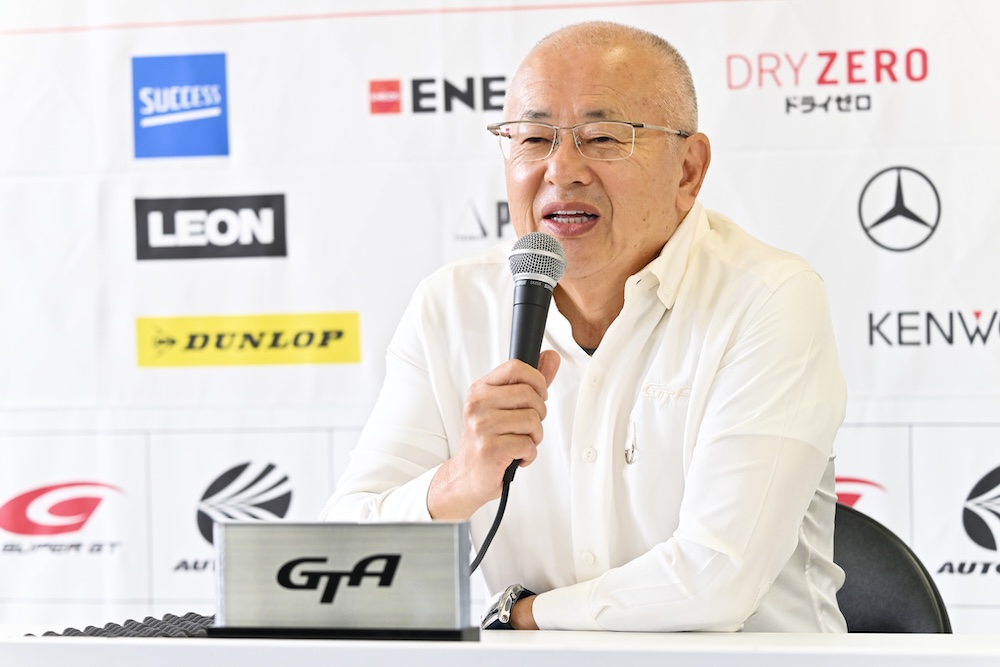
How GTA Chairman Masaaki Bandoh sees Super GT's future shaping up
Masaaki Bandoh has been a fixture of Japanese motorsport for the last 50 years, first as an amateur racing driver, then as a championship-winning team owner, and for the last 20 years, as the Chairman of the GT Association (GTA), which manages Japan’s most popular domestic racing championship: the Autobacs Super GT Series.
With Bandoh as its figurehead, the GTA managed to navigate itself out of a debt crisis in 2007, survived the effects of the “Lehman Shock” (the Japanese phrase for the 2008 global recession) and the Great Tōhoku Earthquake in 2011, and has continually grown and evolved Super GT while maintaining a distinct identity compared to the rest of the world’s major sports car racing championships.
While in Japan for the historic Suzuka 1000KM (an event that was once Super GT’s crown jewel race), I was granted the opportunity to speak with Chairman Bandoh at the GTA’s office in Tokyo — a chance not often afforded to racing media outside of Japan.
As Super GT is set to turn the page to 2027, there were no shortage of topics worth covering in this interview.
RJO: While we know how popular Super GT is in Japan, what has been the greatest challenge to building its popularity overseas in recent years?
MB: A key challenge lies in ensuring the stable hosting of races held abroad. Unlike F1, Super GT relies primarily on sea transport for moving vehicles and equipment to races held abroad. It is also not practical for teams to prepare spare cars or equipment specifically for overseas events.
Global shipping schedules were thrown into disarray by the COVID-19 pandemic, and just as things were finally beginning to stabilize, the outbreak of war in the Middle East forced us, regrettably, to cancel this year's Sepang event. We believe that one solution to this issue is to hold a "Winter Series"—featuring races held abroad —during Japan's off-season, when it is easier to allow ample time for shipping.
RJO: In your view, what strategies could the GTA implement to grow its international audience?
MB: We believe that in order to further expand our global recognition and viewership, it is important to first make more people aware of the Super GT series. To that end, we aim to enhance our digital content — including on social media — and actively share the unique appeal of Super GT, as well as the stories of the manufacturers, teams, and drivers, in hopes of deepening understanding of and affinity for the series.
We also aim to expand our network of domestic and international media, broadcasting, and streaming partners and strengthen our collaboration with them. By increasing opportunities for fans around the world to experience Super GT, we hope to raise international awareness and expand our audience base.
Also, we are preparing to distribute the live video with English commentary for the many other countries next year.
RJO: What was the process like for choosing which tire makers would supply the series for 2027, and how could the change to one-make tires help improve safety? (For example, recent tire tests have shown that the 2027-spec control tires are around 1-2 seconds slower than the current open-spec tires).
MB: We sent a letter of invitation to tender to the four tire manufacturers competing in the Super GT series during the 2025 season, and made the decision this year after comparing their respective proposals.
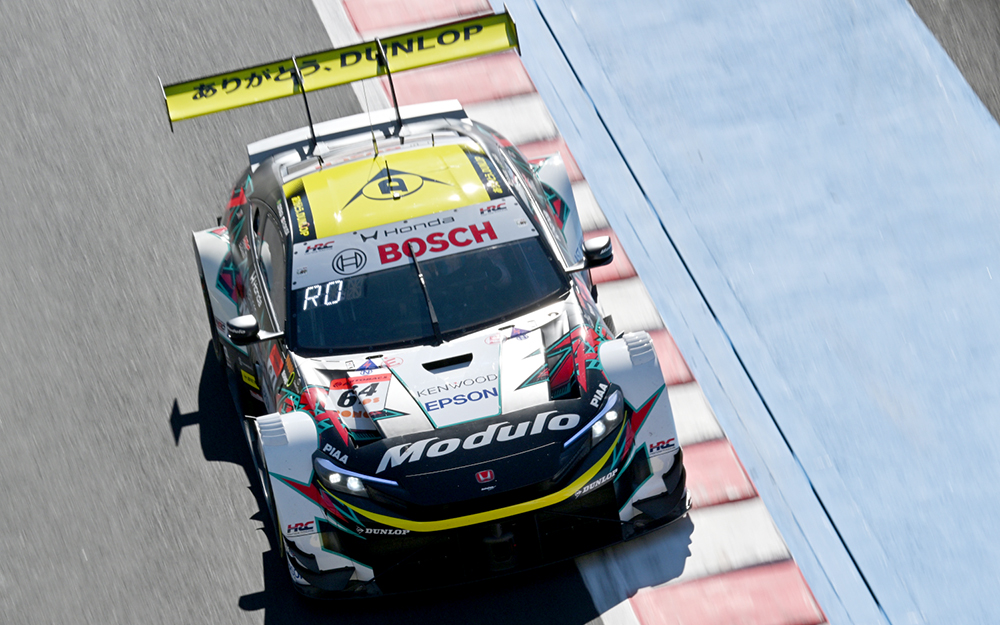
While we cannot guarantee 100% safety, this will at least eliminate the speed competition based on tires, and the cornering speeds will be reduced too. It will also eliminate the differences in tire warm-up, which is a factor that directly contributed to the accident involving the No. 64 (Nakajima Racing Honda) at Fuji earlier this year.
We will proceed with the development of one-make tires in collaboration with Bridgestone and Dunlop, prioritizing safety above all else.
RJO: Following the announcement that the historic Suzuka 1000km would return to the Super GT calendar as a “special stage” for the GT300 championship, what has the response been from teams?
MB: Reactions from the teams vary. While it may be difficult for every team to participate due to the limited number of pit spaces, we hope that many teams will take part.
Next year we will have nine races for the GT300 class, and eight races for the GT300 class. We have proposed to the teams a points system with two dropped scores - so from all nine races, only seven races would be considered in the final points ranking.
RJO: There has not been a major endurance race in Super GT (longer than three hours) since 2019. Could that change in the future?
MB: As 2027 marks the inaugural year of the control tire system, the race distance and the number of tire sets brought to the event will remain the same as in 2026. But if we can see a path toward bringing back long-distance races while reducing the number of tire sets used, we will consider extending race distances from 2028 onwards.
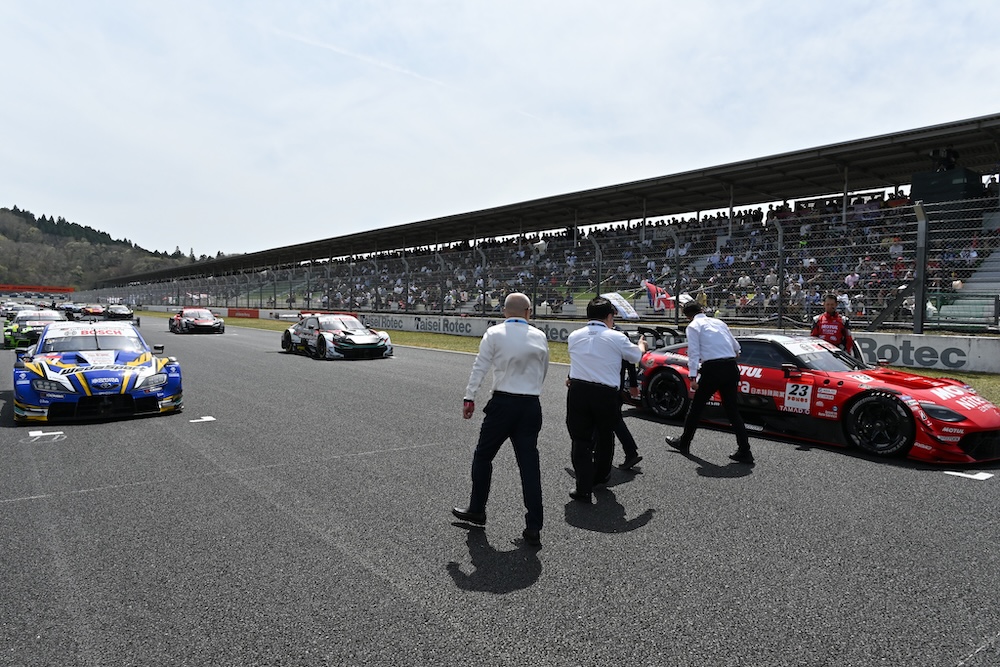
By increasing opportunities for fans around the world to experience Super GT, we hope to raise international awareness and expand our audience base," said Chairman Masaaki Bandoh.
RJO: Are you confident that the series will be able to return to Petronas Sepang International Circuit next year as planned, and are there talks to extend the agreement into the future?
MB: As previously mentioned, logistical concerns remain, but we are continuing to coordinate with the local promoter (HARO Sports & Entertainment) regarding the event. We haven't considered extending the contract yet; that is something we will look into going forward.
RJO: And have there been discussions about bringing Super GT back to other international markets such as Thailand, or somewhere like China, Korea, Australia, or even the United States?
MB: We are not yet at the stage of concrete negotiations, but we have received inquiries. And as previously mentioned, we are looking into the possibility of a "Winter Series," so we are aiming to hold a series of events across Asia after the end of the Japanese season.
We could ship the cars and equipment from Japan in December to Malaysia and other countries, and then back to Japan at the end of March the following year.
RJO: Recently, the WEC announced the framework for the next generation of Hypercars in 2030. In response, what are the current plans for the next generation of GT500 cars which could also be introduced in 2030?
MB: Regarding the adoption of hybrid or hydrogen engines, we will consider whether to introduce them under the regulations following the 2030 rules, while monitoring global trends over the next three to four years. The 2030 regulations will be based on the current rules, but will further advance the use of telemetry, safety enhancements, and cost reductions.
We are currently using the Nippon Race Engine in the GT500 class. It is a very good engine considering the performance and the cost, so we are going to use this engine in the future, obviously.
However, other areas of the car may be different. We are not looking to increase the amount of downforce of the future GT500 cars, in fact, we may want to reduce the amount of downforce. When considering the next generation of tires, we have to think about the use of renewable materials, considering our SDGs (sustainable development goals). We recently switched to Japanese-manufactured E10 fuel; in the near future, we may consider adopting synthetic fuel (e-fuel). This is our idea for the future.
RJO: We all have seen that Nissan has fallen on hard times recently. Are there still concerns about Nissan’s future in motorsport and how it could potentially impact the future of Super GT?
MB: The presence of Toyota, Honda, and Nissan is essential to the GT500 class. We must devise a framework that allows these three manufacturers to continue their participation, while also establishing a system that enables new entrants to join.
It’s a trying situation for the company, but they are dedicated to motorsports. And already, Nissan has said to us that while they are only participating with three GT500 cars now, in the near future Nissan will have four cars once again, perhaps even five.
RJO: Have manufacturers from outside Japan shown interest in entering GT500?
MB: At this moment, we are not engaged in concrete negotiations with manufacturers outside of Japan. This Japanese series is very unique, and there is a high cost to prepare a car to participate in the series as a manufacturer.
RJO: GT300 is a very professional class, and unlike other sports car racing championships, Super GT does not require teams to select drivers based on the FIA Driver Categorization system (Bronze, Silver, Gold, Platinum). Could that change in the future?
MB: We haven’t had any discussions regarding the selection of GT300 drivers, to be honest. In our view, we don’t care about whether or not a driver is an amateur or a professional – as long as the driver is quick and respects the rules, then they are welcome to race in Super GT.
RJO: And finally, what do you consider to be some of the most difficult challenges you’ve had to face as a promoter – but also, some of the greatest challenges?
MB: To be honest, we don’t think about the decrease of the number of cars in the GT500 class, because we have discussed it with the manufacturers. With regard to the GT300 class, we think that maybe our level is domestic rather than international.
We always aim to have grandstands full of spectators at every circuit, every round of Super GT. That is our target as the promoter: to ensure that everybody knows about Super GT. it means the most to us. We have had many challenges, and perhaps made some mistakes during these 20 years. However, this, for me, is part of the work to develop the foundation of Super GT.

RJ O’Connell
Read RJ O’Connell's articles
Latest News

Comments
Comments are disabled until you accept Social Networking Cookies. Update cookie preferences
If the dialog doesn't appear, ad-blockers are often the cause; try disabling yours or see our Social Features Support.