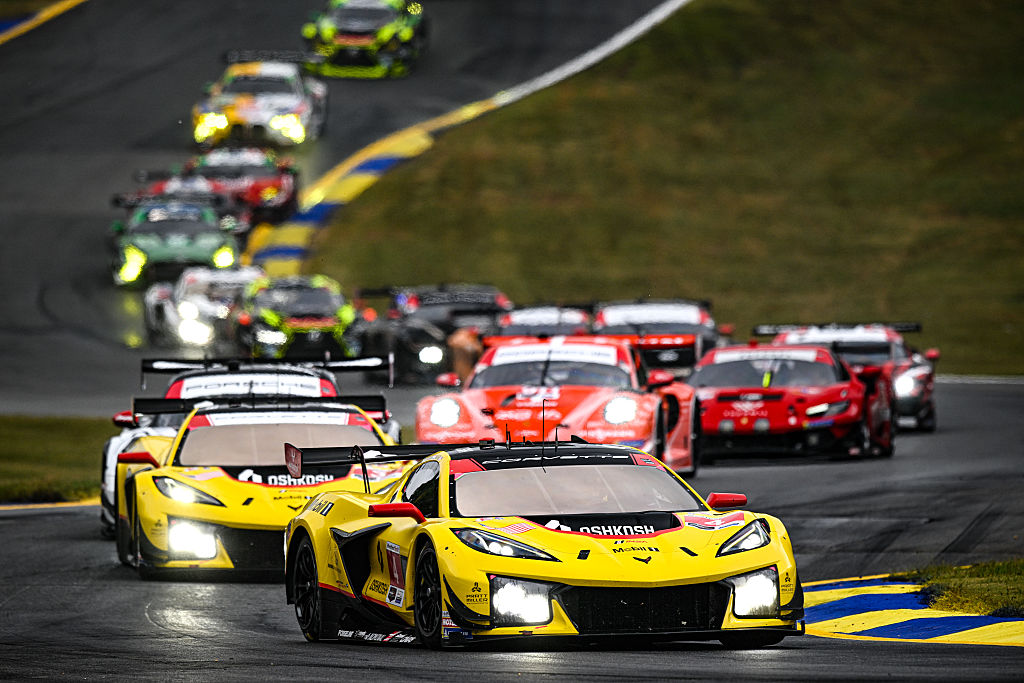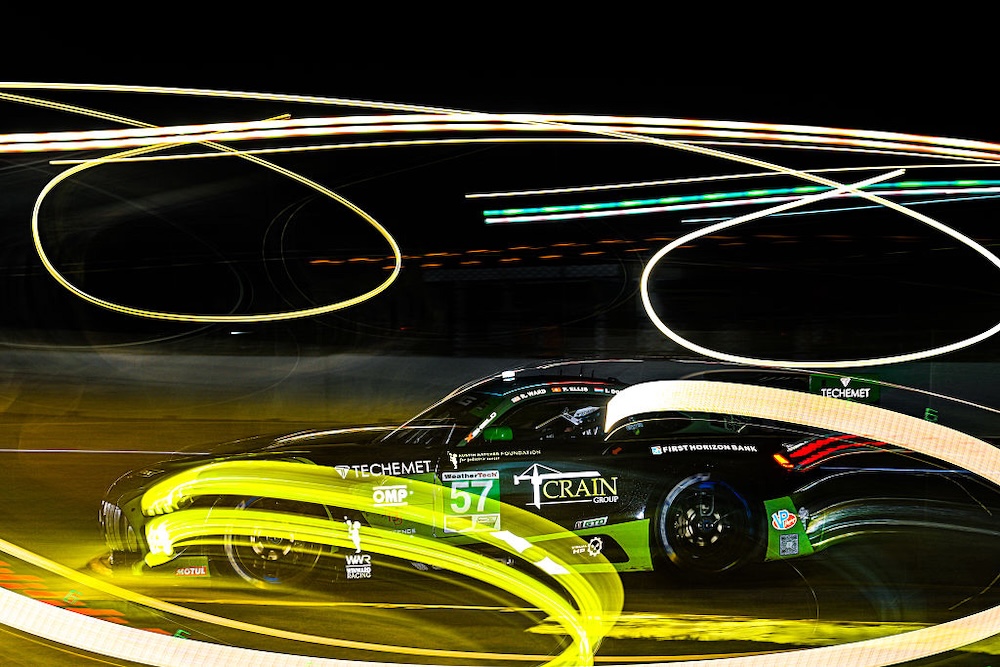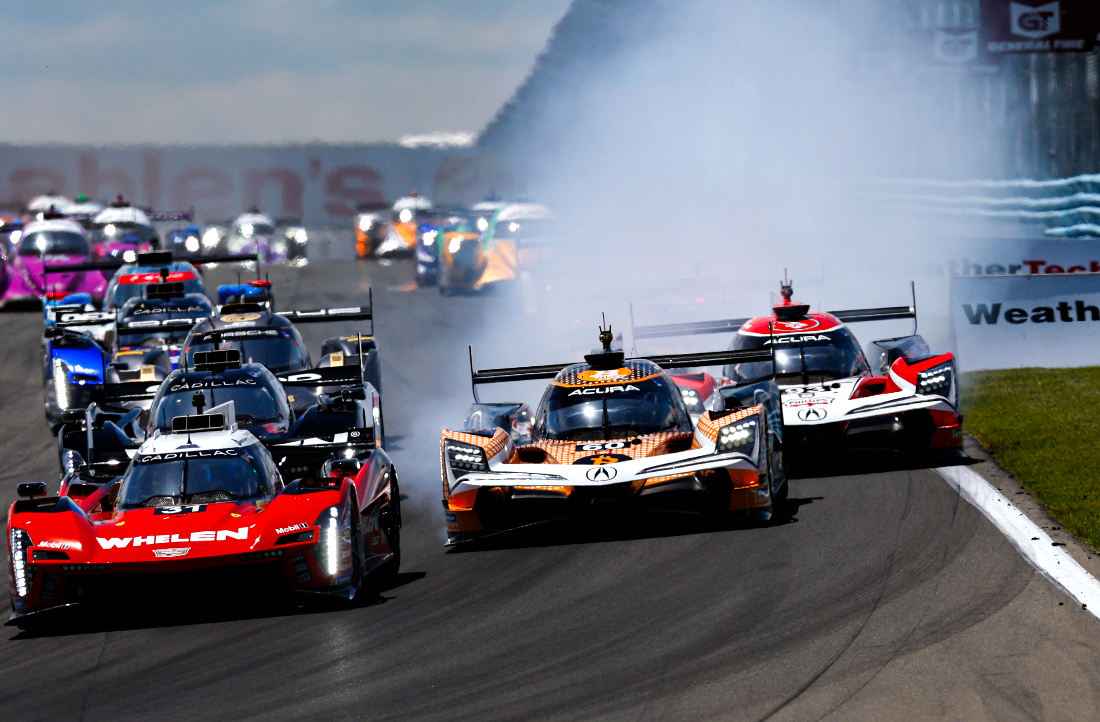
Jake Galstad/Lumen via Getty Images
IMSA has a yellow flag problem – and everyone has different ideas about fixing it
It was only two months ago that IMSA’s driving standards came under fire after Road America’s six-hour SportsCar Endurance Grand Prix produced an unhealthy amount of carnage. IMSA’s top officials opened up to the media and the fans, pledging to do better in the final races of the 2026 season. Outside of first-lap incidents in both races, the following rounds at VIR and Indianapolis seemed to spark a turnaround in terms of quality driving.
But by the end of this past weekend’s Petit Le Mans, we all found ourselves back at square one after another race littered with needless incidents and long full course yellows. There was no shortage of compelling post-race storylines, but it was also impossible to ignore that the messy side of IMSA’s on-track product was back on full display, as it had been on multiple occasions this year.
Saturday at Road Atlanta was the latest in a handful of frustrating races like Detroit, Watkins Glen, and Road America before it, where the driving standards (or lack thereof) became the main talking point after the race. Sixteen full course yellows set an unflattering record for the most in a single Petit Le Mans: not a milestone that IMSA was proud of compared to the two million YouTube subscriber count, or the many purported attendance records at events throughout the season.
IMSA has always been proud of letting its competitors race each other hard, and its drivers typically enjoy having the latitude to do so. That embrace of high-spirited racing is reflected in its “Move Over” tagline launched after Daytona in 2025, when the fallout of the bitter on-track feud between Corvette Racing and Paul Miller Racing was still burning hot.
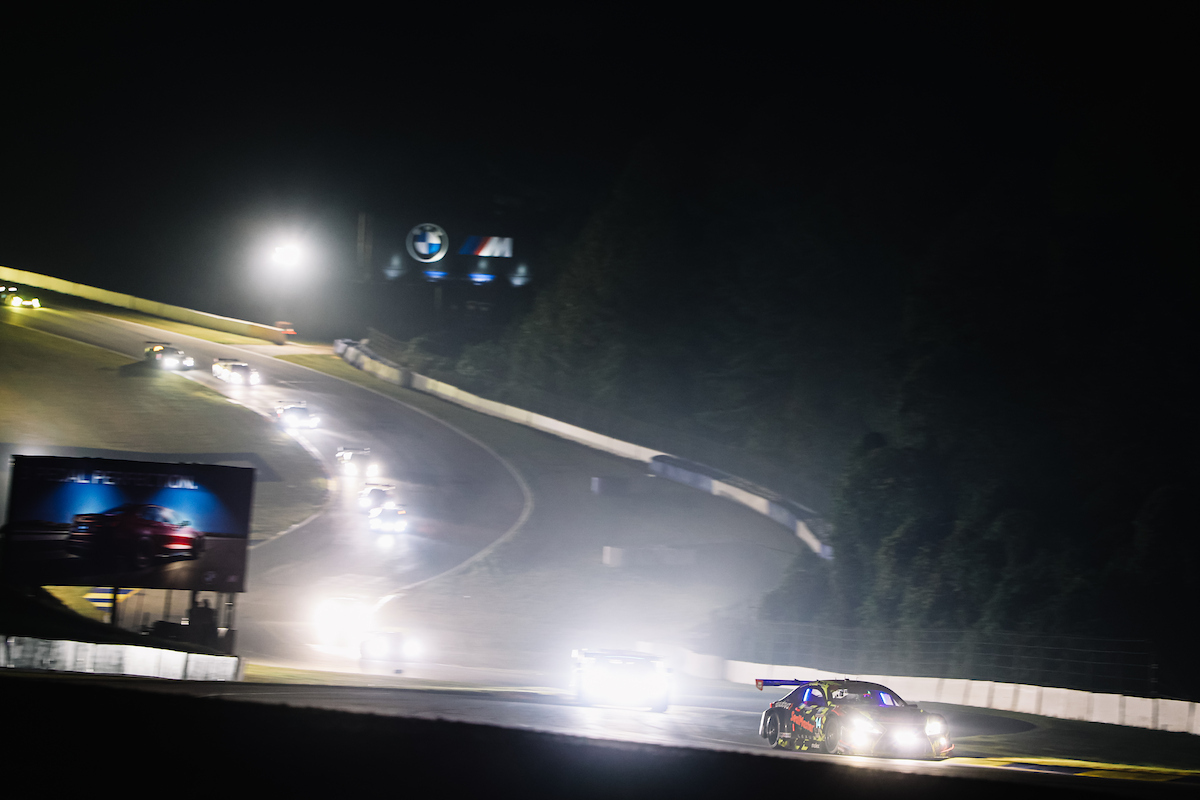
Hard action under the lights is a key part of the IMSA spectacle, but is the series pushing the limits? Joe Skibinski/IMSA
The often-candid Laurens Vanthoor has never been reserved about his preference for racing at the less-sterile North American road courses and, as a top performer in IMSA’s GTLM class of yesteryear, is used to the full-contact style of racing IMSA encourages. When asked about the race’s glut of safety car interventions and critique over driving standards, Vanthoor said, “Honestly, I think it was a bit overdramatized by people. Go and try to drive the last two hours in the dark at Atlanta with so many cars and such a short track, with championships and big victories on the line. The pressure of winning races, the speed differences between professional drivers, amateur drivers, changing conditions, smoke, rain, whatever.
And like the late Kyle Busch after his Chicagoland win in 2018, Vanthoor dug in.
“If you want boring races where we all drive behind each other with no passes, nothing happens. If that’s what everybody prefers, I don’t think it's more exciting,” he said. “Sometimes it goes over the line, stuff happens and we have a lot of yellows. It’s also a bit of a show, right?”
Conversations between RACER and other IMSA competitors in the days after Petit Le Mans revealed growing frustration with the rash of incidents, but many different viewpoints on how to solve it.
Seemingly, the easiest solution would be for IMSA to introduce a virtual safety car protocol similar to the WEC, for smaller, single-car incidents and debris on course. It’s an idea that’s gained more and more traction among fans as a way to drastically cut down on the length of time spent behind the safety car, and keep the field reasonably spread out instead of bunching everyone back together on a restart, thus inviting more opportunities for accidents.
Back in August, during IMSA’s media roundtable with the heads of officiating, IMSA Senior Vice President of Competition Simon Hodgson implied that the series could introduce “different kinds of technology” to reduce the amount of time spent under yellow, but would not say the words “virtual safety car” as he discussed future solutions.
Elton Julian, whose DragonSpeed team left IMSA at the end of a frustrating season, told RACER that he’d be in favor of IMSA adding the virtual safety car to its systems.
“It would be perfect,” he said. “You’re not constantly thrown into bunched-up fields, you don’t close the gaps, and then everybody restarts with the same tire temperature, but still keeps the gap they had.
“We’ve seen IMSA races where it starts green and goes green forever, and it also has to do with being bunched up. A lot of the time, if you don’t get that first accident, there’s a lot of races that we’re going for an hour and a half straight without a yellow. It happened a lot this year, but people don’t focus on that.”
But another departing team owner, Michael Shank, isn’t so warm to the idea, saying that the addition of a VSC would limit the number of teams in with a chance at competing for victory at the finish of races.
“This is how we race in America, right? We want people on top of each other for competition, especially towards the end of a race,” said Shank. “If you do what WEC does, you kind of are where you’re at, and you’re never going to have the ability to get back to get back to the front, which potentially makes for an exciting finish. For me, it’s about the show, and keeping people entertained.
“Maybe there’s a balance between what we’re doing right now [in IMSA] and the WEC. But I always like the ability to keep more people in to win the race. I don’t want to go total WEC, I want to have more people on the lead lap.
"But I understand it causes stuff on restarts. And it takes a long time to get them re-organized and ordered, which can lead to people changing the channel or zoning out. Finding something in-between there probably would be the best thing. I don’t like talking about a problem without a solution, but I’m not totally sure what that would be right now.”
Instead, the founder and co-owner of Meyer Shank Racing pointed towards one element of IMSA’s growth which is often regarded as a positive for the series.
“What stands out to me as a bigger problem, specifically at Road Atlanta, is that they have too many cars on the track at the same time,” said Shank. “It’s just too many. And I’ve complained about it before.
“So many people want to run, and it just makes the racing, the pit lane, everything just pure chaos. I just truly think it’s too much. The standard is not great at times, and we’ve had a couple races here now that it’s actually painful to watch the race. There’s just too many entries in the series for the length of tracks that we have.”
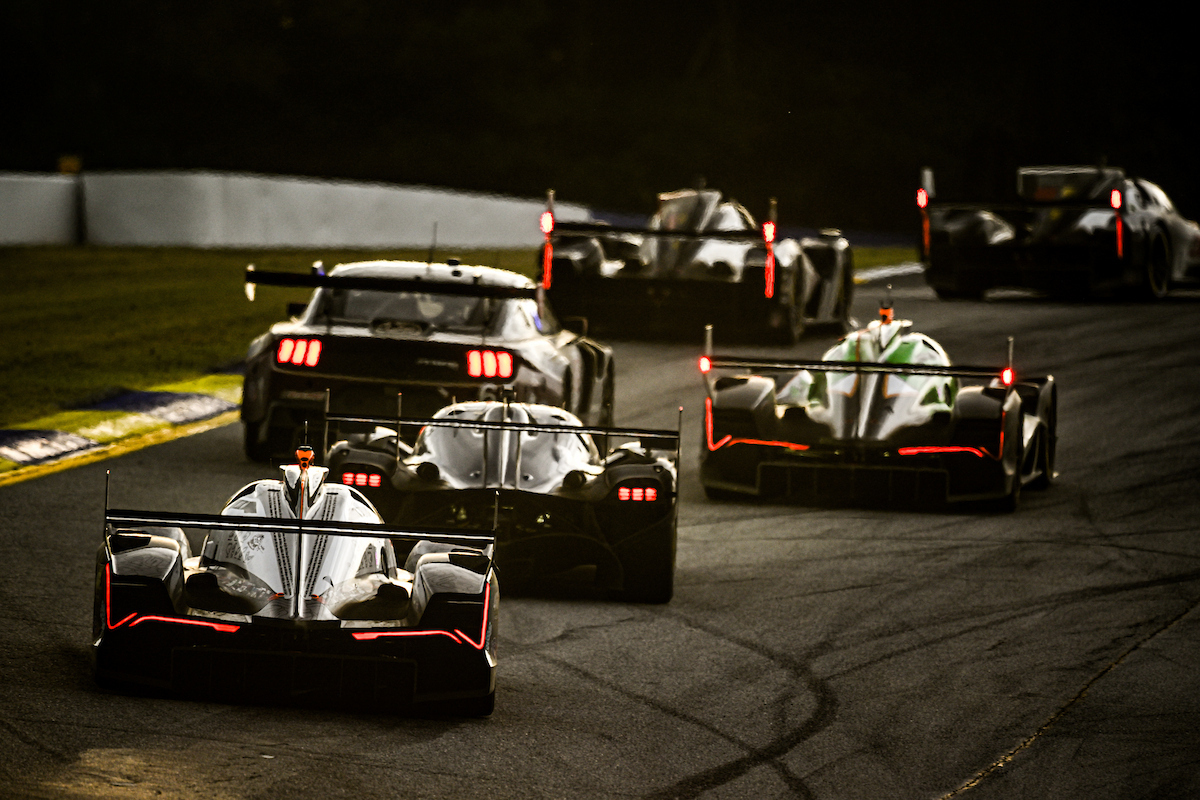
21.25 cars per mile is a recipe for excitement...and maybe chaos. Brandon Badraoui/IMSA
To Shank’s point, Road Atlanta with a 54-car capacity grid yielded a staggering traffic density rate of 21 and a quarter cars-per-mile. It’s IMSA’s equivalent to rush hour along the I-75/85 convergence, and asks drivers in faster prototypes to take great risks when maneuvering through slower GT traffic. The problem could be solved with a massive reduction in the number of entries per race, but it would be bad optics for a series that has prided itself on having more teams interested in competing in the Rolex 24 every year than grid slots available.
Julian, meanwhile, has been heated about his DragonSpeed team being on the wrong end of several on-track incidents throughout the year, and wants other teams to hold their drivers accountable for causing wrecks.
“In a way, I feel bad for IMSA,” Julian admitted. “I really don’t know what they’re supposed to do as far as stopping people from hitting each other – which then causes the safety cars.
“Yes, at times it does get annoying with how long they take to get things going again. But we shouldn’t really be in that position in the first place.
“What’s happening on track to me is insane, and it can only be controlled by the owners. Until people start getting fined for hitting each other, they’re not going to stop hitting each other. You don’t see my guys hitting people. Do you ever see my guys barging into people in any formula? No, and I’ve had (Juan Pablo) Montoya in the car for three years! At least he moves guys tactfully. But until people start penalizing their guys, it’ll keep happening.”
LMP2 has been the easy punching bag among IMSA’s more online fan base, but the truth is that when the Pro-Am class headlined IMSA’s race at Canadian Tire Motorsport Park, it produced one of the more orderly races of the season – no small feat around the tricky CTMP circuit.
One senior IMSA LMP2 team source gave their take to RACER, saying: “Ultimately, we’re here to entertain the fans and to win. If some fans like the crashes and the show then in general I’m OK with it. What I’m not OK with is if the fans don’t like it and would prefer to see cleaner racing with fewer full course yellows. So the question is pretty simple – what do the fans want to see?
“But whatever they say they want, nobody wants to see anyone get hurt and, as things stand, it’s only a matter of time and something really bad could happen. Of course then there’ll be something done about it. So why not be smart and do something beforehand?”
The same source also echoed the desire for drivers to be held more accountable for on-track transgressions, adding, “this is about individual behavior on track. Perhaps they should look at fining drivers personally, and the driver must pay it, not the team. Somebody is then held accountable, and then the driver can make informed decisions, particularly if they are made responsible for paying for the other person’s damages. If you want cleaner racing, we have to make a fundamental change.
“Consistency and common sense matters too. As an example, why does the series care more about an RFID reader at the end of pit lane than a multi-million dollar racing car that could potentially go over the fence?
"An accident on track pretty typically can see a drive-through penalty handed out, but the penalty for hitting the RFID reader exiting the pits has been a five-minute stop-and-go. That’s just not sensible if you are looking to make a positive change to on-track behavior.”
The frustrating part of races like Petit Le Mans, Road America, Watkins Glen and Detroit is that when IMSA is at its very best, it rightfully earns the recognition as one of, if not the, best sports car racing championships in the world. This year’s Rolex 24 At Daytona was hardly a classic because of the nearly seven-hour fog break overnight, but when the race restarted, it had amazing action, particularly in GTP and GTD. Laguna Seca was a classic, remembered fondly for its incredible final-lap finish in the top class, but also producing its fair share of great racing in every class.
This sports car racing fan doesn’t want to see IMSA overcorrect and turn its racing product into a glorified track day. There should be the ability to race hard but fair, and there should be opportunities for teams to fight through early adversity and have something meaningful to race for.
But IMSA needs to remember that as much as it is in the entertainment business, it should always be mindful that it should be entertaining for all the right reasons. At times this year, it devolved into “crash TV” in front of some of the sport’s most devoted fans, at its most beloved venues, and this writer believes IMSA is capable of offering something of more substance in the future.
How the series will take meaningful action to do so remains to be seen.

RJ O’Connell
Read RJ O’Connell's articles
Latest News
Comments
Comments are disabled until you accept Social Networking Cookies. Update cookie preferences
If the dialog doesn't appear, ad-blockers are often the cause; try disabling yours or see our Social Features Support.