Jake Galstad/Lumen via Getty Images
No time like the present for WRT BMW program
This time last year, WRT was frantically preparing to take on one of the biggest challenges in its history. Today, the Belgian team is fighting for a World Endurance Championship title with BMW while simultaneously building a competitive GTP operation in IMSA – scoring breakthrough wins on both sides of the Atlantic in the process.
The scale of that transformation, from running in Hypercar only, to both Hypercar and GTP, is perhaps best captured by WRT team boss Vincent Vosse: “A year ago, we had no tools, no trucks, no people, no workshop. We started from nothing.”
That is the context for what WRT has achieved in the past 12 months. Its first season competing in both GTP and Hypercar with BMW has not been perfect, particularly in IMSA, but the trajectory is unmistakable. In the WEC, BMW has taken the biggest step forward of any manufacturer in the top class over the past 12 months in its third year of Hypercar. With an updated pair of M Hybrid V8s, sporting a new aero package, WRT has taken the fight to Toyota and Ferrari, becoming the leading factory team racing with an LMDh-spec prototype.
Wins at Spa and São Paulo have headlined the season so far, though there have been highlights to look back on. It also came close to winning Le Mans for the first time since the late ’90s before sneaking onto the podium with a late strategy call at Fuji just last weekend.
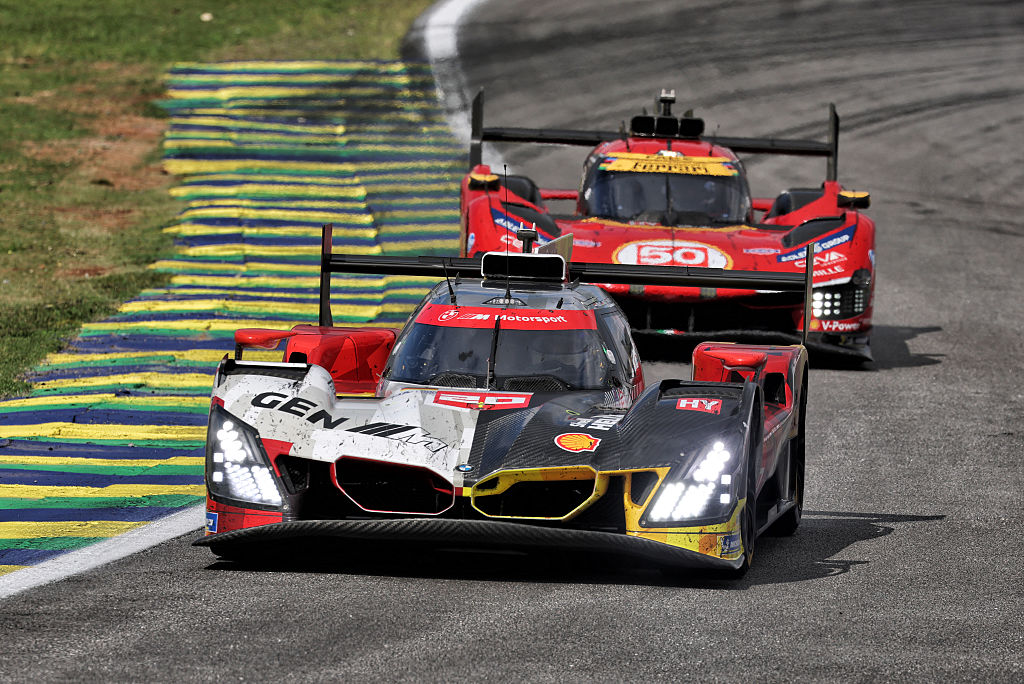
BMW has clawed its way back into title contention as the FIA WEC season has progressed. James Moy Photography/Getty Images
With two races to go, it remains in both the drivers’ and manufacturers’ Hypercar title fights. That would have seemed improbable heading into the last off-season.
BMW finished a distant fifth in the manufacturers’ championship in 2025, with zero wins and just two early-season podiums to its name. Fast forward to now, the M Hybrid V8 is a regular factor at the sharp end of the Hypercar field, and WRT has transitioned from a team trying to find its footing into a genuine title contender.
The IMSA GTP program tells a slightly different story, but the scale of the task this year should not be overlooked.
Following BMW's split with RLL, WRT was handed a late decision to take over the manufacturer’s IMSA GTP operation. It had to build a new team in a remarkably short period of time, then take it to the Rolex 24 At Daytona back in January as its first race.
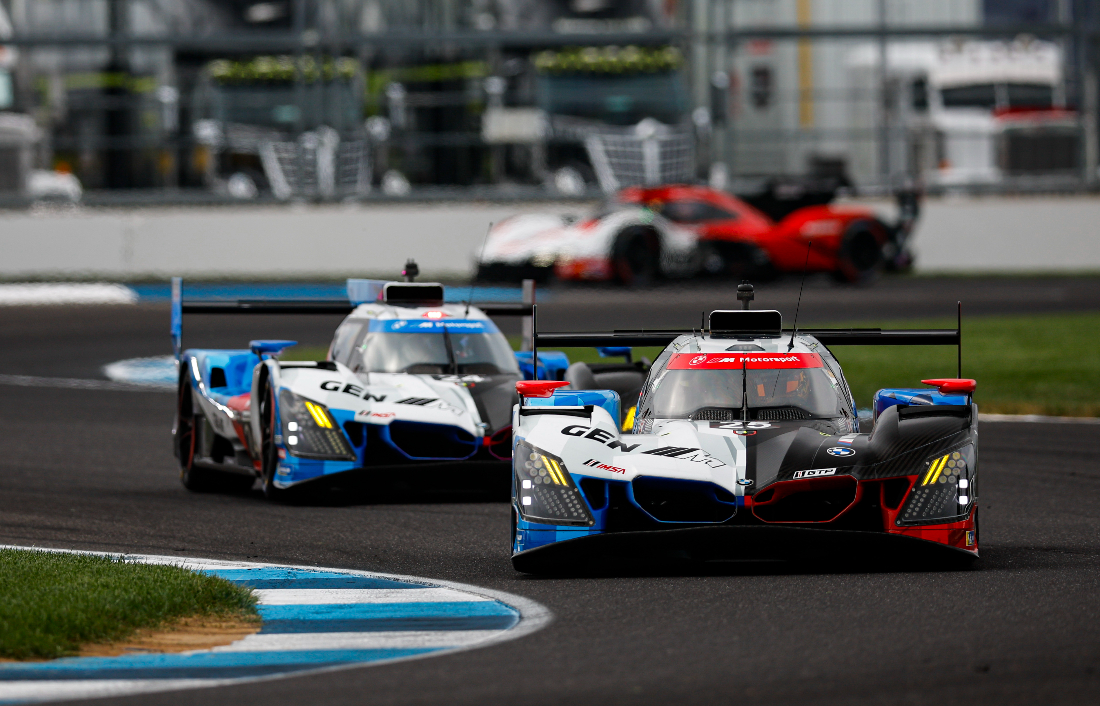
The results have not yet reached the same heights as WRT's WEC campaign, but the progress has been steady. And for proof that the program is on an upward curve, look no further than last month’s Battle on the Bricks at Indianapolis, where it netted its first victory after a late pass for the lead from Sheldon van der Linde.
For BMW M Motorsport head Andreas Roos, that was always the bigger picture, as North America remains a key marketplace for the manufacturer.
“The reason that we wanted to do the switch (from RLL to WRT in IMSA GTP) was to accelerate the whole Hypercar program,” he says on reflection. “We started it already in 2025 with Sheldon (van der Linde) and Dries (Vanthoor), to have drivers doing both championships to accelerate the driver side and have synergies.
“It was not easy to start off, though, because the decision was taken quite late with BMW about how we would continue with the IMSA championship, so we gave WRT a very short period of time to set it all up. But, on the other hand, it was incredible to see what they built in a short period, putting together a team in time to compete in a 24-hour race at Daytona, which is not the easiest way to start things off.
“It's why I was super happy at the end of the race in Indianapolis, seeing the No. 24 car win and everything coming together. Did we reach our expectations? Yes. We've brought the two programs together as close as possible. We have a core group which basically works in both championships, and there's no friction.
“It's helped the WEC program too, because you can generate, share and work through more data and information quicker. It’s all going in the right direction, with the moves and switches we made.”
That cross-pollination between the two programs is already producing tangible benefits.
WRT's latest WEC podium at Fuji provided a particularly clear example. The team opted for a fuel-only stop before the final restart, gaining track position and securing a strong result to cap off a tough weekend. The strategy was shaped in part by what the team learned racing in IMSA.
“We made a good strategic call at the end of the race (to take fuel only before the final restart, to gain track position). How did we come to that? Thanks to IMSA, because here, fuel is everything, and having the opportunity to practice this every weekend in IMSA helps us in WEC,” Vosse says.
That is perhaps the most significant aspect of WRT's first season in North America. Even for a team that has been a powerhouse in GT and prototype racing in Europe over the past decade, racing in IMSA has been a learning experience.
The cars may be fundamentally identical across Hypercar and GTP, but the championships are not. IMSA and WEC have their own identities. They differ in class structure, race formats, the BoP process and how races are managed. Parachuting into North America and immediately taking on established GTP teams was never going to be simple.
“In IMSA, the challenge is about creating your opportunities,” Vosse explains. “You need to be in the right place at the right time, with the right amount of fuel. It’s not easy to achieve this! You can’t predict everything that will happen. We haven’t had huge difficulties; we just need experience. The teams running at the front... how much experience do they have? It says it all.
“When you start a race, or a season, you want to win, right? But did I expect to win immediately? No. Did I want to win? Yes. If it didn't come this year, though, it wasn’t the end of the world. It was really nice, though, to win in Indy and do it in style.
“Either way, whatever happened this season, building the program was the biggest achievement, more than the win in Indy.”
That distinction is important. The Indianapolis victory was the headline result, but the real achievement has been creating the infrastructure and processes required to run a second factory prototype program out of Charlotte, thousands of miles from its main headquarters in Liege. And now WRT has the opportunity to build on it.
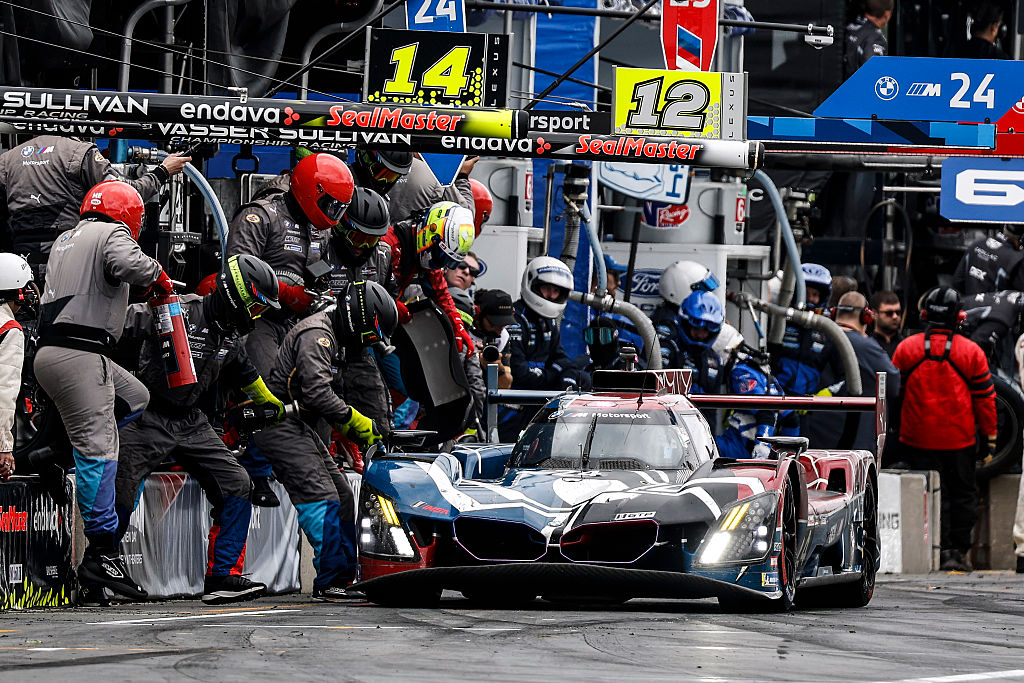
Bolstering pit stop tactics and execution has brought gains for WRT on both the IMSA and WEC sides of the ledger. Michael Levitt/Lumen via Getty Images
Before the WEC title fights resume in Barcelona later this month, Saturday’s IMSA finale offers WRT another chance to take a further step forward before the focus shifts to season two in IMSA GTP. The primary target is greater consistency in its results.
“Consistency is what we've been missing a bit this year. We started off with a good result at Daytona, but then Sebring and Long Beach after that were disappointments. I could see us winning there, but that part of the season was difficult,” Vosse says.
“It would be arrogant to say that next year we will operate on the same level as a team like Penske, but this is the challenge. I won't accept not moving forward. For us, moving forward means fighting for podiums at every race, even when BoP is not with you.
“In WEC, this is the area where we have moved forward this year. In WEC, if you are not able to put every detail together, you can't win. So many quick cars didn't win races this year. When you see the level of operation there, you can't buy your place there or your results. You have to work for it.”
The M Hybrid V8, meanwhile, is providing another layer of stability heading into 2027. The platform isn't set for another major update next year, with Roos ruling out the possibility of using another Evo Joker in the off-season. In his mind, “there's still some potential left in the car.”
“The Evo we did proved to work well this year,” he says. “I think there are still some areas we can improve in the current package, and in the background we are working on topics where we see where we can be better in the future, but there's nothing on the radar for next year.”
For WRT, that creates something it did not have a year ago: a stable foundation. After a year spent building an IMSA program from scratch while trying to turn around BMW's WEC fortunes, it can enter 2027 with established operations in both championships, a common pool of knowledge and experience, and a prototype package that can win races.
“It's a nice feeling to know that a brand like BMW would let me do this – start from scratch, put everything together,” Vosse says. “It’s thanks to the people I have around me that we made it happen. Now we have two big programs, and we’re winning races.
“Of course, there's margin for improvement, but this is motorsport. WEC is going well, and what we are learning is how to be good in IMSA. I think we are getting there. There’s still work to do, but we are getting there.”

Stephen Kilbey
UK-based Stephen Kilbey is RACER.com's FIA World Endurance Championship correspondent, and is also Deputy Editor of Dailysportscar.com He has a first-class honours degree in Sports Journalism and is a previous winner of the UK Guild of Motoring Writers Sir William Lyons Award.
Read Stephen Kilbey's articles
Latest News
Comments
Comments are disabled until you accept Social Networking Cookies. Update cookie preferences
If the dialog doesn't appear, ad-blockers are often the cause; try disabling yours or see our Social Features Support.