Chris Graythen/Getty Images
'Hell Yeah' NASCAR is back
NASCAR came into 2026 with a new championship format, winds shifting towards leadership changes, and a new “Hell Yeah” marketing campaign meant to point back to the sport’s roots and attitude.
It wasn’t until Saturday night at Bristol Motor Speedway that the latter truly came to fruition.
By now, you know what happened, whether you watched it live, online, or in the mainstream news. Ryan Blaney passed Carson Hocevar for second with 43 laps to go; Hocevar tried to cross over and get to the inside of Blaney’s left rear, then chose not to lift as they entered the corner.
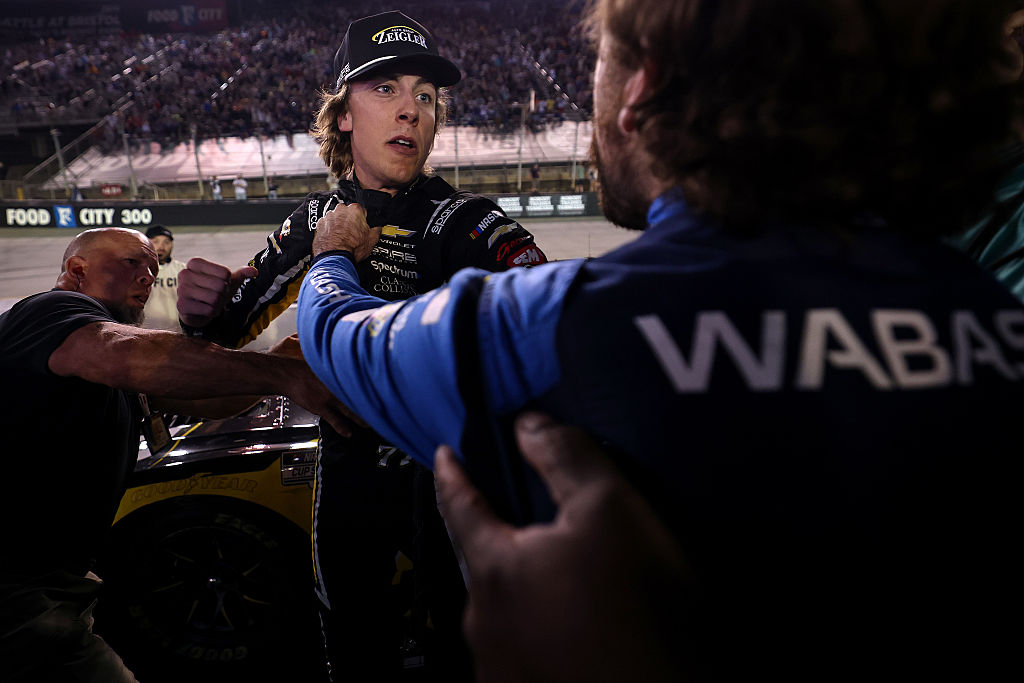
Blaney crashed. He also got mad, and vowed outside the infield care center that something was going to happen before the end of the night. And sure enough, as the fireworks went off overhead for Blaney’s victorious Team Penske teammate, Joey Logano, he created some more on pit road by leaving his hauler and confronting Hocevar.
The fight that has now been seen around the world. The video clips from all angles were shared and dissected across social media. Cameras even tracked the golf karts as both drivers left the track.
Hell yeah, it went viral. Hell yeah, it fired that crowd up. Hell yeah, it divided social media over who was right, who was wrong, whether there should be penalties, whether it was warranted, and whether Blaney’s message landed.
And oh, hell yeah, it was awesome in every sense and exactly what NASCAR needs.
That mainstream media attention? It included the worldwide leader in sports, ESPN, not putting highlights of the race on its programming, but that single highlight of Hocevar and Blaney. It also included CBS News posting about the fight – not the race – on social media.
Hell yeah, NASCAR, get some of that attention. It’s a contact sport, and these drivers aren’t choir boys, so stand back and let the garage handle its business.
And, most importantly, embrace it when it happens. To repeat, it’s a contact sport with fenders on the race cars and a history of torn sheet metal and hurt feelings scattered across the United States for the last 70-plus years.
Don’t deny it. Don’t try to rewrite history. Clashes and crashes are among what built the sport. For far too long, it's seemed like it's moved away from that, with politically correct, media-trained, vanilla drivers who all seem like they could be cut from the same cloth and talk about how close they are with other drivers.
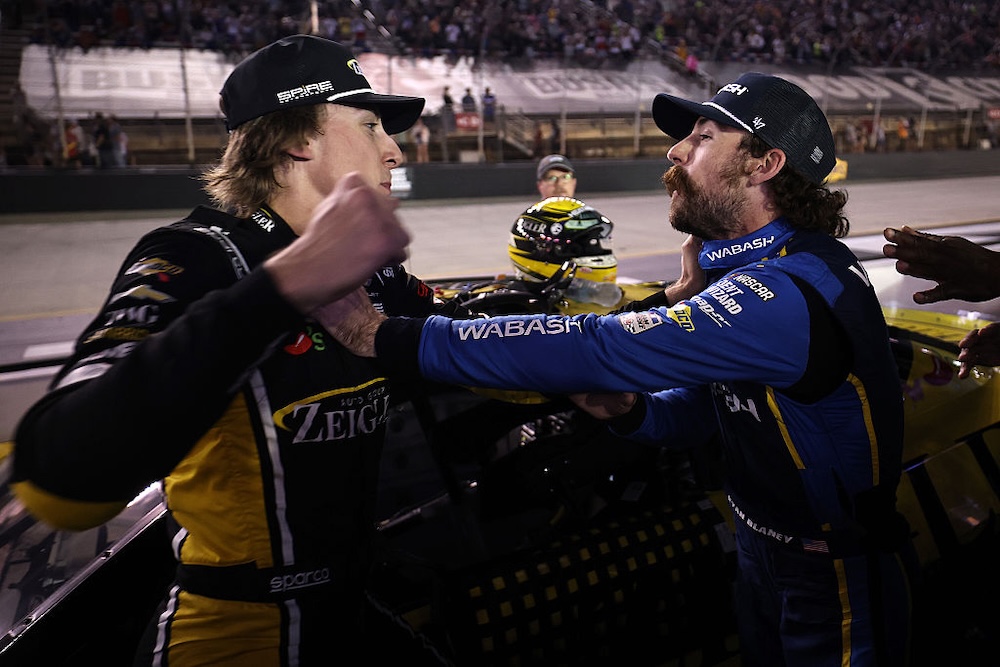
A picture seen around the world: Hocevar and Blaney come to blows after Saturday night's race. Chris Graythen/Getty Images
The garage should be filled with varying degrees of personalities and actions. The fanbase has been starved for someone like Hocevar because he gets a reaction: you either love him or hate him. No one wants corporate drivers who issue fake apologies or seem too friendly with each other. Fine, be friendly, but on the weekends, that shouldn't be anywhere near a conversation, because it should be clear you want to step on their throats.
And even though he might be the extreme case, and even though he makes some blatantly stupid contact with other drivers at times by trying to intentionally wreck them or running into someone under caution, you shouldn’t lump all contact together. It’s not a crime to race hard and get into another driver, and it’s not against the rules to make contact.
Hocevar chooses to race that way, and others don’t have to like it, but that doesn’t mean he should be neutered. Which is often the conversation around Hocevar from the critics. “He never learns” or “he needs to calm down” and even “that isn’t how you should race.”
Ask yourself, honestly, why do you want him to change? To be just like every other driver? Because other drivers say what he does is wrong? Drivers are allowed to feel wronged; it creates conflict and something to invest in. But their opinion doesn’t have to be everyone’s opinion, and it doesn’t have to shape the garage into a single way of doing things.
What would you have been talking about Saturday night if the contact and fight never happened? There should be a little conflict in the garage at times.
Both drivers were in the right of how it all played out. Blaney had every right to be mad about being wrecked and to want to do more than utter words about his frustration and payback that everyone would doubt would ever come. He also had every right to try and protect his position on the racetrack.
Hocevar had every right to try to make the crossover move work, and every right to choose not to lift. But in that same vein, make no mistake, Hocevar must live with those decisions, and that is where the fun comes in to see how it plays out. Hopefully, he understands that if he’s going to be the villain, he can’t be a hypocrite when the shoe is on the other foot.
If that is how it plays out, with drivers getting to be themselves, with the villain prevailing at times and getting put in his place at others, let’s have at it. Sports are better when there are heroes and villains. Watch it, embrace it, and pick a side about what happened.
Because, hell yeah, what we all saw at Bristol is what NASCAR should be and should have more of instead of the constant pearl-clutching about who needs to change their behavior.
Kelly Crandall
Kelly has been on the NASCAR beat full-time since 2013, and joined RACER as chief NASCAR writer in 2017. Her work has also appeared in NASCAR.com, the NASCAR Illustrated magazine, and NBC Sports. A corporate communications graduate from Central Penn College, Crandall is a two-time George Cunningham Writer of the Year recipient from the National Motorsports Press Association.
Read Kelly Crandall's articles
Latest News
Comments
Comments are disabled until you accept Social Networking Cookies. Update cookie preferences
If the dialog doesn't appear, ad-blockers are often the cause; try disabling yours or see our Social Features Support.