Michael L. Levitt/IMSA
Estre and Aitken's Road America clash now in the rearview with focus turned to Indy
Seven weeks ago, a messy IMSA endurance race at Road America ended with Kévin Estre and Jack Aitken crashing into each other in the final minutes.
The controversy around the accident and events leading up to it have been discussed at length in the days and weeks since – some of it was constructive, while others have seemingly been enthralled by the palace intrigue between the star drivers of Porsche Penske Motorsport and Cadillac Whelen (Action Express Racing), and the teams themselves at the centre of it.
In reality, any grudge between Estre and Aitken has been buried for almost as long as the time that’s passed since Estre pushed Aitken off into the entrance of turn one and triggered a race-ending crash for both drivers.
“We saw each other straight after the incident, as we were in the medical car on the way to the medical center,” Estre recalled. “We talked a bit there, but obviously at that moment we had no info, no video, so it was difficult to know exactly what was happening.
“After I saw the video from Road America, and I admit that it was more my fault than his, I went to him and apologized. I talked with him through what I thought happened from my point of view, and I think we left in a decent manner. We’re both intelligent enough to admit that we’re racing hard, and sometimes mistakes happen. From my side at least, I think everything is okay.”
Aitken gave his account of the moments after the ugly conclusion to the race, saying, “We talked about the accident afterwards, me and Kévin, and had a good conversation about it. I don’t have any issue with him, and he hasn’t got any issue with me.
“I think we’ve had some really good battles this year. IMSA made a decision on that accident, and we’re going to move forwards.
“If I had a time-traveling machine, then yes, I would do something different – but I don’t.”
About the incident itself, the Anglo-Korean driver said, “No one expects to be driven off the road on a straight.
"It’s very easy in hindsight to say you shouldn’t have put yourself on the outside (into turn one). But the fact of the matter is, a lot of people had made that outside move work through the day. So, everything takes a bit of cooperation, and we didn’t quite have that. Nobody wants to end up with broken race cars at the end of the race, so it was just a shame.
“I think [disappointment] was kind of my overwhelming feeling coming away from Road America. But we’ve moved on. It happens in racing. There’s two left to go in the season, and I think it’s going to be really tight, it’s going to be competitive, and it’s going to be fun. And hopefully, we don’t have that again.
Aitken and Estre, along with the rest of the premier GTP class have had extra time to prepare for Sunday’s two-hour, 40-minute sprint race at Indianapolis Motor Speedway, the penultimate round of the championship.
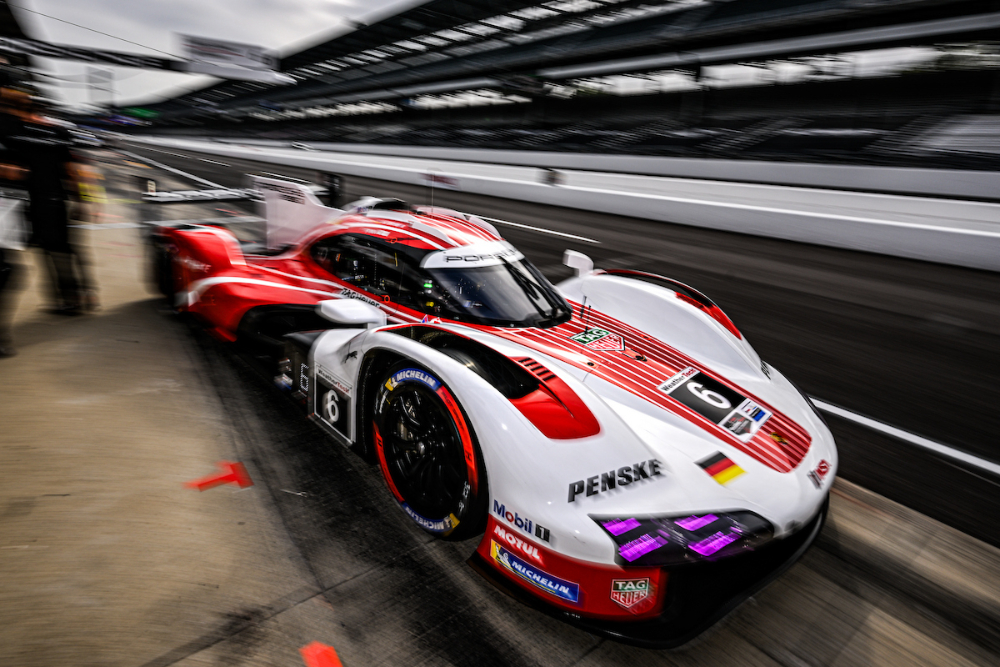
Championship contender Laurin Heinrich has joined Estre in the No. 6 Porsche 963. Brandon Badraoui/IMSA
It’s a race which could determine if the GTP championship for 2026 will go down to a final-race showdown at Michelin Raceway Road Atlanta in the 29th Motul Petit Le Mans two weeks from now, or if championship leader Aitken can wrap up the title just by starting the engine of his Cadillac V-Series.R on Saturday, October 3rd.
And even though he’s ruled out of title contention, Estre has a more direct influence on it now that Laurin Heinrich has been moved over to his No. 6 Porsche 963 for Indianapolis. Heinrich, who has won races for both Porsche Penske Motorsport and JDC-Miller MotorSports this year, enters the weekend trailing Aitken by 118 points in the standings. It’s a window small enough to keep him in contention but big enough to where he and the No. 6 car cannot afford a lackluster result.
But hanging over Estre’s head is a two-race probation which will take effect this weekend and at Petit Le Mans, one where another severe collision like the one at Road America could invite further punishment.
“I can’t really remember such a hard penalty,” Estre admitted. “It was such a minor contact, but which had big consequences. As I said, I agree on the fact that I’m more to blame than Jack was to blame. So if I deserve a penalty, probably.
“If I deserve a five-minute stop-and-go plus two races of probation? Not so sure. Or at least, it’s not really my feeling.”
The discussion of Estre’s penalty kicked off again one week before the race, when Porsche Penske Motorsport Managing Director Jonathan Diuguid told the media that it was “IMSA trying to make an example.” Diuguid’s statement was interpreted by some Porsche supporters to mean that the series had made its ruling based on the French driver’s reputation for being an aggressive, hard-charging competitor.
Estre spoke for himself on Friday, saying, “In the end, I’m not in race control, and I have to accept [the penalty].
“What we really want as drivers is always consistency in the penalties, in how race control treats incidents. It’s always difficult to judge because there’s never two incidents which are exactly the same, so it’s not so easy to say.”
Estre met with IMSA President John Doonan and race director Beaux Barfield on Thursday to explain his point of view, and to repeat his stance urging consistency in decisions from Race Control and the Stewards panel.
Indianapolis Motor Speedway’s road course invites the possibility of teams having to take additional risks, but even with Heinrich’s title hopes now resting partially on his shoulders, and with the probation, Estre said he’s not going to fundamentally change how he races come Sunday afternoon.
“I will do what I always do, which is to drive as fast as I can, and if I can overtake, I will overtake,” he declared.
“I think my mindset is quite clear. The mindset of others is something which I’m questioning. They know that I’m on probation. The way they’re gonna drive against me is the other question, because I’m under more pressure of getting a penalty if there is side-by-side contact, for example.
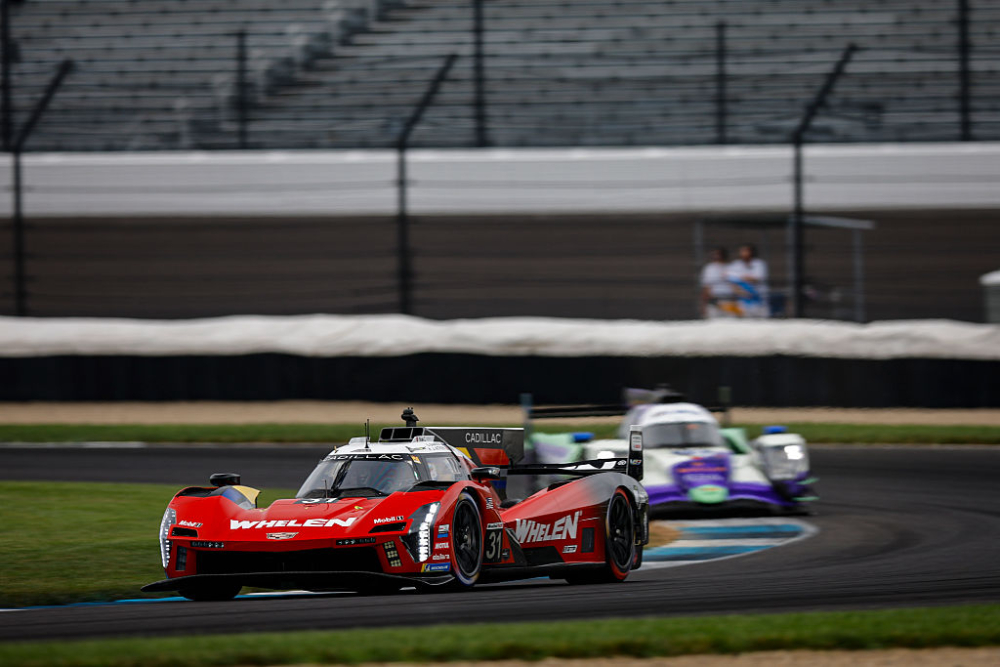
This weekend's race at Indianapolis is the first that GTP and LMP2 cars have raced in since Road America. Jake Galstad/Lumen via Getty Images
“In the end, we are in a professional environment, and I hope that everyone stays professional, calms down, tries to race hard as it’s been in IMSA – but on a fair side. For sure, it’s important to get points for Porsche as a manufacturer, and of course for Laurin.”
Aitken spent the intervening weeks driving in both the WEC Lone Star Le Mans at COTA, and making a one-off cameo at his home circuit of Silverstone for the European Le Mans Series. In that time, he’s been in the crossfire of the discussion around the Road America clash.
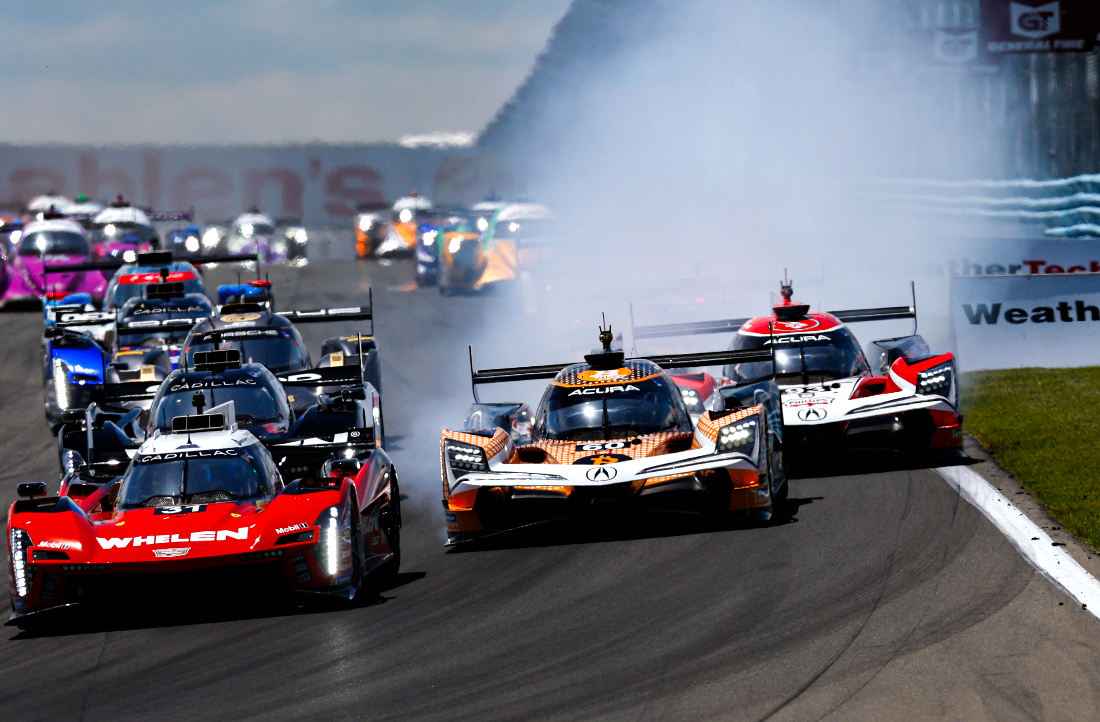
Before Aitken was pushed off by Estre, he made contact with the other Porsche Penske Motorsport 963 of Felipe Nasr earlier in the race, and received no penalty. It was the second time in two races that the No. 31 Cadillac Whelen V-Series.R avoided sanctions for a wheel-to-wheel collision where the other car got the worse end of the clash, leading many to accuse IMSA of favoritism towards the Action Express team via its relationship to NASCAR Chairman Jim France.
Barfield has since admitted that the preceding incident between Aitken’s co-driver Earl Bamber and the No. 21 AF Corse Ferrari at Watkins Glen was a missed opportunity from Race Control, though he did defend its ruling on the Aitken/Nasr collision on the grounds that the No. 7 Porsche had blocked the No. 31 Cadillac into the grass between turns four and five.
Seven weeks later, Aitken admitted, “I think the discourse afterwards was not 100% productive, both from the fans and in general. It’s always difficult when a big crash has championship ramifications. I think the race was a bit messy, which was a shame. But I try not to get involved on that side of things.”
“It’s obviously good that there is a discourse between [race directors and teams], which it sounds like there was between Porsche Penske Motorsport and Kévin, and all of the relevant people at IMSA. You just hope that it’s productive.”
Indianapolis will be the first time that GTP and LMP2 cars have raced since Road America, where once again, the series will be expected to clamp down on avoidable contact, blocking, and other forms of dangerous driving. Aitken saw this trend emerge last year, and he predicts it will be the same in Sunday’s two-hour, 40-minute sprint.
“I think we saw something similar this time last year with a focus on cleaner racing from race direction. Everyone needs to be quite heads-up about it because I think IMSA is known for hard but fair racing, and we want to preserve that,” Aitken said. “But we also don’t want to have cars being fired off into the wall. Finding a balance can be tricky, and there is no black and white in terms of regulation.
“It is down to us and to race direction to tread that line as well as we can, put on a good show, and have good racing without it being messy. Race direction has made it clear that they expect better. Everyone is going to have to be a bit more careful about that because, for sure, penalties will probably come a bit quicker at this point, and it was the same last year.”
Motor racing is a sport which always sparks emotional responses from competitors and fans alike, and no matter which way the GTP championship turns here at Indianapolis or in two weeks at Road Atlanta, one driver will feel jubilant in victory, the other will feel the sting of losing out.
That extends to their supporters as well, and with the events of this summer, a loss for either Cadillac or Porsche may be more difficult to accept.
But for the drivers involved, they’re simply ready to turn the page on an ugly chapter in the story of the 2026 IMSA season and do what they can to help their respective teams and manufacturers win a championship.

RJ O’Connell
Read RJ O’Connell's articles
Latest News
Comments
Comments are disabled until you accept Social Networking Cookies. Update cookie preferences
If the dialog doesn't appear, ad-blockers are often the cause; try disabling yours or see our Social Features Support.