Emmanuele Ciancaglini/Getty Images
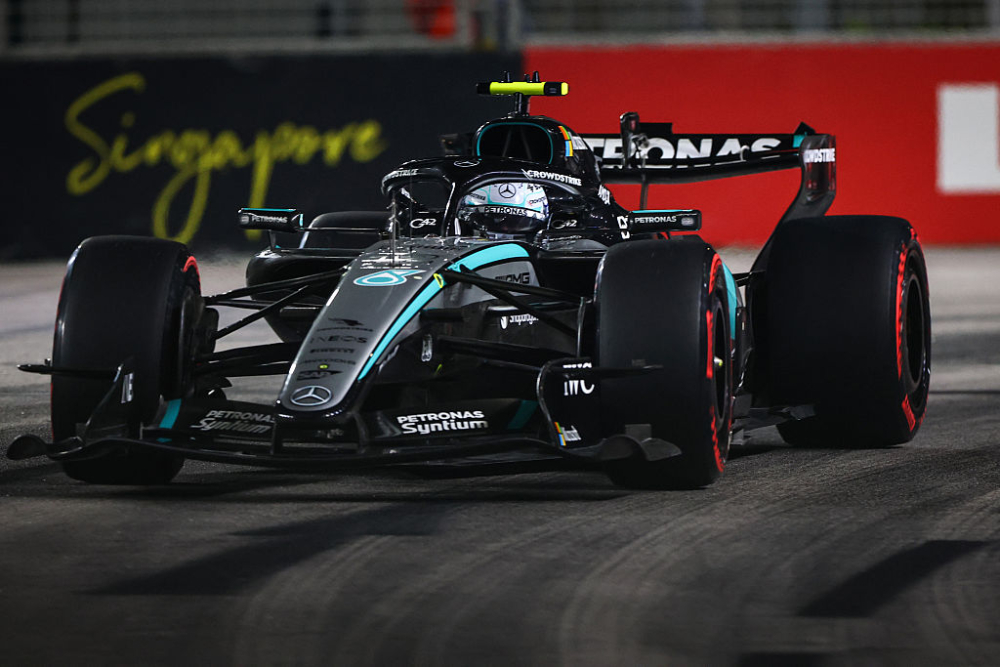
Conventional wisdom was that an F1 Sprint race wouldn't work in Monaco. So why is F1 doing one?
The 2027 Formula 1 calendar’s release has raised plenty of questions. The first, and perhaps most pressing one, being: What is happening at the end of 2026?
The short answer is nobody knows yet, but the longer one is Formula 1 is very much treating it as business as usual at this stage. A decision about where the final rounds will take place was promised in mid-September, and the latest update from F1’s headquarters is the calendar is unchanged and the series is continuing as planned.
Whether or not we actually end up racing in Qatar and Abu Dhabi at the end of this season, the need to plan for normality and not second-guess world events means the 2027 schedule again kicks off in the Gulf, with Bahrain hosting a four-day pre-season test before the same venue opens the season for the seventh time.
What is new about the Bahrain Grand Prix being the venue for the first race is that it will also be the first time an F1 season begins with a Sprint event, as the calendar expands to 10 from the previous six.
Bahrain will be the first of a run of three Sprint weekends in the opening four races, with Australia and Japan (the first two rounds of a triple header that ends in China) also getting a Sprint. And there’s a symmetry to the calendar, as three of the final four race weekends are earmarked to be Sprints, including a double-header pairing in Qatar and Abu Dhabi to finish.
That brings us on to the next question of why there is an obsession with adding more and more Sprint events after having started with three in 2021, then doubling to six in 2023.
There was a push from promoters to try and make a Friday more attractive to viewers and fans, in order to increase crowds and audiences on those days. As you would expect, a race weekend usually delivers its smallest attendance on a Friday, grows on Saturday for qualifying – when more people have time off to be on-site – and peaks on race day.
According to F1’s statistics, more than eight in every 10 ticket holders feel they are getting better value during a Sprint weekend compared to the traditional one three-practice format. That is likely to lead to more people who buy three-day tickets trying to attend on all three days, increasing spend at the track but also in the immediate vicinity through travel and accommodation.
From a business perspective, the desire to host a race is clear. And while it’s not something that every venue receives each season, you can only imagine there is a premium on the race hosting fee as a result. While F1 doesn’t disclose such race hosting fee information, there’s certainly been a commercial boost for format itself, with Gatorade becoming the official partner of the Sprint since PepsiCo joined as a global partner this year.
There’s certainly an argument to be made that statistics showing larger audiences doesn’t necessarily equate to a preference, as fans might still tune in for fear of missing something in a competitive session. But that doesn’t automatically mean they are particularly enjoying what they are watching.
Yet the trend has been for a Sprint weekend to deliver real variety in results, particularly since the format had an update that allows changes under parc ferme between the end of the Sprint and the start of qualifying for the grand prix itself.
Since the start of the 2024 season – a run of 17 Sprint events – there have only been three occasions where the same driver has won the Sprint and followed-up with victory in the grand prix the following day. Two of those came last year when Max Verstappen did the double in Austin and Lando Norris at Interlagos, but there have been no repeat winners in 2026, and only once did it happen in 2024 (when Verstappen won both in China).
While there were fears that a Sprint would just deliver a shortened preview of how the race will play out, it certainly has led to variety of results in the majority of cases.
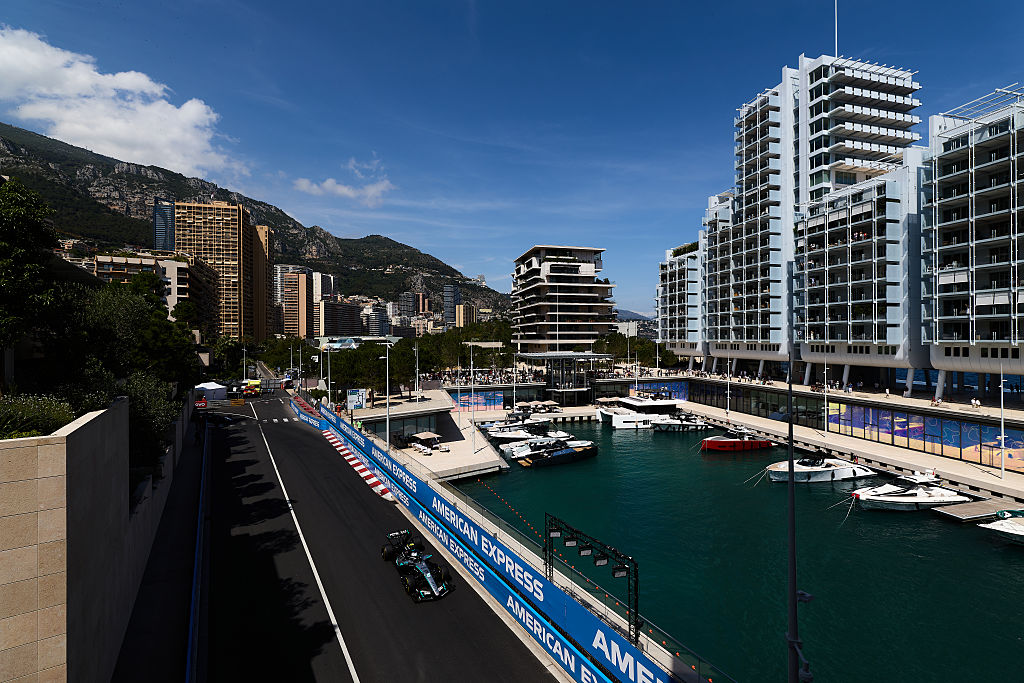
But if I can understand the logic behind increasing the Sprint numbers based on both commercial and sporting aspects, I’m far less convinced by the headline location for one of next year’s race. So the most obvious of the questions raised is, why the heck did they choose Monaco for a Sprint?
Just three days after the processional Spanish Grand Prix that had fans frustrated at the Madring layout, learning there will be two races in Monaco was a shock. After all, when the idea of a Sprint race was first introduced in 2021, F1’s then-managing director of motorsports, Ross Brawn, said: “I’m not sure this format would be as successful at Monaco.”
And yet, here we are.
The logic from Formula 1 is founded in qualifying often being the most exciting part of the Monaco weekend, so adding another qualifying session increases that potential.
And of the 17 races that have only seen three repeat winners, there have also only been six times that the qualifying sessions have seen the same car setting the fastest time.
I try to be optimistic as often as possible, and maybe having two exhilarating qualifying sessions and two boring races will still be an improvement on one of each, but I do fear having a Sprint will just remind everyone even more starkly of how little overtaking there can be in Monte Carlo. Whether that then heightens the excitement for Saturday’s qualifying session or just dampens the enthusiasm for the rest of the race weekend feels like a gamble.
But then, Monaco isn’t going anywhere, and under current regulations it remains a place you cannot overtake. So you might as well try something.
In 2021, Brawn also said: “I don’t think it’ll go to the whole season, I think it’ll be a limited number of races, but that is to be decided.”
If Monaco proves to be palatable using the Sprint format, then it’s hard to imagine any other circuit will be any worse, and maybe the door to a full F1 event format overhaul will have been opened.
Presented by:


Chris Medland
While studying Sports Journalism at the University of Central Lancashire, Chris managed to talk his way into working at the British Grand Prix in 2008 and was retained for three years before joining ESPN F1 as Assistant Editor. After three further years at ESPN, a spell as F1 Editor at Crash Media Group was followed by the major task of launching F1i.com’s English-language website and running it as Editor. Present at every race since the start of 2014, he has continued building his freelance portfolio, working with international titles. As well as writing for RACER, his broadcast work includes television appearances on F1 TV and as a presenter and reporter on North America's live radio coverage on SiriusXM.
Read Chris Medland's articles
For Ford Racing NHRA Funny Car ace Austin Prock, it’s a family affair
Latest News
Comments
Comments are disabled until you accept Social Networking Cookies. Update cookie preferences
If the dialog doesn't appear, ad-blockers are often the cause; try disabling yours or see our Social Features Support.