Jakob Ebrey/Getty Images
How two sliding door moments shaped WEC's Lone Star Le Mans
The 2026 edition of Lone Star Le Mans may ultimately be remembered as the race of two sliding door moments in Hypercar.
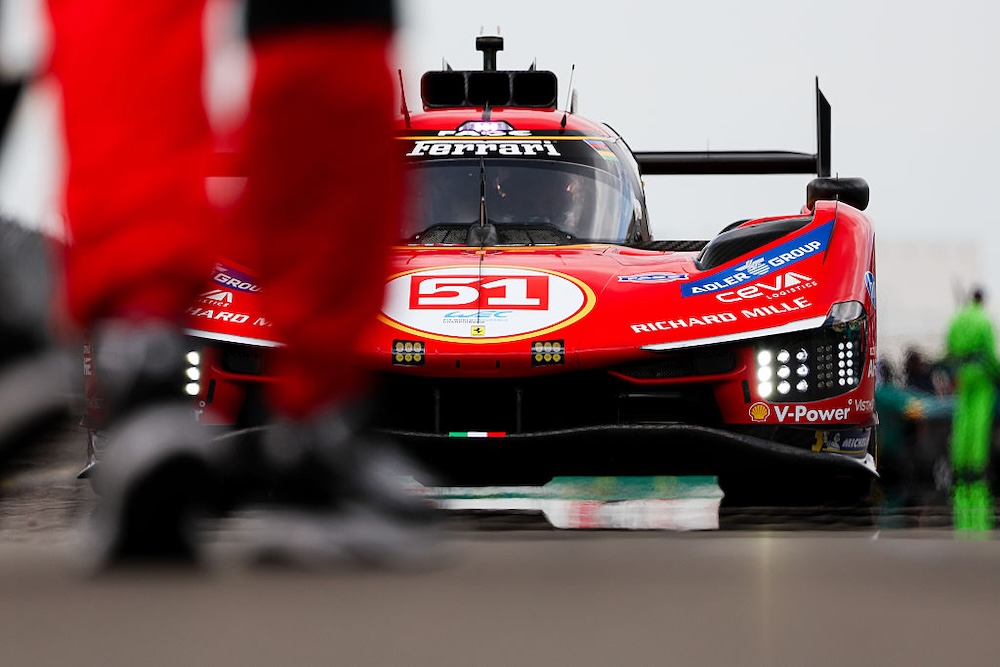
The first came before the first of the race's two safety car periods, when the pole-sitting No. 51 Ferrari (main image) surrendered around 45 seconds in the pits after an error from Antonio Giovinazzi forced James Calado to conduct a full power cycle to get the car out of the pit box.
Until then, the No. 51 looked like a race-winning car. It had the pace, it had control, and it was on course to give Calado, Antonio Giovinazzi and Alessandro Pier Guidi a maximum 26-point haul – one point for pole, and 25 for the win – that would have thrust the trio firmly into championship contention.
Instead, that single mistake set the car on a downward spiral.
Falling back into the chasing pack made things complicated, then late switch to hard tires failed to deliver the hoped-for performance, leaving Pier Guidi and later Giovinazzi unable to make meaningful progress in the closing stages. The result was a non-points finish for a car that, for much of the early race, looked on course to get get back to winning ways in convincing fashion.
“It was an error in Giovi's stint," Calado told RACER when asked about the slow stop. "When he came into the pits, it meant I had to do a full power cycle, there was confusion and we lost a lot of time. From then onwards, it didn't go to plan; it was messy, we had VSCs that set us back, and it was game over.”
If that was one side of the race’s what-if equation, the second was even more brutal.
With just 11 minutes remaining and the No. 7 Toyota leading, a freak hydraulic failure forced Nyck De Vries to retire the car in the dying moments. Toyota had been on course to leave Texas with a sizeable boost to its championship position. Instead, the failure opened the door for its rivals on a day when Rene Rast and Robin Frijns – tied on points with the No. 7 crew coming into the weekend – were nowhere on pace and finished outside the top 10.
Toyota’s technical director, David Floury, gave a blunt assessment to reporters post-race: “Yes (we are disappointed). We lost hydraulic pressure. We’ve never had this problem before. We’ve been fighting hard. It’s a shame. We had a chance to go score good points with both cars, and in the end we leave with not enough.
“When you fight for a championship, you need to have everything run perfectly. And today we had a problem with car No. 8 (which Floury wouldn’t elaborate on) that led to a drive-through and a problem with the No. 7 that led to retiring the car. You need to take every opportunity, and we did not. We cannot blame anyone but ourselves for what happened today.”
That retirement – the first for the No. 7 since Bahrain 2024 – transformed the complexion of the race.
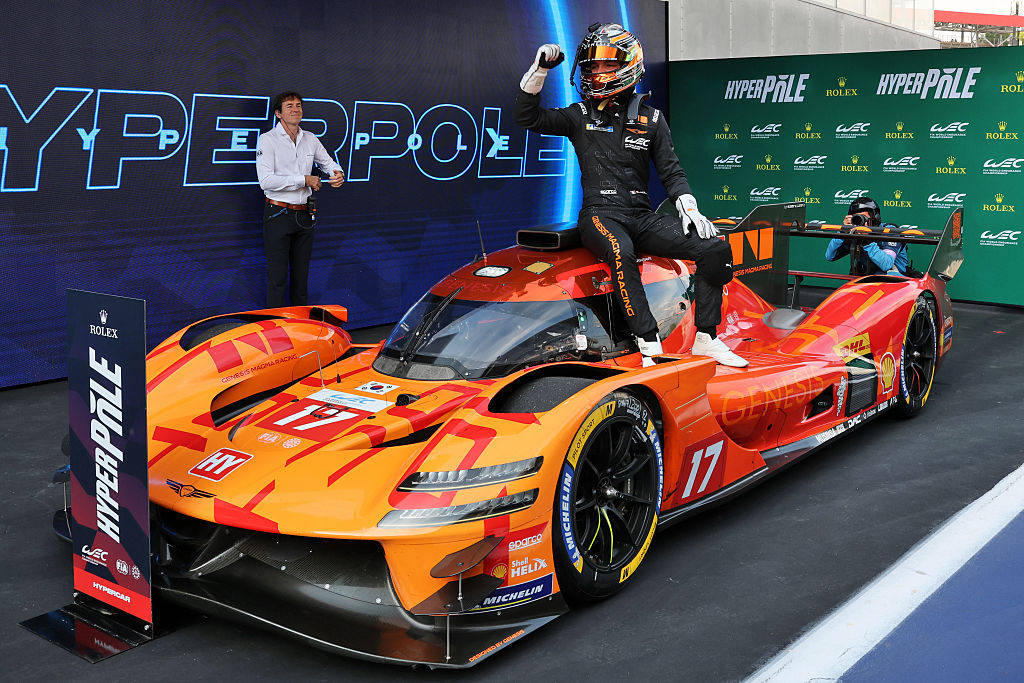
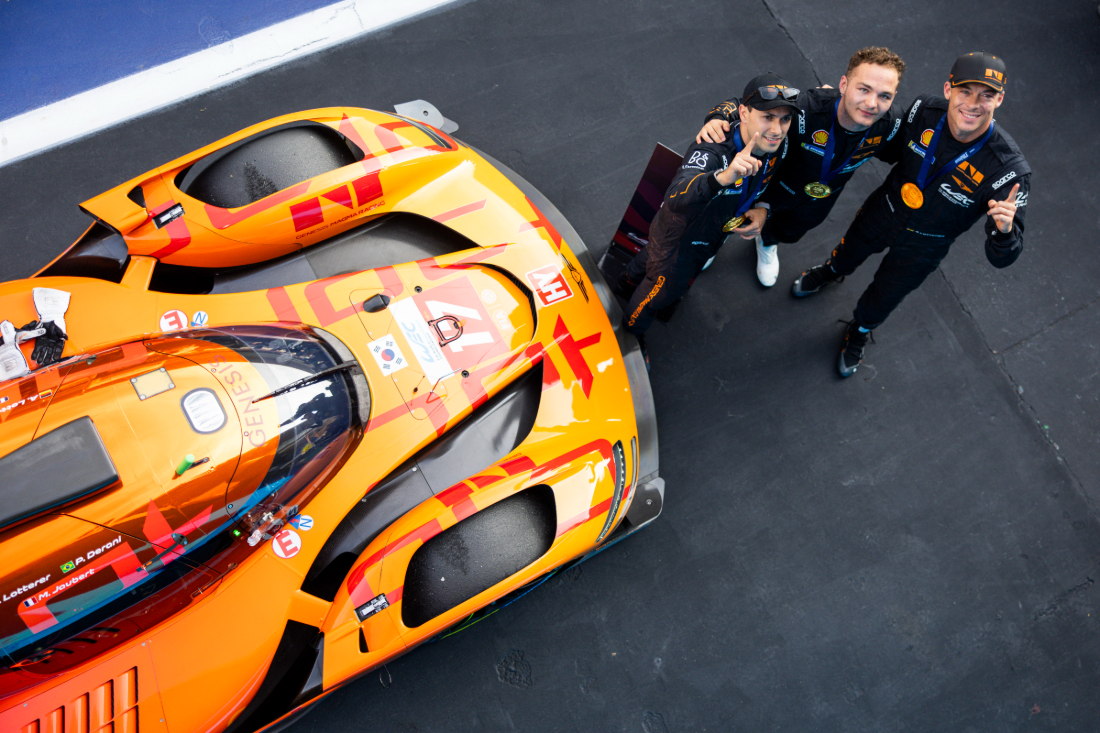
Ferrari’s sister No. 50 inherited the lead and went on to take victory with seven laps remaining, rewarding Miguel Molina, Antonio Fuoco and Nicklas Nielsen with a result that had looked increasingly unlikely as the race unfolded.
The No. 50 had shown the pace to win. Its decision to go off strategy early was effectively wiped away by the safety cars that repeatedly reset the field, but when the opportunities came, Ferrari was in position to take them.
And then the No. 7 failed.
The victory was the No. 50’s first since the season opener at Qatar in 2025 — a long wait, but one that suddenly looked worthwhile.
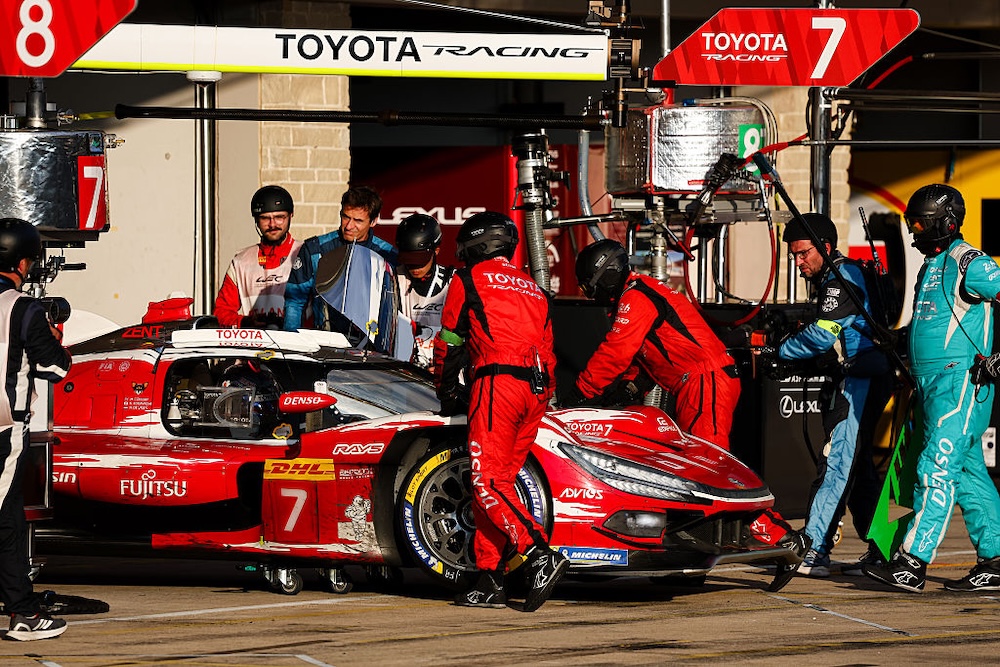
The No.7's retirement capped off a frustrating weekend for Toyota. Jakob Ebrey/Getty Images
“All we could do after the races we had at the start of the season was push here,” Nielsen said. “We knew it would be difficult to fight Toyota, and it didn’t seem like it was going to be our day, but it ended up like that. We were kind of a bit lucky, but on the other hand I think this has been a long time coming. We did a fantastic job all round; it was not an easy race.”
And that is perhaps the biggest takeaway from Lone Star Le Mans: in a championship this tight, being there to capitalize on freak incidents or failures can matter almost as much as having the outright pace.
With three rounds remaining, all carrying standard points due to the calendar change, the title fight is still open.
BMW’s Rast and Frijns remain tied on 75 points with Toyota’s Le Mans heroes Kamui Kobayashi, Mike Conway and De Vries at the top of the standings, as no points were scored by either crew in Austin.
“Unfortunately, we weren’t able to build on the strong first half of the FIA WEC season on this track and in these conditions,” Andreas Roos, the head of BMW M Motorsport, commented. “We were unable to deliver a flawless race with either car. The result, with eighth and twelfth place, is disappointing compared to what we have achieved so far with the BMW M Hybrid V8.
“Especially with car number 20, whose drivers are at the top of the title fight, points would have been important. In the end, we benefited from the retirement of the No. 7 Toyota. I feel sorry for our competitors, who did a great job and would have deserved the win.”
The No. 8 Toyota of Brendon Hartley, Ryo Hirakawa and Sebastien Buemi sits fourth on 64 points after closing the gap by eight points with its result.
Ferrari’s No. 51 trio are fifth on 58 points, while the full-season No. 15 BMW drivers Kevin Magnussen and Raffaele Marciello and the race-winning No. 50 499P crew are both 21 points behind the leaders, level on 54 points in sixth and seventh respectively.
With 78 points still available, nobody can afford really another bad day if they want to stay in the mix come November.
The manufacturers’ battle is no less intriguing.
Toyota leads the FIA Hypercar Manufacturers’ World Championship on 140 points. Had the No. 7 made it to the finish, that advantage over BMW would have been considerably healthier. Instead, BMW remains within striking distance on 131, while Ferrari has quietly eaten into the deficit and now sits just 26 points behind in third. And Ferrari still has Monza to come in November – a second race on home soil.
Lone Star Le Mans this year was a difficult race to assess. There was no shortage of action, drama or strategic intrigue. Though there were also moments when it became messy and perhaps a little too feisty, while the timing of the safety cars repeatedly reset the race and robbed us of the chance to see whether some of the alternative strategies employed early on would have worked.
But perhaps a race like that taking place at this stage in the season is fitting, because the defining moments were not necessarily the ones anyone could have predicted. Ferrari’s No. 51 lost its chance through a costly pit-lane error. Toyota’s No. 7 lost its lead through a hydraulic failure that had never happened before. And Ferrari’s No. 50, having put itself in position, was there to pick up the pieces.
In a BoP managed championship this close, those moments can become the difference between fighting for a title and watching someone else lift it. You can have the best car one week, then struggle to fight for points the next, so you have to maximise the weekends when everything is in place for success.
Fuji is next, followed by a return to Europe for races at Barcelona and Monza. When the World Champions are crowned, Lone Star Le Mans may prove to have been a major turning point on the road to deciding which manufacturer, and which drivers, head into the off season with the most important silverware.

Stephen Kilbey
UK-based Stephen Kilbey is RACER.com's FIA World Endurance Championship correspondent, and is also Deputy Editor of Dailysportscar.com He has a first-class honours degree in Sports Journalism and is a previous winner of the UK Guild of Motoring Writers Sir William Lyons Award.
Read Stephen Kilbey's articles
Latest News
Comments
Comments are disabled until you accept Social Networking Cookies. Update cookie preferences
If the dialog doesn't appear, ad-blockers are often the cause; try disabling yours or see our Social Features Support.