Mark Sutton/Getty Images
ICA hits back at Briatore’s impartiality claims
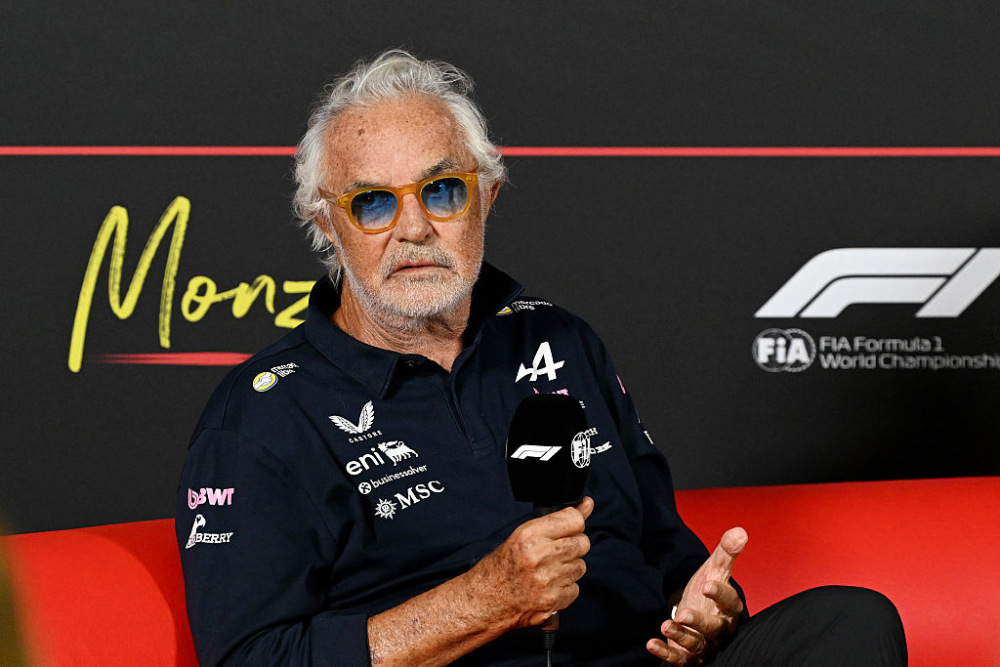
The FIA International Court of Appeal (ICA) has responded to claims from Alpine executive advisor Flavio Briatore that one of the judges in a recent case that went against his team had links to McLaren.
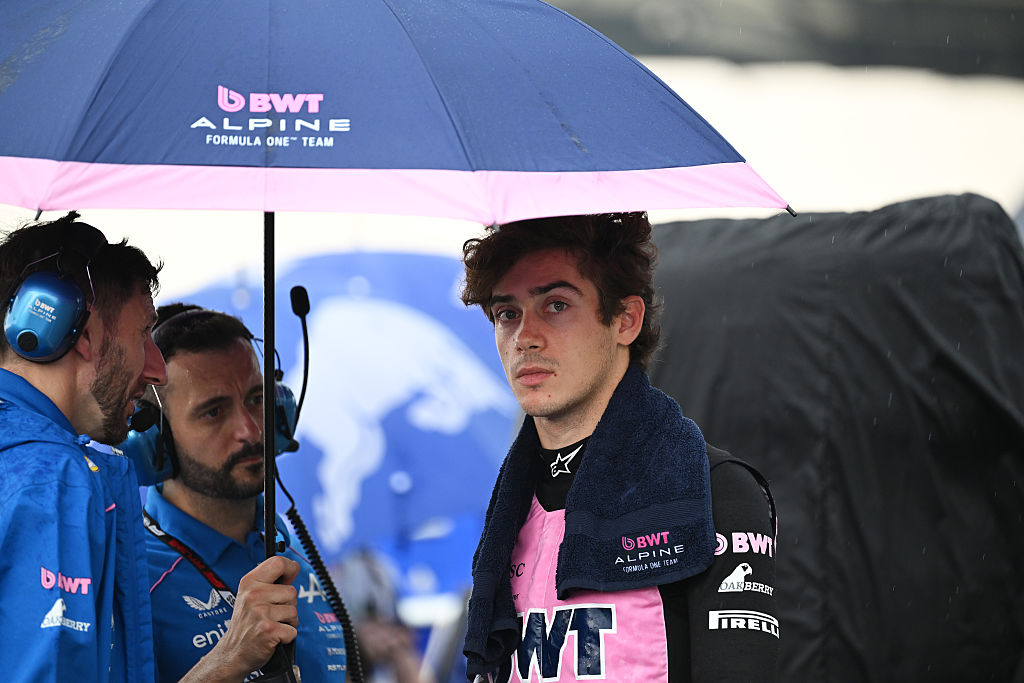
Both McLaren and Red Bull went to the ICA for a ruling on the pit lane speeding penalties that were handed out in the Monaco Grand Prix, after Alpine had originally managed to get Pierre Gasly’s punishments rescinded. While many drivers were penalized during the race for exceeding the pit lane sped limit, two time penalties were added to Gasly’s race time, but he was awarded a podium finish after they were removed.
The ICA agreed with McLaren and Red Bull that the pit lane speed parameters – that were erroneously set as part of the official timing system – had to be applied consistently, regardless of whether there was a chance drivers had not exceeded 60km/h, reinstating Gasly’s penalties and demoting him to seventh in the final classification.
Isack Hadjar regained his podium finish as a result, but Briatore then claimed one of the judges – who he named as American Filippo Marchino – had “a very good relationship with McLaren,” leading the ICA to respond on Saturday morning.
“The FIA Courts are aware of public comments questioning the independence and impartiality of the judges of the panel that decided Case ICA-2026-06-07-08-09,” the statement read. “The FIA Courts wish to make clear that the appointment and participation of the judges in that case, like for any other case, were conducted in accordance with the applicable FIA judicial procedures and usual practice, which are inspired by the highest standards like the IBA Guidelines on Conflicts of Interest in International Arbitration.
“All judges are elected by the FIA General Assemblies, some of them upon proposition of a group of at least five F1 teams in accordance with the FIA Statutes. They are all subject to the independence and confidentiality requirements contained in the FIA Judicial and Disciplinary Rules, make annual disclosures of interests to the FIA Compliance Officer, and sign a specific declaration of independence for each particular case in consideration of the issue at stake and the parties involved, which is served to the parties.
“At both the beginning and conclusion of the hearing, the parties were invited to raise any issue concerning the proceedings or the composition of the Court. None did so. No objection was raised during the hearing concerning the manner in which the Court questioned the witness or conducted the proceedings.
“The ICA emphasizes the importance of constituting panels with judges from different cultural and geographical backgrounds. This helps ensure that the deliberations and discussions reflect a diversity of legal traditions, perspectives and approaches, further strengthening the fairness, independence, credibility of the process and access to a fair trial.
“A Court’s decision can leave room for various interpretations and comments as for its legal merits; that is fair and accepted by all the judges. The Court is confident in the soundness of the proceedings and the integrity of the judges. The FIA Courts remain committed to the independence and impartiality of their judges and to the integrity of the judicial process.”

Chris Medland
While studying Sports Journalism at the University of Central Lancashire, Chris managed to talk his way into working at the British Grand Prix in 2008 and was retained for three years before joining ESPN F1 as Assistant Editor. After three further years at ESPN, a spell as F1 Editor at Crash Media Group was followed by the major task of launching F1i.com’s English-language website and running it as Editor. Present at every race since the start of 2014, he has continued building his freelance portfolio, working with international titles. As well as writing for RACER, his broadcast work includes television appearances on F1 TV and as a presenter and reporter on North America's live radio coverage on SiriusXM.
Read Chris Medland's articles
Latest News
Comments
Comments are disabled until you accept Social Networking Cookies. Update cookie preferences
If the dialog doesn't appear, ad-blockers are often the cause; try disabling yours or see our Social Features Support.