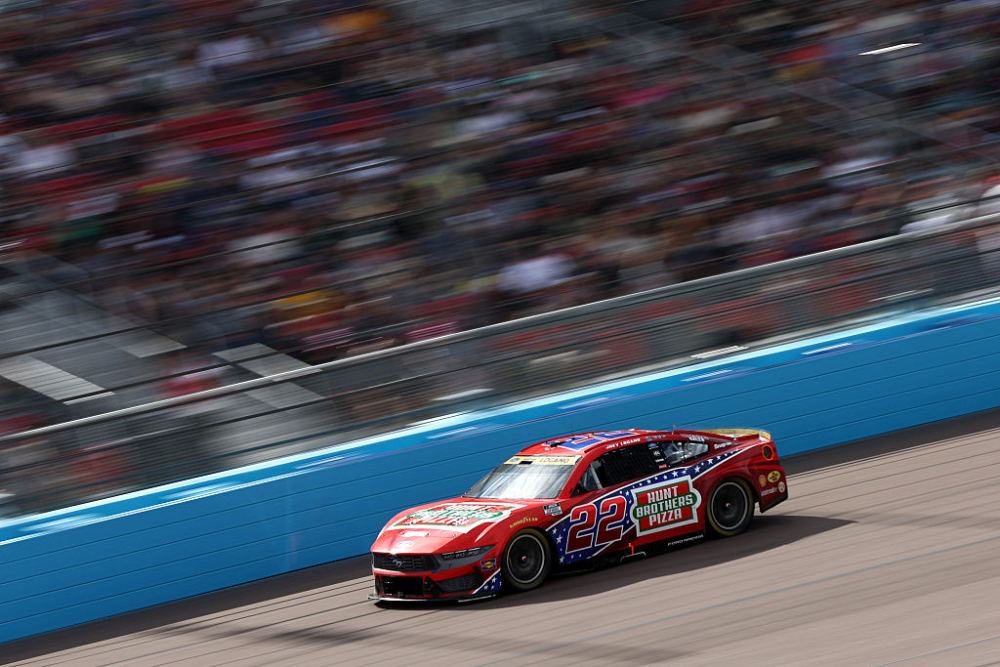
Steven Tee/Getty Images
Prepare for a very different F1 race at Monza
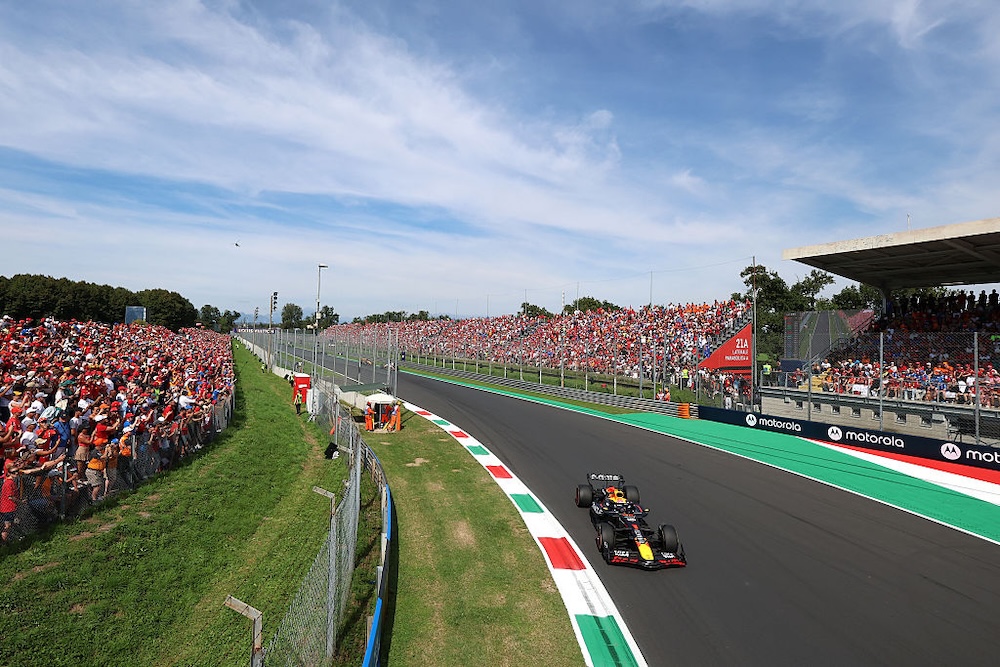
Certain aspects of the Italian Grand Prix at Monza never change. The tifosi turn out in their thousands to support Ferrari and flood the track under the iconic podium to show their allegiance, whether a red car has won or not.
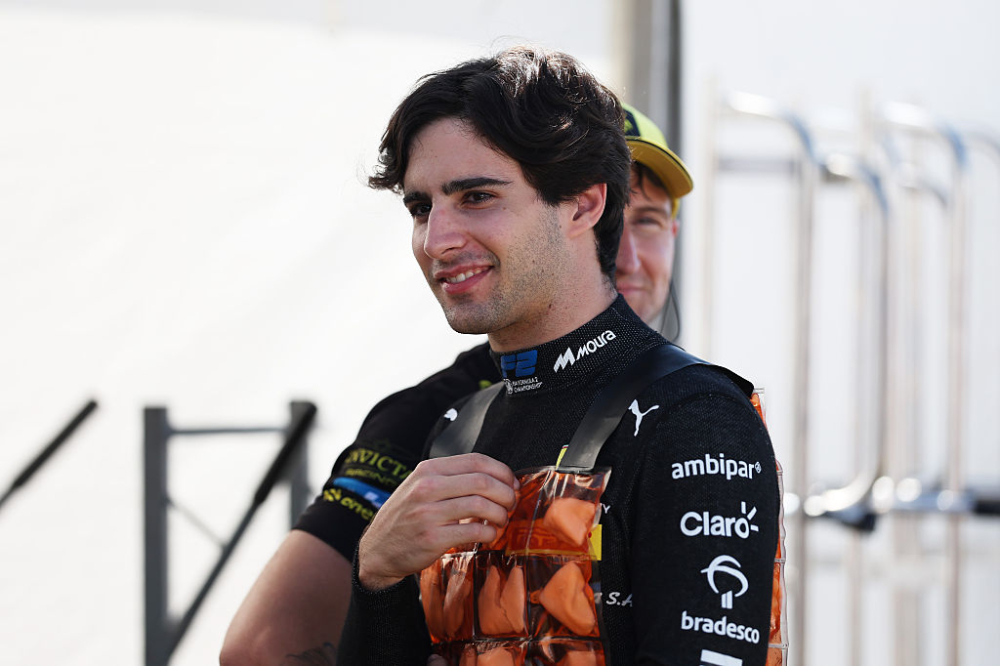
This year there’s even an Italian championship leader to get excited about, although Kimi Antonelli’s chances of adding a victory in front of his home fans appear slim due to a power unit penalty.
But there will be a very different flavor to this weekend’s action on track as a result of the 2026 regulations, and it’s one that is likely to be particularly grating throughout the opening two days of running.
Fresh from the Hungaroring and Zandvoort – two energy-rich venues that ensured the strategic focus was on tire life and performance – Monza is a track that requires an enormous amount of full-throttle usage, and with it, the electrical energy that can be challenging to harvest.
The FIA has prescribed the the lowest maximum recharge levels per lap yet to try and reduce super clipping, and while the big stops into the first two chicanes offer an opportunity to replenish the energy store, the length of the straights means drivers are going to be running out of power long before the next braking zone.
“Even when they turn down the energy, it all depends,” Sergio Perez said. “You're going to get into this situation where if you went half a percent too much in one corner on throttle, it's going to cost you even a few tenths. Belgium was very critical in that regard, and I expect that here it's going to be the worst of them all.
“I think it's definitely [noticeable] over one lap. Driving to this Turn 1, I think you're going to be downshifting on the straight. Above 300 (kph), you're going to be downshifting, so it's going to be a bit different to what we are used to.”
Although using the same power unit as a customer team, there was a different outlook from Esteban Ocon. The Haas driver believes the steps taken by the FIA both throughout this season and for Monza specifically has reduced how painful the track will be from a driver’s point of view.
“There are some stuff which are quite odd,” Ocon said. “Like in the slow laps, for example, we are not allowed to recharge a lot. So we are going to have to go very slowly and not deploy. Because if you deploy a little bit, you start your lap with less battery, for example. So those are some odd stuff.
“But I think the regulations have improved massively. The automatic launch, how the engines are working in general – it is much more detailed and there are less weird differences.
“Sometimes when you drive, there are still differences. If you don't use the right gears, if you go on throttle earlier and stuff. But a lot less. And in the simulator, it was actually not as bad as I thought it was going to be. So we will see if it materializes.
“You clip obviously earlier. But we are still not going to have to do lift and coast and these kind of things. I think by reducing that [harvest limit], you make sure that you don't do lift and coast or weird driving. And there was none of that at the moment. So that's good.”
A pleasant surprise it might prove to be for those behind the wheel, but that does come with the caveat that their prior expectations were low. Lewis Hamilton’s took his first seven starts at Monza with a V8 even prior to the power of the V6 turbos that followed, and believes the ‘Temple of Speed’ will see a clear step down when it comes to headline numbers.
“It’s always tough with these cars to manage the power units,” Hamilton said. “It’s kind of crazy to come here. We probably have more downforce through the corners than we did last year because, obviously, with the drag reduction system – we run the same wing that we ran in the last race, for example, but obviously down the straights with the reduction system, it’s still quick, but then we lose this power.
“We arrive maybe 20 or 30 kilometers slower than we have in the past at the end, going into the corners, which will probably take some getting used to. It was always amazing to arrive here and just hear the engine screaming at the end of the straight and pulling and pulling and pulling just up into the braking zone. That won’t be the case this weekend.
“Likely, the drivers will be downshifting before they get to the braking zone, which, for me, still doesn’t feel ultimately the best, but it is what we have. And optimizing how you apply your throttle and get into full power, activating these systems, the situation we have. I mean, it’s all very, very technical and tricky, and we’re all faced with the same issue."
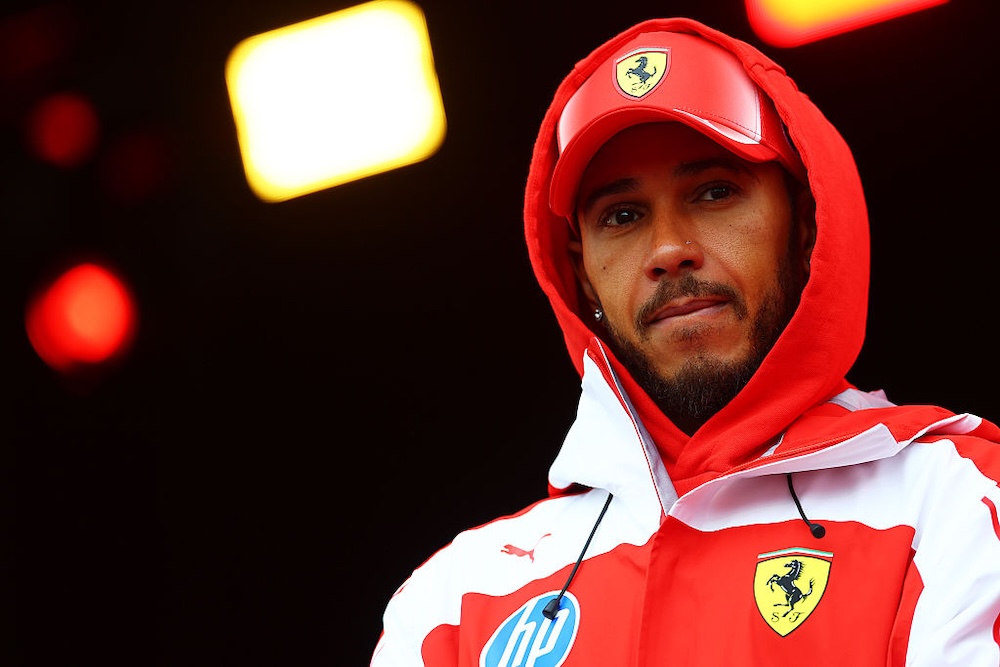
Part of Monza's appeal in the past has been the sight of cars screaming down long straights into the braking zones, but Lewis Hamilton doesn't expect that to be possible under the 2026 regulations. Bryn Lennon/Getty Images
It's true that all of the drivers have to deal with the same regulations, but whatever the distance proves to be, no driver is going to feel it more than Yuki Tsunoda. The Red Bull reserve driver makes his second appearance for Racing Bulls due to Isack Hadjar’s injury, and Tsunoda is aware his first outing was particularly kind to him when it came to getting his head around the new style of racing.
“I think the Netherlands was, fortunately, one of the easiest tracks to manage the energy,” Tsunoda said. “I was able to adjust the car pretty smoothly. But now it's the most difficult track for that energy deployment, and I already experienced in the simulator how different it is, and it really kicks in the challenges of this regulation.
“So, the management, braking early or whatever, those things we have to practice. In the simulator it feels really weird, because I know I can drive faster, but you cannot because otherwise in the total lap time you'll be slow. So that will be the biggest challenge for me.
“I think it will be more challenging in the race condition, because this kind of strategic battle with the energy management, with other cars, I didn't do that. Probably the other cars know what the car is going to do after they use the battery to overtake or defend or something.
“I only know from the simulator, and the Netherlands was probably the least powerful. You use [the battery] only on one straight, so you're going to reach [full charge] anyway before the main straight.
“So that will be the biggest challenge that I'm thinking about in race conditions. In the short run, I would say I'm not worried as much, because you have free practice anyway, so you can focus on yourself, but in the race condition, you have to be proactive. That's the only thing that I have to be more prepared for, for sure, than the Netherlands.”
All of that said, there’s a reason it's the first two days of track running that are likely to stand out the most. Come race day, the challenges of the circuit layout could well lead to more racing action than usual, as drivers try and work out how best to make an overtake stick.
At least, that’s the theory that Mercedes and Kimi Antonelli have been working to by choosing Monza as the location for the championship leader to start from the back of the grid and take a new power unit.
“I think because it's a very energy-starved circuit, I think it creates a lot of opportunities to overtake,” Antonelli said. “And that's why this track was the main one.
“It was the one that we chose to take the penalty because there are other tracks where it's possible to overtake, but this one, because it's very energy-starved and there are a lot of places where you can play differently as well, that gives us the best chance to climb through the field. And that's what we feel is the best, and that's why we took this decision. And hopefully it's going to work out on Sunday.”
Whether you’re an Antonelli fan or not, you are probably hoping Mercedes will be proven right, in which case Sunday could more than make up for the potentially strange sights and sounds that the weekend is likely to deliver.
Chris Medland
While studying Sports Journalism at the University of Central Lancashire, Chris managed to talk his way into working at the British Grand Prix in 2008 and was retained for three years before joining ESPN F1 as Assistant Editor. After three further years at ESPN, a spell as F1 Editor at Crash Media Group was followed by the major task of launching F1i.com’s English-language website and running it as Editor. Present at every race since the start of 2014, he has continued building his freelance portfolio, working with international titles. As well as writing for RACER, his broadcast work includes television appearances on F1 TV and as a presenter and reporter on North America's live radio coverage on SiriusXM.
Read Chris Medland's articles
Latest News
Comments
Comments are disabled until you accept Social Networking Cookies. Update cookie preferences
If the dialog doesn't appear, ad-blockers are often the cause; try disabling yours or see our Social Features Support.