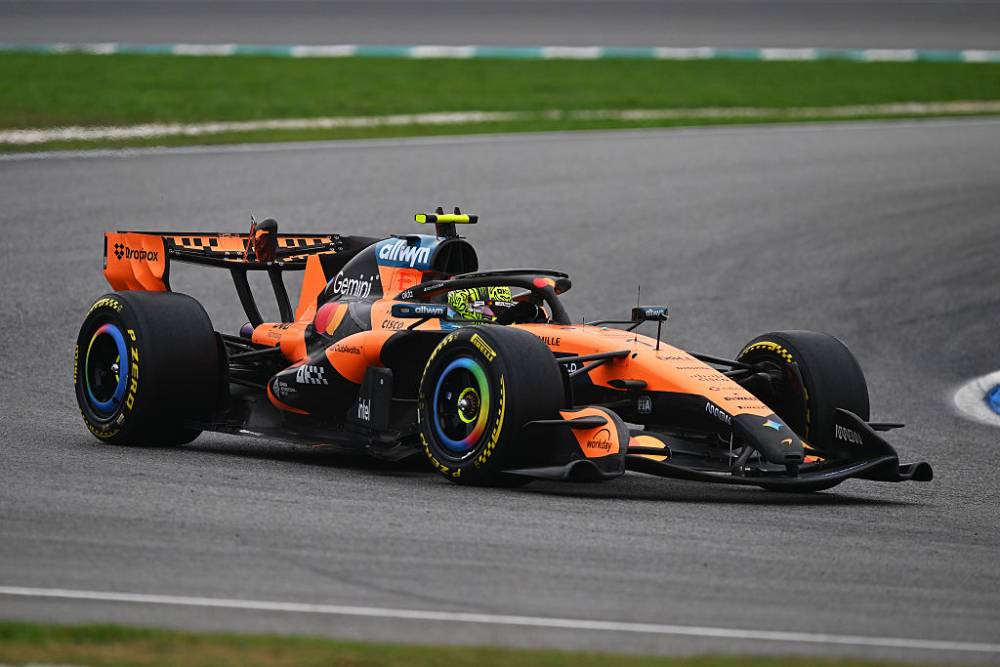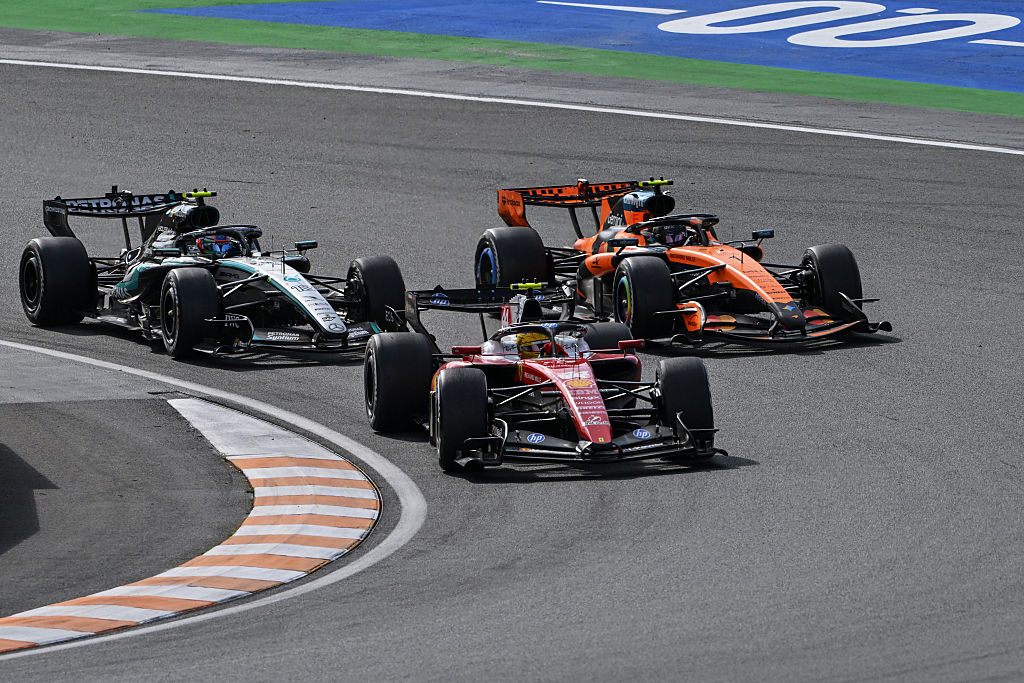
Michael Potts/Getty Images
Ferrari’s Vasseur revolution is on target, whatever happens at F1’s Italian Grand Prix
At Monza, Ferrari is everything. The tifosi expect greatness, often out of proportion to what is realistic. In the past 20 years, a Ferrari driver has only won the Italian Grand Prix four times, and expectations for the weekend should be kept in check despite the planned introduction of an engine upgrade. But however it performs at F1’s fastest track, it won’t resolve the question about whether Ferrari has made a good or bad start to the new regulations era.
The positives are clear. The Ferrari is arguably the strongest car on the grid aerodynamically, with a healthy level of downforce and decent efficiency combined with a good mechanical package, albeit one that has at times struggled with the rear tires on traction-heavy circuits. Lewis Hamilton is revitalized, and while Charles Leclerc is not having his easiest year he and his teammate have bagged a win apiece. Both drivers are lurking on the outer fringes of the championship fight, and Ferrari is second in the constructors’ standings.
The negatives are just as obvious. The power unit disadvantage has put Ferrari on the back foot with a car that’s weaker in qualifying than race trim. This has often left its drivers limited by track position and not able to capitalize consistently on its long-run pace. These weaknesses have turned a potentially dominant chassis into merely an occasional race winner.
For most, this would be a good situation. Ferrari is far ahead of the seven teams comprising the midfield pack, and even winless Red Bull would be delighted to be grappling with the disappointment of having won just twice. There is always something holding it back, a missing piece of the puzzle that undermines its prospects. The expectations of frenzied Ferrari fans don’t come from nowhere. Ferrari has the status, the resources, the drivers, the personnel and the facilities to be winning titles regularly, yet is enduring the longest drought in its history with 18 barren seasons under its belt – already two seasons more than the previous record of 16 between the 1983 and ‘99 constructors’ crowns.
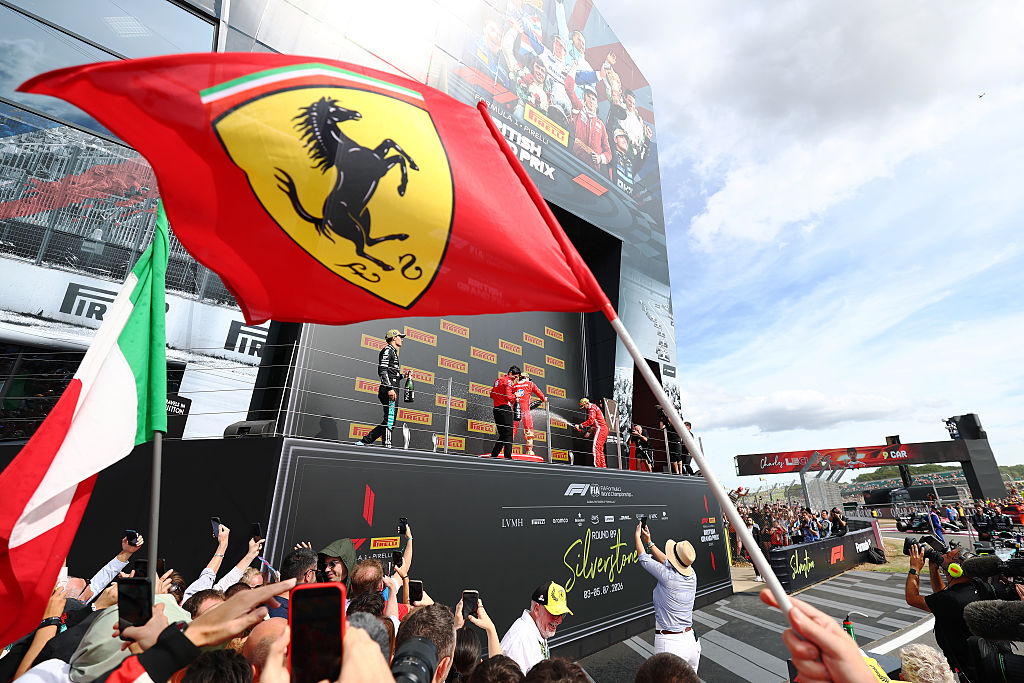
Ferrari is back on winning form, but another step is required for a title run. Simon Galloway/Getty Images
During this spell, there have been periods of transient success, but Ferrari has won only 39 grands prix – a rate of one in 11. This includes years when Ferrari started rules cycles poorly (2009 and 2014), lost out on titles in the final race (2010, 2012 and 2024), flirted with a title challenge but not sustained it (2017, 2018 and 2022) and even managed five seasons without winning a single race. There have also been moments of upheaval, with leadership changes meaning five different team principals have presided over this period of underachievement. Ferrari has bounced between being on an upward trajectory and slumps, with the nadir in 2020 when Ferrari plummeted to sixth after having to modify its engine thanks to a confidential settlement reached with the FIA amid unproven suspicions it had at times been running its power unit illegally.
On paper, this year seems a reasonably promising start to the new regulations era, but contingent on it continuing to improve. The question can only be answered by 2027, so the only indication right now we have on that is the direction of travel. And that, after all, has looked positive before, only to be followed by the inevitable disappointing downturn.
What is encouraging is the stability. There’s always the risk this is a mirage and some disruptive event is brewing behind the scenes that could change this picture, but there’s been no repeat of last June’s rumblings about Vasseur’s position. This is a significant positive.
Vasseur is a racing team man through and through. He understands what it takes to succeed in F1 and has been very effective in modifying Ferrari’s mindset to one more focused on the process and ignoring the distractions of the outside world. While he could perhaps be a little more adept in his public statements to calm the external tumult, what matters most is his leadership inside the team. To understand how effective that is, you need only listen to the strong support both Leclerc and Hamilton give him, which goes far beyond that demanded by duty or good PR common sense. Hamilton credits Vasseur with pushing through the changes to the team’s working methods that were key to his turnaround, while Leclerc has consistently highlighted how clear and effective his leadership has been. Couple this with the good upgrade progress made this year, something that should continue with the power unit step for Monza and associated car upgrades, and there is clearly momentum building even if this is not enough for it to get into the title fight this year.
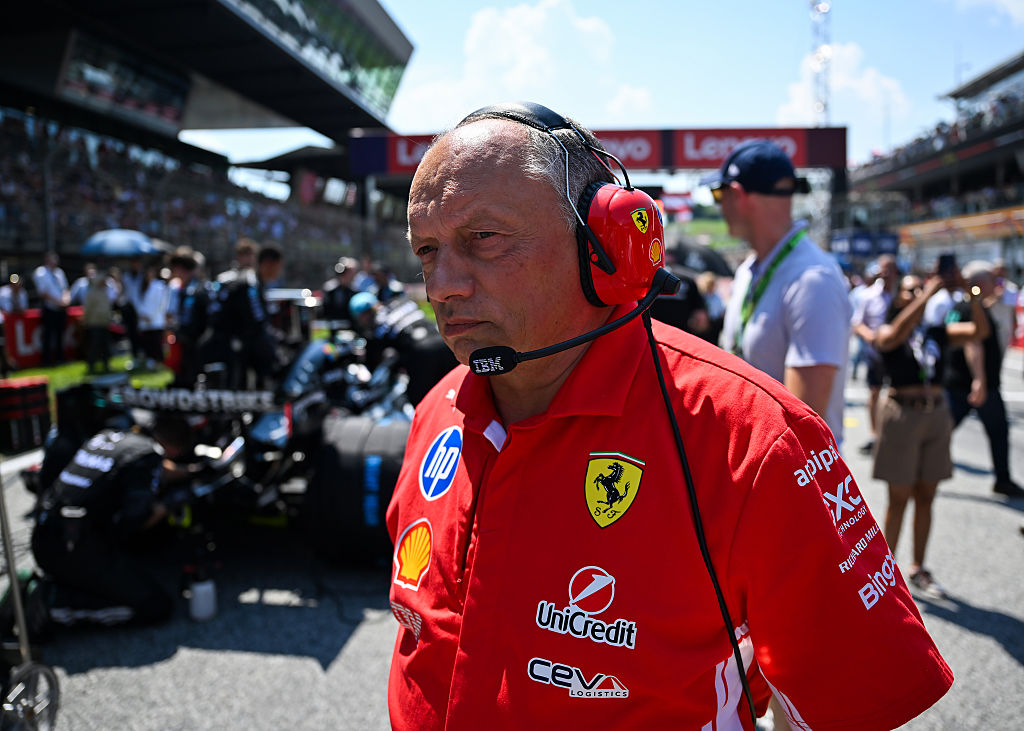
"Vasseur is a racing team man through and through. He understands what it takes to succeed in F1 and has been very effective in modifying Ferrari’s mindset to one more focused on the process and ignoring the distractions of the outside world." Michael Potts/Getty Images
“It’s very impressive,” says Leclerc of Ferrari’s in-season development. “We've had a very aggressive approach this year compared to others. First, in terms of innovation, and I think this is a very positive sign to show that we are innovating and getting out of our way to try and find solutions around the regulations, and second, the very aggressive plan of bringing upgrades. Production has done an incredible job for that first half of the season to work flat out in order for us to receive the parts as early as possible, and it's making a lot of difference in a year like this where we are so early in the development and every upgrade you bring makes such a big difference.”
The key question is whether this momentum can continue. There has already been one major bump in the road since Vasseur took over the team from Mattia Binotto, who now leads the Audi F1 project, in December 2022. This came last year. After missing out on the constructors’ championship by 14 points in '24, expectations were high for ‘25 but Ferrari failed even to win a race. That wasn’t for lack of ambition, as the belief it had hit a ceiling for extracting downforce with its ‘24 car led to significant changes, such as a change to pull-rod front suspension, the moving of the cockpit rearward and resulting shortening of the gearbox to create greater aerodynamic opportunity.
It didn’t work, partly because the car couldn’t run at the ride height it was conceived around because of skid-wear problems, with inconsistent through-corner balance and a narrow setup window making it a painful year. This season has been strong enough to put Ferrari back in the mix for wins, but it’s understandable that doubters will question whether the same will happen again after more than a decade-and-a-half of promising progress being undercut by regression.
Leclerc – who regularly restates his dream is to become world champion for Ferrari and put his signature where his mouth is by signing a new contract earlier this year – is certainly convinced. And it’s the technical progress, despite the problems, that he cites for that.
“There is a very clear development program; there are still many things we want to improve,” says Leclerc. “It was very clear what the main limitations of this first part of the season were – the engine, the power, compared to Mercedes and Red Bull power unit is where we’re lacking the most, that’s where our focus is. The program is already set, we know where we want to go.
“I don’t think we’ve had particularly bad surprises throughout the first half of the season. With the past generation of cars, the fact that cars were touching a lot on the ground was very difficult – you wouldn’t get what you had in the wind tunnel. We didn’t really have that this year. That’s very positive for the development and the future things we want to bring on the car.”
Hamilton is similarly positive, but consistently brings the focus back around to the power unit side.
“We’re getting closer to them, but it’s half a season we’ve been down on power,” says Hamilton. “We really need to pick up the power if we’re going to be anywhere near trying to fight them, closing the gap to them.”
The anticipated Monza upgrade – which is permitted under the FIA’s ADUO (additional development and upgrade opportunities) mechanism that deems the Ferrari V6 to be more than 4% off the benchmark that is Red Bull – is the key moment that will dictate whether or not Ferrari can haul itself into the title fight. There will still be a deficit – it’s naive to imagine that won’t be the case – but it at least will mitigate a disadvantage.
However, it doesn’t matter whether or not this goes down as another of those years where Ferrari wins occasionally but fails to mount a title challenge. There are signs this really can be the step on the journey back to the top of F1, meaning that the tifosi, and crucially Ferrari’s wider leadership, must hold firm and support Vasseur’s Ferrari revolution. Even if it is, by necessity, a frustratingly slow one.
Edd Straw
Edd Straw is a Formula 1 journalist and broadcaster, and regular contributor to RACER magazine. He started his career in motorsport journalism at Autosport in 2002, reporting on a wide range of international motorsport before covering grand prix racing from 2008, as well as putting in stints as editor and editor-in-chief before moving on at the end of 2019. A familiar face both in the F1 paddock, and watching the cars trackside, his analytical approach has become his trademark, having had the privilege of watching all of the great grand prix drivers and teams of the 21st century in action - as well has having a keen interest in the history of motorsport. He was also once a keen amateur racing driver whose achievements are better measured in enjoyment than silverware.
Read Edd Straw's articles
Latest News
Comments
Comments are disabled until you accept Social Networking Cookies. Update cookie preferences
If the dialog doesn't appear, ad-blockers are often the cause; try disabling yours or see our Social Features Support.