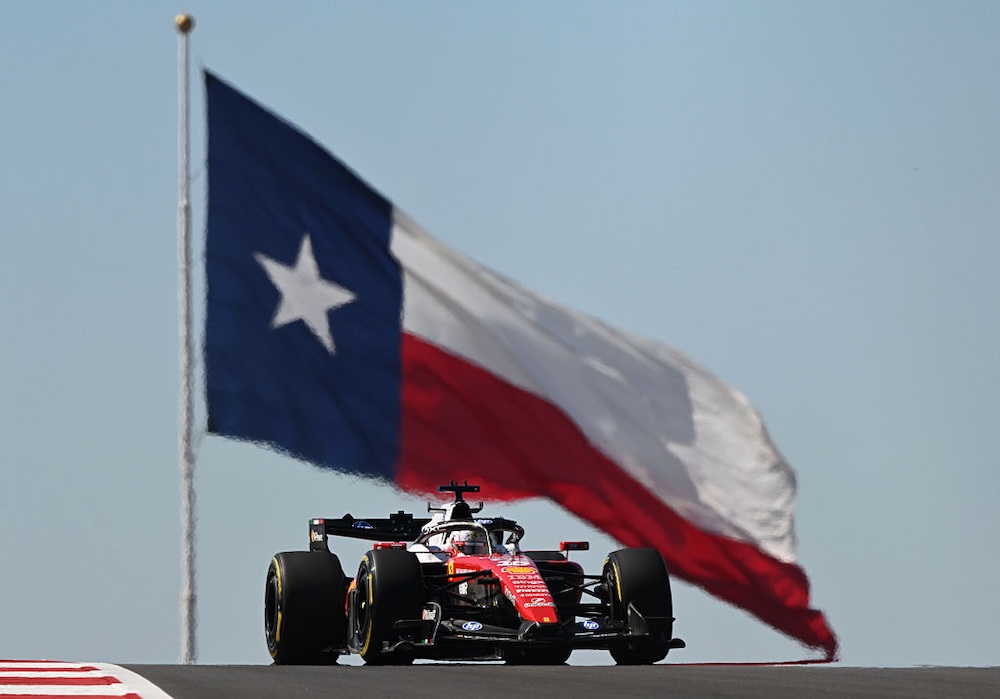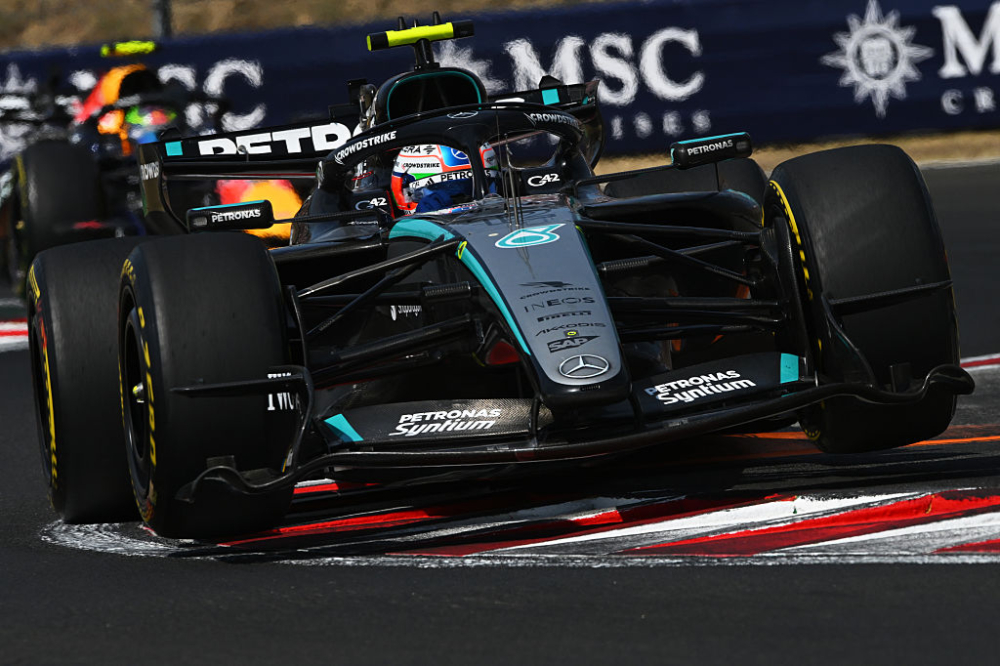
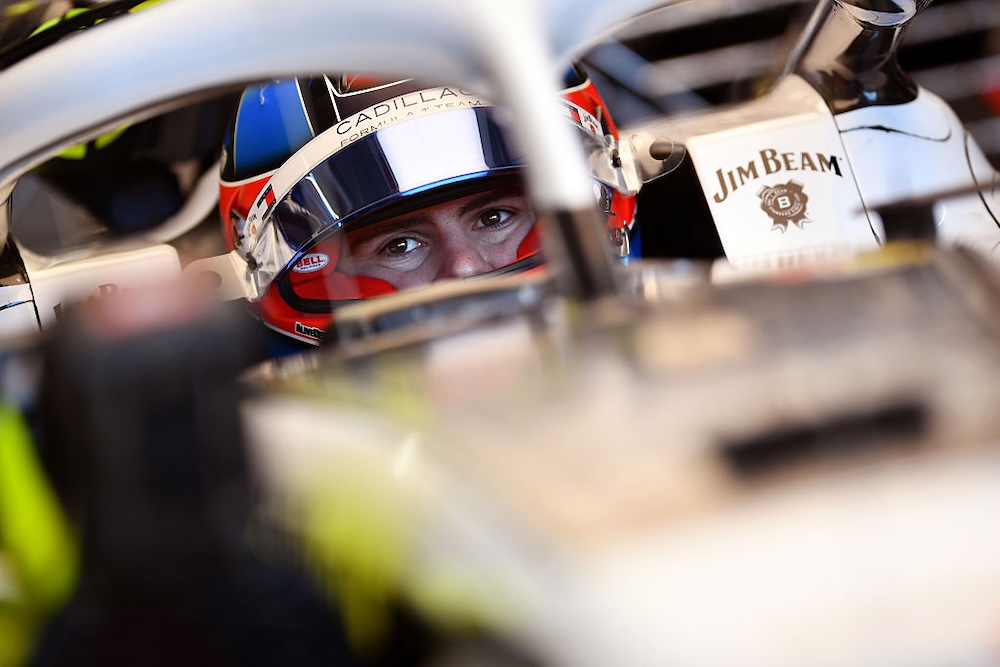
Rudy Carezzevoli/Getty Images
Antonelli's already on top, but he's still not the finished article
Few would have predicted Kimi Antonelli would lead the world championship by 50 points at the August break. Much of the narrative of the season has focused on preseason favorite George Russell’s fluctuating form, driving-style adaptation challenges and deployment troubles, but for Antonelli to be in so strong a position, 59 points clear of his teammate with Lewis Hamilton his nearest challenger, required him to do far more than simply pick up the pieces. He has been the stronger Mercedes driver by a significant margin.
It’s remarkable that a driver who doesn’t turn 20 until later this month is able to perform at this level. Nobody doubted the underlying quality of Antonelli, but the stride he has taken since 2025 is astounding. Most terrifyingly for the opposition, he is still very much a work-in-progress, with obvious rough edges to be smoothed out. Yet even with significant upside to come as he builds experience, Antonelli has put himself in a strong position to win the world championship.
Antonelli’s sheer speed has never been in doubt. He’s been fast in everything, stretching back to his karting days, and even when he had a tough season with struggling Prema Racing in 2024 his class shone through. However, this has not been the campaign of a fast-but-ragged driver to the point where what has impressed the most is a quality usually attributed to no less than Fernando Alonso. Just like the Spaniard, Antonelli is relentless in races.
That’s no better illustrated than by a weekend that few will remember from 2026 in terms of his performance – the Barcelona Grand Prix. Russell was crushingly dominant in practice, with Antonelli qualifying 0.319s slower and in third place. All the signs were that Russell might have emerged from his early-season funk and put what he saw as his junior teammate in his place. Yet come the race, Antonelli was consistently fast, overtaking Russell for second place in the final stint before a battery-related problem put him out. Yes, an error at the final stop with the front-wing adjustment meant Russell was plagued by oversteer, but that simply magnified Antonelli’s race-pace advantage.
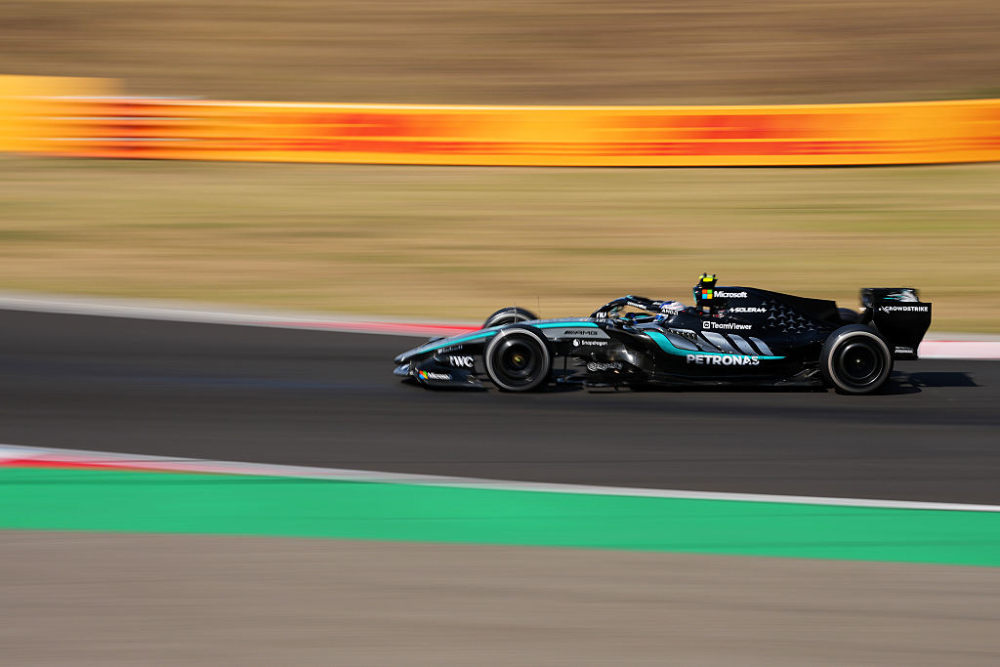
Antonelli's race pace has never been in doubt. Sona Maleterova/Getty Images
Antonelli is always on the pace on race day. His driving style doesn’t map directly onto Alonso’s, but there are some characteristics in common in terms of how adaptable it is. Antonelli, like Alonso, is tremendously sensitive, able to adapt to evolving conditions, reacting instantaneously to micro-slides and the tiny, imperceptible to most, signals he receives through the steering, pedals, tires and all the other sensory inputs available to the driver. During the Barcelona weekend, he struggled to put together the tire management equation for a single lap given the price paid for sliding, but once in the race he was stunningly fast.
This has stood out race after race, and not just in the ones he won. Monaco, where he won from pole position and showed impressive fortitude to hang onto the advantage of the lead through two standing starts (one after the red flag) despite struggles with launches in the early stages of the season, and also survived a safety car restart, is his calling card weekend. But it’s also how effectively he stayed clear of Russell for his first win in China, the mighty pace at Suzuka that likely would have allowed him to win the race even without a conveniently-timed safety car, covering the threat of Lando Norris in Miami, the edge he had over Russell in race conditions in Canada even if he couldn’t make it count before his teammate’s retirement handed over the lead, the well-paced charge to victory at Spa after reeling in Charles Leclerc.
Then there’s races such as Silverstone, where he would likely have caught and passed Leclerc before front-left wheel shield damage undid him, or Austria where he couldn’t quite reel in Russell but had the edge in pace. His Sunday body of work paints a picture of consistent pace, reflected in the fact that when both Mercedes drivers are running he’s been ahead on 61.7% of race laps, with a similar supremacy in qualifying.
There is already plenty of evidence that Antonelli could be ‘the next Verstappen’, a ‘generational talent’ or whatever you want to call it, but perhaps the most compelling argument is the headroom to improve in areas where he’s not yet at the top of his game In race conditions, there have been too many track-limits violations. In the MIami Sprint, Barcelona and Britain he was hit with five-second time penalties for exceeding track limits, which combined with two other penalties, one of 10 seconds for causing a collision with Isack Hadjar in the China sprint and a three-place grid penalty for failing to slow sufficiently under yellow flags in Hungary, shows he does make mistakes. It’s just that they are relatively small ones.
“You guys know I like to use the track sometimes a bit too much,” admitted Antonelli in Hungary. “It's something that I'm trying to work on. I look back at Spa and the track limits I did were very stupid. I was like, ‘what the heck am I doing?’ It’s a bit like Barcelona as well, and Miami, I just feel that it's something I need to work on because sometimes in a race I might need to use them. If I use them when I don't need to, then I might find myself in trouble.”
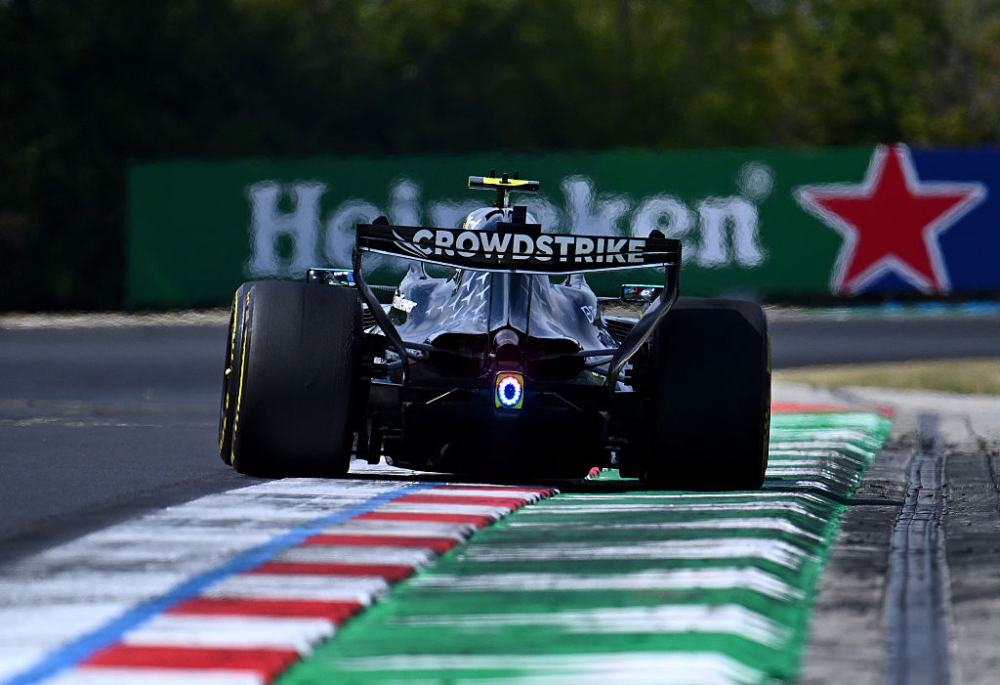
If Antonelli can smooth out the rough edges, his rivals will need to worry. Guido De Bortoli/Getty Images
The inevitable question is whether Antonelli’s stunning race pace comes with too high a level of risk in terms of track limits. That could be the case, but it is just as likely to be down to concentration or not realizing when he needs to be at 98% rather than 100%. This will be better controlled with experience. Antonelli not only admitted the problem, but also recognized the opportunity cost presented by flirting with penalties. It takes four track-limits violations to earn a penalty, and they must be spent wisely. That’s a revealing glimpse of the mindset required of a champion.
Qualifying is also an area where he has room to improve, not in terms of underlying pace but the understanding needed to piece together laps consistently and nail it when it matters. In Austria, for example, he didn’t look slower than Russell over a single lap until the form turned on its head during qualifying, and regardless of the yellow flag he would almost certainly have been behind as the lap he mistakenly aborted was a step off the one Russell completed. Experience counts in qualifying when it comes to getting the tires in the window, making sure the battery pack level is as it should be and moving with the track evolution, and Antonelli is only going to get better at it.
It’s perhaps most telling that Antonelli’s biggest driving error this season only came in free practice. Yes, it was costly, because his FP3 shunt in Melbourne led to a hasty rebuild job and the need to qualify in a car that wasn’t quite right, but that’s trivial compared to some of the other errors made this season. He’s been the driver this season who has made the least major errors, ironically echoing what made Russell’s 2025 campaign stand out.
Critics of Antonelli who argue he’s somehow had it too easy thanks to a combination of the supremacy of Mercedes and the change of regs that suited his driving style are oversimplifying. Partly it’s down to believing the step from last year is too big, which overlooks the fact that Antonelli finished 2026 strongly having lost, by his own reckoning, about three months in the middle of the year to the Mercedes rear-suspension-upgrade misstep that caused him problems. The upward curve resumed after that, and his performance late on in the Brazilian Grand Prix, where he held off Max Verstappen for second, was a warning of what was to come for Russell.
The argument that the cars suit his driving style is also reductive. Certainly, he has a technique that allows him to carry the minimum speed effectively and minimize ‘infill’ of power by the battery, not squaring off the entries as much as Russell sometimes does. That exquisite sensitivity, rolling with the microslides and making tiny, reactive adjustments without falling into letting the car move around too much or losing momentum is also important to this. However, this didn’t happen by chance.
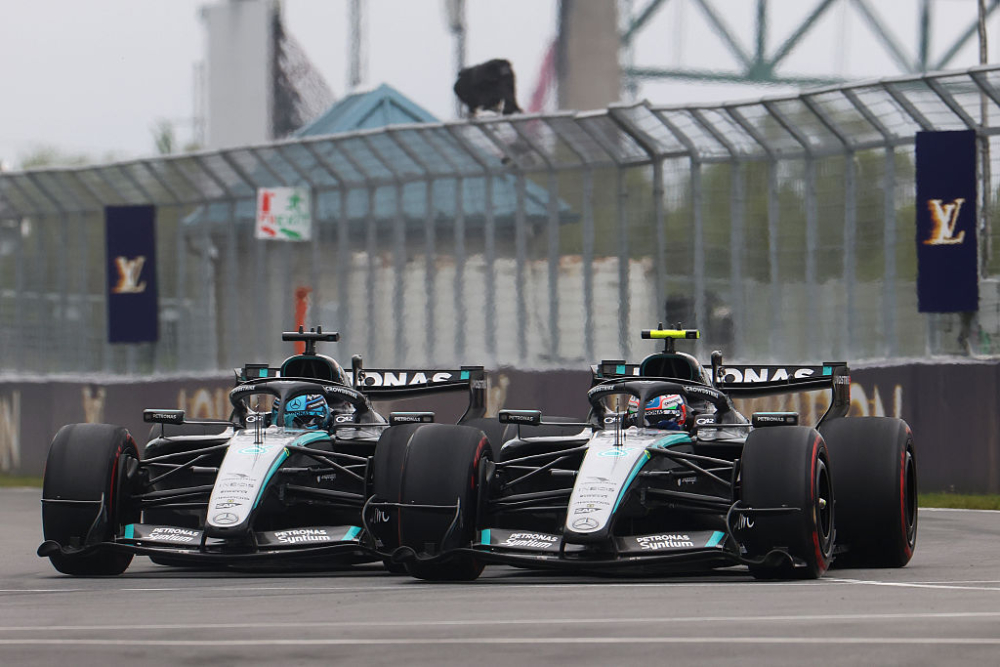
Antonelli has dealt with F1's new cars better than teammate Russell. Steven Tee/Getty Images
“I had to adapt a lot more,” said Antonelli when asked about this in Hungary. “Also a little bit the driving style, carrying a lot of speed into the corner, trying to keep the minimum speed high definitely helped, but there was a lot of work behind to try and make certain things [became] second [nature]. Just trying to make things that initially seem a bit forced a bit more natural. There was a lot of work with the team, a lot of work with the simulator.
“When I started last year to do simulator [work] with this year's car, there were things that were not natural at all. I lost count of how many hours I've done on the simulator, but definitely they have helped. And certainly mostly they've helped because they made things a bit easier and a bit more natural, so I don't have to really worry about them when I drive, because they're already in the back of my mind.”
Regardless of the compatibility with the default driving style and tendencies of the two drivers, the simulator opportunity was also there for Russell. What’s more, Russell also put the work in. The difference is that Antonelli used it to produce the first half of a season that is set to make him F1’s youngest world champion.
None of this happens by chance, and it’s always tiny details that make all the difference. Russell likely will hit back in the second half of the year and there will be difficult weekends for Antonelli because there always are. Russell should not be underestimated and will ask searching questions of Antonelli, as will the Ferrari and McLaren drivers – and, car allowing, Max Verstappen. However, what we’ve seen from the Italian so far suggests that even in only his second year and on the cusp of entering his 20s, he's the real deal.
And if he can be that even before becoming the finished article, just imagine how good he will be in five years’ time when he’s battle-hardened and polished?
Presented by:

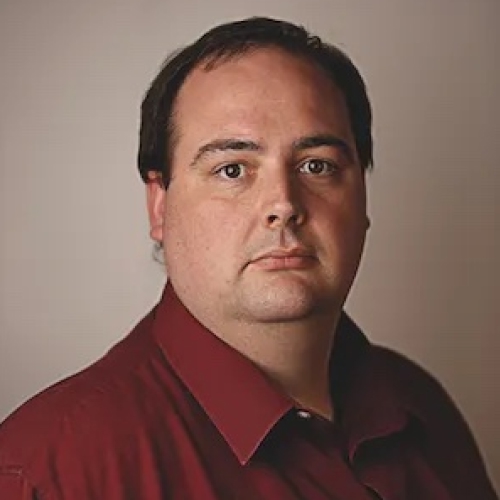
Edd Straw
Edd Straw is a Formula 1 journalist and broadcaster, and regular contributor to RACER magazine. He started his career in motorsport journalism at Autosport in 2002, reporting on a wide range of international motorsport before covering grand prix racing from 2008, as well as putting in stints as editor and editor-in-chief before moving on at the end of 2019. A familiar face both in the F1 paddock, and watching the cars trackside, his analytical approach has become his trademark, having had the privilege of watching all of the great grand prix drivers and teams of the 21st century in action - as well has having a keen interest in the history of motorsport. He was also once a keen amateur racing driver whose achievements are better measured in enjoyment than silverware.
Read Edd Straw's articles
Latest News
Comments
Comments are disabled until you accept Social Networking Cookies. Update cookie preferences
If the dialog doesn't appear, ad-blockers are often the cause; try disabling yours or see our Social Features Support.