Brandon Badraoui/Lumen via Getty Images
Passion wins out: How Dreyer & Reinbold Racing proved the doubters wrong
“We’ve built our team the right way, and the only thing we’re lacking right now is the finances to carry forward and realize that potential,” Dennis Reinbold said.
I was listening to Dennis in late April of 2013, just after the Long Beach Grand Prix where Dreyer & Reinbold Racing finished sixth with Oriol Servia in the DRR Chevy. It was a major result for the little one-car team and was bettered at the next race in Sao Paulo, Brazil, where Servia took the car to fourth.
The reason for the call, however, was anything but celebratory: Reinbold was also heading into the month of May knowing it would be DRR’s last race as a full-time entrant.
“Really, where we’re at today is the best place I think we’ve ever been as a team,” he continued. “It just stinks that it also happens to be a place that coincides with our most serious sponsorship deficit ever. Our philosophy was to go all-out. I feel we’ve built it very well, which hurts knowing the position we’re in. The timing couldn’t be any worse.”
Reinbold was right. This team was too good to fall out of IndyCar’s regular rotation, but it underwent hard times in 2012 when Chevrolet and Honda declined to provide DRR with their new turbocharged V6 engines. He and his partners in the team – the De Bord family – raised the funding to keep the team in the series after the costly switch from Dallara’s old model to the new DW12, but the car needed a capable motor to remain competitive.
On its own, the switch to the DW12 was a major hit for the auto dealer to absorb as Reinbold was forced to downsize from two season-long entries to one, but Servia was good and he had a strong mechanical and engineering group to surround the veteran.
Even so, DRR wasn’t a big-time team at the point of IndyCar’s technology crossover, and that meant being relegated to the terrible third engine option with Lotus, which seemingly paid the Judd family’s Engine Developments firm pennies to build and badge turbo V6 motors with its brand.
Servia and DRR did remarkably well in spite of the power and torque and reliability deficits they faced and were able to run in the midfield before striking a deal with Panther Racing to make use of its second Chevy lease starting at the 2012 Indy 500. The team was instantly competitive as Servia took fourth at the grand event and stacked more top fives to haul himself up to 13th in the drivers’ championship.
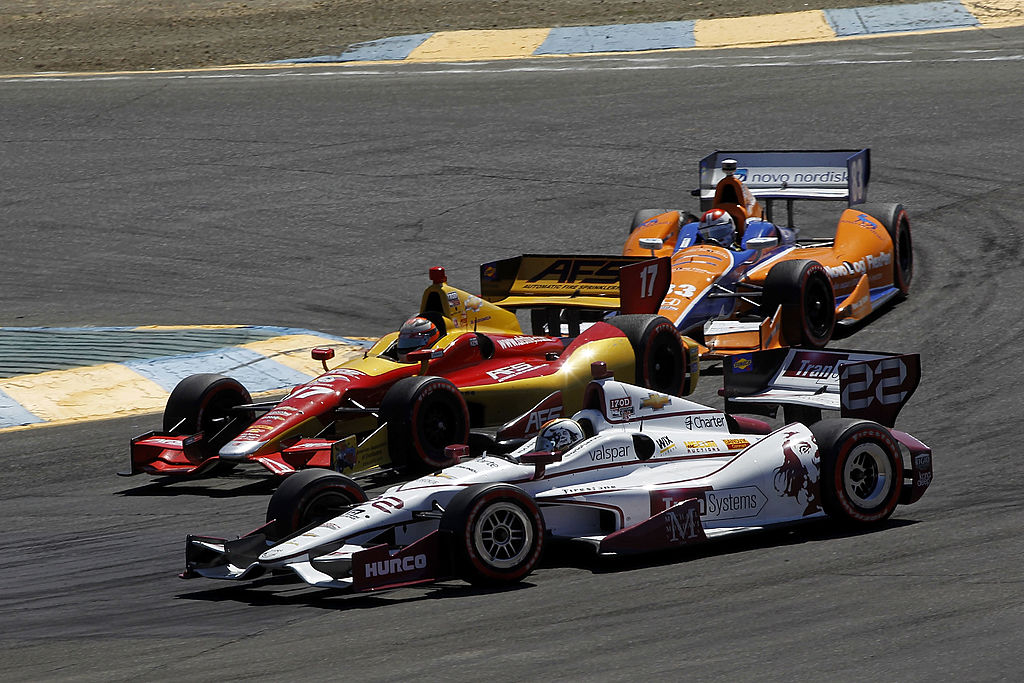
Partnering with Panther righted the ship for Servia (22) and DRR in 2012, but at a cost. Todd Warshaw/Getty Images
It was a remarkable turnaround for the team, but it also came at a high cost. The first reared itself with losing the faith of some sponsors during the early struggles with Lotus, and then there were the added costs of an in-season switch to Chevy and the conversion of their DW12 to Bowtie configuration, plus the associated lease pricing that vastly differed from its Lotus arrangement.
DRR was fortunate to survive the offseason and make its return in 2013, but another funding shortage meant the team that made its IndyCar debut in 2000 – and won its debut race, as well – was running on borrowed time. Servia took 11th at the Indy 500 in the No. 22 Chevy and then the hard call was made to shutter the program.
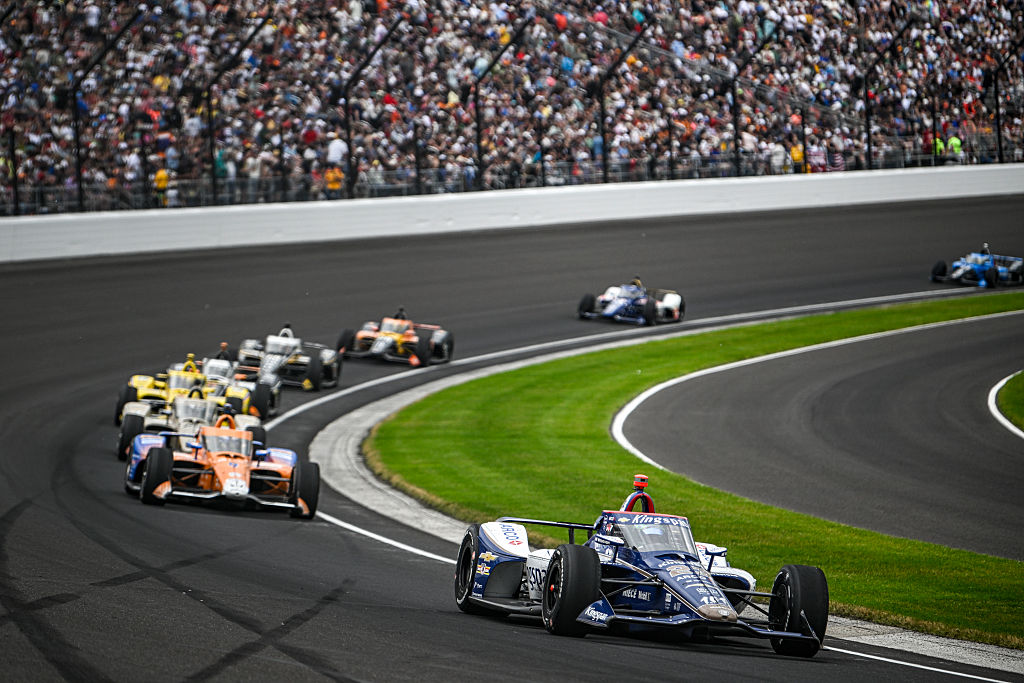
Reinbold’s squad would return in 2014 with rookie Sage Karam to make the first of many Indy-only appearances and promptly finished ninth. It set a trend for many Mays to come as DRR demonstrated its excellence with one- or two-car efforts at the Brickyard, and as recently as 2020, the team was able to run a slightly expanded four-race effort with Karam and JR Hildebrand, but Reinbold wasn’t satisfied with DRR’s limited presence.
He met that dissatisfaction with effort that went unseen by IndyCar fans. Reinbold, as he detailed during routine calls, was borderline obsessed while working in the background to find new sponsors or new investors to fix DRR’s full-time absence. And year after year, it failed to materialize.
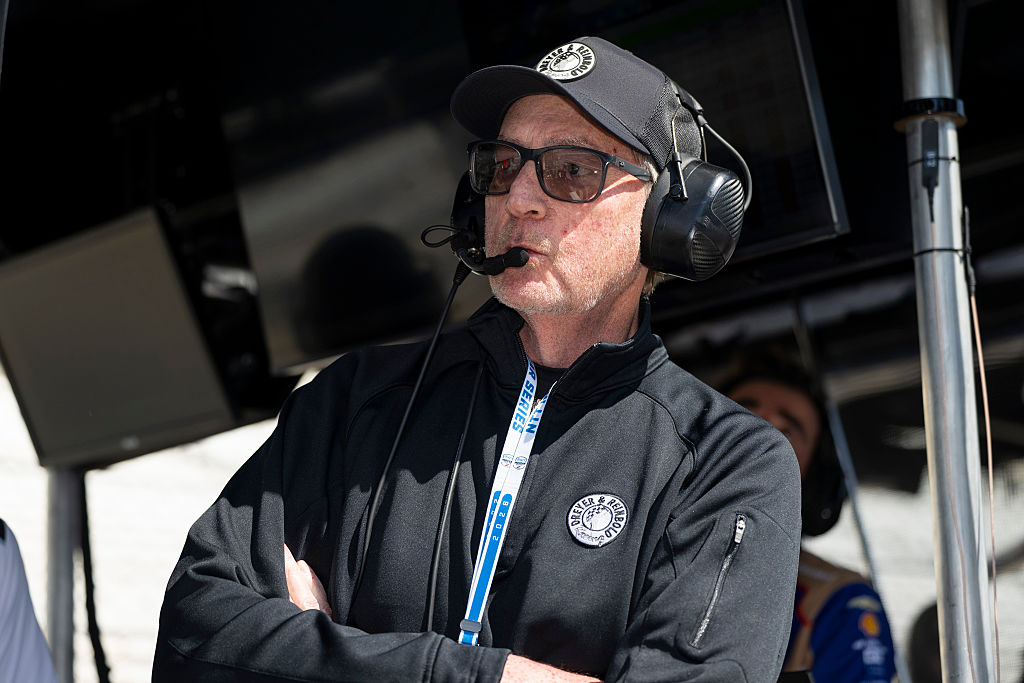
While the odds might have seemed insurmountable at times, Dennis Reinbold never stopped believing in his team. Geoff Miller/Lumen via Getty Images
Some fans chose to openly mock Reinbold for the abundant enthusiasm he shared in stories. He was steadfast in his bullish belief that DRR was on the cusp of inking a deal that would bring the team back as a full-time entrant, and made no apologies for the effusive energy behind those statements.
“I want to be positioned when the new car rolls around and everybody hits the reset,” Reinbold told us in December. “I've always been interested in getting back, but didn't have as clear a pathway as we do right now. We've been doing Indy with the eye on trying to get back full time, and we had a promising start on that back in 2020 when COVID hit. We did four races that year, but COVID really derailed us and pushed us back.
“But now we've rethought things and definitely kept the idea of becoming full-time again, knowing that we would have to get outside investment to be able to do that, and that’s where we’ve been working hard.”
In response to Reinbold’s update on the matter, one person wrote “Like clockwork” as his words were dismissed as hollow. And that’s the part of Reinbold’s character that went largely misunderstood or underappreciated; he was often infused with confidence regarding the latest talks and openly spoke to his belief in DRR’s full restoration.
Reinbold and his DRR partners never accepted the downscaling from 2013 as permanent or incurable, and that’s where, time after time, with new leads to chase, he was imbued with optimism for all that was possible.
He was deeply rooted in hardcore business, but was powered by his love for the Speedway and wasn’t afraid to share his annual beliefs that this year, despite the many setbacks the year before, and the year prior, would be the one where DRR broke free from its Indy-only reality.
And that’s what ultimately came to pass. Even as he was in the final days of his life, Reinbold’s unwavering faith powered this result. The arrangement struck with Rahal Letterman Lanigan Racing to buy a charter and rejoin IndyCar for the entire calendar in 2027 and more in the future is the byproduct of one man’s dedication to his team and the series. The naysayers doubted the wrong person.
Sadly, as we know, Dennis isn’t here to see this joyous day. But his son Derek, DRR’s CEO, and Brett De Bord, the team’s president, and Chase Selman, DRR’s team principal, will carry this dream forward. Reinbold had one instruction to the team’s leadership as he was nearing the end of his life in June – get the job done.
Mission accomplished. Optimism won. Passion won.
Welcome back, family.
Marshall Pruett
The 2026 season marks Marshall Pruett's 40th year working in the sport. In his role today for RACER, Pruett covers open-wheel and sports car racing as a writer, reporter, photographer, and filmmaker. In his previous career, he served as a mechanic, engineer, and team manager in a variety of series, including IndyCar, IMSA, and World Challenge.
Read Marshall Pruett's articles
Latest News
Comments
Comments are disabled until you accept Social Networking Cookies. Update cookie preferences
If the dialog doesn't appear, ad-blockers are often the cause; try disabling yours or see our Social Features Support.