Andy Hone/Getty Images
Learning on the fly: How drivers and teams fit Spa into F1’s 2026 power puzzle
As teams, drivers and fans get more and more used to the style of racing on offer from the 2026 Formula 1 regulations, the less it becomes a talking point each weekend.
It felt like the only topic during the opening rounds of the season, but after tweaks ahead of Miami to try and improve how much super-clipping is required on a qualifying lap – effectively slowing down to try and go faster later in the lap – the weight of the focus started to shift onto different matters.
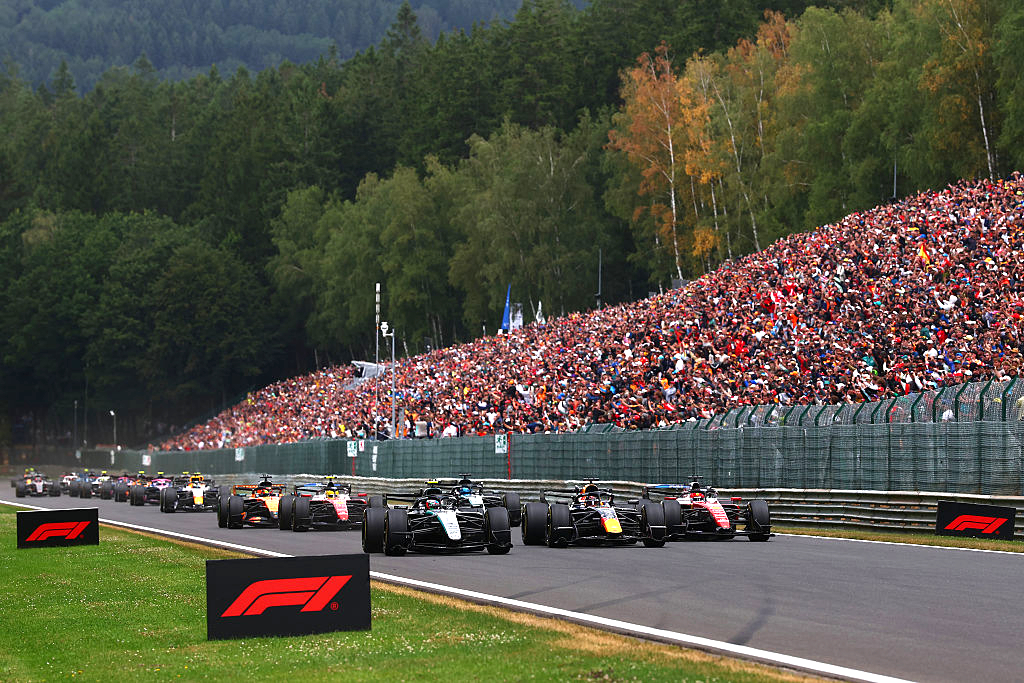
Even after a British Grand Prix weekend where laps of Silverstone prove to be less jarring than expected, Spa-Francorchamps was always going to bring the focus back onto the lack of power available on such an energy-starved circuit.
But the limitations that became a talking point weren’t the ones we might have expected. George Russell’s struggles with straight-line speed reinforced one of the more frustrating aspects facing drivers: fluctuations in power unit performance and deployment that are unpredictable, and sometimes can’t even be explained.
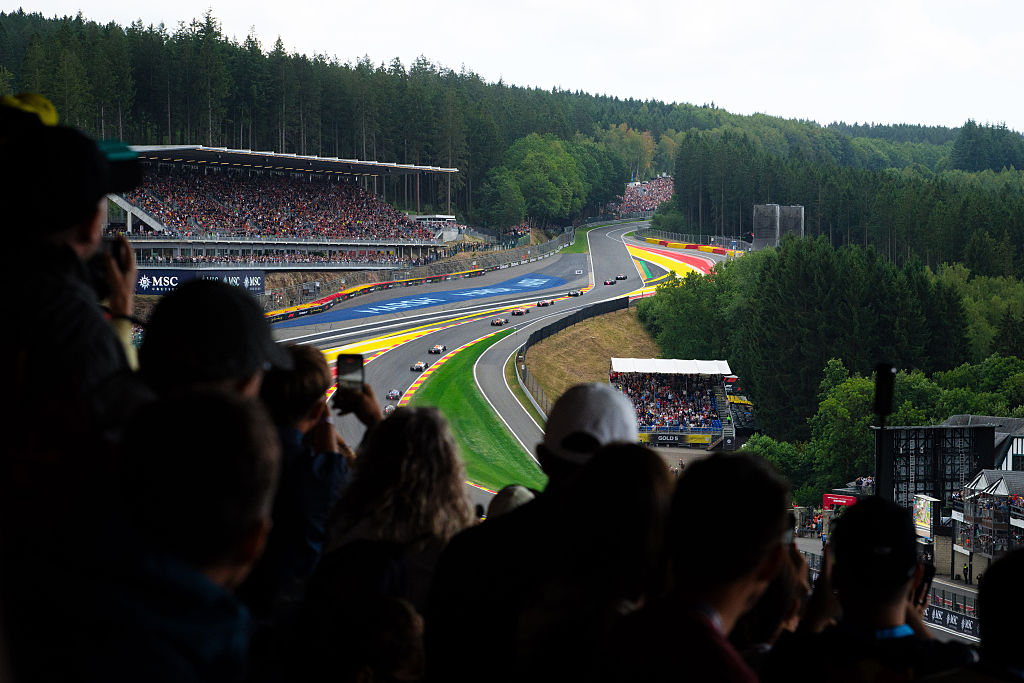
The immensity of Spa is key to its unique appeal, but also makes it especially challenging to deploy F1 cars' power efficiently. Rudy Carezzevoli/Getty Images
“Being honest, with George this weekend there was a slight loss, and sometimes you just don’t understand (why),” race winner Kimi Antonelli said. “I had the same in Australia, for example. It can be a little bit down to driving, but sometimes the system just does something a little bit different.
“It’s very complicated, and for the team, you have to appreciate the work, because the system is very complicated. Of course, they’re trying to make things a bit easier, but sometimes it’s hard to get it perfect.
“Also, with the driving, sometimes, especially on tracks like this that are very energy-demanding, if you start driving differently, then for the system it’s a bit crazy. So, it is tricky. But I have to agree that this weekend, for George, there was a slight issue. I’m sure it will be fixed for Budapest.”
Charles Leclerc confirmed he, too, had suffered from power unit changes that feel like they are influenced more by an algorithm than by his own inputs.
“I don’t know what George’s issue was, obviously, but the only thing I can say is that it happens,” Leclerc said. “These power units are so complex that there are some days when you scratch your head trying to understand why you are losing so much on the straights. That was a bit the case for me on Friday and in FP3.
“Then, in qualifying, things went well again by slightly fine-tuning things. It’s just very difficult, but also very frustrating sometimes for a driver because, even when you are doing your best, there are things in the background that change constantly, and that’s not so nice.”
It was at this point that Max Verstappen commented, “Yeah, I mean, welcome to F1 2026. Sometimes it can be a jungle.”
This isn’t just a case of a power unit being slightly down on horsepower due to old components, or not running sweetly and needing a bit of maintenance. It’s far more complex than that.
It’s the system learning from everything a driver does, and then applying that learning to provide more efficient performance at the same point on the next lap, or even into the next corner. But with drivers trying to control the car in so many different ways, it can lead to unexpected outcomes.
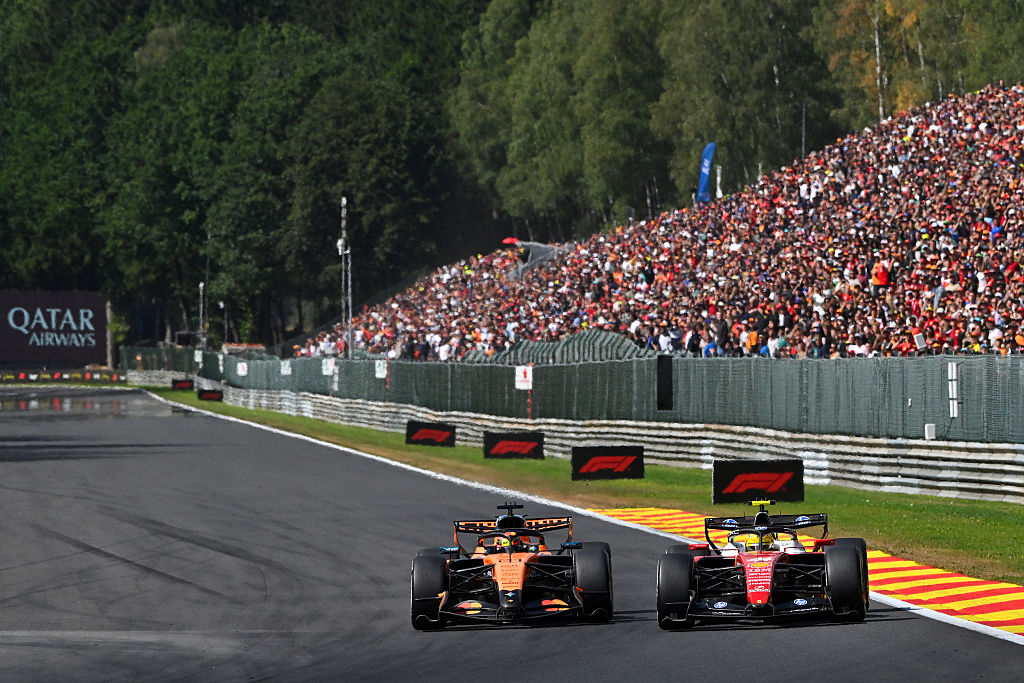
Getting your sums right one lap can be a decisive advantage...but might not bring the same reward next time. Michael Potts/Getty Images
McLaren team principal Andrea Stella eloquently explained after qualifying what the challenges of the "jungle" are that Verstappen later referenced, because it’s not possible to simulate everything the power unit might do ahead of time.
“When we try and analyze the reasons why we had these differences in terms of power unit behavior, in this case, these differences are mainly related to the electrical deployment,” Stella said. “They don’t have to do with the operation of the internal combustion engine – which is complicated also, but it’s kind of less visible because the variations of power in terms of ICE are much smaller than the variations of power between having deployment or not having deployment.
“When we try to analyze this, it gets immediately quite complicated. In fact, when I left the debrief to come here for this media session, there were still discussions ongoing as to why we see these differences when these differences would not be scheduled, in terms of the underlying parameters.
“To operate these power units, you don't operate them in an open-loop way, whereby I would be able to have an offline simulation and say, ‘Oh, that's how the electrical power will be deployed’ and it will always be identical to itself.
“There's a large component of the controller that operates the power unit that happens with live calculations, and the power unit kind of forward-thinks, forward-calculates what it has to do based on some... I don’t want to get into too much technical description or technical IP, but there’s a lot that happens as the car goes [around].
“This is why it’s not so easy to understand what kind of calculations have been made as the car was going around. There’s always kind of a reason – I’m sure we will understand the reason – but at the same time you need to be able to anticipate, and make sure that the operation of the power unit unfolds as expected.
“This is not only for the influence it has in the power-limited sections – in the straights – but it also because it affects the braking points. If you have an additional amount of harvest with the super-clip before braking, then you are approaching the braking point 10kph slower, and your braking point changes.
“So this is quite difficult to master for the drivers, and is one of the reasons I’m sure the drivers talk about the difficulties from a driving point of view to exploit the power unit. It’s not only to get the most out of the power unit, but also because the variations of the power unit affect the references as you approach the corner.
“It definitely kind of learns, but the variations that are significant and relevant are so small that they may happen from one lap to another, even if you have learned from the previous laps.”
Put even more simply, the driver might find the power unit reacts a certain way on one lap, so they adjust their driving in response on the following lap, only to find the power unit has again moved the goalposts due to what it had learned from the previous situations.
That means drivers are constantly chasing a moving target, and getting away from their natural driving approach to try and adjust to power unit performance that potentially moves further from their expectations with each additional input.
In some ways that represents a vicious cycle, and certainly makes it particularly hard to build confidence and consistency.
There will be future venues where the situation is highlighted once again, but at least for now the tracks in Budapest and Zandvoort should see the focus shift back to driving power-rich cars flat out, and therefore drivers leaning more on their natural tendencies to try and make the difference.

Chris Medland
While studying Sports Journalism at the University of Central Lancashire, Chris managed to talk his way into working at the British Grand Prix in 2008 and was retained for three years before joining ESPN F1 as Assistant Editor. After three further years at ESPN, a spell as F1 Editor at Crash Media Group was followed by the major task of launching F1i.com’s English-language website and running it as Editor. Present at every race since the start of 2014, he has continued building his freelance portfolio, working with international titles. As well as writing for RACER, his broadcast work includes television appearances on F1 TV and as a presenter and reporter on North America's live radio coverage on SiriusXM.
Read Chris Medland's articles
Latest News
Comments
Comments are disabled until you accept Social Networking Cookies. Update cookie preferences
If the dialog doesn't appear, ad-blockers are often the cause; try disabling yours or see our Social Features Support.