Brandon Badraoui/Lumen via Getty Images
What will be the next domino to fall in IndyCar’s silly season?
Who’s left on the silly season market after the big moves by Arrow McLaren?
Two of the biggest names are settled, with Scott Dixon and Felix Rosenqvist changing houses in a few months, Christian Lundgaard’s looking for a new home, and there’s plenty of other big names among veterans and rookies who can be hired. Plus a possible expansion in the entrants’ championship.
WHAT’S NEW
Before we get to the existing drivers and teams, let’s lean into one of the more durable rumors since the midpoint of 2025 regarding Rahal Letterman Lanigan Racing and the potential sale of its third charter.
There was steady conjecture regarding RLL’s interest in cleaving its third car from the roster and focusing on its two longstanding primary cars as last season drew to a close. That didn’t come to pass, and the third car is currently in use by Mick Schumacher. But could that change for 2027?
There’s nothing to confirm at the moment, but my sources tell me to prepare for RLL’s return to a two-car operation.
The name most commonly mentioned to acquire the third RLL charter is Dreyer & Reinbold Racing, which is known to have pursued a similar business arrangement with Juncos Hollinger Racing. We’ve mentioned the DRR+JHR angle before with Conor Daly’s name attached as the driver, and based on all I’ve heard, the talks between DRR and JHR ended a little while ago and pivoted to RLL.
Prior to the recent death of Dennis Reinbold, he'd asked his partners in DRR to try and find a willing seller that would allow the team to make its return as a full-time entrant for the first time since 2012. Provided the talks reach the finish line, RLL would be the first team to successfully conclude an IndyCar charter transaction.
DRR would also establish the first valuation for an exclusive IndyCar membership deed, which is important to the rest of the paddock as they wait to learn the market value of the charters they own. At present, 10 teams possess 25 charters, and those charters hold little more than theoretical value until the first sale is completed.
With no pre-established benchmark to work from, I’ve heard sums of $10 million-$15 million mentioned as the anticipated range for the RLL charter sale price. A decade ago, in the formative days of NASCAR’s charter program, first charters sold for $2 million-$3 million before ramping up to a recent range of $25 million-$40 million, which would suggest the rumored starting point for IndyCar’s first charter sale is rather robust.
As for why RLL might want to sell its third charter, the team expanded to three full-time cars in 2022 and the entry has faced ongoing challenges to deliver the commercial and competitive success that inspired its creation. Across Jack Harvey, Pietro Fittipaldi, Devlin DeFrancesco and an array of crews and engineers, the third car has placed no higher than 19th in the drivers’ championship (Fittipaldi in 2024). It has also missed out on earning the $1 million-plus Leaders Circle contracts twice in the last three seasons.
The car currently holds 25th in the entrants’ championship – last place – with Schumacher and needs to crack the top 22 over the seven races that remain in order to secure a $1.65 million contract for guaranteed prize money from Penske Entertainment.
If the third entry was a genuine money maker or was frequently capable of running with RLL’s leading car driven by Graham Rahal, it might be worth holding onto the program. But in its fifth season of existence as and entry that just hasn’t enriched the organization, there’s a strong argument to be made that returning as a sharper two-car team is the smarter move.
And so, based on the volume of input I’ve received on the matter, I won’t be surprised to learn DRR is headed back to the IndyCar Series as a full-time entrant in 2027 with a single-car effort. Daly continues to be the main driver mentioned in connection with the seat.
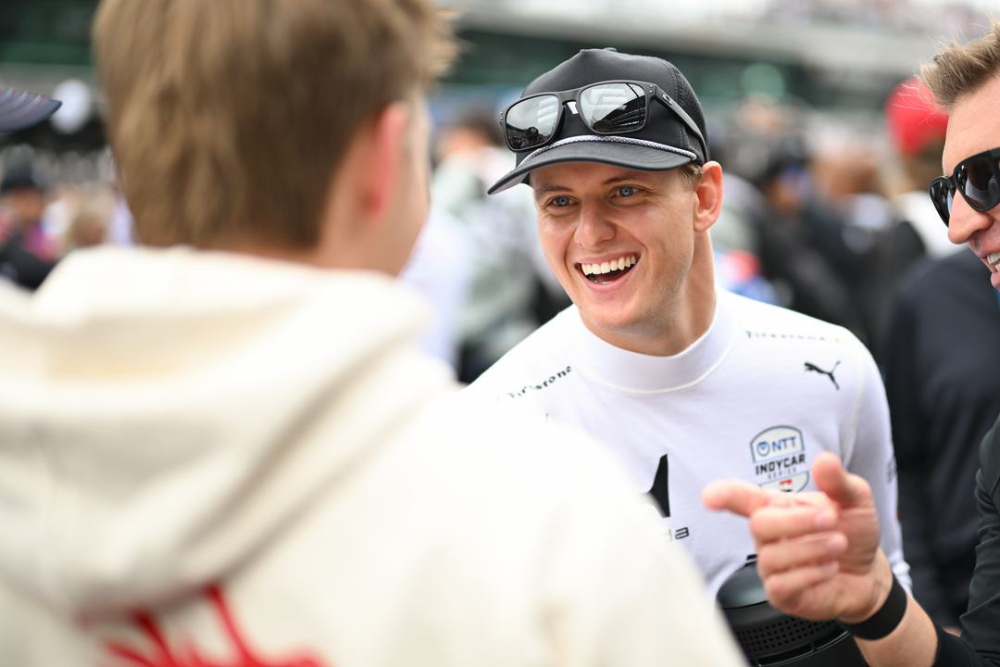
Could Mick Schumacher's new backers keep him on the grid? James Black/Penske Entertainment
MICK ON THE LOOKOUT?
I’m told a new and significant backer has emerged that would allow Schumacher to pursue opportunities elsewhere in the paddock or stay with RLL in whatever capacity. This is a significant change for Schumacher, as RLL is known to be handling all aspects of finding sponsors to fund the third entry and pay the IndyCar rookie.
I expect meetings with prospective teams to take place this weekend in Nashville and other upcoming races to see if a new home can be found for the 27-year-old, or if an arrangement to stay and drive for RLL is at all possible. The question here is whether he’ll find any serious takers outside of RLL.
On results alone, there isn’t much to sell while sitting last in the championship, but with a budget in hand, there could be a smaller team or two that might want to see how he’d fit alongside an established performer. Overstating the obvious here, but a strong finish at Nashville and again in a few weeks at Portland would do wonders for Schumacher’s future.
WHAT’S IN PLAY
It’s worth recapping what’s available, who’s hiring, and who’s selling seats to work through most of the remaining driver situations.
AJ Foyt Racing: Two seats available (Santino Ferrucci and Caio Collet, both out of contract at the end of the season).
The team’s current business model uses a pro for its No. 14 Chevy, where Ferrucci has been its marquee driver since 2023, and takes a paying drivers to bankroll most or all of the second entry with the No. 4 Chevy, which was secured this season by rookie Caio Collet.
It’s been a rough year for the team, which sat 11th (Ferrucci) and 12th (David Malukas) after 11 races in 2025; it’s 17th (Ferrucci) and 23rd (Collet) after 11 events this year and Foyt is at risk of losing out on a Leaders Circle contract if the No. 4 doesn’t make headway on the top 22.
The squad has been digging deep in recent weeks: Ferrucci took ninth at Road America, and Collet produced his best result of the year with 11th at Mid-Ohio, so they’re trending in the right direction with the Nashville oval up next, where both should excel.
Ferrucci remains under the microscope as he looks to complete his fourth full season in the No. 14. He’s loved by the team’s sponsors, which is important to know, but after finishing 16th in last year’s championship, and while sitting 17th today, there’s a strong desire to see the No. 14 return to where it once lived when Ferrucci placed ninth in the 2024 drivers’ standings. The team hopes Ferrucci will be the answer, but thanks to its Team Penske technical connection, I’m confident Foyt has plenty of drivers who’ve expressed their desire to step into the No. 14 and help bring it back inside the top 10. Keep an eye on how Ferrucci fares over the rest of the season and whether the output would lead to staying for a fifth year or if the team might look to make a change.
Despite the challenge-filled debut for Collet, he is drawing more interest than almost any driver, and that’s because of his untapped potential.
With many of the other available IndyCar drivers, team owners have spoken of knowing what they’ll get while expressing limited belief that any of those drivers can dethrone Alex Palou.
In Collet, there’s a curiosity to find out if the Brazilian has something special to explore, and he’s proven to be a quick study on ovals, which has only increased his value. Factor in the rumored $6 million in sponsorship that surrounds him, and it’s easy to understand why he’s on most teams’ short lists.
If it isn’t with Foyt, and with the abundance of talent on the market, I’m not sure where Ferrucci would be hired as a full-timer in 2027. As for Collet, the team is keen hold onto him for another year, and that might happen, but he’s caught the eye of Arrow McLaren, Ganassi and Meyer Shank, which could make things interesting in the next year or two. Whether it’s with Foyt or a rival, Collet will be back in IndyCar.
Introspective times ahead for Foyt. It could stay the same, lose or drop one driver, or return with an all-new line-up. Stay tuned.
Andretti Global: One seat available (Marcus Ericsson, out of contact at the end of the season)
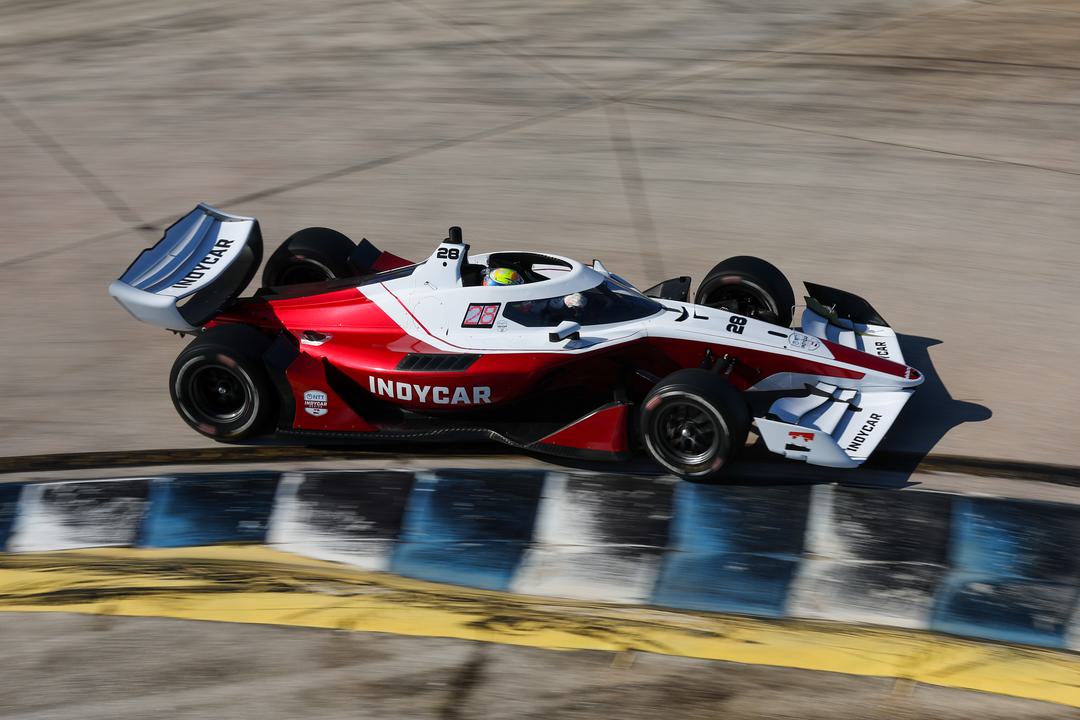
I’ve heard Marcus Ericsson has received an offer from the team to remain in the No. 28 Honda. If that’s correct, another one of the most sought-after IndyCar seats is closed for business.
If there’s one under-reported aspect of the current line-up, it’s the exceptional chemistry that’s developed between Ericsson, Kyle Kirkwood and Will Power. This is a trio that really likes working together and has found something special in 2026 as Kirkwood (second) and Ericsson (10th) wait for Power (14th, and closing) to join them in the top 10.
The distance between Kirkwood and his teammates is larger than desired, and there’s plenty left for the team to improve in its first season under new leadership, but this is one of only two teams in the series – Team Penske being the other – that can win at any track at any time with all of its drivers. Based on that, holding onto Ericsson would be the least silly move so far in the silly season.
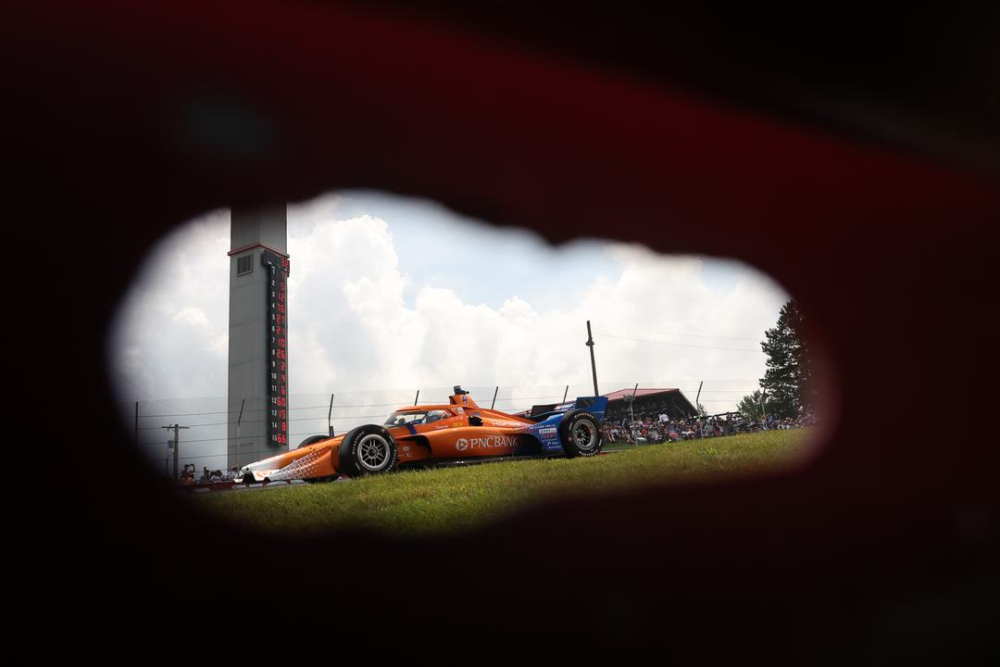
Who's going to fill the void Scott Dixon is about to leave behind at Ganassi? Chris Owens/Penske Entertainment
Chip Ganassi Racing: One seat available (Scott Dixon departing the No. 9 Honda).
Plenty of folks within the IndyCar world are convinced Lundgaard will replace Dixon. It’s possible, of course, but there’s nothing imminent to report. It also might not happen. I understand the team is going to take its time to decide who will replace Dixon, and that could consume a week, a month, or more.
If Ganassi were to choose Lundgaard, it would do so with full knowledge of what the 24-year-old brings and needs to become the best version of himself.
Dario Franchitti is credited for schooling Palou on the art of oval driving, and we see what that’s done for the 2025 Indy 500 winner. Lundgaard’s oval education at Ganassi would be unlike anything he’s had in the series. Ganassi’s oval cars have also been fast and straightforward to drive – nothing like the knife-edge handling that’s been reported with Arrow McLaren’s oval cars – which would also favor Lundgaard’s ability to become a complete threat.
The matter for Ganassi to ponder is whether he’d be a good fit for the team’s blue-collar mindset and would buy into being part of the collective. If Lundgaard’s smart, he bows his head and vows to be the most selfless teammate in the world, uses that approach to receive all of the vast opportunities that abound with the No. 9 Honda, and comes away as the biggest winner in the silly season.
There’s a scenario here where Lundgaard restores the legendary No. 9 car to its former status as a constant 1-2 punch with Palou’s No. 10 Honda. But this is also a team that fights hard to safeguard its culture, which is why it won’t rush into signing Lundgaard or anyone else.
If it’s Lundgaard, and if he makes the most out of the oval curriculum, and if he embraces Ganassi’s team-first mindset, this could be a devastating combination.
There’s Rinus VeeKay, who would seemingly be ready to do all of this for the team in an instant, but I’ve heard mention of a possible offer-matching clause in his contract that would make out-spending Brad Hollinger a hurdle to clear. If there’s no clause, there’s nothing to impede his acquisition.
And there’s the European route we’ve mentioned in past updates, where the team is known to be fond of a number of F2 drivers. The same outline offered a few weeks ago of whether Ganassi will opt for a young IndyCar veteran or hire a prodigious F2 talent and try to build them into the next Palou is the fork in the road that awaits a decision by the team.
Replacing Dixon is a huge event for Ganassi. It’s also a huge opportunity for Lundgaard. The last thing he needs to do is rush and sign with a lesser team, so I’d expect him to wait and see what might develop. And there’s the one key item to remember, and it’s that Ganassi already has Alex Palou. This isn’t a case of panicking to find a new lead driver; it already has the best in the series.
This is searching for the best complement to Palou, and that’s why the team will pursue that person on a timeline that isn’t rushed.
Dale Coyne Racing: Two seats available (Romain Grosjean and Dennis Hauger, both out of contract at the end of the season).
I’ve heard of some possible developments at Coyne since our last update almost a month ago. Romain Grosjean was mentioned as something close to a sure thing to continue in the No. 18 Honda, and while it’s still possible, the last month hasn’t been kind as the car and its Swiss-born French driver have backslid to 22nd in the standings.
The list of reasons for their troubles is long, and Grosjean isn’t solely responsible for the retreat, but none of that changes the fact that the happy-time reunion sought by Coyne, which was fully supported by the team’s primary sponsor, has become a steady disappointment. The 40-year-old hasn’t lost his speed; he’s made two appearances in the Firestone Fast Six and three visits inside the Fast 12 on Saturdays, but on Sundays, Grosjean and the No. 18 have rarely been a factor with nine of 11 results falling between 15th and 25th.
Said another way, the combo has two good finishes from 11 races, with the last falling on May 24 with a ninth at the Indy 500. At the point in the season where teams take a hard look at the future, the supporting evidence to stay the course in 2027 is getting harder to find.
Dale Coyne is the ultimate decider-in-chief when it comes to drivers, so he’s left to choose whether to give the reunion tour one more try or shift to a new lead driver in the No. 18. It’s been a bad year in general for the team, so I wouldn’t be surprised if the call was made to start fresh.
The fate of Dennis Hauger is another vexing issue for Coyne to consider.
Andretti Global’s 2025 Indy NXT champion is known to be in Coyne’s No. 19 Honda thanks to having a significant portion of its budget covered by Andretti’s parent company TWG Motorsports, and that’s said to be changing at the end of the season. Hauger was meant to replace Ericsson, but that plan is understood to have been abandoned, and with no immediate seat to take at Andretti, he’s been urged to seek new options.
As we noted, the Coyne team – like Foyt, and Juncos Hollinger – works from a one paid pro/one paying driver model, and without TWG’s money, Hauger won’t be able to fund a second season in the No. 19 with sponsors of his own.
But what if the team, which loves the driver who sits 19th in the championship and leads the Rookie of the Year standings, wanted to hold onto him and move Hauger over to the paid pro car – the No. 18 – and search for a new driver to backfill the No. 19 with the budget it requires?
Coyne is often the first stop for NXT champions and front runners to break into IndyCar, and while it would be light on experience, the concept of Hauger being paired with an Enzo Fittipaldi, who leads the NXT championship and has backers, or one of the other emerging open-wheel drivers from NXT/F2, is intriguing.
If it isn’t with Coyne, I don’t see Grosjean’s IndyCar story having a final chapter at another team. I’ve heard Hauger has about $2 million to offer from sponsors, and that might pique the interest of a team looking for a young star, but he’s also been stuck in a fairly poor run since the Indy 500 and needs a breakout performance or two – and quickly – to position himself as a must-have talent for Coyne to keep or someone else to acquire.
As is often the case with Coyne, whatever I think might happen on the driver front tends to be totally wrong by the time we rock up to the first race of the season, so I’m prepared for unexpected outcomes.
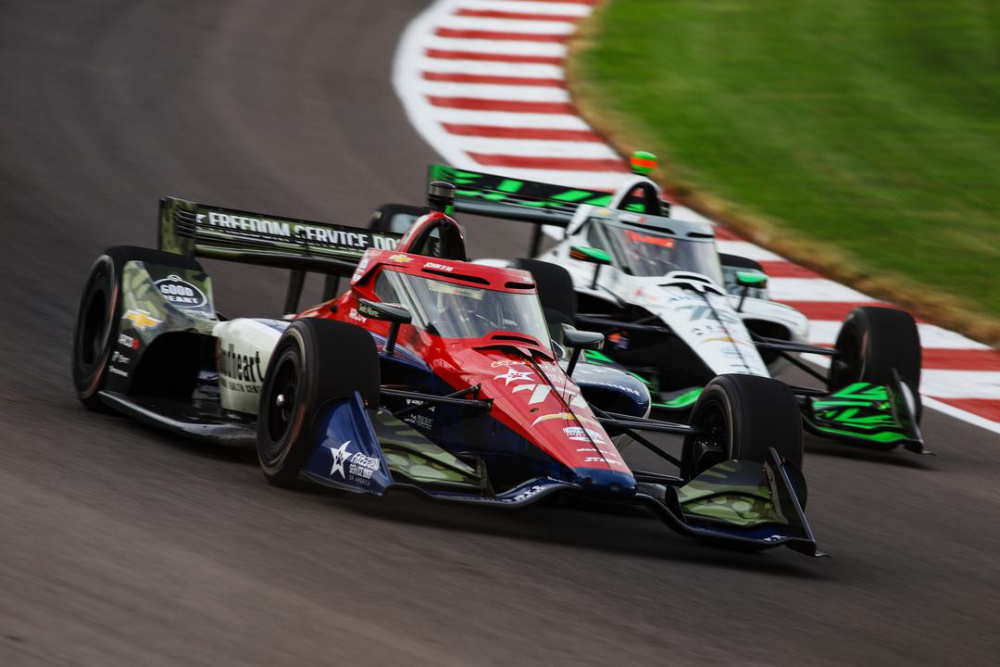
Juncos Hollinger Racing: Two seats available (Rinus VeeKay and Sting Ray Robb, both out of contract at the end of the season).
Welcome to the silly season’s most complex situation.
The team founded by Ricardo Juncos, which exited IndyCar when it ran out of funding, which returned as Juncos Hollinger Racing with a new co-owner and majority investor in Brad Hollinger, has been involved in a forever-long divorce.
For those who’ve noticed, Juncos is rarely seen on the IndyCar side of the operation and mostly focuses on its Indy NXT program. It isn’t something that’s publicized, but it has been a well-known situation within the paddock for at least a year, and if and when the divorce reaches the end of the process, Hollinger is expected to be the sole owner of the team.
That’s important to know, because the team switched to a one paid pro/one paying structure in 2025 to offset the ongoing budget shortfalls it was experiencing, and that led to the signing of Robb to race the No. 77 Chevy. In Hollinger’s efforts to move the team into a new era, he’s pursued investors to help in underwriting the team’s operating costs and to return to hiring two paid pros by 2027.
For that to happen, the ownership divorce first needs to be completed. Then, a new co-ownership arrangement can be finalized and an all-pro driver roster would become possible. That’s the desire, at least, but until all affairs are settled and all deals are done, it’s tough to say with full confidence that JHR will be 100 percent pro in the future.
It has VeeKay as its lead driver, and he’s turned the team into a newly competitive force with the No. 76 Chevy. VeeKay is 11th in the drivers’ standings and his agent is actively chasing the marquee cars at Ganassi and Meyer Shank and Foyt to place his client. The Juncos Hollinger team wants to keep VeeKay, which only makes sense. If VeeKay and Juncos Hollinger are doing this well during their first season together, imagine what they could do in 2027, and possibly with a teammate of similar talent to help the team become more than a one-car threat.
The only drivers in front of VeeKay and the No. 76 belong to Ganassi, Andretti, McLaren, Penske and the Ganassi-affiliated Meyer Shank, which is a wild thing to consider, and explains why the team is interested in signing him to a new and bigger contract.
Robb might have the largest funding package by a paying driver in IndyCar history – a full $15 million is said to be on offer for 2027 – which speaks to the incredible support that surrounds the Idahoan.
The fourth-year IndyCar driver currently competes in the car that Hollinger is aiming to convert back to a paid seat, so if that comes to fruition, Robb would possibly have Foyt to consider, which Robb left to join Hollinger and Coyne, which Robb left to join Foyt, as the only for-hire paths to pursue if either of those teams are interested in a reunion.
Anything is possible, but those odds are slim – even at $15 million – which means there’s also a solid chance that Robb is facing a future in another series like IMSA, which has both full-pro classes and pro-am categories where funded drivers have an easier time establishing long careers.
Circling back to the parting of ways between Juncos and Hollinger, resolving the complexities there would allow not only a new investor to partner with Hollinger, but also for Hollinger and his close friend Zak Brown to explore ways for Arrow McLaren to work with the team like Ganassi does with Meyer Shank and Penske does with Foyt.
There’s a lot of ground to cover and plenty of pitfalls that could get in the way of it happening, but the idea of a technical alliance between the organizations and the possible placing of McLaren-favored talent in a Hollinger car, just as Ganassi and Penske have done with Marcus Armstrong at Meyer Shank and David Malukas at Foyt, wouldn’t strike me as an unreasonable maneuver in the next season or two.
Hollinger is known to have multiple suitors who want to buy into the team, and among them, an investment group represented by Pieter Rossi – Alexander Rossi’s father – is said to be a serious contender.
Meyer Shank Racing: One seat available (Felix Rosenqvist departing the No. 60 Honda).
The move by Meyer Shank Racing to re-sign Marcus Armstrong has taken the team in an interesting direction.
Armstrong’s arrival in the No. 66 Honda, which he stepped into with the help of some personal sponsors, came though the new alliance with Ganassi in 2025. Since then, and thanks to his rapid ascension in the team where he’s often matching or exceeding the output of Rosenqvist in the No. 60 Honda, Armstrong’s become Meyer Shank’s driver. Enough so that he’s been hired to replace Rosenqvist and take his first team-leading role in 2027. He’ll keep the same No. 66 crew but is set to receive the team’s lead number with the No. 60, which is a statement of its faith in Armstrong.
And now the team needs to whittle down the expansive list of candidates to fill Rosenqvist’s place, which has drawn outreaches from drivers in F1, F2, IndyCar and Indy NXT. As Rosenqvist’s exit was confirmed internally, the team had three drivers on its short list, and once his departure went public, Mike Shank says the list has grown to 12.
The question for Shank and co-owner Jim Meyer to answer is if they’re confident in their ability to raise a complete budget on their own, which would allow them to hire the driver they want on talent alone, or if the should hold out for the best driver available who can help with the budget.
Within the first option, there’s the matter of whether Meyer Shank should pursue a proven commodity to complement Armstrong, or try and develop a newcomer to IndyCar from F1/F2/NXT. Lundgaard is a name that’s been mentioned as someone for Meyer Shank to engage with. Based on his recent results, it’s a no-brainer. Armstrong and Lundgaard were teammates in F2, and I can’t say if it’s related, but I don’t think he’s headed there. VeeKay’s been mentioned. Collet has been mentioned. Hauger’s been mentioned…
If it’s the second option and bringing money is a factor, is that signing a promising talent in F2 or NXT who has a few million to offer, or looking into the paddock and considering a Nolan Siegel, a Schumacher, or a Robb? There’s a wide array of paths for the team to evaluate.
Until we get a feeling for where Meyer and Shank are leaning on the paying vs. hired scenario, it’s hard to suggest which driver would be the right answer to pair with Armstrong.
HOW DO THEY STAY OR GET IN?
We’ll close this extended silly season edition on the plight of far too many Indy NXT drivers and a young IndyCar veteran.
In concert with Hauger, I look to the current Indy NXT field and struggle to find immediate landing spots for most of the winning drivers like Fittipaldi and Tymek Kucharczyk, who appear to be ready to graduate after one season. Other young drivers who might be keen on stepping up but could benefit from a second season like Nikita Johnson, Max Taylor and Alessandro de Tullio, and veterans like Lochie Hughes and Myles Rowe join Fittipaldi and Kucharczyk in having extremely limited options to reach IndyCar in 2027.
NXT veteran Josh Pierson, who we covered in the last silly season piece, is another who is ready to leave the series behind and has that rumored two-year, $25 million sponsorship offer to entice team owners. But it’s the same logjam of limited seats to consider before other filters are applied.
And then there’s Nolan Siegel, who is showing something significant with his progress in the last year of his deal at Arrow McLaren. The 21-year-old has more talent to develop and the ability to bring a budget, but will he find a team that has the quality and infrastructure to keep him on an upward trajectory? Too many good drivers are on the market, and most of the teams with vacancies aren’t as good as the team he’s about to leave. Like many others, Siegel is speeding towards a crossroads with no guarantee where it will lead.
Marshall Pruett
The 2026 season marks Marshall Pruett's 40th year working in the sport. In his role today for RACER, Pruett covers open-wheel and sports car racing as a writer, reporter, photographer, and filmmaker. In his previous career, he served as a mechanic, engineer, and team manager in a variety of series, including IndyCar, IMSA, and World Challenge.
Read Marshall Pruett's articles
Latest News
Comments
Comments are disabled until you accept Social Networking Cookies. Update cookie preferences
If the dialog doesn't appear, ad-blockers are often the cause; try disabling yours or see our Social Features Support.