Chris Owens/Penske Entertainment
The 2026 IndyCar mid-season report card
The IndyCar Series has held races at three ovals, four street courses, and two road courses this season and charges into the second half of the championship starting this weekend in Road America.
Before we jump back into the action and run nine more races through September 6 at Laguna Seca, let’s take a look at how IndyCar’s 10 teams have performed, assign grades on their midseason report cards, and add a new wrinkle by having the team owners and team principals grade their own programs.
To my surprise, the grades I chose before each call – which weren’t shared in advance – were matched by most of the teams. Was it a case of great minds thinking alike, or shared delusions? You be the judge.
Joe Skibinski/Penske Entertainment
CHIP GANASSI RACING: A-
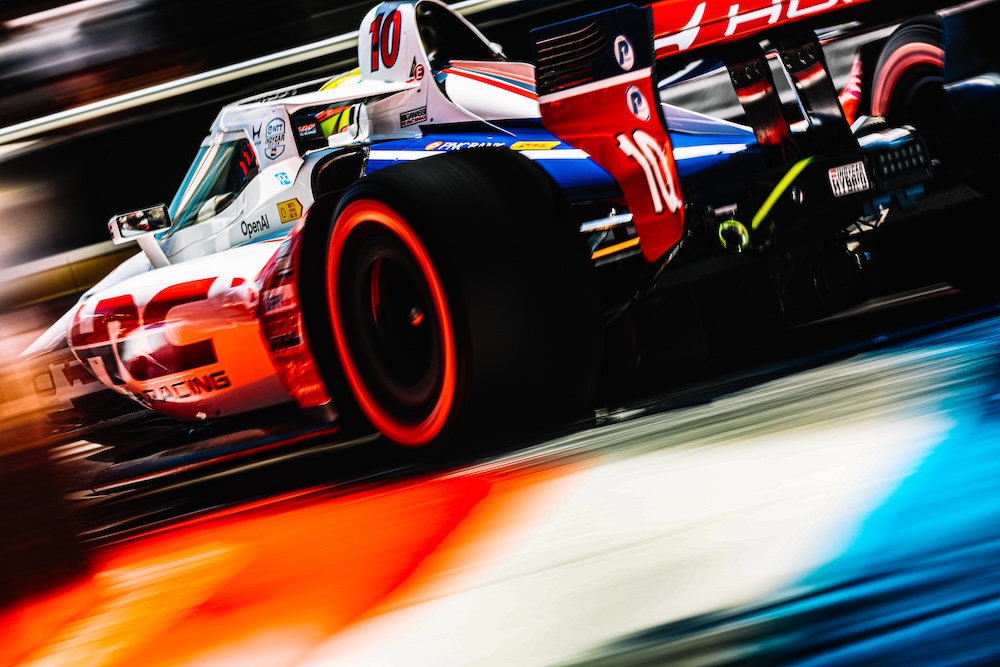
One year ago, Alex Palou (above) had won six of the nine races, Scott Dixon was fifth in the standings, and sophomore driver Kyffin Simpson in 14th was making progress in the championship. As a three-car unit, CGR was performing like a steamroller with its two veterans and had a young talent on the rise.
Palou is doing similar things this year with four wins and five poles from nine races, but a few more errors have crept into their season with the crash at Phoenix, the misread on the Rossi yellow at the Indy GP, the front wing issue at the Indy 500 and the pit lane bobbles at WWTR.
He’s still the clear championship favorite, but Palou is not the same forgone conclusion as last year. It’s worth asking whether the No. 10 car’s output this season is slightly down because of newfound shortcomings, or if what we’re witnessing is a more realistic season for them – for any top team – at four wins and a handful of missteps? It’s the latter.
A season like 2025, when they won 47 percent of the races and clinched the championship with two full races left to run, was a once-in-a-lifetime affair. If that’s the benchmark to use going forward, every season will be a comparative failure, and while that doesn’t excuse the mistakes, it might reframe expectations to some degree.
With that in mind, Palou has won 44.4 percent of 2026’s races… but at this point last year it was 66.6 percent… but nobody other than Palou has a win rate higher than 22.2 percent this season. What’s in motion right now has the feel of something Palou and the No. 10 team can repeat, and if it weren’t for some of the mistakes, they could have a fifth or sixth win.
The reason CGR doesn’t get an A or an A+ is for the rest of the program. Scott Dixon is having one of the worst half seasons of his career: the wheel falling off at St. Pete, the hybrid failure at Detroit and the caution and pitting from the lead for emergency service and ensuing penalty at WWTR have a lot to do with why he’s 12th in the championship.
To grasp how poorly things have been going of late, his finishes of 15th at Indy, 24th at Detroit, and 12th at WWTR mark the first time Dixon’s had three consecutive finishes outside the top 10 in 12 years. Said another way, President Obama was in office the last time Dixon dealt with a three-race slide of this magnitude.
Minus the dramas, Dixon has run anywhere from third to eighth at five of the nine races, which is encouraging, but he has almost half as many points as Palou after nine races (342 to 192), which is unfamiliar territory. Salvaging the rest of the season is the mission for CGR’s No. 9 entry.
Counter to Dixon, Kyffin Simpson’s had a steadier 2026, but consistency is the elusive attribute; 10th one weekend, 20th the next… ninth the next weekend, then 21st. He stood out all month at the Indy 500, but combined, the average numbers at the finish line are average. At this stage in 2025, he was 14th with 166 points, and at the moment, he’s 15th with 147 points. Simpson’s stepped up in qualifying, but it hasn’t translated into better results on a regular basis.
It’s easy to imagine a second-half turnaround for Dixon, but Simpson’s a mystery. Is there a breakthrough right around the corner, or has he settled into a midfield home?
For CGR, you can’t win 44.4 percent of the races and be graded below an A, so the A- is for Palou as a solo performer within that team who’s pulling the grade up with the four wins and five poles.
Mike Hull (Managing Director): “I might be a little low. I think the team is doing a really good job, but there's room for improvement. Probably a B, even though we've had really good success with Palou, and if you took it between the three drivers, it would probably average a B.”
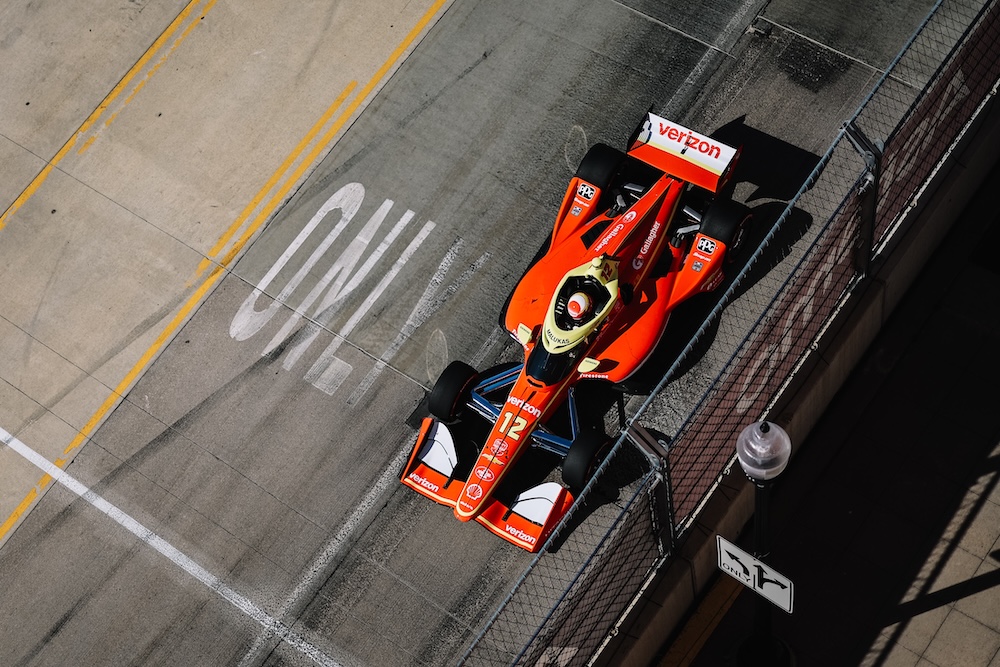
TEAM PENSKE: B+
Say hello to the biggest year-to-year mover in the series.
Penske is also operating as the best team in IndyCar in terms of how the entire unit is producing across all entries. There’s no need to rehash the well-chronicled problems Penske faced last season that conspired against its success in the first half of the year, but it is worth noting how the trio of David Malukas (above) in third, Josef Newgarden in sixth, and Scott McLaughlin in seventh have moved the team – with their positions averaged – from third in 2025 to first in the midseason team rankings.
With all of the firings, promotions, and reassignments, not to mention taking a big risk on an unproven Malukas to replace a double champion in Power, the year could have gotten off to the shakiest of starts, but the huge reboot by Penske has been rewarded with an immediate return to its place at the sharp end of the grid.
It’s also the only team to join CGR as a winner of multiple races, with the two oval victories taken by Newgarden. Newgarden is also among the biggest movers with his improvement from 13th after nine races last year to sixth, which speaks to his year-to-year gains, and the toughness he possesses while dealing with the lingering effects of the Indy 500 crash.
We’re also coming up on the four-year anniversary of his last road or street course win, which is the glaring omission from his game. All 11 of his most recent wins have been on ovals, and unless it’s winning all six of the ovals on the schedule, missing out on wins at the other 12 races makes it hard to vie for a championship.
While Penske’s team-wide lift hasn’t been unexpected, the bold arrival of Malukas has been the greatest positive change for the team.
Week in and week out, Malukas has been Penske’s best driver – its most consistent performer in qualifying and the races – which is why he’s been its leading driver in the championship since the end of March. Malukas is Penske’s best qualifier (6.3) on average, which is well ahead of McLaughlin (9.4) and Newgarden (13.4), and its best finisher (6.9) in front of McLaughlin (9.6) and Newgarden (10.0) which is stunning.
His first speed bumps arrived at Detroit and carried over to WWTR, so he’s got to rebound quickly if he’s going to stay atop his teammates. But the recent adversity doesn’t change the fact that Malukas has been the breakout star of the season in his first shot to race for a title-contending team.
And then there’s McLaughlin, who underwent a change of race engineers during the offseason and has had some solid runs interspersed with more unremarkable days than anticipated. He’s been stuck in an unfamiliar place where we’re waiting for his scary side – the one who readily won and lived on the podium – to make its return.
The B+ is for the big overall improvement so far, the pair of wins by Newgarden, Malukas hovering around the podium at almost every race, and the superb responses to adversity with three chassis replacements to perform by the trusty crew. It would be higher if more than one of its drivers had won. Getting a first win for Malukas, and ending McLaughlin’s winless streak dating back to 2024, would go a long way to cementing Penske’s return to title-contending prominence.
Jonathan Diuguid (Team Principal): “I would say a B+. Obviously, I can't give ourselves an A because we're not 1-2-3 in the championship. But the team is working really well together. Our leaders are doing an amazing job. Our car preparation and reliability has never been at a higher level with what our leaders there are doing. Executing on race day is something that everybody's working on. We've had fast cars and only been to victory lane twice. I think there's been probably two or three other opportunities there where we could have won some races, and so that's why I'd go below an A.”
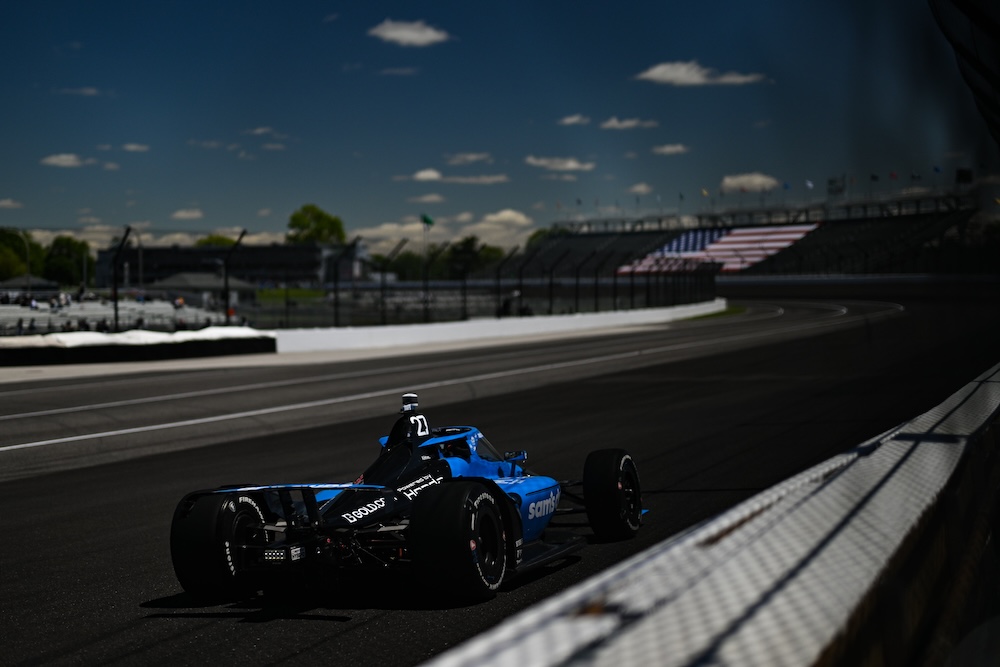
James Black/Penske Entertainment
ANDRETTI GLOBAL: B
This is a strange one. As a whole, Andretti is doing well, with Kyle Kirkwood (above) proving once again to be the main protagonist in the ongoing fight to stop Palou from earning another championship. Complementing Kirkwood, Marcus Ericsson has been the most improved driver of the season.
Together, they’ve placed Andretti second and ninth in the Drivers’ championship after nine races, and despite the brutal debut for Will Power in 17th, the squad appears to be a better version of the one that closed last year’s championship on a downhill slide. Better, yes, but closer to toppling Ganassi? No.
Or not yet, at least, which is why it gets a B for a midseason grade.
Kirkwood is indeed closer to Palou at the midpoint of 2026 (49 points down) than he was at the same stage in 2025 (93 points) when he also held second in the standings. But has the Andretti team made a leap forward to reel in the championship leader, or has Palou taken more steps back?
Kirkwood amassed 293 points after nine races in 2025, and after nine in 2026… he has 293 points. It’s Palou, who had 386 last year, at a smaller sum of 342, who’s responsible for the shrinking gap to Kirkwood, and not the other way around. The gain by Andretti’s best is actually a loss by Ganassi’s best.
But there’s nuance in that point as well; Kirkwood had three wins by this point last year, which is two more than he has in 2026. And yet, he’s matched his point total, which says he’s been immensely consistent with top-tier finishes. Kirkwood is performing better than ever, and while he hasn’t been winning as often, he’s compensated by living inside the top six at seven of nine races. To be at the same tally of 293 points with two fewer wins is a statement of his ascension in IndyCar. Palou is the benchmark, and as he’s proving, Kirkwood is his biggest threat.
After Kirk, Ericsson has been responsible for a revival with his entry. Last year, the team was second (Kirkwood), 10th (Colton Herta), and 19th (Ericsson) after nine races; Ericsson’s jumped into the top 10, rising 10 full championship positions year-over-year with the addition of Ron Barhorst as his race engineer, and Herta’s entry has fallen out of contention with Power as the veteran continues to search for ways to emerge from a months-long nightmare.
Issues with the brakes, contact with walls, contact with rivals, a brake failure, crashes that were and weren’t of his making, and powertrain issues have led to an unsettled Andretti debut for Power. The numbers tell the story: at 17th place and 145 points, he trails Palou by 193 points and Kirkwood by 148, which seemed like an impossibility at the start of the year. Any hope of a hardcore rebound in 2026 to fight for a meaningful championship position has been abandoned.
Granted, a few good races could propel Power from 17th to 12th, but he finds himself as a deep third option for a team that needs to support Kirkwood’s quest to catch Palou and has Ericsson producing in a important way.
With nine races to go, how would Power finishing in front of Kirkwood help the team? Outrunning Ericsson wouldn’t be the worst outcome, but nobody envisioned Power as being relegated to Andretti’s supporting cast in his maiden season. How strange.
One Andretti driver is in the hunt for a title. One driver is surging. And the other is off to a career-worst start. If Andretti can help Power to get into the game, this could be a formidable trio to close the year.
For all they’ve achieved with Kirkwood to hold second on the strength of one win, and all that Ericsson and his entry have done to vault forward 10 positions with no wins, a B feels right as a midseason grade.
Ron Ruzewski (Team Principal): “If I look at it holistically, there's one car that's a D- if you just look at numbers. But if I look at potential and the ability to lead laps and have cars that actually have a chance of winning races, it's a different picture. That's what Kyle Kirkwood's told me. He's like, ‘Hey, every week I feel like I have a car that I can win the race with.’ And Mr. Ericsson, we’ve made a lot of headway this year. You take away two DNFs that weren’t his fault or the team’s fault with hybrid or engine stuff, and he’s sitting seventh in points. And I'm my worst critic, so if I weigh out the pros and the cons, I'm probably a C+ or B-.”
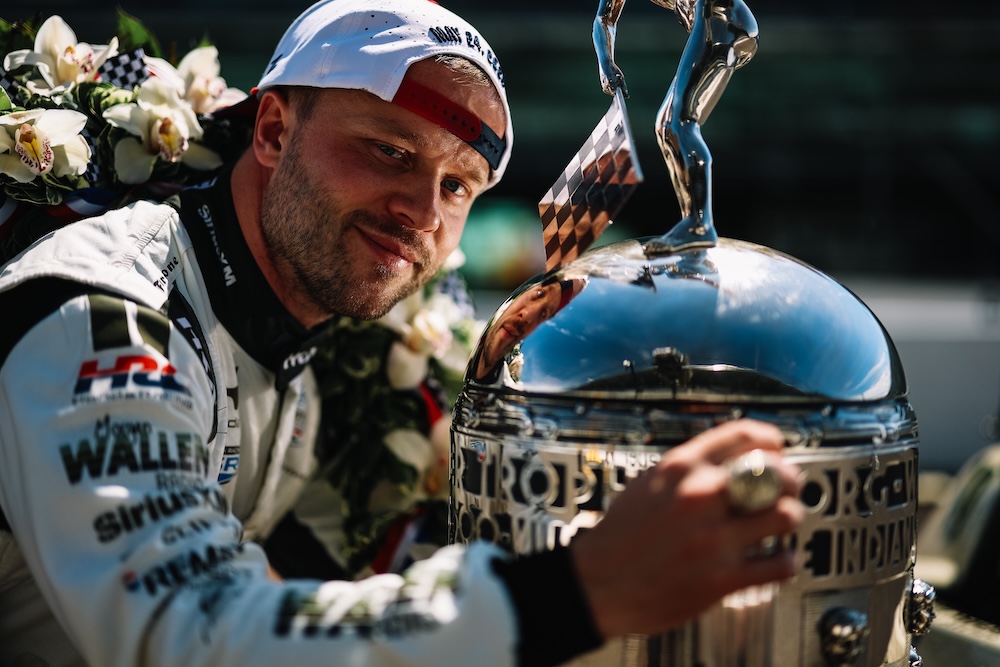
MEYER SHANK RACING: B
Winning the Indy 500 has transformed MSR’s season. Prior to Felix Rosenqvist’s big victory, the team was doing well with Marcus Armstrong taking the largest stride forward, but it was lacking a major result to showcase its progress. That was solved with the Indy win, and if you win the 500, and have both drivers inside the top 10, it’s hard to grade any team’s half-season run lower than a B.
Even so, in the year-to-year look-back to MSR’s position after nine races, Rosenqvist was sitting fourth in 2025 without the Indy win and Armstrong was 11th. In 2026, with the big win, Rosenqvist is down four spots in eighth and Armstrong is up one in 10th. Combined, it’s a net loss, which illustrates Rosenqvist’s boom-or-bust reality through nine races. Rosenqvist rocked with a pole and near win at Long Beach, won Indy, followed up with a sixth Detroit, and the other six have been adrift with finishes of 12th or lower.
Armstrong has been more in the middle, without the same highs as Rosenqvist, but also without the frequent lows. He owns eight finishes inside the top 11, but hasn’t placed better than fifth. Critically, though, Armstrong’s become a serious competitor on ovals, where three of his four best finishes have been generated. The question is whether the Kiwi can turn his fifths and sixths into seconds and thirds and fourths, which would have a huge influence on his stature in the paddock.
Team founder Mike Shank has been clear since the end of 2025 that he needs one of his drivers to close this season inside the top five. Most teams feel like they are who they are at this point of the season, but MSR stands out as one where we don’t know – and they don’t know – where they’ll end up in the pecking order once we’re done in September. A little bit more from both entries would go a long way.
Mike Shank (Co-Owner): “I’d put us as a B. The only reason it's a B is because we won the Indy 500. It’s circumstantial, right? We left a lot of points on the board, just from various dumb ****. We should have won Long Beach. That was not on Felix, by the way. Marcus is doing a really good job for us. But we’ve just left some meat on the bone. We’ve still got some ways to go here.”
Joe Skibinski/Penske Entertainment
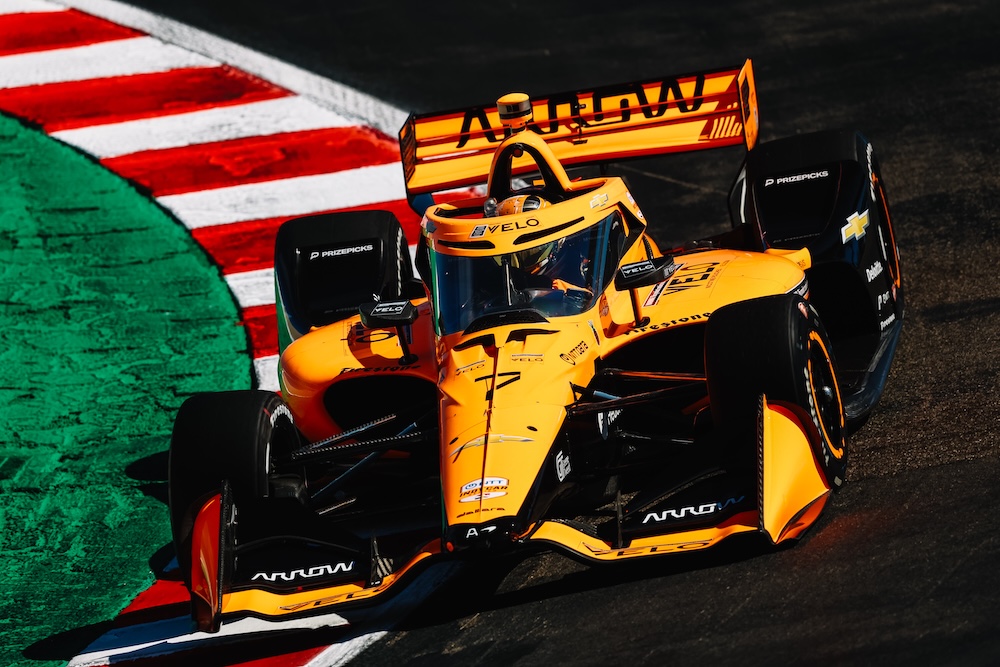
ARROW MCLAREN: B-
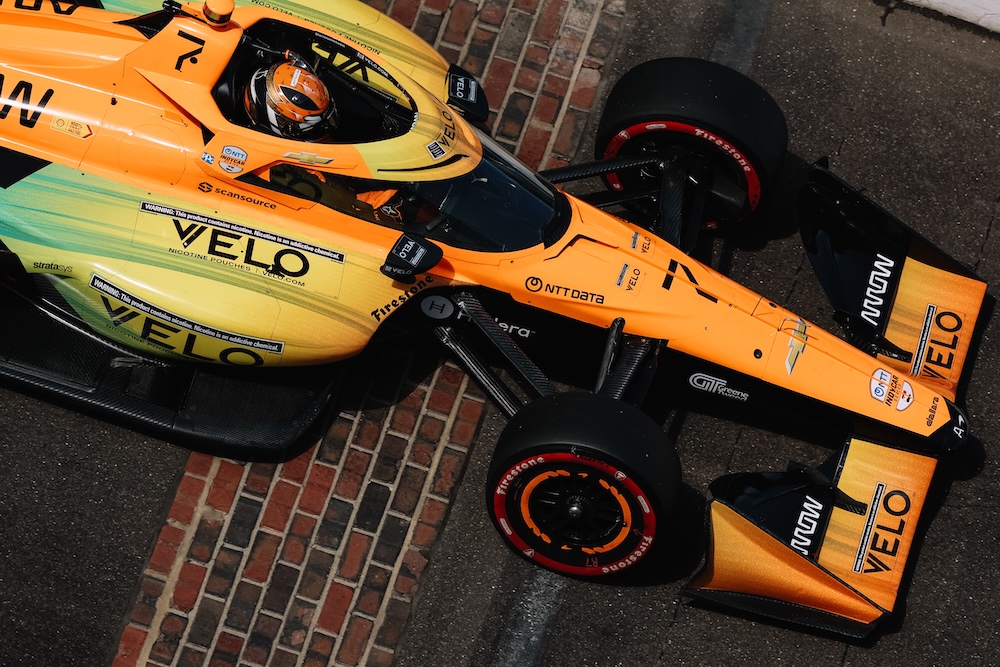
The biggest riser among teams in 2025 was expected to continue closing the imposing gap to Ganassi in 2026, but it hasn’t happened. In fact, it’s seen Andretti with Kirkwood and Penske with Malukas move ahead in the championship, and behind Christian Lundgaard (above) in fourth and Pato O’Ward in fifth, Penske’s Newgarden and McLaughlin are gathering momentum.
The resurgence of Andretti and Penske to displace Arrow McLaren – at least at the halfway point – seems more like a correction than a unfathomable surprise. At the same time, the headstrong performances from O’Ward and Lundgaard that marked the team as one to watch early last year has not carried over to the new championship run.
Maintaining the thrust from 2025 is what should have been Arrow McLaren’s story so far, but it often finds itself as the fourth-best team in the series. O’Ward had four podiums at this stage last year, and has zero in 2026 – he’s yet to finish higher than fourth – with six runs to either fourth or fifth, which quantifies the team’s slight year-to-year decline.
That’s the race-day report. On the setting-the-grid report, O’Ward’s the owner of IndyCar’s greatest street course qualifying improvement of the season with a shot from an average of 16.7 through nine in 2025 to 5.0 this year, and those have come with finishes of fifth, fifth, fifth, and fourth. But then the race-day limitations have emerged where despite starting so close to the front on so many occasions, the progress hasn’t carried over on Sundays.
Odder still, O’Ward hasn’t been a threat on any of the ovals where he’s normally in the hunt for victories; the most recent race at WWTR was a cause for concern as the entire team made no impact and came home with a best result of 10th. O’Ward hasn’t forgotten how to drive, and sitting fifth in the standings isn’t terrible. It’s just adrift from where he’s usually found, and that’s a headscratcher.
On the flipside, Lundgaard has been the team’s top performer with three podiums capped by the great runs to second at Barber and the win at the Indy GP. From seven combined podiums for the duo at the halfway point in 2025 to the three generated by Lundgaard in 2026, the team is lacking the same competitive edge. It has also reached an important point in the season where, without a swift turnaround, Lundgaard and O’Ward are at risk of losing touch to Palou.
Lundgaard (96 points) and O’Ward (103) are in that 100-point danger zone where championship aspirations are saved or lost as the season enters its final phase. It’s not all doom and gloom, but moves need to be made in the next few races for 2026 to be remembered in a more positive light. Resuming the pursuit of Palou is what was expected, and now the battle has grown to catching Kirkwood and Malukas while staving off a rearward advance from Newgarden (104) and McLaughlin (120).
Nolan Siegel has been a pleasant surprise in his final season with the team and was on a solid run from Long Beach through Detroit before being knocked into the wall by Palou at WWTR. He’s 21st in the standings and could edge towards the top 15 with more strong performances to close his time with Arrow McLaren.
The B- is for Lundgaard’s win and team-leading results, plus the fact that Arrow McLaren sits fourth and fifth instead of seventh and eighth while searching for last year’s magic.
Zak Brown (McLaren Racing CEO): “The only reason it would be a B is we're fourth and fifth in the championship. We’re ahead of two Penske cars and we're in a decent position in the championship. Do I feel like the season's been a B+? No, I feel like the season's been a B.”
Joe Skibinski/Penske Entertainment
JUNCOS HOLLINGER RACING: B-
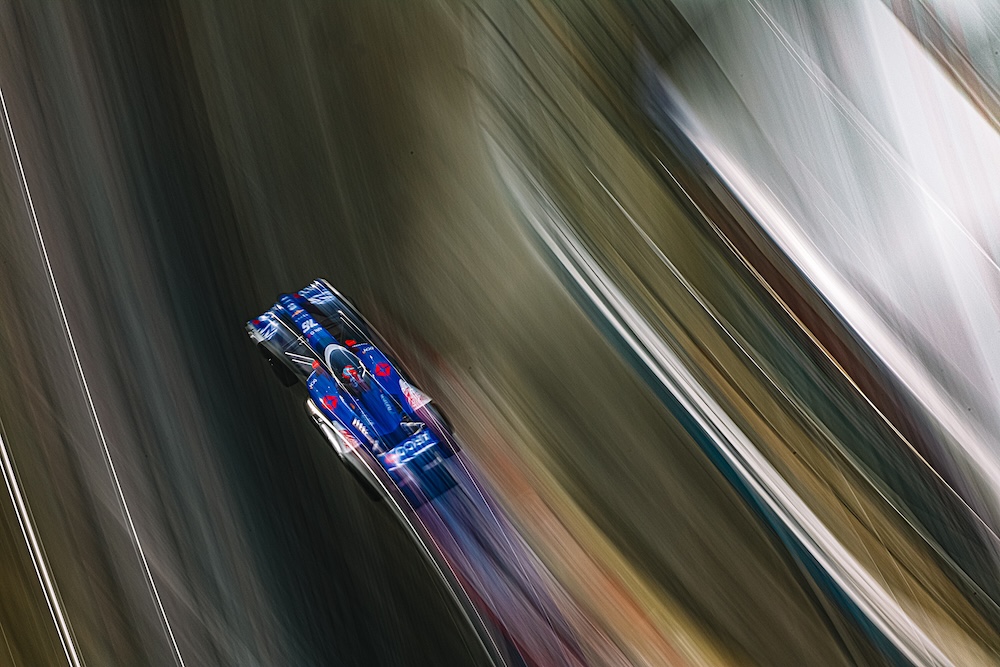
That’s Rinus VeeKay (above), in his first season with the team, holding 13th in the championship. Other than Malukas leading Penske in third, the ongoing competitiveness of VeeKay and JHR has been the biggest surprise of the season. VeeKay’s shift from a skilled but raw and underdeveloped driver at ECR to become the team leader at Dale Coyne Racing last season and the new heart of JHR is among the most impressive transformations I’ve seen in the modern era.
With Phoenix, where he and Palou collided, as the lone exception, the takeaway from the first nine races is how VeeKay has finished all of the other events, and every finish has been inside the top 15. Who are the only other drivers who can make that claim? Kirkwood, Malukas, and Newgarden in vastly superior teams, and Armstrong.
No driver has done more to improve their year-to-year oval qualifying average, and although the Coyne team struggled aplenty in 2025, VeeKay’s 13.8-position gain with JHR cannot be overlooked.
JHR’s history is one of constant lows and mediums with infrequent highs. With VeeKay installed, consistency is the main result he’s delivered, and five of those finishes have been inside the top half of the field with ninth at St. Pete, a career and team best of sixth at the Indy 500, and fourth at Gateway.
At this point in 2025, Conor Daly was 20th in the same car; it was visibly hard to drive on road and street courses, which suggests JHR has made gains on the engineering side as well.
Sting Ray Robb was 26th and next-to-last in the championship with 95 points after nine races last year and is 24th and next-to-last in 2026 with 89 points. He had a great day at Detroit where a season’s best of 14th was earned, but it’s mostly been an exact repeat of 2025 where he’s started 0.8 positions back and finished 0.1 positions down.
Make no mistake; this is a rear-to-midfield team, but with VeeKay in place to build upon its offseason improvements and add in his multi-faceted talents, JHR has turned into a midfield-or-better team in just nine races. Who predicted VeeKay and JHR would be 13th at the halfway point? Nobody. That’s why it gets a B- for performing so far above expectations with a single car.
Dave O’Neill (Team Principal): “I was going to be reasonably hard on ourselves, and I’d say we were a B+ for what we did at Indy with our qualifying and our race performance. But for the full team, I’d go for a C+.”
Chris Owens/Penske Entertainment
ECR: C
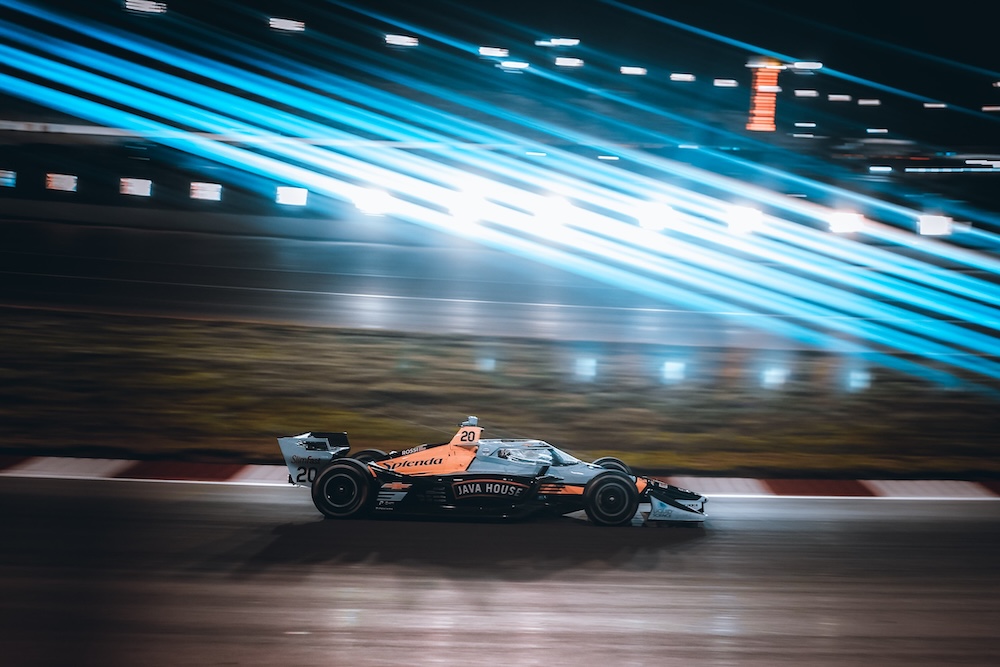
It’s been a tale of gains and losses for ECR this season as Alexander Rossi (above) and Christian Rasmussen have made meaningful year-to-year strides in qualifying, but turning those starts into better finishes has been an issue.
Rasmussen sits second with the most starting positions gained on average (3.9) and Rossi has improved his starting position as well (1.3). On the flipside, with finishes, Rasmussen is third-worst on the year-to-year ranking, with his average being 4.0 positions lower than 2025, and Rossi is fifth-worst at 2.6 positions lost.
For Rossi, it’s been a plunge in May and June after a highly encouraging start to the season in March and April when he rose as high as 10th in the championship. He’s retreated to 14th after the crashes and adversity in Indy, and more of the same at Detroit and WWTR, but it’s his earlier form that shows how much ECR has grown. The team has also gotten faster and more consistent on pit lane, which is an important gain.
And then there’s Rasmussen who, despite having the worst season of his young career, is only down six positions in the standings from 2025 in 22nd. Of course he starred at WWTR, but Rasmussen’s real revelations have come in street course qualifying, where he’s jumped 5.6 positions from last year’s first nine with an average of 11.8. Rossi’s done the same thing with oval qualifying by gaining 6.0 spots with a 6.0 average.
When calamity with hybrids and engines and walls are avoided, Rossi and ECR are top-10 material. Rasmussen has one podium and six other results that are no better than 19th, and likely could have won at Phoenix if he hadn’t come down with a case of the zoomies.
The C- is for an encouraging quarter-season for Rossi that’s since gone sideways, and a rolling disaster for Rasmussen that just had its first reprieve.
More than any other team, I look at ECR and see the possibility of a big turnaround in the second half of the season. Ganassi isn’t going to vastly improve. Penske isn’t going to make great gains, etc. But ECR can. Will they?
Ed Carpenter (Co-Owner): “It’s hard to give ourselves anything higher than a C just because we haven't had enough results. On the flipside of that, outside of our results, I do think our performance has been better, our potential has been higher. Both cars are qualifying above where they were last year. Our pit stops are way better. But purely just on results, I would say a C because results are all that matter.”
James Black/Getty Images
RAHAL LETTERMAN LANIGAN RACING: C-
Similar to Palou at Ganassi, RLL is facing the same dynamic with one of its three drivers enjoying a strong start to the season while the other two are disconnected from the team leader in the championship.
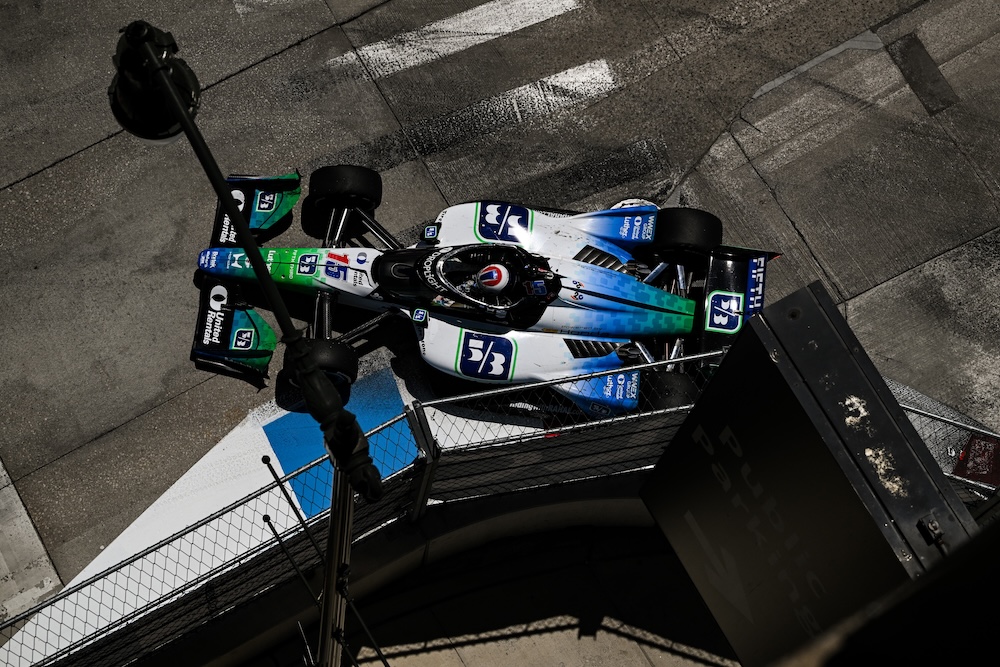
Graham Rahal (above) was holding ninth in the standings until his solo crash at WWTR dropped him to 11th, but that doesn’t dampen how far he’s come after sitting 18th at this stage of the 2025 season. In his second year with race engineer Yves Touron, Rahal and the Frenchman have found something special, and after things went backwards with championship performances of 15th, 18th, and 19th over the last three years, Rahal has had more podiums in 2026 – three so far – than he did in the five previous seasons combined.
When Christian Lundgaard was with RLL through 2024, he was the clear leader in the standings while Rahal was a distant second. Now, with his No. 15 team in a groove, Rahal’s returned to the leadership position he once held and has become a top 10 player at most events.
After Ericsson and Malukas, Rahal (along with Newgarden) is the biggest mover among drivers with seven championship positions gained, and that’s a refreshing reality for the 37-year-old. But it’s not enough to mask how much progress needs to be made with the rest of the team.
Louis Foster was 23rd last year and is up to 19th, which is certainly a good thing for the talented sophomore, but rookie Dennis Hauger, in a Dale Coyne Racing team with fewer resources, is 18th. The tale of Foster’s season, outside of the pair of seventh-place finishes he’s earned, has been one of frustration. Routinely down in qualifying, Foster’s started nearly two positions back from his 2025 average, and that’s made for the need to make up more ground, which he’s done to the tune of improving his average finish by just over three positions.
And yet, most of those drives have been to midfield destinations of 13th, 14th, 16th, or outside the top 20 on four occasions. The 2024 Indy NXT champion can be better, and has plenty left to learn about living within the limits of the tires. But I also can’t think of a driver who deserves a heavy engineering upgrade more than Foster, because there’s no reason for him to be this far behind Rahal. More often than not, he’s driving like an animal to finish 19th or some other distant result that doesn’t reflect on his true capabilities.
Last season, Devlin DeFrancesco sat 25th in the standings after nine races with RLL’s third car, and in 2026, and in the same car, Mick Schumacher sits 25th. The rookie has dealt with all of the things a rookie would never want with three different race engineers over a nine-race span while learning oval racing and all of the tracks but one (his first test was at the Indy road course).
Remarkably, Schumacher’s shown the most aptitude for ovals, and with an engineering legend in Eddie Jones attached to his car through this weekend at Road America – RLL and Jones will decide whether he wants to keep coming out of retirement to do more races – Schumacher has a chance to shine at the big and flowing road course. Then it’s onto Mid-Ohio, which also offers another chance to produce a positive result at a track that should suit Schumacher’s experience.
Rahal is performing at a high level while his teammates, in different ways, are the embodiments of untapped potential. If this was a two-car team, it would receive a higher grade thanks to Rahal’s big efforts, but with two out of three cars deep in the bottom half of the field, the weighting pulls a B- or C+ down to a C-.
If Jones commits to complete the season, we should see a better version of Schumacher. He isn’t a 25th-place driver. In the second nine, Schumacher stands as the RLL driver who can make the largest leap. Foster is tasked with keeping his spirits up and his ears open while waiting on a do-over in 2027.
Bobby Rahal (Team Co-Owner): “If I was going to average them all out, I'd probably say a B- at best, maybe a C+, just because we’ve been hoping for some better results across the board.”
James Black/Getty Images
DALE COYNE RACING: C-
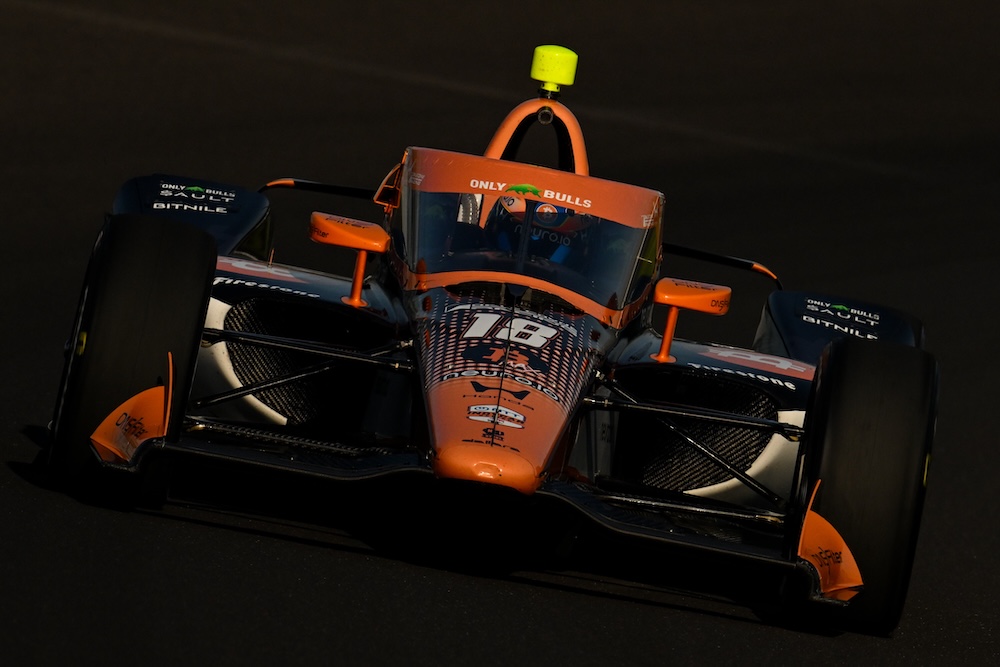
The potential for Romain Grosjean (above) and Dennis Hauger to embarrass much bigger teams is always present, but the ability to deliver on that potential is where DCR has fallen short at most events in the opening half of the season.
Grosjean starred in qualifying at Phoenix but a pre-race assembly error killed his clutch line and he didn’t take part in the race. Hauger was a spectator at WWTR as a fuel leak prevented his participation, and he has missed more track time at other events for smaller reasons.
Since he qualified third to open his rookie campaign, Hauger’s started 19th or worse in seven out of the last nine races – five of those have been 22nd or lower – and despite all of his prodigious talent, that’s one hell of a mountain to ask any rookie to repeatedly climb. Grosjean’s started 20th or worse five times, which confirms the area where the team needs to improve.
DCR had its team manager Mitch Davis retire before the Indy 500, had the esteemed Michael Cannon rock up right before the season to engineer Hauger and exit before Long Beach, and Hauger’s on his third or fourth race engineer so far. Like Schumacher, that’s added another degree of difficulty that isn’t needed with a rookie.
DCR is ranked ninth among the 10 teams on drivers’ average championship position, which is the same it held at this stage in 2025. Hauger, in 18th, and with new race engineer Ben Siegel, is ripe for a better run throughout the season’s second half. Grosjean, in 20th, has the same potential with Bill Pappas. The C- is for the frequent turbulence that’s led to both drivers missing the mark and missing races.
That’s been DCR’s story in 2026, but I’m feeling optimistic for what it can achieve if the instability is put to rest. ECR’s Rossi is only 19 points away from Hauger in 14th. Grosjean has a more imposing crater to clear, but 30 points would get him to Simpson in 15th. This could be a solid two-car effort to finish the season if the team and drivers can avoid the cartoon anvils fired in their direction and the ones they drop on themselves.
Dale Coyne (Team Owner): “C. I was hoping to be better. We started out strong, but we haven't performed well since we started. We race better than we qualify, so at least we can race. We have not qualified well. Neither one of our guys have qualified well, and is that them or is that us? It's always a combination of both, right? But I was hoping for a little more, for sure.”
Joe Skibinski/Getty Images
AJ FOYT RACING: D
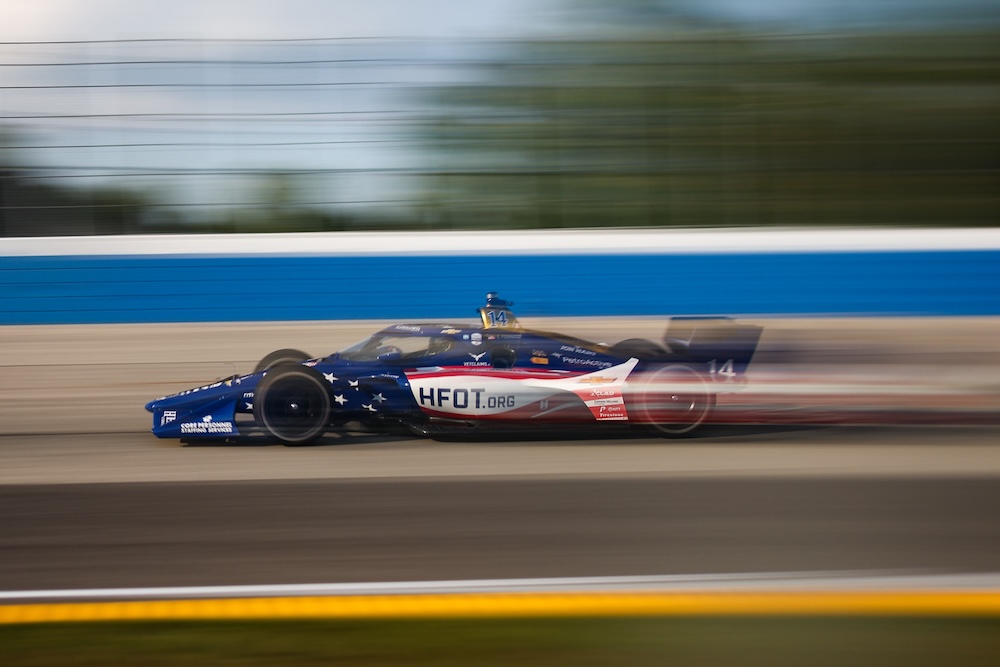
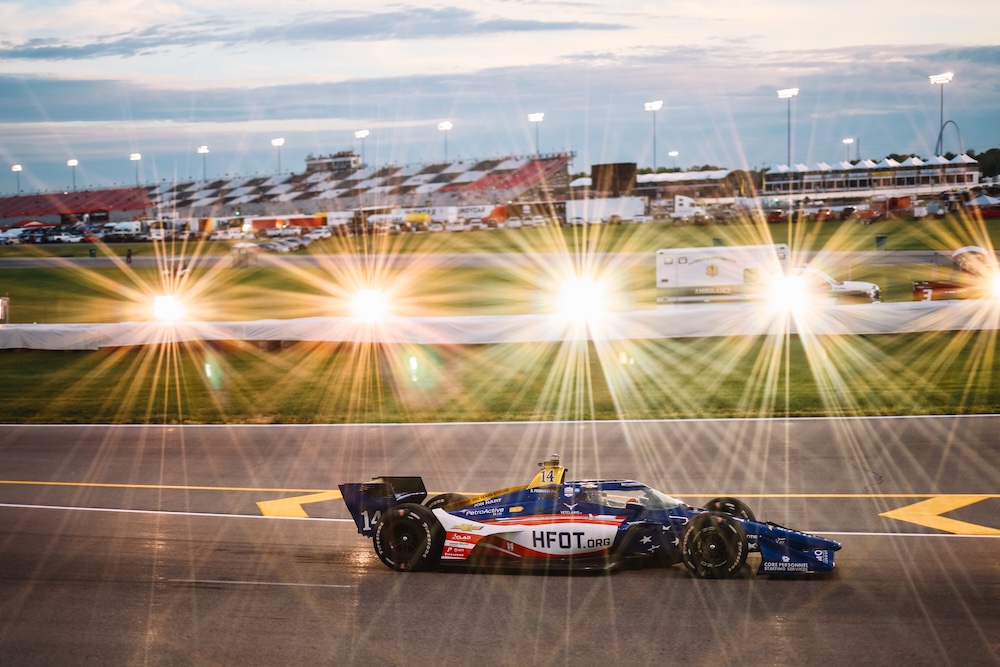
Santino Ferrucci (above) was one of the standout performers to open the 2025 season as he held ninth in the championship at the halfway point. Then-new teammate David Malukas was close behind in 12th to give Foyt its best average placement in the championship in ages – it ranked sixth, just a touch behind Andretti Global and Arrow McLaren.
The fact that Foyt has fallen to 10th and last among teams this year isn’t a surprise after Malukas was drafted upwards to Team Penske and his replacement, Caio Collet, has been a rocket at times without much to show for his prodigious speed. But the change in results for Ferrucci, who’s down seven positions in 16th, is the real surprise.
He’s faced some adversity to start 2026, just as he did last year, but he also delivered four top fives across the first nine races in 2025. Forget the bad days at St. Pete and Detroit; it’s the little something extra from last year that’s disappeared on the clean days, with far too many instances of the No. 14 car being at the race, but not really in the race.
Collet is a ball of fun to watch, and despite the major crash at the Indy 500 and a few other rookie mistakes, he’s been a promising addition to the team. Gateway was the purest demonstration of his capabilities until the motor erupted, and he’s clearly a quick study on ovals. Like Hauger, if the team can provide him with mostly fast and problem-free cars, Collet will be one to stand up and watch over the final nine.
For a team in a technical alliance with Team Penske, the soft start to the season is hard to grasp. Without the Penske support, there would be a better grade to assign for Foyt, but when the lead driver falls deep into the midfield, hasn’t been a podium threat on the ovals, and its rookie is down in 23rd place in a field of 25 drivers, it’s tough to give a passing grade.
Larry Foyt (Team Principal): “I'm certainly not happy with our performance. We just haven't delivered the results, I'll put it that way. If I had to put a letter on it, I don't want to give it an F, but it's not where we want to be. The potential’s there, right, like we see the potential in Caio. And we see the potential with Santino, so we know what's there, and we just haven't delivered on it, so I’ll go with a D. I'm bullish on this second half the season, because I want to see us run how I know we’re capable. Everything is there, and we just have to deliver the results.”
Marshall Pruett
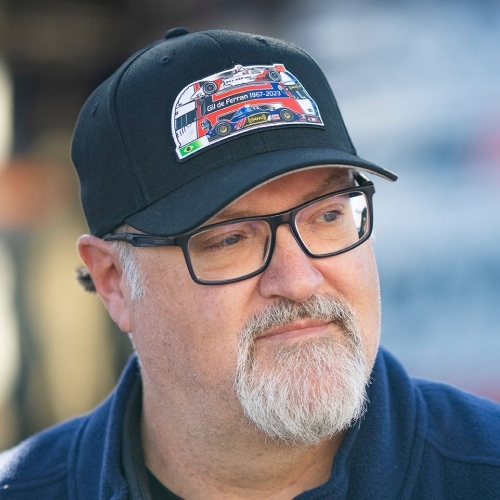
The 2026 season marks Marshall Pruett's 40th year working in the sport. In his role today for RACER, Pruett covers open-wheel and sports car racing as a writer, reporter, photographer, and filmmaker. In his previous career, he served as a mechanic, engineer, and team manager in a variety of series, including IndyCar, IMSA, and World Challenge.
Read Marshall Pruett's articles
Latest News
Comments
Comments are disabled until you accept Social Networking Cookies. Update cookie preferences
If the dialog doesn't appear, ad-blockers are often the cause; try disabling yours or see our Social Features Support.