Don Garlits Museum of Drag Racing
Don Garlits Museum of Drag Racing: Big Daddy's house
The Don Garlits Museum of Drag Racing in Ocala, Florida, is a place where all speed and power lovers must visit — a place where the history of the fastest, loudest, and most aggressive form of motorsport on earth has been preserved not as a polite institutional collection, but as a personal obsession enshrined for all to enjoy.
Why the Don Garlits Museum is one of the most important motorsport destinations in America
What separates this place from every other racing museum in the country is the density of genuine firsts and a truly unhinged dedication to speed. “Big Daddy” Don Garlits was the first driver to break the 200, 250, and 270 mph barriers in the quarter mile. The cars that did it are here. Not replicas, not tribute builds — the actual machines that stood at the edge of what physics and engineering were willing to allow. Some 90 racing cars can be seen in the drag race building, while 50 more are in the antique car building, and nearly all of them were assembled through one man's stubborn refusal to let drag racing's history disappear into someone's scrap pile. This is a timeline of bravery measured in quarter-mile increments, and it is unlike anything else in American motorsport.
The museum is also home to the International Drag Racing Hall of Fame, where inductees are selected annually by a committee of veteran drag racers and other industry legends. That institutional gravity — the Hall of Fame sitting inside the personal collection of the sport's greatest driver — gives the whole place a weightiness that few museums have pulled off.
The story behind the museum: How "Big Daddy" built a legacy
The museum is, at its core, the house that Don Garlits built. His West Coast rivals mocked him as the "Swamp Rat" because he came from Florida, so he donned that name with pride, painting it on all of his home-built racers and then crushed the California competition. That is the essential Garlits story: take the insult on the chin, then put it on the door, and beat ‘em with it.
The pivot point of the entire collection came on March 8, 1970. A transmission exploded, ripping Garlits' car in two and blowing off half of his right foot. Despite how insanely metal that injury was, it didn’t usher in Don’s retirement, as it might with many, it simply marked his reinvention.
Garlits moved the engine behind the driver, changing the fundamental architecture of the Top Fuel dragster and rendering every front-engine car in existence obsolete almost overnight. He then began collecting his own machines because he understood something nobody else in the sport had figured out yet: in an era when yesterday's record-breaker became today's spare parts, somebody had to save the history. The museum opened in 1976 and has been growing ever since.
Three must-see machines
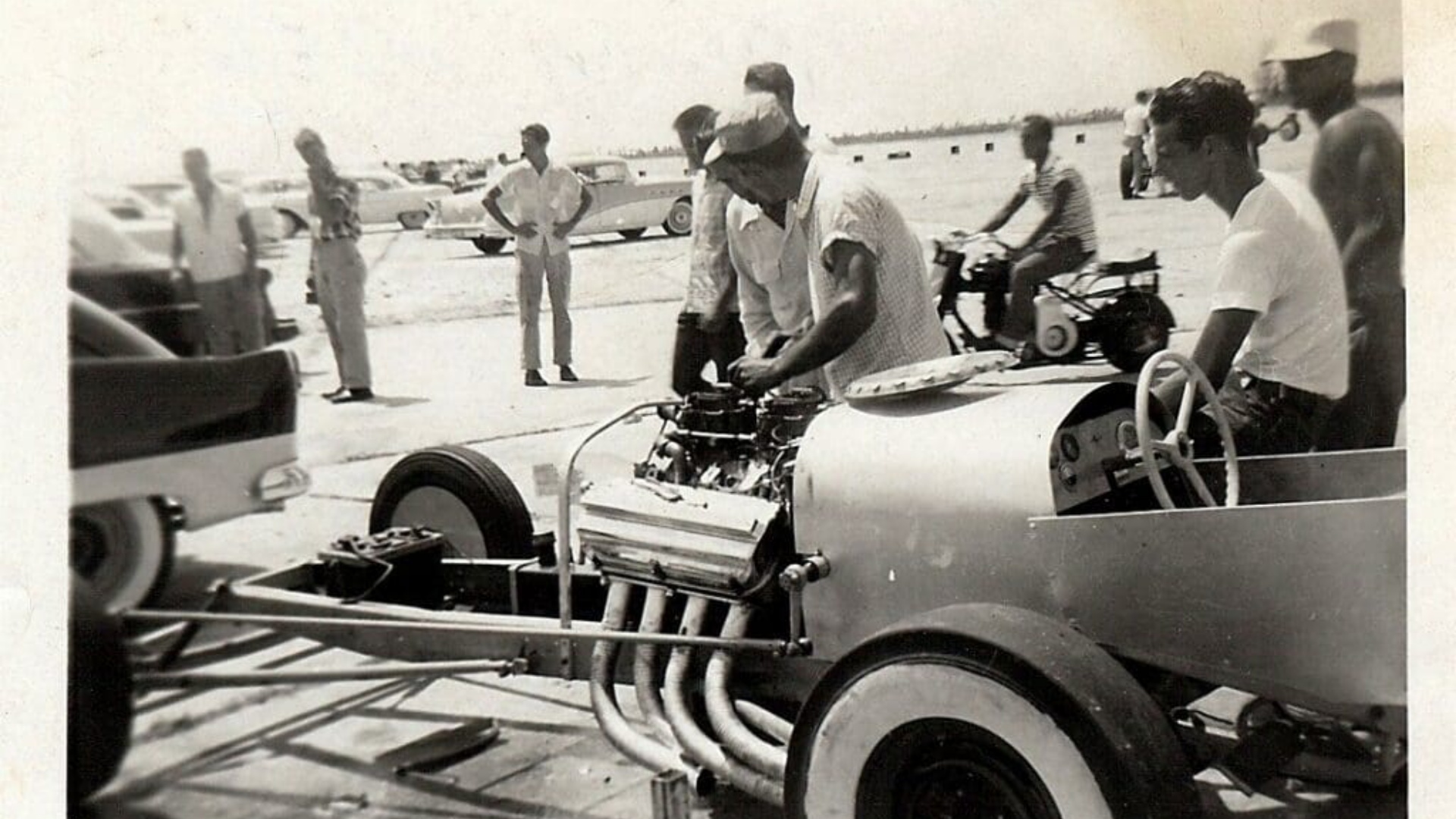
Swamp Rat I: Built in Don's home garage, Swamp Rat I ran from 1956 to 1961. Garlits set his first world record of 8.79 at 176.40 mph in it, with its fastest elapsed time being 8.23 at 180 mph. It is a crude, pipe-frame front-engine rail; a Slingshot dragster with a Hemi up front and the driver sitting directly behind the rear tires. Hot Rod Magazine once called his first dragster ugly enough that they declined to photograph it. Naturally, it is now displayed with pride.
Swamp Rat XIV. This is the car that changed everything. The first successful rear-engine Top Fuel dragster was built in direct response to the 1970 transmission explosion that nearly killed him. Moving the engine behind the driver removed the single greatest source of catastrophic injury in the sport. Every Top Fuel car running today is a direct descendant of this machine. If drag racing has a single most important artifact, it is sitting in Ocala, Florida.
Swamp Rat XXX: Swamp Rat XXX won the NHRA championship in 1986 with a quarter-mile speed of 272.55 miles per hour. It crashed at a race in Spokane, Washington, and, along with Garlits, retired from active competition. A sister car to Swamp Rat XXX now resides in the Smithsonian. The one in Ocala is the car that won the championship. Take a moment with that.
Key museum facts
Address: 13700 SW 16th Ave, Ocala, FL 34473 — just off Interstate 75
Hours: Daily, 9:00 AM – 5:00 PM. Closed Thanksgiving and Christmas
Admission: Adults: $22 | Seniors (60+) and Military/Veterans: $17 | Youth (13–18): $17 | Children (5–12): $10
Phone: (352) 245-8661
Collection: Nearly 300 vehicles across two buildings
Plan for: Minimum two to three hours; serious enthusiasts routinely spend four or more
What you can do at the Don Garlits Museum that you cannot do anywhere else
The most extraordinary option available here is a private tour with Don Garlits himself. For $100 per person for small groups, the man himself will take you behind the scenes, sharing firsthand accounts of the saga of the Swamp Rat. At 92 years old, he still shares stories with a sparkle that keeps these stories and history alive. There may be no comparable experience in American motorsport — standing inside a collection of iconic cars with the man who built them telling you why and how. However, you should call ahead and confirm availability before visiting.
Periodically, the museum hosts Cacklefests — events where historic dragsters blast to life once more, filling the air with bright thunder and the eye-watering scent of nitromethane that defined the golden era of the strip. The museum also hosts the Mopars and other swap meets, typically in fall and spring, which draw serious collectors and rare parts vendors.
Don Garlits lives next door to the museum with his wife Pat, his high school sweetheart, and can sometimes be seen on his lawn tractor mowing the grass, which is the perfect ending to the story of the godfather of drag racing.

Peter Corn
Peter Corn is an automotive writer and storyteller. Peter has spent nearly a decade writing about cars, trucks, and motorcycles for some of the best publications in the business. He believes the best automotive stories aren't really about the machines at all, but instead, the people who love them.
Read Peter Corn's articles
Latest News


Comments
Comments are disabled until you accept Social Networking Cookies. Update cookie preferences
If the dialog doesn't appear, ad-blockers are often the cause; try disabling yours or see our Social Features Support.