Chris Graythen/Getty Images
Be prepared for familiar frustrations as NASCAR goes superspeedway racing again this weekend
Well, it’s Groundhog Day again.
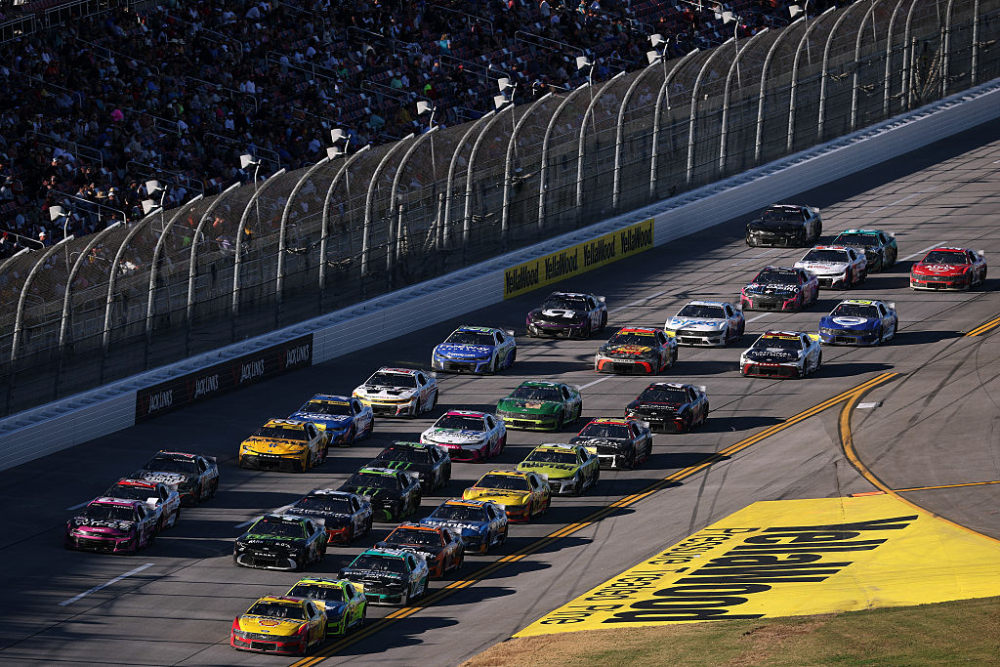
Oh, I’m sorry. I meant to say it’s superspeedway racing week again. Forgive me for mixing the two up; it’s only that what we’re going to see this Sunday in the NASCAR Cup Series race will feel predictable and look similar to other superspeedway events.
And that is why it feels important to offer a warning ahead of this weekend’s activities: there will be fuel saving. The pace of the race will be slowed, and we’re likely to see drivers gridlocked.
NASCAR altered the stage lengths for this weekend in an effort to mitigate such a strategy. The industry, including the race teams who are working to what is best for the success of their day, knows it doesn’t make for the best visual. At this current time, it is the most hated aspect of superspeedway racing.
But let’s not fool ourselves, the fuel-saving strategy is not going to disappear on Sunday. NASCAR hasn’t solved it by implementing different stage lengths. If anything, the saving won’t be as extreme, and perhaps that lends itself to a slightly different-looking race.
“It’s not going to stop,” Ryan Blaney said. “We’re still going to save gas, maybe just a little bit less than what we have.
“It’s still a topic. We’ve talked about it. We’ve had great sit-downs with NASCAR, and it’s like, how do we change the car up to where you don’t have to take gas, or you don’t have to save as much fuel? I would love to personally see them make them drive so bad that you want tires so that the fuel game is obsolete now because you’re taking four tires. That is what my hand would be raised for. So, it’s still going to be a topic, but at least they’re trying something and working on it.”
The anticipation of seeing this procedure change is no different from when the series goes to a racetrack with higher horsepower, lower downforce, and softer tires. It brings questions and hope that it will produce a different type of race. But remember, there have been times when the hype around that hasn’t matched what was then seen on Sunday.
Talladega could be another one of those moments. You cannot put the toothpaste back in the tube.
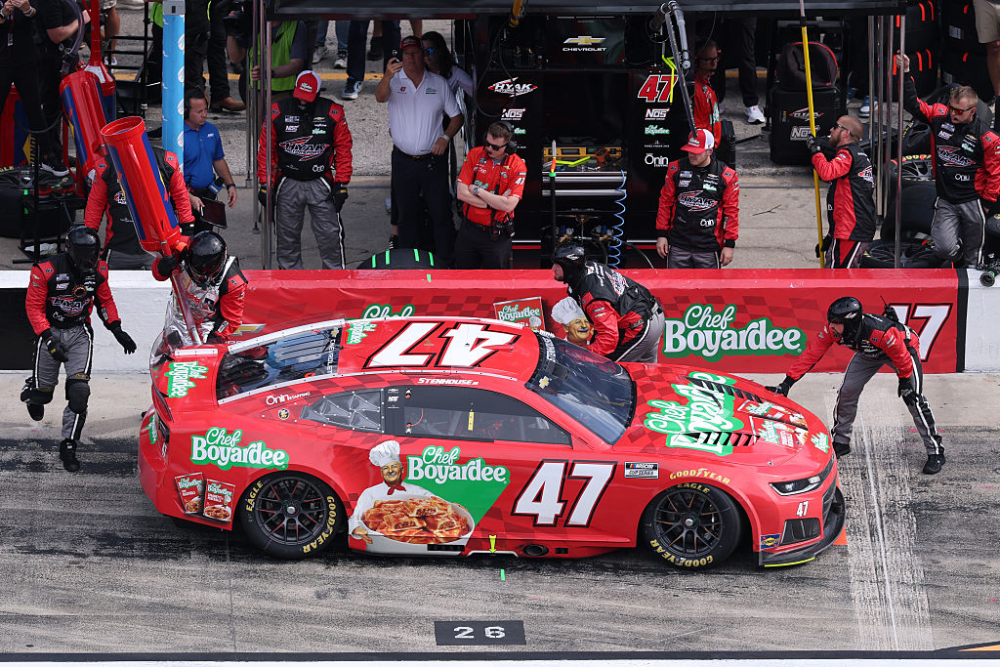
“I think I’ll probably still save fuel because you still have to make a pit stop after the stage is over,” Ricky Stenhouse Jr. said. “You’re still going to want to put … especially after the second stage, going into the third stage, you’re still going to want to put the least amount of fuel in as possible. … I’m sure we’ll still save some fuel. I don’t know if you’re going to spend a lot of time saving, but you’re still going to save fuel.”
A team urging their driver to save fuel is still the best way forward. It’s all about getting themselves in position for the end of the race to go for the win. And there is no unlearning or undoing that.
“You just can’t unlearn things,” Hendrick Motorsports crew chief Alan Gutafson said before the season-opening Daytona 500. “As the margin in the cars has gotten less and less and less … you have to find some advantage, somehow. I think we all learned through the rules and the cars becoming extremely similar that you had to get advantages in other ways besides what, at the time, was conventional, and that was saving fuel and jumping people on pit stop cycles. Well, that came out of necessity for the rules package, and I just don’t see where you unlearn that.
“Even if you went back to a different type of rules format and the cars were opened up more, and there were bigger disparities to the car. That would still be somewhat of a factor. … I think it’s here to stay.”
There is a positive, however.
NASCAR is clearly open to trying something and has been listening to the feedback that fuel-saving is not what people want to see during a race. The drivers, while they understand what their team is trying to accomplish, have admitted they don’t enjoy it either, as it’s nothing more than logging laps while getting yelled at about their throttle input.
But NASCAR also knows the stage lengths won’t be the solution. It’s essentially a band-aid to see if there’s anything to be learned from it.
A change to the car is likely the bigger piece, and that won't happen until 2027 at the earliest. NASCAR is planning a pre-season test in January at Daytona to work through car components and potential changes, which the industry is reluctant to do during the season.
“I think it’s important to point out that this is a tool now that the teams know, and it’s not something that I think is ever going to go away because these guys will look for every possible advantage they can get,” NASCAR EVP and chief racing development officer John Probst said. “And that’s reasonable on that end. I think what we can do is take steps to mitigate that and I think looking at the sporting stuff we can do quick and get a read on it this year, and then looking at some car things next year, is our best chance for success there.”
So, patience is a virtue. Heed the warning. Do not go into Sunday’s race expecting to see something radically different because you’re going to be left disappointed.
Kelly Crandall
Kelly has been on the NASCAR beat full-time since 2013, and joined RACER as chief NASCAR writer in 2017. Her work has also appeared in NASCAR.com, the NASCAR Illustrated magazine, and NBC Sports. A corporate communications graduate from Central Penn College, Crandall is a two-time George Cunningham Writer of the Year recipient from the National Motorsports Press Association.
Read Kelly Crandall's articles
Latest News
Comments
Comments are disabled until you accept Social Networking Cookies. Update cookie preferences
If the dialog doesn't appear, ad-blockers are often the cause; try disabling yours or see our Social Features Support.