The 2026 Super GT season has arrived. Here's what you need to know
This weekend marks the start of a new season for the Autobacs Super GT Series, the top sports car racing championship in Japan, and the nation’s most popular domestic racing series.
And this weekend is also the start of a new chapter as RACER Network and RACER+ become the new broadcast home for Super GT in the U.S. and Canada. All seven rounds of the 2026 Super GT Series will be broadcast live and on-demand, beginning with this weekend’s opening round at Okayama International Circuit. Coverage for the 300km, 82-lap race at Okayama starts Sunday at 12:09am ET.
Quite a few people may be watching their very first Super GT race this weekend, though they may be familiar with the series in some form already. Going back to its origins as the All Japan Grand Touring Car Championship (JGTC) in the mid 1990s, anyone that’s picked up a driving/racing game like Gran Turismo or Forza Motorsport has almost certainly driven a GT500 or GT300 class car in the virtual world.
The two classes are still around to this day, though the cars have matured and evolved rapidly over three decades. Today’s GT500 and GT300 cars make significantly more horsepower than their names suggest, a carryover from previous horsepower limits that inspired their names 30 years ago.
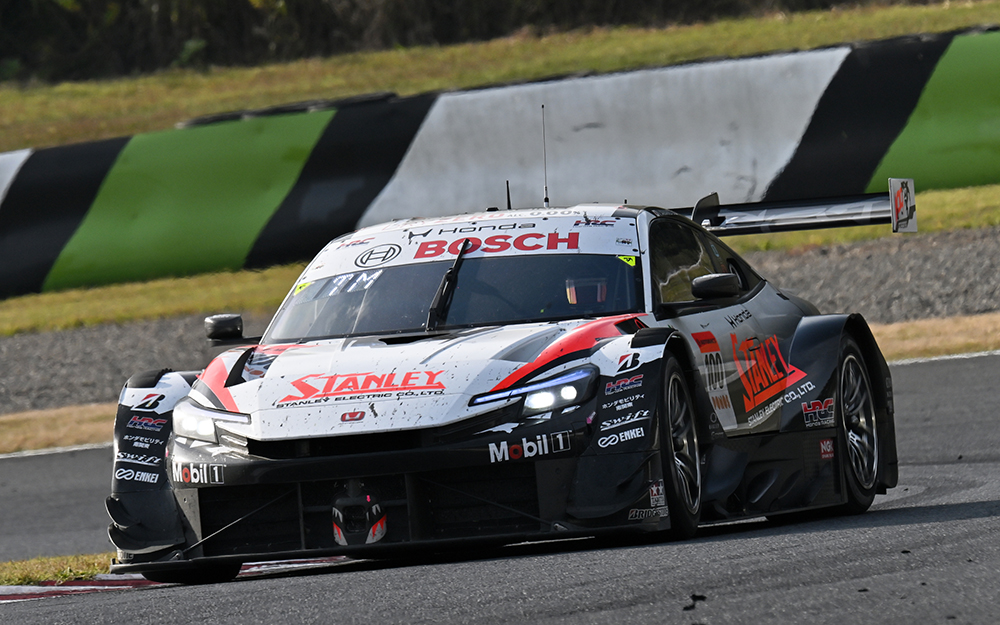
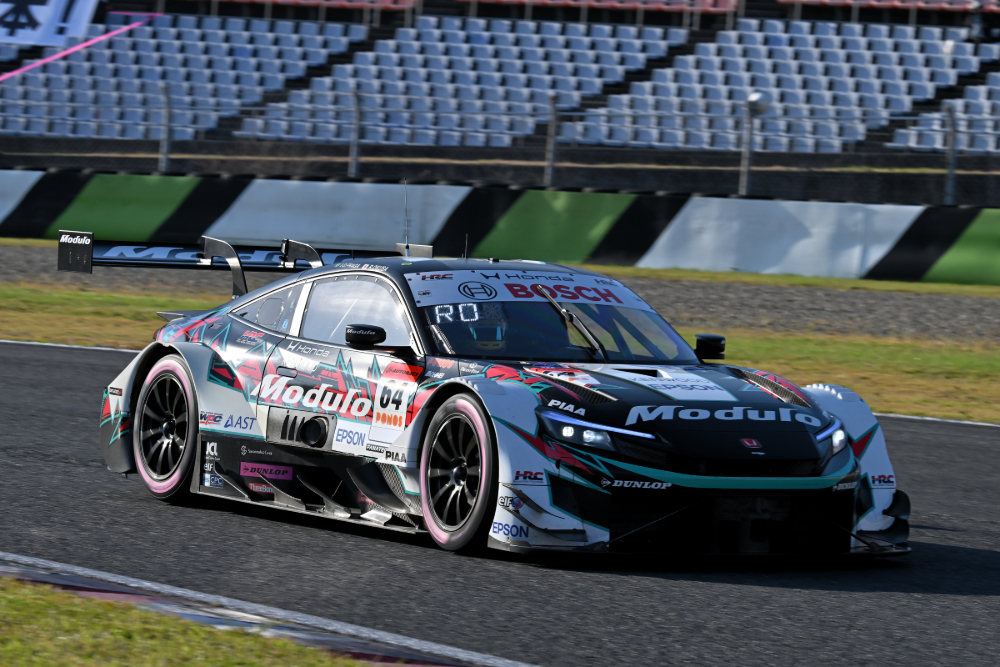
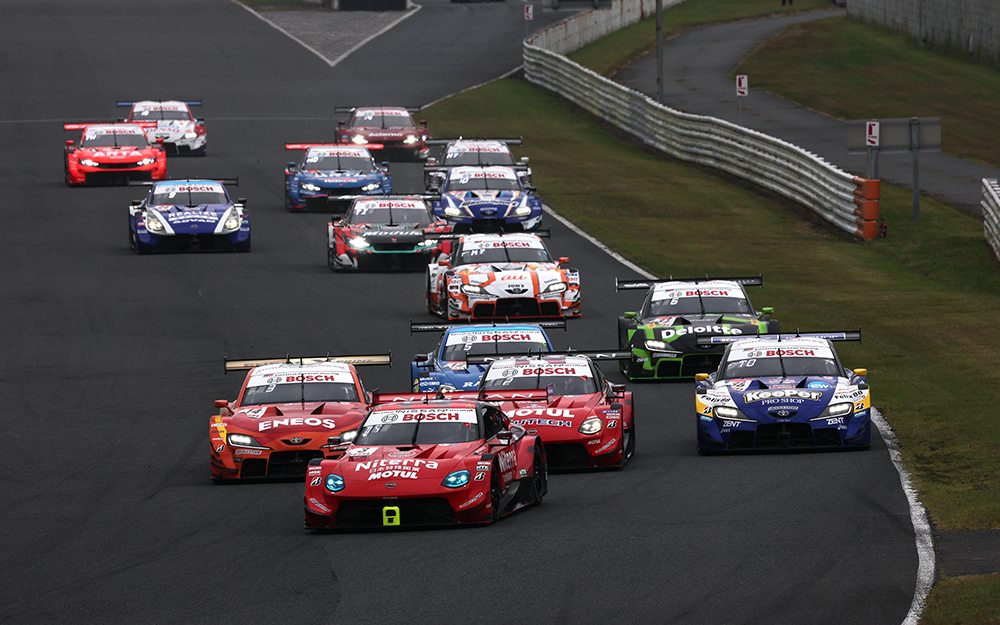
As the premier class, GT500 is a three-way heavyweight showdown between Japan’s traditional “big three” automakers: Toyota with the GR Supra, Honda with the all-new HRC Prelude GT, and Nissan with the Z NISMO.
Just like the cars in NASCAR or Australian Supercars, GT500 cars are silhouette race cars which look like their street-legal counterparts on the surface, but are purpose-built for top-level motorsport. They weigh less than a road-going Mazda MX-5, the two-liter, turbocharged four-cylinder engines pump out well over 550hp, and generate more downforce than a contemporary Le Mans Hypercar.
It’s actually closer to say these cars are like DTM’s silhouette touring cars of yesteryear, because the current crop of GT500s are the product of a unified set of regulations between Super GT and the DTM that were crafted during the 2010s. But while DTM axed the “Class One” formula after 2020, Super GT’s top class continues to not only survive, but thrive, with factory teams running colorful cars with exciting line-ups of factory drivers.
Yet there’s a somewhat common saying among Super GT fans: “You come to the race to watch GT500, but you stay to watch GT300.” The GT300 class of today is actually a combination of three different technical regulations, competing on equal footing thanks to special Balance of Performance parameters. Plus, all but a handful of teams field All-Pro driver combinations, placing the competitive standard quite high up the GT racing landscape.
Most GT300 teams run well-established, very successful GT3 cars from top manufacturers including Lexus, Nissan, Porsche, Ferrari, Mercedes-AMG, Lamborghini, Aston Martin, and BMW. They compete against cars built to Japan’s GTA-GT300 regulations, which are built and developed specifically for Super GT.
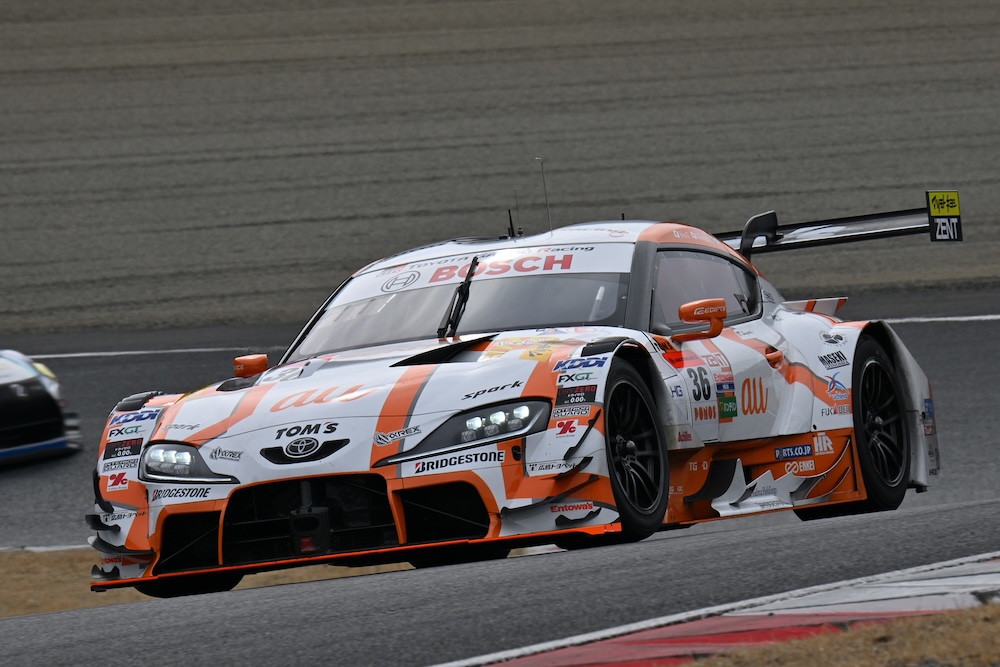
Toyota goes head to head with Honda and Nissan in the headling GT500 class, which features cars built to the unified regulations that the series previously shared with DTM.
Just like a GT3 car, contemporary GTA-GT300 cars are built around the mainframe of their street-legal counterparts, but so expansively modified that you’d be forgiven for thinking they were silhouette cars like the GT500s. They now have driver aids similar to a current GT3 car, they can use any engine built by the manufacturer, and bespoke aerodynamic development is allowed. There’s even a GT300 version of the Lexus LC 500h with a hybrid drivetrain system, using technology adapted from Toyota Racing’s line of championship-winning WEC prototypes.
Also, there is the GT300 Mother Chassis platform, introduced over a decade ago as a cost-contained alternative to GT3 cars. The Mother Chassis (MC) provides teams with a standard carbon fiber monocoque, a 4.5-liter V8 engine, and several other common components with which teams can design their cars around. This ruleset has since fallen out of favor in recent years, now only used by one team in 2026.
One other component that has made Super GT stand out from the competition is that it’s been one of the last major sports car racing series to sanction competition among multiple tire manufacturers. Bridgestone, Dunlop and Yokohama supply tires to teams in both categories, and Michelin supplies select GT300 teams, competing as fiercely as the teams and automakers do for supremacy.
Regrettably, 2026 will be the last year that we’ll see this multi-manufacturer tire competition. In 2027, Super GT will follow the lead of other championships and choose one exclusive tire supplier for GT500, and another for GT300.
The combination of these factors means that Super GT has a legitimate claim to be the fastest sports car racing series on the planet today. At Fuji Speedway, the current qualifying and race lap records in GT500 are more than two seconds quicker than the respective records in the FIA WEC’s Hypercar class – only the LMP1 Hybrids of a decade ago are quicker when it comes to sports cars. We’ll have to wait until next year to see how they measure up with both categories on “control” tires.
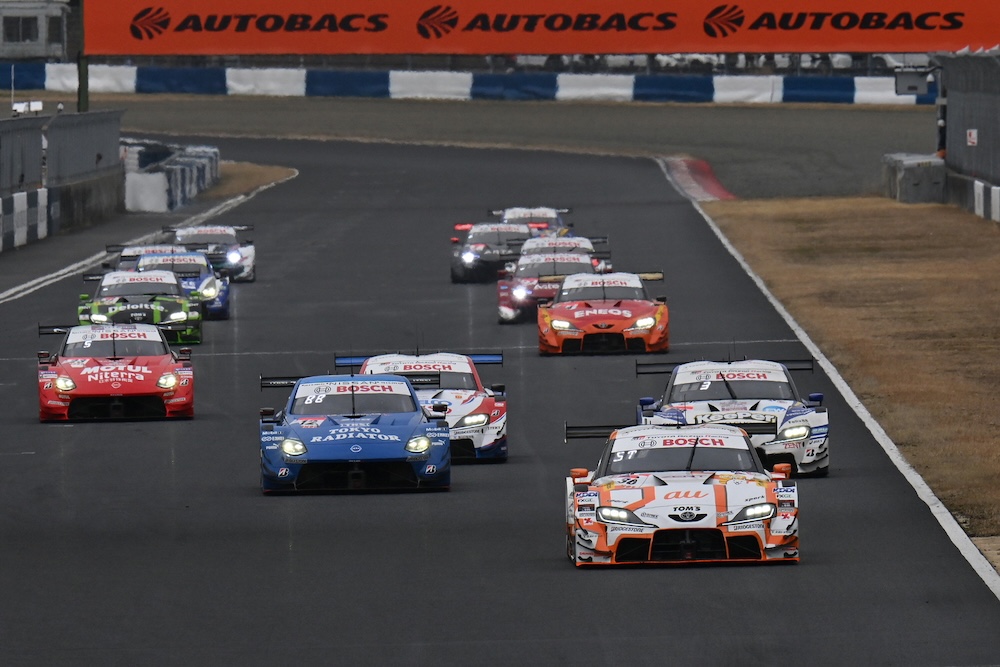
The risks and thrills of multi-class racing add significant drama for any sports car racing series, and Super GT is no different. Together, the two categories race together simultaneously at Japan’s six major motor racing circuits: Okayama, Fuji, Suzuka, Sugo, Autopolis and Motegi. Most races are 300-km sprint races with one pit stop and driver change. Then there are a pair of three-hour, long-distance races, with two pit stops and greater strategic freedom.
One of the three-hour races is Super GT’s biggest race of the year, and it takes place at Fuji Speedway every year on May 4, during Japan’s Golden Week holiday period. This “Golden Week Special” has consistently drawn over 75,000 spectators during the two-day race meeting.
Super GT has also staged international rounds at venues such as Sepang Circuit in Malaysia, which returned to the calendar in 2025 and welcomed a massive crowd of almost 76,000 fans. Sadly, the ongoing Iran war and its ripple effects have caused the next Malaysia Super GT race to be postponed until 2027 at the earliest, and resulted in the 2026 calendar being cut down from the traditional eight rounds, down to just seven.
A race weekend typically takes place over two days; on the first day, a one-hour, 45-minute practice session starts things off in the morning, followed by two-stage knockout qualifying in the afternoon to set the grid for the “final” race. The top-10 finishers in GT500 earn points in the race, as do the top 15 in GT300 – with a bonus point awarded to the polesitters in each class. [Author’s note: We gotta get qualifying coverage too!]
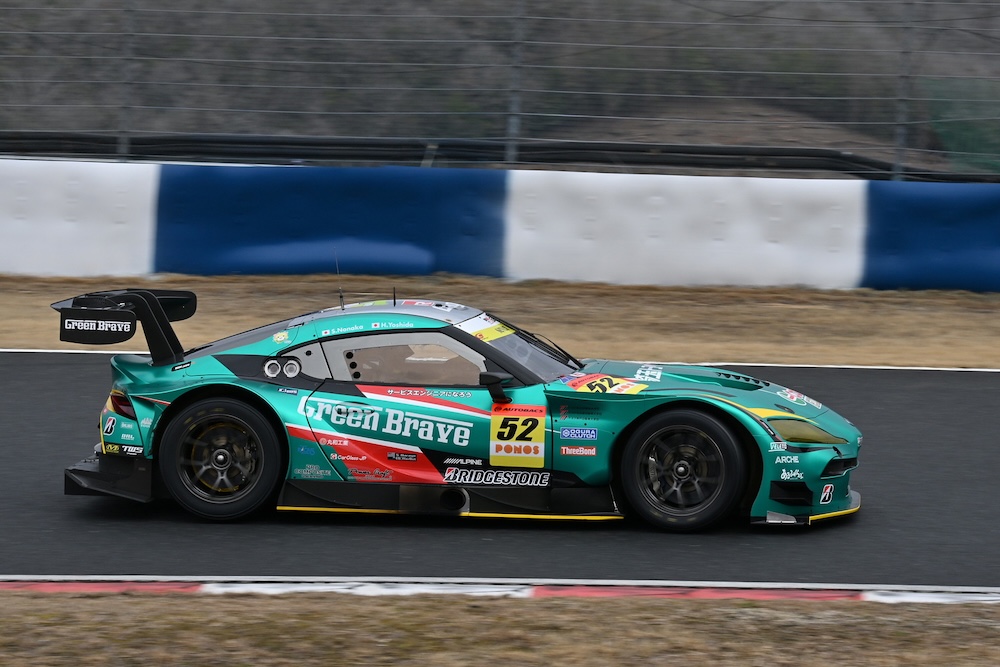
Relative technical freedom makes for plenty of variety in GT300.
Another one of Super GT’s distinct components that’s been around since the start is the use of Success Ballast to create competitive parity across a season. Well before “BOP" entered the sports car racing fans’ common vernacular, the top-ranking teams would earn Success Ballast for the following race. Today, it’s paid out at a rate of two kilograms per championship point scored, up to a nominal limit of 100kg – even though it is no longer just about ballast weight.
Above the 50kg threshold, instead of additional ballast, GT500 teams will have the engine fuel flow rate reduced by 2.5 percent, resulting in a power reduction. And above the 67kg threshold, the size of the refueling restrictor is reduced, resulting in longer pit stop times (with a further reduction above the 84kg threshold). In GT300, only the refueling restrictors are used above the 50kg point.
But to discourage teams from “gaming the system” for the final run to the championship, in the penultimate round, the Success Weight is reduced to just 1kg per point, and then for the final round, the Success Weight is eliminated.
Since its first season, Super GT has seen many legendary drivers of the past and present, from home and abroad, apply their trade throughout the generations. In the early years, Japanese legends like Kazuyoshi Hoshino, Kunimitsu Takahashi, Keiichi Tsuchiya, Aguri Suzuki, and Masanori Sekiya provided the star power, inspiring the next generation.
2009 Formula 1 world champion Jenson Button and F1 race winner Heikki Kovalainen became champions in GT500. Álex Palou raced in GT300 for a season before going on to win four NTT IndyCar Series titles, while Ritomo Miyata went to Formula 2 as a GT500 champion. And a “who’s who” of recent 24 Hours of Le Mans grand champions have raced in Super GT – including Kazuki Nakajima, Kamui Kobayashi, Ryo Hirakawa, Romain Dumas, André Lotterer, Loïc Duval, Benoît Tréluyer, and the greatest of them all, Tom Kristensen. Even the late RACER columnist Jeff Krosnoff raced in the series during its first two years.
The stars of today are every bit as skilled as their predecessors. In 2026, TGR Team TOM’S ace driver Sho Tsuboi looks to become the first five-time GT500 champion in Super GT history, breaking the record set by Nissan legend Ronnie Quintarelli in 2015. Tsuboi’s co-driver, Kenta Yamashita, will be going for his fourth title. Tsuboi has won the last three GT500 titles with TOM’S in its flagship No. 36 car, with Yamashita alongside him for the last two.
Within the Honda camp, Kakunoshin “Kaku” Ohta’s return to the series headlines alongside the debut of the HRC Prelude-GT. Ohta has already impressed in part-time IMSA work, leads the Super Formula Championship after two races, and desires a move to IndyCar in his future. The experience he’s gained in America could make Ohta a strong contender for the prestigious ARTA team, backed by technical support from Mugen, and in the case of the No. 8 car of Ohta and Hiroki Otsu, assisted by extra engineering help direct from HRC.
And even though Nissan’s been through troubled times, the GT500 program is still a source of pride. It’s led by the factory NISMO team’s No. 23 car, featuring top drivers like Katsumasa Chiyo and Mitsunori Takaboshi, who’ve proven their skills in Japan and elsewhere.
GT500 also has a selection of great foreign talent in Bertrand Baguette (Team Impul), Sacha Fenestraz (TGR Team Sard), and Giuliano Alesi (TGR Team TOM’S) plus a rookie class in that features Igor Fraga (Nakajima Racing) and Toyota’s Rikuto Kobayashi (TGR Team Cerumo), who’ve each leveraged success in the esports world – specifically the Gran Turismo World Series – into prime real-world opportunities.
GT300 itself is filled with more great talent than we have time to mention here, but features some big name talent. Among imports, Lamborghini factory driver Daniil Kvyat (JLOC) is new to the series, and Porsche contracted driver Sven Müller (seven x seven Racing) is back after many years away. Nobuteru Taniguchi (Goodsmile Racing & TeamUkyo) and Manabu Orido (apr) are genuine legends in both circuit racing and drifting circles. Hiroaki Ishiura (Team ENEOS Rookie) and Jõao Paulo de Oliveira (Kondo Racing) have many years of great GT500 experience to share, and young Zak O’Sullivan (CarGuy MKS Racing) has a chance to show F1 what it’s missing.
There’s also GT300’s qualifying maestro Hideki Yamauchi (Subaru/R&D Sport), Super GT’s “iron man” Morio Nitta (K-tunes Racing), and the two-time and reigning champion Naoya Gamou (K2 R&D Leon Racing), one of the pro drivers who helped develop the recently-unveiled GR GT3 from Toyota.
You’ll probably meet these drivers – and many more – for the first time this weekend, along with their teams. And we can’t wait to tell you their stories as the 2026 Super GT Series unfolds.
All seven Super GT races will be live on RACER Network and on the RACER+ App, beginning with the Okayama season opener this weekend. Live coverage begins at 12:09am ET on Sunday, April 12 / 9:09pm PT on Saturday, April 11.

RJ O’Connell
Read RJ O’Connell's articles
Latest News


Comments
Comments are disabled until you accept Social Networking Cookies. Update cookie preferences
If the dialog doesn't appear, ad-blockers are often the cause; try disabling yours or see our Social Features Support.