Travis Hinkle/Penske Entertainment
Why Jim Michaelian mattered
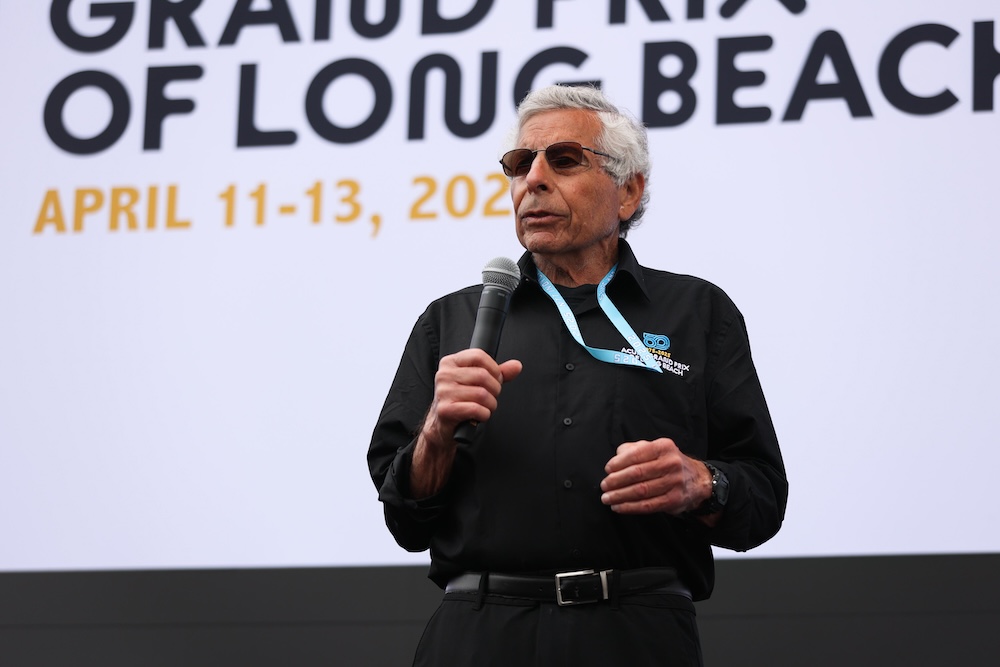
Jim Michaelian wasn’t well-known to fans, but from inside the sport, the forever-long boss of the Grand Prix Association of Long Beach was one of our most valued elders. Always present and reassuring, he was our rock, our pulse. We knew things were good because Jim was there. That’s the hardest part to process after learning of Michaelian’s death late last week at the age of 83.
Long Beach was his event and primary domain, but Jim was seemingly everywhere at once; a mainstay to open the season in Daytona at the Rolex 24, Michaelian was guaranteed to be at Sebring, and the Indy 500, and a dozen other races or more throughout the year. This is not the typical behavior of a person in charge of a single race on the calendar. But he’d make those trips with great energy and enthusiasm, take meetings with a range of series and manufacturers, hold court with friends across the paddock, check in with you on family and personal matters, and head back to Long Beach until the next flight beckoned.
He cared deeply about the people who make the racing possible, and beamed with pride when speaking about his tight-knit Grand Prix staff. Michaelian’s heart was a thing of beauty. Pay Jim a compliment about Long Beach, and he’d deflect and redirect it to the loyal members of the Grand Prix team who loved being part of the adventure. There was nobody like Jim in the sport.
Racing was the center of Michaelian’s business life at the Grand Prix and the core of his personal passion. Jim’s love for driving extended into his 80s, and many of the world’s biggest endurance races featured his name as a participant. The talent was shared with his son Bob, an excellent racer who forged his own career, and was fortunate to co-drive with his father on multiple occasions.
With his deep connections throughout all facets of the sport, Michaelian was among the most informed members of our community. Whenever I needed a straight answer on the Long Beach Grand Prix or other affairs in his orbit, Jim was my first and often my only call. He wouldn’t tell you everything, but he’d answer all he could and his words were direct and definitive. That kind of person is rare nowadays.
Behind the scenes, Michaelian was consistently active within the Road Racing Industry Council, the assembly of track owners and race promoters who meet and help each other with insights and ideas on how to improve their venues and events. Inside that widespread group that covers open-wheel, sports cars, and stock cars, Michaelian was treated like a professor, downloading hard-earned knowledge gained while running the biggest and best street race in the country.
As COVID hit and numerous tracks and events were at risk of permanent collapse, Michaelian was hailed as a key steward in the group to help its members to navigate and survive the enormous revenue losses and work through the gradual return to normalcy.
Working from Long Beach’s outset alongside its founders, Michaelin was part of small promoter group who launched the Long Beach race 51 years ago, served as COO to president Chris Pook, and took over the event in 2001. Under his watch, the Southern California street race has become a sporting event, cultural happening, and party to a greater degree with each edition.
It’s the blueprint for turning a motor race into a festival-like attraction where big racing series along with big concerts are only a portion of what’s offered with each ticket sold. It’s food trucks, and car shows, and a convention center loaded with offerings, plus drifting on Friday night, an IMSA race as the feature Saturday afternoon race, and the grand finale on Sunday with IndyCar.
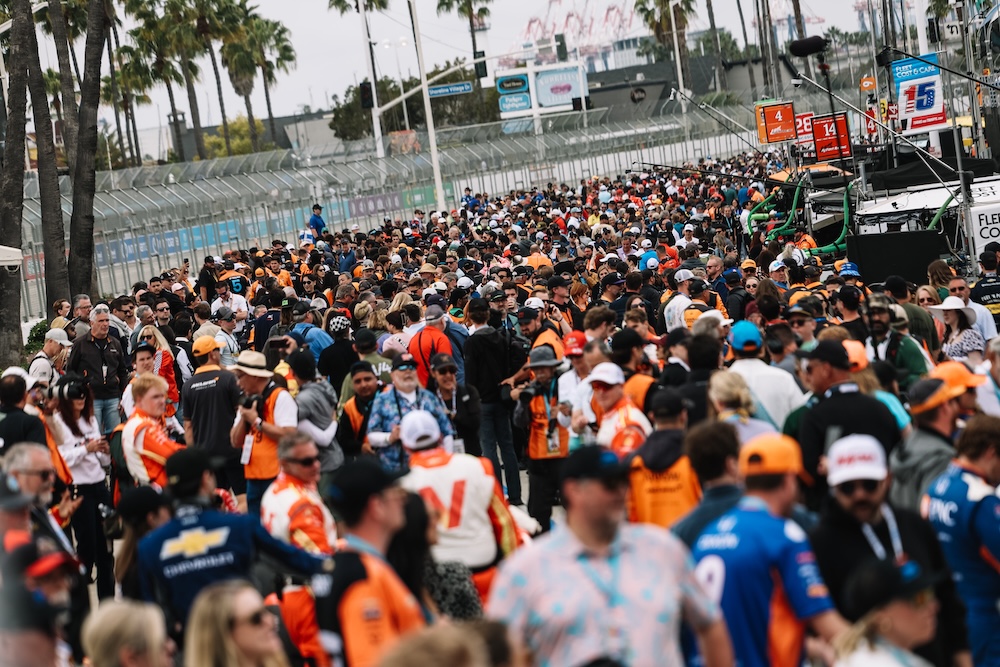
Under Michaelian's watch, the Long Beach GP evolved into a multilayered event with something for everyone. Joe Skibinski/Penske Entertainment
Interspersed between the headlining series, Stadium Super Trucks and one of Michaelian’s loves – a revolving collection of historic race cars run by HMSA – fill the gaps between the big series, along with GT cars from the Porsche Carrera Cup.
There’s the annual Walk of Fame induction ceremony on the Thursday of the event, which precedes the popular Thursday Thunder at The Pike where IMSA teams tow their car into downtown Long Beach and perform pit stop demonstrations.
Throw in all of the gatherings that have become synonymous with ‘race week’ at Long Beach, like the hundreds-strong Road Racing Drivers Club dinner across the street from the track, and all of the parties held in and around the event, and what Michaelian did to turn Long Beach from a popular stop on the CART IndyCar Series tour into an exhaustive and overwhelmingly entertaining event is the standard by which all other domestic races are judged.
Building from the roots established by Pook and the late Dan Gurney, what Michaelian and the Grand Prix staff did – without peer in the U.S. – was create and burnish a multi-generational street racing event. They established the standard in 1975, maintained that standard across vast changes from Formula 1 to the CART IndyCar Series to Champ Car to today’s IndyCar Series, and have made Long Beach an American institution in the process. One that has reinvented itself over and over by adding more entertainment, more types of racing to broaden its appeal, and survived countless changes within local government and each new administration’s agendas, all to keep Long Beach alive and thriving across six decades.
It’s a marvel to consider how the inaugural Grand Prix’s first attendees have had families, brought their children to Long Beach, and those kids have gone on to have families of their own to continue the tradition. Most street races rarely last five years, much less the 50 that Long Beach celebrated in 2025, and yet, the grandchildren and great-grandchildren of the Grand Prix’s earliest visitors have a legacy of their own – not unlike the Indy 500’s multi-generational ticket buyers – next to the Pacific Ocean because of Michaelian and his staff.
How many rival series took runs at Long Beach? How many mayors and city council members wanted to take the race and sell it to the highest bidder, or redevelop the area into commercial properties? Michaelian was a master of navigating the frequent threats and challenges to the Grand Prix’s survival, which is another one of his key contributions to the sport.
Michaelian held his team to incredibly high standards, and it’s reflected in the event’s production. Riding his trusty scooter, he was in constant motion during race week at Long Beach and fixing – always fixing – something he didn’t like or was flagged for his attention to resolve. To understand the Grand Prix’s lofty stature, look under the proverbial hood and it was Michaelian and his team searching for ways to make something cleaner or prettier or more professional. As fun and engaging as he often was, there was a steady undercurrent of excellence that drove Michaelian.
If you attended the recent Arlington Grand Prix and loved what you saw and experienced, thank Jim Michaelian. It was a resounding success by every metric, and was constructed using the blueprint established and maintained at Long Beach. Some have said Arlington is the new standard, and that could be the case. But let’s talk again in 10 years, or 20, and see how it measures up against the true benchmark.
Michaelian was meant to lead his final Long Beach Grand Prix next month before handing the controls to Jim Liaw, a talented and successful promoter in his own right. Instead, the 51st running of our crown jewel will be an odd and somber gathering without the man who tied everyone and everything together. Champagne glasses held high, the tributes to Michaelian and his legacy will be manyfold. A race held in mourning for someone we cherished.
Marshall Pruett
The 2026 season marks Marshall Pruett's 40th year working in the sport. In his role today for RACER, Pruett covers open-wheel and sports car racing as a writer, reporter, photographer, and filmmaker. In his previous career, he served as a mechanic, engineer, and team manager in a variety of series, including IndyCar, IMSA, and World Challenge.
Read Marshall Pruett's articles
Latest News
Comments
Comments are disabled until you accept Social Networking Cookies. Update cookie preferences
If the dialog doesn't appear, ad-blockers are often the cause; try disabling yours or see our Social Features Support.