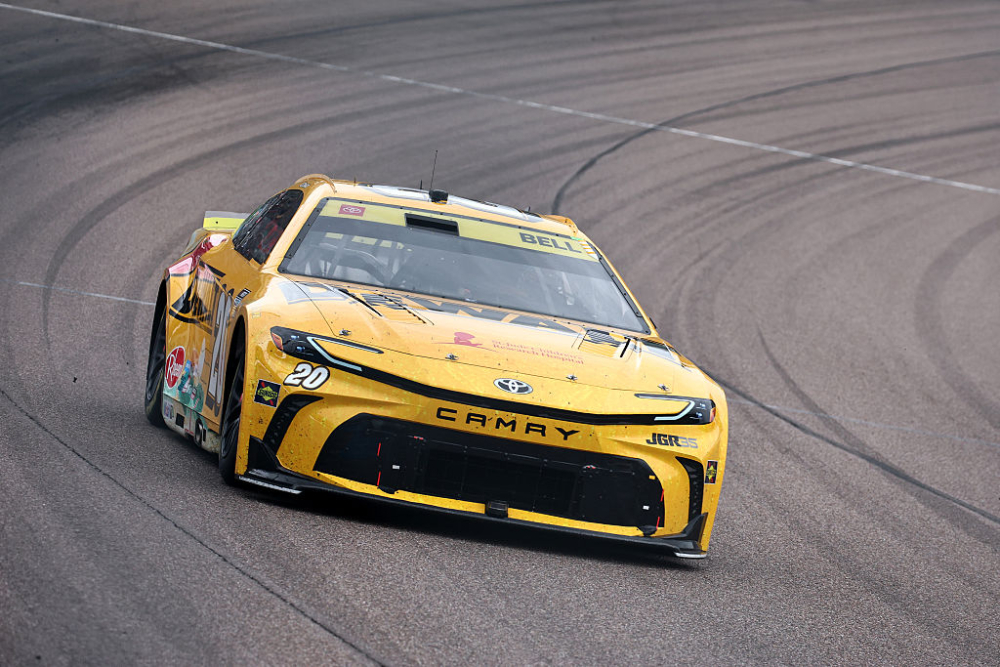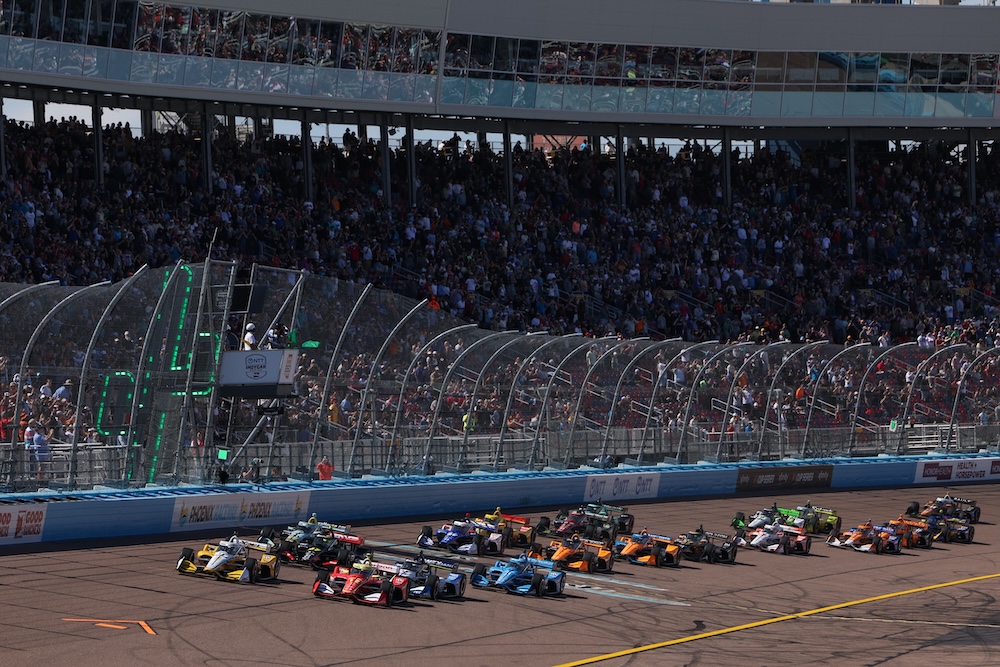
Joe Skibinski/Penske Entertainment
Who was the big winner from IndyCar and NASCAR tag-teaming in Phoenix? Everybody
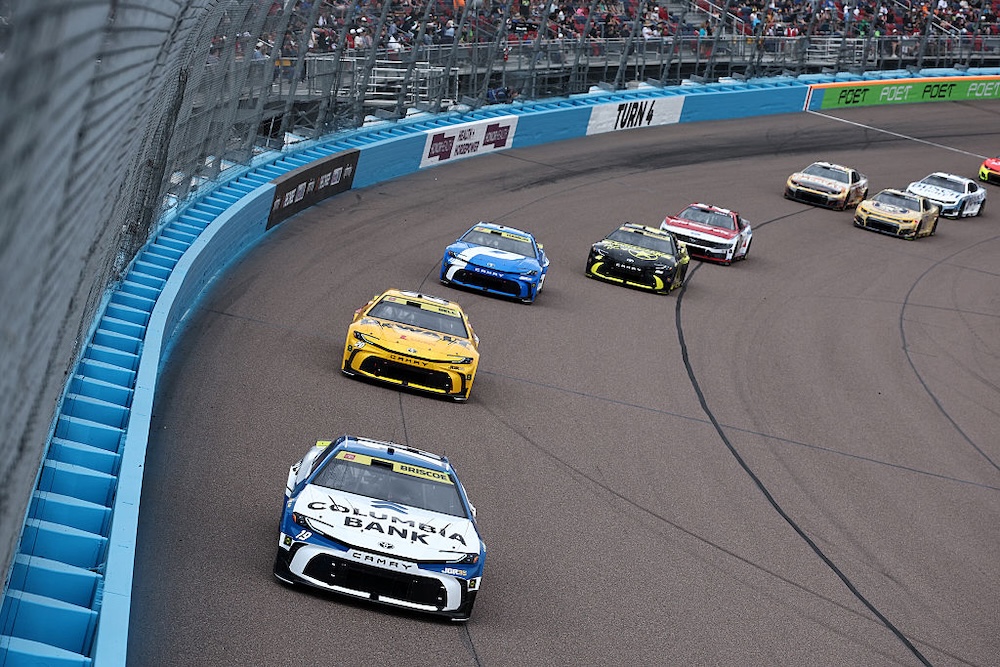
IndyCar isn’t what it once was. NASCAR isn’t what it once was. But together, they made for a powerful co-headlining ticket last weekend at Phoenix Raceway.
The ‘Dual in the Desert’ was a reminder of wonderful times for both series, where they looked important and their fans were the big winners. This was the first proper mashup of stock cars and open-wheelers on the same bill and on the same circuit, and I want to see more.
No disrespect to those who concocted the previous crossover attempts at the Indianapolis Motor Speedway where Cup cars ran on the big oval for the Brickyard 400 and IndyCar used the IMS road course, but that combination was a conceptual nothingburger which nobody loved.
Leaving Phoenix, at an oval that was built for and made famous by IndyCar, it’s hard to imagine anyone who didn’t love seeing the country’s two biggest forms of racing work together for the sport’s greater good. Rather than continuing to behave like warring factions in a decades-long fight for relevance, both series should be proud of what they achieved by choosing to shake hands.
Between the two, NASCAR is the unquestioned leader in popularity among North American racing series; the general awareness it holds on a national level and its elevated TV ratings cast a wide shadow over IndyCar, but with the renaissance being experienced by Formula 1 in the U.S., it makes plenty of sense for the two to call a truce.
IndyCar benefited from being part of the NASCAR weekend, and I’d like to think NASCAR came out ahead as well. Especially since it looked like IndyCar’s Good Ranchers 250 might have been the best show of all across the event. Cup has all the famous drivers, and IndyCar put on a party with wickedly fast machines. Worlds apart in one sense, but a unifier of common interests at its core.
For fans of a certain age, this was 1986 and Run DMC inviting Aerosmith onto Walk This Way – which shouldn’t have worked, but did, and created a new music genre. Or for something this century, it was 2004 with Jay-Z and Linkin Park teaming up on 99 Problems. Although the potential for grand failure was there, the relationship and differing styles complemented each other in ways that are worth ongoing exploration.
This was IndyCar at its best. The timing was also key for the series, with the return of a pre-Indy 500 oval to the schedule. It won’t be lost on fans that during Alex Palou’s crushing run to win the 2025 championship, the calendar opened with five straight road or street courses – the type of tracks where the Chip Ganassi Racing driver has ruled. Of his 20 career victories, 18 have been taken on roads and streets.
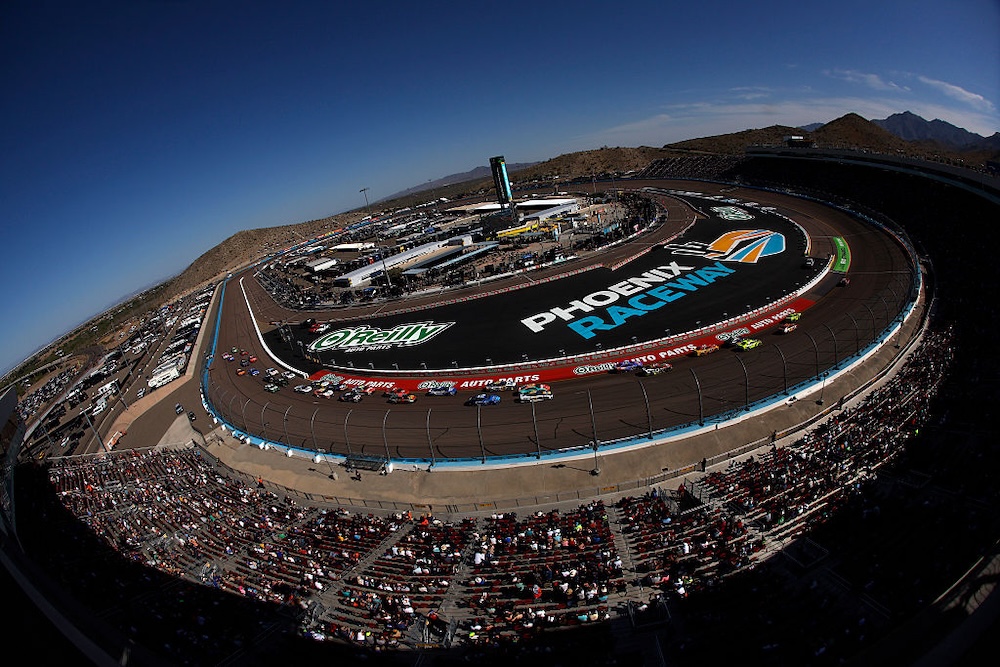
Fans got the rare chance to see America's two biggest race series on the same weekend. Sean Gardner/Getty Images
Dropping Phoenix into the early mix had a perfect effect on energizing the championship – after Palou won to open the season at St. Petersburg – as Josef Newgarden, IndyCar’s short-oval king, rose to expected heights and not only won on Saturday, but took over the championship lead due to Palou crashing out.
Instead of risking another runaway championship lead, the series has an epic fight about to take place this weekend on the streets of Arlington, and two weeks later at Barber’s road course as Palou tries to improve from fifth in the standings. As I told a few IndyCar executives at Phoenix, finding a second oval to use before Indy would be a dream that truly demands the best multi-discipline talents to shine in order to stand atop the rest on approach to the series’ Super Bowl.
If it were to happen with NASCAR, there’s a tight window to consider as FOX, IndyCar’s co-owner, has the Cup series through May before other broadcasters take the baton for the remainder of its season. Mid-April belongs to the Long Beach Grand Prix, so if a second crossover oval before or after was possible in 2027, IndyCar’s schedule is rather light leading into the month of May.
And if IndyCar simply wants to find an oval to use on its own, I’d imagine it would have some newly-interested track owners who’d want to see if the stellar Phoenix race can be replicated at their facility.
As much as I was unexpectedly overwhelmed by the execution of last weekend’s doubleheader, I’m not sure I’d want more than two shared oval events per year between NASCAR and IndyCar. They have their own brands and unique identities, and those need to be respected and maintained. At one or two annual visits, worlds collide in a positive way; any more than that, and it wouldn’t be special.
It’s the same with IndyCar and IMSA. They share Long Beach and Detroit for a pair of cool events where the GTP and GTD cars own the Saturdays, just as IndyCar did at Phoenix, and the featured act closes out the weekend with the grand finale. On IndyCar’s street racing turf, NASCAR just gave it a try at St. Pete with its Truck series taking the Saturday slot – an event that didn’t have a real Saturday feature – and it was a huge hit.
But Phoenix was something different, with IndyCar humbling itself and taking that non-headlining role, being the first cars out – the track sweepers – at 8am on Friday morning. It was hard to swallow, but they were rewarded for it with a strong crowd. A fair amount of people who were in the grandstands told me it thinned out by a considerable amount after the IndyCar race was over – NASCAR’s mid-tier O’Reilly Auto Parts series was the true closer to the day – and if that’s the case, maybe a decent volume of people did show up to see IndyCar.
Regardless, for the many who were in attendance, they either got to see something they loved beforehand, or were treated to for the first time. And everyone was gifted with an unforgettable finish as Newgarden swept into the lead in the final laps.
Not so long ago, racing was incredibly tribal as fans and racing series did their best to hate on each other. I’ve certainly been guilty of holding that mindset, and those divisions still exist. But it felt so refreshing to see a bold experiment like this work and exceed all expectations. It needs to continue.
Marshall Pruett
The 2026 season marks Marshall Pruett's 40th year working in the sport. In his role today for RACER, Pruett covers open-wheel and sports car racing as a writer, reporter, photographer, and filmmaker. In his previous career, he served as a mechanic, engineer, and team manager in a variety of series, including IndyCar, IMSA, and World Challenge.
Read Marshall Pruett's articles
Latest News
Comments
Comments are disabled until you accept Social Networking Cookies. Update cookie preferences
If the dialog doesn't appear, ad-blockers are often the cause; try disabling yours or see our Social Features Support.