Quinn Rooney/Getty Images
Driver dissent surges after power unit struggles in Australian GP qualifying
Throughout the development process of the 2026 Formula 1 cars, there were concerns voiced by drivers and teams as they ran simulations and started to try to understand what it might take for a car to be quick under new regulations.
Some of the biggest fears started to subside the more cars were developed, but there was still a large amount of trepidation even as they hit the track for the first time. The counterintuitive driving style and need to try and harvest so much energy was not in keeping with what many saw as the DNA of F1.
Max Verstappen had been the most critical during Bahrain testing, despite previously avoiding judgements based on simulator running. But beyond the four-time world champion, on the whole there were still more negative comments than positive ones for the drivers.
So you might think the following quote after qualifying in Melbourne was a sign of more positive developments now the cars have been run in their first competitive session…
“The cars are more agile and you’re sort of sliding them around a bit more. It’s easier to lock up and run wide, lose the rear. It wasn’t easy conditions out there today, it was quite windy, quite gusty, but I’m enjoying that.
“It feels more like a go-kart compared to last year – [when] it felt like a bouncing bus, to be honest. It wasn’t as fun to drive. So, I think there are lots of mixed views on the new regs as a whole, but I do think the car regulations for everyone are definitely a step forward compared to what we’ve had for the past [five] years now.”
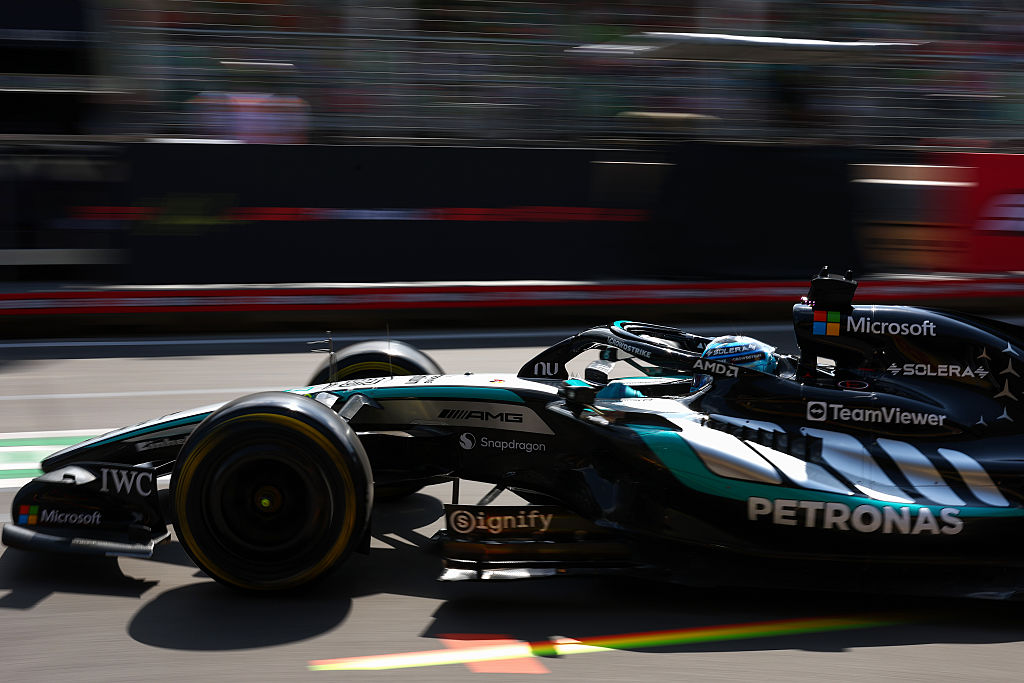
The thing is, that comment came from polesitter George Russell, as Mercedes clearly showed itself to have hit the ground running better than anyone else in the new era. Kimi Antonelli backed him up by saying the cars are better than last season – even if he admitted the power unit situation was “tricky” – but not even a third place on debut for Red Bull could fully placate Isack Hadjar.
“I think the chassis is pretty good, and the rest, I’m not a fan,” the Frenchman said.
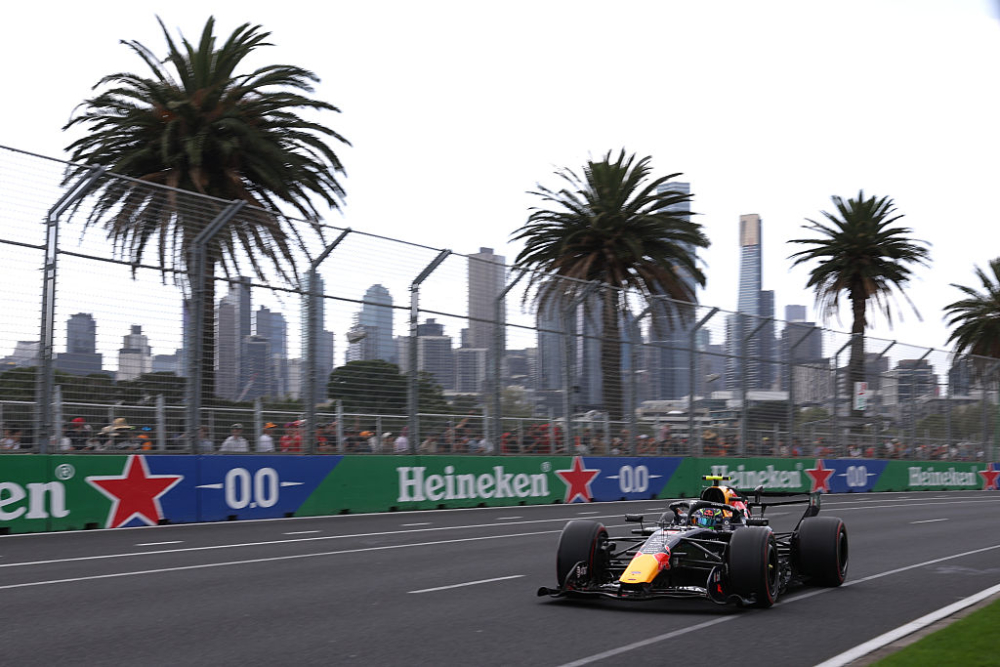
Isack Hadjar was positive about the new chassis regulations, but was less pleased with the new power units. Lars Baron/Getty Images
Those comments were just a scratch of the surface compared to what some of those further down the field said, perhaps also stung by Mercedes’ performance level as well as their frustrations with the new driving demands.
“I think everyone knows what the issues are,” defending champion Lando Norris said after qualifying sixth. “It's just the fact it's a 50-50 split [on the power unit]. It just doesn't work. Straight-line mode means you've got a lot of other issues at hand. But the fact you just decelerate so much before corners, you have to lift everywhere to make sure the pack's at the top. If the pack's too high, you're also screwed.
“It's just difficult. But it's what we have. It doesn't feel good as a driver, but I'm sure George is smiling, so it doesn't really matter in the end of the day. You've just got to maximize what you're going to give it.”
Norris hit a loose cooling fan on the track in Q3 that had been deposited from Antonelli’s sidepod, and says his contact was because he wasn’t able to fully concentrate on the road ahead of him.
“I'm looking at my steering wheel, that’s why I don't see the debris, because I have to look at what speed I want to get at the end of the straight,” he said. “And if I need to brake 30 meters earlier, 10 meters later. So that's also the problem. You have to look at the steering wheel every three seconds to see what's going to happen, otherwise you're going to end up off the track.
"We've come from the best cars ever made in Formula 1 and the nicest to drive to probably the worst. It sucks, but you have to live with it and just maximize what you get given. It's certainly different. It's certainly not like it was last year. It's not like ‘push this corner more.' Sometimes you push more, you lose the battery and just go slower. You have to understand how to do things.
“Mercedes have obviously understood that. They would understand quicker than the others, because they're a good team and it's also their own engine. They've understood more than we have and we'll get there. It just takes a bit of time.”
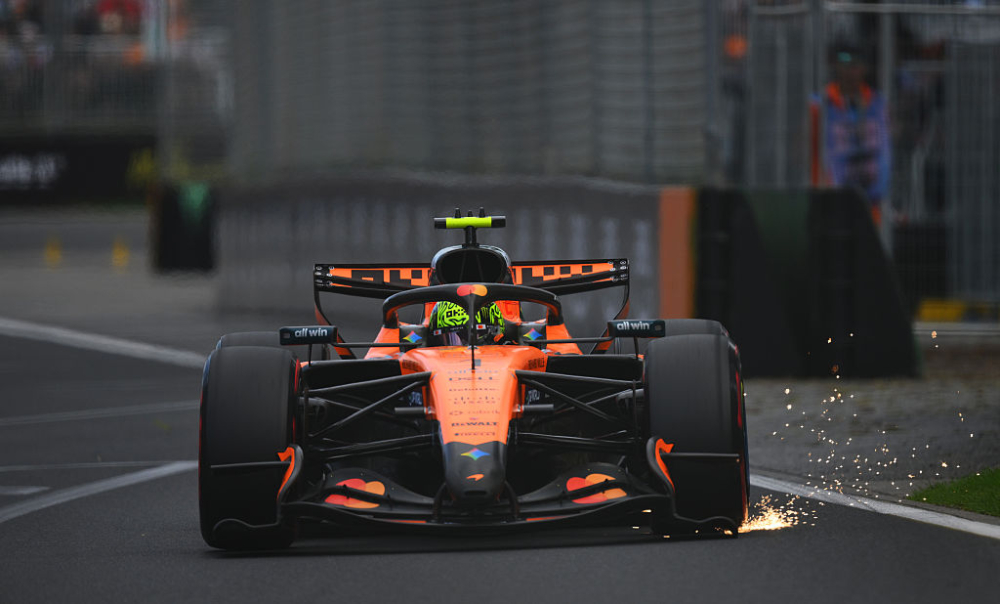
Lando Norris hit debris after being distracted by his steering wheel readout. Simon Galloway/Getty Images
While F1’s newest champion was highly critical, Lewis Hamilton pointed out the “nicest to drive” claim again came from someone who was winning regularly in 2025. At the same time, GPDA director Carlos Sainz attempted a more diplomatic approach, saying that feedback should be constructive and not solely critical.
“It's clear that so far no one is happy,” Sainz said. “The only thing we feel is there seems to be a lot of plasters on top of another to try and solve the fundamental issue... that I think this 50-50 hybrid system is giving us a lot of headaches.”
Clearly the power split does, with the need for active aero in part due to the requirement to reduce drag in a straight line to help with energy use. But the greater electrical power is not the only headache right now, as F1 faces its own in trying to stop the drivers being so critical after just one qualifying session, on a track that was previously earmarked as particularly challenging for this new regulation set.
Previous statements that a wider sample set of tracks would be needed before forming a true opinion were soon forgotten, as on top of Verstappen and Norris, Lewis Hamilton ensured the three world champions that cover the past decade held similar views on the driving experience.
“No, it doesn't feel depressing,” Hamilton said. “The car is really nice to drive, it's just the power.
“The power's good when you've got it, it's just it doesn't last. It doesn't feel... We’re starting the lap, half throttle coming through the last corner and a quarter of the straight, and then you go to full throttle.
“It’s completely against what Formula 1 is about – flat out, full attack, and we're lifting and coasting. That element is not very good, and I don’t think the drivers particularly like it.”
Suggestions of heated discussions in Friday night’s driver briefing suggest that last comment might be an understatement from Hamilton, but it reiterates the seriousness of the situation.
Any new regulation set is going to bring a massive development rate and rapid improvement, and that could still become a positive story for the sport if it soon moves towards providing more enjoyable machinery for those behind the wheel. But as of right now, the driving demands are so alien that the most influential voices in F1 – the drivers’ – already cannot put a brave face on.
Emotions were high given the impact on what used to be such a thrilling part of a race weekend, when cars were pushed to their absolute limits in qualifying. And they won’t have long to subside before the cars line up on the grid for the opening race.
Should the Australian Grand Prix produce exciting competition and close action then it perhaps will quell the situation slightly and buy a touch more patience. Should it not, then the drivers appear aligned enough to continue making their complaints public.
Presented by:


Chris Medland
While studying Sports Journalism at the University of Central Lancashire, Chris managed to talk his way into working at the British Grand Prix in 2008 and was retained for three years before joining ESPN F1 as Assistant Editor. After three further years at ESPN, a spell as F1 Editor at Crash Media Group was followed by the major task of launching F1i.com’s English-language website and running it as Editor. Present at every race since the start of 2014, he has continued building his freelance portfolio, working with international titles. As well as writing for RACER, his broadcast work includes television appearances on F1 TV and as a presenter and reporter on North America's live radio coverage on SiriusXM.
Read Chris Medland's articles
Latest News
Comments
Comments are disabled until you accept Social Networking Cookies. Update cookie preferences
If the dialog doesn't appear, ad-blockers are often the cause; try disabling yours or see our Social Features Support.