Peter Fox/Getty Images
Mercedes will ‘take it on the chin’ if PU rules are changed
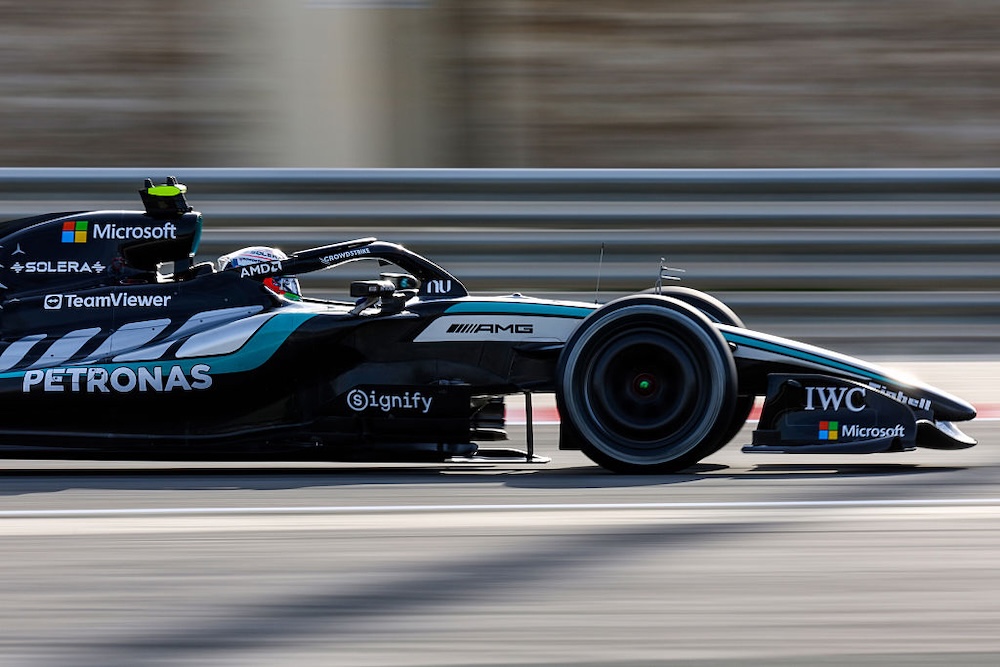
Mercedes will “just have to take it on the chin” if the FIA decided to change the power unit regulations relating to compression ratios, according to team principal Toto Wolff.
Compression ratios become a significant area of scrutiny in the lead-up to the 2026 season, with Mercedes believed to be able to exceed the new 16:1 limit when the power unit is running. That limit is tested by the FIA at ambient temperatures, and after the governing body stated it wants to find a solution to the situation prior to the Australian Grand Prix, Wolff said his team would have to accept any rule change.
“In this sport, the sport is full of surprises, so there's never a situation where you can say you're sure about anything,” Wolff said. “All along the process, obviously, when you design an engine, you're keeping the FIA very close to the decisions you make, and that's what we did. And we have had all the assurances that what we did was according to the rule.
“And it's not even like we're talking about some massive performance gain… But I think all of our competitors got a little bit aggrieved and lobbied the FIA for a long time. And so far, we trust in the governance of the body – and that is the power unit advisory committee. We'll see what that gives.
“There is no such scenario as we would sue anyone. In Formula 1, in my opinion, it is more essential than ever that you know what the rules are. But engineering ingenuity is always respected, and that's why we're always going to respect the governance of the sport.
“If the governance of the sport decides to change the rules, be it against our position or for our position, you just have to go along with it.”
Wolff admitted there would be a detrimental impact on Mercedes-powered teams if the rules did change, and said it is unlikely that that any deficit could be addressed prior to the first race in Australia.
“Of course, you develop an engine over a long time, and you have lead times, and if you were to be told you can't operate the engine in the way you have developed it, that could be quite damaging for the performance," he said.
"There is a governance process. And if that governance were to vote for an engine regulation change, you just have to take it on the chin. It is what it is. And obviously in that case, it would be detrimental for all of the Mercedes power teams.
“If it becomes a regulation, you need to adhere to the regulation. And if you can't adhere to the regulation, then the FIA needs to come up with some kind of invention, how to adjust for that. And that's unclear to us.
“I'm a little bit more confused in the recent weeks about how it came to the point now that it suddenly became a topic. Because until last Friday, I was given the impression that things wouldn’t change.”
Presented by:


Chris Medland
While studying Sports Journalism at the University of Central Lancashire, Chris managed to talk his way into working at the British Grand Prix in 2008 and was retained for three years before joining ESPN F1 as Assistant Editor. After three further years at ESPN, a spell as F1 Editor at Crash Media Group was followed by the major task of launching F1i.com’s English-language website and running it as Editor. Present at every race since the start of 2014, he has continued building his freelance portfolio, working with international titles. As well as writing for RACER, his broadcast work includes television appearances on F1 TV and as a presenter and reporter on North America's live radio coverage on SiriusXM.
Read Chris Medland's articles
Latest News
Comments
Comments are disabled until you accept Social Networking Cookies. Update cookie preferences
If the dialog doesn't appear, ad-blockers are often the cause; try disabling yours or see our Social Features Support.