Jake Galstad/Lumen via Getty Images
How manufacturer charters will move the IndyCar needle for 2028
With the IndyCar Series expected to announce the signing of Chevrolet and Honda to multi-year engine supply contracts in the coming days, the most interesting component of their deals is found in Penske Entertainment’s first-time distribution of charter membership for its auto manufacturers.
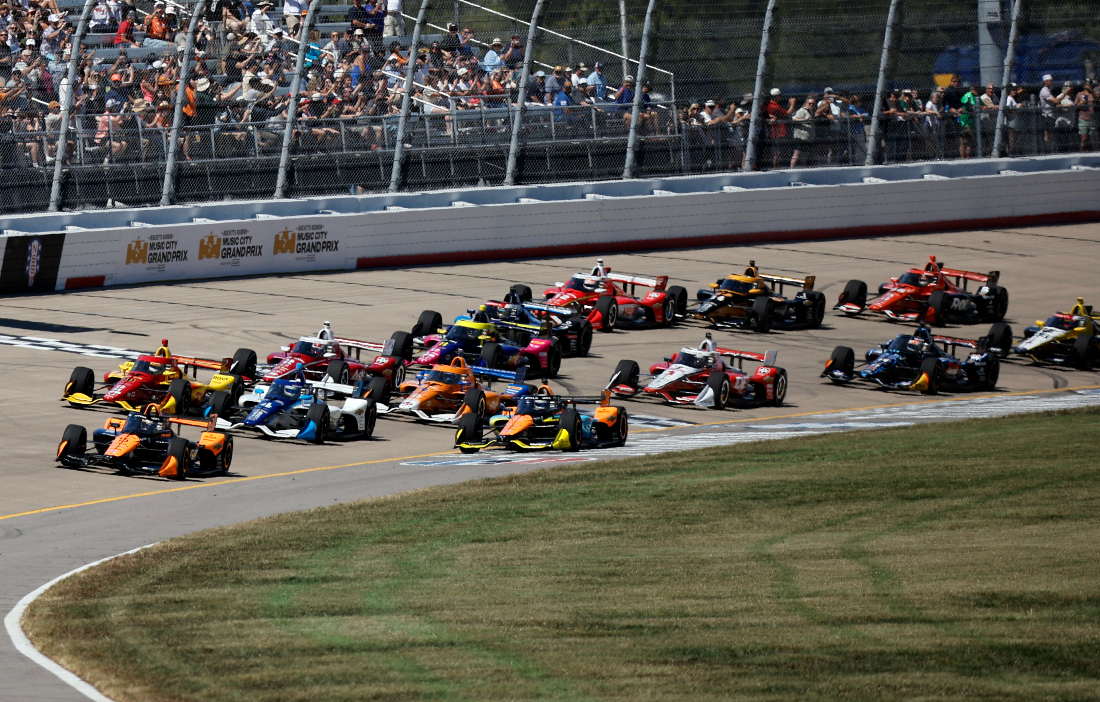
Penske’s charter program rollout took place entering the 2025 season as IndyCar’s 10 longstanding teams received between two and three charters apiece covering a combined total of 25 entries. With those charters in hand, team owners have guaranteed participation for their entries in every race on the schedule, with the exception of the Indianapolis 500, and the charters can be sold for profit if the owners elect to downsize or leave the series altogether.
Facing years of concerns of whether it could lose Chevrolet, whose parent company General Motors has made a massive investment while joining Formula 1 with its Cadillac brand, and bid farewell to American Honda, which has taken a long look at departing for NASCAR, Penske Entertainment took a novel approach to team-related charters as both auto companies enter the last year of their engine supply contracts.
In what’s believed to be a first in the sport, Penske Entertainment has included a single charter entry for Chevy and Honda as enticements to sign extensions that cover 2027 – one more season with their 2.2-liter twin-turbo V6s – before building and deploying all-new 2.4-liter twin-turbo V6s for 2028 and beyond.
Depending on the season, the likes of Chevy and Honda are understood to spend $40-$50 million apiece on their IndyCar engine supply programs, and while the value of a single charter would not offset what either brand will commit over the span of the new contracts, the financial asset provided by Penske Entertainment does change the dynamic of their relationships.
In what has traditionally been a steeply one-sided dynamic where auto manufacturers spend wildly on racing programs, assist heavily with sponsoring events and play a meaningful role in promoting the series, those car companies have no connective strands to the series beyond burning untold millions in the hope of creating some sort of benefit to justify the vast expense. And when they leave, it’s with however many trophies they've won and little else that’s tangible to show for the investment.
With the provisioning of charters, the one-sided nature of the IndyCar manufacturer relationships hasn’t been radically altered to draw Chevy and Honda level with Penske Entertainment, but it does change the dynamic just enough to where decades of an all-take/no-give relationship has evolved.
IndyCar’s automakers are receiving commodities with genuine value, and as the leaders of the racing programs look for ways to continually justify the grand annual budgets they request from chief financial officers and chief marketing officers, charters were seen as important deeds that could recalibrate the conversations.
It’s hard to say what the sale of a Chevy or Honda charter would command in the coming years, but the fact that there’s some financial return to expect on the horizon – no matter how modest – was received as an offer from Penske Entertainment that made great business sense for the brands to pursue.
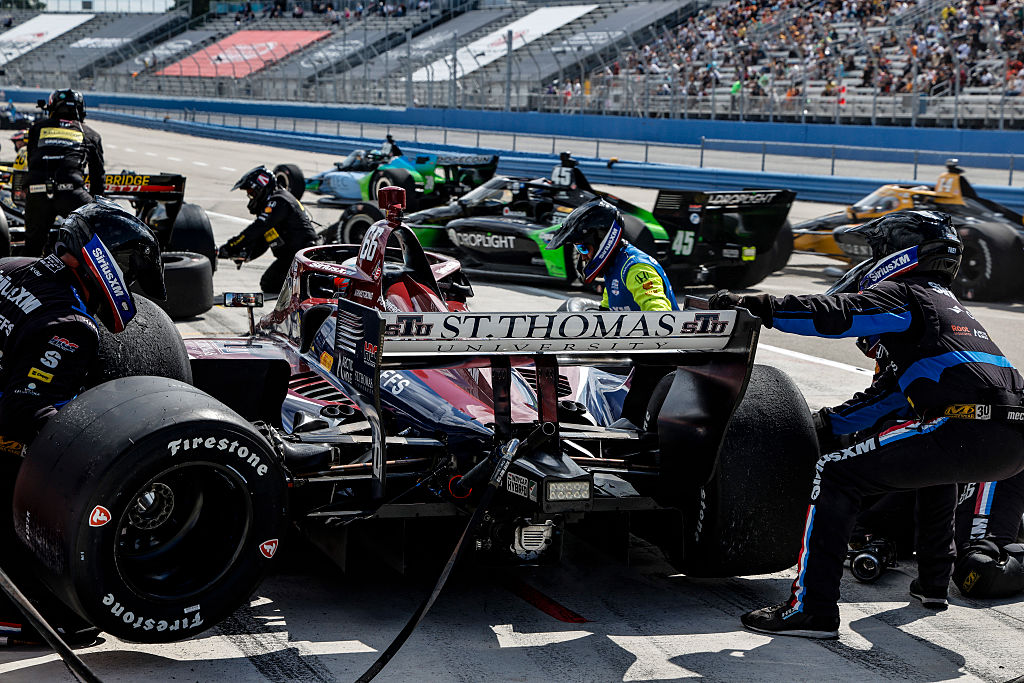
Manufacturers' will have to look further a field than their usual go-to partners for their charter teams. Michael Levitt/Lumen via Getty Images
Negotiating the finer details of the manufacturer charters led into early February, and with the framework in place, a few caveats will govern how Chevy and Honda make use of those charters.
The first restriction is designed to prevent the series’ biggest teams from becoming bigger as IndyCar’s charters prohibit anything larger than a three-car operation. Chevy and Honda have the ability to buy Dallara IR28s, pit equipment, transporters, and hire dedicated in-house crews to run their own single-car factory entries starting in 2028, but the more likely scenario – one with greater cost efficiency – is for the manufacturers to hire an existing team to field their respective cars.
Owing to the three-car limit imposed by the series, Arrow McLaren and Team Penske – both three-car operations – have been the first choice for Chevrolet when the General Motors brand has needed a car run in testing, but they’d be ineligible since IndyCar would count the factory Chevy as a fourth car.
On the Honda side, Andretti Global and Chip Ganassi Racing – also three-car outfits – have gotten the call before any others to conduct engine testing or hybrid running, and they – along with the three-car Rahal Letterman Lanigan Racing squad – would be off limits to Honda.
Granted, by the time 2028 arrives, some of the aforementioned teams could change from one brand to the other and potentially downsize to two full-time cars of their own, which would make room to run a factory Chevy or Honda, but until then, the roster of options for the manufacturers is limited to IndyCar’s two-car outfit.
Barring any changes with brands or sizes, it would put AJ Foyt Racing (Chevy), Dale Coyne Racing (Honda), Ed Carpenter Racing (Chevy), Juncos Hollinger Racing (Chevy) and Meyer Shank Racing (Honda) in play for manufacturers to recruit and sign as partners to run their entries.
For what we’ve heard, IndyCar teams would be excluded from buying charters from Chevy and Honda; if and when they sell; manufacturer charters would be bought by and returned to Penske at market value. And it isn’t clear whether the first two manufacturer charters are a one-time awarding to keep the series’ veteran suppliers in the game, or if it’s an open policy that would deliver single charters to any manufacturer that inks a long-term supply deal.
With the 25 charters owned by IndyCar’s 10 teams, plus the two that can be activated and used to race in the series by Chevy and Honda in 2028, the series would have 27 full-time guaranteed entries. Penske Entertainment, along with some – but not all – of its teams have expressed an interest in reducing the regular grid to something in the 22-24 range in a bid to create more exclusivity and higher value for the charters.
How the expansion from 25 charters to 27 fits that ambition is also unclear, but at least for what’s developing with its manufacturers, Penske Entertainment appears to have solved a worrisome problem and struck a new accord that resonated with its two tenured engine suppliers.
Chevy is in. Honda is in. With the creation of manufacturer charters, could IndyCar have something different to offer that might just bring a long-awaited third car company to the series?
Marshall Pruett
The 2026 season marks Marshall Pruett's 40th year working in the sport. In his role today for RACER, Pruett covers open-wheel and sports car racing as a writer, reporter, photographer, and filmmaker. In his previous career, he served as a mechanic, engineer, and team manager in a variety of series, including IndyCar, IMSA, and World Challenge.
Read Marshall Pruett's articles
Latest News

Comments
Comments are disabled until you accept Social Networking Cookies. Update cookie preferences
If the dialog doesn't appear, ad-blockers are often the cause; try disabling yours or see our Social Features Support.