
The RACER Mailbag, January 28
Welcome to the RACER Mailbag. Questions for any of RACER’s writers can be sent to mailbag@racer.com. We love hearing your comments and opinions, but letters that include a question are more likely to be published. Questions received after 3pm ET each Monday will be saved for the following week.
Q: Short notice, but I think it's important to get some clarity. PREMA has to pay for the IndyCar engine lease by Jan. 31, right? So if they fail to do so, the soonest DRR could do so is Feb. 1. That's past the deadline, no? Is there a provision to open it up to others if PREMA fails to pay?
Ethan
MARSHALL PRUETT: I can’t say if it’s truly Jan. 31, but yes, PREMA is known to be on the clock to secure a season-long engine lease deal for its pair of cars. I’m told PREMA IndyCar CEO Piers Phillips was at Daytona last week during the Rolex 24, as were all of the top brass from GM Racing. I can’t say if they met, but I can say that if I was Piers, I’d have gotten in a car or on a plane and made my way to Daytona to meet with the folks who I need to keep engines set aside for me while I work through trying to unweld the team from PREMA and relaunch it with new ownership.
GM has done at least 100 IndyCar engine supply contracts with teams since 2012, I’d guess. I feel confident it has well-defined language in its contracts to cover non-payment, and yes, provided there are others who want to make use of available engines, I’m sure Team Chevy would make them available if PREMA is unable to pay for the privilege.
Q: I've been following sports cars at Daytona since long before it was the "Rolex 24." I find it difficult to get as excited about four-man driving teams compared to watching the exploits of iconic two-man squads like Rodriguez-Kinnunen, Siffert-Redman or Ickx-anyone. I know in those days safety and driver fatigue were of lesser concern, but having twice the driving compliment to me diminishes the accomplishment, perhaps even for the drivers themselves. Surely three is a decent, though less impressive compromise. What do you think?
A. Jenkins, Ontario, Canada
MP: I’ve never had that thought, but I can see how the ruggedness and romanticism of two drivers giving everything they have – possibly to the point of exhaustion – to get to the 24-hour finish would hold greater appeal than four drivers sharing the burden.
At the same time, I also think of how today, with three to four drivers in each car, you get 24 hours of maximum attack from each driver. There’s no physical conservation, and therefore, you get maximum effort from all those who are behind the wheel. I’ll take three or four drivers going all out whenever they’re in the car. That’s not to say my heroes were on a 24-hour cruise, but I’m here for the speed and the fight, and if those have to be dialed back a bit to make it to the end, the appeal is diminished.
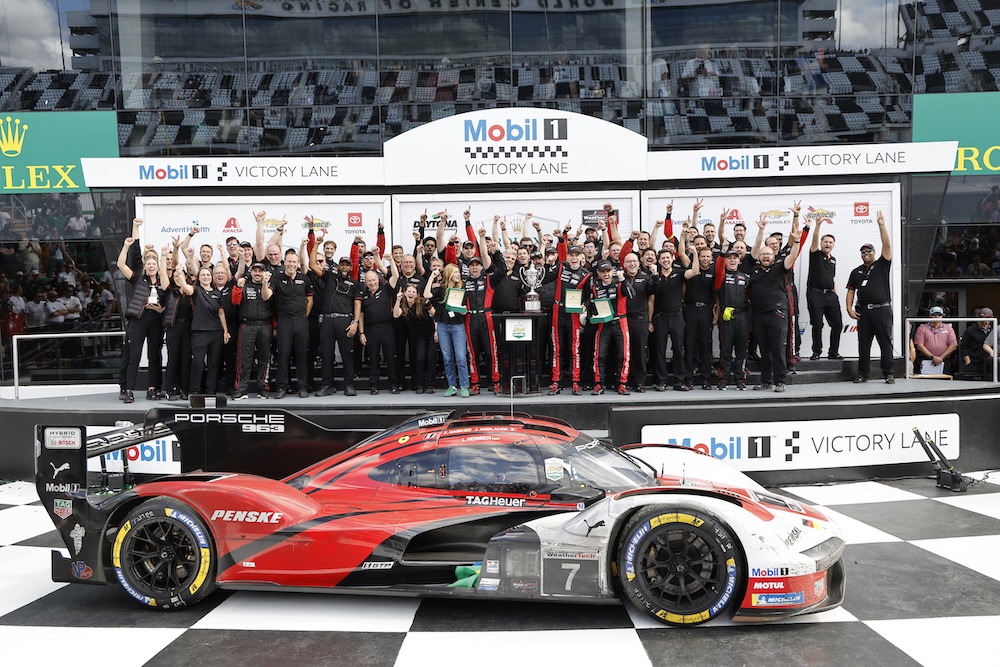
There's a certain romanticism to the old two-driver endurance race line-ups, but there's also no doubt that three- or four-driver teams make the car go a lot faster. Michael Levitt/IMSA
Q: After your first article about the McLaren/Palou lawsuit outcome, I started drafting a letter and just couldn't pull the trigger on sending it, so I hit delete. After the second one by Chris Medland, I just have to comment on these two snippets from both articles:
"Both sides spent more in legal fees than the judgment." As a retired CPA who has done a fair bit of litigation support over 40-plus years, I have seen this far too many times. You're owed $10 so spend $100 to get a judgment, $50 more suing for legal fees and then more trying to collect. In the end your $10 judgment "win" just cost you far more than you might ever collect. I'm fairly sure, having been in the rooms, that the lawyers from both sides assured their clients that the other side had no chance to win. In my opinion the minute you hire the lawyers, win or lose, you have lost.
"Ganassi backed his legal defense and indemnified Palou." I don't know what to say. Is this a blanket indemnification with no cap?
The internet puts Chip's net worth at around $100 million and Zak Brown's around the same. They are obviously savvy businessmen, so what drove this financial insanity? Has Palou's success made this financially worthwhile for Ganassi?
Chip, Zak... go have a drink together (probable several) and work this out before another two years pass and you double the attorneys' fees you have already spent, and please leave your egos, hurt feelings and most importantly the lawyers at home!
PS. If you guys do actually take my advice, I expect a couple of VIP invites from you both to the races.
Tom Patrick, Baja California
MP: I wouldn’t know their net worths, but one owns the team he runs (Chip) and the other runs a team owned by others (Zak), so there’s a fundamental difference in whose money was being spent on their respective defenses.
The reasoning for McLaren seems straightforward since it did sign Palou to a valid contract, and Alex admitted to breaching that contract. McLaren got inventive with the ways it alleged that breach hurt the team financially in F1, which the judge also found to be inventive and duly denied those claims. McLaren’s assertions of how Palou’s default on the contract hurt the team’s IndyCar finances were found to be sound by the judge, who ruled in McLaren’s favor. McLaren went to court to send a message to anyone who signs future contracts with the team.
For Chip, I have to assume he backed Palou financially because if he didn’t, his next-generation Scott Dixon would be ruined if McLaren won a sizable judgment. And having a generational talent in your car, while that talent is seeing his house and cars and income taken, is a great way to destabilize that driver and see your team go backwards.
Palou hasn’t made enough money to defend himself against a billion-dollar entity like McLaren, so that’s where Ganassi was able to both support his driver and be sure he’ll have that driver in his stable for many years to come.
Presented by:


Marshall Pruett
The 2026 season marks Marshall Pruett's 40th year working in the sport. In his role today for RACER, Pruett covers open-wheel and sports car racing as a writer, reporter, photographer, and filmmaker. In his previous career, he served as a mechanic, engineer, and team manager in a variety of series, including IndyCar, IMSA, and World Challenge.
Read Marshall Pruett's articles
Latest News
Comments
Comments are disabled until you accept Social Networking Cookies. Update cookie preferences
If the dialog doesn't appear, ad-blockers are often the cause; try disabling yours or see our Social Features Support.