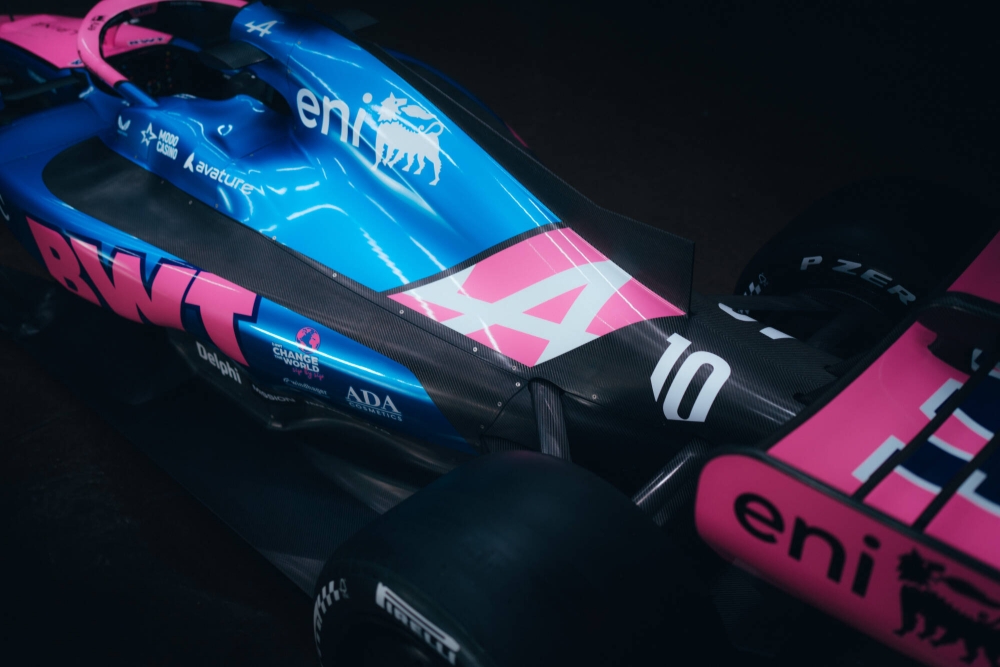
Alpine F1 Team photo
Will sacrificing works status help Alpine move forward?
Every Formula 1 team would ideally be a full works operation. Having total control of both the chassis and power unit design allows the maximum performance potential by integrating every aspect of design, as well as insulating you against failings by an external engine supplier. Of F1’s 11 teams, only Mercedes, Ferrari, Red Bull and Audi are full factory outfits, yet Renault, which owns 76 percent of the Alpine team, voluntarily discarded this advantageous position for 2026 by closing down its in-house engine program.
Renault’s decision to turn Alpine into a Mercedes customer team reflects terribly on its technical capabilities. However, it demonstrates the necessary pragmatism of the leadership of the UK-based chassis operation, which has long felt held back by Renault propulsion. Having made such a bold decision and go all-in on 2026, failure is not an option for Alpine.
Alpine finished last in the 2025 championship with just 22 points. The vast majority of those were scored in the first half of the year, exposing the lack of development. There was just one major upgrade package, a new floor introduced for the Spanish Grand Prix mid-season. This was a consequence of the decision to limit the changes made to fix the myriad problems created by the 2024 car as it evolved into the ’25 machine.
For example, both the front and rear suspension needed to be changed, but only the back end was refreshed. This was because of a combination of the need to not divert resources from the car being produced for 2026, and the belief that the improvement of its traction weakness would yield the larger short-term gain. This is all within the context of focusing almost all of its design resources, including its restricted aerodynamic development allocations for the use of the windtunnel and CFD, on the ’26 project. Even so, Alpine was still capable of being competitive at certain tracks later in the season, and on average was just under 1.4 percent off the pace. It wasn’t far behind, but it was slow enough to put it at the back.
The major overhaul of the regulations this year is the biggest in F1 history thanks to the extent of the changes both to the engines and chassis, so presented the opportunity of a reset to the beleaguered team. Why would you compromise that longer-term aim when a greater focus on ’25 would have yielded, at best, a small bump in terms of results? And boy, did Alpine need a fresh start given the revolving-door leadership and deserved bad press of recent times.
Flavio Briatore drove the push to abandon the power unit program at Viry-Chatillon, just outside Paris in France, when he rejoined a team he led in its two title-winning stints (as Benetton in the mid-1990s and Renault in the following decade) as executive advisor. It was a controversial appointment, one that should never have been made given he was Renault team principal for the 2008 Singapore Grand Prix scandal when Nelson Piquet Jr was instructed to crash deliberately to allow Fernando Alonso the opportunity to win. Luca de Meo, CEO of Renault from 2020-25, recruited Briatore as de facto team boss knowing that the engine change was a requirement.
“The one condition for me joining the team was to have a Mercedes engine,” said Briatore. “It was not Plan B, it was only one plan. The Mercedes engine was the only way to come back, because in this moment you need [to work with] the best people.”
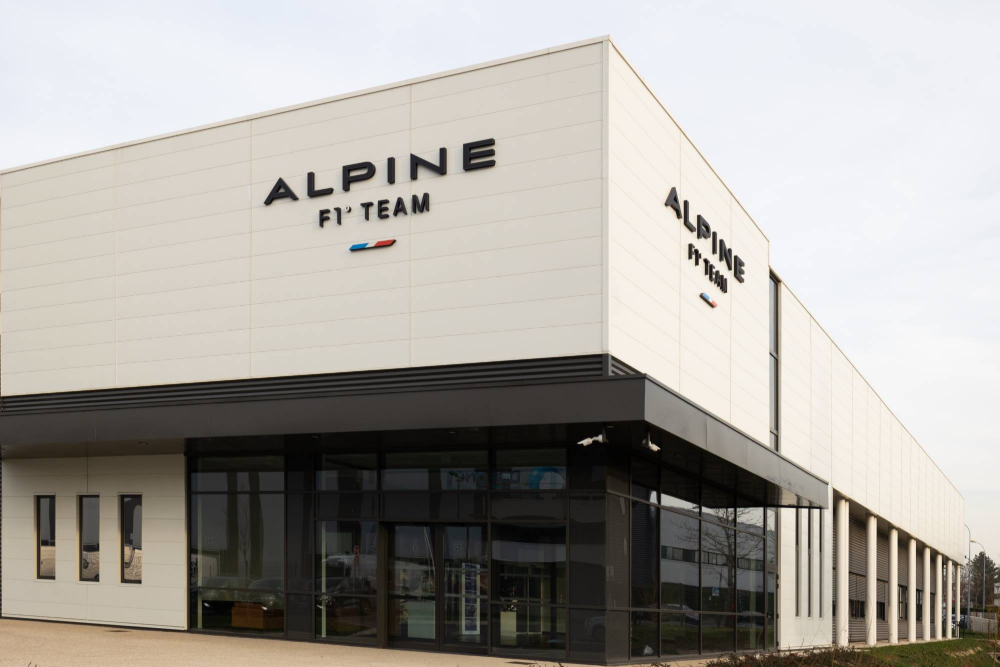
Alpine's engines will no longer be coming from its own facility in Viry-Chatillon. Alpine F1 Team photo
It’s remarkable de Meo agreed to that, given what it said about Renault’s abilities. For an automotive manufacturer to accept that the right plan is to turn your back on your own engine thanks to fundamental failings in its products reveals how little confidence there was in Viry. Briatore was right on the basis that you’re better off with a strong customer engine than a weak works one, but that doesn’t change the fact that the optimum approach for any F1 team is to do everything yourself. But that’s in keeping with Renault’s bizarre history in grand prix racing, during which it has achieved great things but also confounded – notably with its capriciousness since returning to team ownership a decade ago.
Given the problems of the old Renault power unit – not just slightly down on power but also with limitations when it came to energy recovery that often led to the car’s race pace being a step worse than in qualifying – it would have been a mistake to bet on whatever was produced in-house for the notional 50/50 V6/ERS power output 2026 power units being a big improvement. If nothing else, amid the high electrical energy demands in ’26 of a battery that will constantly be charging and discharging, Alpine drivers Pierre Gasly and Franco Colapinto have at least had experience of having to be more cognizant of it than rivals last year when the energy demands were far lower. But that’s not worth much.
Many tip the Mercedes power unit to start 2026 as the market-leader. The much-discussed trick that allows both its engine and Red Bull to run higher than the 16:1 compression ratio mandated in the rules but only tested at ambient temperature points to an advantage, but it won’t really become clear if that confidence is well-placed until more track running has taken place. But, however it performs, it surely cannot fail to eliminate a sustained Alpine deficit. As Briatore puts it, “at least when I arrive at the race I don’t ask anymore how many tenths we have disadvantage – nobody is talking about the engine anymore, nobody is talking about the gearbox anymore”.
The Mercedes PU was reliable straight out of the box. Alpine had a successful shakedown on a filming day at Silverstone last week, completing 140km out of the permitted 200km but only because of a combination of rain and bad light rather than any technical problems. Mercedes itself ran a day later and clocked the full distance, which is promising – as is the fact both ran on the first day of the Barcelona test. And as the 2026 car was an all-new design, it’s the ideal time to switch to a different power unit supplier.
“It’s gone very well,” said technical director David Sanchez about the integration with Mercedes. “Since day one, they’ve been very open with us. We've built a good relationship. They are used to working with customer teams, and they are pretty good at it. We're working in the most open-minded manner, we've got very good interactions, the integration of that power unit was pretty good, and now we'll work our way through fixing all the little gremlins and focusing on reliability and integration.”
This means that 2026 is a test of the capabilities of the chassis team at Enstone. There is certainly great optimism, with Briatore stating the team would be “competitive” this year and even talking of regular points finishes and being in the fight for sixth/seventh place in races. There have been steady improvements made to its facilities under what is permitted by the cost cap regulations, even though Enstone is still not reckoned to be as well-equipped as F1’s frontrunners.
“There have been a few major bits of infrastructure coming online,” said Sanchez. “On that side, the team is doing pretty well. What's going on in Enstone is what you would expect from a team which keeps growing and investing in what you need to succeed. It's just the striking contrast with our performance on track.
“But we all have to keep our eyes quite far ahead. We knew ’25 was going to be difficult, we made our choices, we'd do it again, but in Enstone we keep growing. We talked openly about our new simulator, which is now our main simulator. It's been so for a couple of months now, and we have a few other interesting bits coming up soon.”
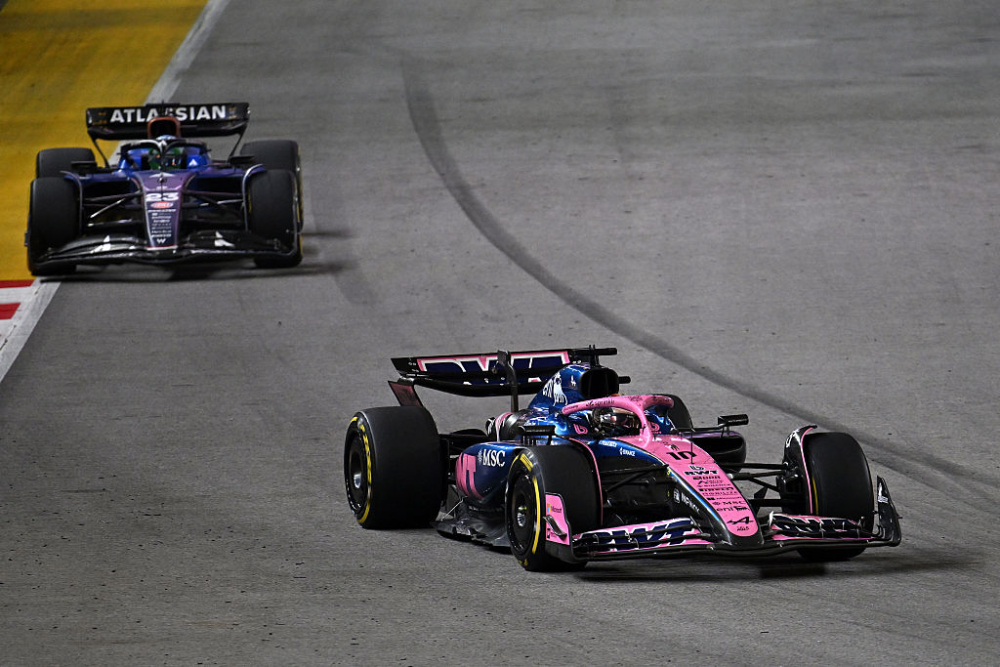
Alpine will be measuring itself against fellow Mercedes customer Williams. Sam Bagnall/Getty Images
Whether it’s enough remains to be seen. Alpine has 800 personnel working out of Enstone, although fellow aspiring upwardly mobile midfielder Williams puts its numbers at 1000 or more. With the factory team and McLaren inevitably set to be the leading Mercedes-powered team this year, Williams is the benchmark Alpine must measure itself against. You’d still tip Williams to be ahead based on recent trends, but given it is sitting out the Barcelona test thanks to problems getting its new car ready there has been an early win for Alpine in that battle.
There are high-quality personnel throughout the team despite having suffered plenty of losses to rival teams, but it’s difficult to evaluate the damage done to the processes and tools used by the team in a sport where standing still means you go backwards. Success this year doesn’t mean winning races, but it demands being at least a strong midfielder and measuring up respectably against fellow Mercedes users – or who knows what chaos lies ahead?
Renault hasn’t said this, and denies any thought of selling, but if 2026 doesn’t at least go decently it seems inevitable that it will cash in on what is a valuable asset. It’s well known that ex-Red Bull team principal Christian Horner and his backers have had conversations to buy into the team but that’s only when it comes to the 24% stake owned by a group of investors headed by Otro Capital, which includes a number of famous names such as actor Ryan Reynolds and NFL aces Patrick Mahomes and Travis Kelce. That’s nothing to do with Renault beyond the fact it would have to approve of any sale as the majority owner. But it’s hard to see Renault continuing to flog the dead horse of F1 if its team continues to struggle and resisting the many vultures circling with deep pockets and determination to get a piece of the F1 boom.
The very future of Alpine F1 is what is at stake in 2026. The story of Renault’s return to grand prix as a team, which ironically was driven partly by frustration that its achievements when only an engine manufacturer didn’t carry the same weight as those of teams, has largely been one of struggles and, at times, made it the justified butt of jokes. This is the last roll of the dice, a final test of whether the remarkable qualities of a team that has won a total of seven world championships really do remain intact.
As Briatore puts it, “if the car is bad, it is our fault”.
Edd Straw
Edd Straw is a Formula 1 journalist and broadcaster, and regular contributor to RACER magazine. He started his career in motorsport journalism at Autosport in 2002, reporting on a wide range of international motorsport before covering grand prix racing from 2008, as well as putting in stints as editor and editor-in-chief before moving on at the end of 2019. A familiar face both in the F1 paddock, and watching the cars trackside, his analytical approach has become his trademark, having had the privilege of watching all of the great grand prix drivers and teams of the 21st century in action - as well has having a keen interest in the history of motorsport. He was also once a keen amateur racing driver whose achievements are better measured in enjoyment than silverware.
Read Edd Straw's articles
Latest News
Comments
Comments are disabled until you accept Social Networking Cookies. Update cookie preferences
If the dialog doesn't appear, ad-blockers are often the cause; try disabling yours or see our Social Features Support.