
The RACER Mailbag, January 14
Welcome to the RACER Mailbag. Questions for any of RACER’s writers can be sent to mailbag@racer.com. We love hearing your comments and opinions, but letters that include a question are more likely to be published. Questions received after 3pm ET each Monday will be saved for the following week.
NOTE: Chris Medland has been on vacation, but he'll be back to answer your F1 questions next week.
Q: The poor quality in some Dallara-made parts you mentioned here made me wonder about something...
I know IndyCar doesn't want multiple chassis builders competing. But what about having two or three building the same car (with quotas) for the sake of having a backup and keeping the racing industry healthy? If one of them starts doing a poor job, the other can keep things going.
The two or three selected builders would finance the development and be able to sell the car. It's viable that way, isn't it?
ACO should've done the same with the next gen LMP2. Everyone will end up with an ORECA anyway. So, why not make a spec design, the four chassis manufacturers finance it equally, and these four would be allowed to sell the cars? I remember an article about the costs of making those cars and the manufacturers all said that due to the development costs they need a minimum of five cars running for five years just to break even. If everyone is financing the same spec design, that's not a problem, is it?
I mean, this much reliance on Dallara is a bad idea. Some people in Japan are already taking steps to stop it there. The U.S. could do the same.
More companies being able to build high level cars is a good thing for the industry, right?
William Mazeo
MARSHALL PRUETT: I’m told the problem with the consistency of parts quality comes from the need to outsource manufacturing to multiple subcontractors due to such high global demand.
Through the spreading of the production workload to meet demand across the ever-widening array of series where Dallara is represented, and knowing how most bidding processes involve awarding contracts to the lowest bidder, the Part A coming in from Germany might not be an exact match for the same Part A arriving from France or Spain, or wherever the array of composites vendors are located.
If human hands are making the same thing in a few different places, which is how most composites are made, there are bound to be minute differences, at a minimum, in the final products. And if the difference between being legal and illegal is 1mm in width or length or thickness, you have a problem.
On nationalism, Dallara USA has been in place in Indianapolis since the latter part of the 1990s; Dallara’s first Indy car, the IR97, debuted in 1997, so I’d struggle to paint the Italian company as something that’s truly untethered to the U.S. The company could be founded and owned by Bill Dallara of Dallas, Texas, and the problems would be the same.
More qualified and proven IndyCar-level constructors would be better, for sure. I’d be happy if we simply had two or three. But like a muscle that’s been allowed to atrophy due to a lack of use, those who might be considered for the opportunities are largely gone.
How many specialist open-wheel chassis designers and constructors exist today that have recent experience making Indy cars? It’s Dallara, and Dallara alone.
The one-of-a-kind requirements involved with creating an Indy car – wholly different from anything in F1 or similar – where safety and performance is required for ovals along with road and street courses weeds out most of the known names like Tatuus, Mygale, Ligier, ORECA, and so on. They could all learn, over time, but none are turnkey ready by any means.
We had Swift producing Indy cars in California, and Panoz, late in its open-wheel period after it bought England’s GForce, making cars in Georgia, but for the most part, CART, Champ Car, and Indy Racing League machinery was all made in the U.K. via March, GForce, Lola, Penske Cars and Reynard.
March, GForce/Panoz, Penske and Reynard are gone. Lola is back, and has ambitions, but would need to start from scratch.
But back to the greater point: Since Dallara has been given favored status in IndyCar for most of the century, and in IPS/Indy Lights/Indy NXT as well, there’s nobody I can think of that’s still in the game with genuine knowledge and experience to build an Indy car in the next two years.
You could get three or four to join in and handle the production of the Dallara IR28, but that does nothing to educate those constructors; they’re just vendors making what Dallara created and developed with its vast IndyCar expertise. The brain-drain in IndyCar design and performance knowledge over the last 20 years makes me sad.
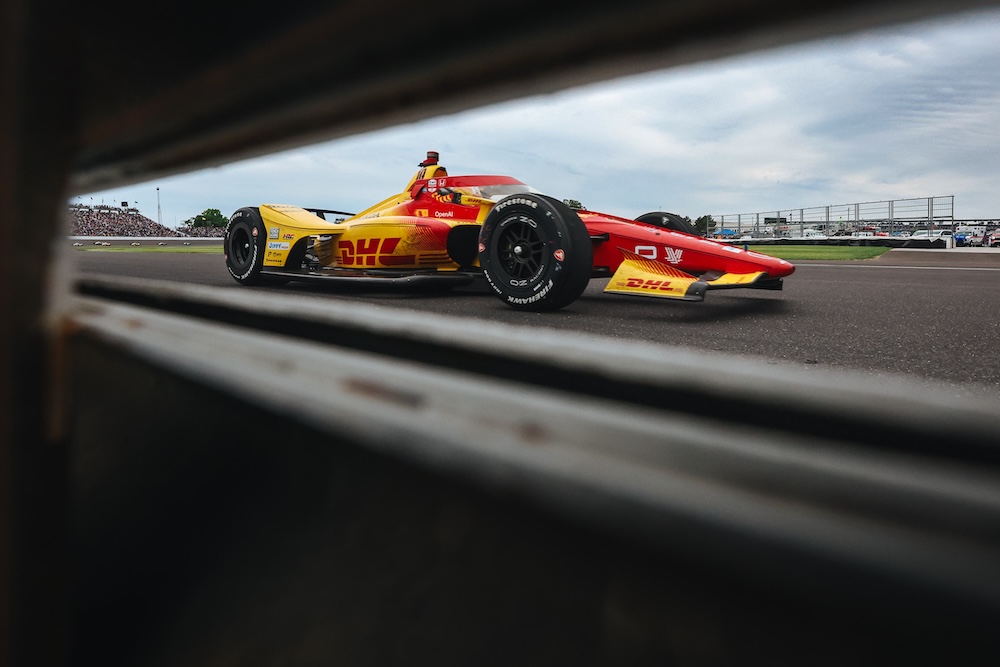
Dallara has cornered the market in making modern Indy car chassis - in part because virtually no other manufacturers have the know-how on tap. Chris Owens/Penske Entertainment
Q: How tightly linked are Honda Racing Corporation and HRC US from a funding standpoint?
Let’s say the internet speculation is right and Honda is significantly behind Mercedes and others in the 2026 F1 power unit race. And let’s say that the FIA does nothing about that and Honda is faced with spending tens of millions of dollars or more than $100 million using the “catch-up” provision of the F1 spending cap.
If that happens, might it force HRC US to cut back significantly on North America programs? Perhaps to the point of killing the IndyCar program?
Ed Joras
MP: They don’t share details on how they fund themselves. Regardless, I can’t see this happening. It’s not like Honda’s making its F1 debut; they just competed from 2015-25, which suggests preparing a new powerplant for 2026 shouldn’t be a seismic change.
Killing the HRC US-led racing programs in IndyCar, and IMSA for that matter, to overcome a short-term issue in F1, if it exists, is something a new and less stable car company would do. Rash behavior is not something we see from Honda in American racing, or anywhere else that comes to mind.
Honda has been up and down in F1, MotoGP and other places as well over the years, and needed to spend a lot of money to fix their shortcomings. If robbing from the U.S. to solve those issues wasn’t done in the past, I don’t see a trend to make me think it would happen is such a thing arises in F1.
Marshall Pruett
The 2026 season marks Marshall Pruett's 40th year working in the sport. In his role today for RACER, Pruett covers open-wheel and sports car racing as a writer, reporter, photographer, and filmmaker. In his previous career, he served as a mechanic, engineer, and team manager in a variety of series, including IndyCar, IMSA, and World Challenge.
Read Marshall Pruett's articles
Latest News
Comments
Comments are disabled until you accept Social Networking Cookies. Update cookie preferences
If the dialog doesn't appear, ad-blockers are often the cause; try disabling yours or see our Social Features Support.