Jake Galstad/Lumen via Getty Images
IndyCar gets new technical inspection truck and tools
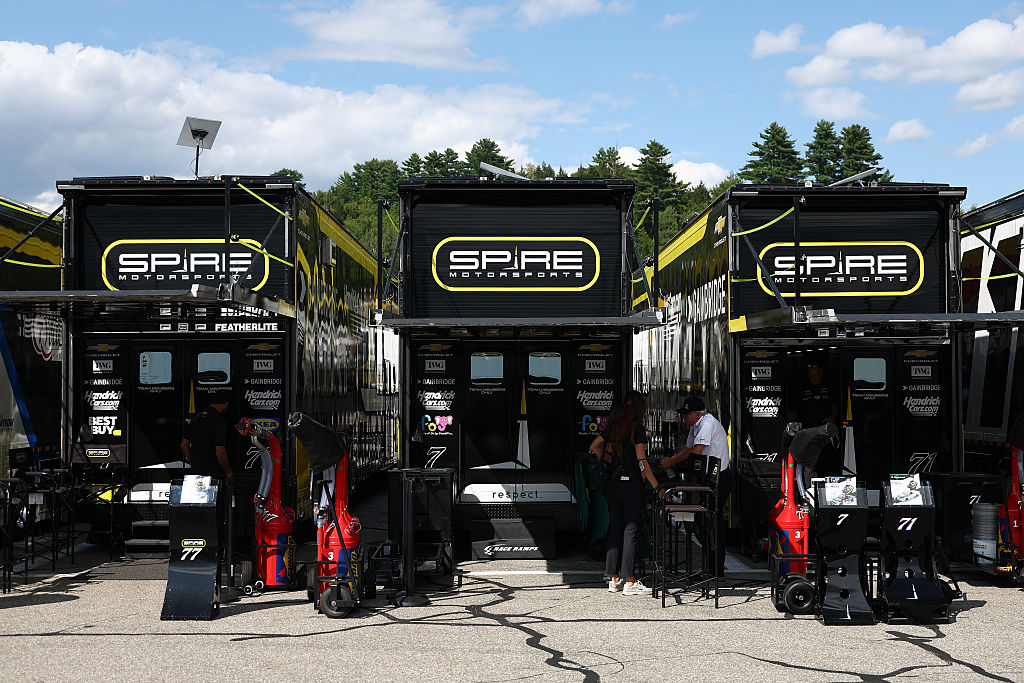
Penske Entertainment has purchased a new technical inspection trailer that will be run by its new Independent Officiating Board (IOB) and the regulatory compliance staff who will work for the Penske-funded IndyCar Officiating Incorporated (IOI).
“The tech truck that goes down the road for the entire tech team is brand-new this year,” said IndyCar President Doug Boles. “Our (IndyCar) folks will transport it and get it there and turn it over at the end of the day, once it's set up, to the tech team and to the IOB to manage.
“It still will be owned by us, but it will be completely run by the IOB. I'm excited that we had planned on doing this even before we got to the IOB side. So this is a nice thing as they kick things off to go into a season with a brand-new truck.”
The tools used for technical inspection are not expected to undergo significant change in 2026 or '27 as the current Dallara DW12 chassis enters its final seasons of service.
But as the new-for-2028 Dallara IR28 is readied for debut, Boles wants to have laser scanning technology – a staple in domestic series like NASCAR and IMSA to measure and verify bodywork and dimensional legality of various components – in play as standard equipment for the IOB to deploy.
“Scanning is one of the areas where I think we have an awful lot of opportunity,” Boles said. “As you know, following the Indianapolis 500 we impounded four cars – or the tubs and the crash structures – because as much as anything, we wanted to learn what's going on, figure out the reliability of the tub. Basically, we took those tubs and crash structures and compared them to the three other cars that came in with them. So we compared all four cars to each other.
“We compared them to the CAD (computer-aided design file) that Dallara has for the build of the Dallara car. And we also built up a brand-new tub and a brand-new crash structure and compared it to that. So as I said, it was as much anything for us to learn what's going on with the tubs and learn how reliable they were.”
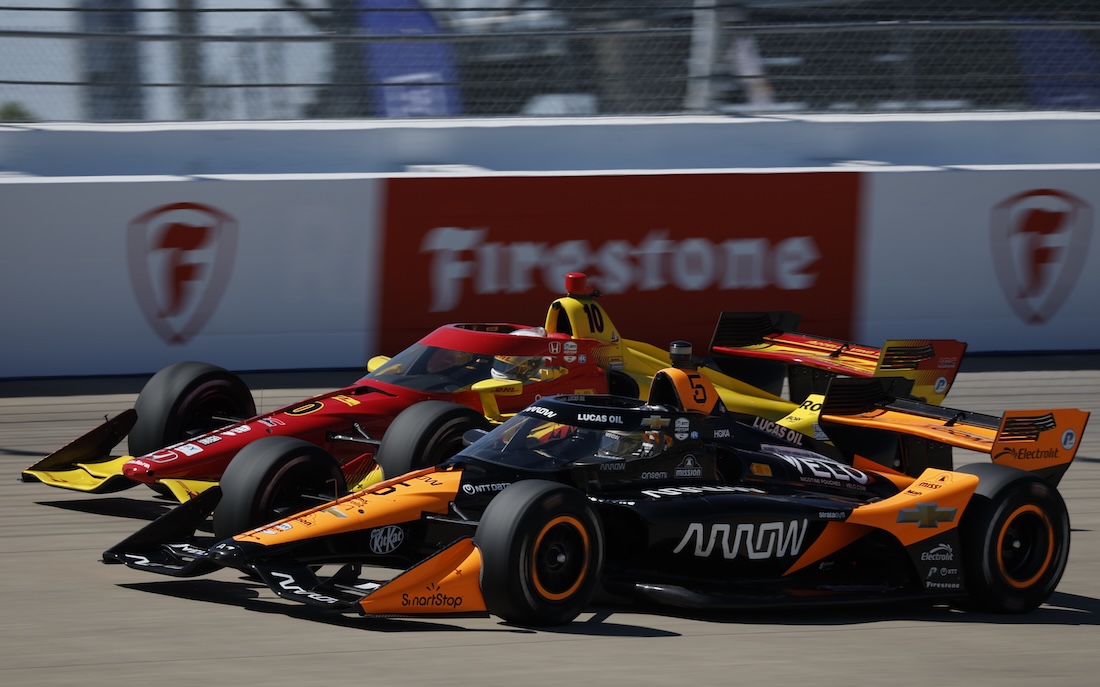
Achieving reliable and repeatable scanning results have proven to be a challenge with the DW12 due to its age and numerous configuration changes the spec chassis has undergone since its introduction in 2012. As DW12s were involved in heavy crashes during the first few seasons of use, IndyCar and Dallara implemented mandatory offseason updated to the tubs where additional side impact cladding was applied to the cars and other annual safety improvements were made.
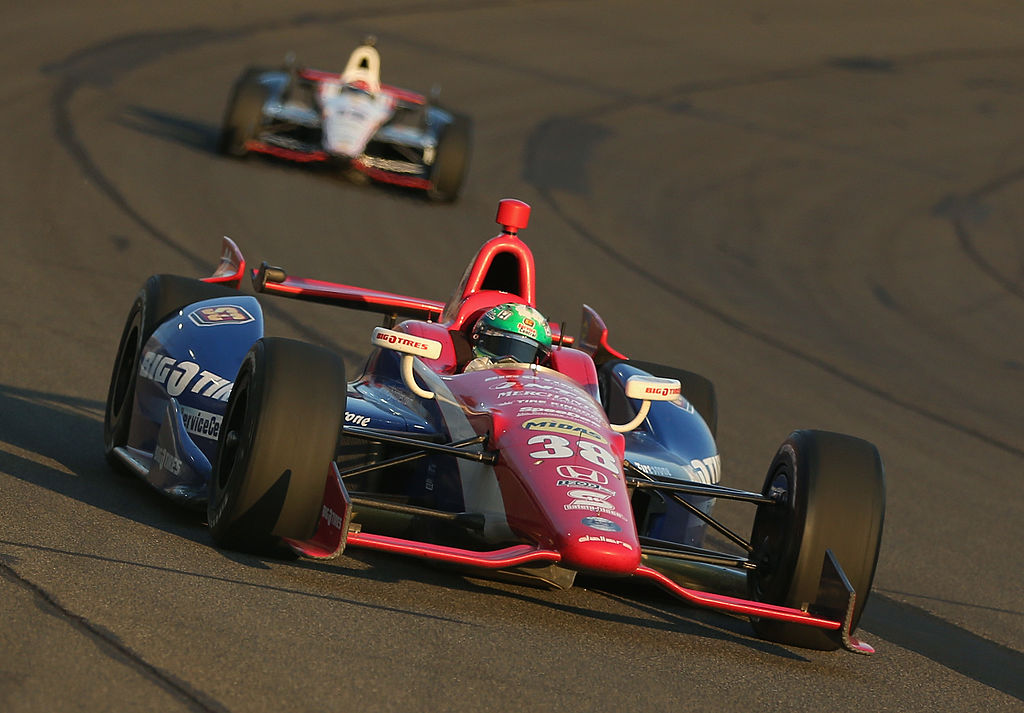
The DW12 of 2012 has been steadily updated over the years. Jeff Gross/Getty Images
As new tubs were ordered, Dallara would incorporate the rolling updates into its tub manufacturing process, so new DW12s had the thicker Xylon anti-intrusion panels and the rest of the updates blended into the tubs. This also meant, for example, that a team with original but updated 2012 or 2013 DW12s with the bonded updates would have tubs that returned different laser scanning results than a brand-new 2014 DW12 with the updates baked into the tub during the manufacturing process.
Owing to the fact that some teams continue to field early DW12s with the add-on updates against teams with newer DW12s, holding the introduction of field-wide scanning until a single and uniform standard can be upheld with the IR28s is the direction chosen by the series.
“We also were able, through that, to see areas that looked like they were odd,” Boles continued, “and chased down some things that were definitely odd on some of the cars there, and to begin to think, ‘OK, we may not be able, right now, to put scanning rules in place that say you must meet exactly this (standard).’
“But what scanning can tell us is places where teams are taking advantage of some of the rules, and we can continue to make sure that everything is on the up and up. We also scanned cars after Portland, and then we scanned four cars after the Nashville race. So it was just a learning opportunity for us.
“So when I spent a little time with the IOB … we did talk about technology and scanning, and I think together, what we've decided we'll do is we will invest in scanning. And between this year and the 2028 season, we will probably do a lot of scanning, just to continue to learn, so that when we come with the new rule book in 2028 with a new car we can be able to easily say, ‘OK, here are the scanning rules in which the box of the car must fit.’ (But) it's not necessarily going to be used this year at all for rules enforcement.”
A blend of scanning data gathered by IndyCar and reports from teams highlighted a separate need for Dallara to improve the quality control with the spec components that make up the DW12.
In May, a number of teams told RACER of scenarios where they bought multiples of the same part to place in their inventory of spare parts, and found differences in the finished products that were big enough to be flagged during scanning as being illegally out of tolerance based on a manufacturing irregularity that somehow made it through the quality inspection process and were offered for sale.
Like the standard inclusion of scanning in the technical inspection process, standardized parts production is another area the series and its official chassis supplier intend to have resolved with the IR28.
“So by the time we get to 2028, one of the things that Dallara has really focused on is the repeatability of the parts, and the ability for us to measure parts from each car identically, in a way that we can start using scanning as a true way to enforce rules,” Boles said.
“Dallara is really focused on that quality control. Because if you're a team and you're buying a part from Dallara, you expect that that part you bought is going to scan perfectly, so that teams know now when they get something, they see something that doesn't seem right, they'd go back to Dallara, and Dallara will either fix it or get another one. But Dallara is doubling down under quality control, so we don't have those issues.
“I’m excited about what the scanning opportunities are going to be. And at some point in time, when the IOB says, ‘You know what? We think we know enough. We're going to take this over, and we're going to actually tell the teams that these are the things we're going to enforce,’ that'll be their decision, not ours.”
Marshall Pruett
The 2026 season marks Marshall Pruett's 40th year working in the sport. In his role today for RACER, Pruett covers open-wheel and sports car racing as a writer, reporter, photographer, and filmmaker. In his previous career, he served as a mechanic, engineer, and team manager in a variety of series, including IndyCar, IMSA, and World Challenge.
Read Marshall Pruett's articles
Latest News
Comments
Comments are disabled until you accept Social Networking Cookies. Update cookie preferences
If the dialog doesn't appear, ad-blockers are often the cause; try disabling yours or see our Social Features Support.