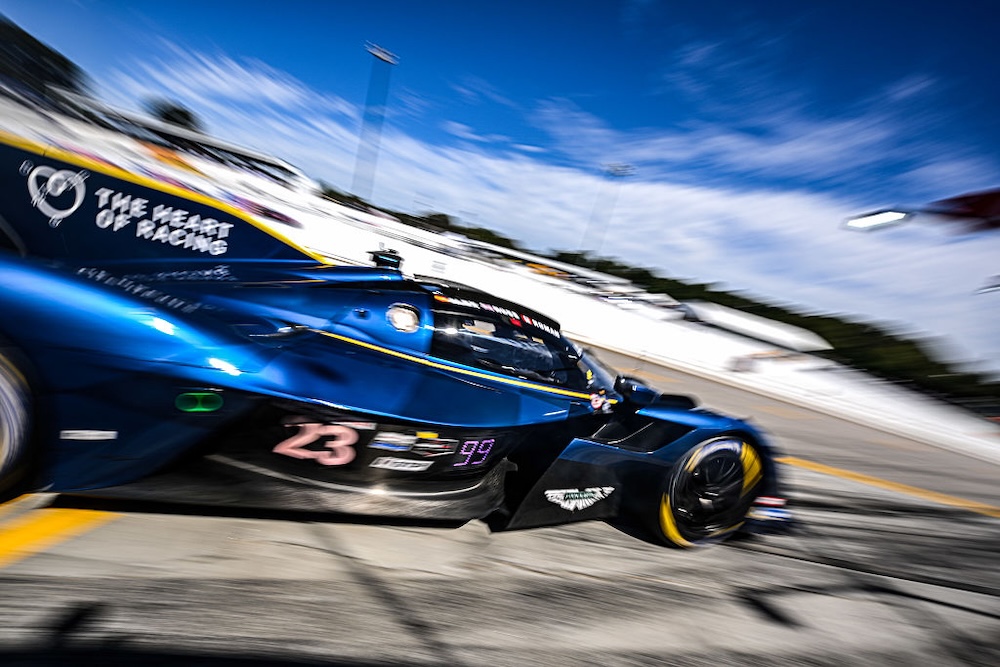
Brandon Badraoui/Lumen via Getty Images
How Aston Martin aims to turn its Valkyrie from crowd-pleaser to regular contender
The Aston Martin Valkyrie AMR-LMH was a crowd-pleaser everywhere it raced last year, thanks to its unique look and sound. And by the end of its first seasons in the FIA World Endurance Championship and IMSA WeatherTech SportsCar Championship, the Valkyrie was showing that it could be a genuine threat for podium finishes against its more conventional rivals.
Heading into the car’s second year of competition, with another two-car effort in the WEC’s Hypercar category and another single-car campaign in IMSA GTP, the goal for 2026 is to take the next step and improve upon the car’s first competition podium, recorded this past October at Petit Le Mans.
Aston Martin Racing mainstay Marco Sørensen put together the car’s first real headline-grabbing performance in WEC, when he sneaked the No. 009 Aston Martin THOR Team Valkyrie into the Hyperpole session at the 24 Hours of Le Mans. Both Valkyries then went on to finish their first race, far more than what some feared when one car retired from the season-opening Qatar 1812KM and another had its door blow open at speed.
At the 6 Hours of Fuji, Sørensen put the No. 009 Valkyrie third on the grid for the race, co-driver Alex Riberas led laps for the first time, and they went on to finish a season-best fifth place.
“For sure, the steps are going to get smaller and smaller, like anything,” Sørensen said to RACER about the car’s development heading into 2026.
“But already now we have a decent package. I guess when the new season starts in Qatar, there should be a possibility of being up there and fighting, and that's what you want. Because obviously, when you miss out on the first three, four races, until after Le Mans, where we only started to get some pace, the championship and everything is kind of gone at that point.
“For sure, next year, we need to start the first race in Qatar and get some proper points and be fighting up there for the championship. And that's definitely what I want, and I'm sure that's also what the team wants, is to be getting a championship for the team and the drivers.
“And then obviously you have Le Mans, which is a bit set off from everything, but I'm quite sure we'll be better off with the car we have now at Le Mans than we what we had at Le Mans this year.”
When the Valkyrie was unloaded for the November IMSA Sanctioned Test at Daytona International Speedway, it was the only car in the GTP class that hadn’t used any of its five development ‘jokers’ to modify the car. It was a conscious choice by Aston Martin and The Heart of Racing with the knowledge that there is still performance to be found with the current package, particularly on the software front – a critical battleground under the current regulations.
“There are things you can change within the regulations and electronics, tuning and control systems that we're still improving all the time,” said Team Principal Ian James.
“We’re getting a better understanding of the car for our simulations, the engineers are doing a lot of work behind the scenes to see how they can improve the ride quality, for example, which is still an area where we're lacking a little bit. So there's so much to do, and there is no off-season anymore, it's flat-out.”
This despite only one of the team’s first class of six Valkyrie drivers boasting any degree of top-tier prototype racing experience – former Nissan LMP1, Mazda DPi, and Proton Competition Porsche 963 driver Harry Tincknell. Sørensen, Riberas, Ross Gunn, and Roman de Angelis were all promoted internally from The Heart of Racing’s GT3 programs, and Tom Gamble was acquired from McLaren’s pool of factory GT drivers.
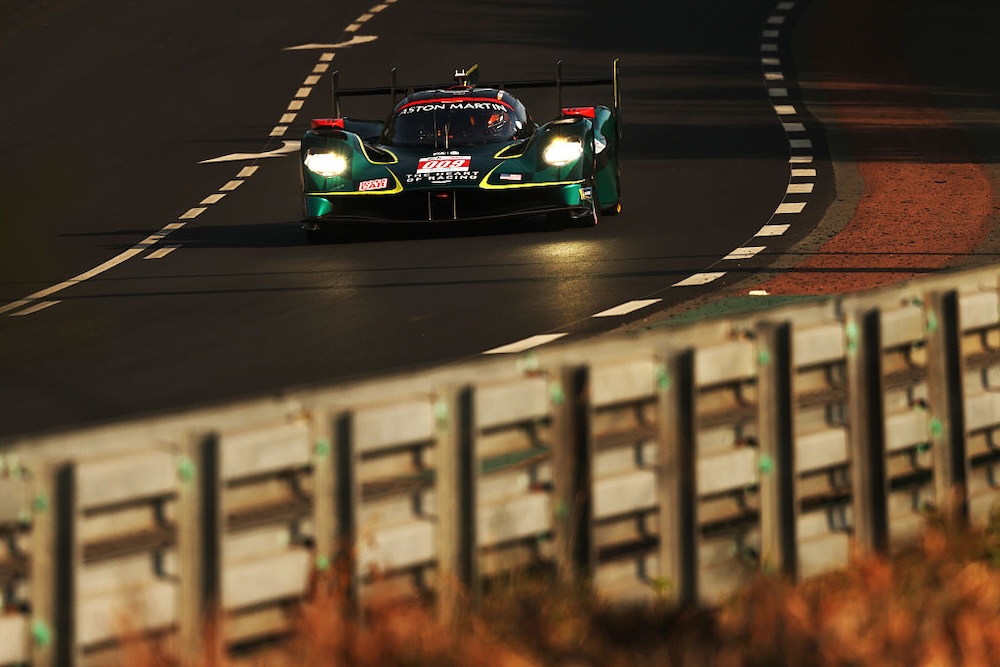
Aston Martin and The Heart of Racing are yet to take any big swings with development on the Valkyrie, because they believe there's still more performance waiting to be unlocked from the current package. Jakob Ebrey/Getty Images
“I think when we first announced the lineups, there was a few little question marks there,” says James. “But in general, I think everybody is surprised how well they've done. We've seen some real stellar, standout performances during the year from some of them, and put them on the radar of really being future stars of Hypercar.”
Sørensen and Tincknell, the most experienced drivers in the fleet, were seen as the leaders to guide young drivers like De Angelis and Gamble as they moved up to Hypercar/GTP this season.
“I wouldn't say we're team leaders,” said Sørensen, who drove alongside De Angelis in IMSA in 2023, and shared the car with the young Canadian three times in WEC this season.
“But we're definitely trying to do our job in the best way and be role models, especially for Roman who is quite a bit younger than us, so [we] try to give him everything we can to feel comfortable. It's just been exciting so far, I would say that's the main part of it. Alex is bringing a lot to the whole program, and Roman can bring some stuff to this team as well. So for sure, everyone is kind of working together.”
As the V12-powered Valkyrie has brought no major updates for 2026, there’s also expected to be no major changes in Aston Martin THOR Team’s driver line-up this season. If there’s a 'next man up,' however, it may well be Mattia Drudi, who recently drove the Valkyrie in the WEC Rookie Test at Bahrain.
Drudi has quickly become Aston Martin’s new GT3 ace driver, particularly after a starring role in Comtoyou Racing’s Spa 24 Hours win in 2024, and a solid first season in WEC for Heart of Racing.
“I never deny that Hypercar is my target for the future”, Drudi admitted after completing 97 laps in the Valkyrie. “It's a great opportunity to drive the Valkyrie, especially looking at the season they had, it's going better and better. They show that they have great speed, and the car is performing really well.
“I really hope I can get the chance to be there with them in the near future. It's a solid program so I don't have the rush to be there straight away, but I would like to, of course. I raced quite a bit in GT and it would be super nice to be in a top class of endurance racing. I'm not the youngest anymore, but I still feel quite young, so I hope I still have some time.”
Should Drudi find himself racing full-time in the Valkyrie, he feels confident that he can be one of many GT drivers who’ve made a seamless transition to LMH/LMDh prototype racing, thanks to the characteristics of the current cars.
“It's great now, because it's quite different from the past when LMP1 and GT were complete different worlds,” he says. “Now I see all the GT drivers can fit in Hypercar as well. They are a bit heavier cars compared to in the past, and the driving style can be adapted from GT to Hypercar. Of course, you have more power, more downforce, so you need to get used to that, but at lower speeds all the physics from the car are quite similar.
“You can see that most of the teams are using drivers coming from GT and it works well, because they want some more championships, some big races. It's really nice because it gives us [drivers] that come from GT only, a bigger opportunity for stepping up to Hypercar.
“It's going to be better and better in the future with Hypercar, with all the other manufacturers coming, so it's nice. It's a good year to be a GT driver now.”

RJ O’Connell
Read RJ O’Connell's articles
Latest News
Comments
Comments are disabled until you accept Social Networking Cookies. Update cookie preferences
If the dialog doesn't appear, ad-blockers are often the cause; try disabling yours or see our Social Features Support.