James Gilbert/Getty Images
Why Palou isn’t on Cadillac F1’s radar
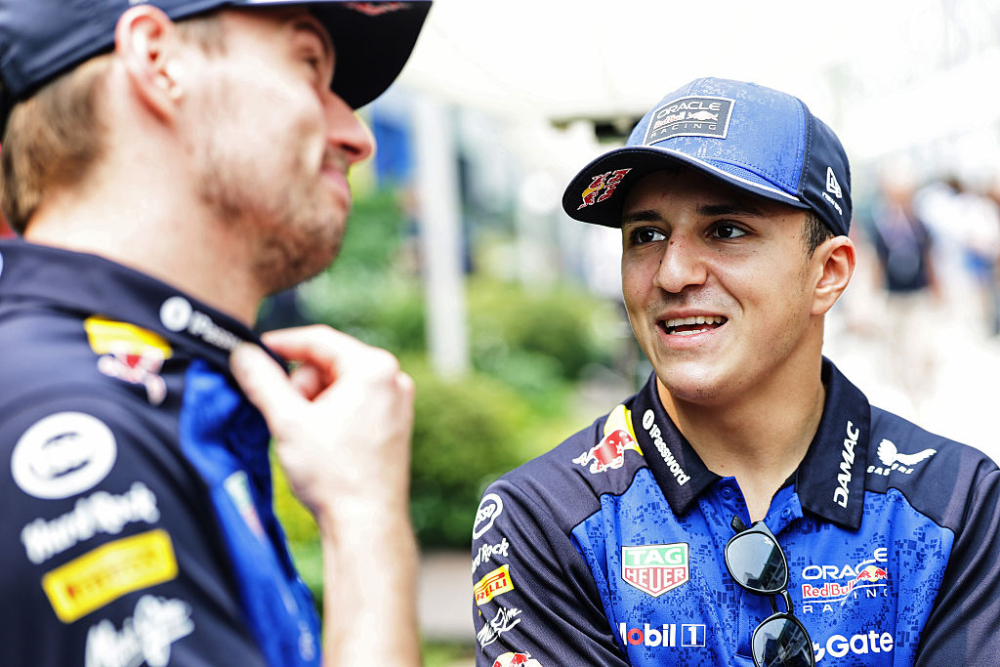
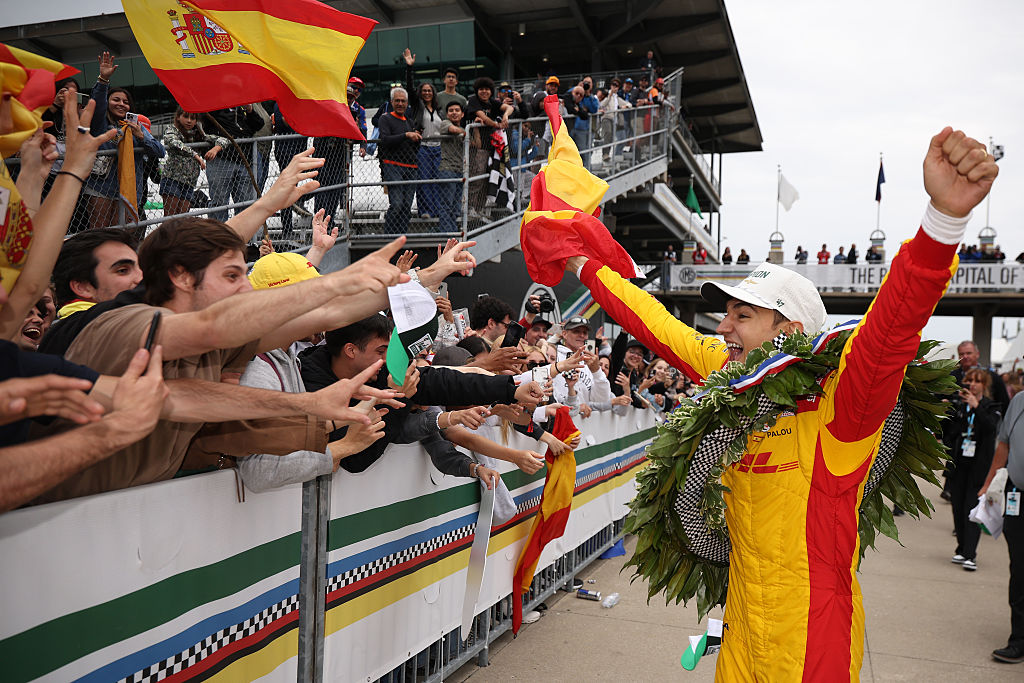
Even when he dominated the 2023 Formula 1 season, Max Verstappen "only" won four of the first six races of the season. And that was in a car that had a clear advantage over its rivals. What Alex Palou is doing in IndyCar this year is remarkable, and his victory in the Indy 500 keeps him on course for a fourth championship in five years.
His achievements have certainly not gone unnoticed on the other side of the Atlantic, either, with his fellow Spaniards in F1 – Carlos Sainz and Fernando Alonso – full of praise for his latest success as they gear up for their home race in Barcelona.
So at a time when there is a standout IndyCar talent and a U.S.-based team preparing to enter Formula 1 that is keen to remain connected to the American market, for some it comes as a surprise to learn that Palou is not a driver that Cadillac has been having conversations with.
The Spaniard is clearly of the highest quality, but that alone does not make him right for Cadillac right now.
As it happens, the last F1 team to enter the sport as a new constructor was also American, and was also facing calls to take a driver from the U.S. racing scene – calls that it resisted.
Haas was led by Guenther Steiner at the time, and the driver choice was never an issue of talent, but experience.
“When you set a new team up, you've got so many things to work at,” Steiner tells RACER. “I wouldn't say problems, it's just because you're young, you need to deal with so many things and you don't have the time for drivers who haven't been in Formula 1 because you need to find your own way and if you have to guide the driver as well, it normally doesn't work out.
“So therefore it was very important for me when we started off that we had drivers who drove already in F1 cars to develop the team, because that's the most important thing that you have to do the first year – you need to develop the team. If you want to develop drivers you have to wait a little bit.
“If you put a driver who has never been in F1 into a team which has never been in F1, you actually don't do them a favor because it goes against them. How can they perform? Because you're focusing on developing the team and you cannot focus on them.
“Sometimes then people say, ‘Oh the driver wasn't good.’ No it wasn't the driver, it's just like they didn't have the right entry into Formula 1 because they worked with a team that... not that they didn't know what they were doing, that's too harsh, but they were still developing themselves.
“Experience [helps], because either you've got time or you take somebody who has done it – that was always my stance when we started Haas. I think if Cadillac comes in, they wouldn't be doing an American driver who has never been in F1 any favors.”
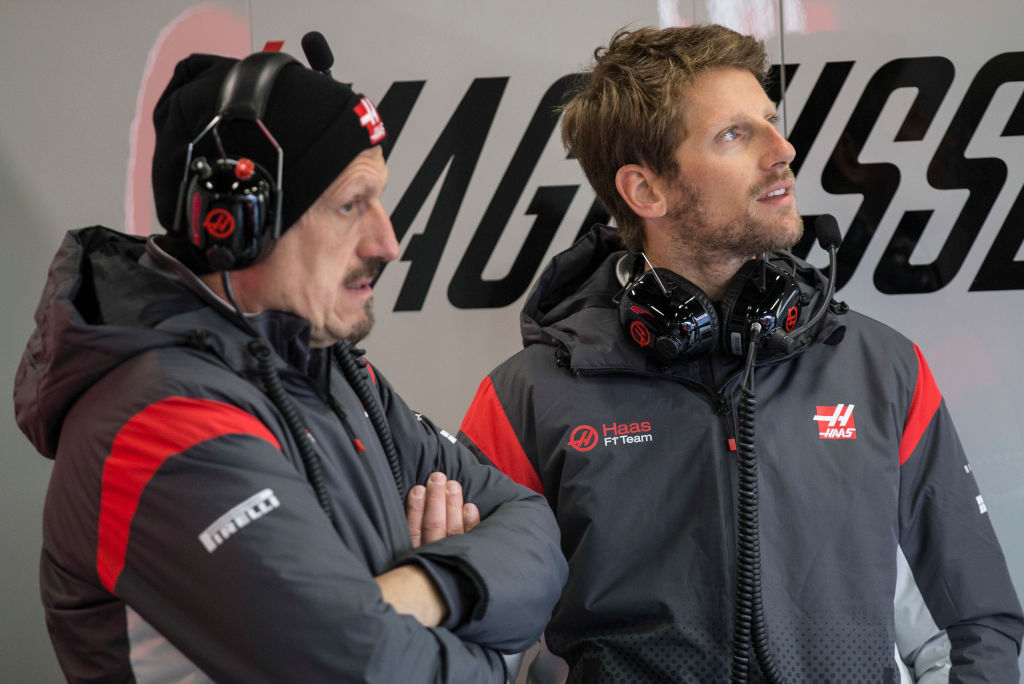
Steiner (left) opted for experienced drivers like Grosjean (right) with Haas's startup F1 operation, because he felt bringing in any rookie would make things harder for both the driver and the team. Sam Bloxham/Getty Images
While Palou is not American, he is well-versed in the U.S. racing scene. After recording solid if unspectacular results in Europe, the 28-year-old was catching the eye in Japan before he excelled in the IndyCar Series.
Drivers, by their very nature, are a confident bunch. So from the perspective of the person behind the wheel, it’s not as clear cut as Steiner’s viewpoint. But there are obvious differences between what an IndyCar requires and what it would take to translate that performance to F1 machinery. Romain Grosjean is well-placed to compare the two, having raced an IndyCar on 64 occasions following 179 starts in Formula 1.
“In terms of driving style, they’re very different,” Grosjean tells RACER. “In IndyCar, at least, you can really slide the car, fight it, drive with quite a lot of oversteer.
“In Formula 1, you have to be smooth and precise and much more on the line, whereas in IndyCar, it's actually changing often. So, you have more adaptation, but you can also really drive the car hard, which would not last long in a Formula 1 car.”
Even Sainz acknowledges that for all of Palou's dominance in IndyCar, “Formula 1 is a completely different discipline, different world” and although Palou’s experience of the European ladder would be beneficial compared to many of his peers, the fact he only made four starts in the current F1 feeder series of Formula 2 still means he would need to adapt to a different culture to the one he’s having great success in.
“If you take a driver that has already been in Europe, I think there's an understanding of the difference of culture, difference of mentality,” Grosjean says. “I think in the U.S., it’s that drivers have been looked after like part of a family, and that's nice. Whereas Formula 1, it's run a little bit more like a business; not in a bad way, but it just feels like you're a little bit more on your own in Formula 1.
“I think Formula 2 has become so professional, even since I left. You're in the Formula 1 weekends, you see what's happening, you get the chance to go in the paddock, you get teams that have an alliance with Formula 1. And that being so close helps a lot, rather than coming from somewhere else. I'm not saying it's impossible to come from somewhere else.
“I know there was a lot of noise about Colton Herta. Palou, for sure. So, there are guys that could do it, but there are also guys that came to Europe and didn't find their feet because, as I said, the mentality is very different.”
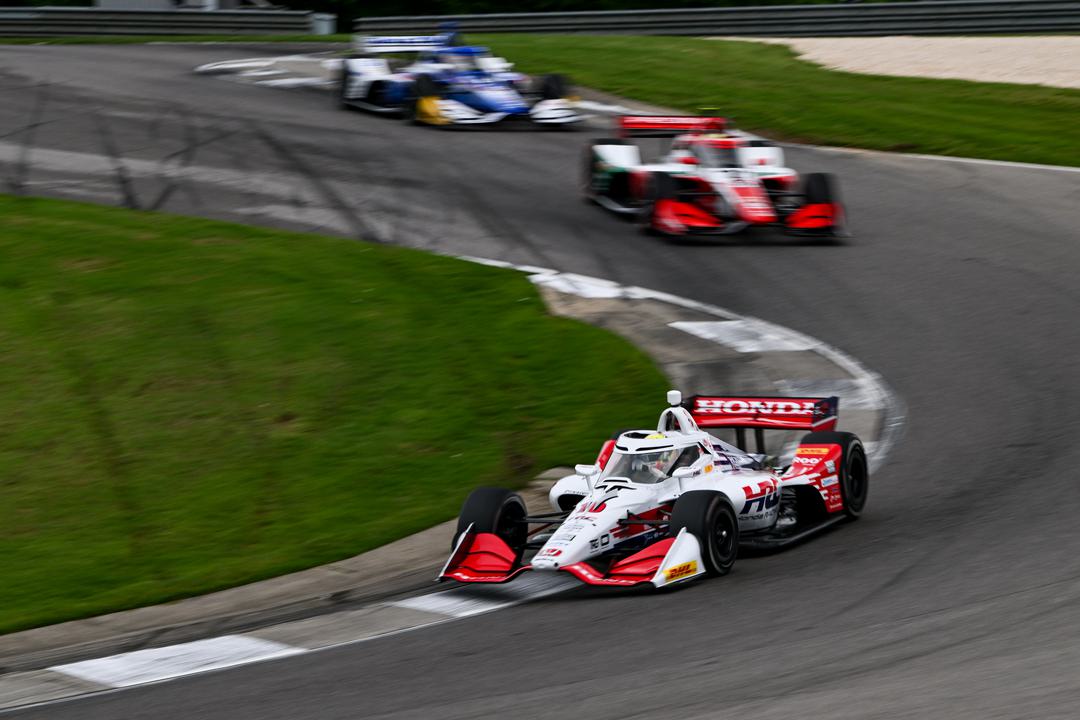
How readily would Palou's demonstrated talent apply in F1? Grosjean says it's complicated. James Black/IMS Photo
Even if he understands the mentality and has some experience from two seasons in GP3 and couple of F2 outings eight years ago, would Palou even want to make the move? As much as he might, it also needs to be factored in that he’d be walking away from such huge success in IndyCar, and into a sport where his opportunities would be far more limited.
Sources close to Palou have indicated he is fully focused on winning a third championship in a row, and as such has not been chasing discussions from his side, either. That’s not to say the F1 door is fully closed, but with a substantial buyout clause and the chance to rewrite history in IndyCar, Palou is in an environment that he is not keen to walk away from.
The last Spaniard to come so close to winning the Indy 500 was Alonso in 2017, and his impressions across the two series tells him it’s the team that controls a driver’s success in F1 far more than the other way round.
“I think here it's more about having the right package, the right car, not making mistakes, to have a good organization with experience,” Alonso explains. “The driver side is a little bit easier.
“I think all the IndyCar drivers know how to drive cars fast, and here 90% of your success is dictated by the package you're driving. So it's more about the team preparation.
“Let’s see, but it's going to hopefully be a good opportunity for [Cadillac] with the change of regulations. Everyone starts from zero and it's a good moment to enter the sport.”
There are so many factors that go into being successful in IndyCar that Palou has lined up at the moment. And there are plenty more needed to be competitive in F1 that Cadillac is working on – to the extent it hasn’t moved beyond preliminary talks with any driver yet – that adding the complexity of a crossover doesn’t appear to be the right time.
Circumstances could eventually lead Cadillac down the path of taking an IndyCar driver, and similarly could see Palou enter talks with other teams on the grid in future. But for now, those aspects do not line up for this pairing.
Chris Medland
While studying Sports Journalism at the University of Central Lancashire, Chris managed to talk his way into working at the British Grand Prix in 2008 and was retained for three years before joining ESPN F1 as Assistant Editor. After three further years at ESPN, a spell as F1 Editor at Crash Media Group was followed by the major task of launching F1i.com’s English-language website and running it as Editor. Present at every race since the start of 2014, he has continued building his freelance portfolio, working with international titles. As well as writing for RACER, his broadcast work includes television appearances on F1 TV and as a presenter and reporter on North America's live radio coverage on SiriusXM.
Read Chris Medland's articles
Latest News
Comments
Comments are disabled until you accept Social Networking Cookies. Update cookie preferences
If the dialog doesn't appear, ad-blockers are often the cause; try disabling yours or see our Social Features Support.