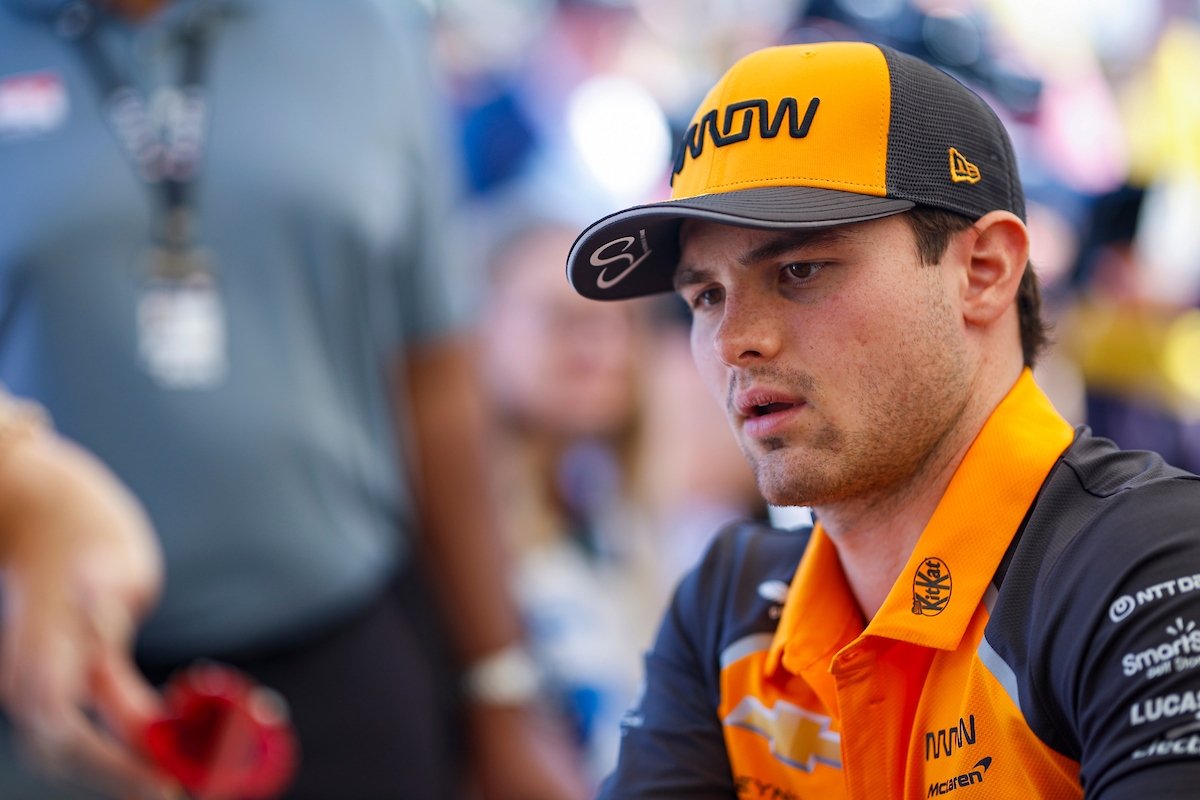
Jake Galstad/Lumen
O'Ward working on qualifying form to rectify poor performance
Pato O’Ward doesn’t like where he finds himself when it’s time to qualify the No. 5 Arrow McLaren Chevy.
The young Mexican has five IndyCar Series pole positions to his credit, but the last came nearly three years ago on the Mid-Ohio road course, and after a dismal start to the season where he qualified 23rd, it’s the one aspect of his game that needs immediate improvement.
“My qualifying was horrible at St. Pete. It wasn't even bad; it was horrible,” O’Ward told RACER. “And then to top it off in horribleness, we got completely screwed by someone else's crash with having a puncture. Considering that we were dead last, about to be lapped within like 20 laps and still made my way to 11th, [it] was good, but we can’t start so far back.
“I was the fastest car in terms of race pace the whole race, so it's not like the speed was missing. But bad qualifying is really penalizing you in IndyCar, and then if you top it off with a puncture, some bad luck to start the race where you just can't even go through your tire strategy, it all snowballs.”
Known for his lighting reflexes and rabid race-day performances, the ongoing struggles in qualifying is an admittedly strange development for one of IndyCar’s fastest drivers. O’Ward took three wins last year and tore through the field at St. Petersburg, but he’d have better odds of securing more podiums and victories if he was able to consistently fire the No. 5 Chevy into the first few rows during time trials.
“I don't want to get too greedy, because I do think things can always be worse, but if I could have qualified 10th, and I could have missed the crash, it’s a different conversation,” he said. “Just qualifying has been a struggle for me, even last year, and I don't know why. I can't pin quite pinpoint why I've struggled so much, because I've always been the other way around.
"Qualifying has always been the best, and then in the race, we can't carry it through, but then I keep finding myself really battling through the races to get to the podium and to win races. We just need to get to where we want to be, which is the first five cars. I don't know why this is happening.”
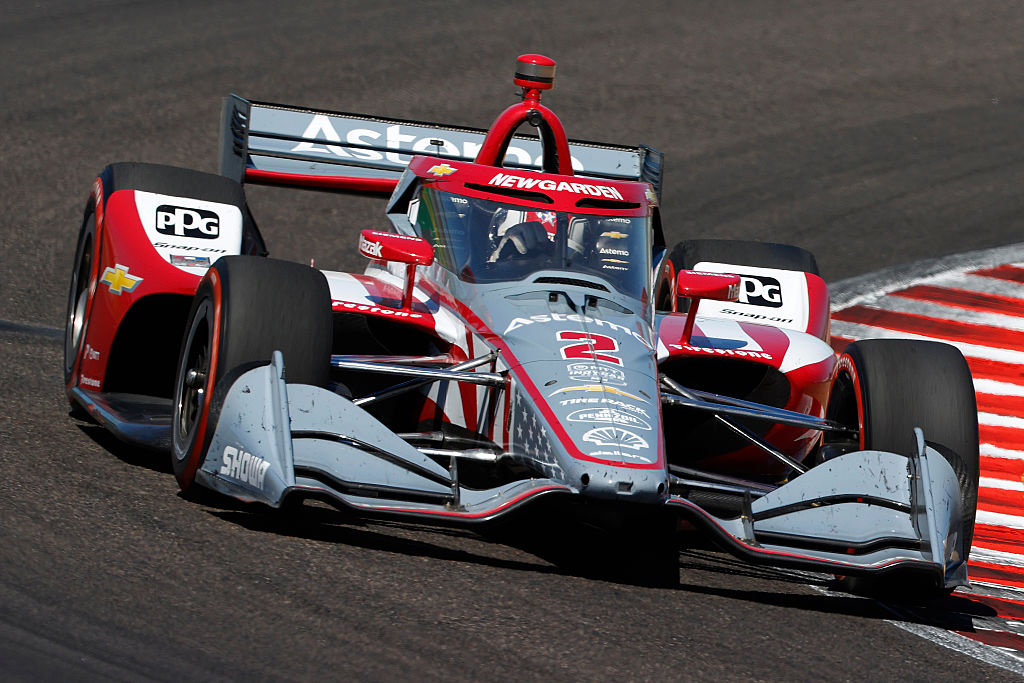
O’Ward does wonder whether the tail-heavy hybrid Dallara DW12 chassis has been part of the problem. For a driver who makes his speed with a fast-reacting front axle—and deals with oversteer in a flash—the change in weight distribution to the tune of 105 new pounds at the back of the cars just might be an issue for O’Ward to accept and overcome. Due to the rearward weigh bias, sliding the cars, which O’Ward has mastered, has become a perfect way to spin.
“I think [about] how I ran my cars in qualifying -- with that little edge that you can deal with for a lap or two... It just doesn't seem to be possible with the hybrid,” he said. “I've had to have the car in a somewhat different window for qualifying and it's definitely been a struggle to feel like I can get the most out of it. I just haven't quite gotten there.
"Obviously, when you don't have all the confidence in the car because it bites left and right, when you do this and you do that, you just ... you can't extract the lap time, you know? We’ve had instances with the hybrid car where I’ve put it on the front row, but it’s not something that’s consistent for me. It’s an area I really want to make sure that we nail sooner rather than later.”
Marshall Pruett
The 2026 season marks Marshall Pruett's 40th year working in the sport. In his role today for RACER, Pruett covers open-wheel and sports car racing as a writer, reporter, photographer, and filmmaker. In his previous career, he served as a mechanic, engineer, and team manager in a variety of series, including IndyCar, IMSA, and World Challenge.
Read Marshall Pruett's articles
Latest News
Comments
Comments are disabled until you accept Social Networking Cookies. Update cookie preferences
If the dialog doesn't appear, ad-blockers are often the cause; try disabling yours or see our Social Features Support.