The RACER Mailbag, March 5
Welcome to the RACER Mailbag. Questions for any of RACER’s writers can be sent to mailbag@racer.com. We love hearing your comments and opinions, but letters that include a question are more likely to be published. Questions received after 3pm ET each Monday will be saved for the following week.
Q: I was looking at the IndyCar Milwaukee 250 website yesterday. We're planning on going; it will be my girlfriend's first ever professional race. Lo and behold, it's now the Snap-on Milwaukee Mile 250. And it's a multi-year deal. That seems like big news that has been lost in the shuffle. Was this Penske forcing it on Snap-on? Or does it matter? Any title sponsor is good news for the series.
Also, I was pumping gas the other day, and FOX's Pato O'Ward ad popped up on the annoying gas pump video screen. Awesome job so far from FOX Sports.
Tobey Taylor
MARSHALL PRUETT: Yes. I checked with IndyCar, and Roger jumped across his desk when the Snap-On CEO was in town, did a judo hip toss, hit him with some ground-and-pound, got him in an arm bar, and said the guy could "sponsor Milwaukee, or get his arm broken." Thankfully, the CEO submitted and chose the former. I’m waiting on the security footage from Penske Corp. to share from the encounter.
And yes, it did get lost in the shuffle. Seems like something to have saved for after the first race since everyone’s attention is on St. Pete, not a race at the end of the season. And yes once more; Snap-On is a longstanding Team Penske partner, and like most of their sponsors or business-to-business deals, they tend to get spun into some form of IndyCar angle.
Saw the Alex Palou ad while I was filling up our Mazda on the way to the airport and my flight out to St. Pete. I’ve noticed some folks complaining about those ads on a refilling terminal, and the tune-in mailers with Josef Newgarden on the cover of the envelope, who’ve positioned both as cheap or desperate ways to market the series, and I passionately disagree.
Having grown up in and worked in the CART IndyCar era when it was the No. 1 racing series in the country, there was a complementary layer to that widespread popularity, and it came in the form of CART promos being found in common areas. Having dinner at a major chain restaurant in the 1990s version of an Applebee’s or Chili’s, and it was common to see a Miller beer placard on your table with Bobby Rahal’s Miller-sponsored IndyCar. Go to the local mini mart and the posters in the windows, which have NASCAR or F1 cars today once had CART cars. Open a magazine at the doctor’s office, and there was a strong chance you’d see a full-page ad from one of the many auto companies involved in CART, or a Fortune 100 sponsor, repping their IndyCar involvement.
Wherever we went, IndyCar was a normal part of our world, and not the rarity it is today. So, hit me with the Josef tune-in junk mail. Show the FOX Sports ads at the gas station. And keep doing the things that normalize IndyCar in our regular lives, and that’s how familiarity with the product starts to improve.
Q: I was wondering if you got any feedback on FOX’s coverage? I really didn't see anything wrong with the coverage last year – until I saw the practice session on Friday. I think the FOX coverage looks very professional and polished, compared to what seems to have been just phoned-in coverage of the races. I give FOX an A, and the only reason it's not an A+ is because I know it will get better. Looks like more cameras, better pitlane coverage, and all the cool graphics, plus the TV personalities… it is headed in the right direction.
John Furnis
MP: Great first effort, and yes, received constant feedback from folks. Plenty of glitches and improvements to make, and I appreciate FOX Sports’ approach by swinging for the fences with new graphics, new features, new tech, and trying to introduce everything up front instead of slowly rolling them out at each new race. There were some issues, but they went big and have ample time leading into Thermal to iron out most of the kinks.
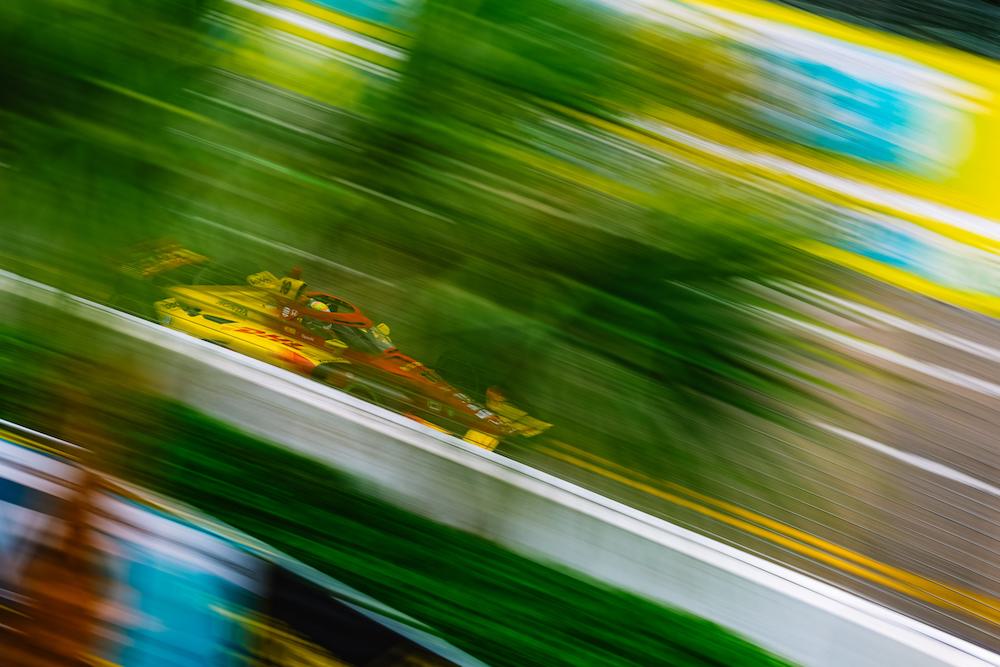
IndyCar's new TV partnership with FOX is off to a flying start. Joe Skibinski/IMS Photo
Q: Looking so forward to the new season, the anticipation is big. I’m getting excited and decided to go to the IndyCar web page. There is all sorts of merch for the IndyCar fan to purchase. As I’m looking at the merch for a few of my favorite drivers, I notice it is all 2024 merch. Hard to believe that this is our option at the beginning of the season. I’m sure that by the 500 in May teams and IndyCar will have an updated page, but why not now? Aren't they missing a great opportunity to cash in? It’s not my biggest frustration but it is disappointing. Can you explain why this is”
Bruce Taylor
MP: Many teams did their formal unveilings one to two weeks before the start of the season, which is the issue. Arrow McLaren unveiled its new liveries the night before opening practice at St. Pete. That conspires against having a full line of 2025 car models and driver jerseys ready to sell at race 1.
But what you point out, which is totally correct, is that this needs to be improved for 2026. IndyCar has no formal guidelines on when liveries and uniforms need to be locked in, and using your note, and how IndyCar’s rivals tend to be ahead in this merch game, maybe it’s time to level up.
Q: Based on St. Pete qualifying, this this is going to be a hell of an
interesting IndyCar season:
1. Both Meyer Shank cars outqualify every car from CGR..
2. DeFrancesco leads the RLL trio
3. Lundgaard leads the McLaren cars, with Siegel putting in an
impressive run.
4. VeeKay, in a Dale Coyne car, outqualifies Power
5. Shwartzman from PREMA, in his first IndyCar race for a brand new
team, beats Indy 500 winner Rossi in an ECR car
Alex, I'll take "Things I didn't expect" for $100, please!
Ben Malec, Buffalo Grove, IL
MP: Let’s also not forget, for those who love pettiness, that Rinus VeeKay finished ninth, driving for the smallest team, one spot ahead of his replacement, Alexander Rossi, driving for one of the (newly) wealthiest.
Q: FOX Sports’ IndyCar coverage is awesome! I’m sitting here watching the morning warmup show? The what? The morning warmup show! Being a fan of IndyCar since the '80s I’m always excited about the start of a season, but seeing how FOC is going to elevate the sport is really exciting.
Rich, Woodstock, IL
MP: As I’ve written more than a few times, the signing of the FOX deal is the biggest new achievement by Roger Penske and Penske Entertainment since the series was purchased, and based on the big 40-plus percent audience increase for St. Pete, this has the power to transform IndyCar’s fortunes.
Q: I know Firestone delivered what was asked of them, but I am worried. First of all, I think they need to change the rule that requires actual competitive laps to satisfy the tire requirements.
Second, when the entire field is on the same tire it seems to stunt passing. Having slightly better alternates early or slightly better primes late creates passing opportunities. If everyone runs the entire race on the same compound, I worry what that means for the on-track product.
What do you say? Am I having a chicken little moment, or is there something to be concerned about? I know St. Pete isn't the best for passing, but it's by far not the worst. Our next two races are generally more difficult for passing.
Ryan, West Michigan
MP: Agreed on modifying the rule to be X number of laps under green, and as one of my podcast listeners suggested, bump it up from two laps to five and make it a real strategy element, not just two quick laps that can be satisfied under caution.
The timing of that first-lap caution is what killed the fun strategy options, and it’s not uncommon to get that first-lap crash/caution at St. Pete. My main note is at IndyCar’s earliest convenience, it needs to turn the opening race of the season into an oval event. I know St. Pete is said to have it in its contract to be the first race, just as Nashville has it in its to be the finale, but for IndyCar’s sake, this needs to change.
Pick an oval where it’s warm enough to race in early March and move the opener, because that’s where you’re going to get a killer start to the season. If it wasn’t for Sting Ray Robb creating drama over the last 12 laps, it would have been an epic snoozer, just as last year’s race went down with Newgarden leading 92 laps. If IndyCar, and now FOX, and the rest of its partners are going to spend six months touting the amazing racing that’s coming at race 1, and the venue often conspires against great racing, move the race to where there are much higher odds of a compelling race being produced.
On the topic of fear, I fear new potential fans who bought into the great FOX driver promos and bought the pre-season hype to tune in and watch their first IndyCar race might have tuned out after 25 laps of no passing, or at the halfway point when no passing happened, or at the three-quarters mark when there was no passing. I love St. Pete. Needs to stay on the calendar. But not as P1 on the schedule.
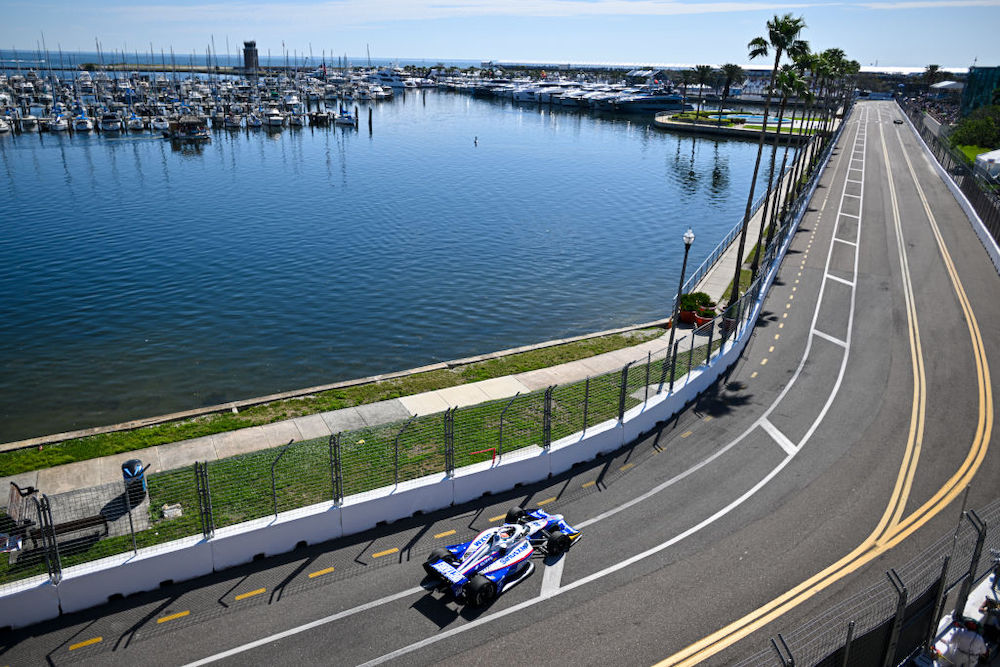
Does IndyCar's road to awesomeness include bumping St Pete from its slot as season opener? Miguel J. Rodriguez Carrillo/Getty Images
Q: Last year I expressed my displeasure that the Indy NXT spotter guides did not have the radio frequencies listed. You thought it would not be difficult to add that information. I was pleasantly surprised to see the frequencies in the spotter guide for St. Pete NXT race. Maybe IndyCar does read and react to Mailbag questions.
The charts that IndyCar releases (e.g. entry list, results from various sessions, race results) include the chassis, engine, and tire used by each team. Other than it has always been done that way, why does it continue when there's only one chassis and one tire?
David, Waxhaw, NC
MP: Probably for the same reason I mention Penske Entertainment by its full name and explain it’s the owner of the IndyCar Series in just about every story I write. You know PE owns IndyCar, and I know it, but there’s someone today who just discovered IndyCar and is learning about the series and this little factoid for the first time. I’d love to skip that and just use shorthand, but I’m always aware that at least one person is gaining brand-new knowledge that a single chassis, two engine suppliers, and a single tire vendor is used when the spotter guides are released.
Q: On the FOX broadcast of the St. Petersburg Grand Prix they mentioned that the alternate tires were only good for 16 laps or fewer. Why are the alternate tires only viable for such a short number of laps?
As was pointed out on TV, last year this race did not have the hybrid powertrain, which adds 132 or more pounds to the vehicle. However Firestone has had a year to test tire compounds that can handle 132 lbs of extra weight. Is 16 laps the best they could do? This is a 100-lap race, with the expectation of two to three pit stops. Hence each pit stop should have tires that are good for 25 to 33 laps, certainly not just 16 or fewer.
Can we expect the same poor Firestone performance in the Long Beach, Detroit, and Toronto street races?
Kevin P., Los Angeles, CA
MP: Relax. It wasn’t unintentional. Here’s the story from Friday on the topic.
Q: In the early years of what was then known as the IRL (1998-99), the series held two races at what is now known as the Dover Motor Speedway.
Why did the IRL leave Dover after 1999, because for someone born in 2004, those races there were amazing!
Kurt Perleberg
MP: I was there for both, I think. Purely a guess, but I recall seeing a lot of shiny aluminum surrounding the track, aka, no butts in seats. Had a lot of those in the early IRL years, unfortunately.
Q: I rarely complain about the tires Firestone brings to a race, but both compounds were a disaster and let to a terrible race at St. Pete. The alternate only lasted one lap and I saw very little passing in Turn 1 from my seats all day with drivers using the primary. They really need to get this fixed quickly.
John, Venice, FL
MP: It also had the fewest number of passes I can recall, with 75 total and 53 for position. Among 27 cars. In a 100-lap race. And none for the lead with an on-track, wheel-to-wheel pass, that I can recall.
Q: Explain why Scotty Mac could not have pitted after the lap one caution. If he did so he could have put on greens, done two caution laps and then gone back on primaries. I understand he chose not to but he could have, correct?
Isaac, Fruitport, MI
MP: He could have, yes, and gone to the back of the field by doing two pit stops in the first few laps while the others did one stop. This is what Pato did, starting near last, and got off of primaries during that caution due to a puncture, went to alternates, and ended up doing four stops to the three done by the winner and five out of the top six drivers. He ended up improving to 11th, so that was great, but minus the opening puncture, I’m guessing he would have stayed out on primaries and fared worse.
Scott ended up doing four stops and was able to rally back to fourth, which speaks to his speed and potential. But double pit stops early in the race would have made life hard, in retrospect, because there wasn’t a second caution to make an easy and painless stop. Everything stop after the initial caution was done under green.
Q: Scott Dixon completed the St. Pete race in second place without radio communications, which is quite a feat. This is especially difficult to do with no knowledge of strategy and other things. Scott noted that the only way he knew to come in was when the fuel light came on. This makes sense, but then also seemed very 1980s to me. I seem to recall that teams can send electronic messages to the drivers via their steering wheels. Is this the case? If so, could this have aided Scott during the race, and did Ganassi employ this strategy?
Brad Edmondson
MP: He had radio communication to pit during his first two stops, and did not have communication for the third and used the low-fuel warning as noted. Teams do not have the ability to send messages to their drivers on the steering wheels or any other device while they’re on track.
Q: I am not an aerodynamic or engineering guru by any means. Why was it so hard for Palou to pass Robb at the end of the race? Is the air disturbance that bad to slow the faster cars down? That should not be a problem in my mind. If you're a faster car you should have no issues passing.
Eric R, London, OH
MP: Because Robb is an extremely good driver. Because his car was performing well. Because he used a lot of push to pass power to stay ahead of Palou, who didn’t want to burn down his P2P to get by Robb and be defenseless against Newgarden using P2P. Because St. Pete has a lot of slow corners leading onto its fastest straights, and that’s where P2P being used by the lead car really makes a late dive under braking hard to execute. Because after 13 years of the same chassis and engines, and eight years into the same UAK18 aero package, the cars are extremely similar in peak performance since even the smallest teams have learned just about all there is to know about achieving peak performance.
And finally, because with the 100-plus lbs of energy recovery system weight towards the back of the car, drivers can’t always attack with the highest level of aggressiveness due to the rear of the car being more prone to sliding and instability.
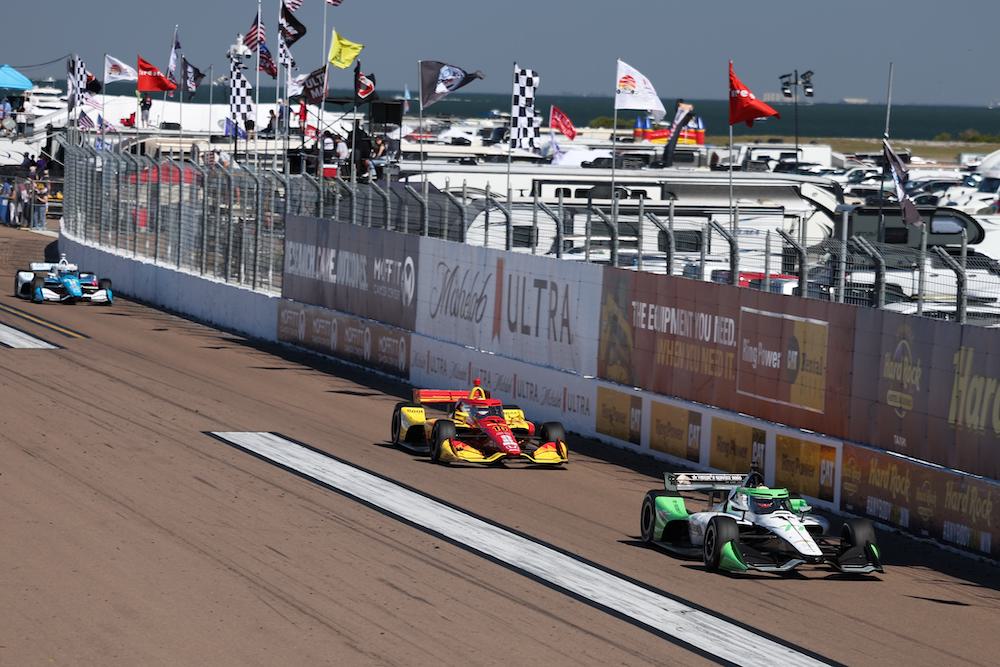
Being polite isn't part of the job description. Joe Skibinski/IMS Photo
Q: I hope for 2026, IndyCar changes this rule. As we saw Sunday, the cars that started on the alternates ran about three corners of green, then came in at the conclusion of lap two to change the tires. I would like to see the rule changed to where they cannot be changed on a yellow that happens in the first five laps. That way, everyone has to actually race on them. Is it a legal strategy? Yes, I am bitter it bit the 3.
Also, while it was perfectly legal for Sting Ray Robb to stay ahead, he or any driver should move and let the leaders by if it’s just a handful of laps. It's the ethical racing thing to do.
Mark in Cincinnati
MP: Ethical, yes, but Robb’s sponsors aren’t paying millions and millions for ethics. They’re paying to be seen on national television, and since that doesn’t happen very often for the kid, there’s no way he or his team was going to pull over. He got multiple laps on screen, corner after corner, and that’s just not the usual reality for drivers in the middle or tail end of the field.
Granted, if his car was Ricky Bobby-style with ME on the sidepods and a graphic of a cougar, I’d feel a different way. (Actually, that’s a lie. I’d want him to fight even harder so we got to see ME and the cougar…)
Q: I was wondering if any team owners complained about the onboard camera graphics package covering up their sponsors inside the aeroscreen? Thinking MSR usually places a premium on that space.
Andy Brumbaugh
MP: That would be a yes, Andy. As soon as I’m done answering Mailbag questions, it’s the next story on my list.
Q: Watching the St. Pete race got me thinking about the IndyCar tire use rule. Each car needs to run each type of tire in road and street courses. The statement was made on TV that a minimum of two race laps need to be completed to count as "use" for the tire rule. Obviously, both laps do not need to be green flag laps based on Sunday's race. Individual questions about the rule are as follows.
I understand the alternates need to be new or sticker tires. Why do used or scrubbed tires not count? Does this part of the rule go for both the primary as well.
If a car started the St. Pete race on alternates and the caution comes out on lap one, and the pits open on lap two, does that count as two laps when you have not reached the start finish line when you dive into the pits, or do you have to wait for lap three?
Does it matter if your pit is prior to, or after the start finish line for counting race laps from the start of the race?
Does a portion of the two race laps need to be green flag running? For a long caution, could a car come in early in the caution cycle and put on alternates, return to the track and complete two laps under yellow, and then return to the pits and put on primaries?
For what it’s worth, the coverage on Sunday was pretty good from my vantage point. However, the graphics and information during Saturday's qualifying needs a fair amount of work.
Bill M, Austin, TX
MP: I don’t know. Yes. No. Yes. Yes.
Q: I understand all is new to FOX, so the timing glitches are fine for the few races. Just be buttoned up by Indy.
My only pushback I'd give them, and it's nitpicking, but they list historical stats for a driver as Wins, Top Five and Top 10. Top Five is a NASCAR thing, Podiums are open-wheel and sport cars; Wins, Top Three, Top 10. I know, a little petty, but there is a difference.
But all in all, it was a good first showing by FOX and the drone shots were beautiful.
Zack, Atlanta, GA
MP: It’s actually not just a NASCAR thing. IndyCar tracks and lists top three/five/10 stats for its drivers as well. That info was included for every driver in my 11 team previews in recent weeks, FWIW.
I also look for top sixes because I grew up in an era of F1 where only the top six scored points, so I use that on occasion by habit.
Q: In regards to a new IndyCar, it seems like you were in the camp of Jay Frye in preferring current components in a new car. So when we boil that down, we are talking a new tub? What does that accomplish? Who cares if it’s a 2027 tub if it’s basically the same car? Most of the people who watch wouldn't know if it was a new tub or not.
On top of that, you’ve said that half the field is on the financial rev limiter as is. Why not just run the same car? Back in the day, we got new cars because they got faster every year. We now live in a world where any car, new or a 2012 model will be restricted to top speeds at Indy basically where they are now. The track record at Indy is almost 30 years old. So why the expense to design something to do the same thing you are doing now?
I would love a new Penske, Lola, Reynard and so on every year, but we are no longer pushing the limits. We are at speeds we have chosen not to go past now for many reasons. So all a new car does is make a small percentage happy that we have something new.
Mark, Cincinnati
MP: I’m 100 percent in the camp of wanting a 100 percent new car. But not everybody can afford it, so I’m having to temper my wishes, as Jay did, to go with what’s best for the entire paddock. Jay’s persistent pitch to Penske was a compromise, with a new tub and some new components, but as many carry-over parts from the DW12 as possible to keep costs in check.
The reason to go to a new tub is to accommodate a new energy recovery system that would have its battery located at the bottom of the tub in a new notch below the fuel cell. It moves the heaviest part of the ERS forward -- to the same spot found in F1 cars -- and a new tub would also allow the series to make some other adjustments to the cockpit they’ve wanted to do for a good while.
If IndyCar were to stay with the DW12, it would not be able to change its ERS or make the cockpit changes, and that’s a direction they could go, but Dallara already has the core 2027/28 car designed and in the wind tunnel.
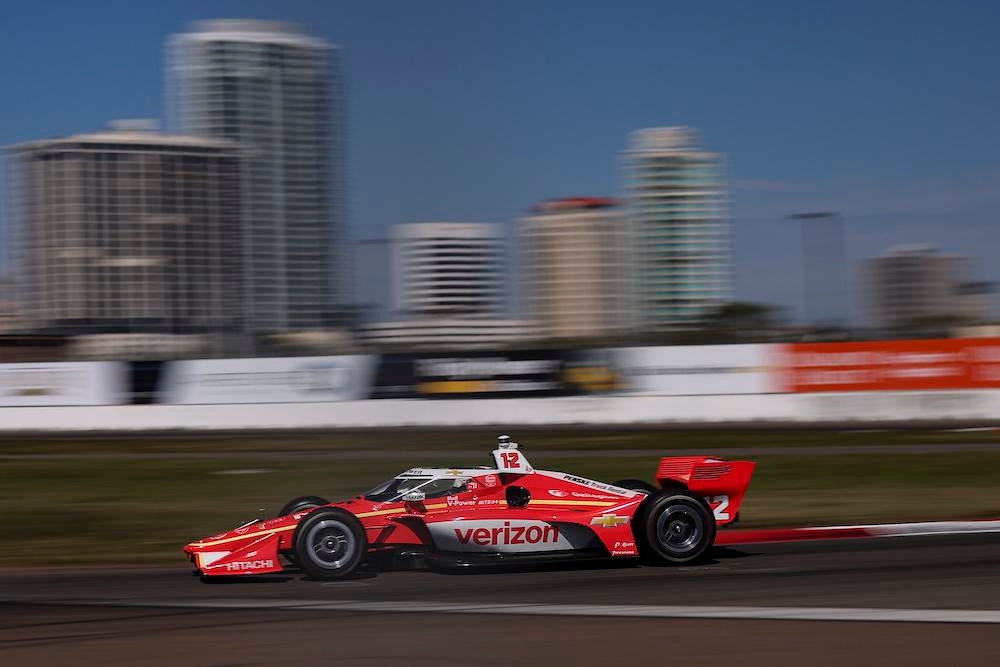
There's going to be plenty of current-car DNA in the 2027/28 version. Chris Owens/IMS Photo
Q: Thank goodness we've finally got an actual race to talk about, because the off-season has been pretty rough since the calendar turned to 2025. Between Jay Frye's ousting, Hy-Vee and possibly Honda heading towards the exit and lack of clear direction surrounding the new chassis, it's been a lot of tough news as of late. I'm a male in my mid-to-late 20s, go to multiple races a year, watch everything available on TV and buy the hats/shirts to boot. Outside of that there's not much more I or any other fan can do.
We have the on-track action, which is splendid, and the drivers are talented and outgoing, but what else could we look to in terms of positive momentum?
Mitch, Michigan
MP: It’s all about the FOX deal, Mitch. And not just what FOX broadcasts, but the increased linkage between the series and its TV partner on social media and its teams and drivers and sponsors. FOX is becoming a rallying point for series-wide engagement in ways I haven’t seen from a broadcaster in ages. Teams and drivers, in particular, are more interested in doing extra things -- more social posts and connecting with fans -- because they know a huge opportunity to lift themselves and the series to a higher level has arrived.
The age-old gripe has been that IndyCar and its TV partner at the time didn’t do enough to promote the series, and it was a valid complaint. At least for the first few months of the year, and the first race weekend, that lingering bitterness is nowhere to be found. And that makes me happy.
Q: I just read your article "Why do IndyCar team budgets keep climbing?" and it seems the consensus is two primary reasons: the hybrid engine program and driver/team salaries.
What is ironic is that the hybrid engine was for just one constituent: Honda. The drivers didn't ask for it, the series didn't need it, the team owners didn't ask for it, Chevy didn't ask for it, and the fans weren't clamoring for it. Only Honda wanted the hybrid powertrain, and they finally got it.
Have you seen any Honda ads on TV touting the virtues of hybrid IndyCar engines or any tie-ins to Honda passenger car hybrids? Have you seen any promotion whatsoever regarding the hybrid powertrains? I haven't seen any ads for even the Acura IMSA GTP hybrids, much less IndyCar hybrids, yet Honda had to have it.
Now Honda's biggest complaint is that supplying engines to IndyCar is too expensive and they aren't getting a good ROI. So my question is, why did Honda push for the hybrid engine in the first place? How has it benefitted anyone? If IndyCar loses Honda in 2026, then Honda has raised the cost for all teams, with absolutely no benefit to the series. That's not a partner worth fighting for.
The other irony is that Andretti Global was cited as a primary reason driver's salaries increased in the last two years. Now that driver's salaries have gone up for every IndyCar team, Michael Andretti is stepping away. Once again, thanks a lot!
Kevin P., Los Angeles, CA
MP: It wasn’t just Honda. Let’s kill that false narrative up front. Of IndyCar’s two engine partners, yes, Honda was the driver between themselves and Chevy; as recently as 2023, I had someone from the Bowtie tell me they’d kill the hybrid program in an instant if they could. So you are correct in regards to the two manufacturers in the series, but it was Honda and other brands that weren’t in the series telling IndyCar that they needed hybridization in the next engine formula to get approval from their marketing and financial executives.
In the manufacturers IndyCar was speaking with on potentially coming in, the poll numbers said they had zero interest without hybridization. So that’s the direction the series went, and other than Honda, who stayed in, those who said they had to have it when it was announced in 2019 then either lost interest, had the financial crater of COVID to deal with starting in 2020, or both, and the series was left holding the proverbial bag. All while having made a commitment to go hybrid as part of the supply contracts back then. Very sticky situation.
I’m highly sympathetic to IndyCar/Penske Entertainment on this front. The series listened to the auto industry prior to its sale to Roger and then saw no new movement. Penske is well known to have wanted hybridization to disappear from the series’ plans and could have killed it, but that would have gone legal and led to losing Honda a few years ago.
It’s easy to pin everything on Honda here, but nobody placed full expectations on going hybrid as a thing that would magically satisfy anyone’s return on investment. Going hybrid justified the expenditure in a series that added an important new level of technology that has relevance in the auto industry. It just hasn’t found the desired relevance in IndyCar racing.
IndyCar’s years of failures to market and promote its series and smallish audience size and TV ratings are where the ROI problems are found.
Q: If Honda and Chevy end up leaving IndyCar, it would seem to have an immediate negative commercial impact on the series. But could this become an opportunity is disguise? No longer would use of the hybrid system be a requirement from the OEMs, reducing cost and weight – clearly those aren’t drawing more OEMs, nor fans.
No longer would the OEMs dictate engine capacity and power output, allowing for return of the previous series president's mantra of "Fast, Loud, and Authentic" with 1,000+ HP engines, speed records, etc. with the excitement of the late '90s/early '00s cars. And without the money tied to OEMs advertising budgets, the leases could be less expensive. Or is this just wishful ignorance?
Tommy Plahitko
MP: A big and powerful engine that’s small and fits in an IndyCar won’t be cheap, even without the hybrid part, so the question is what team owners are willing to pay. Losing out on the many millions spent by manufacturers on promotions, event sponsorships, broadcast ads and segment sponsorships and so on, would be a considerable downside. I’m at the top of the list for those who want that "Fast, Loud, and Authentic" mantra to return. But not if it takes the sport to a smaller place.
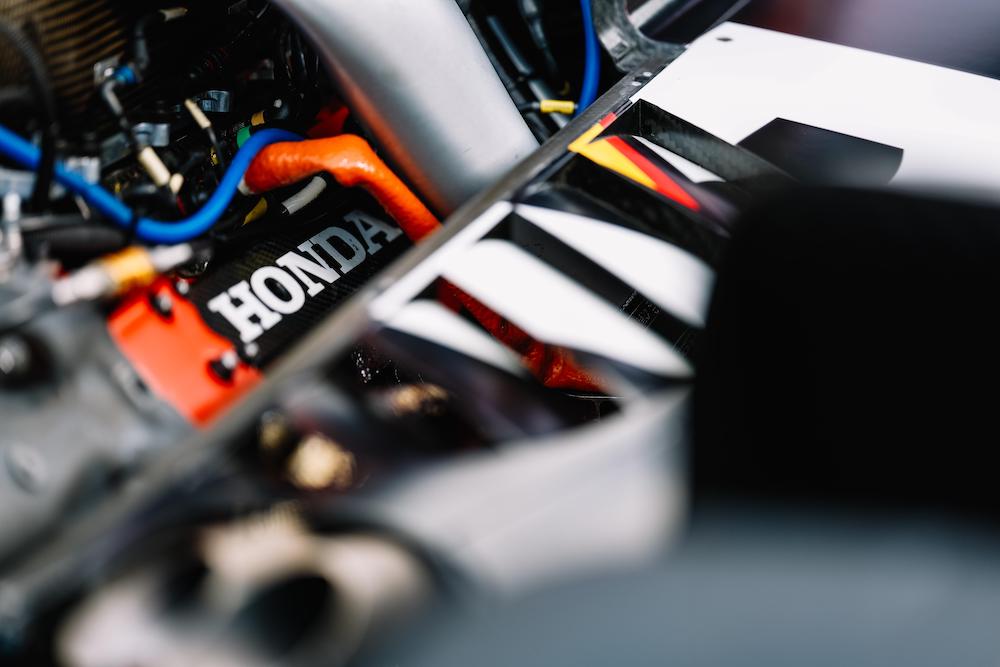
"Fast, Loud and Authentic" is cool, but "Realistic' and Viable" are important, too. Joe Skibinski/IMS Photo
Q: The worry and rumors of Honda leaving, and a potential car delay, and the comments last week about GM, reminded me to bring up a potential angle I have not heard discussed, but could have some merit.
New engine, built purely by Ilmor. Meaning no more direct OEM efforts for manufacturing, but the licensing of the engine badging rights is then handed off to the OEMs. This, on the surface, means less expensive R&D for OEMs (and smaller ones who could come in), and the licensing then becomes more of a cost center of the OEM marketing budget, and less on marketing and engineering.
This allows new OEMs to come into the series, spend marketing money to promote themselves in IndyCar and the 500, at a fraction of the cost. You get the Ilmor reliability, and the cost of entry barrier drops significantly as a result.
This could allow Toyota GR, Hyundai, Kia, Honda, Dodge, Mazda, Nissan and a host of other brands to come into the series, have that OEM presence, and let’s be honest, it’s a spec series – who cares who is building the actual engines? (Looking at you, NASCAR, as proof).
Is this a viable angle in your mind?
Ed, Westfield
MP It has been on the table as an option for a while; Honda’s Chuck Schifsky pitched the spec-Ilmor idea in his frank discussion with RACER late in 2023 about the brand’s issues with IndyCar’s return on investment.
Q: Where on the map of the United States would you propose a new race, or bring one back?
Sergio
MP: Well, Las Vegas is a popular destination, but that’s taken by F1. Miami is a vibrant place, but that’s taken by F1. Denver is already in the works for IndyCar. Arlington -- not a big and popular national hub, but cool nonetheless -- is happening. A street race in New York has been a fantasy thing forever that never happens. Same with San Francisco; many have proposed, but nobody has gotten it done.
So I’m going to go with the consistent IndyCar TV ratings hot spot that is Louisville, Kentucky. It always rates among the top locations for viewership, so a street race would be amazing.
Q: The disappearance of Michael Andretti from IndyCar seems to me like a sort of high-level "gardening leave," as the F1 folks say. You can get (if you’re lucky or highly placed) a big payout with the stipulation you leave the scene for a certain length of time. You stay silent to the media and your prior racing series. Not saying he’ll be back but never say never. Your thoughts?
Jeff Brown, Bernardsville, NJ
MP: Yes to all of the above.
Q: So, the TV coverage goes from NBC to FOX. Does the same TV crew of technicians, cameramen, etc., cover the race, or does each network have its own crew? I'm thinking broadcasting a race is a specialized talent considering the complexity of the in-car cameras, and such. Is it the same crew at each race or is the crew regional?
Jim Doyle, Hoboken, NJ
MP: It’s all done by FOX, but there are plenty of folks who worked for NBC on IndyCar who migrated over to FOX during the offseason. Similar to when Carlin Racing shut down and Juncos Hollinger Racing bought all of Carlin’s assets and hired all of its crew who wanted to stay and continue with JHR.
Q: It's been a while since I've read about LED panels in the Mailbag so I wanted to share this video with you about how the WEC is using them this year. Enjoy!
John P., Brownsburg, IN
MP: My favorite topic! (Kidding.) Yep, cool stuff. I’d expect to see something new and unique on the future IndyCar.
Q: Why don’t Ferrari and Toyota run Hypercars in America? I don’t know how much advertising value IMSA holds, but the U.S. has to be one of, if not the, largest market for them both. Is there no desire for Ferrari to compete at Daytona and Sebring? It’s shocking that THOR and AMR are the first Hypercar to come to the States (and we’re very grateful for it). Also, the addition of the Battle on the Bricks as the fifth enduro has added to the load for IMSA crews. Thoughts on the 6 Hour at The Glen becoming a WEC race instead?
Ian
MP: Toyota’s main U.S. program is in NASCAR, which is a popularity giant here compared to the WEC or IMSA. Ferrari is Ferrari, and already sells every car it makes and has years of back orders to fill, plus, it races here a bunch with its halo program in F1. There are no thoughts about Watkins becoming a WEC round.
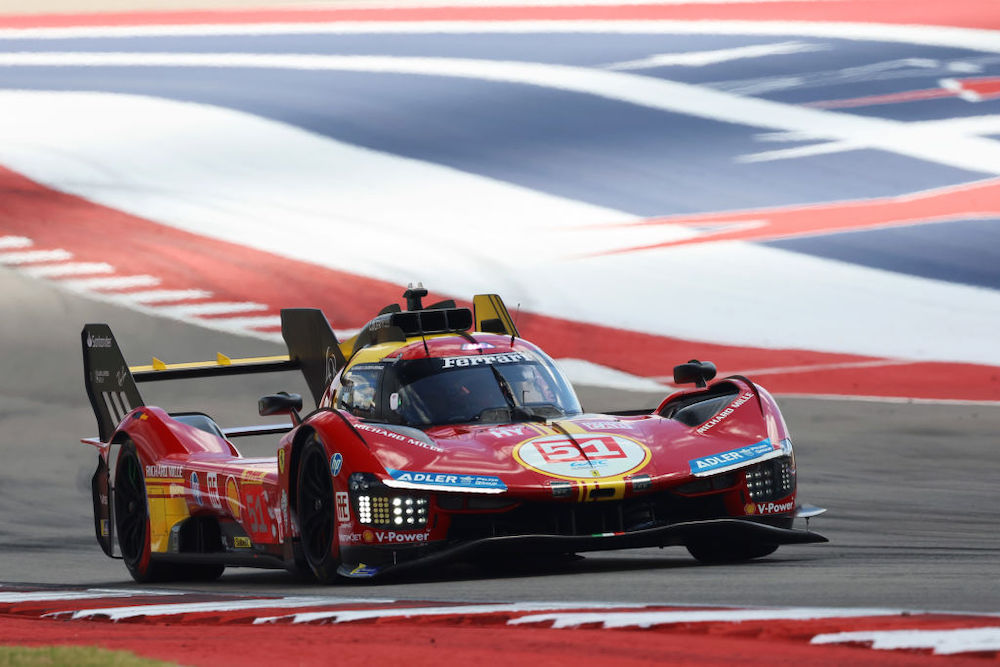
The bad news: You're probably not going to see the Ferrari or Toyota Hypercars in IMSA. The good news: You can still catch them when the FIA WEC visits COTA. Photo by JEP/Getty Images
Q: New IndyCar President Doug Boles was recently a guest on Conor Daly’s podcast and covered a wide range of topics. One topic was the development of the new IndyCar, and he said something about the hybrid system that caught my ear. Here’s what he said:
“Ultimately, I think we’re going to need to have a project manager that’s really going to move it forward. But right now we’ve got a great collection of experts from the engine side, experts from the chassis side, experts from the hybrid side, if that’s the direction.”
Upon hearing that “if” statement, I couldn’t help but think the series is considering moving away from the hybrid system in the new car. I’ve read your reporting on the budget challenges most teams are facing, and team owners have repeatedly called out the hybrid system as being a major driver of the ever-increasing costs.
What are your thoughts on that potential move? In addition, do you have any thoughts or intel on how teams, drivers, and/or manufacturers would feel about that change?
Luke, Utah
MP: Spoke to Doug on Sunday at St. Pete and he said there was nothing to that closing sentence. Said he needs to be mindful of his words and how, as IndyCar president, there’s a much bigger spotlight on all he says. I’m also aware the series has commissioned the new car from Dallara as a hybrid. There’s no secondary non-hybrid design being prepared.
Q: Which F1 team in 2025 is most likely to have a true resurgence? McLaren obviously had a transformation last year – aside from Red Bull looking to gain the title back, and the Scuderia bringing Sir Lewis on board, who’s the next underdog to watch in 2025?
Ed, Westfield
CHRIS MEDLAND: After setting the fastest lap of testing it would be easy to say Williams, because that's a team that showed signs of what it could do last year but hurt itself by being late with its new car and failing to keep the weight down. If it had started the season with the car as it intended, there would have been some really strong results early on in 2024, so that lends itself to a better showing this year than last. But, the headline times perhaps are over-exaggerating the progress, even if I think there might be a chance of sneaking a trophy somewhere with the line-up it has.
So I'm going to say Alpine. The car that ended last year was really strong, showing that the technical department started producing results after its overhaul at the start of the year. I'd expect that to continue, and could also see a little bit more development focused on this year to get some big results and make the team look good if there was sale interest, rather than being the first to switch to 2026. That is an if, but it would make sense.
I'll admit I'd still be surprised to see any of the teams outside the top four last year join that group regularly at the front, though. I think with the new regulations on the horizon, for most of the teams there will be more of a focus on the next era and a longer-term picture.
Q: I'm an open-wheel guy but I follow and appreciate most all circuit racing, even NASCAR. And I am struggling right now. I see a lot of reports about NASCAR inconsistencies in officiating the last laps of a race due to crashes. To your knowledge, is anyone either inside the NASCAR office or the team headquarters wanting to address the real issue (IMO)? That is, the fact that these drivers seem intent on wadding up their race cars before rolling them back onto the trailer at the end of the day?
Andy R., The D
KELLY CRANDALL: Doesn’t it feel good to put the blame where it belongs? It's on the drivers. And they admit that it’s their fault that the superspeedway races end up like they do, because they’re the ones driving the cars and making the mistakes or causing the crashes for one reason or another. I’m not sure there is anything that can be done about that part of it. I do think some of the problem is the aero package, which leads to drivers just blasting the bumper of those in front of them. That might be a good place to start. But even then, don't think we’ll never have wrecks on superspeedways. It’s happened throughout the history of NASCAR, and will continue.
Q: At the risk of sounding like the old man shaking his fist at clouds, if NASCAR wants to double down on their pledge to throw the caution flag on the final lap of the race, can we then finally get away from the green-white-checker concept and at least race to the flag?
There was a time when the threat of the race ending under a yellow flag in any series of motorsports was actually a strategy that crew chiefs and drivers had to take into account, and it meant that the drivers had to be smart enough not to wreck themselves in order to gain a position – knowing that there will be another G-W-C opportunity... and another... and another.
There has now been almost an entire generation of Cup drivers, and most certainly Xfinity drivers, who have never known anything different, who have never known that sometimes finishing fourth is a strategic move instead of taking out your competitors to advance your position. There don't seem to be many tactics anymore, and you almost expect someone to wreck on the final lap from being over-aggressive, let alone an extra number of laps tacked onto the end of the race like some silly "stoppage time" in soccer. Let’s call it the Daytona 508 or something.
Maybe my mind has clouded my recall, but I don't remember nearly as many last-lap wrecks – heck, even something in the last five laps – when all the drivers knew that finishing under a yellow flag at the end of the published number of laps in a given race was a reality.
OK, I'll go back to my pureed dinner now.
Brad, Seattle, WA
KC: I don’t see that happening. I’ll just refer to these recent pieces on NASCAR’s thinking:
- NASCAR explains cautions and non-cautions at Daytona
- NASCAR pledges to keep throwing cautions on final lap
Q: Pitbull abruptly parted ways with Justin Marks at Trackhouse. What is the dirt on the breakup at the House?
Ed, Westfield
KC: There is no dirt as far as I’m aware, and based on what Justin Marks said to my face in Daytona. When the statements were made, I found Marks in the garage and asked if there was anything more there because the tone of Pitbull’s statement was very abrupt and abrasive. Marks acknowledged that, but said those statements were not done jointly, which he would have preferred. He went on to say that he and Pitbull accomplished everything they wanted to together and Pitbull had other opportunities. Plus, the landscape of Trackhouse Racing changed beginning last year when new minority owners/investors were brought in, so that played a part, too.
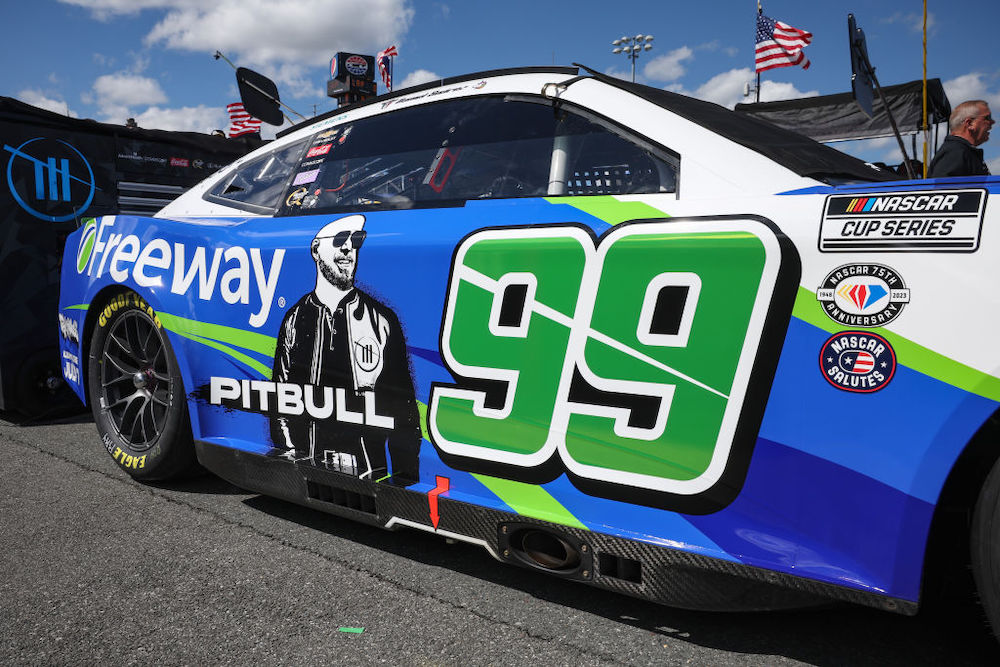
End of an era. A pretty short one, but an era nonetheless. James Gilbert/Getty Images
Q: With all NASCAR trucks running Ilmor engines, what do the non-EM, OEMS provide?
Laz, Jefferson, MO
KC: The OEMs still provide trackside support and resources, and a lot of those drivers are in their development program. So, those teams and drivers have access to training and simulators, etc.
Q: Chase Elliott’s recovery to fourth on Sunday at COTA was amazing. Can you please review the strategy, breaks, etc., he and Alan Gustafson used to work their way through the field? (And perhaps let Chastain know he isn’t supposed to binge-out on his sponsor’s product before the race!)
David Spear
KC: It comes down to how they approached the stages, which usually happens on road courses. Elliott finished the first stage fifth because they stayed out for the track position, and then they pitted at the stage break. The same appears to have happened with the second stage and Elliott began the final stage outside the top 20. From there, it was about who made their final pit stops at what time and Elliott also missed the crashes that broke out, which helped. But there were calls that Alan Gustafson made that helped as he brought Elliott in multiple times in the final stage for tires. The charge began off the final restart with 13 laps to go – and he had tires – as he went from outside the top 20 into the top five.
THE FINAL WORD
From Robin Miller's Mailbag, March 5, 2014
Q: I was thinking of the many underfunded IndyCar teams that have come and gone over the years, but then there’s Dale Coyne Racing. He has survived over 30 years with limited resources. I know one reason he’s been able to stay alive over the years is that he has hired pretty good shoes: Paul Tracy, Adrian Fernandez, Buddy Lazier, John Paul Jr, Sebastien Bourdais and Justin Wilson, just to name a few. What do you think of Dale’s longevity and the reasons why he’s been able to buck the fate of other underfunded race teams?
Gerry Courtney, San Francisco, CA
ROBIN MILLER: Coyne is smart, frugal and quite a survivor. But he’s confounding. He finally won a race with Justin and Bill Pappas and then couldn’t keep them together. He then brought them back together for 2012, but now Pappas has gone again. Coyne did manage to win Detroit last year with Mike Conway, no testing, a solid little squad and the engineering of John Dick and Pappas. But now both those engineers are at RLLR. Dale doesn’t believe in bidding wars, so maybe that’s his strength.
Marshall Pruett
The 2026 season marks Marshall Pruett's 40th year working in the sport. In his role today for RACER, Pruett covers open-wheel and sports car racing as a writer, reporter, photographer, and filmmaker. In his previous career, he served as a mechanic, engineer, and team manager in a variety of series, including IndyCar, IMSA, and World Challenge.
Read Marshall Pruett's articles
Latest News
Comments
Comments are disabled until you accept Social Networking Cookies. Update cookie preferences
If the dialog doesn't appear, ad-blockers are often the cause; try disabling yours or see our Social Features Support.