The RACER Mailbag, November 27
Welcome to the RACER Mailbag. Questions for any of RACER’s writers can be sent to mailbag@racer.com. We love hearing your comments and opinions, but letters that include a question are more likely to be published. Questions received after 3pm ET each Monday will be saved for the following week.
Q: I know it sounds fickle, but after watching Formula 1 fumble all over itself to suddenly talk to General Motors now that Michael Andretti has stepped down, I would love to see a total power move from GM once negotiations are complete:
"After careful consideration we have decided Formula 1 would not bring enough value to the General Motors brand to warrant the upheaval of its addition to the series."
Third supplier in IndyCar engines instead?
Brad, Seattle, WA
MARSHALL PRUETT: I’ve heard the GM-to-IndyCar rumor since 2010 but can’t find any evidence that says it will happen. Fingers crossed.
Q: The announcement that Wayne Taylor Racing will operate the Cadillac GTP program in IMSA for 2025 did not mention Andretti Global as a partner. The RACER.com article noted that Wayne Taylor said the team name was changed from WTRAndretti to WTR at the request of Cadillac. Is Andretti Global still involved? Seems like there is more to this when a significant partner’s name is removed from the team name.
What is the latest beyond-the-scenes developments with Andretti Global/Cadillac’s efforts to get into F1? Is the Andretti Global F1 facility really continuing to staff up and work on a 2026 car? I have read speculation that with both Michael Andretti and Greg Maffei out of their respective roles, along with the U.S. Dept. of Justice investigation proceeding, that there may be a compromise in the works to allow an 11th team on the grid. Comments attributed to Mario Andretti and Eddie Jordan recently imply something is in the works sooner rather than later.
David, Danville, CA
MP: You sent this prior to Monday’s formal confirmation of the Cadillac F1 program being accepted for 2026, but as I wrote in the first Mailbag after Michael was uninstalled at his own team, all of my sources positioned this as a high-level move to weed out the problematic aspects of Cadillac’s efforts to reach F1.
Liberty Media had major issues with Andretti. And General Motors, as I was told, also took issue -- far too much drama and public-facing instability for its liking -- and an initiative to move forward without the Michael Andretti distractions was hatched to get Cadillac into that 11th F1 entry slot.
Everything we’ve seen since then has fallen in line with what those sources spelled out in September because that’s precisely what’s been unveiled. We also noted how, in everything prior to Michael’s exit, the F1 team was presented as Andretti+Cadillac, and how in a post-Michael world, the new positioning was of Cadillac as the entrant, minus the Andretti name. But that never meant the Andretti team went away.
Think of the Sauber F1 team, which went by Sauber or some version of Sauber forever, and how it fell back and renamed itself Alfa Romeo Racing from 2019-23. We all knew it was Sauber making the cars and running the team, but it was presented as Alfa. That’s what is taking place with the removal of Andretti from the now-it’s-Cadillac-F1 routine.
On the WTR side, Andretti Global is involved, but mostly by name through ownership of WTR instead of being intermingled in the team’s daily activities. Andretti applied a significant layer of oversight and involvement in their first season together in 2023, and the outcome was far from harmonious. Andretti pulled back and let WTR be WTR in 2024, which was tons better, and that’s the way it will likely stay.
Despite being excellent in sports cars for a brief period from 2007-08 in the former American Le Mans Series, Andretti Global are not experts in IMSA or hybrid GTPs, whereas WTR are among the best, making the recent shift towards being a standalone operation a smart one by its parent company.
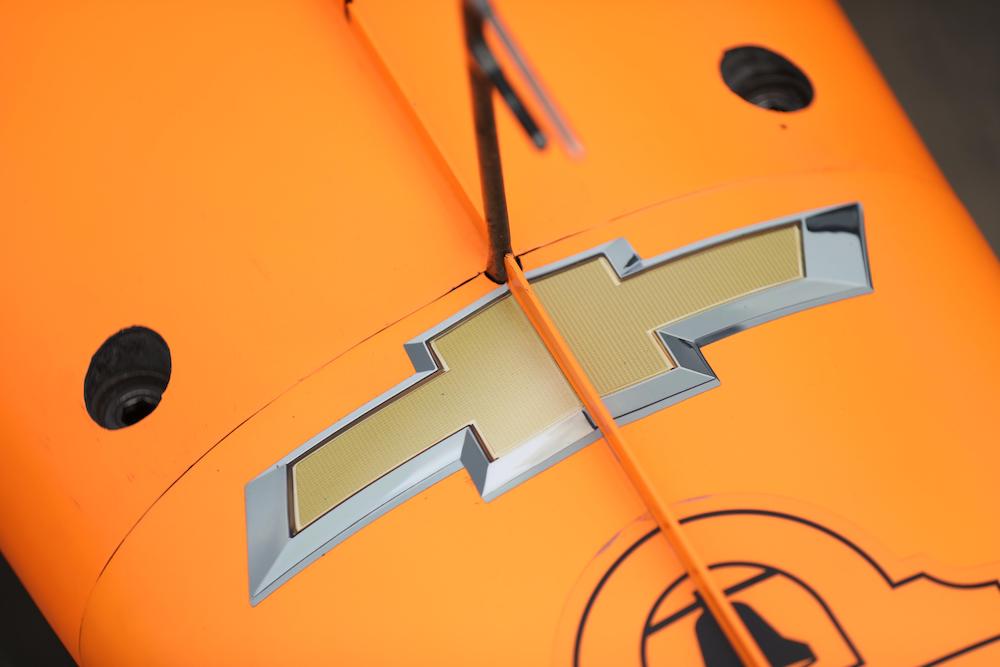
If GM joins IndyCar as a manufacturer, I'll celebrate by wearing something fancy like a bowtie to the press conference. Matt Fraver/IMS Photo
Q: I've been to the Roush Automotive Collection a couple of times whenever there was an open house when NASCAR came to Michigan. There's a Whistler Mercury Cougar IMSA GTO car, and close by is Tommy Kendall's All Sport Mustang that he raced in Trans Am. Just by looking at the bodies, it seems to me the IMSA GTO and Trans Am cars from the late '80s and early '90s look pretty similar. What are the similarities and differences between IMSA GTO and Trans Am from that era, and could cars from those rivaling sanctioning bodies compete in both series?
Brandon Karsten
MP: Roush routinely rebodied his Bob Riley-designed tubeframe Ford/Lincoln Mercury/Merkur GTO and Trans Am cars to use in both series. Engine displacement and configuration were the main differentiators, but the cars -- minus paint and stickers -- were largely identical.
Q: On your podcast two weeks ago you said that when a new chassis comes out there will be only 25 cars, not 27 like IndyCar has now. Why is that, and which teams will lose a car?
Paul, Indianapolis, IN
MP: It’s not official, but every team owner I’ve spoken with regarding charters has said at some point that they expect the release of new cars to coincide with Penske Entertainment trimming the field from a max of 27 cars to 25.
As for where the two deleted cars would come from, there’s no answer, since it hasn’t been formally adopted. But I’d start with the three-car teams (Andretti, Ganassi, McLaren, RLL and Penske) as the first candidates to cull one car. The other option to address is whether version 2.0 of the charter, assuming the 25-car limit is implemented, would allow more non-charter entries to try and qualify for those 25 spots.
Would one of those three-car teams trim to two chartered cars and try and bump their way into the races with a third and newly unchartered car, provided it was allowed?
Q: Good on FOX for not only getting one of their more popular personalities into the 500 Pace Car, but also using a good chunk of prime NFL pregame show to announce it to the noon Sunday NFL audience. Now, maybe Michael Strahan could have been better informed about some of the details of the job ahead of him, but to have Will Power's car and the pace car there in the studio with them and to spend that much time on it -- these are good signs.
Aitch, Richmond, VA
MP: It’s the latest example of how the FOX deal is the biggest achievement by Penske Entertainment since it bought the series. The NFL pre-game show on FOX is sponsored by Verizon, so using Power’s Verizon-sponsored car during the shoot was a smart and obvious choice.
But I wouldn’t be doing my job if I didn’t tell you that in a paddock that is always on high alert for things that could be a conflict of interest in a series owned by Penske where Penske also competes, not every reaction to this has been positive.
A call from one person asked why Penske was using the opportunity to benefit himself with one of his cars on a big nationally televised show, instead of helping one of the other IndyCar teams -- possibly one that isn’t as financially secure -- to use the hit to land a sizable sponsor. I can see how Penske-helping-Penske was the takeaway for some, and if the show wasn’t sponsored by Verizon, I’d likely agree. But this made sense to me, so I don’t agree.
Q: Now that we’ve heard about the IndyCar drivers you consider most underrated, let’s shift gears. What about cars? Which race car -- past or present -- do you feel is underrated? Are there one or two out there that you want fans to know and understand more about?
Mike, Rawlins, WY
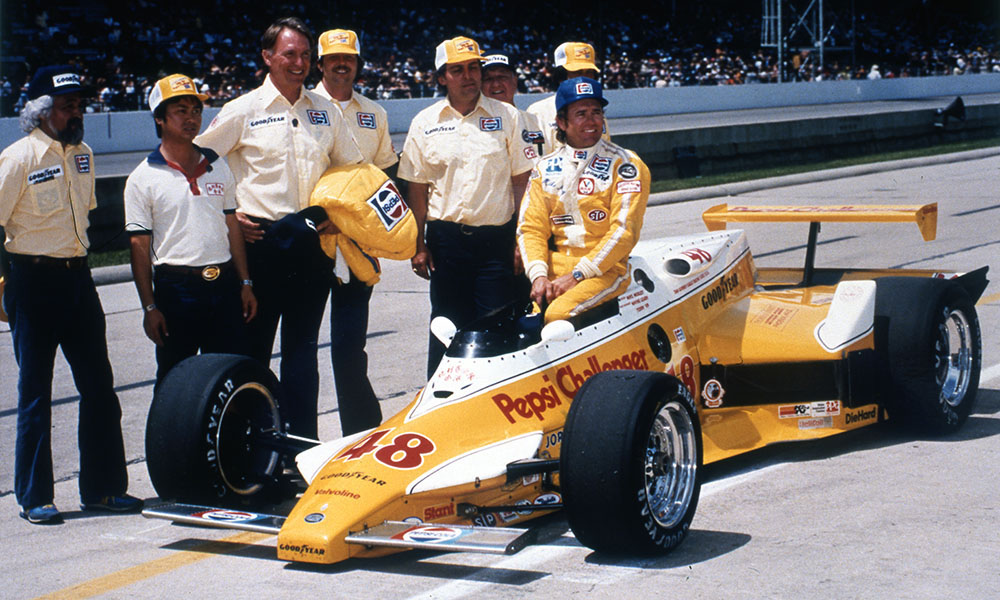
MP: It won one race, so it might not stand out as being underrated, but my first thought went to Dan Gurney’s favorite car, the 1980-81 Eagle Indy car -- the "Pepsi Challenger" driven to victory at Milwaukee by Mike Mosley.
All American Racers was on the downhill slope of its greatest success and profits as a chassis constructor, and on a highly restrictive budget, Dan let a young kid at the time -- John Ward -- pen his first car:
Marshall Pruett Archive
They couldn’t afford to buy the dominant Cosworth DFX V8 turbos, so they went with a stock-block naturally aspirated V8 that came with a weight break in the rules. And they went for a wild concept that skipped the in-fashion ground effects tunnels and made a car that looked like an arrow, using a fresh idea -- what was dubbed B.L.A.T. -- the boundary-layer adhesion theory --along the sides of the cockpit in place of big sidepods and fed wide and expanding rear bodywork, complete with a giant diffuser, to make ample downforce without needing the big and boxy and drag-inducing sidepods.
It was really fast at The Mile and also at Indianapolis, but was often regarded as a weird machine, or an untenable gimmick. It eventually received Cosworth DFXs as a handful of orders came in for the car, and those were quick as well, but that yellow 1981 car was the sweet spot for me in terms of innovation and trying to take on the established cars and engines with something that was altogether different.
Q: Forty-three years before Ugo Ugochukwu's win, and also before Logan Sargeant, Santino Ferrucci and Richard Antinucci took podiums at Macau, there was another U.S. talent who took a surprise win in the Formula 3 race. It was Bob Earl in 1981 at Macau. Bob thought he would become another U.S. driver who would crack the F1 or IndyCar ranks, but had to settle for sports cars before calling it quits in 1993. The last that we knew about Bob was that he was a freelance driving coach. Is he still doing freelancing, or did he go on to other projects?
Juan Solano
MP: I see Bob at local vintage racing events, often coaching. Haven’t had a proper chat with him in a while, so I can’t say what else he’s doing.
Q: The world of sponsorship of big-time auto racing teams has certainly changed over the decades. I believe it used to be that teams hired drivers and teams found sponsors. I'm sure the above model is still used by some teams, but we all see that there is a second and third model being used, that of a driver finding a sponsor and then approaching a team with sponsor in tow. This seems to have a negative connotation, as it gets lumped in with the third model -- that being, rich kid brings daddy's money, or his own money perhaps, and basically buys a ride. We all hate that.
However, is there really anything wrong with a driver bringing a sponsor to a team? Wouldn't a sponsor want to associate itself with a talented driver? I'm sure there are some cozy relationships between drivers and sponsors that are maybe not based so much on talent, but I would think most are. If all this is true, dear IndyCar, please have teams apply a prominent color-coded decal, perhaps to the roll-over hoop, depicting the three sponsorship models; this way, it will be easier for us fans to know who to root for and against.
Will, San Diego, CA
MP: Rooting for or against people based on nothing more than a color… as history has shown, there are no negatives to this plan. And maybe we could complete the trifecta by placing colors on the cars that also denote the drivers’ political and religious affiliations to make the booing louder.
Q: Reading your Mailbag response about Abel and Malukas both being interested in an IndyCar team made me wonder if there is any talk between either of them and Dale Coyne Racing? Also, I have not heard much about Logan Sargeant’s plan for next year. Would love to see him join IndyCar!
Tim Sheehy, Germantown, TN
MP: The Abels and the Ganassi team have gotten to know each other quite well over the last season. Prior to the charter system and strict three-car coverage limit, I think we might have seen some form of Ganassi-Abel connection with an entry.
Sargeant hopes to land a seat but has nothing in the works that I know of for 2025. He did test the week before last with the IDEC LMP2 team in Europe, and that team is one of Hyundai’s GTP/Hypercar development outfits, so he could be in the frame for a factory prototype deal.
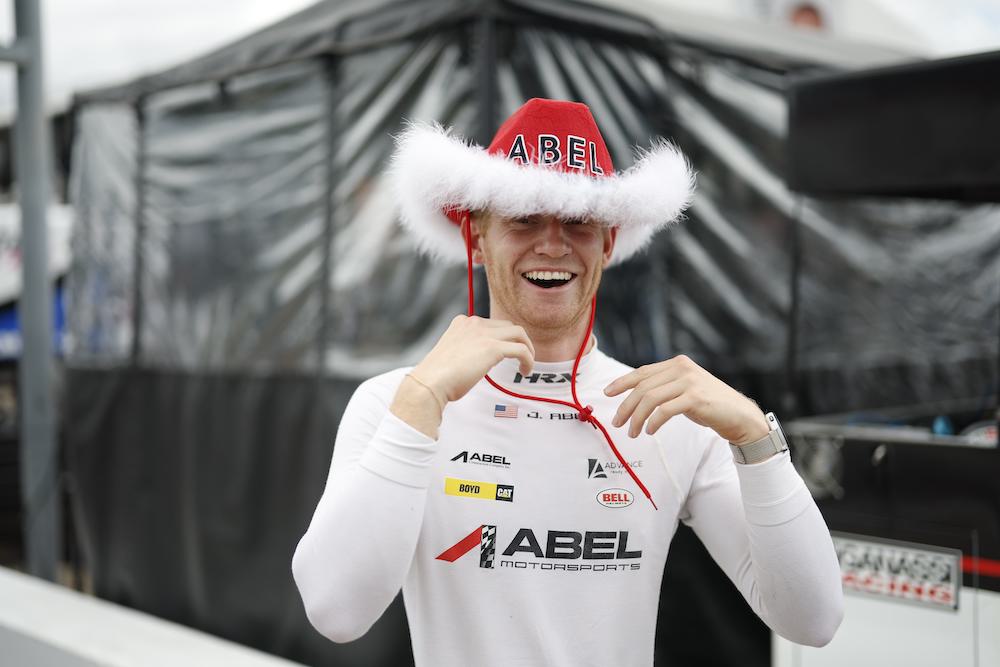
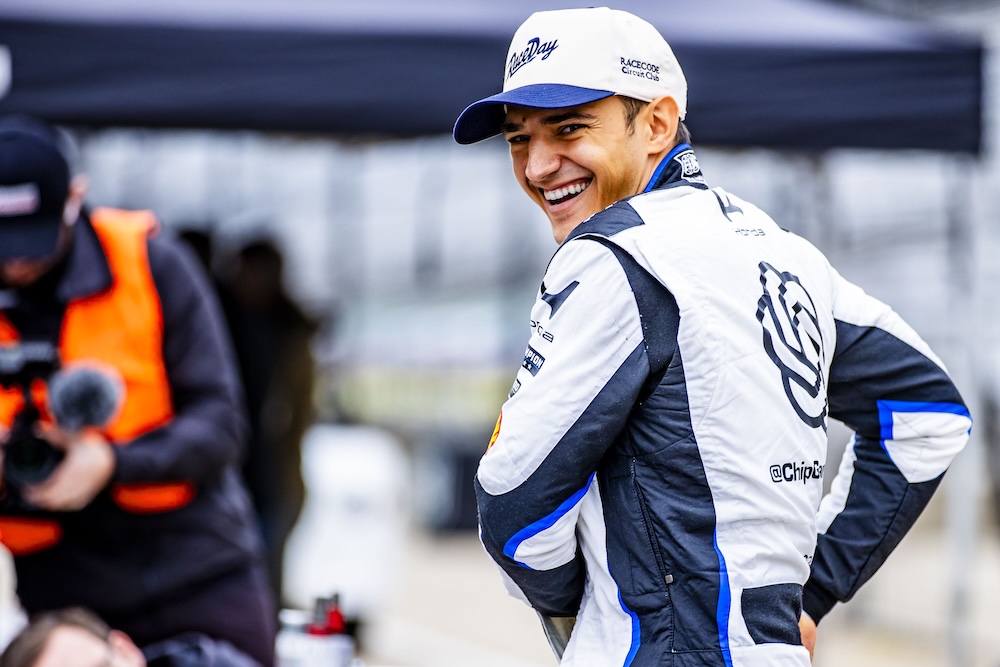
Hope he makes a matching hat for Chip if they ever end up working together. Joe Skibinski/IMS Photo
Q: What would have happened with Renault’s F1 engines if Mercedes hadn’t dominated the V6 turbo hybrids since 2014? Will Renault dominate again?
Would Mercedes have slid to mediocrity if the V6 turbo hybrid wasn’t introduced?
How about potential new components of Dallara IR-27 IndyCar car from 2027 onwards?
Will the stillborn 2.4-liter V6 twin-turbo IndyCar engine be part of the regulations slated for 2027?
Given that the WRC will remove hybrids from next year, will the IndyCar Series consider remove hybrids in the future?
Therius Oktavio
MP: Renault would have been beaten by Ferrari and Honda, just as they are today. With Renault ending its F1 powertrain program, it will dominate the most-recent-engine-provider-to-leave-F1 championship.
Yes, but only in 2017.
Indeed, how about new components.
It’s very possible.
No.
Q: Felipe Nasr made the most of his test at Thermal. If Josef, Scott or Will were unable to start an IndyCar race would Penske/Cindric call Felipe up?
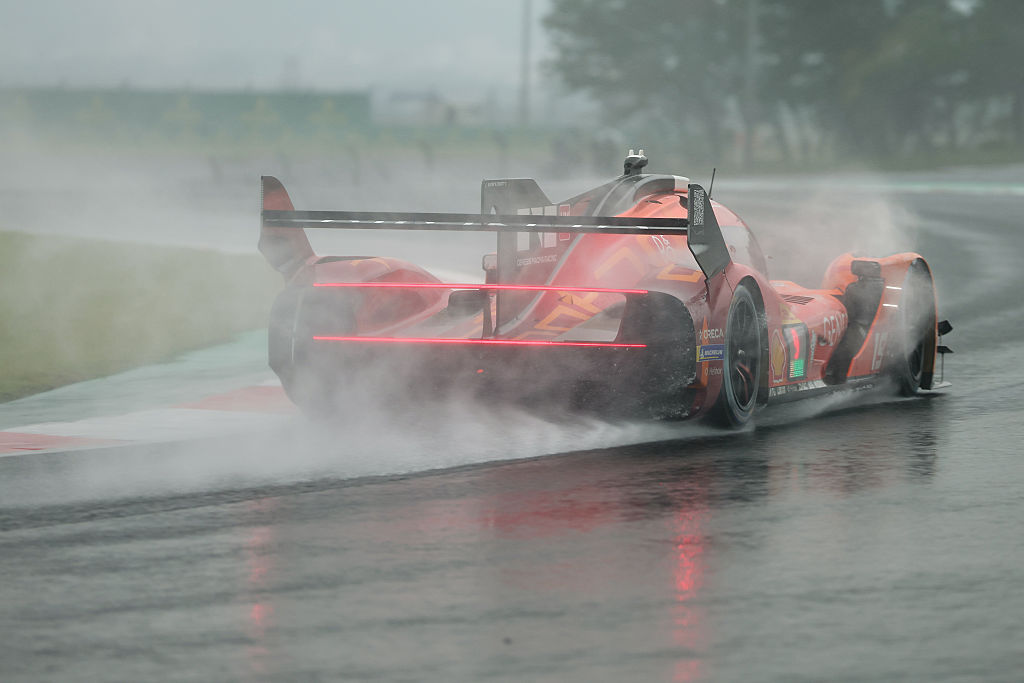
Speaking of Felipe, if my memory serves me correct, his 963 suffered a power steering failure at Indy. The onboards looked excruciating. What kind of steering wheel forces are we talking about -- a Twinkie 35 feet long weighing 600 lbs?
Jonathan and Cleide Morris, Ventura, CA
MP: It would make a lot of sense for Filipe to be the first call. I also wonder if Penske would pull Malukas up to stand-in, since he’s at Foyt to prepare himself to become a Penske drive, and place a different driver in the Foyt car for the weekend.
But it should come as no surprise that Nasr is as good as any leading IndyCar driver. He’d be winning races for Penske in the series, or another top team.
Giant forces. With power steering on a 2000-plus-pound GTP car, there are no setup efforts made to make turning the car easier in the same way changes are made to an IndyCar without power steering. So when the assistance fails, it’s not just a heavy GTP car to turn, but also one that is as hard as possible. And, with that assistance, sports car drivers do not go full Hulk on upper body development because there’s no need, and because it’s excess weight. Not a fun time.
Q: Big Possum wants to give a shout out to Jacob Abel for his smokin’ hot test with CGR at Texas. Great driver, great person and great family. And a Butler University guy as well – and dad Bill is what racing dads should be!
Can’t wait to see him at the Indianapolis 500 next year -- and if Big Possum’s memory is correct there was another guy from Louisville that did quite well for himself – Danny Sullivan!
Big Possum
MP: The "Finger Lickin’ Fast" kid from Kentucky, as a friend calls him, will be a welcome addition to the series.
Q: I know a lot has been said, written, and expressed about Michael Andretti and his stepping down from Andretti Global, and I’ll wait patiently for any updates. I’m not sure if I’m alone in this view, but a good bit of wind has been taken out of the sails for my interest in IndyCar for the upcoming season. He’s had a presence in American open-wheel racing since the early ’80s, along with being my favorite driver. Not having him as an integral part of the team, the series, and season just sucks.
Terry, Maryland
MP: I’ll miss Michael, with hundreds of millions of dollars behind him and feeling untouchable, being the only team owner with the balls to speak his mind to the world in IndyCar.
I fear we’ll have no Andretti family presence in IndyCar next season, barring Mario’s longtime affiliation with Firestone. Andretti COO Rob Edwards recently declined to answer whether Marco would return to race once more in the Indy 500, and thanks to the recent efforts by Andretti to post content surrounding Jamie Chadwick, who said she isn’t returning for a third season of NXT, and her desire to race in the Indy 500, I do wonder if she’s meant to step into that fourth Indy entry.
Q: With all the discussion of Roger Penske, his management style and his influence on IndyCar I'm very curious about his racing and business experiences. There are three books about him on the market by authors Robert N. Marsh, Thomas M. Kinne and Sigur E. Whitaker. Do you have any suggestions as to the most informative or insightful of these? Do you have other suggestions for insight into the man? I've read that he has discouraged such publications, but he has become the leader of IndyCar racing so it would be helpful to know more about him without the strong opinions generated by recent events.
Web Beadle
MP: Wasn’t aware there was one book about him, much less three, so I’m of no use there. The two I’d recommend are the late Mark Donohue’s brilliant "The Unfair Advantage," which on this subject, chronicles his involvement during the early years of Penske Racing, and Jade Gurss’s excellent book "Beast" on the secret 1994 Indy 500-winning engine project Penske backed. After reading those, maybe one of the three you’ve found will stand out as the best to follow.
Q: Why is the Las Vegas race at night? Vegas weather in November is OK in the daytime but miserably cold at night. I know, The Strip looks great on TV at night but sundown is 4:30pm and it's fully dark by 5:30-6:00! Late start times are ridiculous.
Mark, San Diego, CA
CHRIS MEDLAND: The fact it’s at night you’ve already covered off in many ways -- it’s the backdrop that Vegas wants. But why it’s so late is a bit of a point of contention…
Among the reasons given by F1 and the organizers are that they don’t want to shut down The Strip too early in the evening, so that traffic can still use it to move around to resorts, restaurants and their evening entertainment. But on top of that, it wants the race itself to be one of those nighttime entertainment options.
I can’t say I totally buy the argument that 10pm keeps people in the casinos longer in the day, because it feels like it makes it less likely that they will spend as much time back in any of the resorts after the race. But the race organizers and partners have the data and will see if it works in the way they want it to.
The track was closed long before 10pm for a support race this year -- that started before 7pm -- so it does feel like it could move earlier without disruption in the city, but that would then make it at a less convenient time for the large European market. What is currently a 7am race start time in Europe will attract a bigger live viewership than if it was a few hours earlier.
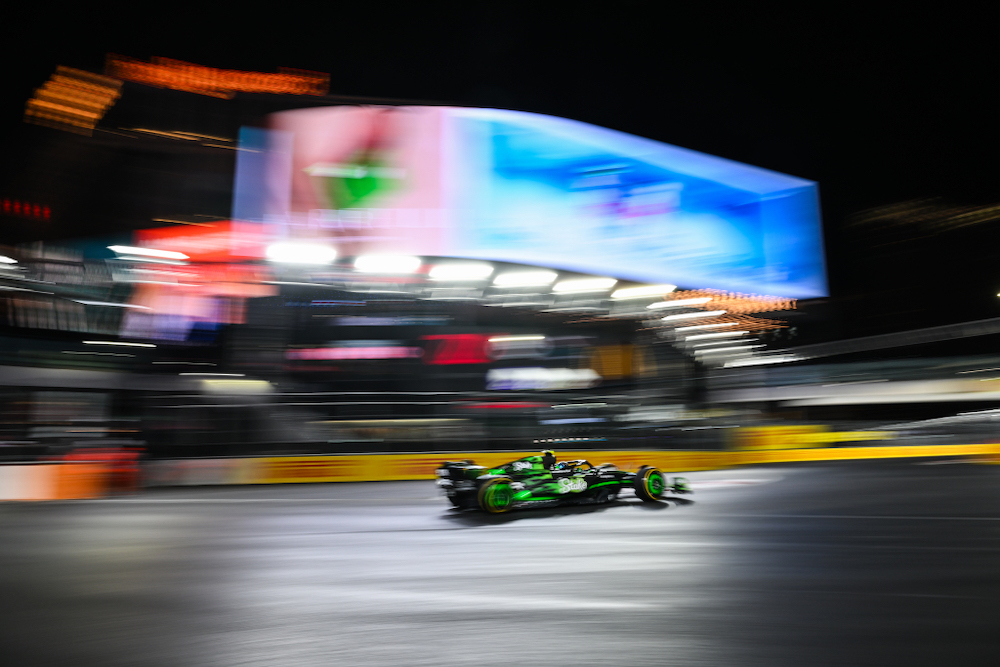
This shot would look a lot less cool if it were taken during the daytime. Sam Bagnall/Motorsport Images
Q: It seems imminent that GM Cadillac is getting an F1 entry for 2026 without Michael Andretti. I know FOM’s position was that a 2028 entry would be considered but a 2026 entry was denied. Can you explain what influenced FOM to reverse its decision?
David, Danville, CA
Q: This recent GM F1 development, only one month after the bombshell Michael Andretti step-down, has a distinct odor to it. The high potentates at F1 clearly had it in for Andretti -- they rejected the initial bid because GM would not have its own engine until 2028, and Andretti could re-apply then. Now, one month on, it's just fine that the same team, same situation, (minus one person) still won't have their own engine till 2028 and will buy an engine from Honda or Ferrari and join up in 2026?
John Becker
CM: It’s not the same situation minus one person, but it is very similar. The 2026 rejection always said it was open to discussions in 2028 if it was going to be a GM power unit, but what F1 wanted was full works commitment from GM. That initial 2026 entry that F1 rejected had targeted a Renault power unit supply, don’t forget, and Renault has since pulled out as an engine manufacturer.
Imagine if F1 had accepted Andretti Global in January and then Renault made that call? Stefano Domenicali and co would certainly have been aware that was a possibility.
Was the evolution of the project accelerated by the Department of Justice investigation into whether F1 was breaking any antitrust laws? It’s hard to argue that it wasn’t, but perhaps more in the fact it kept the lines of communication both open and active. Instead of leaving the ball in GM’s court, F1 may well have been more proactive in pushing for a greater manufacturer commitment.
Instead of it being an Andretti team supported by GM -- where GM could back out more easily in future years -- F1 now has a situation where the future certainty is greater. But it’s also not F1 entirely calling the shots on how it would look, it’s those who are financing the team and while it was Daniel Towriss as the frontman who took over as CEO at Andretti Global, Mark Walter is a name that Marshall Pruett had been hearing for a while.
Walter owns a number of sports franchises and leagues, and if he wanted to be involved in F1 too then he will have had many different ways of doing that. Much like the Mercedes setup, he will now be involved with a team representing an iconic car brand, and have the full marketing might of GM behind it, too.
Q: I will start by admitting that I am a big Red Bull and Max Verstappen fan, and believe this most recent championship stamps him as an all-time great because it looked like he carried a car for a better part of the season. He "Max-imizes" every weekend.
Having said that, I wanted to get your thoughts on the main cause for Red Bull's fast start and then early-midseason drop-off in pace? I know the team did not stand on its laurels from last year and just evolve last year's car; it seemed to go pretty radical on some design changes. At the same time, there also seemed to be some quiet rumors about the FIA making a substantive change to the rules relating to asymmetrical braking system around Miami. Red Bull was rumored to be using the system (which frankly I think is brilliant idea and what I love about F1).
Was it the radical design changes they only have lately started to come to grips with? Other cars evolving better than the Red Bull? The asymmetrical braking system ban? Or all of the above?
Jeff Smith, State College, PA
CM: I don’t buy into any braking system issue, because if Red Bull had been breaking any rules then rival teams would have been up in arms about it, and if Red Bull hadn’t been but just had to make changes then Christian Horner certainly would have claimed that the team was being unfairly penalized.
I think we’ve seen just how impressive last season was from Red Bull, when every single item it brought to the car had a big impact on its performance in a positive way. Other teams fluctuated, and Aston Martin’s competitive start shows how the rest of the field was still getting things wrong.
Once McLaren started getting on top of its car mid-season last year, it was on a trajectory to challenge Red Bull, where the headspace for improvements was smaller. Ferrari too started making gains, just not as big, but the signs were there.
Red Bull then made a good step forward with its 2024 car, and Ferrari wasn’t a million miles away at that stage either, but McLaren was just late with its development. What it had learned in 2023 put it on a path that it couldn’t have ready in time for the start of 2024 but was worth waiting for, and team principal Andrea Stella suggested as much pre-season. So when the upgrade landed in Miami, you saw that instant step into competitiveness with Red Bull.
What made it all seem much more dramatic at that stage was Red Bull stopped getting the expected value out of a mid-season upgrade. Mercedes technical director James Allison even called it a downgrade, and Red Bull sources admit there was a need to stop and understand what wasn’t working. That slowed overall development, and in F1 the old adage is if you stand still, you go backwards.
The cost cap and limited wind tunnel time have also played a big role here. Red Bull couldn’t throw endless money at trying to understand the issue, or at further developments. Resources originally planned for upgrades suddenly get redirected into troubleshooting and finding remedies.
Part of me is a little sad that McLaren didn’t start the year quite as strongly as it would have with its Miami upgrade, because not only would that have limited the early Red Bull dominance, that too would likely have given Ferrari a smaller deficit that it would have been trying to erase late in the season.
It’s been a great season and Verstappen has certainly maximized his opportunities to wrap up the title early, but an all-time classic could be on the cards in 2025.
Q: My family and I have become big fans of Yuki Tsunoda. He just seems so different from the typical F1 driver in an amusing way. What isn’t amusing is that he seems to be an afterthought for Red Bull. I know Japanese drivers have not entered the sport without backing from Honda or Toyota. But Yuki has been beating his teammates, and it still took nagging from Honda to get him what sounds like a token offer of a test in a Red Bull at the end of the season.
Is there a general sentiment in F1 that Japanese drivers are only there to please the Japanese manufacturer and can never stand on their own merits? I think Yuki may be the first Japanese F1 driver whose driving earns him a place in a team regardless of the engine manufacturer. Why does the F1 world not seem to value his talent?
Bary
CM: I’m a big fan of Yuki too, Bary! I don’t think there’s an F1 sentiment there that Japanese drivers can’t stand on their own merits, because if you look at someone like Kamui Kobayashi who went before Yuki, he came in through Toyota but was then snapped up quickly by Sauber when Toyota pulled out of F1, and he remained a popular target for teams for a number of seasons.
I believe Yuki is a casualty of Honda’s decision to pull out. That led to Red Bull developing its own powertrain department and having to find a solution for 2026 to try and remain competitive, and was a major obstacle. Huge investment has been made and it’s undertaking a massive challenge, but then Honda quickly decided it was coming back in 2026 with Aston Martin.
That will have stung Red Bull, and Yuki’s backing from Honda might mean that instead of Red Bull supporting him, it is far less keen to promote a Honda driver.
Plus, there is part of me that is pragmatic about the fact he would be a very different teammate to Max Verstappen than Sergio Perez has been, and creating an environment that works best for Verstappen will be Red Bull’s priority. Tsunoda could well do a great job for Red Bull, but he’s still shown flashes of petulance -- that he admits he needs to keep working on -- that might just stop him making a case that can’t be ignored.
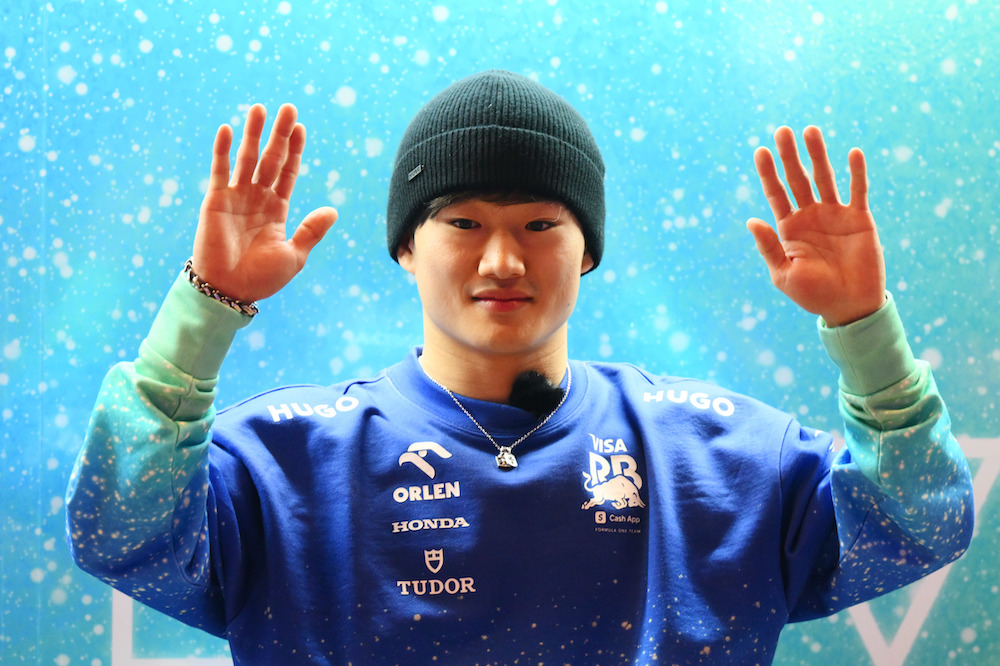
Hands up if you think Tsunoda still has lots of unfinished business in F1. Simon Galloway/Motorsport Images
Q: Max winning the championship in a car that’s probably going finish third in the constructors' is impressive, but I think it’s worth pointing out though that in 1982 Keke Rosberg had three different teammates and in 1983 Piquet’s teammate only finished five races.
I think it terms of raw race pace, the ’82 Williams, ’83 Brabham, and this year’s Red Bull were probably better than the third-best car and that the second driver(s) all really underperformed what the car was capable of.
If you were a F1 driver, with hindsight, at the start of this year you would still want to be in the Red Bull, right?
Will, Indy
CM: I’d argue that the fact there’s only two previous occasions that this has happened shows how rare it is that a car can be so tough to drive that one driver would underperform to such an extent, and therefore how impressive it still is to be successful even in a quick car when there are multiple competitors capable of winning races.
I’m sure we could also pick out other times that drivers in even slower cars came close to winning a title, or won one and the team still finished in the top two because other teams underperformed, but over the course of a season it generally tends to all average out.
I love your final question though, Will, because I don’t think it’s an easy one to answer. Maybe you do still just lean towards the Red Bull, but look at what Perez has done this year compared to last year, and how regularly there have been chances to win races for either McLaren or Ferrari drivers.
If you’re Verstappen and you had that hindsight of the entire season, I genuinely don’t know which car you’d pick. Don’t forget he was perhaps one dry race in Brazil away from having his title hopes significantly dented, and could still end the year with a relatively small advantage over Lando Norris if McLaren performs as expected at the last two rounds.
I’m unsure about a Ferrari, but I do think Verstappen still wins the title this year in a McLaren, although partly because he’s not competing against himself in the Red Bull! The hypothetical of who would have been in the Red Bull at the start of the season becomes another fascinating aspect of your question.
THE FINAL WORD
From Robin Miller's Mailbag, November 24, 2015
Q: I watched "Winning: The racing life of Paul Newman" the other night, and I recommend it to anyone interested in racing or PLN. It got me thinking about non-racers, mostly actors, who attempted to drive and how good some of them were. Certainly people of our age, Robin, know about Newman, James Garner and of course Steve McQueen. I know Newman and McQueen had success in the pro ranks and I know Garner had a race team (if you get a chance to see his movie about his team, it is worth seeing) and he was the only actor that did his own driving in Grand Prix. I know Tommy Smothers was a racer as well.
Later on, Bruce Jenner had a credible racing career and had pro wins, and younger folks will remember Frankie Muniz giving it a try and Jason Priestly, who was doing a good job before his big crash. Now we have Patrick Dempsey and he has proven to have the right stuff. My question is, who do you think is the best of the pack that tried racing, and who do you know that was good that I left out? I am thinking four national championships and a class win at Le Mans is going to be hard to beat.
Tom in Waco
ROBIN MILLER: It has to be PLN hands down, although McQueen was decent on dirt bikes and Smothers ran Formula 5000 or Formula A and was credible. James Dean evidently had some chops in sports car racing while Gene Hackman tried sprint cars in Danville, Ill., and Kent McCord of "Adam 12" fame ran little sedans and sports cars for many years and did OK. Muniz was making strides and Priestley nearly died in an Indy Lights car, but Priestley seems to have had the right stuff like Newman.
Marshall Pruett
The 2026 season marks Marshall Pruett's 40th year working in the sport. In his role today for RACER, Pruett covers open-wheel and sports car racing as a writer, reporter, photographer, and filmmaker. In his previous career, he served as a mechanic, engineer, and team manager in a variety of series, including IndyCar, IMSA, and World Challenge.
Read Marshall Pruett's articles
Latest News
Comments
Comments are disabled until you accept Social Networking Cookies. Update cookie preferences
If the dialog doesn't appear, ad-blockers are often the cause; try disabling yours or see our Social Features Support.