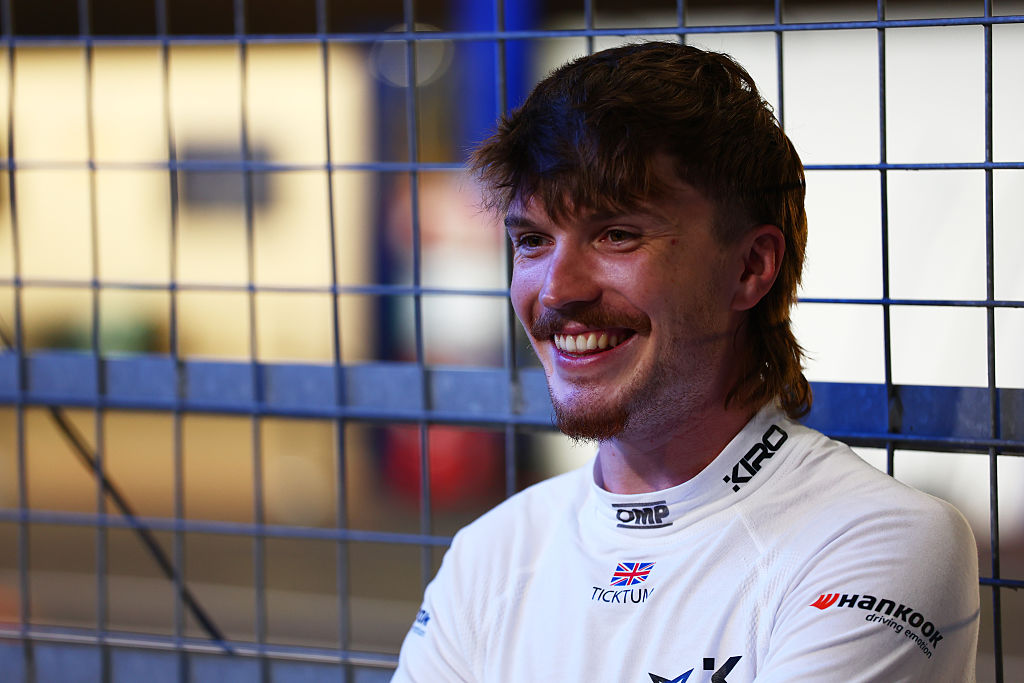
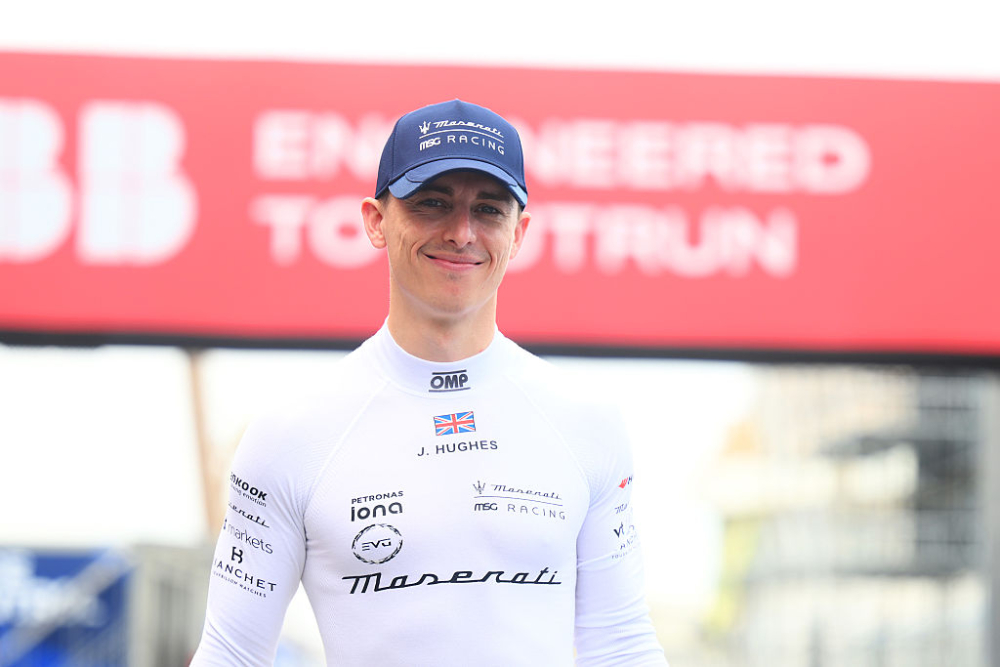
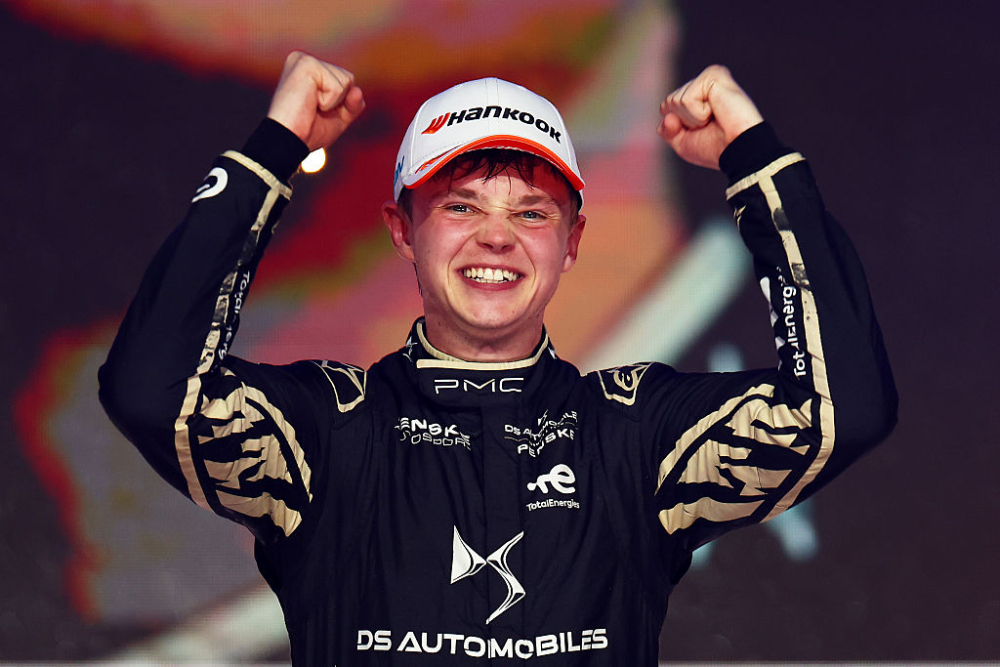
Alastair Staley/Motorsport Images
What brings the world’s automakers to Formula E
If you take a quick glance at the Formula E grid, you'll see identical cars. In fact, you often see it referred to as a "one make series,” but that's simply not the case.
Right now, Jaguar, Porsche, Stellantis (via its DS and Maserati brands), Nissan, Mahindra and China's Gusto Engineering all participate in the series as manufacturers. They all have heavy involvement, but aside from liveries, you won’t spot any visual identifiers between the cars, with finances being a key consideration behind that.
Cost-cutting is a major factor in modern day motorsport. You’ll see common major components used in everything from IndyCar and NASCAR, to the World Endurance Championship. Even Formula 1, which prides itself on being constructor-centric, has common electronic components and allows a certain number of other parts to be shared between teams.
Formula E’s decision to use a control chassis has been a conscious decision since day one. Not just for financial reasons, but because aerodynamic development is simply irrelevant to what the series is doing.
“We decided 10 years ago when we started Formula E that we don’t want to spend any energy on the static parts of the car -- the chassis, bodywork, aerodynamics -- basically the opposite of Formula 1,” Sylvain Filippi, team principal of Envision Racing, tells RACER. “Here with aerodynamics, we don’t spend any time or resources whatsoever on it with the view that it’s not relevant to what we are trying to achieve, which is to improve electric cars.”
Jaguar TCS Racing team principal James Barclay adds: “We could spend a lot of money designing our own chassis, our own bodywork, and our own powertrains -- if you can compare it to something like IndyCar, they have a common chassis, and there's manufacturer powertrains. What we didn't want to do is create a motorsport where the cost to enter is incredibly high, especially with the startup sport.
“So we said, what are the things we're not gonna learn from technically? That's chassis and aero. We don't need to be a chassis or aero formula to start with. There's no relevance to production cars in aerodynamics, and that's just a cost race.
“What is important is the powertrain. We want to put all the available money to advance the electric powertrains in these cars, and what we call the manufacturer-primitive parts.
“That's the reason why all the cars don't look different. It’s based on a clear strategy to make sure the investment is in the area that's driving the differentiation in performance and also the learning from an IP point of view and a technology transfer for the road.”
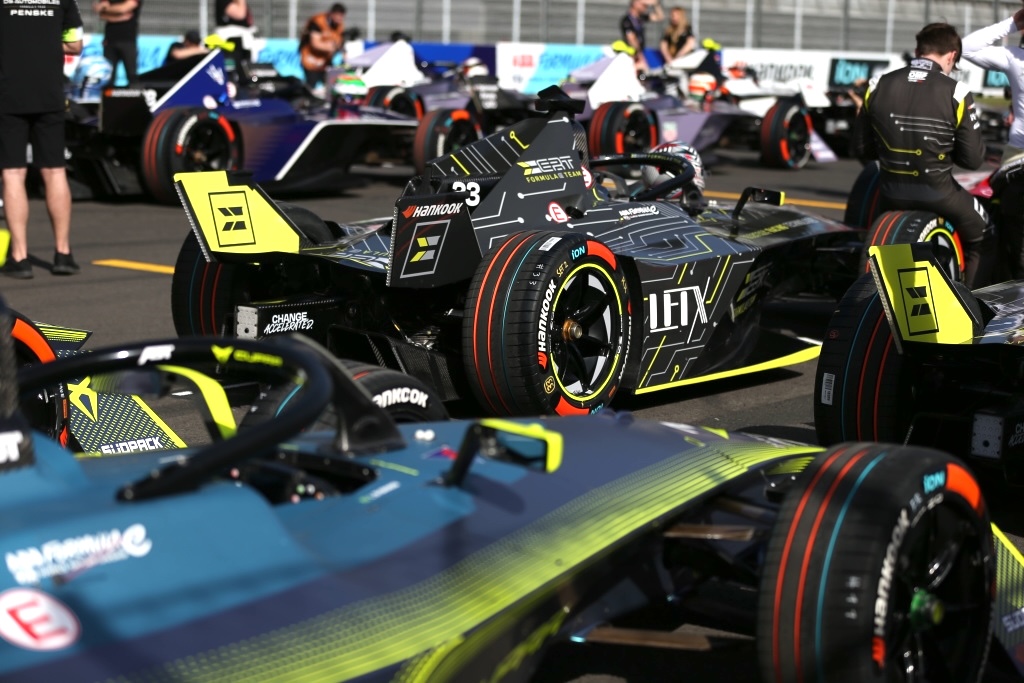
While they might all look alike, Formula E OEMs have a lot of leeway for creativity under the skin. Dom Romney/Motorsport Images
OEMs still have a huge amount of involvement and influence with their respective FE programs, though, making what’s under the skin not only different from car to car, but hugely important, too. While the bodywork and front powertrain are control areas, manufacturers are free to develop the inverter, the rear motor, gearbox, differential, driveshaft, all of the rear suspension, all the high-voltage wiring looms, all the low-voltage looms, and all of the software.
“There’s a huge remit for the manufacturers and if you look at the rulebook, it’s actually very little because there’s very few regulations,” says Filippi. “If you go to Formula 1, it’s hyper-regulated in every single area you can think of. Here, for the powertrain, the rules say 1000 volts maximum, power 350 kW maximum, 600 kW with regen. There are key parameters, but then off you go.
“You can do the motor however you like -- a high-revving motor, a low-revving motor, you decide anything you like. Genuinely, manufacturers are developing the absolute state-of-the art technology right now, there’s no regulation limit to that.”
Batteries are control parts, too, and for similar reasons to the chassis. Filippi says they’re like a conventional fuel tank, saying that in-house developed batteries wouldn’t bring any real performance benefit, and would be another unnecessary expenditure.
“It’s basically a store of energy like a fuel tank,” he explains “We have a 40 kWh battery which is the equivalent of four liters of fuel, roughly, of energy. So we’ll start the race with the equivalent of four liters of fuel, but there’s no performance in it -- it’s the same for everyone.
“Everything else after that is for each manufacturer, which if you think about it is a huge scope -- it’s not at all a one-make series. Everything that makes the car move is bespoke.”
Those bespoke components are subject to a homologation period, which in Formula E is two full seasons.
“When we started out Formula E, the homologation was one year and we actually got to the point where we were introducing a brand-new powertrain every year, which is phenomenal, considering in the automotive world a manufacturer probably, at best, produces a new powertrain every four to maybe eight years,” Barclay says. “We were doing one every year and it was just becoming incredibly aggressive -- and as the technology was evolving, it also wasn't needed.”
The homologation of hardware is a tricky balance, with it needing to be long enough to control costs, but short enough to allow for sustained innovation.
“There’s always things that you look at and with experience go, ‘I know we can make that better,’” says Jaguar driver Nick Cassidy. “However, at the same time we know that’s the case for everyone up and down the grid and sometimes when you have a really good product or car, you want it to stay stable because you have a performance advantage.
“Behind all that, though, and when you look at the sport in general, you have this race-to-road technology transfer that needs to be as fast as possible and so you can’t have homologation periods that are too long -- the speed of development with EVs is faster than two years, realistically.”
Even though the physical drivetrains are locked in for a couple of years, software updates can be applied more frequently, making that a crucial battleground for manufacturers.
“No one ever stands still in motorsport, so when the GEN3 car launched at the beginning of last year, to the end, the cars got significantly quicker,” Barclay points out. “You look at the lap times each year we come back to a circuit, we're going quicker. So when there's a generation change, yes it's to the hardware, but like now, between Season 9 and Season 10, you'll see the cars going faster and that's through the software.”
Software changes, while invisible, are hugely influential. And to put it into old-school terms, Barclay’s Porsche counterpart Florian Modlinger likens software changes to more traditional car setup changes, albeit one that can change multiple times in a single lap.
“It’s like when you come from conventional race cars with mechanical setup,” he says. “If you change camber or toe or any kinematic parameter, the drivers feel it. Here in Formula E we have a lot of software functions which influence the car balance at the turn-in of a corner, mid-corner, and exiting the corner, and these little software changes and parameters, the drivers can feel like a setup change on a car.
“If you do a setup change on a car, it’s completely around the whole track, but we can do the software changes corner by corner, so he can have a different setting, a different function for one corner and then the next corner, you have different needs so you adapt the software and the car is better performing and balanced in the next corner.”
In such a digital environment, physical feeling for a driver is a key element of the software development race.
“We are basically looking at how we optimize the control systems in the car, energy management and efficiency,” says Barclay. “We have a car that has a rear powertrain and a front powertrain. The rear powertrain is for traction for driving the car forward; the front and the rear are for deceleration so we can use them for regen and we produce 40 percent of the energy to finish the race from the regen on those two axles.
“We have mechanical brakes on the front axle, but we don't have them on the rear axle. We have emergency brakes; we're not allowed to use them. As soon as you apply any pressure on the rear calipers, you have to park the car, so all the mechanical braking is done on the front axle with the disc brakes, otherwise all the braking is done through the two powertrains, front rear axle.
“So what that means is for a driver, the pedal has to feel the same whether using the mechanical brake or whether using the regen on the motor. With GEN3, getting that feel right was a really important factor. We're constantly improving that -- the more you improve that feel, the faster drivers become, the faster the car becomes.”
Sam Bagnall/Motorsport Images
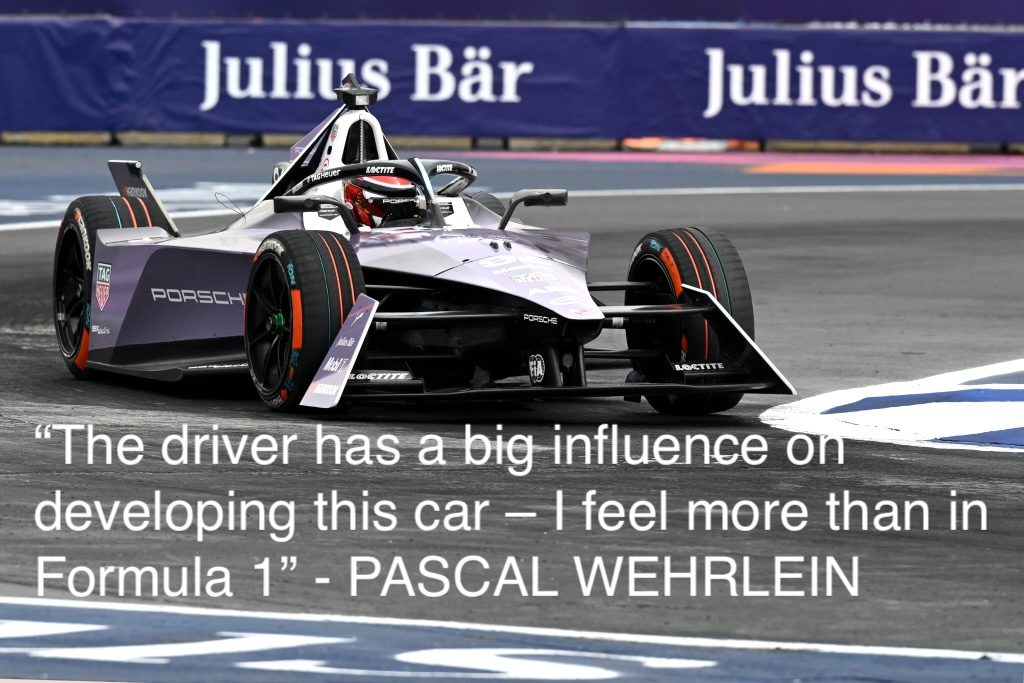
Porsche’s Pascal Wehrlein -- a former Formula 1 driver who spent several years in a development role with Mercedes during its dominant period -- says all of this means that the driver plays a more important role in the car’s development than many other series.
“I think that here the role of the driver is much bigger,” he insists. “When we tested this car for the first time, we knew we were going to have this car for two years because the hardware is always frozen for two years. So all the feedback that we drivers are giving is directly consequential and directly going into simulations to improve the issues. It was really a nice process of a lot of tests before the first race.
“The software is probably as important as the setup and the car itself because there’s so much going on in the software, especially in the race to be efficient in the race. There’s a lot of driver preference going into those details and the driver has a big influence on where we're heading with developing this car -- I feel more than in Formula 1 because that was about putting downforce on the car. There’s still setup and stuff going with the driveability, but everyone (there) is especially chasing downforce.”
The financial and technological positives are obvious, but of course there’s a sporting benefit, too, with the sizeable but not totally uniform approach helping to keep the field close.
“I’m a big fan of having a lot of common parts because that is making the sport and the competition a lot more fair,” adds Wehrlein. “We don’t see the teams with the biggest financial background just outperforming everyone by spending more money. Manufacturers can make a small difference to one another but still it’s not enough that there’s one dominant car over the whole season. That’s why it’s such a big challenge to win.”
The scope of manufacturer involvement means that Formula E cars, while simple and the same as one another at face value, are incredibly complex machines. Barclay suggests that they might even be more complex than current Formula 1 cars.
“But we have less staff -- we have 30 staff allowed at a race and we have six people we’re allowed in our remote operations back at the base,” he points out. “I think the level here of this championship with the capability of this area and software, is really significant. But we rely on technologies like cloud technologies, of course security of data, data management -- we're producing terabytes of data on these cars. I asked one of the engineers to give me a picture of what that means, it's like 20 million filing cabinets of data we use over the weekend, which is incredible.”
With fewer mechanical and physical developments, that doesn’t make the process any easier. Jaguar's Barclay concedes that “you can get it very wrong, very quickly.”
“If you get one line of code wrong the whole thing can be wrong,” he says. “Like anything physical, you can do it well and you can do it badly, and to do it well, you have to make sure you have a clear view of what you're trying to achieve. You have to validate it and make sure it's going to achieve what you want to achieve because if we put a code in and and we have a problem in Free Practice 1 or 2, we'll lose track time and then we're straight into quali. And if you don't qualify well, it's difficult to race well.
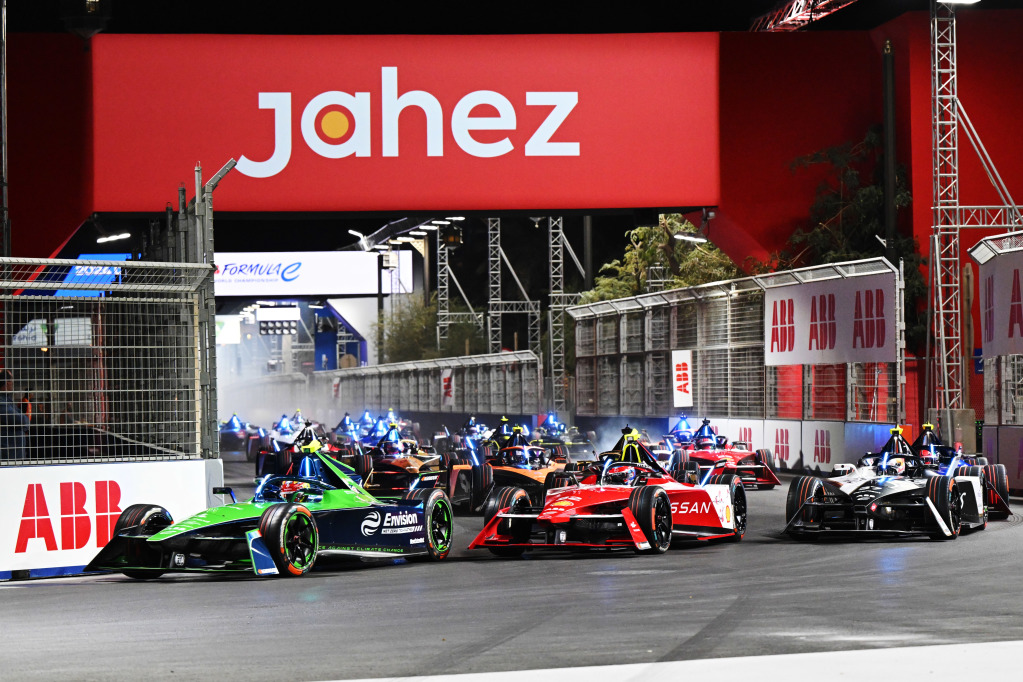
The regulations provide for customer teams like Envision Racing to stay in the competitive mix with the factory squads. Sam Bagnall/Motorsport Images
As mandated by the regulations, customers must have the same hardware and software as the factory teams, too. It’s a stark contrast to the likes of F1 where customer teams may have year-old engines, or different software that might not allow the same engine modes as the works operations. They have very little say in the development process, but when it comes to the finished product, they are entirely on par with whom they’re buying from.
“They have to have everything that we have,” explains Cassidy, who finished second in the championship last season with Jaguar customer Envision and who now drives for the British brand’s factory team. “But when it comes to actual product development, that’s all Jaguar. We’ve got huge amounts of resources and people at the factory developing the car and coming up with these systems, and then it’s more or less, when I talk about the fine-tuning stuff that (teammate) Mitch (Evans) and I are doing on race weekends, that’s what our customer teams are doing as well and we’re trying to work together with them to come up with optimum settings for each track specifically.”
Detailing the customer/factory relationships further, Envision's Filippi says having the same tools is “only one part of the equation” and that independent outfits still need to bring their own trackside infrastructure, including strategy software -- which differs from the manufacturer-developed car operational software -- operational tools and staff.
“Sure, we still don’t have the resources of a manufacturer, but at least I can get very close to that, which is then very rewarding for the team because it’s nice to win races and be on the podium,” he says. “That’s the really great thing about Formula E -- we’ve managed to have this super-steep development curve on the car while keeping a sport that is very competitive and where everyone kind of has a shot at doing something.”
Not only that, manufacturers are keen to see customers succeed, because even if it's not their name above the garage door, it’s still proof that their technology is successful.
“Ultimately for the manufacturers, they want to win the championship and races of course, but if a customer team wins it’ll still look better than if it’s the competing manufacturer. Everyone knows it’s their car,” Filippi says. “So even though I’m the Envision Racing team and I get the glory for my team and my partners, everyone knows it’s a Jaguar car and I’m not hiding it. So there’s an incentive on both sides to do well and be quick and ultimately beat everyone else first.”
"Win on Sunday, Sell on Monday" might be a tired old cliché but in Formula E it remains an adage to live by.
“In Formula E, we want to relate that technology to our future cars,” Barclay stresses. “And since we've been involved, we've started to do that now. So there's many examples like silicon carbide -- we were the first manufacturer to use that technology in our inverter and we've announced it will be on all future JLR production vehicles.”
Porsche's Modlinger explains his team is in regular contact with the company's road car side, with staff even crossing between departments.
“The development is quicker than on the road cars and all the processes and software development and the complexities of the systems, these are things we transfer and have regular meetings on within the departments where topics are shared,” he says. “Our structure in Porsche Motorsport is that we have, in the individual departments, people who work on factory programs, work on GT programs, but also on road car development, so the exchange of information is natural.”
Along with road car tech transfer, Modlinger says Porsche’s other factory motorsport programs benefit, too.
“From the sports car side, the big topic which is common for both car types is the braking,” he says. “The braking is complex on both cars and both series and braking is dominated by function systems and software; there is also a regular exchange of information and both parties are profiting from each other.”
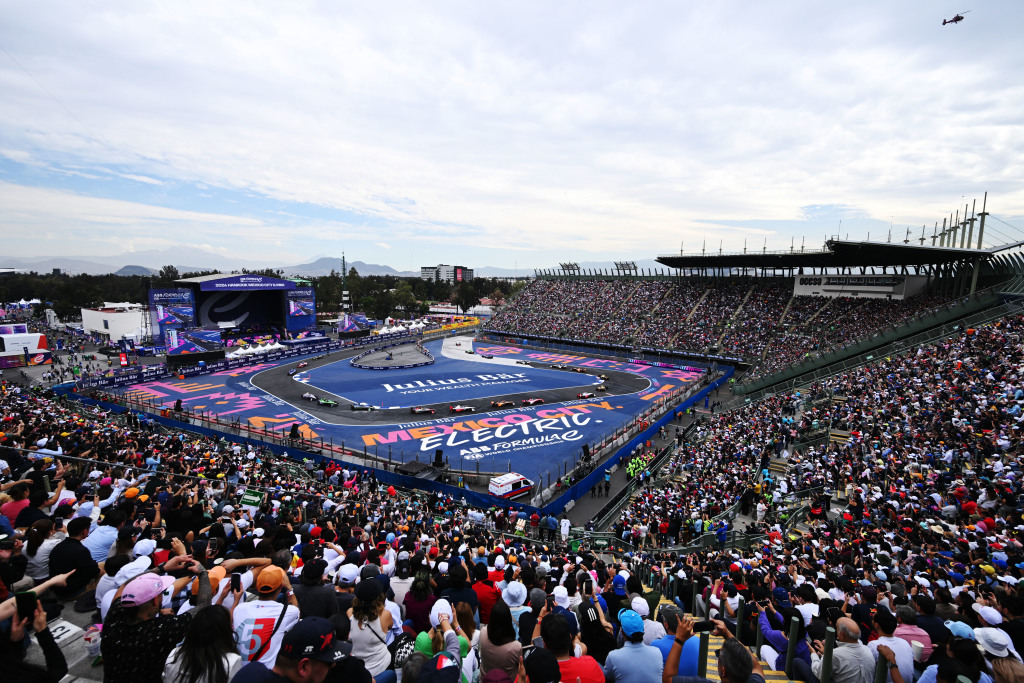
Manufacturers see Formula E as the ideal vehicle with which to connect their motorsport activities with the cars they are selling to the public. Sam Bagnall/Motorsport Images
It seems almost like a paradox that the most technologically advanced and most relevant open-wheel series in the world today is the one most like motorsport of the past, in a sense, with its advancements having a direct impact on what is being sold in showrooms today -- much like how turbocharging, rear-view mirrors, seatbelts, disc brakes, anti-lock brakes and semi-automatic transmissions came from race cars of yesteryear.
“It's motor racing getting back to what it's always done,” says Barclay. “This transition to electric racing is incredibly exciting because it's what is fundamentally what racing's always done. We didn't continue racing front engines in grand prix cars with fuel tanks next to you. It's evolved with its times to make sure that the sport is future-proofed and is representing what future generations also want as well.
“This is the most relevant world championship for the race-to-road tech transfer, because if you look at the majority of investment from every automotive company in the world, the majority of their R&D money is going to their full battery electric investments. This category is most aligned with the biggest R&D spends most of the OEMs have.
“We're showcasing what the technology can be, whether it's efficiency, whether it's performance, whether it's fast charging, these are all factors that the formula is aiming to introduce.”
Dominik Wilde
Dominik often jokes that he was born in the wrong country – a lover of NASCAR and IndyCar, he covered both in a past life as a junior at Autosport in the UK, but he’s spent most of his career to date covering the sliding and flying antics of the U.S.’ interpretation of rallycross. Rather fitting for a man that says he likes “seeing cars do what they’re not supposed to do”, previously worked for a car stunt show, and once even rolled a rally car with Travis Pastrana. He was also comprehensively beaten in a kart race by Sebastien Loeb once, but who hasn’t been?
Read Dominik Wilde's articles
Latest News
.png?environment=live)
Comments
Comments are disabled until you accept Social Networking Cookies. Update cookie preferences
If the dialog doesn't appear, ad-blockers are often the cause; try disabling yours or see our Social Features Support.