Motorsport Images
Returning Hypercar teams look to raise their game for 2024
The 2024 FIA World Endurance Championship got off to an unofficial start with last weekend's Prologue test in Qatar, with returning and new teams looking to build on the promise shown by the new Hypercar formula last season.
In 2023 there were 13 cars on the full-season entry list and 16 for the Le Mans 24 Hours. A year later, the WEC’s premier class looks even stronger with multiple new manufacturers and a 19-car full-season grid.
For the new teams, the task is clear: get up to speed and break into the top end of the pecking order that emerged last year. That will not be easy, as the level and depth of quality in the top class has never been higher. But in some ways, the challenge for the five factories and Porsche’s customers that took part in last season’s campaign is just as tough, as the field gets deeper and improves.
Take reigning Hypercar world champion Toyota Gazoo Racing, for instance. It is back with the GR010 HYBRID for a fourth season. After it made substantial changes to its package for 2023, which its competitors felt was enough to consider it a brand-new car, Toyota heads into 2024 with only minor tweaks and refinements.
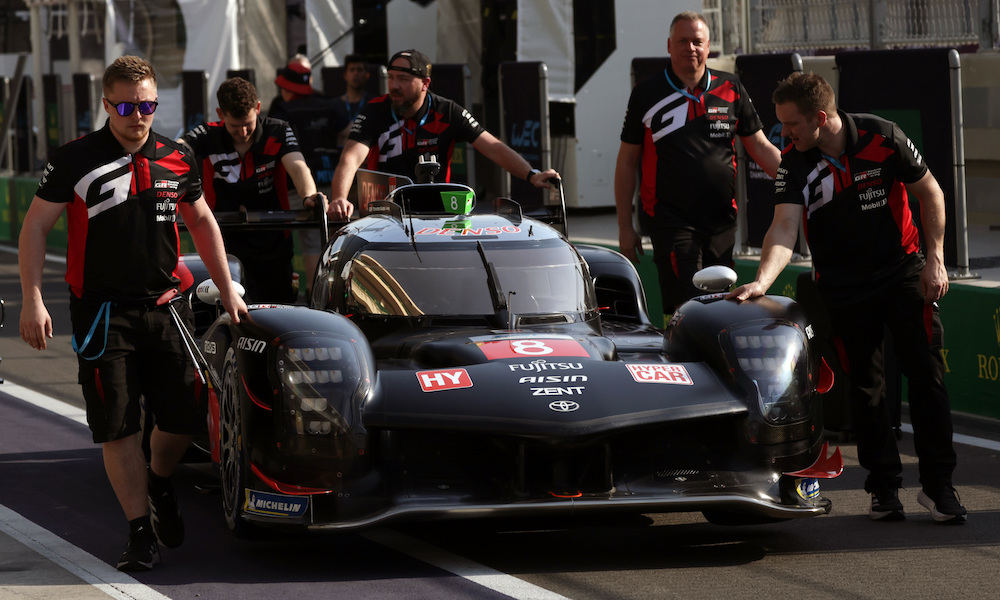
The 2024-spec GR010 HYBRID will look radically different from the outside, with its new all-black livery (main image), but up close you need a keen eye to spot the differences.
“Changes for performance are limited to a fixed number of ‘jokers’ during a car’s homologation period, and these require agreement from the governing body,” explains TGR WEC chassis project leader John Litjens. “We carefully consider how to use the ‘jokers’ in order to continuously improve reliability, driveability, serviceability and of course performance within the context of a Balance of Performance. Based on the 2023 data, we did not see any obvious performance weak point so we have focused our efforts on reliability.”
As a result, the car features a change in headlights -- reverting back to the 2022-spec solution after drivers complained of issues with glare last season -- and updates to the anti-roll bar and smaller components, sensors and heat protection.
The driver lineup and management have also been tweaked. In the driver roster, Jose Maria Lopez moves to AKKODIS ASP’s Lexus program, making way for Nyck de Vries, who returns to the WEC after a stint in Formula 1. On the pit wall, longtime technical director Pascal Vasselon has been replaced by David Floury.
The big question mark for Toyota is whether or not the competition has closed the gap substantially. The team is trying to keep its expectations in check, as repeating its 2023 record of six wins in seven races will be a tall order. “Last year we didn’t win the biggest race,” Floury points out, noting the marque's defeat at Le Mans. “I don’t think we are the favorite.”
Will the biggest threat to Toyota’s title reign coming to an end be Ferrari once again? Looking back, the 499P’s maiden season should be considered an enormous success. Sure, it only managed a single win, but to win Le Mans first time out was a spectacular achievement for the AF Corse-run team.
Ferrari's driver lineup is unchanged for 2024, as is its car. But a year of data gathering and an ambitious test program in the Middle East over the off-season, which included a visit to Qatar for some running before the Prologue, surely puts the team in good shape.
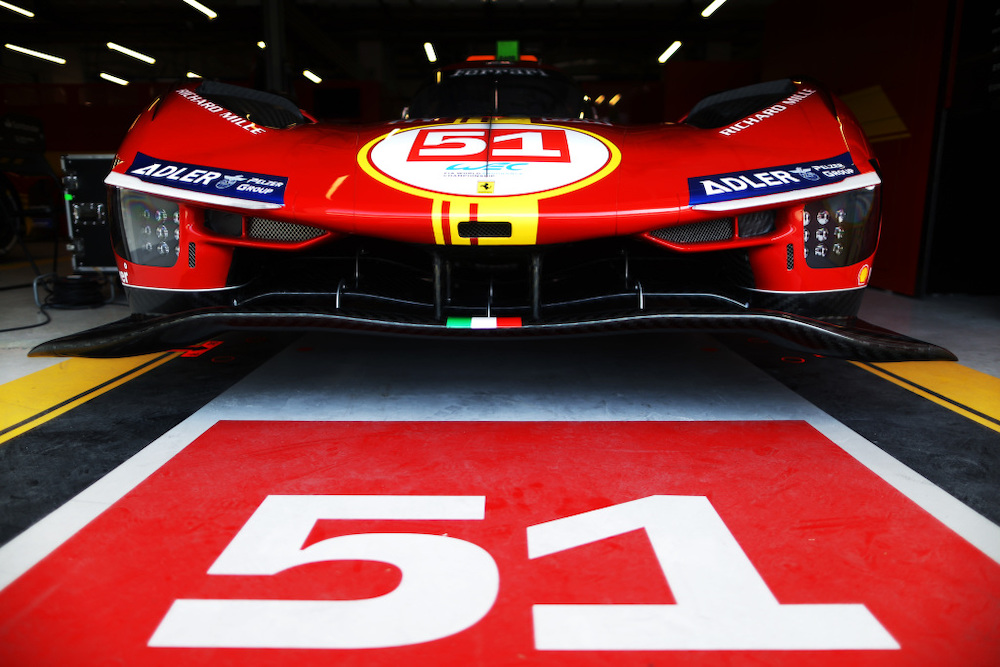
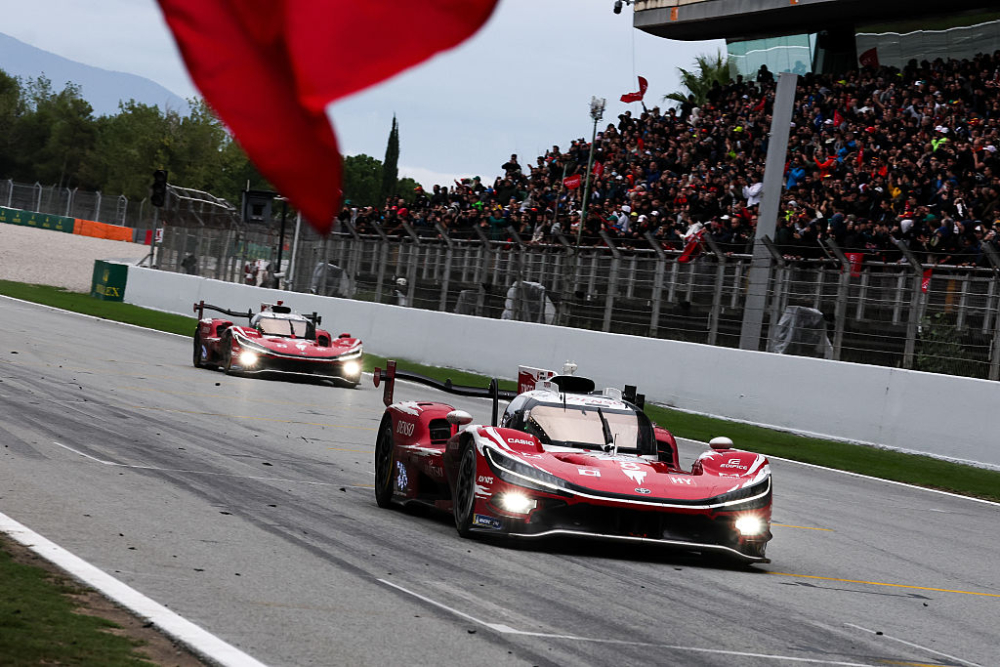
Ferrari returns in 2024 with the same car, and a much stronger understanding of what makes it tick. Motorsport Images
Taking a wait-and-see approach to upgrades, it feels, is a smart move. This is because form of the 499P ebbed and flowed throughout the 2023 season, making it hard to pinpoint specific areas to use its jokers to improve the car for its second year.
“For us our car is ‘OK’,” the head of Ferrari Attivita Sportive GT Antonello Coletta told RACER at the end of last season. “We had a chance to demonstrate in the first part of the season that the car is probably not the best car, but it is not a bad car.”
The team with the most to prove is arguably the third of the big three OEMs racing with LMH-spec prototypes, Peugeot.
2024 looks like a make-or-break year for the French manufacturer in the WEC. While there were flashes of pace and competitiveness in 2023, the first-generation 9X8 simply wasn’t good enough. The team took strides with small improvements throughout the season, notably switching to a new gearshift activation system early in the campaign.
Thankfully, the disappointment attached to the team’s lack of results in year two for the program has only fueled the motivation of everyone involved. The team is set to bring a radically different 9X8 to the grid this year, featuring a heavily revised aero package and a change in tire size. Previously, the 9X8 used 31cm wide tires all around but had to switch to the now-standard 29cm front, 34cm rear tires for the formula.
“Most of the changes we’re making are just to accommodate the tire dimensions,” technical director Olivier Jansonnie explains. “First, we need to move the weight distribution on the car. Our car was designed to run at a very forward weight distribution because of the 31-31 (cm) tires.
“We’ve got to move it back somehow, which means we need to have some lighter parts on the car, move some ballast over to try to move the weight distribution and then obviously retune the aero balance on the car.
“That’s the second biggest part of the package, to try to get an aero balance on the car that matches the new tire dimension. Everything is actually driven by the tire choice we are making now.”
Unfortunately, the 2024 9X8 will not be ready for the meeting in Qatar. Instead, the debut is expected to come at Imola in April, although crucially before the Le Mans 24 Hours. Until then, it may be a case of clinging on and waiting for the cavalry to arrive…
Another manufacturer waiting on significant upgrades, which will likely be introduced later in the season, is Porsche. Its 963, which scored a hugely important overall win at the Rolex 24 At Daytona in January, returns to WEC with two factory Penske entries and high hopes that it can fight up front.
In IMSA, the uptick in form has been far more notable since its global debut, though there were green shoots towards the end of last season. Penske looks to carry that positive momentum into the car’s sophomore campaign, with a suite of upgrades focused on reliability. The team describes the first wave of these, which came in time for the Rolex 24, as "minor."
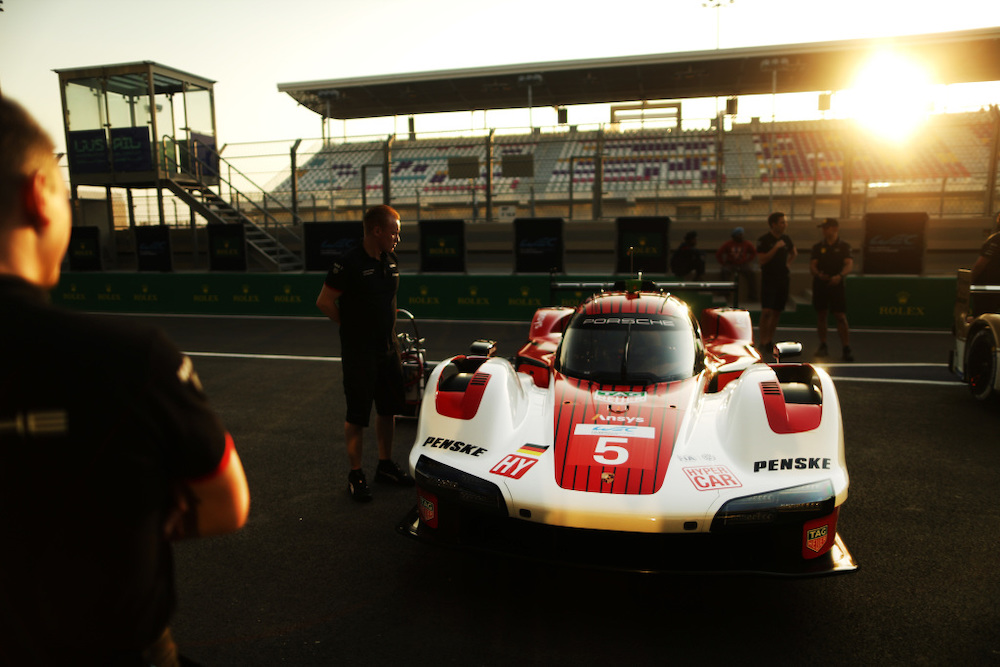
There are upgrades in the pipeline for Porsche's 963. although they're unlikely to be rolled out until later in the season. Motorsport Images
“There are sensors or small things we have changed. They're helping with reliability, obviously, but they're not making the big portion of that step we can see,” Urs Kuratle, head of the LMDh project at Porsche, told RACER before the Rolex 24.
It’s the second update that looks to be the more significant one, with Porsche planning to bring a significant revision to its engine in the form of a new crankshaft. There are two question marks hanging over it: When will it get signed off and when will it debut?
“We have to investigate internally,” Kuratle replied when asked when the update would be coming. “I can't tell you any dates or numbers yet.”
Like in 2023, Porsche’s representation includes entries from customer teams Hertz Team JOTA and Proton Competition. Both are expanding their efforts this year, though Proton will start the season with a single 963 while JOTA has two cars ready for the opener at Qatar.
JOTA’s driver lineup is larger and has a fresh feel. With Yifei Ye now at Ferrari and Antonio Felix da Costa focusing on Formula E, Oliver Rasmussen, Phil Hanson, Jenson Button, Callum Ilott and Norman Nato join, making for an eye-catching sextet with returnee Will Stevens. Operating two cars will be no easy task, but JOTA proved to be operationally sound in 2023 and feedback from the team’s test in Bahrain last month was all positive -- the larger team is operating as a cohesive unit already.
Proton, meanwhile, has a single full-season 963 to run alongside its IMSA GTP commitments. The experience of Christian Ried’s team with the 963 has been up and down thus far. On one hand, there has been clear frustration with the late delivery of its chassis and spare parts; on the other, there have been strong performances, the clear standout being the team’s podium at Petit Le Mans last October.
With a larger 19-car field -- with nine factory teams -- to race against in the FIA WEC, it will be harder to compete at the sharp edge of the field. But Proton is hugely experienced and ambitious; all it lacks is clarity on its second car, which it hopes to run later in the season once it’s delivered from Porsche.
That leaves Cadillac. The GM brand’s 2024 effort looks almost identical to 2023, with a single, unchanged, Ganassi-run V-Series.R set to complete the full season, joined by the two IMSA examples for the Le Mans 24 Hours. While Cadillac explores upgrades for the V-Series.R in time for the 2025 season, it looks to build on its 2023 WEC form, which peaked at Le Mans where it finished on the overall podium.
Perhaps the most significant storyline to follow here comes in its driver selection. Following Richard Westbrook’s departure from Chip Ganassi Racing at the end of 2023, the team is opting to run with just Earl Bamber and Alex Lynn for the full 2024 schedule, with guest third drivers (Sebastien Bourdais and Alex Palou) confirmed for Bahrain and Le Mans.
Like Porsche, the Cadillac top brass will hope that the performance gap between the LMDh and LMH cars in the field closes this year. This will likely be achieved through a combination of experience and a Platform BoP that does a better job of equalizing the all-wheel-drive hybrid-powered LMH cars and the rear-wheel-drive LMDhs, which has become somewhat of a thorny issue.
“There has been a lot of performance found over the last 12 months with both cars (the Porsche and Cadillac),” says Cadillac FIA WEC team manager Stephen Mitas. “There is still a lot to learn, though, with the package we have as it stands. General Motors wants to build on that moving forward. If we take the option to use a joker or re-homologate the vehicle in the future we want to do it in the best possible fashion.”

Stephen Kilbey
UK-based Stephen Kilbey is RACER.com's FIA World Endurance Championship correspondent, and is also Deputy Editor of Dailysportscar.com He has a first-class honours degree in Sports Journalism and is a previous winner of the UK Guild of Motoring Writers Sir William Lyons Award.
Read Stephen Kilbey's articles
Latest News
Comments
Comments are disabled until you accept Social Networking Cookies. Update cookie preferences
If the dialog doesn't appear, ad-blockers are often the cause; try disabling yours or see our Social Features Support.