The RACER Mailbag, July 12
Welcome to the RACER Mailbag. Questions for any of RACER’s writers can be sent to mailbag@racer.com. Due to the high volume of questions received, we can’t guarantee that every letter will be published, but we’ll answer as many as we can. Published questions may be edited for length and clarity. Questions received after 3pm ET each Monday will appear the following week.
Q: Have the IndyCar rules changed regarding grid drops for unapproved engine changes? Seems there have been quite a few failures (especially Hondas) but no grid penalties that I have noticed.
Ed Joras
MARSHALL PRUETT: Not to my knowledge, Ed. Once an entry goes beyond its fourth engine provided in the four-engine lease, the grid penalties begin. Since we’re only nine races in, it would be too early for fifth or sixth engines to be needed, but it isn’t far away.
Q: I realize it’s a very, very big "if"; however, if Alex Palou stays with Ganassi, are we witnessing a changing of guard where Scott Dixon no longer the main championship threat on the team?
Matt, Dallas, TX
MP: Palou’s gone from Ganassi after he drives out of the Laguna Seca paddock on Sunday evening, September 10, so that’s happening. But in the absence of Palou, no, I don’t think Dixon would be unable to deliver another title before he retires. Where Palou’s had the same race engineer and crew chief since he arrived at Ganassi in 2021, Dixon’s on his third race engineer and second crew chief over the same period, and that can’t be ignored. By 2023, the combination of Palou, Julian Robertson, and Ricky Davis is finely tuned and devastating.
Dixon and crew chief Tyler Rees -- new in 2022 -- have formed a powerful duo, and after they torched Team Penske in the Indy 500 Pit Stop Competition, we can say that side of the driver/drew relationship is super strong. With new race engineer Ross Bunnell, there’s tons of potential that’s been shown, but they’re still searching for their first win together. They have the potential to reach title-winning heights and they’re on the clock to get that maiden win and then keep building on it.
Q: I was sitting in Turn 4 at Mid-Ohio and noticed that when USF2000 and USF Pro 2000 came into Turn 4 on the parade lap they slowed way up, coming very close to running into the back of the car in front of them. Why did they slow up so much? I was curious to know if they were testing brakes, or what the reason was.
Lisa Klitz
MP: Since I didn’t see it, it’s hard to say if there was an issue that caused a knock-on effect with one driver slowing unexpectedly and the rest reacted in a panic. If that wasn’t the reason, it’s common for drivers to go hard towards the end of a long straight during the parade lap(s) and brake hard to generate heat from the brakes that radiates into the wheels and tires to build tire pressures and temperature.
Q: An incredible drive by Shane van Gisbergen in Chicago in an unfamiliar car and track he’s never seen before. It was reminiscent of Rob Wickens at St. Pete in his debut. Do you think Chip and "The Captain" took notice?
Dave Surgent
MP: I’m sure NASCAR team-owning Roger Penske did, and Chip loves all forms of racing and likely watched the race as well. But I doubt either of them came away with a plan to hire Shane. The next IndyCar vacancy Roger will have is when Power retires, and unless Andretti covers him off with a long and lucrative extension, I’d bet Kyle Kirkwood will be at the top of his shopping list. Chip’s looking to hire race-ready drivers or sign those who can completely fund the car. The patience to sign and develop SVG into an IndyCar driver, which existed when McLaughlin came over, doesn’t seem to be there these days.
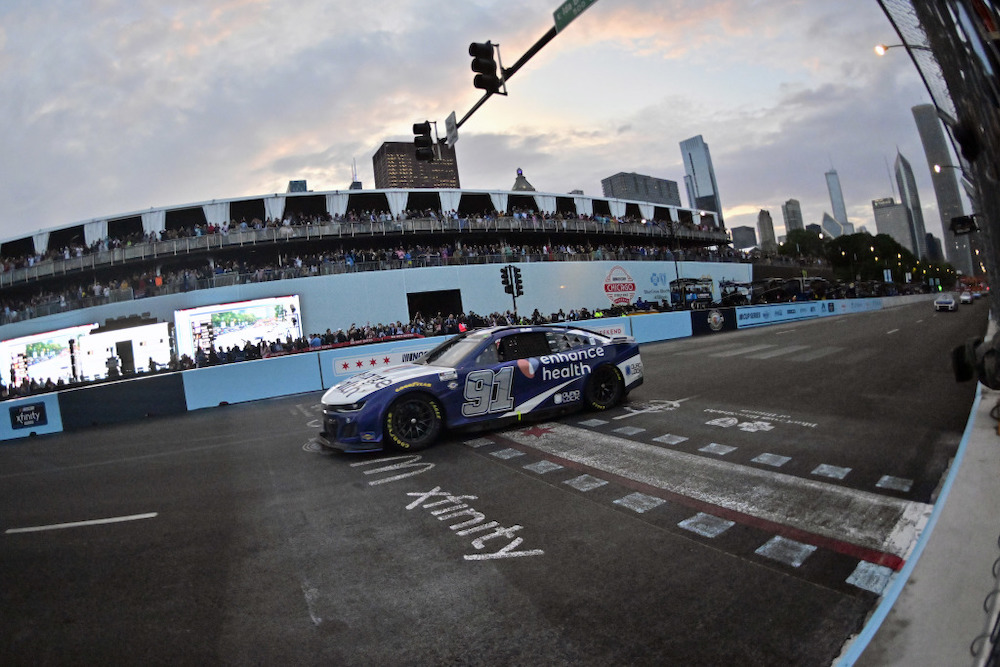
Every team owner in the country took notice when Shane van Gisbergen claimed a shock NASCAR win in Chicago, but whether any of them see him as a Scott McLaughlin-style project is another question. Nigel Kinrade/Motorsport Images
Q: How did the TV broadcast not bring up Michael Andretti's nearly identical crash into China Beach back in 1998? I was there, sitting in the Esses, and it was horrifying.
Brian in Ohio
MP: The broadcast did show Michael's 1998 crash.
Q: Regarding RLL, is this real progress or a false dawn? They have made a step, but will it continue?
Don Hopings, Cathedral City, CA
MP: Well, IndyCar races on five unique types of circuits, so we’d need to go back to Texas or Indy to know if RLL’s terrible speedway showings have improved. They were good at the first two street circuits, but dreadful at the most recent one in Detroit. They were good at Barber and the Indy road course, decent at Road America, and really good at Mid-Ohio, so they have a strong road course package. They haven’t been on a short oval (Iowa) or an intermediate oval (WWTR), so there’s more data required before we can make any claims about where RLL stands across all disciplines.
But, and this is important, Bobby Rahal has been taken a bigger role in fixing RLL’s issues, and there’s a direct connection between Bob lighting fires beneath people and the gradual rise in competitiveness.
Q: First, my condolences to the family of the driver who was killed at Spa, but before we go into making knee-jerk changes to the track, we should look at the circumstances. The race should never have been restarted as the visibility was so poor that following drivers could not see his stopped car. I have also noticed from this incident and from watching other racing videos on YouTube that a lot of drivers are not slowing for yellows. When I raced SCCA club racing, a waved yellow meant slow down; now, drivers are barely lifting as they enter the crash scene.
Maybe we need better training of the drivers and a new flag like a red/yellow on a diagonal that indicates a crash with cars or debris blocking the track and drivers need to be able to stop quickly. Racing is dangerous, but accidents can be prevented. What are your thoughts about this?
Mark B., Floral City, FL
MP: Some corners have a much higher potential -- and history -- of calamity than others, and the Eau Rouge complex (including Raidillon, where this latest accident occurred) has been on that list for decades and decades. All four turns at Indy are on that list. About half of the 156-turn ’Ring would qualify. The potential is there for about half of the 8.5-mile Le Mans circuit. Sections of Road America and Laguna Seca are terrifying to ponder in the event of a stuck throttle or brake failure. Finding a stopped car sitting broadside while flying over a crest at VIR or Road Atlanta is the stuff of nightmares.
Obvious statement -- we should always search for improvements in safety, and at the most dangerous corners, a higher level of vigilance is required. But if we start to neuter the Eau Rouges, I’m not sure the sport holds the same appeal. We do this for many reasons, and one of them involves the thrill of danger. Golf exists. Soccer exists. They’re both extremely popular, and yet, motor racing is also hugely popular because it’s so radically different in ways that are exhilarating and slightly scary. We choose to do this, despite the grave risks that tennis and basketball players never need to contemplate, and I hope we don’t give in to the calls -- which have also been around for decades and decades -- to alter what makes us who we are.
Q: I noticed something unusual during the Mid-Ohio IndyCar race. Whenever the Chevrolet-powered cars crested the hill in Turn 5, they made a popping sound. I found it odd, and even my not-mechanically-inclined wife noticed it as well.
It reminded me of the anti-turbo-lag pops the Indy NXT cars make off-throttle, but it was the first time I had ever noticed it from the big cars, and it was specific to the Chevies. It can even be heard in the onboard video of Pato O'Ward's car released by the series.
Was this a new feature of Chevrolet engine mapping? Or have I just not been observant until now?
Brandon Clarke, Milford, OH
MP: That’s the ECU at work doing just as you mentioned, as it triggers anti-lag to keep the turbo spinning while Pato is off the throttle. Nothing new there for Chevy (or Honda), and the on/off throttle behavior of the engines through ECU/throttle mapping is easily the biggest area of ongoing tuning for both brands.
Q: So between Penske, Andretti, Ganassi, Arrow and Rahal, who is out to make room for Malukas?
Jeff, Colorado
MP: Penske has no vacancies. Andretti has one-two openings, so that’s possible. McLaren has all the quirk it needs with Rossi. Rahal has one seat. And then there’s ECR. I truly have no idea where he’ll end up because he isn’t the first or second choice on the free agent market, which means he’ll likely need to wait and see what some of the aforementioned teams do first and then decide based on the best available options.
Q: Since former Chicago mayor Jane Byrne actually had a signed deal with CART for an IndyCar GP only to see it scuttled, what are the chances that NBC, as the television partner for both IndyCar and NASCAR, sees the ratings figures just achieved and turns Chicago into a NASCAR/IndyCar doubleheader? As a downtown resident, I'd like to see such a downtown disruption more worthwhile!
Mike Vicari, Chicago
MP: I wish NBC had the power to modify events, but this was all NASCAR and the city. And at the moment, IndyCar isn’t big enough or wealthy enough to get in on the Chicago action.
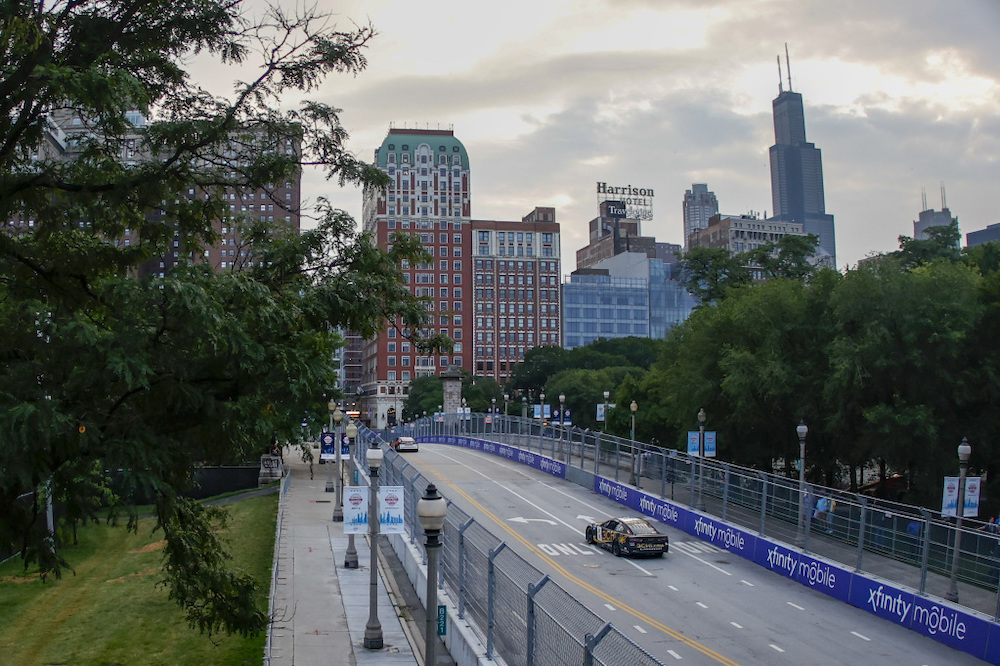
Chicago's probably a closed shop as far as IndyCar is concerned. Motorsport Images
Q: Seems like a lot of people were angry at Benjamin Pedersen after Mid-Ohio, but isn’t a lot of that misdirected? I always thought the driver’s job was to go as fast as he can while the guys on the pit stand are responsible for keeping track of race position and who’s coming up on their driver and whether he should let them through. I didn’t think Pederson was obviously blocking anyone.
Would it help address the driver’s issues if everyone not on the lead lap just had PTP disabled? I realize there’s no clear-cut answer that’s fair in every situation, but at least then drivers would know where they stand.
John
MP: By rule, he did nothing wrong. By etiquette, he made an ass of himself. He needed to put up a fight to prevent Palou from lapping him, because if he didn’t, he’d lose the faith of his team and be viewed as an easy out by the rest of the drivers. But when he kept fighting like his life depended on it after Palou got by and pulled the same routine on second and third and so on, he showed the best drivers in the field that he was a wild card who can’t be trusted to make smart decisions.
There’s a general agreement among IndyCar drivers where they try to avoid screwing each other -- and there are exceptions of course, like if they’re fighting over a win, but if a Rossi or Newgarden is having a bad day, they aren’t going to try and ruin a strong run by a Dixon or Herta. And yet, they’re all capable of being bad citizens and doing exactly what Pedersen did. So when a rookie is more than two miles behind them on track and ready to be lapped over and over again, and chooses to go rogue, he gets booted from the rest of the group that abides by that agreement and opens himself up to being screwed at every opportunity by those he acted out against.
Best thing he can do is apologize to the field and ask for forgiveness. The last thing he and the Foyt team needs is to have a target on his back at Toronto, Iowa and so on.
Q: I just watched the 2013 Freedom 100 finish for the 100th-plus time. Fantastic finish. Why did Indy drop it, and is there a possibility for it to come back? In NASCAR, Cup drivers sometimes run the Xfinity and Truck Series. Any reason why we couldn't see Dixie, Will or somebody run in Indy NXT?
Steve Coe, Vancouver, WA
MP: The Freedom 100 is gone as long as Roger Penske owns the series. He saw some of the big and scary crashes shortly before buying the track and both series, and decided he didn’t want to run the risk of a maiming or fatality with a kid behind the wheel, much less a maiming or fatality two days before the Indy 500.
I can’t think of any value an IndyCar veteran would get from running NXT.
Q: Road America's IndyCar program covered the main event OK, but only included only driver headshots of the NXT racers. No car pictures, no info, no nothing. Not even a referral to a website. The other series were not even mentioned. How are fans to get even the most basic info if not from the program?
Steve Rosaaen, Ellsworth, WI
MP: I didn’t see the event’s program while I was there, so I can’t speak for what was or wasn’t in it, but if I wanted to know such things and the program sucked, I’d use my phone or tablet and visit each series’ website (Dr. Google never fails) and go to the pages for teams and drivers and whatnot and arm myself with whatever knowledge the program didn’t offer. I’d also go and walk around the paddocks and look at the cars and signage and get a good feel for the colors and names of the main players, and maybe also use my phone/tablet to take photos of them to refer to if I wanted a reference to use if I forgot who was in what car.
Q: With all of the technology contained in IndyCar and F1, why hasn't anyone developed a small video screen and placed it on the roll cage to provide side and rearview images for the drivers? The existing mirrors can't give much of a view and the placement would allow drivers to pick up more of a view while still looking forward.
Craig Nelson
MP: I love the assumption that drivers care about or want to know what’s behind or alongside them! Video cameras are the norm in sports cars, so I’d bet an open-wheeler with a wraparound halo or aeroscreen could incorporate a slim, wide screen if each series wanted to seek a vendor/partner for it.
Q: I'm curious to know if VIR or Road Atlanta ever come up in IndyCar scheduling conversations? Both host IMSA races so I would think that logistically they could support an IndyCar race. Either would add a fresh new race in areas where there isn't a huge IndyCar presence at the moment. With VIR's multiple long straights, I feel like it'd be an entertaining race.
Connor, Columbus, OH
MP: They would, and no, the speeds and safety involved with sports cars that fully envelop the drivers, and the speeds and safety measures to handle rocket-fast open-wheel cars with those exposed wheel and roofless machines, mean there’s no way IndyCar races at VIR or Road Atlanta without the tracks undergoing vast changes.
Q: In a response in the July 5 Mailbag, you wrote, "IndyCar needs to snap out of its olden ways and try a few things that aren’t predictable and safe." OK, here's my suggestion:
End the season at Watkins Glen on the first weekend in October.
F1, of course, raced at the Glen in early October and drew large crowds for 20 years. A large portion of those crowds were college students, and there are a lot of colleges within relatively easy reach of the track. Market the race not only to the racing audience but also to the weekend-party college audience. By early October those students are ready for an off-campus blowout.
Your first reaction may be to recall the Watkins Glen "bog" and the infamously unruly activities that took place there. Today, the bog is history. Tracks, including Watkins Glen, have learned how to minimize the potential for such things.
Your second reaction may be to object to a race during the heart of the NFL season. I will grant that the NFL has grown to be even more popular today than it was during the F1 years, but I think that the majority of the racing audience will remain loyal to racing. The Pittsburgh Steelers were arguably the most popular NFL team during the F1 years at Watkins Glen, but the Steelers did not have a negative impact on F1 attendance at the Glen. And the college party crowd was not then and is not now a slave to the NFL schedule.
Your next reaction may be to object to an October date in the Finger Lakes regions. It can be cold and wet. It was often cold and wet during those F1 races, but the crowds were there. It can be cold and wet at NFL games, but the crowds are there. People are remarkably accepting of iffy weather when doing things they want to do -- just look at the crowd that stuck around in Chicago last weekend. And bad weather is not a given at the Glen in October.
Having now addressed some of the possible objections, let's look at the positives: It would be an IndyCar race in the northeast market, a market that is the largest in the country and which has been ignored by IndyCar in recent years. It would be both a "throwback," hearkening back to the F1 years, and at the same time "new," trying something outside of the current IndyCar box. It would extend the IndyCar season into the fall which, frankly, it needs in order to cut down on the dreadfully long off-season.
I am very much an oval-track guy, yet here I am, advocating for a road course. It would be, as you asked, not "predictable and safe." But it could be a success, and it would be lot of fun. It ought to be tried.
Bobster
MP: Thanks for the ideas, Bob.
Q: Been a few years since I've been to Mid-Ohio, and I was glad to see the west side stands were upgraded to new gleaming, shiny steel, compared to the old, rotten wood seats.
The downside: the few times it was sunny, I felt like I was in one of those easy-bake ovens. Can they dull out or paint the stands, or (miracle happens) put a roof over the damn thing? Also, while I'm still in my whiner rant mode, how about a few porta-potties on that side of the track? We had to make the long trek under the tunnel every time.
John Becker, Illinois
MP: Duly noted, John.
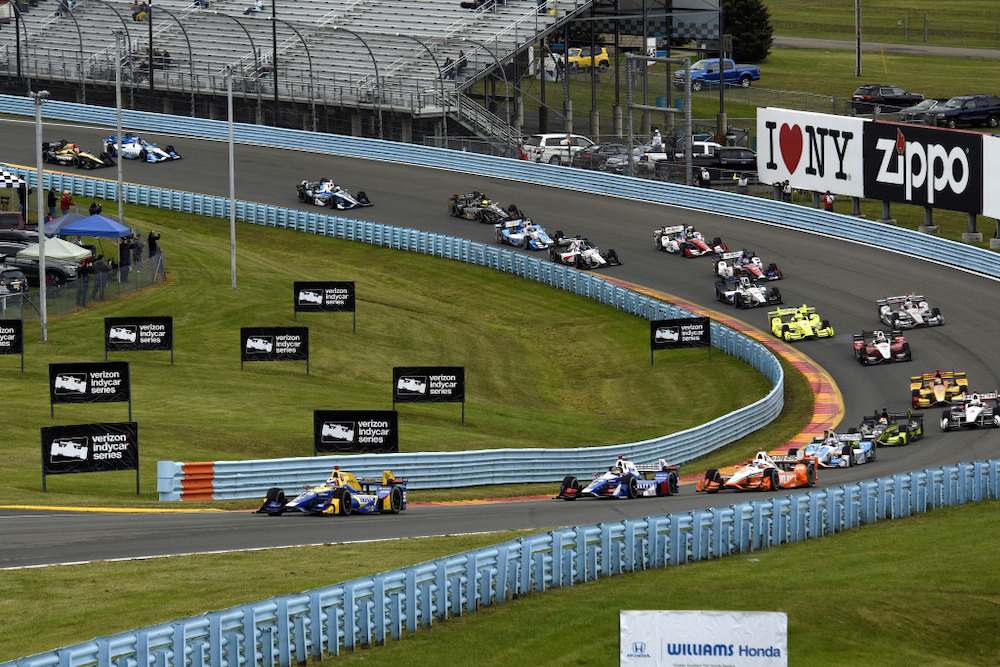
Who's up for ending the IndyCar season at The Glen? Motorsport Images
Q: The IMS authorities have been touting their drive for "diversity." This year’s Indy 500 featured only one woman, and the 2022 race had none. I cannot think of any prominent woman who could get a ride for 2024. Beth Paretta’s project seems to have just dried up and blown away.
Three years with half the population not represented in "The Greatest Spectacle in Racing" seems a pretty poor showing given the stated aim of reflecting diversity. Am I wrong?
Anthony Jenkins, Brockville, Ontario
MP: I hear you, but we’re in a generational phase where, barring Simona De Silvestro or Katherine Legge, there are no turnkey solutions that come to mind at the Speedway. Behind them, there are some extremely promising young women who could join in, but the Calderons and Chadwicks and Pins and Powells have a combined total of zero oval races on their records.
We hope Jamie Chadwick will show well on her oval debut at Iowa and again at WWTR, and while she’s only shown an interest in NASCAR, Hailie Deegan might be the closest to taking on something like the Indy 500 based on her multiple seasons of ARCA and Trucks experience. But if we’re talking about readying the next Simona in American open-wheel, there’s a big void to fill in regards to having ass-kicking women running up front in the USF Championships presented by Cooper Tires or Indy NXT by Firestone.
So, while we don’t have a number of next-generation women racers who are ready to race in the Indy 500, we also have almost nothing being done about it, except for Michael Andretti with Chadwick. IndyCar teams like Carpenter and Ganassi will take boatloads of money to develop any driver who can pay for the opportunity, and so far, all of those drivers have been young men. There are a few young women who come from the same kinds of wealth, but they’ve chosen IMSA as the place they want to race. I can only hope that young women with the financial means start choosing USF/NXT/IndyCar.
Separate from the driving side, we’ve had an explosion of diversity on the team side at Indy, and that makes me happy.
Q: What is the rough budget for an IndyCar team?
John L.
MP: Annual budgets range from about $6-11 million per car. Engine lease is just over $1m. Tire lease isn’t too far behind. Crew costs vary based on team size and quality; a 10-year gearbox veteran costs more than a newcomer. First-year race engineer should be a six-figure person, but some teams are cheaper than others; a title-winning engineer will be over $250K at a proper team. Travel is also a big variable since some teams take good care of their crews and others are booking flights and hotels by using the "Lowest Price First" filter (I’m often surprised when I’m staying at a semi-sketchy hotel and find an IndyCar or IMSA team downstairs in the lobby in the morning…)
Q: Why can an F1 car go a whole race on one tank of fuel and an IndyCar would have to refuel at least twice over the same distance? I know there is some difference in the cars, but they look the same and should have the same size fuel tanks.
Don, Grand Rapids, MI
MP: Same reason an 18-wheeler can go a lot longer before refueling than a Ford F-150: Fuel tank big on one, small on the other.
Q: I notice that the NXT cars have a backfire-type noise on shifting. Is this a turbo thing?
Yoshio
MP: It is. And it will likely sound a little bit different next year because the cars are receiving all-new electronics systems. And by "receive," I mean that teams will be required to pay $40,000 per electronics/ECU system. For the teams with a lot of cars -- bear in mind that some have spare cars that will need outfitting -- it’s a big chunk of change to spend.
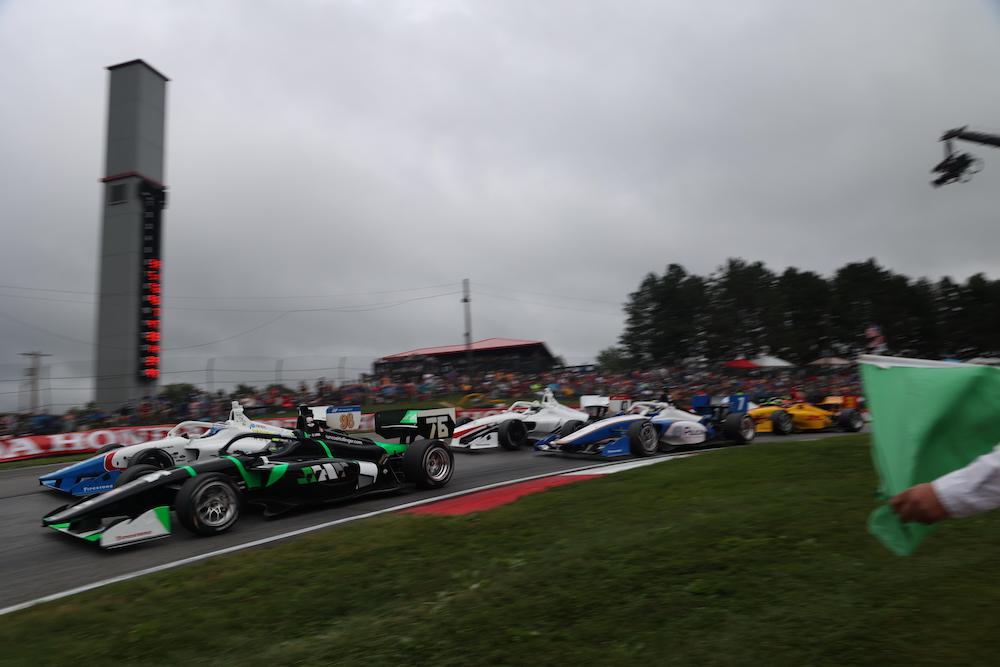
Listen for a different-sounding "bang" from the Indy NXT cars next year. Travis Hinkle/Penske Entertainment
Q: Now that IMSA has dropped LMP3, what will become of those cars? Will they be sold to European LMP3 customers, or will another sanctioning body in the U.S. continue to race them?
I know there was some dodgy driving in the LMP3 class over the past few years (which didn't win many friends in DPI/LMDH and LMP2), but LMP3 and GT4 might pair well together -- especially at races like Detroit or perhaps Chicago.
Should we read anything into Charles Leclerc's visit to the Ferrari paddock at Le Mans? Purely a PR event, or could we see Charles in the 499 sometime in the future?
Finally, which LMDH/Hypercar would you like to see Alex Palou in? With the season he's had in IndyCar (especially his race craft), he would have the pick of the litter if he so chose.
Jonathan and Cleide Morris, Ventura, CA
MP: IMSA’s booting P3 from the top series, but not its feeder series, so I’d guess we’ll see them return to where they came from. But if there’s enough of a surplus, I’ll put money on the SRO America group offering an LMP3 class to diversify its offerings.
Chuck turning at Le Mans was a PR thing. Ferrari’s F1 team needs to get its act together before thinking of making Leclerc’s life more complicated by adding endurance racing in amidst a 24-race F1 season.
Palou in a Cadillac would be amazing to behold. It needs to be driven at 100 percent at all times, and with his ability to do that without making many errors, it’s the car that would reward his skills more than any other.
Q: Around Super Bowl time every year comes the AT&T Pebble Beach Pro Am. Being a no-snow destination, it is the first major golf tournament of the year. The same conditions can be found in Napa, Sonoma and Mendocino Counties north and east of San Francisco. Unlike Laguna Seca, which would be a mud bowl that time of year, Sonoma Raceway is set up to be a viable track during California’s rainy season.
In my opinion Sonoma is really the only possibility Stateside to fill the gap between St. Pete and Texas. The Monterey County Board of Supervisors truly understands that the sanction fee paid for the Monterey Grand Prix comes back to the Monterey Peninsula in tourism dollars. There should be an outreach to at least the Sonoma and Napa County governments explaining that landing the second race of the season would be a good investment. It’s sort of different in that Laguna is a county park and Sonoma is privately held, but it would be worth the effort. Maybe Sonoma could be the AT&T Pro Am of the IndyCar season. We would certainly drive up for that.
Paul Ingram, Carmel Valley, CA
MP: As much as I’d love the track where I grew up return to the IndyCar schedule, we have two things that can’t be ignored. First, there was no crowd for the last visits, and therefore, no profits for the privately-owned venue. Second, asking local government to step in and be the ones to take the loss is a perfect way for the track to lose its good standing with the county.
At Laguna Seca, the big profits from its Monterey Reunion event covers the losses from its IndyCar and IMSA events, so this model isn’t one that would work for SMI at Sonoma.
Q: You mentioned in an article recently that Andretti is taking a different tack next season with driver selection. But, I wonder, will that be enough? For several seasons now, the top talent in that team seem to flounder over time. Herta was recently attractive to F1 teams, but I am sure has lost his market value in the series. Grosjean… I recall when he signed with Andretti, I thought, "I'm not so sure that's the right move." And Rossi signed one too many contracts with Andretti in my opinion. I know I'm just a fan, but I wonder why that team is so attractive to top talent. (I'm sure Herta had other options when he signed.) I would love to see Andretti back on the top step of the podium more often, but I don't see how abandoning the pay driver helps.
Andy Rolfe, Brighton, MI
MP: Andretti’s in the midst of an interesting process with its race strategists that makes me think of the question here, Andy. They have some highly talented strategists, but in some pairings, the chemistry has been off, so they’re trying out some different combos.
The same good/bad chemistry possibilities exist with driver selections, and yes, you can hire big-name drivers, but will that driver create a stronger team through their attitude and contributions to all facets of performance, or create division and tension and make folks miserable? And there are levels here, right? Nigel Mansell was a dark cloud, but he also won and kept winning, so the personality shortcomings were accepted as the high cost of reaching victory lane. But would the same toxic behavior be accepted if he wasn’t winning?
If there’s been a theme in recent years, it’s been personality rifts between at least two Andretti drivers, which isn’t how championships are won, unless we’re talking Senna and Prost in 1988 and ’89, and they aren’t available. Andretti has all the money in the world at his disposal to hire anybody he wants, and I hope his next lineup is one where a lot more time and effort goes into creating the best blend of characters who can win together. Herta and Kirkwood are foundation to build upon, and nobody has accused Marcus Ericsson of being a bad or selfish teammate. Felix Rosenqvist is universally loved. David Malukas is quick and hilarious. Marcus Armstrong is genuinely nice and fast.
So, yes, the team will get better with four paid drivers who have winning pedigrees and want to function as a unit.
Q: Where can I get Sonny Hayes and Jimmy Bly hats?
Steve Coe, Vancouver, WA
MP Hayes is and has always been trash. I’d rather wear a Joe Tanto hat or a Mark Plourde jersey than represent Hayes. As for Bly hats, I might know a guy who had a few made…
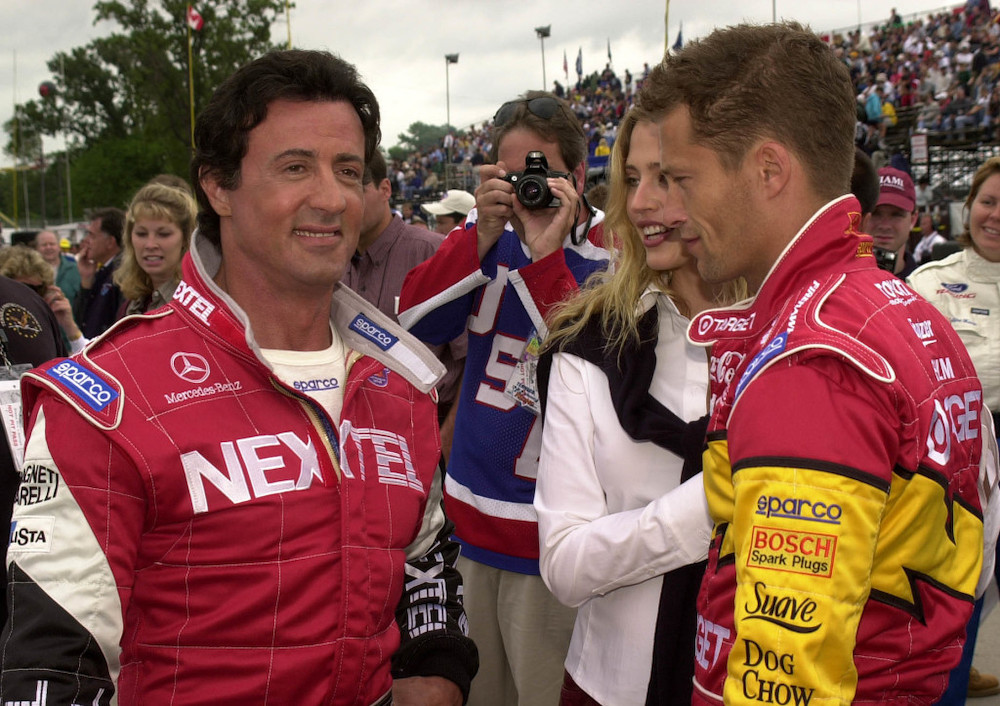
Racing royalty. Michael Levitt/Motorsport Images
Q: Do you know the origin of the ever elusive and legendary "Jack the Bear" that is spoken of in hushed tones in racing? As in, he is "going like Jack the Bear"?
Big Possum, Michigan
MP: Never heard of the reference before today, unfortunately.
Q: I wish to explain the confusion about the Watkins Glen IMSA start. I will admit that I was not able to watch the race, as I was working another race. The many comments that were made concerned why the green flag was displayed at start, when the BMW had gone off at Turn 1. The rule is for split starts, if the first group gets the green flag, the second group must also receive the green flag. Since the off occurred at Turn 1, the corner marshals at Turn 1 are responsible to show a waving or standing yellow flag for the incident. At some races, if the incident is at Turn 1, a backup starter might also show a yellow flag, while the point starter throws the green for the split start. In the event that the starter waves off the first group, the second group would also receive the wave-off.
Frank, Mooresville
MP: Thanks, Frank, but no, there’s nothing that requires a series to make dangerous decisions because the rules say to do so. There’s no "must" here. Beyond whatever’s written, a race director is tasked with ensuring the safety of the drivers, crews and volunteer workers, and as such, they are given extraordinary authority to do whatever is needed to meet that all-important duty. What we saw at Watkins won’t happen again.
Q: While I am sure it will be far more realistic, is it just me or does the new F1 movie plot sound very Joe Tanto-ish? The "Driven" soundtrack is very underrated in my opinion, by the way.
Jeff Smith, State college, PA
MP: It is indeed underrated among worst movie soundtracks, no doubt. Yes, it’s a copy of Driven’s premise, but that’s Hollywood’s thing, isn’t it? Copy, derive, and repeat.
Q: I'll preface my comments by first thanking Penske for picking up the reins and becoming a stabilizing leader in the stewardship of IndyCar at a time when so many question marks existed. Under his management, the series continues to offer the best, most diversified, and most entertaining racing on the planet. Still, it's a series that most people aren't aware of, are passive to, or don't care that it exists.
In spite of my appreciation of Penske in the short term, I cannot tell you how increasingly disappointed I have become with the overall management of IndyCar. Yes, the racing is really enjoyable, and has been for several years. But where is any sign of those game-changing "needle-movers" that we all thought were imminent with his takeover? Granted, there are some valid reasons for the embarrassing punchlines of the third engine manufacturer, the new chassis and the hybrid engine. Still, one would have thought we would at least have a handle (or timeline or plan) on one or more of those, especially with Mr. Penske's business and racing acumen. Tough issues, granted. So let's give him mulligans on those, even if arguably not so warranted.
Where my biggest disappointment remains and one that is more controllable is in the lack of marketing and promotion and innovation of the series itself. Someone needs to inform Penske Entertainment that they are indeed in competition with other racing series, primarily F1 and NASCAR, but others too. I guarantee low single-digit percentage growth (at times) is not a long-term needle-mover for the series. We have the same 17-race schedule at 14 venues with significant gaps between races and nothing new on the horizon (unless you count Miles's pet project, non-points, who cares Argentina joke year after year.) Those weekend gaps? Out of sight, out of mind, while F1 and NASCAR keep racing.
But it goes way beyond just the schedule. IndyCar is, was and always has been the worst marketer for decades in promoting its highly entertaining product, and still is under Penske. No change.
I was actually intrigued by the RACER article reporting on NASCAR's "let's try some stuff" era to see what works and what fans might like. At least they (and F1) are trying some new things. Can't imagine IndyCar doing anything outside of the box. Not when they can make a single-day visit to the old Milwaukee Fairgrounds track and consider it (well, maybe) for a venue a few years down the road. Milwaukee and its history would be welcomed, but a needle-mover? Much more needed.
So after my rant, here's my question. Can you please tell us if you are aware of any new plans or innovative ideas forthcoming that would help put IndyCar back to some degree of relevance again? If not, I guess we'll have to learn to live with those newly-painted restrooms at IMS.
Jim, Indy
MP: Well, we have the Nashville GP, which came together during Penske’s first year of series ownership, and we’ve had Penske work with co-promoters to bring Iowa back and Penske moved his Detroit race from Belle Ilse back to downtown, so it wouldn’t be fair or accurate to say they’ve done nothing big.
But, of the three, only Nashville is truly new to the market. I’m not aware of a game-changing domestic event in the works that will draw a huge new crowd like Miami F1 or Chicago Cup.
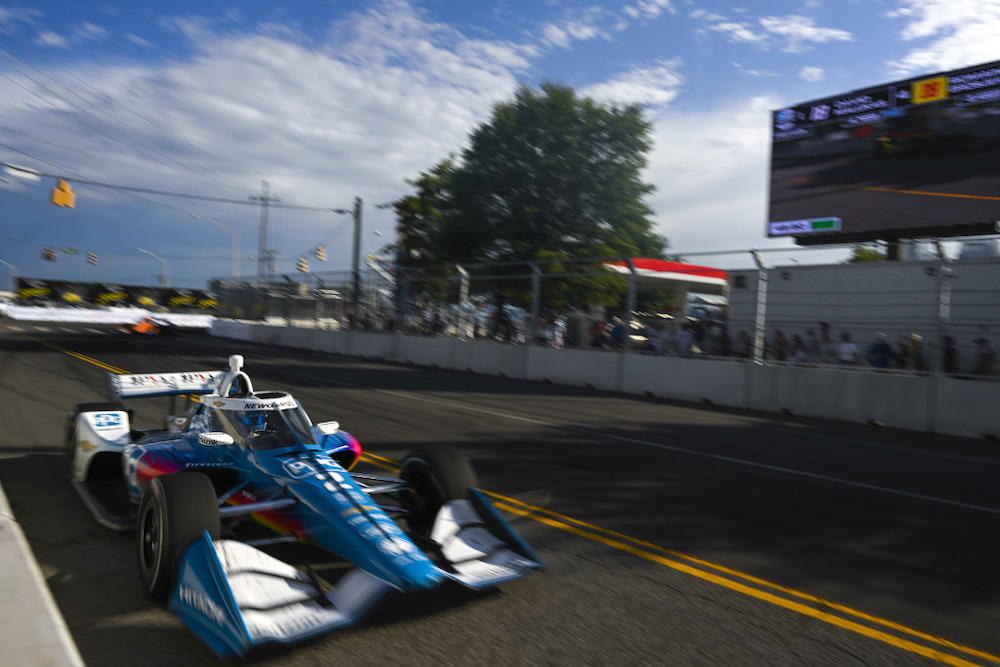
IndyCar raced on the streets of Nashville for the first time under Penske's watch. Gavin Baker/Motorsport Images
Q: I was encouraged to read that the new investment into Andretti Global will allow the IndyCar team to fund four paid drivers next year. I have felt for a long time that hiring ride-buyers somewhat diluted the series.
Why are not all or the majority of the drivers paid, instead of half having to bring money to pay for their ride? For example, Scott Dixon has had PNC Bank on his car for many years. Is PNC paying his salary, or is Ganassi? Also, I’m guessing that Miller’s Mt. Rushmore of Foyt, Andretti, Gurney and Parnelli didn’t have to bring money to drive in IndyCar, USAC, F1, Trans Am, Can Am, or endurance racing. What was the big change in IndyCar that led to ride-buying? Was it the split then the loss of tobacco, beer, and sponsors like Kmart that left the teams without enough money to pay drivers? Here’s to hoping other teams can make the financial jump and do what Andretti Autosport did.
Rick Schneider, Charlotte
MP: The why is simple: A number of IndyCar teams are owned by folks who make a living by selling the commodity of being an IndyCar driver to those who can afford it and meet the series’ requirements to receive a license. That’s how they make money and most of them do not own teams that are good enough to attract sponsorship, or those teams lack the people or skills to go out and sign major sponsors.
That Mt. Rushmore came into the sport before pay drivers were much of a thing, but who knows if they’d all get hired as rookies in today’s market? Not when reigning Indy Lights champion Linus Lundqvist is rideless because he couldn’t pay for any of the available seats and held no value to them without the ability to bring $6 million or more.
The arrival of what we consider pay drivers in IndyCar took off at the end of the 1970s and in the early 1980s, and has never stopped. The advent of making and selling off-the-shelf customer cars that anyone could buy from Lola and March, and others afterwards, took the routine into overdrive.
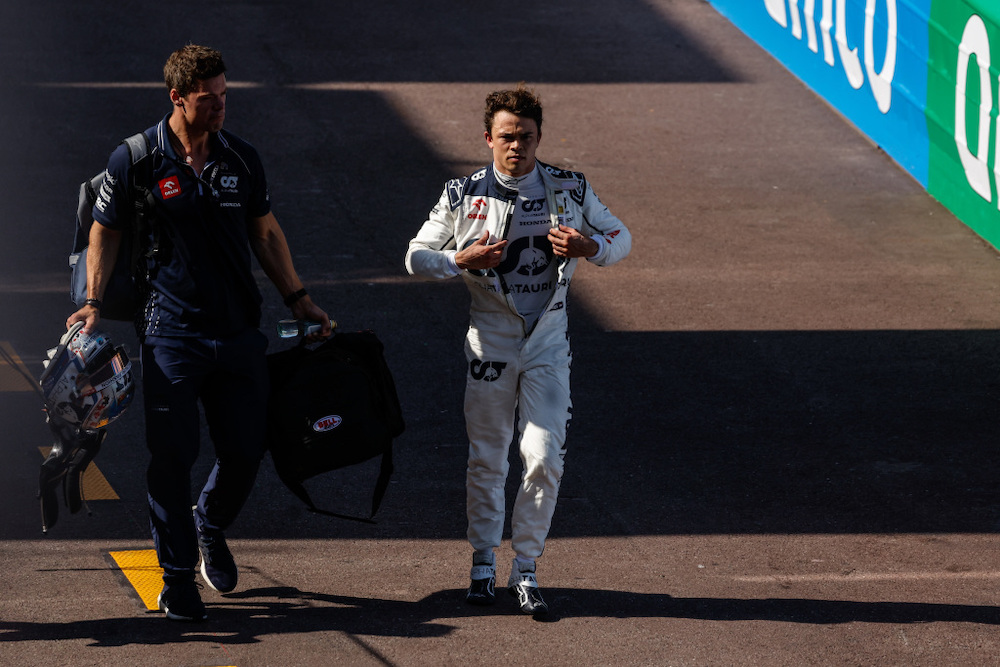
Q: Do you think that Nyck de Vries will survive, or will he be another Dr. Marko casualty?
I’ve seen various thoughts about what to do about track limits, but there doesn’t appear to be a clear solution bubbling to the surface. Your thoughts? And yes, it doesn’t make the sport look good with all of the reshuffling of the finishing order after the fact.
Don Hopings, Cathedral City, CA
CHRIS MEDLAND: I reckon he'll be lucky to still be in the car in Hungary... No, to be completely honest with everyone, this is what I wrote out initially when I received this question before de Vries was dropped:
I think he’ll get the season but that will likely be it, just based on the way things have gone so far. I know that internally de Vries has really impressed AlphaTauri with his feedback and the car hasn’t been competitive which isn’t his fault, but Red Bull wasn’t expecting too much from Yuki Tsunoda this year and if de Vries doesn't start beating him I think he only gets one season.
What might change that is if Red Bull drops Tsunoda (it doesn’t really need to keep Honda happy any longer) and brings in Ricciardo next year. Then if it doesn’t deem any of its youngsters to be ready for F1, it could be that de Vries gets a second season.
I could see Ricciardo going into the AlphaTauri, but not this soon, and Tuesday’s news came out of the blue (even though we’ve seen it many times from Marko).
As for track limits, I still stand by the harsh approach of “the line is the track edge, stay within it or get a penalty." Austria wasn’t a good look, but in a strange way the problem is only having such a bad situation once per year. By next season it’s not so fresh in the mind, whereas this past weekend at Silverstone nobody got a penalty despite three or four drivers being one infringement away from one at Stowe. Drivers have shown it can be done if it has to be, but it’s not the ideal solution.
In an ideal world, let’s have gravel on every exit as a proper deterrent that will hand out a penalty there and then for any errors.
Spoiler alert... Glenn Dunbar/Motorsport Images
Q: The subject: stacked pit stops, and the question: why?
Many times, I see a car sitting in pit lane, waiting for their teammates to have their car serviced before taking their turn in the same pit box. Precious seconds are lost. Why don’t they just use their own pit crew and boxes? In Canada, Lando Norris deliberately slowed the pace car laps so that Oscar Piastri could get in and out without affecting Lando’s stop, and Lando got an unsportsmanlike driving penalty of five seconds. It can’t be to save on equipment and crew members, Ferrari does this often, and they have no money problems. Is this a necessity for the cost cap rules?
Paul Sturmey, Carleton Place, Ontario, Canada
CM: It’s nothing to do with the cost cap, Paul, it’s just that there’s only one pit box per team, and the pit crew is made up of personnel from both cars. Each team has two garages -- one per car -- and you’re right that they have people who specifically work on that car as mechanics and engineers, but when it comes to pit stops it’s a mix of the entire team, so that’s why you see the cars being serviced by the same group both times when they stack.
The pit box itself covers pretty much the entire space across the front of the two garages, because you obviously need the room to get in and out of each pit box as well. So there’s not actually a separate box for each car, just one per team, and both cars need to use the same space.
Q: The solution to track limits is electronic proximity sensors on the car and on the track that indicate immediately and accurately when the car has gone over the white line and off the track. IndyCar does this in the Corkscrew at WeatherTech Raceway Laguna Seca. A light or display in the cockpit can alert the driver when they have transgressed, along with a tone in their earpiece. Immediate feedback to the drivers will allow them to learn exactly where the limit is and how to avoid it.
Bruce
CM: I don’t think this is a bad idea at all, Bruce, but the one downside is those sensors can’t tell you why a car was out there. The FIA did do that at certain corners in the past (I actually think at the Red Bull Ring if I remember correctly) but if two cars are fighting through there and one is pushed off, it doesn’t count as one of the infringements that could lead to a penalty. That means you still need to check every alert, which is what took so long in Austria.
Where you’re spot on is the drivers learning exactly where the limit is, because many mentioned the lack of visibility due to the current wheels and wheel covers, so they need to feel where the car is somehow. In that sense I actually think a smaller exit curb could help in Austria too, because they will feel when the left wheels have gone totally across it, and then will know, if they feel the right wheels on the curb, they’ve gone too far. But I have no scientific evidence into how well that would work!
Q: I saw your opinion article on Austrian track limits. It almost became an issue at Silverstone again. My main question is, why does it matter? I don't see it as a safety issue at either the Red Bull Ring or Silverstone. I side with the tracks on this with regard to having to cater to different cars/bikes to make the track viable. If it is not a safety issue, then just get on with it and let the drivers drive. They are low in cockpits that really can't see the white lines, especially if they are fighting with someone.
It just seems like we’re making an issue out of something that should not be an issue. Penalizing everyone after the fact in Austria was just bush league. If it were a safety issue, then maybe I’d see the point. But I’m not seeing it that way now.
Jeff Smith, State College, PA
CM: I know what you’re getting at Jeff but you’ve got to extrapolate it a bit more. If you say no track limits on those corners, then drivers will work out the quickest way through the corner and that could be miles wide and then ducking back just before grass starts that could launch the car. In Austria’s final corner the wall has to come back in towards the track as well before the main grandstand, so if you got it wrong there or had an issue, an accident could be catastrophic.
There’s a balance to be had and if they all just took the lines they did at that race last time (and at Silverstone at Stowe like you mention) then it wouldn’t be a big deal at all, but it would be far quicker to carry way more speed and run a lot wider, and then the track stops conforming to FIA safety standards as that’s not what the barriers and run-offs are designed for.
Q: Do you know who are the significant backers/investors for Andretti’s F1 bid? As an avid F1 news reader, I don’t recall a name or names being dropped since their initial announcement.
I’m definitely in the minority (especially as an American) but I’ve always had little to no faith in his bid succeeding. My primary source of doubt was where Andretti was getting his investment from. I’m no businessman but the fact Andretti’s primary business is running a motorsports organization (unlike, say, Penske, who owns various other non-motorsports companies), I don’t believe he can make enough profit himself to bankroll an F1 bid, thus the need for outside help, and thus the need to drop an investor’s name or two in media circles to relieve some of the doubts in the paddock. The skepticism doesn’t surprise me at all when it sounds like he barely has enough to put his foot through the door, let alone add value to the sport. I don’t know how rich the current teams need to be to not care about losing X million dollars per year in prize money.
Andrew
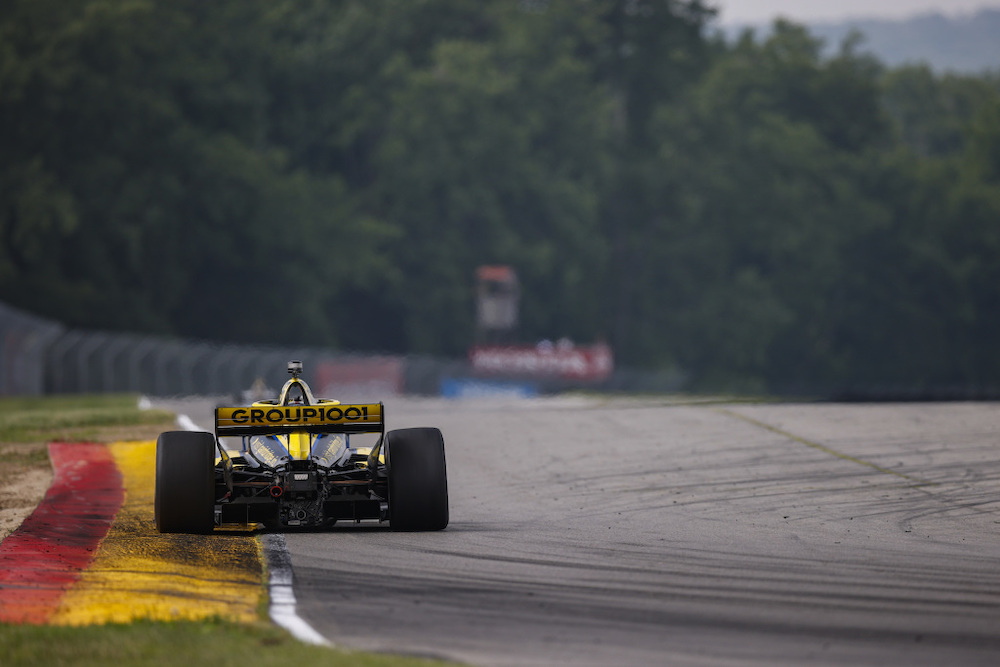
CM: The main one that is known is Gainbridge, which is part of Group 1001. They were already backers of the team through Colton Herta in IndyCar, and it was revealed earlier this year that Daniel Towriss (the Group 1001 CEO and president) is now part of the Andretti Autosport ownership group.
But don’t discount the clout of General Motors, too. This is very much a collaboration given GM’s huge involvement in racing already and the resources they have for that. It’s true you might not have heard much recently though, because Andretti has heeded the advice of F1 and stopped talking publicly about its entry efforts.
I had it explained to me this week at Silverstone that it would take up to nine years for a mid-to-lower midfield team in F1 to start losing money after a new team came in, thanks to the $20 million each team would receive as an anti-dilution fee from that new team (that’s the $200m figure that gets referenced). Being given that money as a lump sum up front easily covers any financial impact based on the prize money for a number of seasons.
As the rules currently state new teams can enter, the bigger return for the existing teams is if the sport is totally closed off as a 10-franchise setup, and then they will all instantly become more valuable. I want to see new teams added but you can’t blame the current 10 for looking out for themselves -- they’ve got businesses to run.
Group 1001 looms large on Herta'a IndyCar, and it's a player in Andretti's F1 plans, too. Jake Galstad/Motorsport Images
Q: Masterful job by van Gisbergen! Just amazing. Has anyone expressed interest in bringing him back? Does he have any predisposition against ovals?
Don Hopings, Cathedral City, CA
KELLY CRANDALL: There haven’t been any rumblings about a team other than Trackhouse Racing that I’ve heard. The night that van Gisbergen won in Chicago, Justin Marks reiterated he’s being methodical about how the No. 91 car competes because of the toll it takes on the rest of the company to field a third car without it taking away from the efforts of Ross Chastain and Daniel Suarez. But then Marks said, “I’m pretty confident that it’s Shane’s seat right now.” So, time will tell if the resources are there for Marks to make the team a full-time entry. As for van Gisbergen competing on ovals, he has stated his interest in coming to NASCAR when his time with Supercars is done, but he knows it’ll be a tall task as oval races “would be a completely different world.” But he would “love to try it.”
THE FINAL WORD
From Robin Miller's Mailbag, July 6, 2014
Q: I say we need at least one oval prior to Indy and go deeper into the year with scheduling. Run Saturdays with a Sunday back-up. (Saying this because I think more people watch pro football than college football). Also, pay attention to what the individual races are up against regarding other events in the same area at the same time. I know a person who doesn’t like road or street courses because she says she just sees the cars go by -- gone, then come again -- and only watches ovals. Bring "retired" race cars ahead of a race in malls or grocery stores with former or current drivers. Let people have a Q&A session, pass out hats and cater to kids. Wine and dine local sports media guys/gals with some drivers in attendance.
Dan Gallion, Ft. Worth, TX
ROBIN MILLER: I remember Johnny Rutherford and Chuck Rodee coming to slot car Indy 500 one year at Southern Plaza and they probably made more fans in two hours at that shopping mall than can be imagined. I’d bring back something like the Champion Spark Plug High School Safety Team (Indy drivers speaking to schools during the off-season). And I’ve never met a sportswriter who’d would turn down a free meal with a driver. It’s promotion and it’s all been done before, but it’s not being done anymore. At least not enough.
Presented by:
Marshall Pruett
The 2026 season marks Marshall Pruett's 40th year working in the sport. In his role today for RACER, Pruett covers open-wheel and sports car racing as a writer, reporter, photographer, and filmmaker. In his previous career, he served as a mechanic, engineer, and team manager in a variety of series, including IndyCar, IMSA, and World Challenge.
Read Marshall Pruett's articles
Latest News
Comments
Comments are disabled until you accept Social Networking Cookies. Update cookie preferences
If the dialog doesn't appear, ad-blockers are often the cause; try disabling yours or see our Social Features Support.