The RACER Mailbag, March 22
Welcome to the RACER Mailbag. Questions for any of RACER’s writers can be sent to mailbag@racer.com. Due to the high volume of questions received, we can’t guarantee that every letter will be published, but we’ll answer as many as we can. Published questions may be edited for length and clarity. Questions received after 3pm ET each Monday will appear the following week.
Q: I had a few questions about some of the IndyCar driver/team pairings for this season. First, why did McLaren move Rosenqvist to the 6 and give Rossi the 7? I saw in your McLaren 2023 team preview article that Rosenqvist’s team actually is mostly the same from last year with the exception of Craig Hampton leaving, but I still don’t know why this would necessarily result in a number switch. Second, I was also wondering if it was a personal decision by Marcus Armstrong decision to not run the ovals or if it was a Chip Ganassi decision, and if even Armstrong was OK about doing the full season why they wouldn’t just enter Sato in a fifth part-time car for the ovals.
Josh, Havertown, PA
MARSHALL PRUETT: I think it would be fair to say that Rossi is a long-term solution for the team and Felix is not, so if I were in charge of Arrow McLaren, I’d make the same call and stack team veterans on Rossi’s car. I’ve also heard having Hampson was a condition of joining the team. Both Marcus and Takuma are paying to drive the No. 11 car through their sponsors, and at least for Year 1, Armstrong’s budget was not enough to cover the entire season. I hope he’ll be able to become a full-time player in 2024.
Q: Marshall, are you going to interview the drivers of the Meyer Shank winners of the 24-hour at Daytona? Just would like to know their thoughts.
Barney, Reno, NV
MP: Had lots and lots of conversations with people at the team, and none of those discussions were on the record as that was their preference. I’m confident Mike Shank and I will do a story or video or something when the time is right, but for them, that time isn’t now.
Q: The last two mailbags have had letters about IndyCar's point system, which compels me to put my two cents in. Several years ago I wrote to Robin Miller about this. Robin had said many times that he didn't like the system either. So I invented a system that took into account laps led and grid positions but was way too complicated. The system needs to be simple to understand. The current system awards points down to 33rd position. This is fine. I don't have a problem with everyone getting points but the points given do not reward winners and fast drivers enough for being the highlight of the show. 25th down to 33rd all award 5 points. A driver could win the first race of the season and then be injured by an accident and knocked out for the rest of the season. Another driver could finish last at every race and end the season with more points than the winner of the first race. This is just plain silly!
In my mind the best point system ever used in racing was the system used in F1 during the 1970s and ’80s. 10-6-4-3-2-1 for 1st through 6th. If you want to award points for more positions, it is easy to do with this system. Increase the points by awarding 100-60-40-30-20-10 for 1st to 6th and then award points down to 15th with 9-8-7-6-5-4-3-2-1 for 7th to 15th. Based on this system Will Power would not have been champion last year. It would have ended with Newgarden as champion followed by McLaughlin and then Power, 648-568-567.
The current system awards one point for winning the pole, one point for being the fastest driver and 5 points for being an also-ran during the race is just plain silly. The current system awards one point for leading a lap and two points for leading the most laps. This should only apply to green-flag laps. A driver could dominate a race and lead the race almost from start to finish and get three points. While a backmarker could get one lead lap point during a yellow flag during the race winner's pit stop and get one point. This is silly.
The top 15 system I've described could be amended a bit by giving the pole winner 10 points. You could also award grid points down to 6th using that old F1 system. Or award nothing for grid points. Adding laps led points would be a bit more complicated but something equitable could be figured out if it is felt that lead lap points should be awarded.
If we go back over the years and examine how this top 15 point system would have affected previous years, for many years it would not have changed things. Going back to 2008 when the IRL and Champ Car merged, and looking at each year, 10 times the champion would have been the same but five times we would have had a different champion. Interestingly, Will Power would have been champion in 2010 and 2011 but as mentioned earlier would not have been champion last year. The other different champions would have been Ryan Briscoe in 2009 and Graham Rahal in 2015.
These results do not include grid or laps led points. These changes in championship winners are only concerning results that have already taken place. In actual fact, the awarded champion would have done things differently and with this points system may have still been champion. The important message here is that the points system has to reward the drivers and teams that try to dominate.
Doug Mayer
MP: Thanks, Doug. IndyCar’s points system is swiftly becoming the Mailbag’s new weekly LED panel debate.
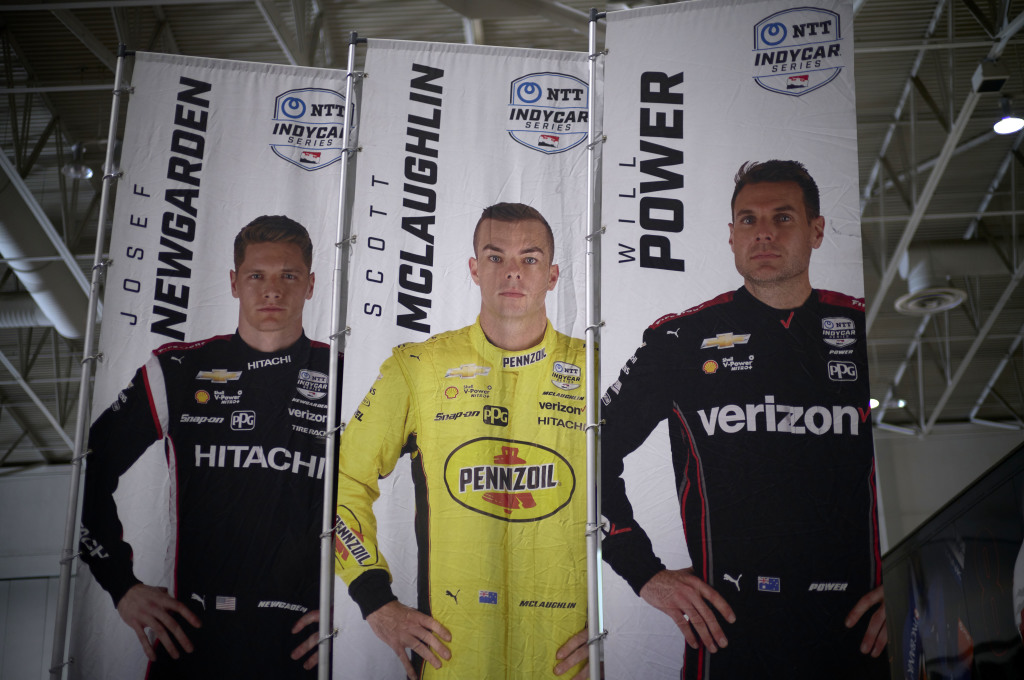
One team, three winners, but only one can be the champ...so let's keep scrambling the points system to get the results we want. Michael Levitt/Motorsport Images
Q: Have the recent rain and storms affected any of the repaving of the Laguna Seca road course? Will it be ready for the IMSA race come May?
Mike Hickman, Beech Grove, IN
MP: Rain has certainly complicated A&D Narigi’s renovation schedule. Last update I got a few days ago is the adjusted plan involves paving after IMSA’s visit.
Q: Updates on Alex Zanardi are few and far between. Are you able to update us on how Alex is recuperating and his current condition? Thank you.
Bruce, Western Massachusetts
MP: Yes, they are. Am I able? Yes. Am I going to defy his wife’s years-long strategy of controlling all aspects of his condition? No.
Q: Has Sage Karam found a drive for the 500 yet? His neighbor Marco Andretti has a car in his garage; will Andretti be using it this year? How much would it cost to put Sage in it, if Marco is too busy defending his SRX championship in May?
Shawn, MD
MP: He has not. Sage texted me last week inquiring about what’s out there and I pointed him in one direction that’s remote, but would be the best for him if it comes together.
Q: Rolex should make some tire pressure gauges in the image of their watches, and engrave them for the MSR team...and they surely should return the watches. They should have to HAND THEM to the second-place team.
Bill Bailey
MP: Auction them off and do something to help others with the proceeds. It would take big balls for anyone to wear those in public.
This guy who made his own MSR shirt was all kinds of awesome at Sebring.
https://twitter.com/marshallpruett/status/1636756122089472001?s=20
Q: I noticed that the green light was still on as cars continued to crash in the first wreck at St. Petersburg. Any reason the yellow light wasn't used to alert the cars before they got into the wreck around the blind corner?
AFR, Texas
MP: Our friend Kyle Novak, IndyCar’s race director, provided a deep dive on what took place for us: “What AFR saw is the trailing green at marshal Station 3A, meaning the preceding station (3) has a local yellow condition. In the EM system, anytime a local yellow (waving or standing) is activated by the marshals, the EM system automatically illuminates the next panel as green for 5 seconds to allow all cars that have seen the local yellow to see a green condition at the next station meaning the track is clear. Of course, if there is an incident at the next station, the marshal can override the trailing green with another flag condition.
“At the opening lap incident at St. Petersburg, when the marshal at station 3 activated the waving yellow condition for the incident, the EM system automatically produces a green at 3A, and a standing yellow at Station 2. It’s a great feature of the system."
Taking the situation further, when Race Control activated the FCY condition, the FCY overrides the green condition on the trailing panel, while the area of the incident still carries the local waving yellow on its panel to still forewarn of the incident ahead until the track is again clear.”
Q: I agree with Bernie of West Milford, N.J. When IndyCar broadcasts are only presented on Peacock, (like the qualifying, practices, etc.) the sound mix is terrible. (This is not a problem when watching the race via NBC.) The sound of the people speaking is almost completely overshadowed by the sounds of the cars on the racetrack! This is a recurring problem from last year also, not just at one track, and is very frustrating in trying to hear what is being said. The sound mix, or work of sound technicians, is poorly addressed. Is this only a problem on ATT/Apple technology? I hope this problem will be addressed and solved.
PJ, Indiana
MP: Copy, 10-4, and Roger.
Q: During my local broadcast of the St. Petersburg Indy Grand Prix, of all the onboard camera shots shown, I counted only three times where the live telemetry data was displayed on screen. I didn’t count how many times it occurred during the Bahrain F1 Grand Prix, which I watched earlier that day, but I’m pretty sure it was much more than that (although the only data shown here is the instant speed).
Also, it's been a couple of years since IndyCar started posting onboard pole lap videos on their social media, which is really cool. But there again without the telemetry data, unfortunately. Of course, having an HUD with the live speed along with the throttle and brake inputs doesn’t change a lot to your experience as a spectator. However, if you’re a tech fan, an occasional sim racer, or simply into race car driving, this is definitely an interesting feature to have a look at.
Seeing when these drivers hit the brake pedal and how slow they release it, at which speed they reach a corner apex, when and how fast they apply the throttle on the exit; this is the kind of thing that gives you a closer idea of how these athletes do what they do. And, as far as I'm concerned, it is just some fascinating stuff. Besides, this isn’t like telemetry looks to be a classified piece of information. Any person with a mobile phone can download the F1 TV Pro App, subscribe, and watch a live feed with both the telemetry and an onboard camera footage showing what their favorite driver is doing in the car.
Same goes with the IndyCar official app, which is 100% free (Regardless of the fact that in this case, the telemetry feed is not only very jerky, but also about 20 seconds ahead of what the onboard camera is showing, which makes it pointless...). Hell, even you, Marshall, were able to get your hands on David Malukas’s data during the pre-season testing at The Thermal Club (I'm talking about the video you posted on your YouTube channel). So, why is it that in F1 (a series where every team is observing the next one while being themselves extremely careful with that to reveal publicly) we get to know more about what the drivers are doing in the cockpit than in IndyCar (a series where all the cars are identical except for the engine and the dampers).
Who decides whether or not to show the telemetry data on screen during a given sequence (both in F1 and IndyCar, but especially during an onboard camera shot in the latter)? And would it be possible for IndyCar to add the telemetry data on the future pole lap videos they post?
Xavier
MP: It would be possible, yes. Hopefully they read your question and decide to act.
Q: The ending of the Sebring 12 Hours was exciting, of course. But whenever I watch an IMSA endurance race, I can’t help but wonder what the point is of everything besides the last hour. Inevitably, due to IMSA’s yellow flag rules, no matter who is leading and how big the gap is ultimately it won’t matter because some random GTD or LMP3 car is going to end up in the wall and they’ll reset the field. I understand the point about making for an exciting ending and avoiding one team riding off into the distance, but it essentially ends up making the first 23 hours completely meaningless for a 24-hour race. Just keep your car out of trouble and make sure you have a good last pit stop/restart.
I love IMSA’s sprint races because teams aren’t just biding their time until the end. They’re going flat out from the green because they can’t necessarily count on a yellow to bail them out. But the endurance races just feel like a slog. WEC isn’t perfect either, but at least you need to pay attention from the get go because every minute matters.
I just wish IMSA would get away from this American (i.e. NASCAR) mindset that we need to bunch the field up every time someone loses a mirror (and don’t get me started on the absurd amount of time it takes to go back to green). It makes the whole concept of an endurance race essentially meaningless. Curious to hear your thoughts.
John, Cincinnati, OH
MP: We were just a few minutes shy of having four hours -- 33 percent -- of the 12-hour race run under caution, John, and yeah, if that was the Rolex 24, people would be rightfully outraged at losing eight hours behind the pace car.
I can’t blame it all on the LMP3 class, but I won’t mind seeing those cars getting the WeatherTech Championship axe next season (that’s what I expect to happen, at least), and from there, we saw all the GTP cars, which have a lot less downforce and a lot more weight struggling in the heat on worn tires, so some of the best drivers in the field were also guilty of contributing to the daylong mess.
The topic is raised in the final question, so I’ll save answering it here, but yes, there must be a better way to handle debris and seemingly minor on-track issues than firing the pace car out to slow the field every damn time…
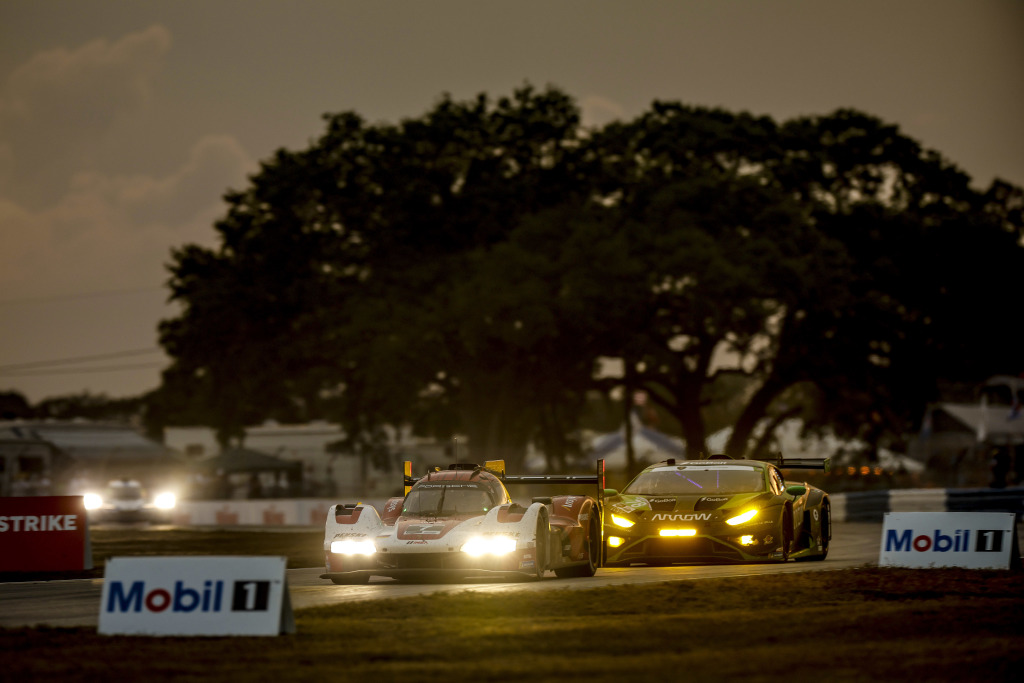
Putting different car classes together at night with wins on the line is combustible mixture already before throwing a bunched-up field into the mix... Michael Levitt/Motorsport Images
Q: Just got home from Super Sebring. What an amazing race week! We brought a bunch of first timers and happy to report most will be coming back next year. While other races hold higher prestige, from this fan's perspective, spending a week camping in Green Park and roaming the track is the best bang for your motorsports buck in North American racing.
Throughout the week, it seemed like the WEC was clear that they care more about oil/gas money from the Gulf States than they do making an amazing sports car gathering. Is there anything that can be done to salvage Super Sebring, or will this combination go the way of the hybrid diesel?
Kyle
MP: All of my WEC friends tell me we just experienced the last Super Sebring, and while I’m a little bit sad, I also won’t mind going back to having the 12 Hour as the main event and filling Friday with Michelin Pilot Challenge as the big warmup act.
What I really hope to see happen is for IMSA to add its Historic Sportscar Racing (HSR) series to the Friday schedule with a great nod to history with a proper vintage race for IMSA’s finest GT and prototype cars from the 1970, 1980s, and 1990s.
Q: Why wouldn’t Roger Penske enter a fourth car for the 500, for one of his NASCAR Cup Series drivers? It would raise the TV ratings for the race and qualifying, and probably fill more seats. Once some of the NASCAR-only fans watch the race, they might become IndyCar fans too. It was always interesting when a driver would do the double that day.
Jim, Ontario, Canada
MP: That thing where Team Penske’s gotten its backside kicked over and over again at the Indy 500 in recent years would be the reason. When you fail to run competitively with three cars, the answer isn’t adding a fourth with a total newcomer.
Q: IndyCar having success at Barber Motorsport Park should open the door for a return trip to NOLA. The first time was a disaster, but that was 8 + years ago and a different IndyCar IMO. And what about Sebring? IndyCar is saying they want a 20-race schedule and i agree, have been saying so for years, so what about Richmond, another great short oval?
AE, Danville, IN
MP: The problems at NOLA weren’t about IndyCar or who was running it back then. It was, as I was told by all who were involved (I was at the Silverstone FIA WEC season opener that weekend) that it was amateur hour and an infrastructural dumpster fire.
IndyCars would snap in half on the full Sebring circuit, so that’s not an option, and yes, if there was a way for IndyCar to get Richmond back on track, I’d love to go back. My last time there in 2001 was a blast as we (Sam Schmidt Motorsports) earned our first IndyCar pole.
Q: After watching the 1000 Miles and the 12 Hours at Sebring, do you think the Acura ARX-06 would have a chance against the Toyota if they race together?
Guillermo Calvillo
MP: In time, maybe. As I expected, the debut race for converged Hypercar and LMDh/GTP formulas showed one formula was favored through BoP than the other, and on long runs, the Cadillac LMDh/GTP and the Porsche LMDhs/GTPs weren’t capable to staying with the Toyota Hypercars. No blame to any of the three manufacturers; it’s just a byproduct of the ACO/FIA WEC and IMSA failing to agree on a single prototype formula, and since they went down their own roads, it was always going to end up with favor falling with one formula instead of a true 50/50 shot for either formula to win at Sebring.
They’ll have a few more opportunities to get it right before the big one at Le Mans in June, and I really hope we don’t get into race week there and find one formula beating the other due to BoP. But I also won’t be alarmed if that happens…which is why I have and will always hate BoP.
Q: I’m watching the 12 Hours of Sebring and with about five hours to go there's a full-course caution for a big piece of debris on the 3.74-mile track. After spending a dozen years of going to oval races at the Milwaukee Mile, I went to my first race at Road America in 1978 and was introduced to the concept of the "local yellow.” It was displayed in the (usually a) corner where there was debris or a disabled car. After the field had passed by the situation for a couple of laps, corner workers were able to go out and resolve the issue. As time has gone by, that concept has disappeared, understandably for corner worker safety. I'm still haunted by watching live the unfortunate incident of Willy T. Ribbs at the 1990 CART race in Vancouver.
This leads me to thinking outside of the box and adding a question. Drones are being used to provide incredible views during race action. I'm sure drones can be fitted to replace the corner workers in retrieving large pieces of debris once a local yellow has been established and all drivers are aware of it. That would eliminate some, if not many, full course cautions for debris on road courses. (Street circuits are a different subject).
So my question is, would the sanctioning bodies be interested in using that kind of technology to reduce the interruption of races, or do they prefer being able to use the "debris caution" as a way to increase drama?
JZ in Wisconsin
MP: I love your line of thinking here, and while I’m not sure most drones are capable of clamping onto and removing heavier items, it does lead me to wonder if and what kind of solutions might be considered in the future. How about of a bunch of rocket-fast Roombas that are deployed to vacuum up tire marbles and whatnot?
Kidding aside, somewhat, I do wonder when we’ll get to a place where IndyCar and IMSA can follow F1 and the WEC with Code 60/Virtual Safety Car all the cars are brought down to a slow speed in an affected area where a piece of debris is on the circuit where a safety truck can sprint out, retrieve it, and get the race back to green.
Going full-course yellow for everything just kills my brain.
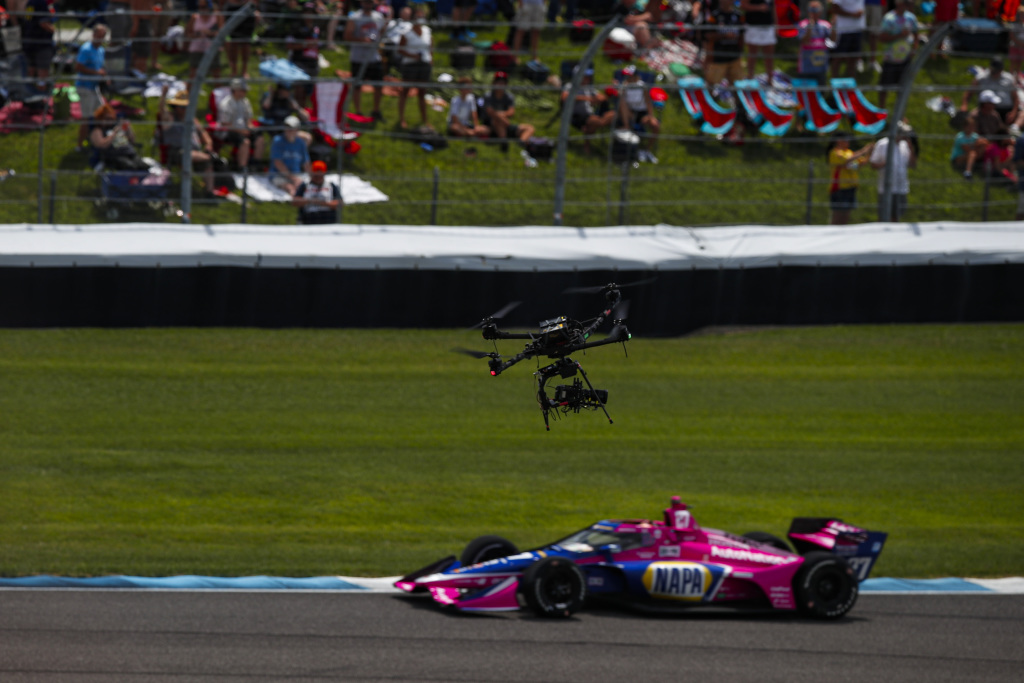
They're already taking their picture, so why not have drones pick up after the race cars, too? Jake Galstad/Motorsport Images
Q: While watching the Phoenix Cup Series race I saw the word "McLaren" on the side of Kyle Busch's car. Is that Bruce McLaren McLaren? F1/Indy Car McLaren? Does this mean Rowdy at the Indy 500 too?
Bernardo, Canyon Lake, TX
KELLY CRANDALL: The logo on Busch’s car was McLaren Custom Grills, which is a Canadian company that does custom barbeque products. However, the McLaren that you’re thinking of does have a presence in NASCAR as the supplier of the ECU units teams used and the digital dash in the Cup Series cars. They’ve been in the sport for years. As for Busch running the Indianapolis 500, he would like to do that one day and has routinely said that. It was even something he addressed with Richard Childress when signing with him, and Childress is all for it.
Q: I was very impressed with what I felt was great NASCAR racing at Atlanta Motor Speedway. There were very few yellow flag laps, the cars could easily run two wide, with sometimes three-abreast racing and I liked all of the passing and lead changes. It looked like the grandstands were full of fans even though it was 40 degree weather. If Atlanta is now considered a superspeedway in the same class as Daytona and Talladega, I'd have to say I thought Atlanta put on a better show than Daytona did last month.
My question is this: Does the repaving and reconfiguration of Atlanta give us hope for 1.5-mile ovals overall? Could something like this reconfiguration and repaving be successful at Texas Speedway and improve both the NASCAR as well as IndyCar racing at Texas? Has NASCAR found a solution for other 1.5-mile ovals? It seemed like the fans were back, and enjoying the show in Atlanta. Can you comment on attendance estimates for Sunday's race in Atlanta versus previous years?
Kevin P., Los Angeles, CA
KC: I don’t think this needs to be the answer for any other intermediate racetracks. Aside from Texas Motor Speedway, there’s been some really good racing on the 1.5-mile tracks. But, yes, Texas continues to be a disappointment and not a favorite of the drivers either. With two races at Daytona, Talladega, and Atlanta, that makes it six superspeedway-type races on the schedule. That is plenty, and there is no need for more, so I would hope NASCAR doesn’t continue down this path of turning tracks into smaller superspeedway races.
Attendance seemed decent, I’ll go as far as saying. It wasn’t full but it looked pretty good. It was also really cold and windy, so I’m sure fans were in and out of their seats and going under the grandstands for refreshments, etc. I don’t have an actual number to give you -- those aren’t released anymore -- but sometimes local outlets will give estimates. I haven’t seen anything for Sunday’s race.
Q: I’ve been listening to Corey LaJoie’s podcast "Stacking Pennies" for a while, and on it he often mentions Chevrolet’s “key partner” teams (which I believe are Hendrick, Childress, and Trackhouse). My question is, do Ford and Toyota also have teams in the Cup Series that they designate “key partner” organizations? If so, which ones are they?
Garrick
KC: The key partners of manufacturers are the ones who get the most resources and support, and those are usually the bigger teams with bigger budgets. They get the backing from the manufacturer, data, sim time, etc. Team Penske and Stewart-Haas would be those in the Ford camp. Toyota has a smaller group of teams, but the pecking order is going to start with Joe Gibbs Racing.
Q: Is there a particularly plausible or reasonable explanation why the FIA does not run F2 races in North or South America? For some reason they seem to have come up with justification to run them in Melbourne, Australia.
Wiscowerner
CHRIS MEDLAND: It all comes down to funding, and whether a race promoter wants to help make the event viable for those categories. F3 was set to race at COTA in 2020 before the pandemic hit and that could have been a precursor to F2 following suit, but those plans had to change once the race was cancelled. The promoter might offer some financial or logistical help -- I believe that's what's happened for Melbourne -- but for races far from Europe it needs to be more significant to ensure it isn't too expensive for the teams. The Middle East is better value for money as teams do pre-season testing and the first race in Bahrain, then head straight to Jeddah, while they end the season in Abu Dhabi and do a three-day test there afterwards too.
I do think we'll see COTA at some stage host an F2 race as it fits into the existing calendar pretty well, but Miami and Montreal are probably too close to other events for it to be financially viable without a lot of help from the race promoters, and Vegas is solely an F1 race with no support categories planned (plus is too close to Abu Dhabi for F2).
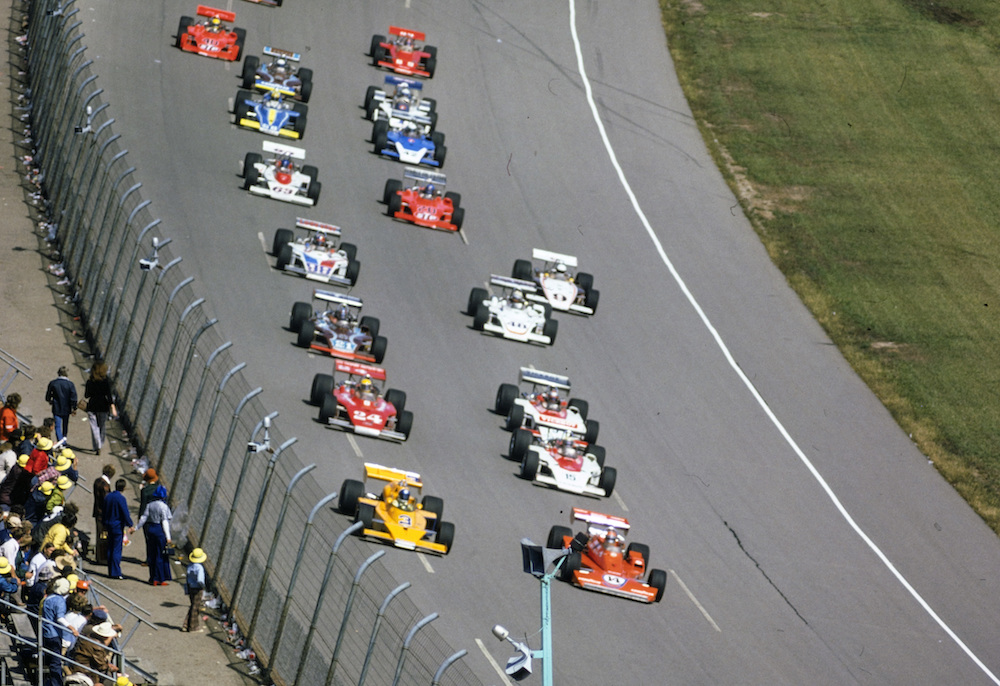
A. J. Foyt's Coyote and Johnny Rutherford's McLaren lead the USAC IndyCar field on Michigan's 18-degree banks in September 1974. The previous month, Foyt and his Coyote toured Talladega's 33-degree banks... William Murenbeeld/Motorsport Images
THE FINAL WORD
From Robin Miller’s Mailbag, March 20, 2019
Q: In doing some research the other day, I came across USAC's original 1980 schedule, which included some interesting track choices. Of the 10 races, there were events scheduled for Charlotte, Road Atlanta, and to my surprise, a 500-mile race at Talladega (all of which were later cancelled when CART and USAC briefly got together to co-sanction). Now, knowing a bit about USAC's ill-fated attempt at Daytona in 1959, it honestly shocks me that they would have even considered running at a high-speed superspeedway such as Talladega again. Do you have any recollection concerning this race? Who on earth thought this would be a good idea?
Vincent Michael, Williamsport, PA
RM: Hmmm, let’s see who thought it would be a good idea? How about the same clowns that took the dirt cars out of the USAC Championship Trail? There were some crazy ideas being thrown around back then, but I don’t think anybody ever took Talladega seriously. Jim Hurtubise ran 191 mph in his Mallard roadster at Daytona in 1968, but the lone Indy car pass came in 1974 when A.J. Foyt ran 217.854 mph in his Coyote.
Marshall Pruett
The 2026 season marks Marshall Pruett's 40th year working in the sport. In his role today for RACER, Pruett covers open-wheel and sports car racing as a writer, reporter, photographer, and filmmaker. In his previous career, he served as a mechanic, engineer, and team manager in a variety of series, including IndyCar, IMSA, and World Challenge.
Read Marshall Pruett's articles
Latest News
Comments
Comments are disabled until you accept Social Networking Cookies. Update cookie preferences
If the dialog doesn't appear, ad-blockers are often the cause; try disabling yours or see our Social Features Support.