Michael Levitt/Motorsport Images
INSIGHT: The art of the perfect IndyCar pit stop
It’s one of the great ironies of IndyCar that the segment of the race that can most dramatically affect the outcome occurs when the cars are traveling at their slowest. Or indeed, not moving at all.
IndyCar pit stops only take a few seconds, but they have an outsized say in how a driver’s race is going to play out. Yet despite their importance, they often go relatively unscrutinized. Not race strategy, but the pit stop sequence itself -- the series of processes that are followed both in the cockpit and in pit lane when a driver gets the call to come in.
Part of the reason for that is simple pragmatism. As Meyer Shank Racing’s Simon Pagenaud put it: “There are a lot of secrets there.”
But another reason pit stops get overlooked might simply be that the drivers and crews make them look so easy: car goes in, gets fuel and tires, rejoins, job done, right? But in reality, there’s a lot compressed into a tiny window of time. To help gain a better understanding of it all, RACER assembled an all-star cast:
FELIX ROSENQVIST: Driver, No. 6 Arrow McLaren SP Chevrolet
MARCUS ERICSSON: Driver, No. 8 Chip Ganassi Racing Honda
TREVOR LACASSE: Chief mechanic, No. 12 Team Penske Chevrolet
WILL POWER: Driver, No. 12 Team Penske Chevrolet
JOSH JUNGE: Chief mechanic, No. 15 Rahal Letterman Lanigan Racing Honda
SIMON PAGENAUD: Driver, No. 60 Meyer Shank Racing Honda
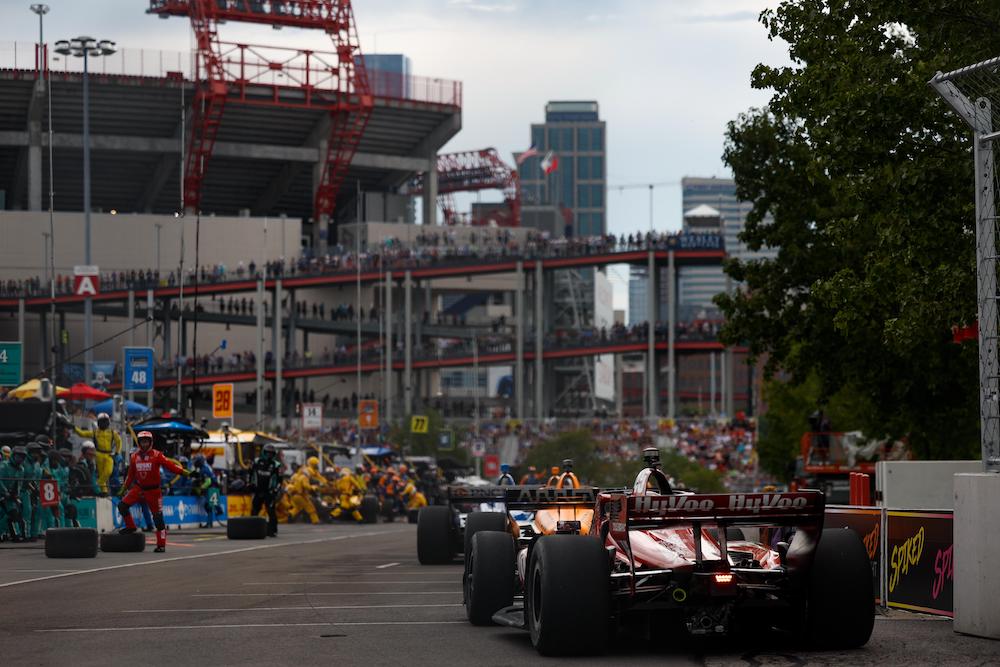
A pit stop party kicking off at Nashville. Joe Skibinski/Penske Entertainment
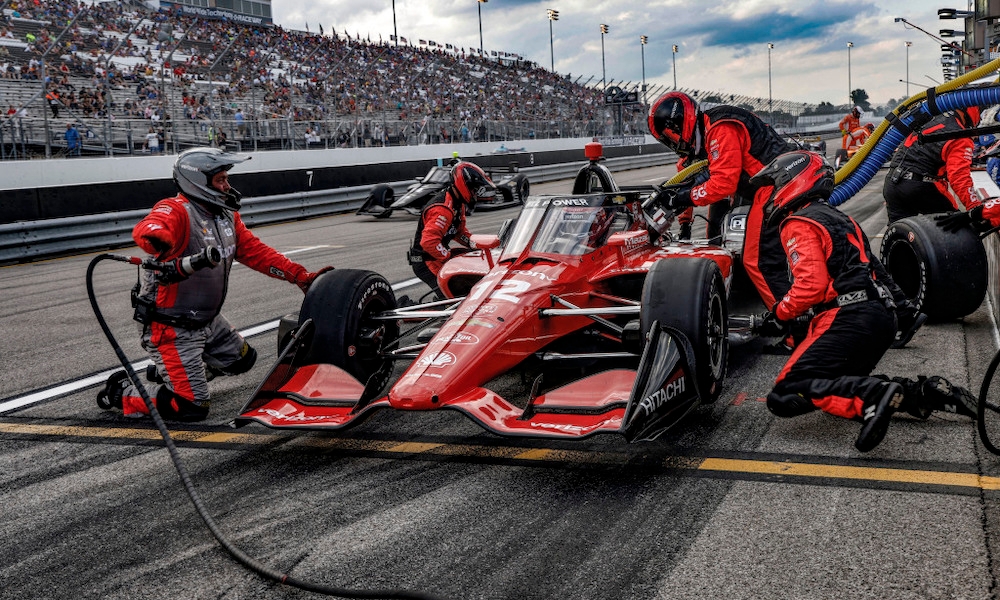
Most pit stops are completed through the execution of a carefully choreographed series of actions between the driver and the six crew members that go over the wall. The reason most stops look so seamless is that teams spent an extraordinary amount of time into perfecting them. The 2022 season has only been over for a few weeks, but preparations for the first round of pit stops at St. Petersburg next March have already started.
TREVOR LACASSE: All winter long, we have our (pit stop) car here that we get on at least two to three times a week. And if we're not doing pit stop practice, we're in the gym at least three days a week as well. So, we spend 7:00am to 8:00am in the morning either doing pit stop practice or working out. Some days we do both. Usually that starts falling off a little bit once the season gets going, because with our schedule it's hard to have that much time to set aside during the day to do that.
JOSH JUNGE: The majority of the people in the shop -- it is mandatory for over-the-wall people -- take part in our performance program. We have a full-time trainer, and he is also our pit stop coach. There's a pit stop practice area that was built into the (new) shop which utilizes the electric car that we use, so we have a rolling car to do stops with.
TREVOR LACASSE: We have some stations that a lot of the new hires can work on. There are hubs mounted to the wall so you can get your hand-eye coordination going, to start building your skills there. That's a pretty good one for us. From that you can move to actually (doing stops) on the car. Then we have a guy that breaks down the video from pit stop practice, so by the time lunch rolls around you can watch it on your phone, your computer or whatever and, and see your stops and have some times to go with it. It's a pretty good program there for us in the winter. You can see a lot of data and learn a lot.
The biggest thing is going from what we call a "warehouse warrior" to going to the racetrack with the actual live car coming at you. That's obviously the next hurdle. You have some guys we've seen over the years get a bit stuck in the moment there, you know, car coming, there's 20-something other cars coming by you, and all the noise... That's the next hurdle you've got to get over with some of these new guys -- when it's real, there's a lot going on in five seconds, six seconds.
Once the team arrives at a race for a race weekend, one of the first jobs on the to-do list is to prepare the pit box. The positioning of the assorted markers that define the box is largely dictated by IndyCar’s regulations, and the teams lay them out accordingly using templates.
JOSH JUNGE: After that’s done, it’s just being aware of what’s around you. When you first roll out, just taking a look at the entryway into our pit box, making sure there's no bumps that are going to upset the car; that's going lock up one of the front wheels. Or, make sure there's no areas of unsettled ground where our air jacks' feet are going to hit the ground.
You see that a lot on our street courses because they're not maintained as well as the road courses and ovals. They can be a bit gnarly and you've got to raise your hand to (IndyCar) tech straight away so they can get somebody over there to fill in the holes.
One other thing I concentrate on is to memorize the six pit stalls that are in front of us -- know who's in them -- because there are situations that pop up at certain times that that can have a big effect, depending on when they come in. If there's somebody that's going to be coming in that's two pit stalls in front of us, but I know on track they're eight seconds behind us, that's going to have us launching right when they're turning into their box. I try to do a lot of that homework beforehand, so that way I can react to them quicker and more in a informed way than just reacting in the two seconds that I have between when I'm done changing my tire and actually releasing the car.
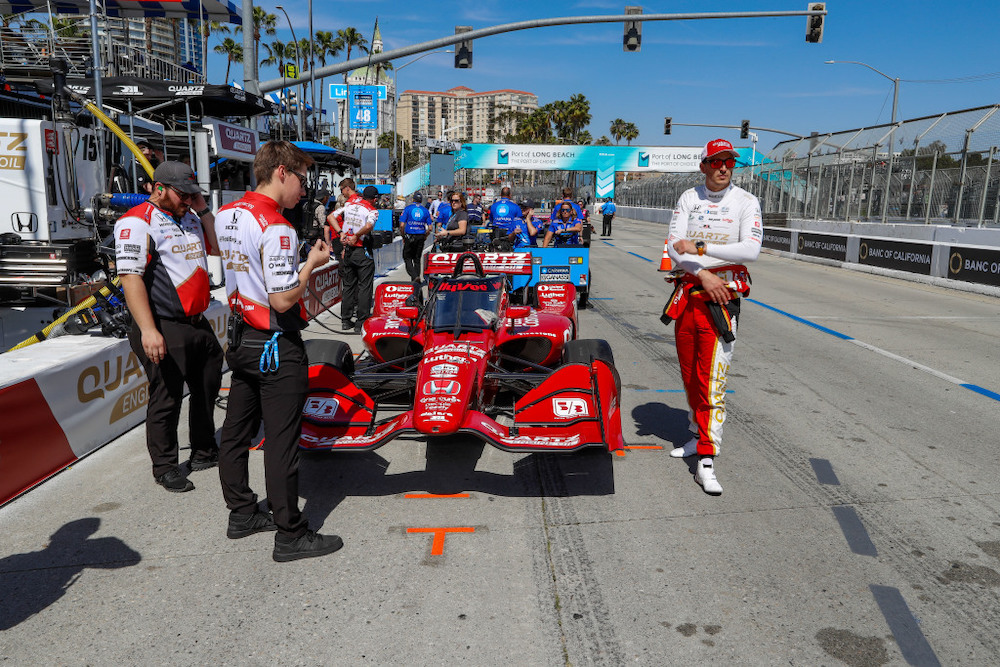
At the start of the weekend teams will check the surface around their pit area for anything that could unsettle the car while it's approaching its box. This is especially important at street courses like Long Beach. Motorsport Images
Drivers, meanwhile, use the opening sessions of the weekend to lay their own groundwork for successful stops during the race.
MARCUS ERICSSON: Starting from Practice 1, you need to start to work on your reference points for pit-in. Different tracks have different levels of difficulty with the pit-in -- Laguna Seca is quite difficult because you have a really tight corner before you hit the pit speed line, so you need to work on all that right from the start of the weekend to really find your limits there. And then you also have to take into account tire wear, what tires you’re on and stuff like that. So it is quite hard, and you can make quite a big difference there as a driver.
Once qualifying is done and the focus switches fully to the race, the chief mechanic will start preparations according to the strategy that has been mapped out for their car.
TREVOR LACASSE: One thing is just how your tires are stacked in your pit box. On a road course, whether it's scuffed blacks, sticker blacks, sticker reds, scuffed reds, you lay it out according to whatever your order is. That’s half the battle, making sure you're getting the right tire on the car.
Dave (Faustino, Power’s race engineer) usually has our plan laid out, but as the race progresses those plans change so you're shuffling stuff around. That's where I stay in touch with Dave and try to keep the crew updated with as much information as they need, and make their jobs a little bit easier.
Once the race is underway, the chief mechanics remain in constant communication with the timing stand as well as with the group going over the wall.
JOSH JUNGE: I watch what they call the 'marching ants' (ED: the track map that shows each car’s position in real time) and timing and scoring. Then I have certain different rows of numbers that I watch constantly during the race, as far as gaps and where people are at on the racetrack. Then as well as being in communication with the timing stand constantly, not only am I the outside front tire changer, but also the chief mechanic, so I've got to make sure we've got the right tire set up front. Or if they make a tire allotment change, or if we're going to make a tire pressure adjustment, or if we're going to make a wing adjustment, I communicate with that person first before I do the rest of the crew.
TREVOR LACASSE: As we go through a run, I try to keep our fueler in the know of, "Hey, you're looking at a three-second fill at this stop versus a six-second fill," and give them some anticipation of what they're up against. Honestly, nowadays the drivers are so good at getting in and off of pit road, your fueler is your quarterback of the deal because so much rides on them. If it's a bad plug-in, you can make what you thought was a four-second stop into a seven-second stop pretty quick.
While all this is going on, the drivers out on the track have a broad idea of what their pit windows are going to be, but with everyone along pit lane eavesdropping on everyone else’s radios, some smoke and mirrors come into play as the crew count down towards the moment that they issue the instruction to come in.
SIMON PAGENAUD: There’s a lot of gamesmanship. The team will wait until the last minute to call you into the pits. Everybody is scanning each other’s radios, so if you want to do an undercut, for example, you need to make sure that nobody’s aware that you’re going to do it so that you can be the first one to jump. "Undercut" meaning that when you go back out on track, everybody else is on old tires and you are on new tires, so now you get one lap where you are two seconds faster, and you make so much time. Then when you come out of the pits they’re on cold tires and you’re on hot tires, so you make even more time. It could turn out to be five seconds’ gain, which is huge. On the overcut side it’s not quite the same, because you’re seeing people pitting in front of you.
TREVOR LACASSE: Typically, we won't jump until Ron (Ruzewski, Power’s strategist) actually calls Will on the radio because you've got other teams listening to what you're doing. As soon as Ron tells him, "OK, pit now," that's our cue. And that's what I've told my guys -- either you're going to cue off of me jumping off the wall, or when Ron says to pit, then we're clear to jump over because at that point what we’re doing is public knowledge.
MARCUS ERICSSON: Usually you want to know a little bit earlier than, like, a corner before pit entry, because then you can use push-to-pass. I always try to use push-to-pass on an in-lap when I know I’m pitting – you can gain a few tenths from that.
FELIX ROSENQVIST: They try not to say too much on the radio, so you kind of have a little code word that indicates that you have one lap before you come in. And that whole lap, especially if the guy in front of you is trying to undercut you and get clear air, you have to do a massive lap. You have to basically burn as much push-to-pass as you can, because you’re fighting the other guy and he’s in the pits and you’re on the track, so you really try to maximize it, take everything out of the tires.
Then you come to the point where you need to come into the pits. At Laguna Seca, you’re coming off Turn 10 and then you’re veering into the pits, and you can make up a lot of lap time under braking. That brake zone… you don’t get a lot of practice; it’s kind of a slippery area and you only have five or six times in a weekend where you’re actually committing 100%. So it’s a bit of a guess. You really need to work out a reference or work with the engineers to figure out where you want to brake, because you don’t want to stuff it into the wall on pit entry.
All the pit entries are different, too. At Laguna Seca you have one braking zone, then you have a little corner, then you have the line. It’s hard to make up 0.4s on the track, but in that section, you can make 0.4s, 0.5s easily.
SIMON PAGENAUD: You want to gain as much time as you can in the braking zone on the way to the line, but if you blow it, it’s such a huge penalty that your race is over. It’s a tricky one to balance, and some drivers will go over. I’m a driver who always tries to be at 99, not 100, because it’s too big of a penalty.
WILL POWER: There’s always that fine line as you’re approaching the line -- do you want to gain a tenth or risk a speeding penalty? So you kind of play for that nice spot in between. It’s the same thing with hitting your marks. You can gain a ton of time on the way in, and then slide long and lose a couple of seconds. Or you can lose a little bit, but make sure you hit your marks and gain that way. So you’re playing that risk vs reward, depending on your situation. If you’ve got a massive lead, why take the risk?
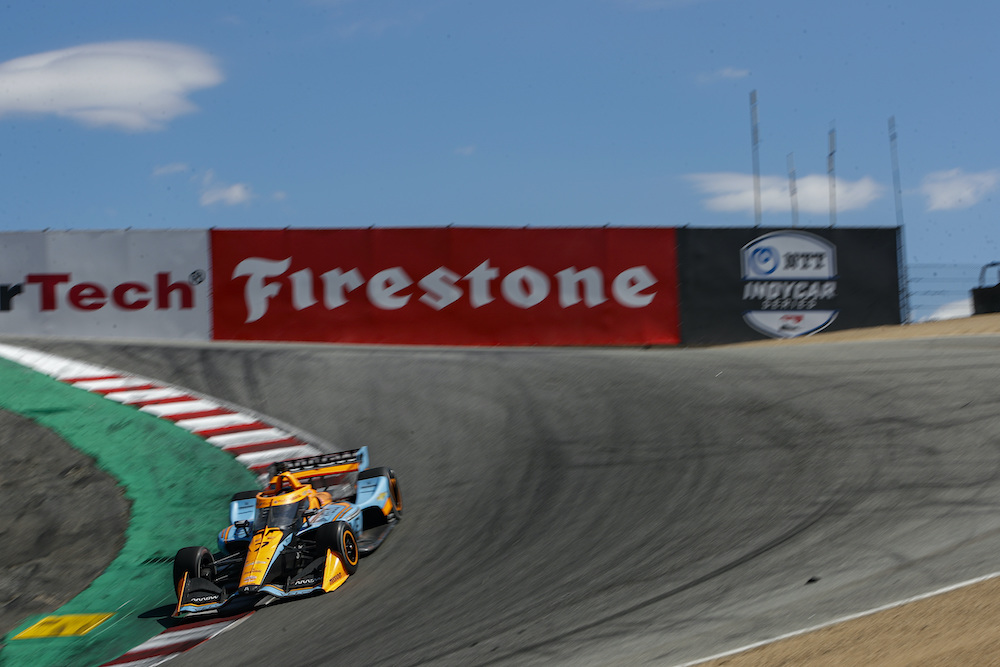
Once Felix Roseqnvist gets the call to come in, he focuses on mashing the push-to-pass button and squeezing out whatever life is left in his tires before heading onto pit road. Jake Galstad/Motorsport Images
SIMON PAGENAUD: As you get to the pit sequence you start breathing a bit more to relax, to get your heart rate down, because you’re about to have the most excruciating 10 laps of the race. You’re basically qualifying again inside the race for 10 laps.
The team calls you in, and usually you can reset your anti-roll bar positions for the new tires that are coming up. When you get to the end of a stint the tires will wear and usually you need to have the rear bar at full-soft and the front bar at full-stiff because the rears are gone, so you’re trying to give some stability to the car. Going to new tires, it’s going to be so much different -- you gain so much rear grip that you need to readjust the anti-roll bar position. So you might readjust by four positions on the rear, back down three positions on the front, and reset.
So you’re doing that a few corners before pit in. And then some drivers will also play with the brake balance. Some pit lanes are more slippery than others, and in some pit lanes you need to go rearward on the brake balance to avoid locking the fronts and sliding into the mechanics. You do that at the latest moment possible so that it doesn’t bother you on-track.
MARCUS ERICSSON: You can play with your bars if you have time -- you can change your bars for pit-in. I don’t do that a lot; I focus more on the pure driving side of things. Usually when I’m in the pit lane and on the pit speed limiter I change my bars so I have them ready for the next stint.
SIMON PAGENAUD: You can also adjust engine settings, throttle maps… Fuel mixture as well, depending on how much power you want to use. That’s usually based on the team telling you, or you can decide yourself -- I usually know what I have and do it myself.
WILL POWER: Sometimes you’re making adjustments in the car. Sometimes you’ll get a drink. Sometimes the strategist will be calling you down, saying, ‘We’re going to go to this tire, we’re going to do a tear-off…’.
FELIX ROSENQVIST: Then when you’re going into pit lane, you’ve got a while to breathe, and just think about your actual pit stop. Which is pretty tricky as well -- some tracks, like Laguna Seca, have pretty tight pit boxes, so the car that’s parked previous to you… you have to really brush his tire that is standing there if he’s also preparing to do a pit stop. Then you immediately swing around the other way, and if you nail that, it’s just about enough for you to get square into your box. Normally at tracks like this you can arrive a little bit crooked, which is not optimal, and that’s where lap time can start to go away quickly. If you’re a bit crooked, pit exit becomes a bit tricky… all those things add up very quickly.
SIMON PAGENAUD: Once you’re in pit lane, some tracks are easier than others. You’re looking for your board, so you recognize where your timing stand is… and remember, at this point your heart rate is about 180, 190, you’re already breathing really heavy, so you need to recover so that everything in your mind is working right. Sometimes people making mistakes in pit lane is because you went over the line of what you can physically do, and you’re not as "present." Dehydration, heat… you have to be in check with all that.
WILL POWER: That’s a big thing, making sure you don’t miss your box. Over the weekend you pick banners or flags, or put tape on the wall, and you use those to get your bearings. It’s harder at some tracks than others, like if you’re in the middle of the pitlane and there a not many (visual) references, like Iowa. I often look at the numbers around me, so I’ll think, ‘Oh, Rahal is there,’ so I know when I see their number then I know it’s this number, then this number, then it’s mine.”
At this point, the sequence arrives at one of the moments that define the success -- or otherwise -- of the entire stop: how accurately the driver hits their marks.
TREVOR LACASSE: Oh my God, that is everything.
JOSH JUNGE: Working with a veteran is... I don't want to say it's a breeze, but it is definitely a luxury compared to working with somebody that you have to constantly work on as far as them hitting their marks, or the speed at which they come in. I fully appreciate Graham (Rahal) as the seventh member of our pit stop team, because he truly is. He's the seventh guy that's over the wall, and everything that he does is just as important as what we do out there.
TREVOR LACASSE: For a driver to be a bit long on his marks, that's OK because you can follow him through. But a driver that's short that costs you time, because you've got to basically reset. Going long, you can try to pull it with you a little bit, because for the most part both front tire changers and the inside rear changer are usually on the nut before the car's actually stopped.
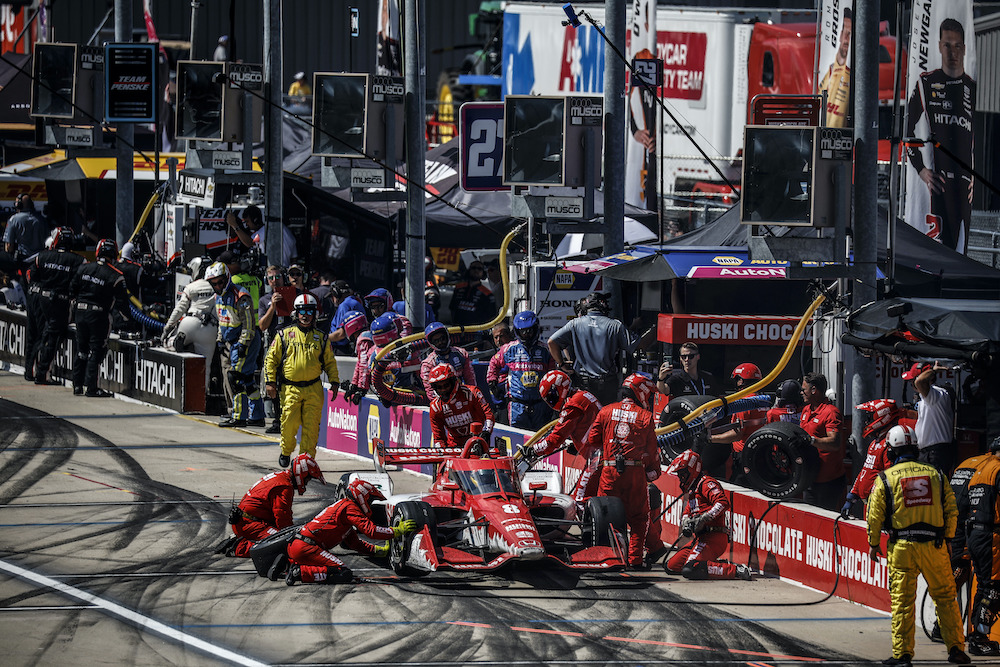
A driver who stops right on their marks is a driver with a happy chief mechanic. Michael Levitt/Motorsport Images
SIMON PAGENAUD: You see your board, the team counts you down "5, 4, 3, 2, 1" -- which doesn’t do much, really, it’s just a reminder that you’re getting close -- and then it’s all about carrying enough speed into the box, because there’s a lot of lap time there, too. Going from 45 to zero, or 60 to zero… it’s very important. You could lose half a second right there. But you could also lose a lot if you slide, so again, a big balance adjustment.
It’s easy to fail the process. There’s a list of things that you need to go through. I like the team to remind me of everything like we do in sports cars, because I think it’s the best way to avoid a mistake. But, you know, pit lane speed, a reminder that pit lane is slippery, a reminder to go into neutral…
FELIX ROSENQVIST: They talk to you a bit on the pit lane – "think about your marks, think about your brake bias, your tools…" – but in the pit stop they try to be quiet because you’re focused on just reacting and looking at your guys. So they don’t really want to talk too much.
I always look at my fueler in the mirror, so when I see he pulls (the probe) out, I’m getting into first gear and getting ready to go, just to react a little bit quicker. So that’s a very tense moment. But when you’re just driving in pit lane you can breathe a little bit. It’s the only time in the race where you can’t really make any lap time.
SIMON PAGENAUD: I’m looking at my crew chief, basically. You can have lights on your steering wheel to tell you when the fuel probe is in and out, and that helps you to react quicker.
Mike Shank talks to me and tells me to stay in neutral, rev the engine, select first gear, go, watch your outside or stay inside. We use two lanes, so if someone is on the outside you’ve got to stay on the inside, so you’ve got to be aware of your environment. And the timing stand helps you with that.
WILL POWER: You’re holding the clutch with your hand close to first waiting for those fuel lights to go out so you can grab first and go. And the strategist will talk you through whether someone is on your outside, or if you’re clear.
TREVOR LACASSE: It's a lot going on there, because you're on an open intercom system with the timing stand, so you got those guys talking; you know, like Ron will tell me, "It's a slow outside rear," or whatever. "We had a bad plug-in there so it's going be a second," you know, keeping his eyes on you as well, telling you the play while you're working. So when you stand up, you're not surprised by something, or you know the area to look for or whatever. So there's a lot that goes on in those six seconds, from the strategist talking to you, making sure everybody's done and you got a clear hole to merge into...
FELIX ROSENQVIST: It’s actually one of the most tense moments of the race focus-wise, but physically… these cars are heavy to drive, and every lap out there you’re fighting the car a lot. So physically, you get to rest a little bit. But not mentally. The focus is always there.
TREVOR LACASSE: You put a lot of trust in your jack guy. He's your eyes on the tires. So my cue... If the car's on the ground we're good to go there, and then I'm watching the fueler; kind of bouncing the eyes between the fueler and having a gander down pit lane to make sure you're not sending (the driver) into anybody or into traffic. But as soon as I see the fueler pull, that's usually my cue to send him.
As well as keeping an eye on their own crew, the chief mechanics are also watching the pit boxes around them to try an anticipate potential problems caused by cars pitting either side of them.
TREVOR LACASSE: You want to know, like, "Hey, it's going to be real close with (Scott) Dixon in front of you here. He's going to be coming across you as you're leaving, so might have to hold (Power)." Had plenty of those over the years where as much as you just want to be done and send him, you've just got to pause those extra couple seconds, let them come across and then send him.
A team’s position along pit lane can have a huge impact on this part of the stop.
SIMON PAGENAUD: I’m not even sure IndyCar is aware of this, but your position on pit road has a huge effect on your race weekend, not just your race. For example, we qualified poorly in Portland so we were midway along pit lane (at Laguna Seca), and at Laguna the out-lap is very important to warm up your tires. People do it in different ways -- some people go fast, some people go slow; we all have different methods. The problem is, when you need to go fast and other people are going slow, you end up being in a traffic jam and you can’t get your tires ready. If you’re first in pit-out, you don’t have that problem because you dictate the pace.
MARCUS ERICSSON: The biggest thing is if you have an open in. That really makes a big difference in where you can brake into your box. That’s more the luck of the draw, and whether someone else is pitting with you or not.
I always prefer an open in, because it’s easier to stop on my marks, and that makes it easier for the mechanics. On the exit, if you have to go around someone or if you can floor it and go straight… yeah, you have better acceleration. But for me, the biggest thing is to try to maximize the stop. And if I can stop exactly on my marks, that’s a bigger gain than if I have a straight exit.
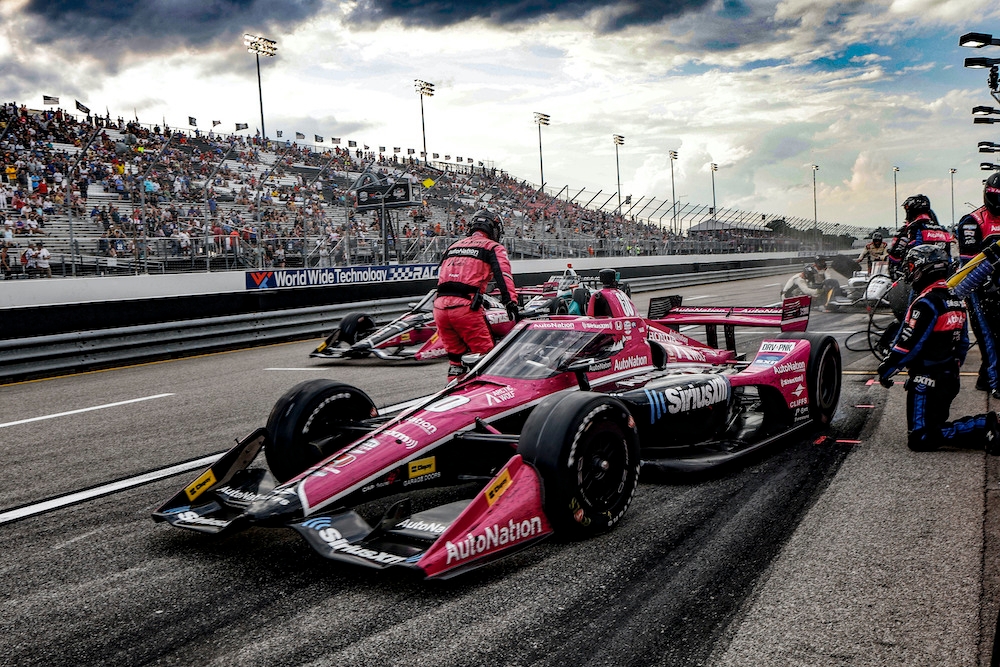
Pagenaud launches from his box after receiving service from his No. 60 crew at WWTR. Michael Levitt/Motorsport Images
JOSH JUNGE: I just speak for the outside front position because there's more responsibility than just changing tire. It's calling the driver in, it's watching as the cars come down pit lane to make sure nobody's going to launch into us. And then at the same time, sending our car out... to be in those first three to four pit boxes makes that job 75 percent easier. Once you get to the middle or the rear of pit lane, that middle section can be extremely dicey. It's a lot of cars coming out and a lot of cars coming in, and it gets pretty chaotic. So for sure, the first four stalls are very important.
Once the stop is completed, the driver is given the signal to leave the box and rejoin the race.
FELIX ROSENQVIST: You try to launch well, and there’s quite a lot of lap time in that as well, because these cars have such a long first gear. If you bog down a little bit you can lose a lot of lap time getting up to the speed limiter.
Then you get to the pit exit and press the button, and pretty much have the same thing as the in-lap -- you have to make the best out of cold tires, and that’s a little bit of a guessing game. There’s always going to be a bit of a slide. It can be a bit rough and wild when the tires are cold, especially on street tracks; big-commitment tracks. So there’s a lot of lap time to be gained there. Those two laps are definitely the most important of the whole race.
SIMON PAGENAUD: The first corner is obviously super-treacherous. There’s always tricks with the anti-roll bars and the brakes that you can do for the first corner, and then you adjust again after that.
MARCUS ERICSSON: In Formula 1 you have tire warmers, so right from Turn 1, the full grip is there. Here in IndyCar, depending on what compound you’re on and what track you’re at, it can take a lap or two laps before you’re up to temperature. Some drivers are really good at hustling the car on cold tires, and some are less good at it. So there’s always a fine line there, which you try and maximize because it’s race time.
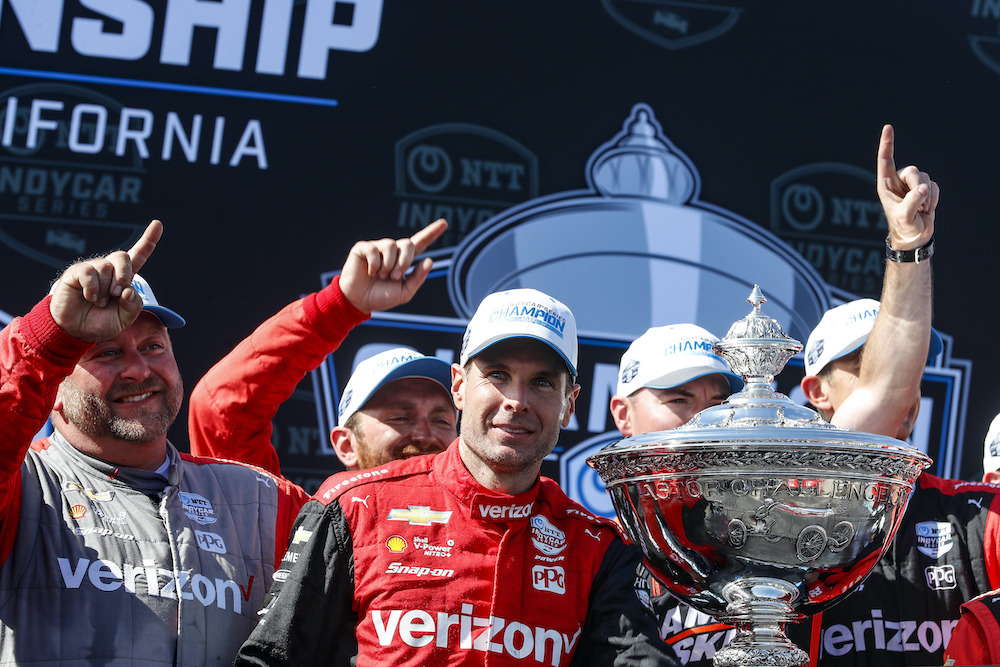
Lacasse (left) reaping the rewards of a season's worth of good pit stops with Will Power. Phillip Abbott/Motorsport Images
Meanwhile back in the pits, the pit crew regroups.
JOSH JUNGE: The camaraderie definitely starts at pit stop practice here in the shop. I think it's healthy for guys to kind of razz on each other a little bit, but it's even healthier on the other side of the token for guys to pick each other up. It shouldn't just be one person's thinking, "Hey, that other guy, he had a bad day of practice.' In our particular group, we've been very lucky to have some experienced people, so guys can lean on each other a little bit when they know that the guy that's talking to them has experienced this stuff.
Then when you get into race weekend that's even heightened. As soon as the stop's over, the first thing you'll see is after a pit stop when everybody gets over the wall and gets all their equipment over is, everybody meets either the back of the pit box or the back of the fuel rig, and it's either patting each other on the back or it's grabbing some guy's shoulder and saying, "Hey man, you got it. That one's OK. We're still good and lifting each other up." And that goes a long way, for sure.
TREVOR LACASSE: After the race all the guys are looking for the time sheet to see who was the fastest team in pit lane and that turns into a friendly competition, and that's always cool. And then the last few years we've been pretty fortunate to be able to win the Firestone pit stop award at the end of the season. So that's some pretty cool bragging rights, for sure.
JOSH JUNGE: Everybody definitely deserves every bit of credit that they get for what they're doing in the pit stops, because unlike other racing series, the guys that go over the wall in our series are also the mechanics. They're also the truck drivers. They're also the bodywork guys, the carbon guys. Everybody plays more than one role than just going over the wall. So to have an aspect of your job that has an instant reward.... In motorsports, we get instant rewards 17 times a year in the race results if you work hard. But then you multiply that over pit stops and the feeling when you are successful... to get that many rewarding moments during the race season is an incredible feeling.
TREVOR LACASSE: This year I bought an Apple Watch, and you’ll have some times during in the middle of a stop that you'll feel it vibrate because your heart rate's up. Your heart rate just spikes real quick, so the watch thinks something's going wrong with you. So after the stop you've got to acknowledge that, "Nope, I'm OK!" So yeah, your heart rate definitely has some spikes in there. It's a pretty big adrenaline rush. Even doing it as long as I've done it, it's still the coolest part of the job.
Mark Glendenning
Read Mark Glendenning's articles
Latest News
Comments
Comments are disabled until you accept Social Networking Cookies. Update cookie preferences
If the dialog doesn't appear, ad-blockers are often the cause; try disabling yours or see our Social Features Support.