The RACER Mailbag, September 21
Welcome to the RACER Mailbag. Questions for any of RACER’s writers can be sent to mailbag@racer.com. Due to the high volume of questions received, we can’t guarantee that every letter will be published, but we’ll answer as many as we can. Published questions may be edited for length and clarity. Questions received after 3pm ET each Monday will appear the following week.
Q: Last week mention was made of IndyCar drivers not doing donuts anymore. I never missed an IndyCar race at Road America and I can’t ever recall the winner not putting some huge rubber down in Turn 5 for the crowd. I’m pretty sure every NASCAR winner has also put on a display there, with Ty Gibbs setting the standards for donuts and burnouts when he carried one halfway up the hill to Turn 6 after his Xfinity win this year. No shortage of donuts in Turn 5 at Road America -- the Turn 5 run off area should probably be nicknamed "The Donut Shop!"
Craig, Slinger, WI (yes, that Slinger with the notorious short track)
MP: Well, since IndyCar hasn’t done it, I’m going to do it myself, Craig:
Rule 0.0.0.0, Post-Race Vehicular Celebrations: In accordance with international standards, the winner of every NTT IndyCar Series race must perform a minimum of five (5) rotations performed by intentionally rotating the rear tires at a speed that far exceeds the speed of the rear tires in order to produce copious volumes of smoke from the rear tires. A failure to do so in a manner that pleases the assembles crowd will result in a $25,000 fine and loss of 25 Drivers’ and Entrant points.
Q: As a long-time Swedish IndyCar fan, I'm thrilled that the late evenings and nights staying up watching IndyCar racing have been blessed with the presence of not one, but two and, should the stars align for 2023, three of my countrymen in the series.
From this side of the pond, it feels like IndyCar racing is on the up and up here as well, no doubt boosted by drivers with F1 pedigree (Magnussen, Alonso, Grosjean, Ericsson) and strong F2 drivers such as Lundgaard. While I do miss Rockingham and Lausitzring I garner no hope for the series racing in Europe an time soon (and it shouldn't -- get Mexico a race first!) but I'm keen to know how much the IndyCar management pays attention to Europe when planning its races, as to when the green flag should fly, and things like this? Is Europe part of the conversation at all, or is it just a happy little accident that most of the races start on a convenient time for most Europeans?
John A
MP: Somewhere between almost none and not at all, John. I know the new IndyCar schedule has a lack of domestic conflicts with the 12 Hours of Sebring and internationally with the 24 Hours of Le Mans, but beyond that, I’m unaware of any other efforts being made to plan a North American series’ calendar around favorable timing for viewing or a lack of clashes with international events.
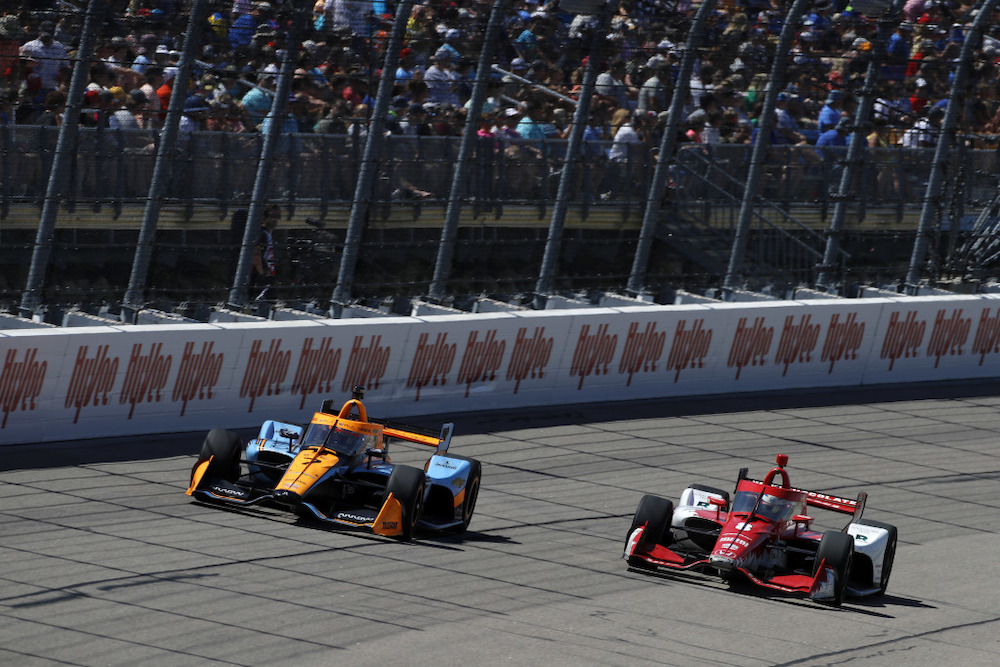
The bad news: Swedish time zones don't figure into IndyCar's planning for race start times. The good news: If you have stay up late, you can pound bottles of Huski to stay awake. Phillip Abbott/Motorsport Images
Q: Do you have any insight into Scott Dixon's alternate racing line at Laguna Seca? The NBC broadcast mentioned it a few times, with a great view of it from a following Colton Herta. Did Dixon have to drive differently due to worn tires? Or did he think he'd found a better racing line for the day?
Second, any idea why people still can't say Alex Palou's name correctly? Dixon called him "Paloo" in his postrace interview on NBC, and someone on Dixie's radio called him "Palow" after the race. Seems especially egregious from two people from his own team. Any idea if it bothers Alex?
Mike Brockmeier
MP: From what I saw from that camera, Dixie’s car was an absolutely handful. I wouldn’t, for a moment, portray it as an alternate racing line; the car was an understeering mess.
Palou pronounces Dixon’s first name as "Skoht," rather than "Skawtt" but I don’t perceive it as an intentional slight. Heck, my last name is either "Proo-it" or "Proo-et" most of the time, or "Pure-rett" for those who are really confused. I figure if it really mattered to Alex, he’d set Dixon and Mike Hull straight.
Q: How much does a promoter have to pay the NTT IndyCar Series just for them to show up and race? Does this sanctioning fee vary when it comes to the type of track? For example, road and street courses versus an oval? I’m also wondering whether or not Road to Indy races came as a package deal when promoters sign on to host an NTT IndyCar Series race?
David Coquitt
MP: Hard to say, since every negotiation is different. It’s not like there’s a price menu with Oval, Road Course, and Street Course listed for track owners and promoters to pick from and then add some sides with Indy Lights, Stadium Super Trucks, and parachuting anthem singers. I know Monterey County pays $1.5 million for the privilege of hosting IndyCar, since that figure is made public. Also keep in mind the events that IndyCar/Penske promote or function as the entity renting the track, like Iowa, to put on a show of its own. I’m not trying to be vague -- there’s just no single answer to any of it.
Q: I really enjoy how the Mailbag has evolved with the team approach. I miss Robin but the three of you are doing a nice job. I especially notice how you've been switching hats from technical explainer to personality and opinion. Thank you for keeping up the franchise so well.
How are all the cars going to fit on the new Detroit downtown circuit for qualifying? Most street courses and some road courses bring driver concerns and comments about the lack of clean laps from cars being bunched up during 12+ car qualifying sessions. Downtown will be great, but 1.7 miles seems too short.
Are races like Portland which go relatively caution-free bad for the sport? I really enjoyed the race and don't need the crash-fest. Nashville, for the second year, was an embarrassment. I also hear that NASCAR at Michigan isn't as popular as their other venues partly because the races go so smoothly most of the time. Is there any data on this you can share?
Do you have any news yet on the broadcast team for next year and how they were perceived this year? Hinchcliffe was great. I miss Paul Tracy for sure, his style has become polished but still edgy and mildly confrontational. Unless someone made a big deal of it, most people wouldn't care about having two Canadians and an Australian in the booth. Townsend Bell is really good and a real racer, especially when he jumps from the Lexus to the booth on the same weekend. Seems like he and Hinchcliffe are a little too much of an overlap, though. What about Katie Hargitt [ED: She’s now Katie Kiel] and Allen Bestwick? I remember watching Katie do driver introductions/interviews at St. Petersburg and she was like an encyclopedia. Bestwick did a great job as the straight man with Eddie Cheever and _____.
Can we please have Cosworth back as an engine supplier? I know Edsel Ford said no more IndyCar but maybe another manufacturer can work with them for branding.
Eric Gackenbach, Dearborn, MI
MP: Kind of you to say, Eric. It’s a long offseason ahead. Don’t hesitate to spread the questions across a few Mailbag editions. Working backwards, of course we can have Cosworth back. Just need someone to commit $50 million over five years for it to happen.
We have Leigh Diffey as the host, so just as you mentioned Towny and Hinch being on top of each other, we’d be double stacking hosts with the good man Bestwick in the booth. Seemingly every major stick-and-ball sport and all of the biggest racing series have come to the realization that men and women watch their broadcasts and, crazily enough, that having both men and women in the booth or on the sidelines or in the pits is a pretty smart idea.
For reasons unknown, NBC seems to be good with IndyCar’s current sausage-fest, all while there are plenty of talented women like Katie who are either underemployed or working NBC’s NASCAR and IMSA broadcasts.
With all of the amazing progress IndyCar is making -- compared to its contemporaries -- with its women racers, this feels like a giant blind spot. IndyCar once had a solid presence with women on the broadcasts; having team owner Beth Paretta in the booth when her team isn’t racing sure seems like a no-brainer. She’s a racer, extraordinarily smart, and brings the ownership side to the conversation, which you rarely find on the TV side.
I keep hearing Hinch might have another shot at racing in IMSA next year, and if that’s the case, I hope another recent driver is hired, and no disrespect to Towny or PT, but Hinch’s firsthand experience from driving the latest iteration of the car was invaluable.
A crashy event without crashes is fine by me; I just want some passing to take place. And yes, you’d have to imagine someone like Roger Penske gave a little bit of thought about whether the field would fit on a 1.7-mile track before signing off on it?
Q: I noticed that Jack Harvey managed to not record the highest-placed finish for his own No. 45 car this season despite only missing one race! What do you think his chances of staying in that seat would be for next season?
Max
MP: Strong, now that Rosenqvist is continuing with AMSP. The hot rumor over the final weeks of the season was that Felix would replace Jack after a buyout was completed. I’m not saying that was going to happen, but it was the story everyone was telling me. Granted, when I asked people who would know, they said it wasn’t true.
Nonetheless, I have to believe Jack’s solid for next year -- famous last words, right? -- and assuming he’s up for contract renewal after 2023, he’s spending next season driving for his career in the same way Rosenqvist was in 2022. By no means can we lay the blame for Jack’s terrible RLL debut at his feet, and his feet alone.
There were many chefs who cooked up that ****show, and having seen Harvey run well in 2021 as Shank’s main driver -- he finished 13th in the championship -- there’s no credible scenario where Jack dropped to 22nd in the standings with RLL because he forgot how to drive.
Regardless, the paddock will happily forget one bad season from any quality driver, so long as it doesn’t become two. If Jack underwhelms for whatever reason next year, he’ll be hunting for sports car drives in IMSA. There’s not a lot of mercy when a promising but winless driver slides to the bottom of the field for more than a season.
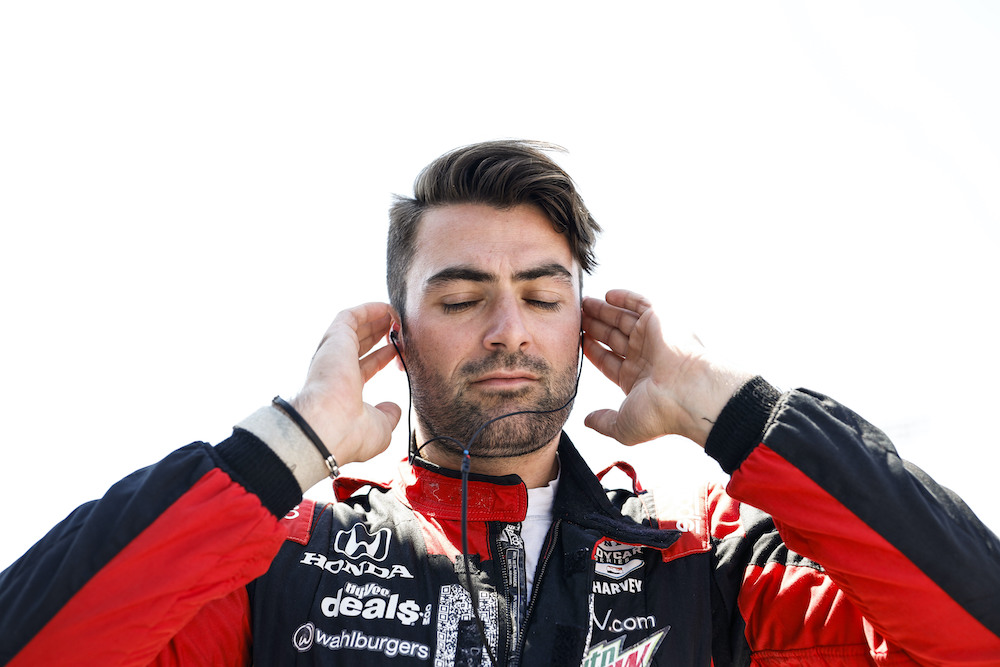
Harvey's solid results in seasons past mean he can shut out the doubters after this one. But everyone associated with the No. 45 will be looking for a rebound in 2023. Michael Levitt/Motorsport Images
Q: For the CART years during the 1980s, and I’m sure in USAC years before, over the wall pit crews were limited to five team members. Three tire changers, one refueler, and one person for the combined duties of air jack/fuel vent. Three tire change pit stops were not uncommon back then. Races on ovals would sometimes see the left-front never get changed during a race. In the mid to late ’80s, the left-rear tire changer, for teams that I worked for, would loosen the left-front wheel. He would then scamper around the refueler and vent/air jack man and commence with changing the left-rear tire. The right-front tire changer, upon finishing his tire, would make any wing adjustments then complete the left-front tire change.
Depending on the circuit, the orientation could be the opposite. This practice was potentially dangerous because the left-rear tire changer not only had to navigate the two people at mid-car but also the fuel hose, vent hose and airline. All of these hoses were draped over the wall and in a space of about four-five feet between the pit wall and the car. Eventually both sanctioning bodies viewed this practice as a potentially dangerous situation and changed the rules to allow a fourth tire changer on the over the wall pit crew. That rule for tire changers stands to this day.
Tom B, former IndyCar CM
MP: Thanks for the tale, Tom.
Q: In answer to Matthew Honk's question about the 1987 CART race at Laguna and Mario taking only three tires, I had the privilege of being on the Alex Morales Race Team from 1984-86 as truck driver and air jack/vent over the wall member. I don't remember when it began or when it changed, but we were only allowed five members over the wall. Fueler/airjack; vent/three tire changers. With that being said, on most ovals we sometimes would not replace the left-front tire but on every other stop. I am assuming that the stop Matthew saw was one of those occasions (even though it was a road course) and this was done for reduced time in the pits.
Another note: there was not a pit lane speed limit during my time in CART. Your answer to him was spot-on! Thank you for keeping the Robin Miller Wednesday tradition alive.
Brent W. Burton, Sebring, FL
MP: The Morales team never got the full measure of respect I felt it deserved. I’m not saying it was a Penske-caliber operation, but it punched well above its weight and ran some fine cars and drivers. Thanks for the insights.
Q: We will be attending the Laguna Seca race next year and we're wondering if you would be kind enough to list some definite dos and don’ts for at the track, and race fan-friendly venues?
JRW, Chandler, AZ
MP: You bet: Bring some form of folding chair because it’s a walking track. There are some cool grandstand seats to consider for race day, but otherwise, Friday and Saturday are best spent wandering the hills and enjoying all kinds of amazing vantage points. Bring hearing and sun protection, and while I wouldn’t know what’s needed to get into the paddock as a fan, it’s worth gaining access for at least one day. Lots of cool things to see up close -- cars, people, tech, etc.
I’d say the same things -- be ready to walk, sit, view, and keep moving to the next spot you find -- about Mid-Ohio, Road America, and the Indy GP.
Q: In light of Jimmie Johnson's situation the past couple of seasons, I'm wondering why we don't see drivers spend some time in Indy Lights when transitioning from other forms of racing? I'm thinking of similar situations where open-wheel guys have gone to NASCAR and almost always do at least a little bit of racing in the lower tiers of stock cars before making the jump to the big show.
In a similar vein, when you have situations where drivers don't have a full-time ride in IndyCar -- maybe like a Sage Karam or JR Hildebrand -- why not stay in the open-wheel game where you're racing on most of the same tracks as the big cars and giving yourself some exposure? I realize it might be a little bit of a blow to the ego, but it's not uncommon in other sports for athletes to spend time in the minor leagues, or again even in other forms of racing like NASCAR.
I've followed racing long enough to know the answer probably comes down to money, but what is it specifically about IndyCar/Indy Lights that prevents this type of thing from happening?
Steve M., Michigan
MP: Not sure I see the angle here as related to Jimmie and Lights, Steve. There was nothing he’d learn in Lights that he wouldn’t learn in IndyCar, and since his sponsors weren’t going to pay eight figures to be on the Road to Indy, the smart choice was to go straight to IndyCar.
There’s no money to be made in Lights, so there’s also no reason for a Hildebrand or Karam to risk their reputations in second-tier open-wheel cars just for the sake of it. There’s only negatives involved when the young guns finish ahead of the old Lights champs. It’s not like Xfinity where Cup drivers can make good money and learn more about the track to apply to their Cup cars for the big race.
I’d see it making sense if JR or Sage had IndyCar rides, but how do you sell yourself as the right person for an IndyCar seat if three or four teenagers just took your lunch money and pride in a Lights race? Matty Brabham was an outlier since he’s been out of IndyCar for many years and wanted to kickstart his open-wheel career after playing with jumpy trucks for the last five or six seasons.
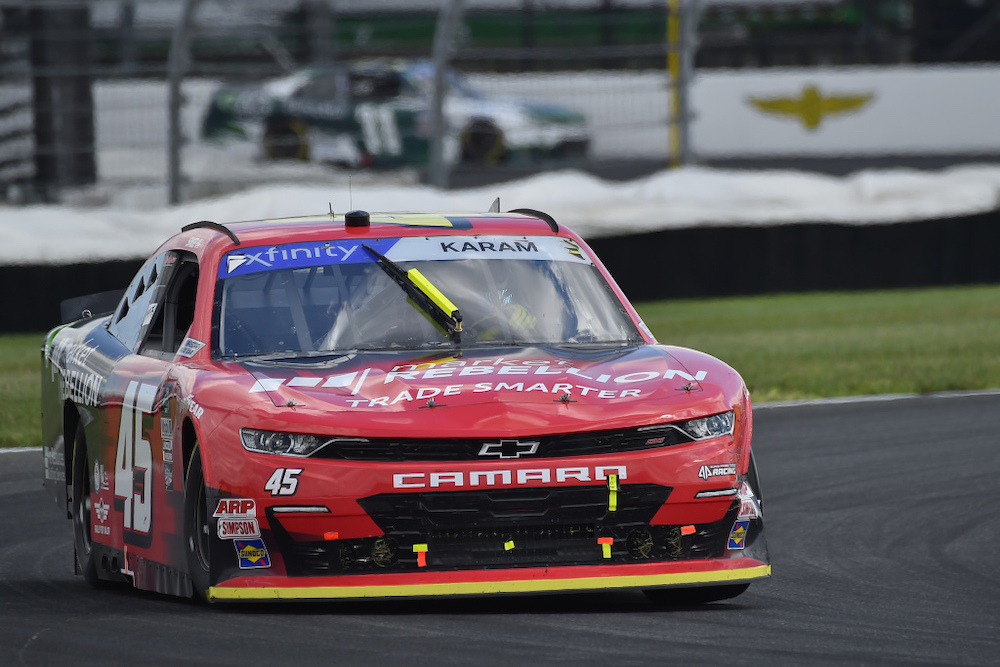
There's not a lot of reason for Karam to go back to Lights. NASCAR's second-tier Xfinity Series is a different story... Rusty Jarrett/Motorsport Images
Q: It seems to me that qualifying toward the front can actually be a disadvantage because you have to use valuable tires up in qualifying. I'm sure I'm in a minority, but I think I'd rather start 13th than anywhere between second and 12th, especially at high-degradation tracks. Setting costs aside for a moment, I think it would be beneficial to give the top six or 12 qualifiers one extra set of red tires that can only be used for qualifying. This would allow them to run as hard as possible during qualifying and not be at such a disadvantage come race day. Now, let's bring costs back into it and ask for your thoughts.
Corey in New Orleans
MP: Interesting observation, and it can help if a front-runner has a bad day and fails to make the Fast 12, but here’s a quick look at 2022 on this topic: Scott McLaughlin started on pole in St. Pete and won the race. Colton Herta qualified on pole at Long Beach and was running third when he made a mistake and crashed. Rinus VeeKay took pole at Barber and finished third. Josef Newgarden took pole at Detroit and finished fourth. Alexander Rossi took pole at Road America and finished third. Colton Herta took pole in Toronto and finished second. McLaughlin took pole in Nashville and finished second, then took pole at Portland and won. Will Power took pole at Laguna Seca and finished third. The data says qualifying up front is the advantage and the extra mileage on tires used in the Fast Six is not a disadvantage.
Q: I like the people complaining about JoNew winning so much but losing to Power. The rules are the rules, and all the teams and drivers know the rules for points. They all race under the same rules. The fact is, Will finished in the top five 12 times. That's a 70.6% top five finish rate. That's an insane level of consistency! He was competitive in over 70% of the races. That is huge! Josef is a phenomenal race car driver, but he had to many famine results to pair with his feasts. Regardless, it was one hell of a season and great to have the title go down to the last race.
John Balestrieri, Waukesha, WI
MP: Agreed on all points, John, and I’m curious to see how Josef responds next year. I know he said he’s going on the warpath, but I wonder if we’ll see a similar version of Power’s consistency-first formula in motion. And, to be fair, it’s not like Josef drove in a crazy manner and threw away a bunch of points. Un-break his right-rear shock at the second Iowa race and he’s even closer to Power in the final reckoning, but as a whole there was a highly intentional approach to Power’s results that was recognizable from the first race of the year. Will Newgarden model himself after his teammate or try to win by domination and accept the greater risks that come with that strategy?
Q: 1. Why the big deal about Andretti starting an American team when Haas is an American team in F1?
2. Regarding Chevy and Honda restricting how many engines they will build for the series -- why? Are they too hard to build? Are they too expensive to build? What gives, sir?
3. A fellow writer made a complaint about the volume of IndyCar’s announcers. I agree with him. What a pain to try to understand what they are saying. Watch the replay and you will hear what we mean.
4. Was the winning margin for Palou at Laguna Seca of 30+ seconds a record? It was weird waiting so long for the second-place car to cross the line.
Sincerely, Janis (dodging lightning bolts here in Tampa)
MP: 1: Gene Haas can stick 500 American flags on his F1 cars and I’ll never look at them as being our own. Just as we don’t claim an English soccer team to be American because it’s owned by an American, an F1 team owned by an American with cars made in Italy that are run out of England is 100 percent not American.
2: Costs, costs, and more costs. When the new engine formula debuted in 2012, I was told by one of the manufacturers that each lease cost them around $1.6 million, but they were only able to charge $1.1 million according to the regulations. Said another way, each lease was a money loser to the tune of $500,000, and with all the extra investments make in promoting their IndyCar involvement, sponsoring a couple of races per year, etc., manufacturers quickly reached the comfortable spending limits set by senior management. Fast forward a decade and even more scrutiny is being placed on both brands to cut costs and justify their ongoing expenditures in racing. Over the last 10 years, we’ve gotten to a place where spending extra money and taking care of everyone who wants an engine is not longer a guaranteed thing. They can build more motors and support more teams, but someone would need to pay for it because they aren’t as willing to lose more money as they once were.
3: Totally understood what the person was mentioning. It was the part where a question as to whether it was intentional where I had to tap out.
4: It was one of the biggest gaps we’ve seen in many years, but no; IndyCar races were once won by a lap or more when the cars were far less reliable.
Q: NASCAR Trucks are running next August at Milwaukee. Just sayin’.
Chris Schaffner
MP: Can’t wait to write about IndyCar being back at the Mile in 2024 or 2025, Chris.
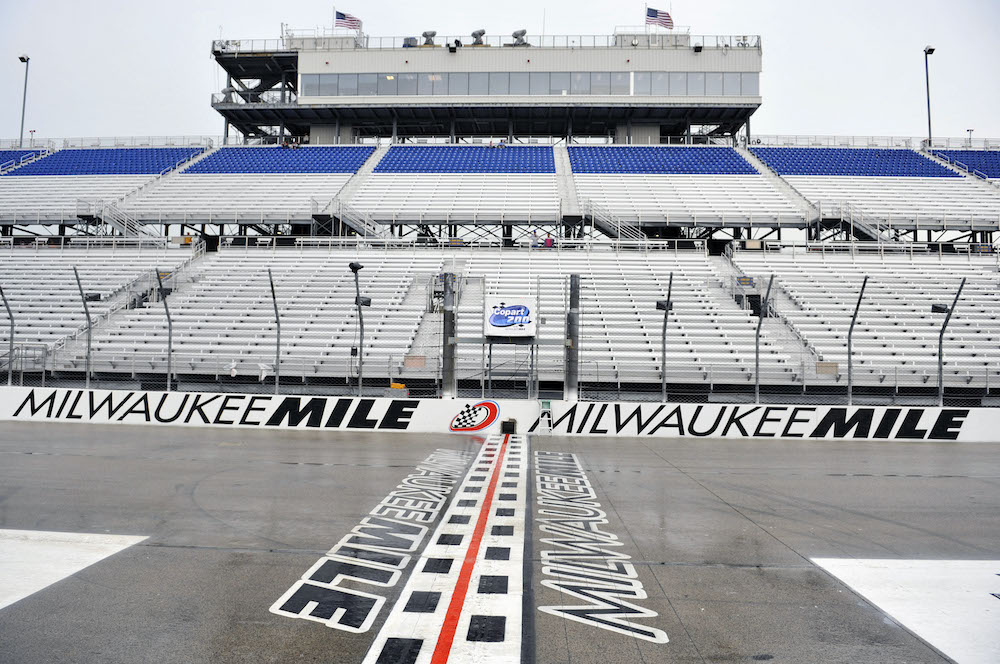
The field of dreams. Motorsport Images
Q: Long time reader, first time writer! I read the press release stating that this was the most-watched IndyCar season in six years and I wanted your thoughts on it. It seemed like the first four races or so of the season, the TV ratings where really strong. After that, the ratings for the 500 felt really disappointing and then the rest of the year the ratings didn’t seem all that strong (other than a few exceptions). Is that a fair summary from what you saw, and if so why do you think the TV ratings seemed to dwindle as the year went on?
Daniel
MP: Keen eye, Daniel. Felt a bit like Power’s championship run. Some definite highlights that led to the final outcome, but few mind-blowing events that gave the impression that everything was awesome from start to finish.
And like Power’s title, it is the cumulative number and average that matters to teams and advertisers, so even if the best ratings were front loaded a wee bit, it still gives NBC and the series a chance to say that viewership was on the rise. Hard, though, to read that release and then read about the ginormous increases F1’s seeing with its TV product, and be anything but jealous.
Q: There were articles with Zak Brown talking about IndyCar needing to technologically upgrade with more speed from its engines and I totally agree. That was honest of him to say that, and I also know that other owners are going to play poverty as the reason for not wanting to upgrade. But what about the loss of interest from fans, sponsors and ticket sales if they don’t upgrade? Want to hear your thoughts on this.
Shyam Cherupalla
MP: Yes, I filed a story about a number (but by no means all) team owners and team bosses calling for new cars and fresher technology, including thoughts from Zak, about six months ago, and since then, I’ve only heard the topic lose traction. There was one misperception in a Q&A Jay Frye did, FWIW, where it was thought he said we wouldn’t have a new chassis until 2028. He told me that was false, but we still don’t have a locked-in date for the next Dallara.
As for the rest, no need for me to rehash what I’ve already written, so here’s the original.
Q: NASCAR trucks will be sharing the track with IndyCar at Texas in 2023. Given that they run on a different tire compound, how much might that hinder any additional attempts by IndyCar to rubber in the track with cars running practice laps on the higher line?
Matt Philpott
MP: We’ll have to see how this works out, Matt. Will NASCAR demand the snotty goo stuff gets applied to TMS for its trucks? We’d need to know that before we can guess about the rubber mismatch and potential grip mismatch.
Q: So, which Chevy team is calling Kyle first? Rowdy Energy logo on the #frontnose?
Shawn, MD
MP: I ran through this scenario, Shawn, and with the exception of Arrow McLaren SP, I can’t find a Chevy-powered team where it would work without Chevy and Kyle sponsors paying the tab. Foyt isn’t in the habit of paying Indy-only drivers and isn’t flush with funding. Dreyer & Reinbold doesn’t have the cash. ECR has enough on its plate as it is and would be unlikely to fork out a bunch of money to have Busch in a car.
JHR wouldn’t care. Busch has got the wrong chromosomes for Paretta Autosport, and Penske has zero interest in expanding to four cars after getting its tail kicked at Indy last year. At least for now, I don’t see how it works unless he shows up with a free engine and $2 million in hand for most team, and even then, I’m not sure how many Chevy teams other than ECR or AMSP would capture Kyle’s interest. No reason to do it if you’re with a midfield team that has no hope of winning.
After expanding to three full-time cars, AMSP has said it would be open to running a fourth car at the 500, but I can’t believe they’d be silly enough to bench JPM for a driver who would never be faster or better than the two-time Indy winner at the Speedway.
Q: I, for one, am fed up with the silly tire regulations in IndyCar and Formula 1. This whole business of forcing teams to use certain tires during practice, qualifying, and the race while only being allowed to use so many. And you have to start the race on the set you used in Q2, or if you reach Q3, you can skip qualifying altogether and keep a new set of stickers for use in the race. But in the meantime, the number of tires you are allowed to use is hypocritically defended as a "cost-saving measure" while the tire manufacturers formulate specific compounds for three levels of grip (red, yellow, black) for each individual track and... ad infinitum.
The whole business is a ridiculous distraction and adds nothing to the racing.
Here's a radical idea. Three tire choices: soft, intermediate, and wet. The same compound for every track, unlimited number of tires, let the teams manage them the best they can, put racing back into the hands of the drivers and may the fastest driver win.
Carlton Higginbotham, Jacksonville, FL
MP: I’m never sure about how I should respond to letters like this, Carlton. When someone decides a major problem exists and the racing is bad and can only be improved if the thing they perceive as wrong is fixed, I look at the situation, ask myself if the problem is real, and when it isn’t, I’m left wondering what to say.
IndyCar has been doing to primary/alternate tire routine for a really long time -- dating back to Champ Car -- and the racing is generally good to great. Of all the items that rank in the top 50 of big complaints by IndyCar fans, this wouldn’t crack the top 100. But hey, I just had a fever dream, so it’s not like I don’t have hallucinations about problems that aren’t real from time to time.
Q: Apologies if you're inundated with similar questions, but I have a few questions regarding Palou and Ganassi in 2023 and beyond. It's my understanding that Ganassi and Palou came to a revised deal for 2023 that will pay Palou a higher sum and will allow him to test in F1 if the opportunity arises. Didn't Ganassi have an option for 2024 as well? Would Alex need to wait until 2025 at the earliest to make a switch from Ganassi? Or is Palou's McLaren switch completely off the table at this point?
Fever Dream Joe
MP: I couldn’t get a straight answer on some things, but I believe the team-based option CGR triggered in July is the same that he’ll drive under next year. I did confirm he’s gotten a raise, so my guess -- and it’s only a guess -- is a secondary agreement for that and the testing freedom was crafted. I can’t say if the 2024 option was voided, but I also can’t see how Ganassi would give that up since it had Palou by the frank and beans and had no reason to reduce its leverage.
I’d put your money on Alex leaving CGR as soon as he’s contractually allowed to go. I could easily see him in Rosenqvist’s No. 7 AMSP Chevy in 2024 or 2025.
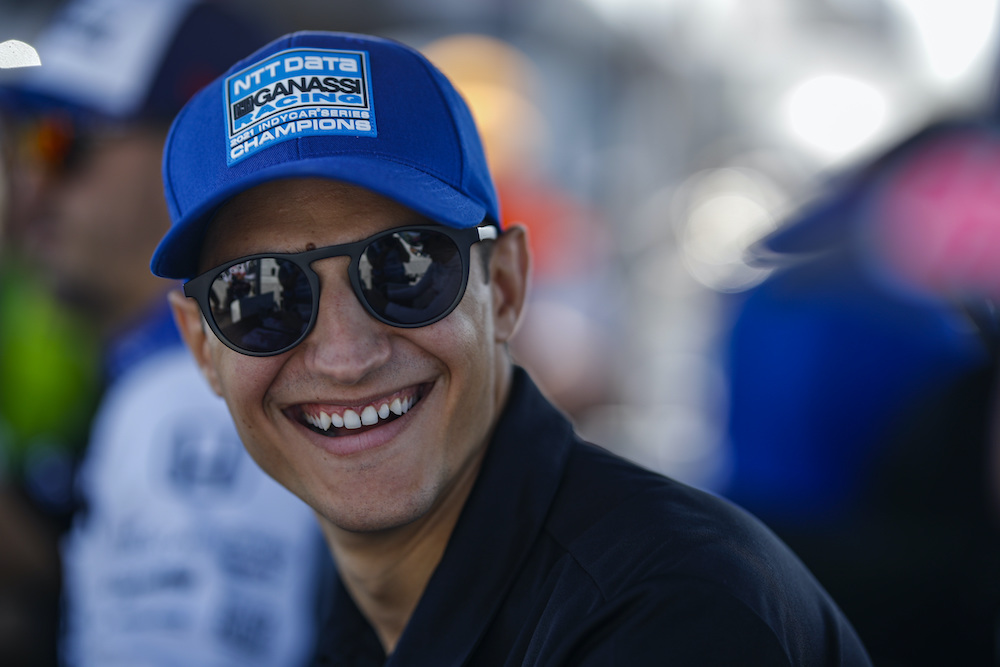
Palou's contract mess was a boon for lawyers, and an annoying distraction for everyone else. Jake Galstad/Motorsport Images
Q: First of all, well done on a great job covering this year’s series and thank you for explaining that the whole Palou nonsense was just a bad dream: who’d a thought Bobby Ewing was an IndyCar driver and what would Robin have made of it?
Now, I’m wondering, when will the British F4 Championship be officially on the Road to Indy ladder? Part of the TOCA package headlined by the BTCC, it gets national TV coverage on ITV4 but the commentaries go on and on and on and on about it being the first step to F1, when in fact it’s IndyCar that’s got the best out of it so far. Yes, Lando Norris came out of British F4, as did Oscar Piastri and Logan Sargeant. But so has Colton Herta, Devlin DeFrancesco, Linus Lundqvist and Louis Foster, but of course you’re not allowed to mention IndyCar over here in case you upset those delicate F1 flowers.
Speaking of the British Touring Car Championship, Scott McLaughlin has been magnificent but the BTCC is the best tin-top series in the world. If another IndyCar team was willing to try a similar left-field choice then somebody please give Ash Sutton a try out. A multiple champion with an open-wheel junior racing background and the most exciting driver in the series. Imagine mixing Tony Stewart with Paul Tracy and a large portion of A.J. Foyt attitude! Ash would take IndyCar by storm. I really hope something positive comes out of Jamie Chadwick’s Indy Lights test as well. She is wasted in that W Series and, let’s be honest, despite all the fine words, the last thing F1 wants is a woman driver. She belongs in IndyCar where she would thrive and be appreciated and it would maybe open a door for Alice Powell as well.
Peter Kerr, Hamilton, Scotland
MP: Thanks, Peter. I ended up cutting a whole section on Rosenqvist out of the dream recollection. Lord, there’s a lot of mess there, too, but it became too much to pack into one fantasy piece.
Hard to argue about the BTCC being the best tin-top series in the world, assuming we’re talking about decades ago and the Super Touring regulations. Sounds like Ash should book a flight and find a seat for the upcoming Chris Griffis RTI test. It’s the place where new and unfamiliar faces tend to pop up and pique the interests of team owners.
Agreed on Jamie. I bet she’d become a fan favorite if she’s able to land in Indy Lights and I can’t wait to see how she settles in with more tire, power, downforce, and speed.
Q: Looks like the Palou/CGR saga pulled what I'd like to call a "Game of Thrones." It was all anyone could talk about, the intrigue built and built and then poof, it was over and nobody knows what happened in the end. Will there be a sequel?
Bernardo, Canyon Lake, TX
MP: I sure hope it’s the first and last time we see such idiocy in the series, Bernardo, but I wouldn’t be surprised if it happens again in the near future. Lots of high-value drivers reaching the end of their contracts, and for the big spenders like McLaren who don’t seem to care about blowing up the series to try and get what they want, it’s now a well-defined tactic to try. Just not against Chip Ganassi. The idea of facing against that guy kinda scares me.
Q: So many complaints about IndyCar not wanting to compete against football on TV. I don't think it is IndyCar that is afraid. I think for the networks, football is easy money, where with IndyCar they have to work harder to sell advertising. Most of us would choose easy over hard. So IndyCar gets what they can. In the CART days there were a lot of consumer-type sponsors. Now sponsors are more B2B, and they aren't going to buy TV ads.
Kevin Kovach, Allen Park, MI
MP: IndyCar’s afraid, but it’s the smart kind of afraid, Kev. Avoiding the NFL has been a strategy applied by IndyCar since the Boston Consulting Group delivered their findings, and as I was told then by IndyCar CEO Mark Miles, the series will do its best to end its seasons before football takes over. For the most part, the series has held firm to that plan for a while now.
Q: I really enjoyed your Penske 1994/2022 story. Thanks. To hear the respect that Al Unser Jr. was throwing Will Power's way was very special.
That 1994 CART season was the first one I really followed all year long, mainly because of Paul Tracy. The parallels between Paul and Will are very interesting. Frequently surrounded by one controversy or another, both men were/are monster speed demons of their era.
Doug Mayer, Revelstoke, BC, Canada
MP: Thanks, Doug. It was also the first year where I really made an effort to bring my camera on the road for the Atlantic Championship rounds with our Genoa Racing/Greg Ray Road to Indy program, and I’m thankful for that because as soon as I was able to break away, I’d go shoot a CART session from wherever I could sneak into using my Atlantic credential. PT’s big rise, Mario’s Arrivederci Tour, Villeneuve’s rise, Mansell’s disinterest, Honda’s debut, etc. Amazing season, plus, Little Al and Team Penske and The Beast and that gorgeous Penske PC23 and a new challenger with the sublime Reynard. An electric time to be involved with American open-wheel racing.
Q: Since IndyCar is returning to Texas, any chance the high line tire session can be made mandatory for all cars? Everyone benefits but not all participate, and some don't take it seriously by consistently ducking below the line, a la Alexander Rossi.
Vincent Martinez, South Pasadena, CA
MP: Hard to force teams that IndyCar doesn’t own or control (except for Team Penske) to participate in a non-competition outing like that, Vincent. Only way I can think of to make it mandatory would be for IndyCar to write that in as a clause in the Leaders Circle contracts, but that would only obligate the top 22 to go out and rubber-in the second lane.
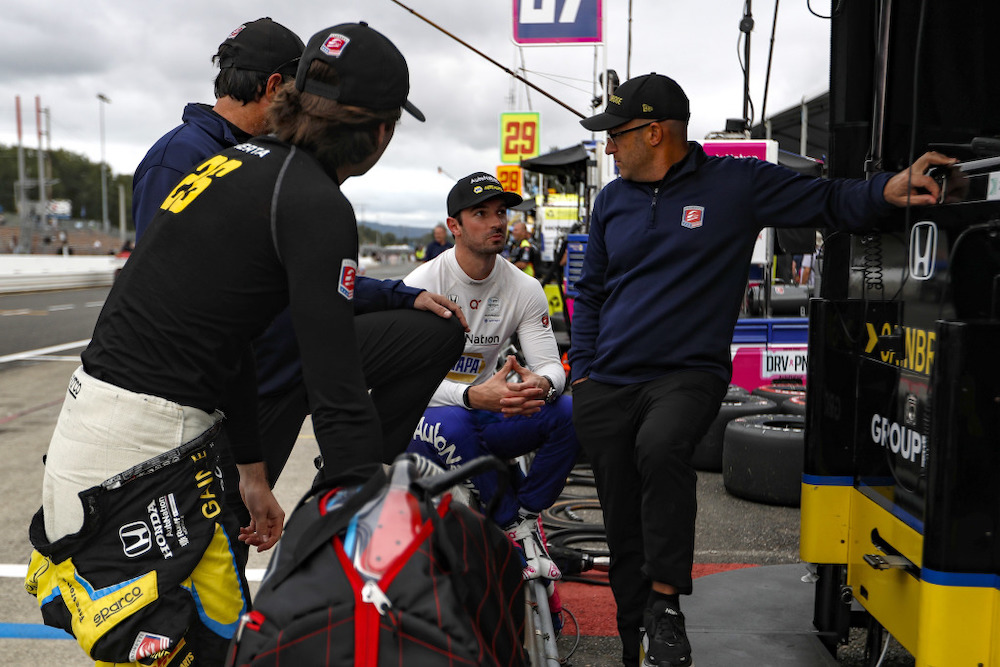
"Way to rubber in the second lane, Alex." Phillip Abbott/Motorsport Images
Q: During a couple of recent NASCAR broadcasts, they used car animations to explain suspension issues and also the “cause and fix” of the fire issue. I found the use of the animation extremely helpful and was wondering if NBC plans to add that capability for IndyCar in 2023?
Kevin
MP: It would be an awesome addition, Kevin, but the budget allocated to NASCAR coverage is vastly different than what NBC commits to IndyCar because NASCAR delivers greater ratings and advertising dollars. If you have two products and a single marketing budget to draw from, the majority of the funds will be put towards the one that’s out-performing the other. That’s what NBC has with NASCAR.
Q: You mentioned in the Mailbag that Toronto is one of the 2023 events that needs to be buttoned up. It is my understanding the city already has a contract through 2023 for the race. Is this issue because of the pit road?
I was talking to someone back in July on the Sunday of the Toronto race and this gentleman mentioned that he overheard on the officials radio the previous day that officials were looking to possibly move pit road to the long curvy straight of Lake Shore Boulevard by using the full width of the road in 2023. In fact, RACER had an article the week before the race in which Jay Frye said they had a plan for Toronto that would handle 30 pit boxes in 2023.
Christopher Kyriazis, Markham, Ontario
MP: I don’t know, my friend. I’d just heard from a few sources that Toronto was one of two events left (now that Texas is good) with a few final details to lock down, and admittedly, chasing the story wasn’t a priority amid the championship weekend and post-race follow-up content. But I have no doubt TO is on the calendar.
Q: Thanks again for great piece with regards to your article "The fever dream." You also wrote a great one on Colton Herta a while back with more or less the same gist. It well reflects what the state of auto sport is becoming lately vis a vis F1. It’ s a shame to see real good talent being lured with a possibility of a moment of fame. First we had the Palou/Ganassi/McLaren issue. Then Alpine/Piastri/McLaren saga, followed by the Herta/Gasly/AlphaTauri tracts. He’s a tremendous talent, as are Palou and O’Ward. I would hate to see them be deceived. McLaren started the party and the others are joining in. How will this change the way negotiations are done in the future?
This also sends a message to the established racers already in place: your seat isn’t safe; you don’t perform; you’re out. To a certain extent, this makes sense. Take Piastri for example; even though he landed the job, McLaren is still testing others. Same situation at Alpine and AlphaTauri. F1 targets the North American market and its great potential. America is also a great sponsor basket. Will we see the rise of "fast fame" -- here today, gone tomorrow? How will this affect American racing? Will we, in the future, see a drain of our talent and their exploitation as we saw in the past?
F1 has a way to do so: lure, exploit and spit out.
Dominic Adriano
MP: Pro/paid drivers have always needed to perform to keep their jobs, so that’s anything but new. F1 has never been a drain on American talent, but there were times -- the golden years -- where we had Gurney and Hill and other heroes on the grid at the same time. For the most part, we’ve had a single full-time driver, for a limited period of time, and some interlopers joining them on rare occasion, but I’m mostly looking back 30-plus years ago. In the most general sense, F1 loves our cities, attendance, and money, but DGAF about our teams and drivers.
IndyCar teams, as I wrote in July when the Palou nonsense fired up, spent a lot of money having their lawyers review all driver and sponsor contracts for any weaknesses in order to keep habitual-line-stepping team principals from robbing their talent and backers.
Q: I was looking through some old Indy seasons on Wikipedia and saw that in 1969 the series ran several races on dirt. (I also was surprised at the all-oval nature of the series in that day). Indy cars had transitioned to rear-engine by that time, but I was under the impression that rear-engine cars can’t run dirt due to weight distribution, which is why sprint cars (Indy cars’ cousin) are all front-engine.
Did teams carry special front-engine dirt cars in that era? And if they ran rear engines, why did rear engine sprint cars never catch on? Seems like rear engine sprints would be an easy grassroots training ground for IndyCar drivers.
Finally, does footage of any of these races exist? I would love to see an IndyCar on dirt but couldn’t find anything on YouTube.
Steve in Dallas
MP: We are well outside my area of expertise, Steve. Reminds me of when Robin would forward a sports car question that came into the mailbag with an email subject "HELP!" Here’s what I got from our mutual friend Steve Shunck:
'To the best of my knowledge and from things I've worked on in the past, 1973 was the first time a rear engine Sprint Car won a USAC feature -- Tri-County Speedway -- Dave Roahrig. SCCA racer and Minnesota stock broker Jerry Hansen won at St. Paul later in the year in a rear engine car but Tom Sneva was the one that made a name for himself in 1973 driving to six feature wins and finishing 11th in the points for owner Carl Gehlhausen.
"As for Champ dirt races being run by 'Indy cars,' I'm pretty sure Lloyd Ruby tried one year at the Hoosier 100 -- I think I remember hearing about ride height and size of tires being an issue. One the of great things about Champ Dirt Cars is the specs pretty much never changed... I believe from 1969 to 1974, with the exception of adding a roll cage and tire improvements, Big Al ran the exact same car Ford V8 Grant King built car. In 1969 he won two mile dirt races.
"Al won all five mile dirt races in 1970, the last year they counted toward the National Championship. He won three out of five in both 1971 and 1972. For 1973 and 1974, the team added a second car for Mario and between the two of them, they won seven out of eight races. Al winning the title in 1973 and Mario in 1974. Between 1970 and 1973, Al went four-for-four at the Hoosier 100 at the State Fair Grounds.'
"This (Al's Champ Dirt Car 1969 to 1974) was the best money-making car we had! We won over half the races we entered in this car with Al. We started racing this car in 1969 and ran it through the 1974 season. It was a very, very good car to all of us. Racing on the one-mile dirt tracks suited Al's driving style so well and it showed. Springfield, DuQuoin, Sedalia, Sacramento, Syracuse and the Indiana State Fairgrounds -- he totally dominated on all of them over the years. Al won the championship in dirt cars and so did Mario." Parnelli Jones
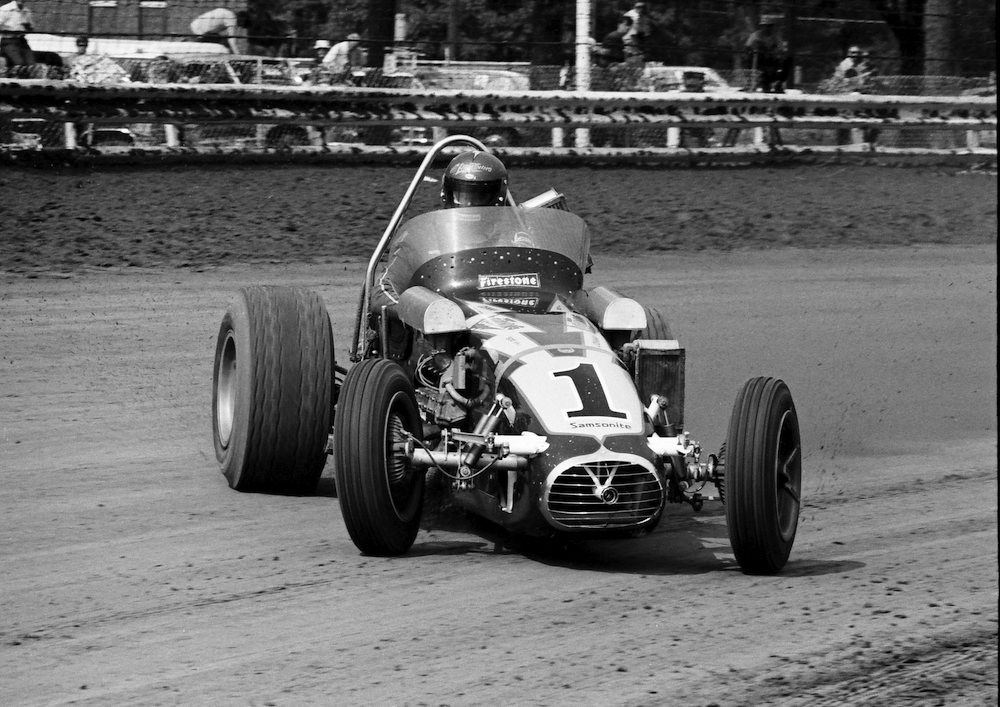
Al Unser heading for another good payday in the 1971 Hoosier 100. John Mahoney photo; Robin Miller Collection
Q: We’ve seen Michael Andretti’s effort to acquire an F1 team stopped at the last minute. We’ve seen Michael Andretti’s effort to start a new F1 team fought and ended by most of the big names in F1. Dietrich Mateschitz is rumored to be looking to float AlphaTauri for sale, the same team Colton Herta’s name is connected with for a drive in 2023. The Andretti name has also been connected with that story. This week we see Colton Herta’s chance to drive in F1 next year is sunk. All of this in less than a year.
Looking at the names connected with the Colton Herta debacle, a lot of the people critical of his move into F1 were the same people critical of Andretti’s attempts so far to acquire a team. Coincidence? Is there a part of the story here that we’re just not getting in the press?
Mike from Minnetonka
MP: Only part that wasn’t made part of the greater Colton story, as I think I wrote last week (I don’t recall, TBH) was what I heard about then-new F1 boss Stefano Domenicali having an interest in getting an American driver into F1, with that driver being Colton. Now, with another year on the job, it would appear Stefano’s interest in backing Herta’s given way to backing his teams and series.
If there’s one thing to come from all this that makes me happy, it’s the full exposure of F1’s asshattery on its Super License points system and the general hostile and exclusionary behavior being shown towards us on the driver and team front. I’ll keep saying it: They love our money but don’t love us. It’s been this way for almost as long as I’ve followed F1 -- back to the late 1970s/early ’80s -- but it’s no longer something that can be kept in the shadows.
CHRIS MEDLAND: If there’s something I love more than a good rant it’s a good conspiracy theory… No, but it all comes down to money and maybe that doesn’t get explained regularly enough. If you add an 11th team to the F1 grid, the existing teams all have to give up a percentage of their income from F1 because it gets split 11 ways rather than 10, so they don’t want that.
Nobody was against Andretti buying Sauber last year as it didn’t change that balance, although some teams seemed a little worried that the numbers quoted -- a relatively small amount for the purchase of an existing team would devalue their own teams.
As Stefano Domenicali has pointed out recently, Andretti isn’t the only team trying to enter F1, just the one shouting loudest so we’ve heard the most about it. But none of the interested parties trying to come in have got anywhere so far.
And as pointed out in another answer below, it’s the same with Colton. Teams want to be first to get a high-quality American driver in, so they’re looking at ways of doing that. If one team goes after a driver that the others felt was unavailable (due to the Super License rules) then those others are pushing back so they don’t miss out compared to a rival.
Q: So, last week when my letter on Super License points and junior category issues was run, it was mentioned in response to my opposition to the notion of forbidding the F3/F2 champion from running in the series the subsequent year that such is OK because the series aren't meant to be a palace for driver to hang around in. Well, that's actually the problem -- they should be series where drivers can hang around in for at least a couple seasons, even if they win the title first time out.
Pushing kids through the ranks so quickly is not only leading to a bloated driver market, it's also pushing them through too quickly, oftentimes before they're truly ready, and not giving them the level of competitive experience they need. F2 and F3, with their current arrangement, don't produce this reliably, especially not with the trashtastic engine in the F2 cars. Champions being able to wait in F2 or F3 for seats to open allows them to continue to hone their skills in (mostly) relevant machinery without having to bounce all over the motorsports landscape while also providing a yardstick for other up and comers to be measured by.
Now, I am nowhere near smart enough to figure out the specifics, but it doesn't take a genius to see the problems that pushing talent through the ranks too quickly causes. Things definitely need to change with how they handle moving champions along.
But a couple things I do know for sure are:
1) F3 needs this more than F2 does. F2 is sufficient just being where you get that last bit of experience with faster cars while F3 teaches more competitive needs at lower speeds, and F2's current state is perfectly suited for that -- aside from the unequal, unreliable garbage of an engine they run. (Have I made it sufficiently clear that I have a very low opinion of the F2 engine yet? It's probably the biggest problem with the current ladder system).
2) F3 is without any doubt too expensive in its current state. To that end, and to get people to stop whining about the current state of F3, it should be running Formula Regional cars with increased engine power and better brakes. All the FR engine packages are capable of reliably increasing their output by a minimum of 50 horsepower (close to 100 with the Honda K20 used in FRA -- I know this from direct experience with said engine), so it can certainly be done more cheaply than current F3 costs.
Rant over, Fox out.
FormulaFox
CM: Keep ranting! I love a good rant. So we’ll meet in the middle on this one, because I think if you win either series that should show that you are ready and not being pushed too quickly (you’re the best in that category, or at least one of, as I do take your point about terrible reliability).
So when it comes to F2, I don’t want F2 champions waiting around holding all the seats and stopping others coming up from below. But, I can see the argument making a bit more sense for F3, if drivers think they’re better served doing another year there -- on a bigger grid where there are more seats available -- then perhaps I can accept that being allowed.
I’m with you 100% that F3 is too expensive, as well. I remember Juan Manuel Correa stepped up to F2 before his 2019 crash because he couldn’t get a front-running F3 seat for anywhere near decent value, and would be paying similar for midfield F3 or midfield F2 drives so figured it made more sense to get into F2 earlier and start learning that car. And those costs haven’t dropped since then.
Q: We keep hearing about Colton Herta and Super License points. I would love to see a comparison. How many does Colton, Linus Lundquist, Kyle Kirkwood, Logan Sargeant, David Malukas and Pato O’Ward have?
Kenneth Roscher
CM: I’m so glad you asked this question Kenneth, because it puts the whole Super License points system into clear perspective where the holes are.
Colton has 32 points as I believe he can still choose the best three of the past four seasons, but if not then it would be 29 points over the last three years in IndyCar. Pato has 34 points for seventh, third and fourth over the past three IndyCar seasons.
Linus has a whopping 43 points after winning the Indy Lights title, being third in the championship the year before and winning Formula Regional Americas the year before that (FRA giving him 18 points alone). Before anyone yells, Colton would have had a Super License earlier but his Indy Lights P2 in 2018 didn’t count as the field was too small that year.
Kyle has 23 points for winning Indy Lights and Indy Pro 2000 in the past four years (it would be 25, but as Indy Pro had fewer than 16 starters at the first race the rules in 2019 make that worth only 80% of the points).
Logan has 27 points from P3 and P7 in Formula 3 over the past two seasons, meaning a top five finish this year in F2 (he’s currently third) would earn him the Super License.
David’s got 26 from his second-place finishes in Indy Lights and FRA (he loses his three points for P6 in Indy Lights for 2019 as that field was too small at the time).
Good results in lower categories can earn a Super License in the U.S. -- as long as the grid is big enough -- but then drivers reach IndyCar and it stops their ability to score anything meaningful unless they’re top two.
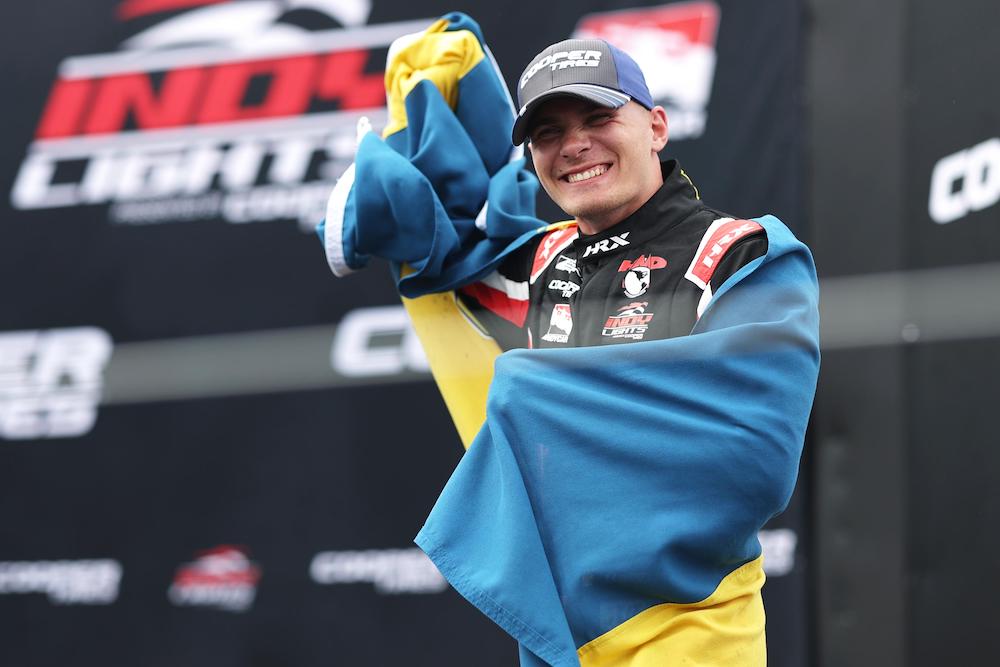
If Lundqvist isn't using his Super License points, maybe he can let Herta borrow some. Penske Entertainment
Q: This whole Colton Herta to F1 story has generated a lot of venom from the golden rope society. The whole thing kind of angers me, and no more so than the comments from "our own" American F1 team Haas F1.
When Haas started out, I understood Guenther Steiner’s comment that that they needed an experienced driver. But as the years progressed, his comments have become somewhat questionable with his "Newgarden can’t cut it" view and his hard stance against Colton Herta. Maybe it would be in his best interest to at least pretend to support Herta and/or an American driver? Just pretend, it would be a better look.
Steiner’s history of driver choices is questionable at best. Has anyone crashed more than Romain Grosjean and Mick Schumacher? And could you please explain to me the decision to go with Pietro Fittipaldi? This driver has accomplished absolutely nothing in his career. He could have gone with a number of young Americans that have shown some degree of success (Kirkwood, Crawford, Malukas…)
Angry in Buffalo
CM: Don’t forget that Guenther is a businessman, and that’s how he’s got to where he is. So he’s looking at it from a business perspective. If a standout American driver with a Super License was available he’d be all in, but if another team says they’re going to try and take that driver when they don’t have a Super License -- and so wasn’t on the shortlist for most teams -- he’s pushing back.
It’s not that he doesn’t want Colton in F1, it’s that he doesn’t want another team getting that exciting talent and commercial interest over his team, when his team didn’t believe Colton was an option.
You’re more similar to Steiner than you think though, because Schumacher’s expensive crashes have played a bit part in not wanting to keep him for 2023 and looking at more experienced options.
As for Pietro, his development was hurt by his big crash at Spa but he’s been a really reliable reserve for Haas to have. He jumps in the car and does as he’s asked when he’s asked, and is available for the majority of the season. You ideally want an integrated driver just in case there’s a last-minute need for them, and he’s integrated.
The three young Americans you mention don’t have Super Licenses so would be pointless as a reserve, and do you really want to see two young IndyCar talents sit on the sidelines and not racing in F1 instead? I’m not sure either of them would take that gig. (Crawford’s a moot point as he’s a Red Bull young driver, so Haas couldn’t pick him up as another F1 team did a while ago).
Q: By my calculations, if Shane van Gisbergen wins the Supercars title this year, he’ll have enough points to get a Super License. Looks like If Colton Herta misses out on an exemption, Dr. Marko has a licensed champion within the Red Bull family ready to step into the AlphaTauri.
B, NZ
CM: Yep. you’re right on the points. That would also be a mega crossover, although I think might take a little bit more time to get used to an F1 car coming from Supercars than IndyCar!
Q: Can you please explain the logistics of the Formula 1 summer break? How are the teams monitored for conformity to the rules and regulations? With the capabilities to work online, how is this enforced?
Steve in Florida
CM: Sure thing Steve, and apologies for the slow reply but the FIA promised some more info for you that took a while to land due to the recent triple-header.
All teams have to submit the dates of their two-week mandatory shutdown period to the FIA. They can choose when this is at any time during the gap between races, so some will pick the first two weeks of the break, some the last two, others start midweek etc.
The shutdown prohibits various aspects specifically related to F1 activities, including all R&D, design, testing and production activities, whether by employees or sub-contractors, directly or indirectly. Teams and their suppliers are even prohibited from communicating from each other on such matters.
The FIA police it by having cameras installed in team factories (for a variety of other reasons too, including to monitor the Haas/Ferrari relationship in Maranello), but they also have the ability to carry out spot checks on any team at any time.
It’s also seen to be self-policing, as working online leaves a paper trail that the FIA can access, and if any team were to do that, personnel are so desperate for the time off that it’s very likely that it wouldn’t take long for someone to blow the whistle that they’re being made to work during that period.
Q: When I saw a young Colton Herta compete in Europe in Euro Formula, I was thinking: Please, can a Formula 1 team take him as a development driver? Six years later, McLaren gave him an opportunity test a new car just as Andretti Autosport has announced its intention to enter F1 as the 11th team. Helmut Marko is looking into a plan to get him into an AlphaTauri. And now Alpine is also giving Colton a chance to test its car.
But what about Josef Newgarden? He is so far the best-qualified IndyCar driver and a better U.S. hopeful who could roll the dice and drive a Formula 1 car based on his track record and Super License status. But the Big 4 (Mercedes, Ferrari, Red Bull, and McLaren) have their drivers set. Alpine would only be the best eligible choice to test Newgarden.
What it will take for a Formula 1 team to test out Newgarden?
JLS7, Chicago, IL
CM: I actually don’t know the answer to this. Apologies in advance to Josef for even suggesting this, but it might be that his age plays against him, because by the time pre-season testing starts next year he’ll be 10 years older than Colton. If you’re an F1 team looking to bring an IndyCar driver across, then if you’re sensible you’re investing in them and giving them time to make the transition (if they need it). So the younger driver will be more attractive on that front.
Plus, Colton can attract big backing from the likes of Gainbridge, and from this side of the pond I haven’t heard that Josef would open the same doors. The latter part is a shame but there are also commercial considerations too. All that said, now the Herta move seems to be off and Alpine won’t test him, it would be great if Alpine did give Josef a run out.
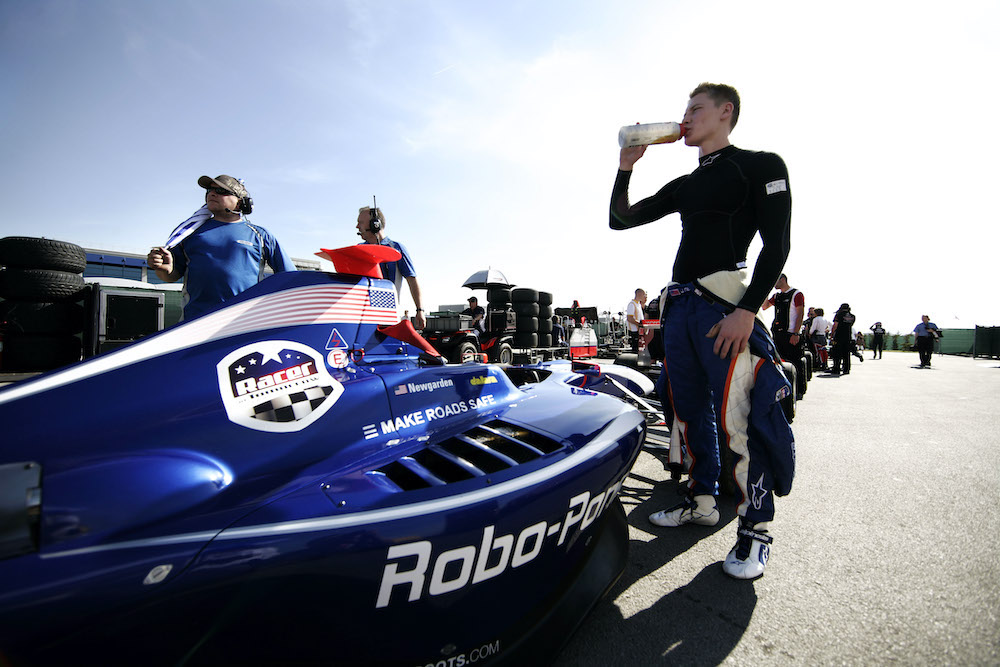
Newgarden jumped out of the F1 pipeline after a single season of GP3. Drew Gibson/Motorsport Images
Q: Why does NASCAR Cup live with all the flats and blowouts that send the cars into the walls, crashing themselves and others in the aftermath? I also watch F1 and IndyCar and they don't have the problems with tires the Cup cars seem to tolerate. F1 or IndyCar would not put up with this for a minute. What gives? I would think the drivers and car owners would be going ballistic and demanding a fix, but it has been going on for years.
Donald McElvain, Polson, MT
KELLY CRANDALL: To start, having a flat or blown tire in NASCAR is not new, and whether it’s chosen to be believed or not, Goodyear is pretty conservative with its tires. After the 2008 fiasco at Indianapolis Motor Speedway, the tires got much harder and you’re more likely to hear drivers complain they need to wear more than they are wearing too much.
The reason you don’t see or hear anyone going ballistic is that they share in the blame. Goodyear has their recommended PSI for teams every weekend, and they tell teams that if you go below that, you’re getting into risky territory. Crew chiefs up and down pit road -- if they are being honest -- will tell you that they rarely adhere to those recommendations and are always going by what they think is going to help them. Ever walked down pit road before a race? You’d think there were flat tires bolted on before the race even started because teams are running such low air pressure. So they are also to blame when a tire blows.
But this year, there is also another factor, and it shouldn’t be a surprise: Teams, NASCAR, and Goodyear are learning that Next Gen puts a lot of load on the rear tires, and that’s why they are routinely going down. Bristol was the perfect storm because you have a car that puts a lot of load on the tires at a very fast racetrack where the car is being abused. So all of that added into whatever air pressure teams are running, and it wasn’t all that much of a surprise to see tires go down.
THE FINAL WORD
From Robin Miller's Mailbag, 25 September, 2013
Other than Tony Stewart, who drove midgets, sprints and Silver Crown cars before Indy, none of the others in recent times have ever driven anything that would ever come close to being that loose and having to actually steer the car.
ROBIN MILLER: Talking with Dario Franchitti about that the other night and he said it was just so different and so hard to adapt. He said Jimmie Johnson was always trying to help but he just couldn’t get comfortable driving loose enough. On the flipside, A.J., Parnelli, Mario and Gurney had no trouble adapting to tin tops in the ’60s and ’70s and they all won races. Last time I checked, no NASCAR driver has ever won an IndyCar race, or really come close.
Presented by:
Marshall Pruett
The 2026 season marks Marshall Pruett's 40th year working in the sport. In his role today for RACER, Pruett covers open-wheel and sports car racing as a writer, reporter, photographer, and filmmaker. In his previous career, he served as a mechanic, engineer, and team manager in a variety of series, including IndyCar, IMSA, and World Challenge.
Read Marshall Pruett's articles
Latest News
Comments
Comments are disabled until you accept Social Networking Cookies. Update cookie preferences
If the dialog doesn't appear, ad-blockers are often the cause; try disabling yours or see our Social Features Support.