The RACER Mailbag, May 25
Welcome to the RACER Mailbag. Questions for any of RACER’s writers can be sent to mailbag@racer.com. Due to the high volume of questions received, we can’t guarantee that every letter will be published, but we’ll answer as many as we can. Published questions may be edited for length and clarity. Questions received after 3pm ET each Monday will appear the following week.
Q: Can we play a game of "what if?" Let’s say Sage, Santino, T.K. or even J.R. (none of whom I’d count out) win the 500. Any of them convert that into a rest-of-season gig?
Shawn in MD
MARSHALL PRUETT: If the prize money for the win comes with an extra $4 million to cover the budget to run one of them, it’s on!
Q: The pit-in location at Indy appears to be around Turn 3. Will that be the same on race day, or will it be right after Turn 4 as in previous years?
Tom Corso
MP: Turn 4.
Q: I would like to start a grassroots movement to convince NBC to not cut away from the race to show us Scott McLaughlin's or Will Power's or Josef Newgarden's or Scott Dixon's or Jack Harvey's or any other driver's wife or girlfriend during the last 50 laps.
Where should we direct our correspondence?
Mike, West Coast, USA
MP: Send that to SandyAndrettisbigchurchhat@gmail.com.
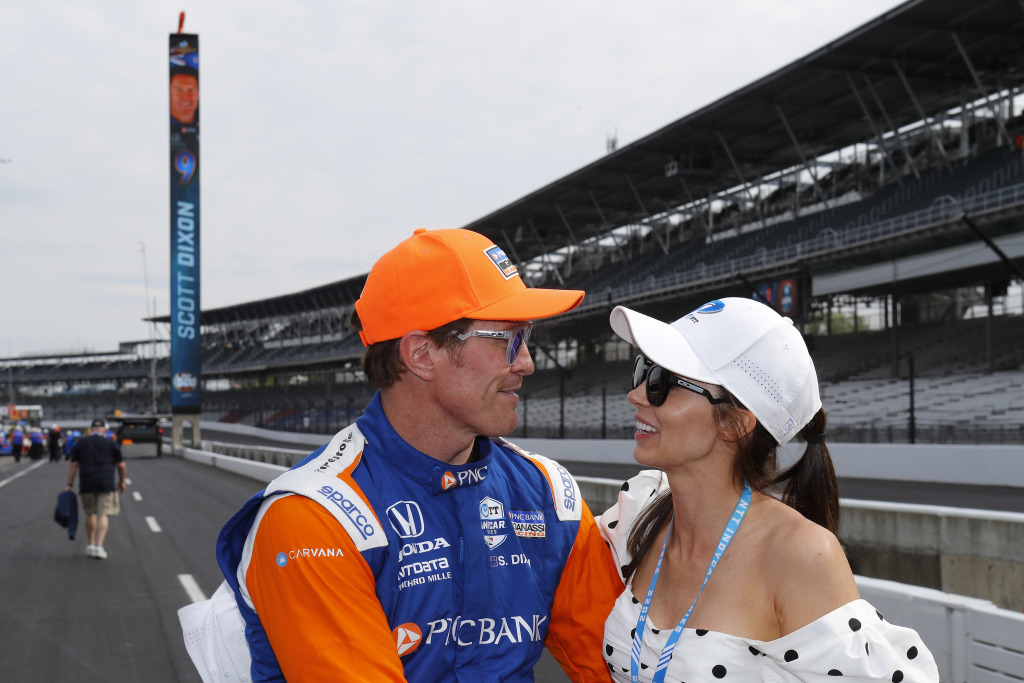
This one’s for West Coast Mike... Phillip Abbott/Motorsport Images
Q: I was at the IMSA WeatherTech race at Mid-Ohio and I thoroughly enjoyed it! I was on the opposite end of the track of where the No. 38 LMP3 car stalled to bring out the only full-course yellow. After watching the full race a few days later, I didn’t realize that the car was stalled on the racing surface, borderline on the racing line itself. On top of that, everyone was in the middle of green-flag pit stops and it felt like the IMSA officials waited for everyone else to complete their stops before putting out the full-course yellow. I kept thinking it would be a safety issue should someone come around a corner and run into the stalled car. Could you please explain what officials take into consideration in that situation and do you think that could be a safety issue?
Brandon Karsten
MP: IMSA race director Beaux Barfield, a former driver, tends to lean towards trusting his teams and drivers to apply their smarts and expertise to manage a situation like the one you’ve mentioned. I’m sure that if he felt the No. 38 was in imminent danger, he would have paused the race in an instant. The fact that he didn’t suggests he felt that pre-yellow pit stops would be fine to let happen before intervening. IndyCar tends to act based on a script of predetermined actions. IMSA tends to go with its gut.
Q: I feel like I should know the answer to this, but I don’t. In IndyCar, are the folks over the wall on a pit stop the same people doing all the mechanical work, or are they specialists who just go over the wall? And is it the same for all teams, or do only the big boys use specialists? I see in NASCAR they’ve got ex-football players carrying tires and such, but I’m not sure how it works for IndyCar.
Chris Schaffner, Concord, MA
MP: Two totally different approaches, Chris, with almost entirely full-time crews taking care of the cars and the pit stops. Only on rare occasion will we see a team draft in outside crew, but that’s usually just a case of an IndyCar team pulling in some of its crew from IMSA to help with an extra car.
Q: Why were no cooling fans used to cool the cars (as in F1) between IndyCar pole qualifying sessions? Did cruising around behind the pace car really help that much?
J R Hannon
MP: I’m sure I heard the various cooling fans blowing, so I’d be surprised if every team stopped doing what they do to cool the car every time they return to pit lane. Yes, the laps really helped to cool that much. The fastest front row in history was produced, which wouldn’t have been possible if the cooling measures were inadequate.
Q: I like when I know the names of the crew and not just the driver. These guys are as important as the drivers in my opinion ,and it's always interesting to see when they make moves or switch drivers/teams. Could we get a list of the crew chiefs and engineers for all 33 cars this year? I remember years ago they used to list the crew chiefs somewhere. But that was probably before engineers existed!
Steve, Indianapolis
MP: I’m with you here, Steve. I’ve often done those lists with race engineers and crew chiefs, but just haven’t had the time so far this year. If I can, I will. As an aside, engineers have always existed -- they were just called car chiefs, crew chiefs, or chief mechanics before the role was spun out into a dedicated job.
Q: After Scott Dixon set the second-fastest pole speed ever at Indy, the thought occurred to me that it may have been the fastest lap ever for a car under 1,000 horsepower. Quite an achievement when you consider the cars are heavier than they used to be. And the center of gravity is higher with the addition of the aeroscreen. These drivers, engineers, and manufacturers like Dallara have really achieved a lot considering the parameters they work in. Just a little food for thought.
Don
MP: That’s a great call, Don. Between 1994’s The Beast and all the thermonuclear Buick turbos from the 1990s, the big lap speeds were certainly made possible by giant power. Running over 230mph with ease, while lacking 25 percent of the horsepower (or more) tells you a lot about the aero efficiency we have today and the quality of Firestone’s tires.
Q: Nothing against a solid driver in an undercooked program here, but I can’t find the prop bet on Caesar’s Sportsbook so I guess I’ll have to propose it here. Over/under on how many laps before Stef Wilson has “electrical problems” and parks this thing he’s spent about 20 minutes in all month? I say seven. At the very least we don’t make it to the first pit stop. In all seriousness, if he’s running around in the back all day, does Larry at some point say, "Enough already. I want my car back in one piece"?
Ryan, Point Pleasant, NJ
MP: They ran strong on Monday with 88 laps turned -- nearly half a race distance -- and were right behind Foyt’s JR Hildebrand in P28 and ahead of two-time Indy 500 winner Juan Pablo Montoya. Of the four Foyt-owned cars, Wilson was second, so I’m not concerned. If anything, I’m impressed.
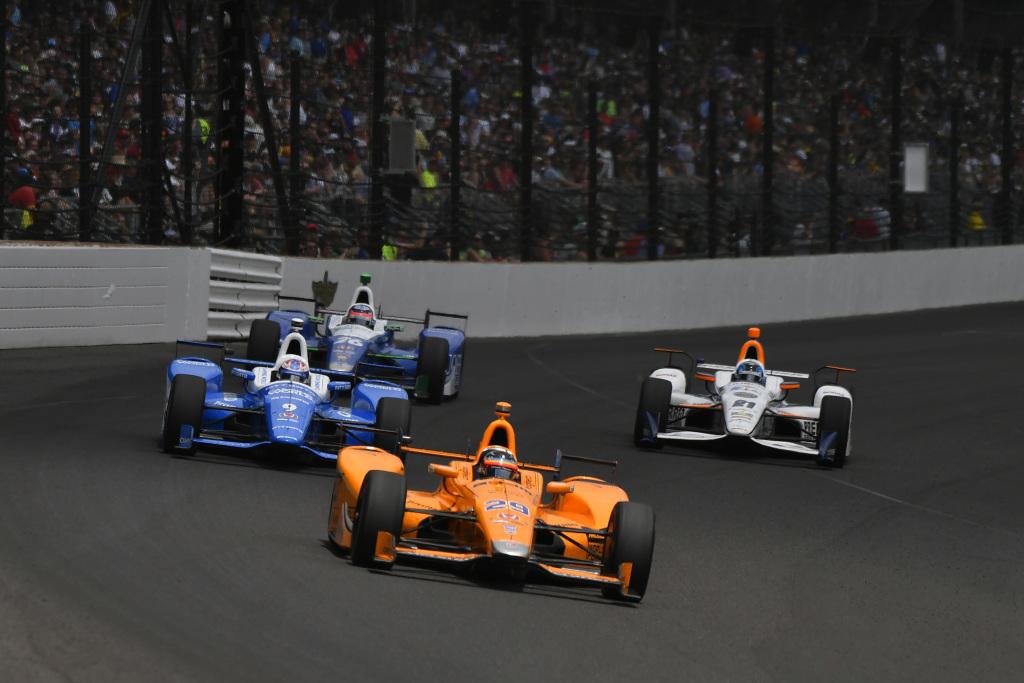
Maybe Fernando Alonso just liked the way his car looked better in 2017? Scott LePage/Motorsport Images
Q: RACER published a story about Fernando Alonso last week in which Alonso said the aeroscreen made his return to the Indy 500 less likely. He said, “In 2017, there were a lot of overtaking, and I loved that race. There was a little bit less love in the last couple of years when you cannot overtake.”
This seems dubious to me. In the 2021 Indy 500, there were 361 overtakes made, and in this month’s weekend’s Indy Grand Prix, it seemed that there was a ton of passing. Are these anomalies? Is Alonso right or wrong about this?
LA IndyCar fan
MP: I’ve been a fan of Alonso’s since he was with Minardi, but the topic of "Fernando complains about something" is one to expect on a regular basis.
Q: Why is the pit wall so low at Indianapolis? Watching the shots of Dixon's wife, you could actually see him fly by and if she wanted, she could have reached over and touched the track he was driving on! It seems like an unnecessary hazard, because what happens if we have a crash on the front straight and a car flies through the air or debris ends up where the teams are? I know R.P. has a lot of jobs on his IMS to-do list, but re-erecting the kind of wall/fencing that was in place when the MotoGP bikes were here seems obvious to me.
Jordan, Warwickshire, UK
MP: It’s not actually all that low; there’s a trench that runs between the straight and pit lane and while standing in there, it’s deep. Pit lane, however, is somewhat elevated, which is what you’re seeing.
I hear what you’re saying, but I like it the way it is.
Q: Still getting over Dixon’s pole run, and had a couple of questions. Did all teams run with the fuel buckeye covers on both sides for qualifying? Also, I watched a video of Arie Luyendyk’s record run, and noticed that the rear wing on the Reynard was negative like they run today. How do the downforce, drag, and horsepower numbers of the ’95 Reynard-Ford compare to the IR-18/Honda of today?
Steven Friedland, Morristown, NJ
MP: We weren’t allowed on pit lane during Sunday’s runs, so I can’t say on all buckeye covers, but I’d have to assume they were all in place.
Can’t say on the Reynard’s 1996 Indy 500 aero, but Arie says the Ford-Cosworth turbo V8 was wound up to 800-850hp for qualifying; with the Chevys and Hondas on road course push-to-pass boost, the estimate is somewhere around 750hp.
Q: I was watching the broadcast during the Fast 12 qualifying runs and took notice of the throttle and brake graphs during each run. I noticed a trend where all the Chip Ganassi Racing cars had some amount of brake applied. Only one other team had something similar. I would think that any amount of brake on a qualifying run would be disastrous, and I know the teams go to great lengths to make sure the brake pads are pulled back from the rotors before the run. I could understand that it might be noise, but not on all five CGR cars. I was surprised that Townsend Bell or Hinch didn't comment about it.
Is CGR dragging a brake to help with turning? I did notice that the brake wasn't being used in Fast 6 runs.
Bman from E. Coventry, PA
MP: I think Towny finally noticed the red brake trace and mentioned it was an error with the data/graphic. I first noticed it with one of Sato’s runs on Saturday; it was just a bug on the screen and not evidence of braking on their runs.
Q: During Scott Dixon’s Fast 6 effort I noticed he had a different strategy than every other driver on Sunday. With NBC’s fantastic qualification graphic we could see when the drivers would shift. Most followed a strategy of running in sixth gear down the front straight through Turn 2 and downshifted into fifth for the backstretch through Turn 4. Most would shift back into sixth before passing the pit wall. It kept speeds below 237 entering Turn 3. In contrast, Dixon would downshift only before entering Turn 4 and get back into sixth immediately exiting 4. He had significantly higher speeds entering Turn 3.
I know there are a lot of variables and changes the drivers are making that we cannot see, but why wouldn’t drivers want to be all-out down the back straightaway?
What makes Turn 3 different from Turn 1? Speeds into 1 approached 242, while most were below 237 into 3?
Dustin Koetter, Sellersburg, IN
MP: It all depends on the team’s choice of gearing and the anticipated speed they’ll be able to achieve in whatever the forecast calls for with wind, etc. One team I spoke with tried a top gear that would have produced a 245mph top speed in the Sunday Fast 12 practice session; they hoped their setup, combined with favorable ambient conditions, would help them to pull a crazy top speed number, but they were way off and this driver spent the session in fifth gear because sixth was way too tall. It’s likely that Dixon had the right gears at the right time; a headwind into Turn 3 and a tailwind out of Turn 4 was definitely evident on a number of runs by the other drivers.
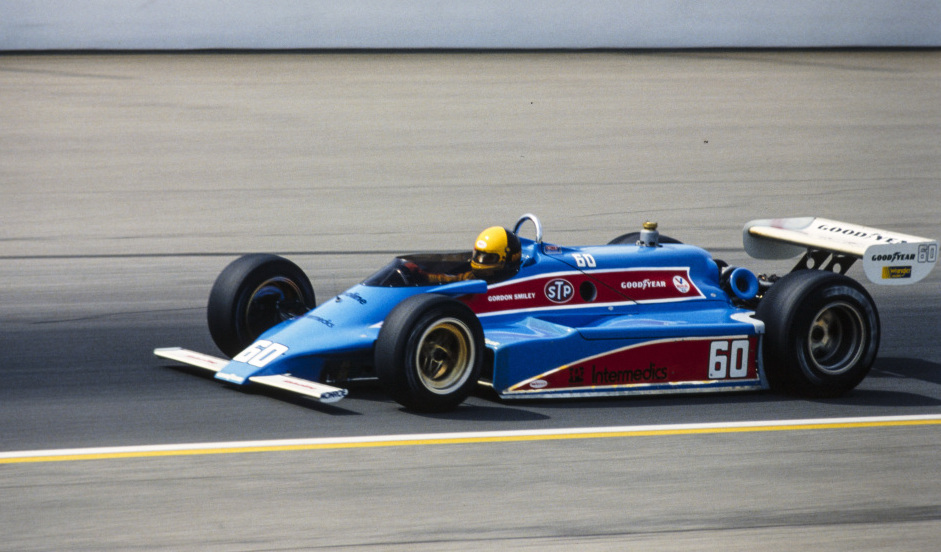
A year before his tragic death, Gordon Smiley started eighth in the 1981 Indianapolis 500 with this Patrick Racing Wildcat Mk8-Cosworth but crashed out of the race. Motorsport Images
Q: 40 years ago, two drivers lost their lives in a span of a week. In F1, Gilles Villeneuve died during Friday practice at Belgium, and Gordon Smiley while qualifying for the Indy 500. Once upon a time these two raced each other in the Formula Atlantic series in 1976 and were fierce competitors. Gilles went on to greater heights racing for Ferrari in F1, while Smiley at times showed some promise during his stint in Formula Aurora and in IndyCars. So why did Smiley get overlooked?
Alistair, Branson, MO
MP: He was a classic journeyman driver who raced whatever he could find and wherever he could find it. He’d done two Indy 500s before he was killed trying to qualify for a third, and was known for being fast and brave. From what Robin told me, it was the latter part -- his supreme bravado -- that didn’t seem to land well with team owners, especially at Indy. Funnily enough, Mr. Villeneuve was among the most daring drivers of all time, but it was also apparent he possessed the kind of talent that only comes around one every couple of decades. I’ve never heard that assertion made for Mr. Smiley.
Q: What happens to the tires that are used for a qualifying run? Do they still have to start the race on the tires they qualify on? And if you attempt multiple times, I figure those tires are no good for any other qualifying runs, but are they still good enough to be used for the following Monday practice and/or Carb Day? Is it still 36 sets of tires per entry?
Dan, Linn Grove, IN
MP: Teams are no longer required to start the Indy 500 on the tires they used in qualifying and yes, they have 36 sets to manage across the opening lap of practice to the final lap of the race. When we have rain delays and whatnot, it favors the teams by ensuring they have plenty of new or low-mileage rubber at their disposal on Sunday.
Q: Over the past couple of months I've read quite a few articles and theories about Ilmor vs HPD and how Ilmor finally fixed its drivability issue. They all reference Ray Gosselin moving over to Ilmor with his Honda engine knowledge.
If most of the paddock thinks that Ray Gosselin took his engine expertise from HPD and brought it over to Ilmor, why isn't Honda going after him for trade secrets? It is quite obvious that his time working with HPD while at Andretti has heavy influenced the changes Ilmor/Chevy have brought this year.
Barney
MP: Quite the opposite. One thing that hasn’t been questioned is Gosselin’s integrity. The big and well-known area of separation between Chevy and Honda through 2021 was Honda’s willingness to tailor the engine’s response characteristics to the wants and needs of each driver. With Ray’s arrival, he’s ensured this has changed and with it, Chevy has erased one area of performance and optimization it, for reasons unknown, did not address as aggressively as its rival.
If Honda wants to go after Ray, every driver who leaves a good team for another good team will need to be sued because they all take similar things with them -- how their former team has a process that’s better than the new team, and so on. And for the sake of clarity, Chevy, not Honda, makes their engine calibrations and finer engine data available to their teams, so you can’t take what you don’t have.
Q: Although I’m not a devout follower of IndyCar, I always read the Mailbag. I admit to a lack of understanding of the economics of IndyCar that has allowed GM and Honda to dictate these needlessly complex engines which are pushing car weight toward a ton. (I assume it’s partially green posturing, and some Silverado ad revenue for NBC.) Would annual lease expenses be more for engines produced by Gibson or Cosworth? Hard to imagine IndyCar fans are either committed General Motors or Honda fans. There has to be more than that. Help me out.
Jack Woodruff, Vail, CO
MP: Need to look at the big picture here, Jack, with how much Chevy and Honda support the series through their engine leases, where they lose money on every one, event sponsorships, event activations, TV commercials, etc. Yes, going to a generic engine would come at a lower cost, but then you break the economics of the series.
There are many committed Chevy/Honda fans -- I know because I hear from them all the time. The new hybrid engine formula is what Honda demanded in order to stay in the series, and in time, Chevy agreed. Like NASCAR, IMSA, F1, WEC, etc., manufacturers are the economic lifeblood. I’m sure some are nostalgic for the days many decades ago when that wasn’t the case, but, as JPM likes to say, "It is what it is."
Q: Multimatic is headquartered in Canada. Hinch is Canadian. Does Multimatic + Hinch = Hinch driving the Multimatic-developed Mustang GT3 in IMSA or any other GT3-based series?
Jonathan, Ventura, CA
MP: If I say yes, will that force Multimatic to make it so? My money is on The Mayor landing in IMSA, but probably more in the Porsche world than a new Ford that’s two years away.
Q: While attending the Indy GP I had a conversation with a Yellow Shirt, and he pointed out the new building inside of Turn 3 of the oval that was constructed to house the BMW performance driving school or whatever they are calling it. I commented about the building bearing IMS branding and not BMW. His response was the BMW branding would go up in September. That made me wonder if the delay until after the end of NTT IndyCar season was because the series and track wanted to have the new branding correspond to announcing BMW as a third engine supplier. Am I on to something, or am I victim of my own wishful thoughts?
J Panther
MP: As much as I wish a building inside Turn 3 is a harbinger of something bigger with BMW, sadly, it isn’t.
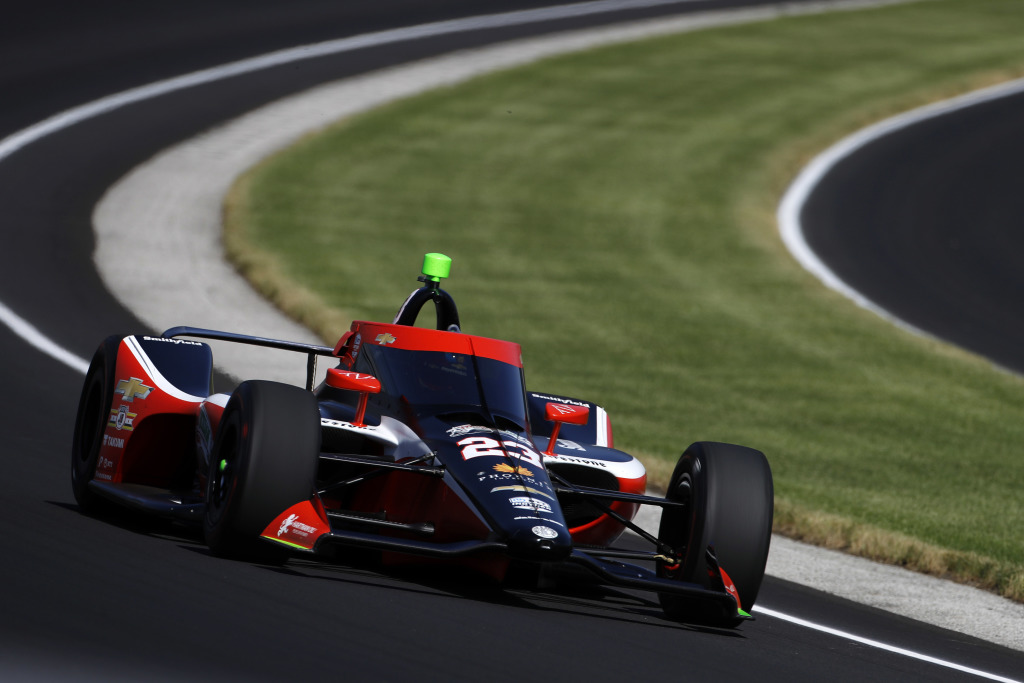
They say it's Ferrucci in there, but could it really be the first autonomous Indy 500 entry? Phillip Abbott/Motorsport Images
Q: Part of the allure of open-cockpit racing is seeing the driver. Why would IndyCar allow the aeroscreen to be tinted when the helmet visor can be tinted instead?
Andy, Farmington, MI
MP: Completely agree. My guess is this will be fixed before we get to the next race in Detroit.
Q: Is it really necessary for the broadcasters to mention the team name every time they refer to a driver? Wouldn't it be better if they were to mention the sponsor and not the team name? Or maybe Leigh Diffey just likes saying Juncos Hollinger Racing or Rahal Letterman Lanigan over and over and over again. Same complaint goes for IMSA announcers.
DA, Chicago
MP: It’s the stylistic standard, so they’re doing what they’re supposed to do. Counter to that, it isn’t their job to promote each team’s sponsors -- not when IndyCar’s TV is paid for by advertisers.
Q: IMSA seems to be very opposed to a Glickenhaus entry in the new GTP category. The DeltaWing was allowed to run for several years, albeit with a rule set that prevented it from being consistently fast. The 007 LMH is beautiful and a great experience in engineering. Isn't the whole point of sports car racing that you encourage as many different solutions to a set of regulations as possible? Can you shed light on IMSA's perspective?
Kyle
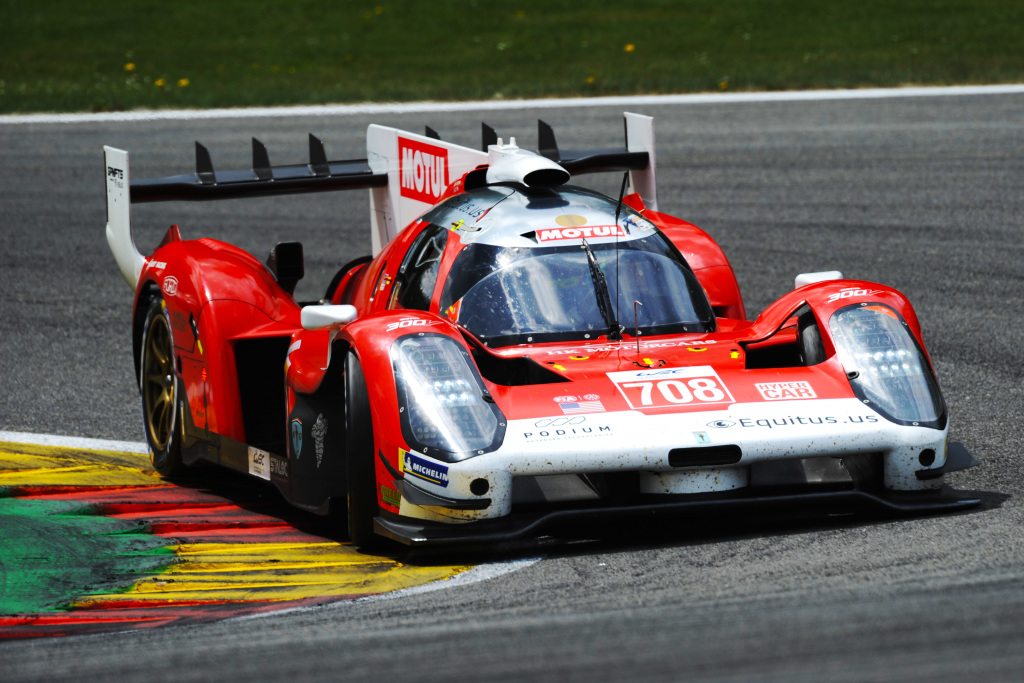
If you want to see Glickenhaus Racing’s 007 LMH, you'll have to attend a WEC race. Motorsport Images
MP: Biggest difference here is ALMS founder/IMSA owner Don Panoz, who sold the series to NASCAR/Grand-Am, carried influence within the new IMSA series that followed and ensured he was able to run his DeltaWing. Jim Glickenhaus doesn’t wield the same influence, unfortunately, as I’d love to see his cars run in IMSA. A greater point to consider is Jim’s loud and public complaints are the exact kind of thing NASCAR/IMSA abhors, and if history is a guide, Glickenhaus will not be successful using this approach.
Q: Chip Ganassi was quoted as saying: "Parkland believes in our entire organization and I’m proud to share that they’ll be the first sponsor to support both our NTT IndyCar and Indy Lights series teams.” Looks like CGR will field an Indy Lights team in 2023. Is this proof that Penske will incentivize IndyCar teams to have a Lights team?
Oliver Wells
MP: Well spotted, Oliver. That stuck out to me as well, but the team says it won’t be starting a Lights program; the money will go to Kyffin Simpson’s TJ Speed team.
Q: In last week's Mailbag you mentioned you could not recall if there was ever an IndyCar and ARCA combo. Well, check out the Champ Car race at Milwaukee on June 4, 2005: It was paired with an ARCA race. And yes, it was an odd combo.
Ben Malec, Buffalo Grove, IL
MP: Thanks, Ben. Yep, there were lots of IRL+stock car series events back in the day. Friday nights were the only time I got to see NASCAR Truck races since they were often the opening act in the IRL’s all-oval days. They also drew bigger crowds on a regular basis than the Saturday night IRL feature…
Q: You mentioned that the boost given for Friday and Saturday
is "road course boost." Is extra boost given for all road and/or street course races? Also, is boost given for the 500? And if so, is it the same as Friday and Saturday?
Bill, Cincy
MP: IndyCar has given drivers road course boost for Fast Friday and qualifying weekend for about 10 years. It’s just for those days, then back to low boost.
ROBIN MILLER: After Jim won that race, he was walking back to the Holiday Inn (at least three miles away) with his driver’s suit tied around his waist before somebody recognized him and gave him a ride. That was him, a self-made badass and not one to ask anybody for favors or help.
Marshall Pruett
The 2026 season marks Marshall Pruett's 40th year working in the sport. In his role today for RACER, Pruett covers open-wheel and sports car racing as a writer, reporter, photographer, and filmmaker. In his previous career, he served as a mechanic, engineer, and team manager in a variety of series, including IndyCar, IMSA, and World Challenge.
Read Marshall Pruett's articles
Latest News
Comments
Comments are disabled until you accept Social Networking Cookies. Update cookie preferences
If the dialog doesn't appear, ad-blockers are often the cause; try disabling yours or see our Social Features Support.