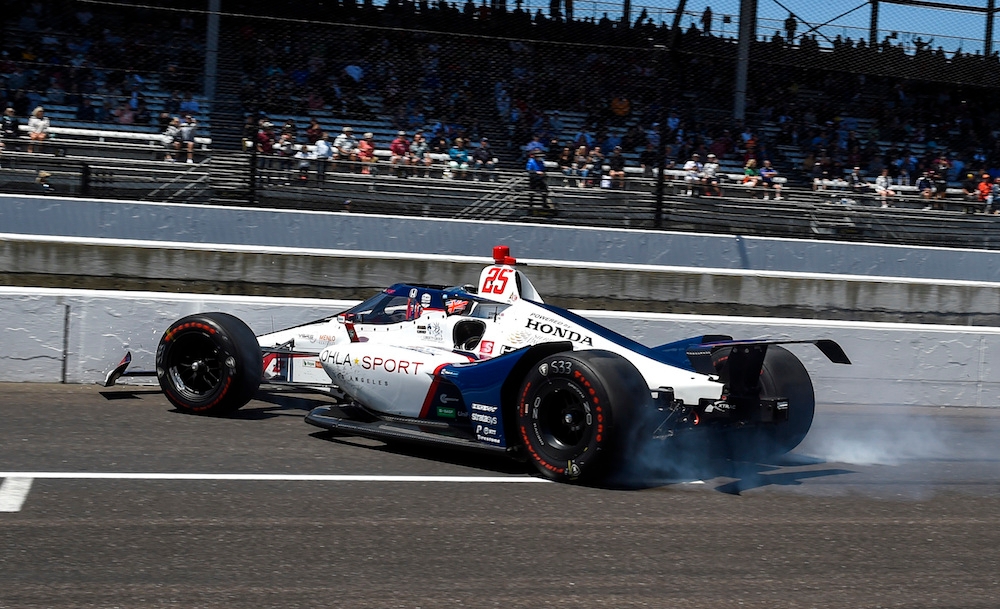
Motorsport Images
IndyCar acting to minimize 'pullback' brake accidents at Indy 500
After witnessing an embarrassing number of drivers fly past the 60mph pit lane speed marker in a dangerous manner and either crash or receive speeding violations at last year’s Indianapolis 500, the NTT IndyCar Series and brake vendor PFC are hoping to avoid another spate of incidents caused by "pullback" brake configurations.
Within the brake calipers made by PFC, teams have pairs of spring-loaded levers that can be used to pull the brake pads back from the brake disc and prevent drag -- a loss of straightline speed -- being created by the pads and discs making contact when the brakes aren’t in use.

Just as teams have the ability to adjust those levers to require light pressure from the driver’s foot on the brake pedal to push through the "pullback" threshold, team can also tune the levers to require immense force to break through the threshold and get the pads to clamp against the discs. Once pressure is taken off the brake pedal, the levers pop back into place and move the pads away from the discs, and the cycle starts anew.
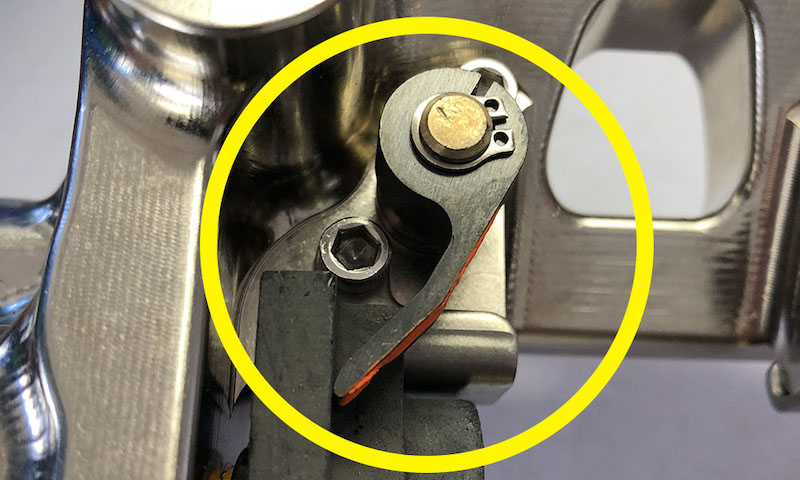
Some teams took an aggressive approach to setting up the levers on their brakes at Indy last year, resulting in a rash of incidents at pit entry. Image by Marshall Pruett
As seen in the 2021 Indy 500, some multi-car teams went for an aggressive pullback approach which forced their drivers to pump the brake pedal in a frenzied panic to get the car to stop on entry to pit lane, and while IndyCar opted not to ban the levers for Sunday’s race, stricter enforcement of ‘normal’ settings for the levers as defined by PFC will be part of the pre-race technical inspection process.
“There’s a reminder going out to teams from PFC about the process that they’re expected to follow,” IndyCar president Jay Frye told RACER. “You can’t say what was done last year was not within the rulebook, but we’re going to make sure processes defined by PFC are completely followed to a T. And there's been nothing that would make us think that anyone will not following the process correctly."
Some teams also opt to remove the levers altogether for the 500.
"But for sure, we’ll check in pre-race tech," Frye said. "We think we've got a pretty good process to check them as they come through to make sure that there are in compliance.”
Presented by:


Marshall Pruett
The 2026 season marks Marshall Pruett's 40th year working in the sport. In his role today for RACER, Pruett covers open-wheel and sports car racing as a writer, reporter, photographer, and filmmaker. In his previous career, he served as a mechanic, engineer, and team manager in a variety of series, including IndyCar, IMSA, and World Challenge.
Read Marshall Pruett's articles
Latest News

Comments
Comments are disabled until you accept Social Networking Cookies. Update cookie preferences
If the dialog doesn't appear, ad-blockers are often the cause; try disabling yours or see our Social Features Support.