The RACER Mailbag, November 24
Welcome to the RACER Mailbag. Questions for Marshall Pruett or any of RACER’s other writers can be sent to mailbag@racer.com. Due to the high volume of questions received, we can’t guarantee that every letter will be published, but we’ll answer as many as we can. Published questions may be edited for style or clarity.
Q: I read the comment in a recent Mailbag about your jarhead wife (blessings on her continued recovery!) calling our boys in blue (love the bus driver uniforms) the Chair Force. I'm ex-Army and was stationed at the all-branches DLI. We referred to the USAF as the Air Farce, zoomies, and jetters. The Navy was of course the squids. Everyone had their revenge by calling us trees.
Whitney A Warrick
MARSHALL PRUETT: Things I learned early on in our relationship from my wife Shabral:
• There’s no such thing as an ex-Marine. They might not be enlisted, but they never truly left the Corps and are ready to fight for us in an instant.
• If you’re a member of any military branch that isn’t the Marines and make the mistake of identifying yourself as a non-Marine in front of a Marine, be prepared to be ridiculed without mercy. This even goes for one of her brothers who served in the Army.
• My girlfriend, then new wife, and now wife of 16 years, can treat me to a dirt nap whenever I act out, or become too much of a smartass.
• I can also get the dirt nap if I fail to appreciate that while she’s been through boot camp at Parris Island and been trained to fire bazookas, I have not, and should be mindful of the fact that she’s the war fighter in the relationship, and I’m the monkey who taps on a keyboard for a living.
Q: Will IndyCar adopt 18-inch wheels for the 2023 car? F1, NASCAR and IMSA/WEC have all made the jump to the new size. I believe NASCAR is also adopting a larger brake rotor as well. We will see the same for 2023 IndyCar?
Jonathan and Cleide Morris, Ventura, CA
MP: Only the hybrid engine and related systems will be changing in 2023, along with some parts at the rear of the car being replaced by lighter components. The existing PFC brake package is likely to stay in place. Wheel sizing and all kinds of other changes would only be considered for a new chassis, which is a few years away under the series’ current plan.
Q: What do you think the chances are of Kyle Larson someday running the Indianapolis 500?
Dave Morgason, Plainfield, IN
MP: Slim, unfortunately. If I’m Rick Hendrick and have my new champion – who has the potential to become the successor to Jeff Gordon and Jimmie Johnson with multiple titles – I’m keeping him as far away from the risks at the Indy 500 as possible. I know Kyle lives for short track racing, and there are plenty of risks to be found there, but the last thing Rick wants is to lose Kyle to injury for something that truly would fall outside of Larson’s routine.
Here’s what I do know: If fans had the vote, Kyle would be in the Indy 500 every year.
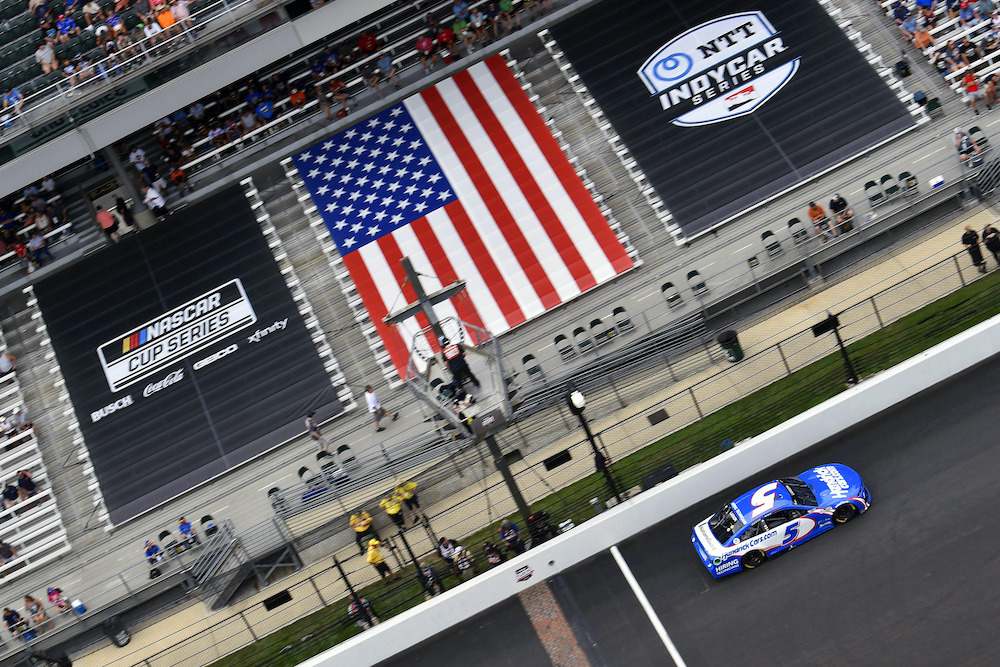
It's the wrong type of car and it's going in the wrong direction, but it's about as close as you're likely to get to seeing Larson at the 500 for the foreseeable future. Nigel Kinrade/Motorsport Images
Q: Not really a question, but a response to a recent Mailbag letter. It was suggested that the two-seater be abandoned in favor of a sports car. This past May I fulfilled my No. 1 bucket list item by taking a two-seater ride of four laps around Indy with the legend – Mario. I gotta say, it was insane!
Being a fan of Indy since the early '60s, I have always known they go fast, but until one actually experiences it, one cannot grasp it. Intensely fast and quick! It seemed like we were in the short chutes for about one second! Sure, I could not see the shifts or foot controls, but then it’s paddle shifters, so that’s not such a big deal. One probably can’t see much foot action in a sports car, either. One is not there to actually watch how a driver shifts or works the pedals, but rather to feel the rush of coming off of Turn 4 and barreling down the front stretch. To say get rid of that is simply crazy. I’m considering taking a road course ride-along now to feel the Gs.
I say keep the two-seater, save up some money if you have to and get to the track! Nothing, and I mean nothing, compares to a ride in the two-seater!
Jerry
MP: One of the wildest things that our man Robin Miller experienced was being taken for a ride in CART’s two-seater back in the day by Mario Andretti. Compared to today’s two-seaters, these were real beasts. After Robin passed, Mario couldn’t help but recount that experience of Robin screaming in terror. And Miller raced midgets that were frightening, so it said a lot about how raw the experience of being on track as a passenger in an IndyCar happens to be.
In whatever form, get out there in the two-seater, or find your local SCCA chapter or track and do a high performance driving experience (HPDE) track day event in your road car, or go all the way and buy or rent a racecar and go through driver’s school. Find a local bullring and learn to drive a quarter midget. As you well know, Jerry, life isn’t meant to be lived on the sidelines.
Q: I’m hearing AMSP offered Kyle Kirkwood 10 races for next season. It’s no secret that they are looking to expand to a third car in 2023 and will most likely run a third car in select events next season, so what was Kirkwood’s thinking in going with Foyt instead of AMSP? I would think he’d have a much better shot to showcase his talent at AMSP and make a strong case for him to be the third driver for the team down the road. The 10 races with AMSP vs a full season at Foyt is a no-brainer as far as I can see.
Kirkwood has some money from being the current Indy Lights champion, which helps, and I’m of the opinion that he would light it up in an AMSP car. If he shows the kind of performance many expect of him, AMSP would have another young driver that it could control for many years, and someone that would push Pato and the team forward.
Warbird Willie
MP: Hard to say which version of the story is most accurate, but I heard there were mixed signals on what was being offered. Regardless, Kirkwood doesn’t think of himself as the No. 3 driver – none of the greats do. So while AMSP is a more competitive proposition, I can understand how being the No. 1 at a less competitive team was a better fit for Kirkwood.
And as I noted in last week’s Mailbag, there was no full-time room for Kyle at Chateau Andretti in 2022 since Honda was unable to supply a fifth motor, but I don’t expect that to be a problem in 2023 when everything’s new. Kirkwood+Andretti+2023.
Q: As a longtime open-wheel and Mailbag fan, thank you for taking up the mantle of the Mailbag. I think it’s neat that your spin will be a little different, more technical, and builds nicely on the Mailbag’s legacy. Robin is surely smiling down on you. He had a very unique racing backstory and history in the IndyCar paddock. You do as well, but I don’t think it’s quite as well known (or rather, less publicized).
Have seen tidbits here and there, but can you please write up the “three-minute Pruett backstory” for us, so we can understand your open-wheel history and expertise? It actually might help us better formulate some future questions to you.
Scott B., Seattle, WA (nee Gainesville, FL)
MP: My father was a British and Swedish car mechanic, had his own shops, and was an amateur racer in the SCCA. He’d drag me with him, and my memories of being in the paddock at Sears Point start from when I was three years old. I grew up at the shops, learned to work on cars, and when I was 15 or 16, got my start in racing as a gofer for a driver/shop vendor he knew named Mike McHugh, who raced in the SCCA Pro Super Vee series (think Indy Pro 2000, but in the 1980s).
I worked on his Anson SA4 chassis, then went to work for a Bay Area open-wheel prep shop named TR Raceservice where I was the only employee and looked after maybe a dozen cars. That started halfway through my senior year in high school; I think I was 17. Tons of Formula Fords, FF2000s, and a few Formula Atlantic cars. Such a blast. I’d prep them, do gear changes, engine changes, and whatever else, then load the trailer – often on my own – and drive the monstrosity up and down the west coast to SCCA races where we ran the owners of the various cars. A crash course in almost every facet of the sport.
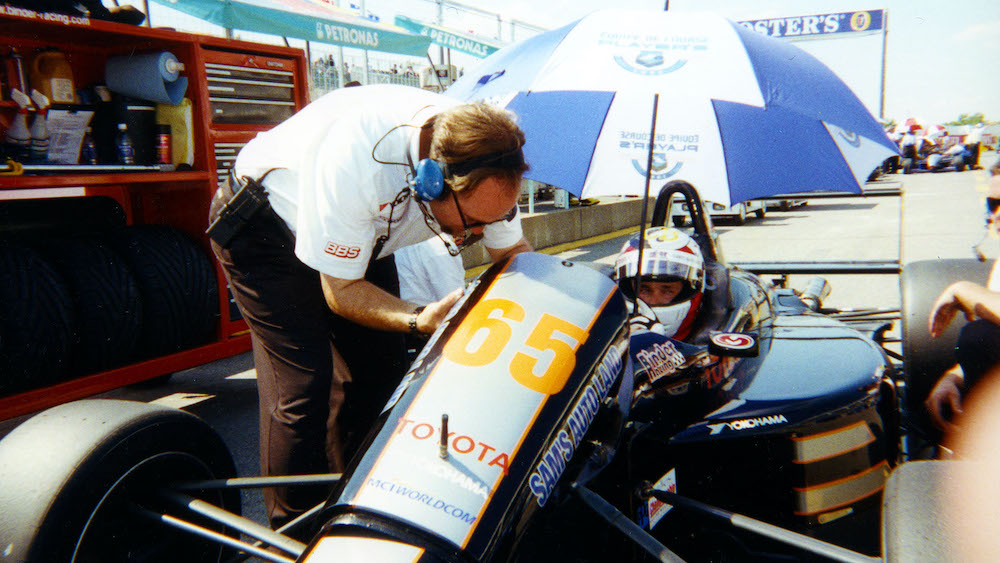
Pruett doing some Formula Atlantic engineering magic at Montreal in 2000. Image via Marshall Pruett
From there, I went to work for my first major team, Pfeiffer Ridge Racing, where we ran cars in pro FF2000 (met Greg and Ric Moore for the first time in that series), Atlantic, and Sports 2000. We were a dealer for Swift, so I got to build a ton of Swifts on my own, which was amazing. Trekked all over, was mentored by Riccardo Pineiro and Jon Ennik, and acted a fool most of the time. Best time of my young life. I’ll skip over a lot of moving about after that, but it was all in some form of Road To Indy/Road To Rolex 24 type of stuff, then got connected with Genoa Racing late in 1993, was part of their Atlantic and Indy Lights teams helping with driver coaching, some assistant engineering, and whatever else was needed.
We moved into the IRL in 1997, I did five straight Indy 500s with Genoa/TKM, Nienhouse Motorsports, TeamXtreme, and closed with Sam Schmidt Motorsports in 2001, my last full-time season in IndyCar. I also worked for the Hogan Racing CART team in that span, and the roles revolved around assistant engineering, team management, and sundry functions depending on funding and staffing. I always preferred smaller teams because I grew bored of doing one thing for extended periods and got to multi-task.
After I "retired" from working as a crew member at the end of 2001, I tried to lead a normal life, found work in biotech where some of my mechanical and engineering skills applied, met my wife, went with her to the University of San Francisco, and then felt the pull to get involved with racing on the weekends. Lots of fly-in race engineering and team management work in Atlantics, Pro Mazda, World Challenge, Grand-Am, the NHRA (that was wild), started running my own little factory endurance racing team with Toyota/Scion, and bowed out in 2010 as this new media career took off after it began slowly in 2006 with SPEED Channel/SPEED.com.
I’m getting the bug again. I want to work on race cars, and maybe do some engineering. Can’t say I was great at any stage because I wasn’t, but I was good when I was motivated. Writing about the tech side of the sport, and the drivers – after working with hundreds as a mechanic or engineer or manager – comes from a place of comfort. Like Miller, I came from the paddock and continue to call it my home.
Q: Last week in the Mailbag, the subject of Pocono came up, and I can tell you from experience all the way back to the first race in 1971 — Penske's first win with Philly local hero Mark Donahue — that there are two reasons why it has poor attendance despite the proximity to metro Philly (pop. 4.5 million) and NYC (pop. 20 million): The place is still a dump (my last race there was 2014); and very poor highway access, which you can blame on both the late Joseph Mattioli and on the Commonwealth of Pennsylvania.
When Bill France was building Talladega back in 1968, he demanded of Alabama Gov. George Wallace that he build the access road from I-20 to the track site before he started construction. Gov. Wallace tried to talk Big Bill into building the track first, but he was having nothing of it.
Now, look at Pocono: Coming up from the Delaware Valley on the Penn Turnpike NE Extension to I-80 is easy, as is coming in I-80 from the east from NYC. But then, you get off onto PA 115, which is a narrow, 2-lane road for the last three-and-a-half miles. The first year, it was only single lane; but at least from 1972–on it was both lanes; but it's still a disaster when you have a large crowd.
Not so much because of the reasons you gave, but the crappy fan facilities and poor road access are reasons enough for IndyCar to not return to Pocono. Even the facilities and road access to Langhorne in the late '60's (I was there in '68 & '69) and Trenton in the '70s were better than Pocono is today.
Yours truly,
Dan Schwartz
MP: I haven’t been to Pocono in recent years, so if they’ve made upgrades, I’ve missed them. But I can say that Pocono was one of the few tracks I’d drive into and had no problem imagining what it was like back in 1974 (or whenever) because it looked and felt like the track was preserved in period-correct form from decades ago – a retro-modern museum of sorts.
Q: I am an IndyCar/racing fan from New York City, not very common. In my childhood bedroom, I held on a copy of AutoWeek from early 1992 announcing the Grand Prix of New York City to take place in 1993 as a street race around the World Trade Center promoted by Chip Ganassi. Obviously the race never took place, but I never have been able to find anything on the internet about it. I would have sworn I hallucinated reading this if not for this magazine. Do you have any recollections/stories about why this didn’t go forward? (I finally got around to taking this picture when visiting my parents this month.)
Jeremy Ribakove, Astoria, NY
MP: Chip and IMG were indeed in a partnership, and they promoted the Meadowlands IndyCar race in New Jersey for three years but wanted to move it to Manhattan. Together, Chip and IMG had 27 meetings with David Dinkins, the Mayor of New York City. Upon receiving the approvals from New York City, they signed Phillip Morris Companies (aka Marlboro) as a sponsor for the Grand Prix of NYC, which would have run around the World Trade Center. At the same time, Phillip Morris was under heavy scrutiny for tobacco advertising, and with that scrutiny came title sponsorship problems that ultimately canceled the event before it became a reality.
What might have been. Image via Jeremy Ribakove
Q: The same people doing the new IndyCar game have a new NASCAR title out – NASCAR 21: Ignition. YouTube sim racer (and real-life Britcar series winner) Jimmy Broadbent tried the game, and it was a mess from start to finish. From being unable to use his steering wheel to races where other cars would wreck by just passing by them, it was one of the worst racing sims I've ever seen. No, it was the worst. If these are the people doing the IndyCar sim, don't be expecting much.
Arthur Alford
MP: Actually, this sounds like the most realistic NASCAR game, ever. If we’re fortunate to get the same realism with the IndyCar game, be prepared for nine-hour qualifying sessions as race control messes around with endless delays to debate blocking penalties. Can’t wait. 😉
Q: My question has to do with the special prep that teams do on their 500 cars. I heard more comments from drivers, engineers this year than ever before, talking about car prep starting in October for the May race.
What is the special prep that is done where a team will literally replace every piece connected to the tub after a crash rather than going to a back-up car?
Ed Kelly, Studio City, CA
MP: All about reducing friction. Reducing mechanical rolling resistance and reducing aerodynamic resistance, aka drag. We get this question somewhat often, so let’s do a decent dive here so we can refer to in the future as needed.
The crazy dedication of time and personnel and money to the "Indy 500 chassis" compared to the non-500 cars is significant for some obvious and less obvious reasons. Some folks ask why the same intense level of aero and mechanical perfection isn’t done for every race, and it’s mainly due to practicality. There’s so much bumping and scraping and pounding that takes place at a St. Petersburg or Laguna Seca that the effort would be quickly wasted with all the contact and abuse fired through the car from curbs and walls. Plus, winning at an Iowa or Portland doesn’t pay $2.5 million and get your mug on the Borg-Warner.
So, with Indy being a giant proving ground for aerodynamic excellence and mechanical smoothness, teams spend all that time making the bodywork fit perfectly to the chassis, and to each connection point – the sidepods to the floor and tub, for example – to avoid tiny gaps that trap or slow air as it passes by. Picture the bow of a ship sailing through the ocean. If the bow is perfectly smooth and has no tiny holes or cracks, the water flows over it without resistance. If that bow has some tiny holes and imperfections in it, small stream of water will shoot through, slow the ship, and rob performance. Have too many holes, and you’re sunk.
Same theory applies with letting small streams of air sneak in through gaps in the bodywork, or to sit and eddy in bodywork seams that aren’t flush. In performance terms, you can lose 1 mph or more per lap, and if that’s the case, you’re sunk.
Expand all that out to the mechanical side with reducing friction with the rotating parts like wheel bearings and all the bearings in the transmission, and that parasitic drag acts just like aero drag. If the wheel bearing aren’t optimized, for example, it takes extra horsepower to push through that resistance, and if you’re wasting a few HP on spinning the wheels compared to the next team whose cars have wheel bearings that spin freely, that’s where you lose speed each lap.
For the better teams, they’ll have their own in-house gearbox dyno where they’ll spin up the gears and measure the frictional losses. Just like an engine dyno is used to measure and benchmark how much power and torque is made, the gearbox dyno serves the same purpose, but you’re looking to get the numbers as low as possible. They’ll make adjustments, look for friction reductions, run the ‘box again, measure the numbers, and keep going until they get as far as time and money allows. Fun stuff.
Q: When the hybrid IndyCar debuts I expect that the pit release will not be as aggressive. Has IndyCar considered the use of tire warmers? I stopped watching F1 about 20 years ago and would generally hate to see IndyCar use anything that is commonly thought of as F1 technology, but in this case I think it may be a good idea – especially on the ovals, where it could prevent serious situations.
Another pit stop question that I have is, what changes must be made to the car when going from a track with left side service like Indy, to a track with right side service like Long Beach? At the very least it appears that body work would need to be changed, and does the fuel filler nozzle just pivot from one side to the other, or is there more to it than that? Thanks for keeping the Mailbag going, Robin was the best.
Bill, California
MP: Not sure where the notion of slower pit releases would come from, since we’ll have instant electric torque available from the ERS. I’m sure tire warmers have been considered, but why ruin the opening laps of a stint by removing the special ability of certain drivers to make speed with limited grip while others with less ability do not? Sports cars, both GTs and prototypes, went hybrid more than a decade before F1, and continue to do so today in the WEC, so that’s not a perceptual concern.
Fuel buckeyes are interchangeable from left to right, so it’s just a case of unbolting the unit and dropping it on the correct side. On the non-buckeye side, there’s quick-connect ports where teams connect the refueling system during regular sessions to add in the precise amount of fuel called for by the engineer for the next run. That port obviously switches sides as well depending on the track. Robin was indeed the best.
Q: I know that it is too early, but what drivers will race in both the IndyCar Grand Prix in late July and either a NASCAR Xfinity Series race at the Indianapolis Motor Speedway road course or the Verizon 200 at the Brickyard on the Indianapolis Motor Speedway road course?
Chris Fiegler, Latham, NY
MP: I reached out to get some insight on this from my pal Chris Fiegler from Latham, NY, and he said, “it is too early.”
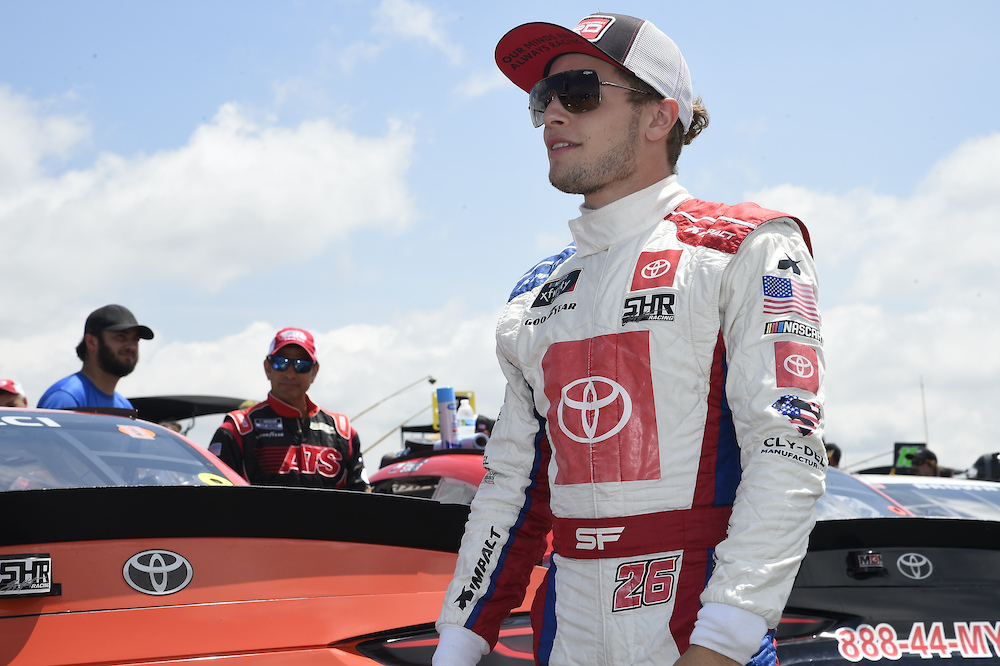
Let's get the the IndyCar/Xfinity rumor mill rolling with a random photo of Santino Ferrucci. John Harrelson/Motorsport Images)
Q: Marshall – I commend you for recommending that racing enthusiasts forego Amazon in favor of their local or favorite motorsports memorabilia shop. Some of us don’t have one of those but we do have our favorite or only independent local bookstore. When I read about Art Garner’s “Black Noon” (probably something Miller wrote), I figured there was a snowball’s chance in a very hot place that Chaucer’s Books in Santa Barbara would have it. But I knew they would order it for me. I called and, lo and behold, they had it in stock and set it aside for me. So, please give a shout out to local independent bookstores—those that are left anyway.
P.S. I enjoyed the photo of you and your Tiga Formula Ford. I didn’t know you raced. I was a corner worker in the SF Region in the late 1980s and early '90s and probably waved a flag at you. (I’m not suggesting it was blue.)
Tom Hinshaw, Santa Barbara, CA
MP: It was probably blue. Thanks for being an SCCA volunteer. I don’t say this lightly: You and your track worker brethren are the unsung heroes of the sport. And the SCCA’s volunteers are the gold standard – have been forever.
Q: I love the call on the local bookstores. I'd love you to post a list of bookshops/publishers to circumvent Amazon.
RGS, Geneseo, NY
MP: Here’s a list that is by no means comprehensive, but should provide plenty of options. I left one or two off the list because I would not consider them to be reputable businesses.
The RACER Store has some stunning prints and goodies you won’t find anywhere else, and there’s also a nice selection of books and other memorabilia.
The Motorsport Collector
. Miller used TMC each year to send his friends all the latest books and calendars for birthday and Christmas gifts. TMC has also helped me to raise a lot of money for charities by holding blind auctions at no charge. Good people there in Illinois.Blocks away from the Burbank airport in SoCal is the renowned Autobooks Aerobooks, and like TMC, they have an extensive collection of new and old racing and car books. https://www.autobooks-aerobooks.com/
In Canada, TorontoMotorsports.com (a longtime partner of my podcast, full disclosure) is more on the models, t-shirts, team gear, and stickers tip, than loaded with books. They’re heavy into IndyCar, which is unique among most of the memorabilia stores found outside of Indiana. They also have a lot of Miller swag, for those who were wondering.
Mini Grid
is a great resource that fits the TMC approach with a heavy emphasis on books and models. It’s been a while, but when I’ve ordered from them, they’ve been great to deal with.I can vouch for those stores from firsthand experiences. The rest are options provided by friends in a Facebook Memorabilia group who fired in some other options like:
• Speedgear.com (I wasn’t aware they were still in business, but they were huge in the 1990s and 2000s)
• Three Sisters and a Trunk In Speedway, IN
• Pasteiner’s Auto Hobbies in Birmingham, MI
• Racemaker Press, Octane Press, and Coastal 181, three of Miller’s favorite publishers
Q: Why didn't the No. 55 Mazda get a penalty for running into the No. 4 Corvette and taking it out of the IMSA Petit Le Mans race? I thought that DPI cars were held to the "No Avoidable Contact" standard regarding passing cars in the slower classes. Can you shed a light on the decision making in this instance?
Jeff Leisring
MP: The "no avoidable contact" thing isn’t really a thing these days, and as I understand it from a judging standpoint, the Corvette was more middle of the road than on the racing line, it’s believed the Mazda was expecting the Corvette to return to the racing line and not stay in the middle as it way trying to zoom by, and there was the incident that followed. If the Corvette wasn’t off the line, I’m guessing IMSA would have dinged the Mazda.
Q: We have seen eye-popping fines in F1, IndyCar and NASCAR. Who actually pays them, where do they go and who decides where they go?
Gary
MP: There’s nine potential answers here, and that’s more of a feature story than a Mailbag response, so I’ll take IndyCar. It depends on the situation, obviously. If a driver is fined, they might pay it or the team might pay it. If it’s a crew fine, like leaving your visor open during refueling, it’s usually the team that covers the bill. IndyCar sends the team an invoice for the fine to be paid directly to the series. The money goes into IndyCar’s bank account.
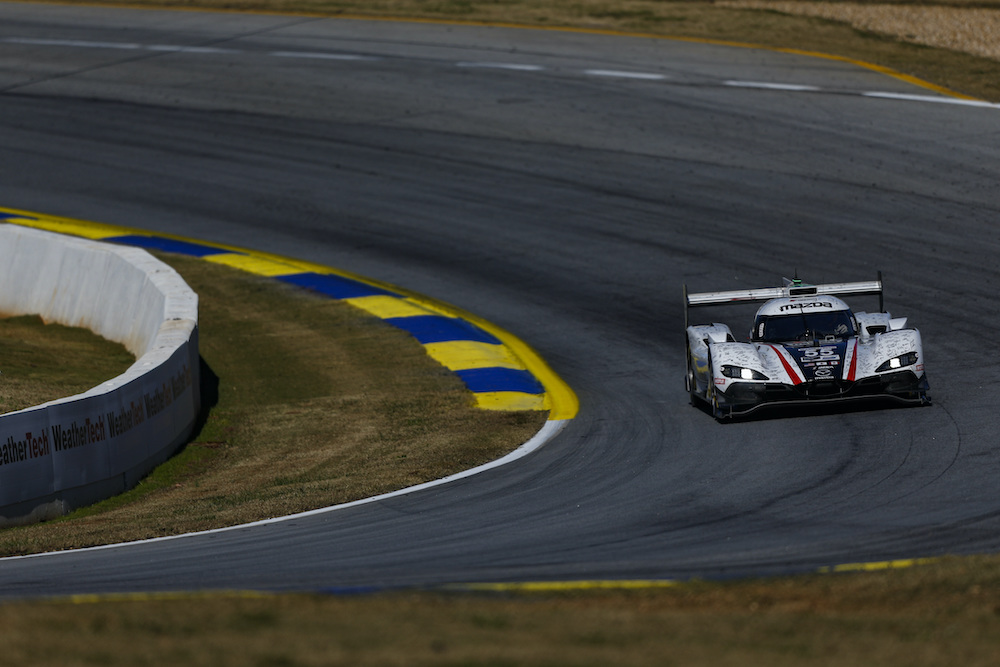
The Corvette camp might not agree, but IMSA officialdom saw no reason to penalize the Mazda at Petit Le Mans. Jake Galstad/Motorsport Images
Q: Any updates on why the Christmas light display at the Brickyard isn't happening anymore? We really enjoyed it.
Jason Morrison
MP: IMS president Doug Boles was kind enough to send along a thoughtful response:
"Thanks for passing along Jason’s question. We, too, enjoyed having people out at IMS for Lights at the Brickyard. It was a great way to engage families and fans in a special time of the year at a special place.
However, as we have gotten busier and busier with on-track activities (especially this year – we were flat-out Sept – end of Oct), our only time in a season to do any track maintenance or investments that cannot be done overnight is November/December. We cannot really plan on doing anything in the spring because we do not know when winter really will end, and any significant rainy period eliminates the ability to do much asphalt or concrete work. So … Lights has had to take a break.
Set up for LATBY needs to begin in earnest in mid-October in order to be ready by Thanksgiving, so that impacts it even more.
And, finally, asking our staff to work 45+ straight days until 10/11 pm at night (including Thanksgiving and Christmas) was also not fair to our team members who get little time off during the year.
Thanks, Doug"
Q: Thinking back to John from Ohio’s question in the Nov. 17 Mailbag around how Kirkwood will do at Foyt; without kicking the Foyt team when it is down (because even though he is in his 80s, you can’t run from A.J., Marshall), can you point to where some of the problems lie in engineering? Obviously a lack of budget, but is there a single place it could improve to show results?
I recall way back when PT got sidelined after Forsythe bailed when the Spilt was resolved, that Paul had agreed to drive for Foyt after a dismal one-off (Milwaukee '09). Anyway, the car didn’t even have a functioning weight jacker. A.J. didn’t take Paul up on the offer to drive for the team because A.J. said they weren’t capable of giving him a car fit for his talent. But Taku won in Long Beach and was second in Brazil at the start of 2013 before the team dropped like a rock again. What was the key to that brief flash of brilliance the team showed in early 2013? It is painful to see an iconic owner have a struggling team. Are there any potential partnerships that could give the team a leg up in the engineering department? Do they have a shaker rig or a shock program?
Trevor Bohay
MP: I’d put it down to the rather fluid state of things since ABC Supply left, as they’ve not had the luxury of going into the next season(s) with all of their sponsorship in place early, which is what allows significant spending on off-season engineering R&D projects. If you aren’t sure where your money’s coming from, or who’s driving for you, it’s hard to commit hundreds of thousands of dollars or more to a mystery.
The other area of hardship has been frequent engineering turnover. Technical director Mike Colliver – also one of the team’s strong race engineers – is stepping back, and as previously mentioned, Justin Taylor was one-and-done as the No. 14’s engineer after receiving a better offer from Ferrari. Of those who remain, there’s some engineering talent left at the team, but it’s hard to gain ground when you’re starting over every year or two, all while the Ganassis and Penskes and Andrettis aren’t.
Consistency and stability with high-caliber staff wins races and championships. Constantly changing players, coaching staff, and the playbook does not.
In light of the vacancies, the team needs to surround Kirkwood with some engineering badasses if they want to make the most of the opportunity. I went back and looked, and Kyle’s easily the biggest rookie talent they’ve had since Davy Jones in 1987 and Bryan Herta in 1994. That’s how big of a deal Kirkwood is for the Foyt team. But can they attract those engineering badasses to turn Kyle into a contender? Stay tuned.
Q: Hi RACER folks. Thanks so much for bringing back the Mailbag. I had begun to dread Wednesdays since Robin's last days and his passing. Wednesdays just became very dreary. The Mailbag was the first thing I did when I arrived at work each Wednesday. Email just had to wait.
Marshall's article covering Robin's memorial was wonderful. I remember during the streaming at the conclusion of the memorial someone (I think RM's pal Steve) mentioned that a list of appropriate charities could be located in the back of the program. I believe I am not the only reader who would like to honor Robin's memory by giving to one of his favorite charities. Would Steve or Robin's sister Diane be willing to share this info with us?
Thank you,
Deb Schaeffer, Torrance, CA
Hope City Indy
, Riley Childrens' Hospital's Riley Cheer Guild, and theIndianapolis Blood & Marrow Transplantation Foundation
. If you choose the latter, please select "Bone marrow patient assistance fund" from the drop-down menu. And thank you.Q: Where will Ryan Newman go to in 2022? Where will Santino Ferrucci go to in 2022? Will Team Penske field the No. 22 Ford Mustang in the Xfinity Series, and who will drive it?
Kurt Perleberg
KELLY CRANDALL: Right now, Ryan Newman does not have a ride for 2022, and there hasn’t been much chatter about where he could end up. Newman told the media in Phoenix that he has nothing on paper for next season and doesn’t believe there are any quality rides available.
Santino Ferrucci has nothing locked as of right now either. However, he continues to work with sponsors to see if he can continue to run Xfinity Series races in 2022, and we’ll see him at the Chili Bowl in January.
It does not appear that Team Penske will keep that car going in the same capacity as we’ve seen the last few years. Nothing has officially been announced, but look at the pieces: Austin Cindric is a Cup Series driver now, and crew chief Brain Wilson has been promoted to the Cup Series as well to work with Harrison Burton at the Wood Brothers. No other driver has been announced or rumored over there, and Team Penske officials have repeatedly said their plans were to be determined. But it seems clear that if they do run that car, it won’t be full-time.
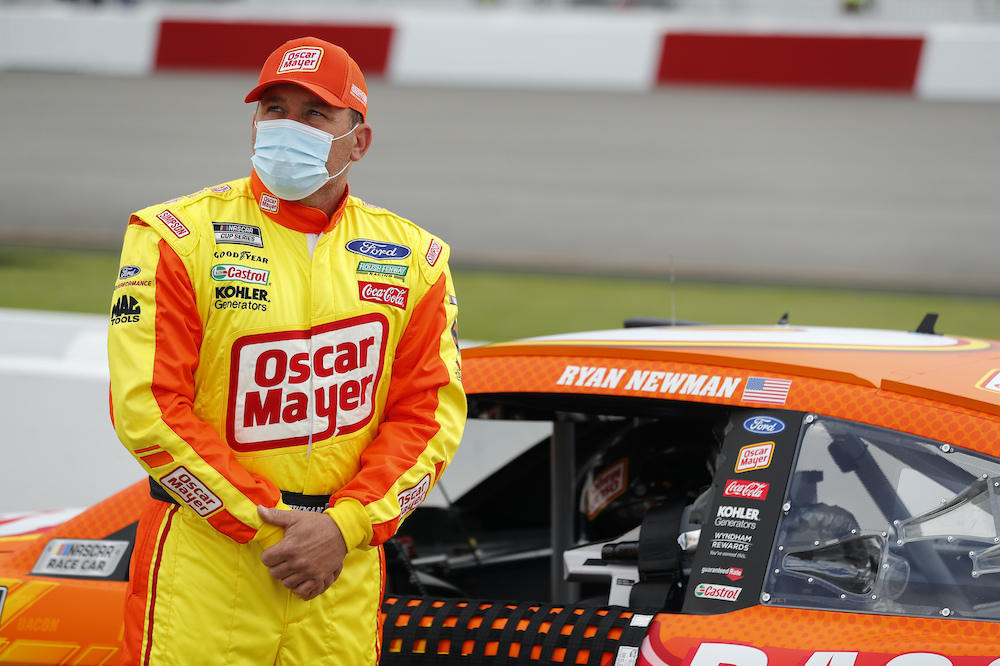
"Maybe I should find out if Dreyer & Reinbold's running a third car at Indy..." Motorsport Images
THE FINAL WORD
From Robin Miller's Mailbag, November 26, 2014
Q: How much of a stir did Teo Fabi cause in IndyCars in 1983? I’d always rated him in Europe – very good in F3 and F2, better than Nigel Mansell, for example – but obviously his first season in F1 was in a horrible old Toleman with a team that favored his teammate. So I was pleased when he got the opportunity to come to Indy racing, and was even more pleased that he did so well, although 30 years ago, news took some time to arrive in Italy, 4,000 miles away! Anyway, I just wondered what you and the paddock thought of him.
Giorgio Ramboni, Scotland, UK
ROBIN MILLER: I went to Teo’s initial oval test at Indianapolis Motor Speedway and after a few laps he said “no thanks.” The walls really spooked him. But he finally got comfortable and, of course, wound up winning the pole position for the 1983 Indy 500 before scoring wins at Pocono and Phoenix. He was a damn good road racer, obviously, and captured Mid-Ohio and Laguna Seca in ’83. He won the most races (4), poles (6) and led the most laps but lost the championship by five points to steady Al Unser.
Teo was very quiet, tough to get to know, but a nice guy and I always called him “Ted” and he couldn’t understand why, yet he always smiled. He was very smart, in and out of the car. The Brabham F1 team came calling for 1984 so he only ran a few IndyCar races that year, but returned to CART full-time in 1988 and he scored the only victory for Porsche in 1989. I ran into him a few years ago at the downtown Indianapolis mall, and we talked more than we ever did at the track.
Presented by:
Marshall Pruett
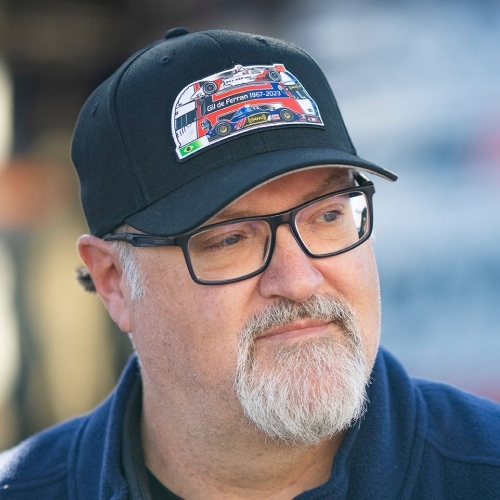
The 2026 season marks Marshall Pruett's 40th year working in the sport. In his role today for RACER, Pruett covers open-wheel and sports car racing as a writer, reporter, photographer, and filmmaker. In his previous career, he served as a mechanic, engineer, and team manager in a variety of series, including IndyCar, IMSA, and World Challenge.
Read Marshall Pruett's articles
Latest News
Comments
Comments are disabled until you accept Social Networking Cookies. Update cookie preferences
If the dialog doesn't appear, ad-blockers are often the cause; try disabling yours or see our Social Features Support.