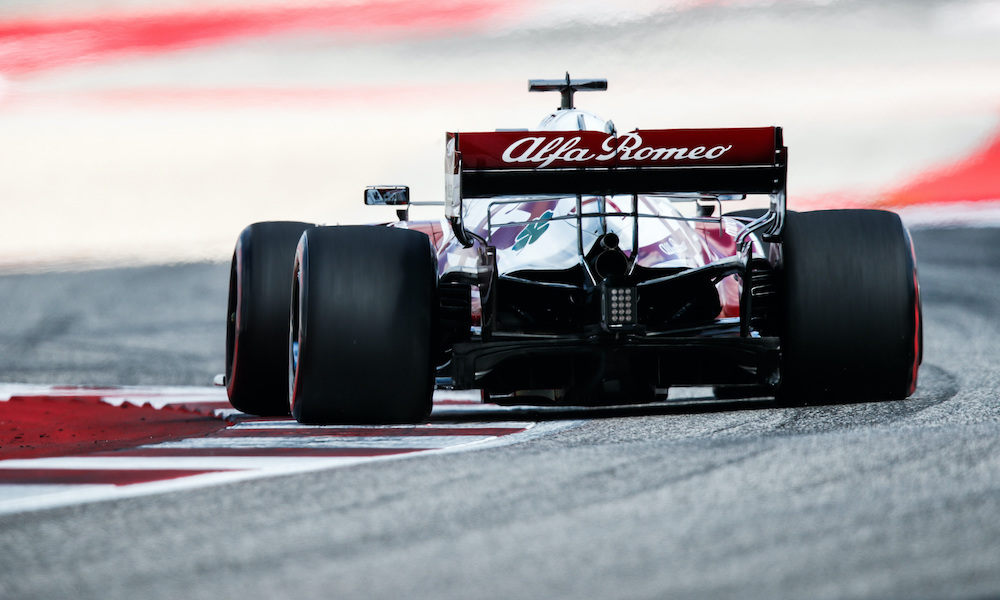
Charles Coates/Motorsport Images
INSIGHT: Why the time was right for Andretti to pursue Sauber
When the proposed takeover of the Sauber Group, which runs the Alfa Romeo Formula 1 team, collapsed, some might have felt it was a good thing for Andretti Autosport. After all, grand prix teams are notorious money pits and Sauber hasn’t exactly set the F1 world alight in recent times, so what possible sense did this deal make for an organization that’s thriving, with teams involved successfully in six categories around the world? Why would it need F1?
That view might have held water a few years ago, but F1 has been transformed recently. The very fact that Andretti was eager to acquire an 80% stake in Islero Investments, the Sauber holding company, and that the ownership – effectively low-profile Swedish billionaire Finn Rausing – ultimately wasn’t willing to do a deal on workable terms confirms this. For the first time in the 21st century, F1 teams are on the brink of existing as consistently profitable and stable companies rather than being reliant on continual shareholder cash injections or hand-to-mouth struggles to survive.
Looking at the big picture, F1 teams now have to operate to a cost cap. That first appeared this year with a baseline level of $145million (that’s based on 21 races, with adjustments up and down should that number be different), and will drop a further $5m in each of the next two years. The cost cap doesn’t cover everything, with driver costs, the pay of the three highest-paid team executives and myriad other things excluded, but crucially it does cover the design, build, development and operation of a couple of F1 cars over a season.
The cost cap is a hard line, enshrined in a 49-page document that sits alongside the technical and sporting regulations that F1 runs to. And while it has yet to be challenged by a test case, a chunk of those financial regulations are devoted to the procedures for punishing transgressors with draconian sporting sanctions. As F1 managing director Ross Brawn said when it was first announced, the cost cap “has teeth”, and could cost you a championship or worse.
The cost cap means that outgoings are far more under control than they once were. Teams will spend every dollar and cent they can on making the car go faster and this is the mechanism that has driven costs ever-upwards in recent decades, for a period creating a system where only the three biggest teams – Mercedes, Ferrari and Red Bull – could realistically aspire to sustained success. Now, if you are running an F1 team, you have a good idea what you will have to spend.
The income is also better structured thanks to the new Concorde Agreement, the document that binds together the FIA, F1 and the 10 teams commercially, agreed last year. A more equitable split of the chunk of revenue shared by the teams means that all the entries will get a fairer slice of the pie as opposed to under the previous commercial terms, whereby the biggest teams were paid disproportionately purely based on what they could negotiate under the pretense of historic success.
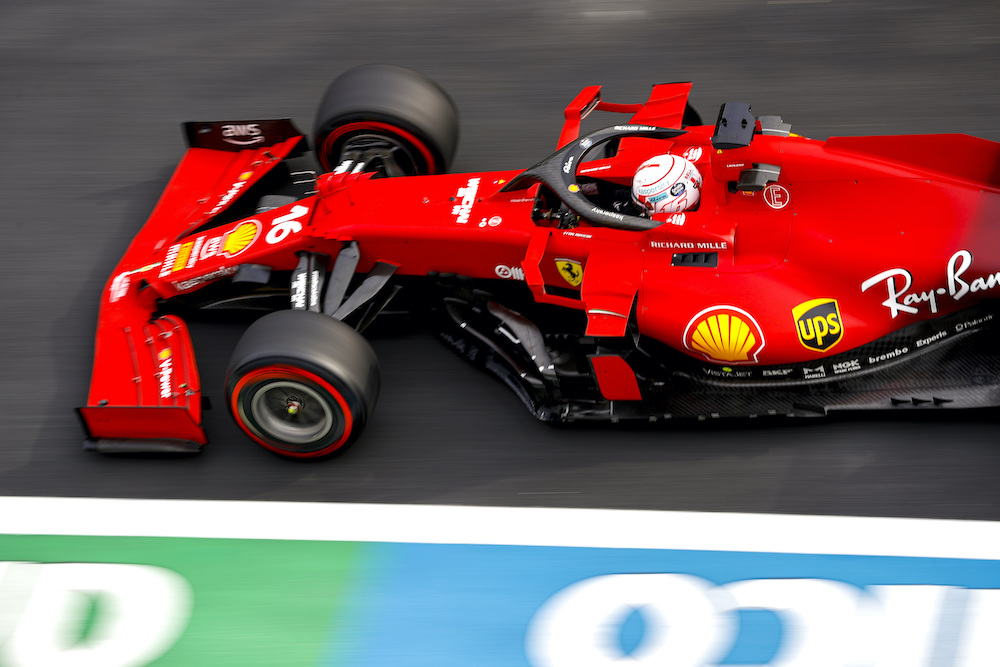
Prior to the arrival of F1's current commercial regulations, teams like Ferrari negotiated advantageous terms on the basis of their historic value to the sport, regardless of their recent performance. Glenn Dunbar/Motorsport Images
This means all of the F1 teams should be viable and sustainable. And although it’s fanciful to imagine that there won’t still be a hierarchy based on resources, facilities and expertise, over a long enough timeline things should even up. Potentially, this means it won’t only be the biggest teams that can aspire to a valuation of well over a billion dollars. NFL franchises are often used as an aspirational comparison, and you won’t get much change from $2.5 billion even for the lowest-value one of those.
So for Andretti, or any aspiring F1 team owner, the long-term incomings and outgoings were not only more predictable, but also more realistic. This is dramatically different to the past, where even measures such as the resource restriction agreement agreed in late 2008 proved impotent and preceded a period where the likes of Red Bull, Mercedes and Ferrari stoked the spending rises ever more aggressively.
This explains why owning an F1 team might be appealing. But why Sauber, a team that has finished eighth, ninth or 10th in every constructors’ championship since the switch to 1.6-litre V6 turbo hybrids in 2014, and that has only won a single GP in its 28 years in F1?
The simple answer is that it’s a privately-owned team that just might have been willing to sell. Those with manufacturer ownership, even Mercedes (one-third owned by each of Mercedes, Toto Wolff and INEOS), are not for sale, and even if they were, many would be prohibitively expensive. That doesn’t leave many options, especially given two teams that have been available in recent teams are now owned by a Lawrence Stroll-led consortium (Aston Martin) or New York private investment firm Dorilton Capital (Williams). As for Red Bull’s second team, there have been times that AlphaTauri (formerly Toro Rosso) has unofficially been open for offers, but it now suits the company very well to have two teams.
So that realistically leaves Sauber and Haas. The latter, despite some suggesting it would make sense, would not have been a sensible option. It’s a team that has enjoyed some success since joining F1 in 2016, finishing fifth in the constructors’ championship, before its current slump. But it falls far short of Sauber in terms of appeal given its dependence on Ferrari for the supply of the majority of parts that make up the car – effectively, it's a partial F1 team. What’s more, despite owner Gene Haas’s publicly aired concerns about F1 a couple of years ago, the changes in the financial basis of F1 that have already been discussed and the financial injection from Russian company Uralkali, owned by Nikita Mazepin’s father Dimitry, mean it’s currently not for sale.
So too, it turned out, was Sauber. It’s understood that Rausing was uninterested in selling but eventually acquiesced and at least formulated some basic terms that meant the sale of 80% might be possible. This was the point when the Andretti side seemed confident a deal could be concluded, potentially over the United States Grand Prix weekend, before the amount that needed to be pumped in rose. The bottom line is that now is not a good time to sell a grand prix team.
As for Sauber itself, it’s a far better potential acquisition than many realize. Since BMW quit F1 at the end of 2009, with the Sauber team eventually holding onto existence after founder Peter Sauber re-acquired control having always maintained a stake even during the German manufacturer’s ownership of the team, it has had a tough time. Longbow Finance acquired the struggling team in July 2016 (it was later reorganized under the Islero Investments holding company) and has been playing catch-up ever since.
“The last big overhaul of the regs was 2017 and Sauber was another company that started the season with the one-year-old [Ferrari] engine and a car that had a performance far from the optimum, which we are still paying the price for,” technical director Jan Monchaux told me in an interview earlier this year.
“With the new rules, it makes it very hard if you start a new regulation cycle on the back foot. Our focus is to try everything we can to deliver the best possible car and put ourselves in a much better situation from the very beginning of the new regulations and not start on the back foot, 2.5-3% away and running behind like the last five years.”
Next year really is a fresh start for Sauber, with the signing of Valtteri Bottas a statement of its intent to take a step forward. While it would be fanciful to expect Sauber to be up there fighting for wins next year, it can at least aspire to move a little up the order. As one of F1’s smaller teams, it’s not having to go through the challenge of cutbacks thanks to the introduction of the cost cap, so should be able to work up to it, and it does have some accomplished personnel and facilities. That said, its location in Switzerland doesn’t always mean it has an easy time recruiting, and it was clear any deal would not lead to the team relocating.
Its windtunnel, originally built to a high standard by the proceeds of selling a young Kimi Raikkonen’s contract to McLaren ahead of the 2002 season, is still up to the task. What’s more, it is also part of the wider commercial proposition of Sauber as it does plenty of aerodynamic work for other companies – Audi, for example, used it for its successful run of Le Mans prototypes. On top of that, it has good CFD facilities to complement that, so it has a lot of what is required to be a good grand prix team. Of course, they can always be improved, but Sauber won’t require vast investment on massive infrastructure projects.
The one area where Sauber has lagged behind has been the driver-in-loop simulator, which is now up and running but still going through the phase of being fully understood. This is a sign of the kind of investment the current ownership has been willing to put in – and is keen to see the benefit of as more than just a 20% owner.
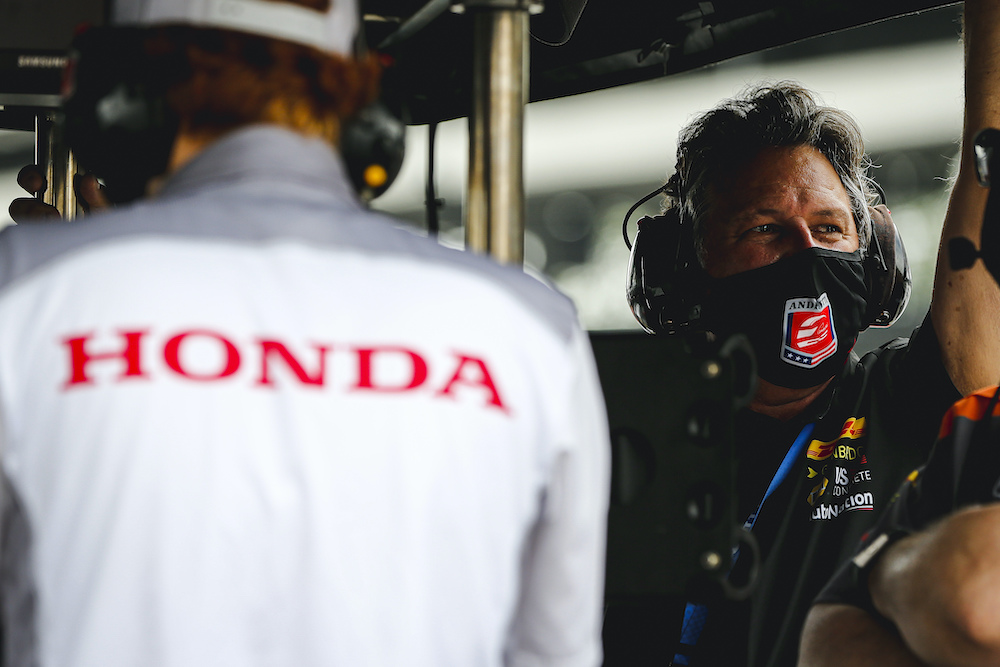
A relatively transparent financial structure and the realistic potential to (eventually) build a competitive organization makes this the perfect time for aspiring F1 team owners like Michael Andretti to look for a way in – but it also gives current owners greater incentive to hold on to their investment. Barry Cantrell/Motorsport Images
But while the foundations are reasonable, that doesn’t mean all is well at Sauber. Its recent seasons have been disappointing, with last year badly hit by the underperformance of the Ferrari engine, while in 2021 it has only managed to score seven points. The C41 started the season as a solid enough car but one that didn’t have the levels of downforce needed to be in the front group in the midfield, and as the season has gone on, attempts to improve the aero appear to have made the car a little trickier to drive.
What’s more, there have been far too many mistakes. There have been countless errors this season, but perhaps the one that encapsulates the team’s season was in Spain, where the right strategic call was made to bring Antonio Giovinazzi in under an early safety car, only for a deflated left-front tire to be brought out. He was then given the wrong safety car delta time when he returned to the track, meaning he wasn’t able to catch the pack, and any vague hope of points had evaporated. So it’s fair to say that Sauber hasn’t been living up to even its limited potential this season.
Sauber will need time and investment to get back to a level where it can realistically be expected to contend for podium finishes and even victories, but it at least has the foundations built. That’s why those suggesting Andretti should look at a startup should think again, given the vast resources and enormous lead times needed to do this. For anyone wanting to come into F1, a team like Sauber is a good place to start.
But that’s exactly why a deal didn’t happen. If there are no teams with motivated sellers, the price will inevitably be high and for Rausing, who has owned Sauber for five years and could be on the brink of seeing meaningful returns, why would it make sense to sell now? As for Andretti, if the deal had been done, it would have the foundations to build on and emerge as a serious contender in the medium-term.
F1 has changed, and we will likely see more situations where aspiring owners believe they are getting towards a deal that fails to come to fruition. Andretti almost got in at the perfect time, and should be commended for getting at least part way down the road to doing so before it all fell apart.
Edd Straw
Edd Straw is a Formula 1 journalist and broadcaster, and regular contributor to RACER magazine. He started his career in motorsport journalism at Autosport in 2002, reporting on a wide range of international motorsport before covering grand prix racing from 2008, as well as putting in stints as editor and editor-in-chief before moving on at the end of 2019. A familiar face both in the F1 paddock, and watching the cars trackside, his analytical approach has become his trademark, having had the privilege of watching all of the great grand prix drivers and teams of the 21st century in action - as well has having a keen interest in the history of motorsport. He was also once a keen amateur racing driver whose achievements are better measured in enjoyment than silverware.
Read Edd Straw's articles
Latest News
Comments
Comments are disabled until you accept Social Networking Cookies. Update cookie preferences
If the dialog doesn't appear, ad-blockers are often the cause; try disabling yours or see our Social Features Support.
