Jake Galstad/Mototsport Images
Pruett's cooldown lap: Long Beach-278335
Having lived through dozens of IndyCar championship runs, I’d put everything we just experienced in 2021 towards the top of a list that contains many classics from the CART and Champ Car eras. From the dumpster fire that was Nashville to the fairytale in May that made Helio Castroneves a four-timer and Michael Shank the world’s biggest recipient of Busch Light, we were blessed with compelling races at nearly every stop on the calendar.
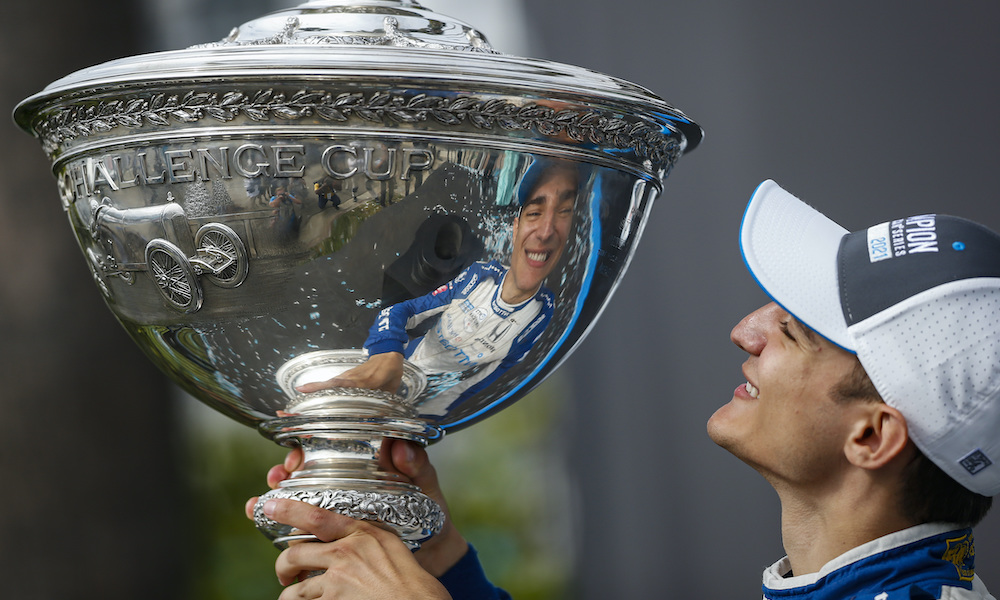
Following that theme, it was fitting to close the season at one of IndyCar’s most popular events where drama was all but guaranteed to be on display, and the Acura Grand Prix of Long Beach delivered in the best and worst ways. It was heartbreak for Pato O’Ward, hard charging by Josef Newgarden, a mile-wide smile from our new champion Alex Palou, and the need for Ed Jones to be airlifted away from the circuit for his safety after taking out a title-contending crowd favorite.
We’ve covered a lot of post-race topics in standalone stories, so let’s take a deep dive on the rest of the topics of interest as we farewell last season and move into the quieter months ahead.
STATEMENT MADE
Colton Herta sure put the fear of future potential into the rest of his rival drivers and teams. The Andretti Autosport phenom became the year’s only back-to-back winner with his disappearing act from pole at Laguna Seca and recovery drive from a midfield starting position at his home race to school all the attendees at his Long Beach masterclass. Imagine if this were to become a more common occurrence in 2022 and beyond.
In concert with his peerless race engineer Nathan O’Rourke and his father Bryan calling strategy, the decision to open the contest by using Firestone’s faster red-banded tires and to stay on reds for the second stint – all while using healthy amounts of extra push-to-pass horsepower from his Honda – proved to be the perfect call to overcome his P14 origination point.
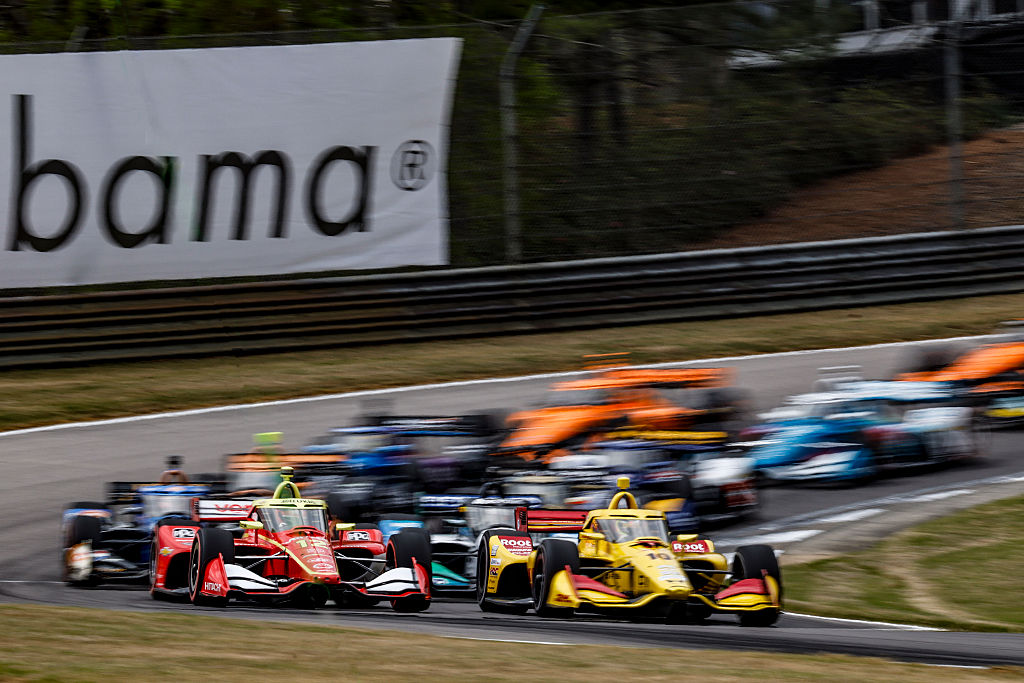
Like Romain Grosjean’s epic drive to finish the Laguna Seca race, Herta’s incredible performance was flipped 180 degrees as he charged to the front early in the contest and then spent the last stint on Firestone’s primary tires trying to hold off polesitter Josef Newgarden. The Team Penske driver hounded the back of the No. 26 Honda without mercy as his reds gave the No. 2 Chevy a marked advantage.
The choice to go red-red-black was a brilliant one by the No. 26 team, with only Arrow McLaren SP’s Felix Rosenqvist opting for the same tire strategy among the 28 drivers.
Consider this: Herta’s become a six-time race winner in three seasons; teammate Alexander Rossi has seven wins in six, and outgoing teammate Ryan Hunter-Reay had 15 in 12 with Andretti. The numbers suggest something big is on the horizon for the No. 26 team.
This was the latest storming drive by Herta who, in his brief IndyCar career, is cornering the market on statement-making victories. His first win came at COTA in 2019 amid changing fortunes in a race Will Power led convincingly until his gearbox failed. Since then, all five victories have been epic mollywhoppings.
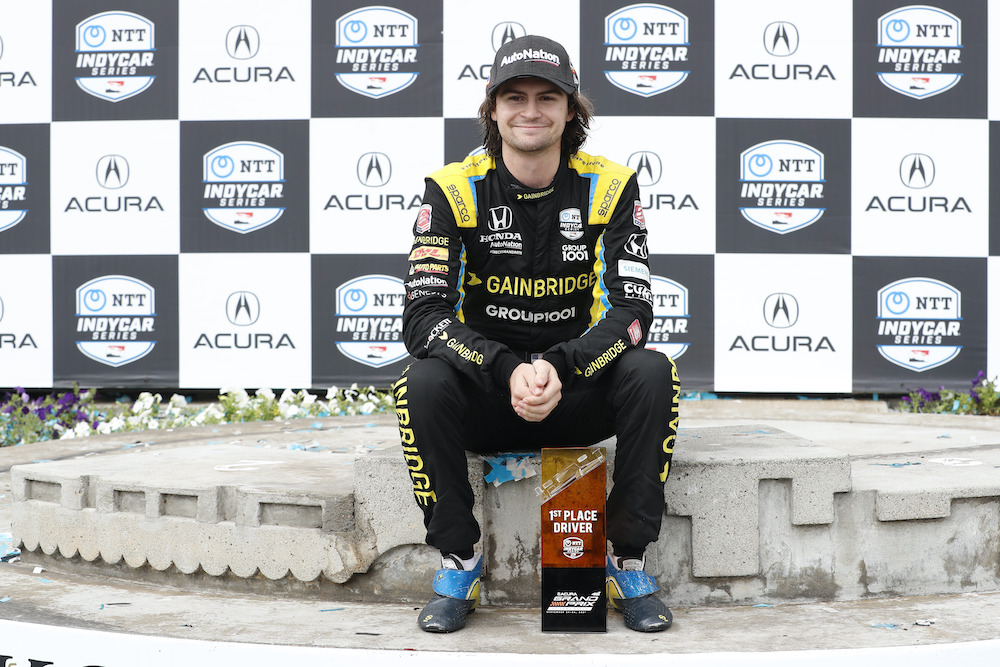
The smile of a man who specialized in mollywhoppings. Phillip Abbott/Motorsport Images
He started from pole and ran away and hid at Laguna in 2019, leading 83 of 90 laps to take his second win. At Mid-Ohio’s second race of the 2020 doubleheader, he dominated by leading 57 of 75 laps from pole to shepherd home Rossi and RHR in an Andretti 1-2-3 to claim his third victory.
Herta’s fourth win, snatched this year at St. Petersburg, was downright ridiculous with pole and 97 of 100 laps owned. Then it was onto Laguna Seca earlier this month with... pole and total proprietorship of the event with 91 of 95 laps led.
Long Beach was something new for Herta after running wide in qualifying, clouting the wall with his car’s left-rear corner, and failing to turn his pole-grade speed into anything better than P14 on the starting grid. Forced to fix his mistake, the aforementioned tire strategy and P2P usage and bold driving added to the lore of all he’s achieved since arriving in IndyCar.
This win was somewhat lost among the season-long celebrations involving Palou and Chip Ganassi Racing, but it deserves respect; this was Herta’s first fightback victory. Other than earning his first oval win and a championship, there isn’t much that’s left for the second-generation driver to cross off the list. He turns 22 in March. If Laguna and Long Beach are indicators of what’s ahead for Herta, the next title run is going to be incredible.
LONG BEACH A GO-GO
The traditional April date for Long Beach is one of IndyCar’s pillars, and that might make moving it to the end of the season a bit of a problem, but after the thrills and strong crowd size amid heavily restrictive COVID policies at the venue, I’m convinced the series needs to think hard about ending its seasons in the LBC.
Go back to the 2020 season finale at St. Petersburg, and while it didn’t have the same kind of fan component, the style of track was a heavy contributor to the drama that unfolded on the Floridian street circuit. Speaking purely from a storytelling mindset, closing the last two championships on circuits that generate intrigue is everything IndyCar needs to continue with its future calendars.
As much as I love my home race at WeatherTech Laguna Seca, the crowd size has been dismal since our return. In 2019 and again in 2021, the only thing missing was a decent audience to witness the spectacle of open-wheel cars back where they belong in Monterey. We’ll end the 2022 season there, and the new track managers at A&D Narigi, LLC, have done a fine job of hosting the series for the first time without the former stewards at SCRAMP being involved.
But smooth facilitation of an IndyCar race isn’t a metric the series can use to its benefit. It would be much easier to overlook the limited crowd sizes if the grandstands and hillsides were even half full in Monterey, but as I’ve written repeatedly for more than a decade, a rebuilding series like IndyCar cannot afford to look weak or unimportant on TV, or to its fans and sponsors in attendance, at any of its events. Playing in front of an empty house is the opposite of what IndyCar needs, which is why Long Beach stands out as the right place and right visuals to embrace.
If there’s a solution to double or triple the crowd size in Monterey, I’d love to see it hold onto its status as the season finale. And if that problem can’t be solved, pick a Long Beach, or a World Wide Technologies Raceway, or a Road America to send off the season with a robust audience that speaks to the series’ growth and restoration.
STARMAKERS
Our man Robin Miller must have written about the tragedy of how six-time NTT IndyCar Series champion Scott Dixon can walk down almost any street in America in total anonymity at least a hundred different times. The best of his generation, the most successful IndyCar driver competing today, is all but unknown in downtown New York, Los Angeles, Chicago, and any other major metro. What a loss for the series where he’s made his name.
Dixie came to mind on Sunday after he gave teammate and new champion Alex Palou a giant hug when the Spaniard become Penske Entertainment’s first truly new champion to develop. At this stage, Dixon, and Newgarden, for that matter, have championships and whatever amount of followers and cachet they are likely going to amass.
Palou, however, is a brand-new project for Penske Entertainment’s marketing team to manage, and with 40,200 followers on Instagram and 29,000 on Twitter, the new champion’s public profile – at least using social media as an indicator – suggests the series has a lot of work to do if he’s going to avoid the same kind of anonymity that’s plagued his most recent predecessors.
He’s a good looking kid who’s bright, warm, and has a great story – living the American dream – that should be an easy one to sell to talk shows, cable news and cable sports outlets, newspapers, and lifestyle magazines. Does Penske Entertainment have a plan to make it happen, or the pull to prevent him from becoming another big name in a small pond?
The series has a daunting test on its hands with the 2021 champion. Can they become star makers? The answer will be an easy one for all to see.
CLASS
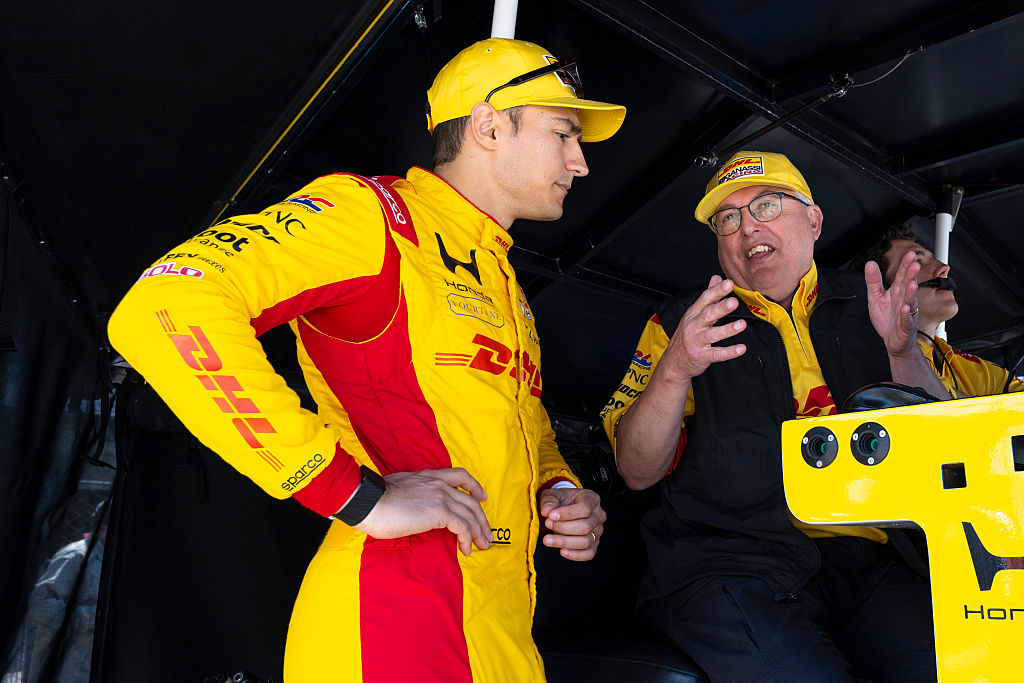
Ryan Hunter-Reay’s farewell to Andretti Autosport was handled in a classy manner throughout the weekend. The champ hoped to stay on for some form of part-time campaign, but when that did not develop, he accepted what was coming in the latter stages of the season and went into Long Beach ready to say goodbye to the team he’s called home for the last dozen years.
His crew had one final grace note awaiting the driver of the No. 28 Honda as he crossed the finish line – an image from their 2014 Indy 500 win – that popped up on his dash with ‘Thank You, Ryan’ inscribed at the bottom. Add in the slightly damaged front that the team signed as a gift for RHR, and there was plenty of warmth to be found once he came to a stop and climbed from the car.
https://twitter.com/marshallpruett/status/1442297387658080259?s=20
And it wouldn’t be a proper goodbye for RHR in that No. 28 hot rod without adversity paying a visit during the race. Yes, indeed, even on his last Andretti Autosport ride, the effing cartoon anvil refused to stay away as Herta rode over the back of the No. 28, cut the left-rear tire, and later, thanks to the bodywork damage, another tire was ruined.
RHR rallied back to finish P23, two laps down, and by coincidence, directly in front of the No. 28’s next pilot, Romain Grosjean, who crashed and came home in P24 in his last drive for Dale Coyne and Rick Ware.
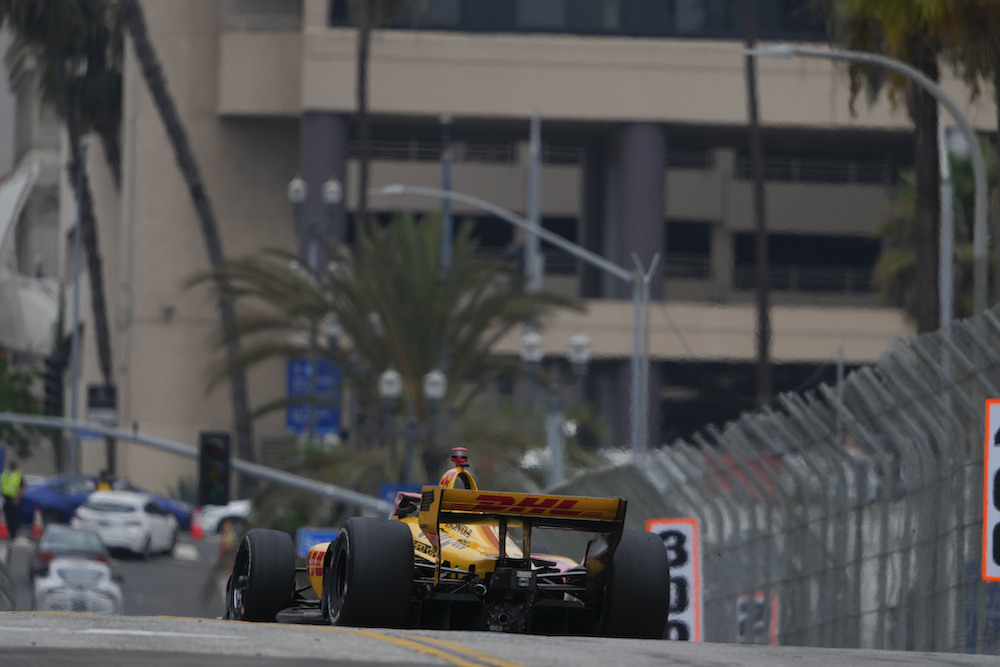
There was lots of love from Andretti Autosport for Ryan Hunter-Reay in his final race with the team. Unfortunately, there was also the depressingly familiar dose of bad luck. Jake Galstad/Motorsport Images
RACE CONTROL
Sweet Baby Jesus. For all the things that ended on a high last weekend, this was an undeniable low. There’s not enough time to work through all of the complaints about IndyCar’s handling of Saturday’s qualifying session and the other season-long concerns leveled by the paddock, so I’ll table this one for a standalone story in the coming weeks. Houston, we have problems.
MR. INVISIBLE
It was a strange weekend for Graham Rahal. Coming off of a charging performance in Monterey that netted P4, he was definitely at the Long Beach race but not really in it after qualifying P19 and finishing 30 seconds behind Herta in P16.
MYSTIFYING STRATEGY REACTION
Count me among the many who were unable to crack the code behind Meyer Shank Racing’s decision to leave Helio Castroneves out when the rest of the frontrunners dove in when Pato O’Ward came to a halt on track on lap 19 moments before a caution period was triggered.
The same mystery arose a few minutes later when the race briefly went green with Castroneves’ No. 06 Honda in the lead and another caution was thrown on lap 26 when Marcus Ericsson went into the Turn 1 tires. Like the O’Ward caution, Castroneves was kept out as more cars pitted.
He’d lead again at the next restart and was soon forced to pit – under green – on lap 34 as his tank was on empty. From there, he was mired at the back of the field and crossed the finish line in 20th, last among the cars on the lead lap. So what happened, and where did that strategy play come from?
I’m told it was a simple mistake on the O’Ward caution where the No. 06 was not instructed to pit. Nothing more than a mistake.
And with a guarantee Castroneves would plummet down the running order if he stopped during the Ericsson yellow, hoping for another caution – near the end of his fuel stint where the lead pack might be tempted to stop again – was the only way out. That Hail Mary caution didn’t appear, Castroneves had to pit, trailed home behind Dalton Kellett, and now we know why things went sideways.
SOMETIMES IT’S EASIEST TO SAY YOU’RE WRONG
I was in the Speedway garages drilling a hole in the new shock cover on our Thomas Knapp Motorsport/Genoa Racing Dallara-Oldsmobile Indy 500 entry in 1997. We’d gotten it back from the painter, and while putting the finishing touches on prepping the car for the first day of practice, I took a moment to install the aerial antennas for the car radio and the second one for the telemetry system.
For reasons that remain unknown, and despite marking the centerline on the shock cover to make it easy for the installations, I managed to drill the sizable radio antenna hole to left of that line. And not by a small amount. We didn’t have time to do repairs to the carbon fiber for me to give it a second try.
So, with the hole in the wrong place, and the antenna leaning to the side like a ship that was about to roll over, the mistake was glaringly obvious for all to see. Making things worse, the radio antenna sat right in front of the telemetry antenna I’d correctly installed a few minutes earlier. One was perfect, the other looked like I’d had my eyes closed, and there was no hiding it.
Our crew chief didn’t hesitate to ask, “How did you manage to **** that up?”, and rather than admit to my obvious error, I made up an excuse about the antennas needing to be on different alignments to improve signal strength. It was total bull****, and I was crucified for the rest of the month for both the bad installation and the bigger failure of trying to bluff my way out of owning the mistake.
That scenario marched to the front of my brain after Sunday’s race when Ed Jones’ glaringly obvious **** up in spearing and spinning Pato O’Ward on lap one was met with a similar attempt to spread bull manure in the hope that people reading it were stupid enough to buy the excuse.
“It was an eventful day for the SealMaster Honda,” he said. “At the start of the race I was pushing to gain positions, everyone stacked up and unfortunately I caught another car and spun him. So we got penalized for that and went to the back of the field. We had to work our way forward. We did a good job getting back up to 10th. We had a major issue on the last stint with the tires and lost two positions. We had a great car today.”
If only the race wasn’t televised. Like my lame attempt to point the antenna blame elsewhere, Jones’ effort to suggest hitting O’Ward was the result of cars stacking up simply doesn’t jive with what the TV camera – placed directly over Turn 11 – captured for the world to see.
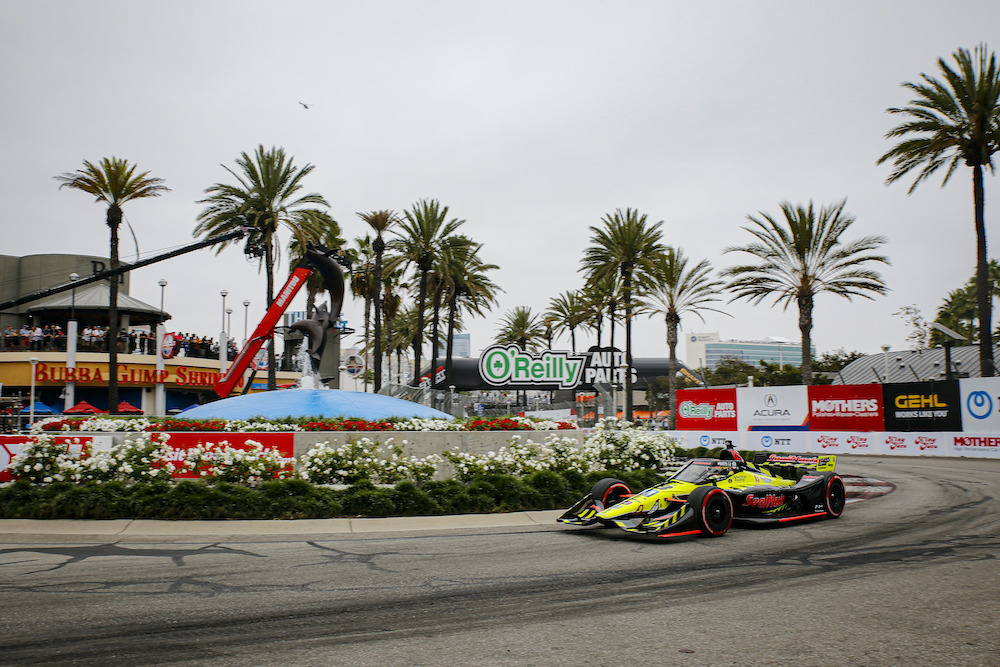
Ed Jones's explanation for the accident that wiped out Pato O'Ward made total sense – assuming that you hadn't actually seen the incident. Barry Cantrell/Motorsport Images
He noticed James Hinchcliffe stayed to the left at Turn 11, saw an opportunity to cut to the right and pass him on corner entry, carried too much momentum while sailing by the No. 29 Honda, and rammed the back of O’Ward’s No. 5 Chevy. The decision to penalize Jones for the transgression must have been the fastest and easiest call made by race control this season.
We’ve seen this move every year, and while, on occasion, the contact could be blamed on cars stacking up, this might have been the most clear-cut case of individual error on record. Why, then, he blamed it on ‘stacking up,’ is a curiosity without an obvious answer.
Jones isn’t a bad person or a bad driver, but there were concerns that with the heavy pro-O’Ward support group throughout the track, he might need to put on a disguise to get out of Long Beach in one piece. There were high hopes for Jones’ third stint in IndyCar. Entering Long Beach, he was 21st in the standings. Thanks to finishing 12th on Sunday, he improved to 19th for the year.
THE GOLDEN BOWLING BALL AWARD
Once again, this award kinda’ gives itself away, doesn’t it? Come on down, Ed Jones!
MISC
* CGR wasted no time in telling motorists from Long Beach to Indianapolis about who won the championship:
https://twitter.com/altezzablue/status/1442334609807609858?s=11
* Great to see Andretti Autosport Indy Lights driver Devlin DeFrancesco spend the weekend plugged into the No. 28 timing stand. It’s become a tradition for upwardly bound Indy Lights talent to connect with their IndyCar team late in the season – just as VeeKay did, for example, at ECR in 2019 – to gain insights on how the team and driver communicate and facilitate each session.
* The life of John Paul Jr was celebrated on Monday in SoCal. An impressive group of his friends and rivals turned out to pay tribute to the winner of the 1983 Michigan 500 and two-time winner in the Indy Racing League who lost his battle with Huntington’s Disease in December.
* Those Hondas sure had some torque to put down on the slow- and medium-speed corners.
* Starting to feel like a broken record with noting ECR’s struggles to close the season. Daly and VeeKay qualified outside the top 20, Daly came come where he started 21st after an odd interaction with Oliver Askew slowed his progress, and VeeKay was on pace to have a quality finish when engine issues took him from 10th to 25th and out of the race on lap 48. Starting fresh in 2022 with a clean slate feels like everything ECR needs to turn the page.
* Has there been a bigger burst of opposing emotions than what we saw after Helio’s run the third in qualifying and the explosive joy that followed, and his I’m-gonna-kill-that-guy explosion the next morning when he wrongfully accused Alexander Rossi of feeding him to the wall in morning warmup?
* Speaking of Rossi, bizarre weekend for the defending two-time Long Beach winner. Rossi was nowhere for most of the event, started 15th behind Herta, but rallied to sixth at the finish. Like ECR, a new season and another chapter in Rossi’s Revenge Tour is the perfect prescription for the Indy 500 winner.
* James Hinchcliffe was having a great run until an undisclosed issue at the back of his car – some form of fluid leak, I’m told – hindered his progress. P14 was an undeserved outcome for The Mayor in his last race with Andretti Autosport.
* Had to feel for Oliver Askew as the last event for RLL in his three-race deal was just as rough as the first. The crash with Daly led to a 22nd-place finish, which came after a promising ninth at Monterey and a 24th to open the evaluation at Portland.
* Let’s close with some props given to Jack Harvey, who motored from 25th to seventh in his last race for MSR. And Sebastien Bourdais in what might have been his last in IndyCar with a recovery from the bottom of the field following a hit and spin to eighth for Foyt. And Takuma Sato who improved from 15th to ninth in his last drive for RLL. And Max Chilton who took IndyCar’s tiniest team in Carlin Racing from 23rd to 15th.
Well, thanks for reading our Cooldown Lap columns this season. It won’t be long before we’re off and running again in February.
Presented by:
Marshall Pruett
The 2026 season marks Marshall Pruett's 40th year working in the sport. In his role today for RACER, Pruett covers open-wheel and sports car racing as a writer, reporter, photographer, and filmmaker. In his previous career, he served as a mechanic, engineer, and team manager in a variety of series, including IndyCar, IMSA, and World Challenge.
Read Marshall Pruett's articles
Latest News
Comments
Comments are disabled until you accept Social Networking Cookies. Update cookie preferences
If the dialog doesn't appear, ad-blockers are often the cause; try disabling yours or see our Social Features Support.