Michael Levitt/Motorsport Images
INSIGHT: New stingers in IndyCar tails for the Indy 500
A change to Honda’s exhaust configuration that was first spotted in pre-season testing has made the cut for the Indy 500 and beyond.
IndyCar’s engine rules allow its engine suppliers to develop new exhaust systems each year, with two provisos. First, the altered exhaust design must be submitted for homologation by the series no later than 30 days before the first race, and while the brands can use the old or new exhaust prior to the Indy 500, whichever version is deployed at Indy must be used for the rest of the year.
Honda Performance Development elected to install its 2020 exhaust configuration to open the season while making use of the extra time to have its 2021 design mass produced to supply the 17 Indy 500 entries making use of its 2.2-liter twin-turbo V6 engines.
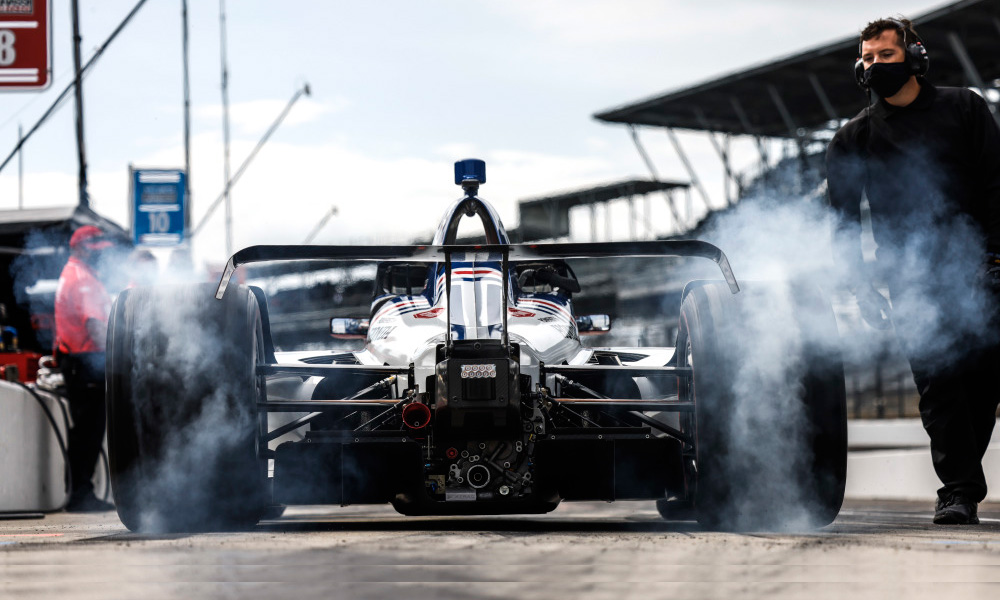
With the start of practice at the Speedway on Tuesday, Honda’s decision was obvious as the twin-pipe arrangement last seen in testing replaced the old single-pipe design on display from Round 1 at Barber Motorsports Park through last weekend’s Indy Grand Prix.
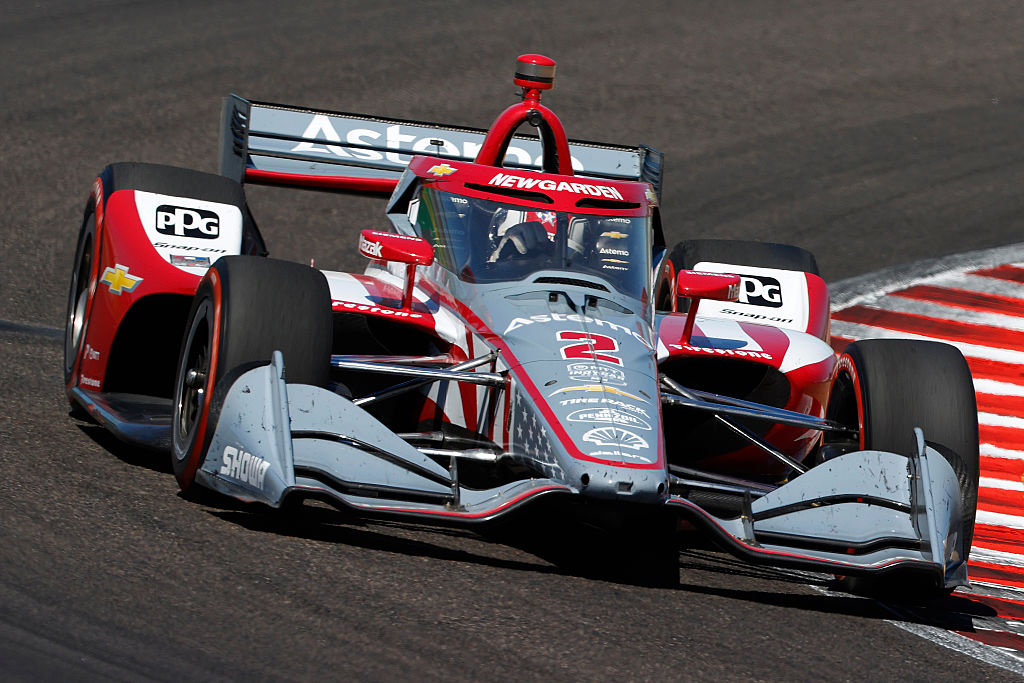
Chevy took a different approach, bringing its new exhausts with curved sculpted outlets into service at the beginning of the championship.
It was no surprise both Chevy and Honda declined to speak about their respective exhaust developments for the Indy 500, and the change for Honda is the only outwardly visible difference between the dueling engine packages with the bodywork installed.
Honda’s return to individual engine and turbocharger wastegate exhaust outlets sprouting from each bank makes for an interesting trip down Dallara DW12 Memory Lane. (All images by the author.)
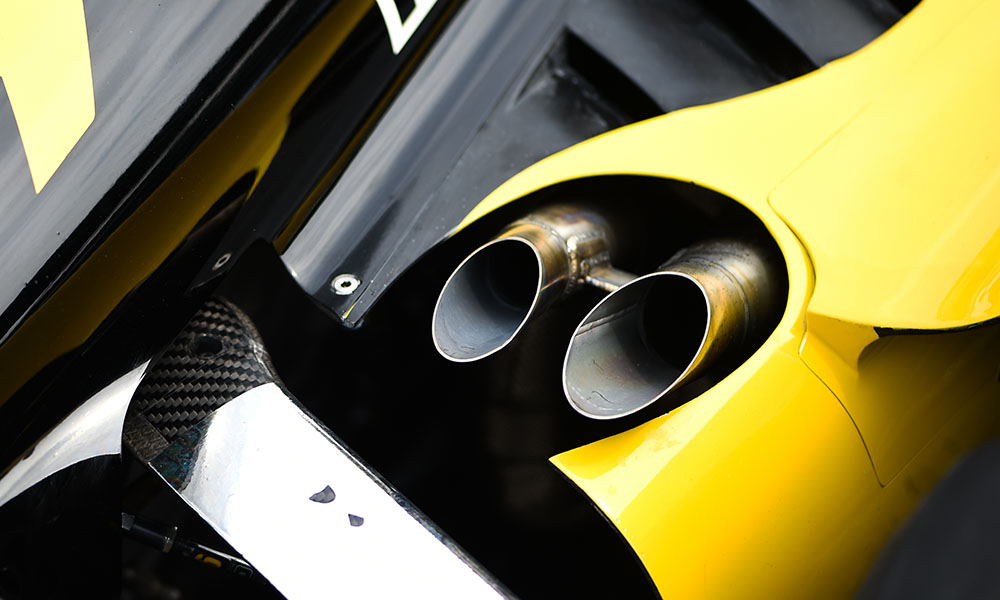
Starting with what’s on display this week, take a look at Honda’s treatment with the smaller wastegate exhaust pipe on the inside the bigger pipe leading from the cylinder head to the turbo and out through the sidepod.
Another look at the new Honda configuration with independent engine and wastegate exhaust pipes.
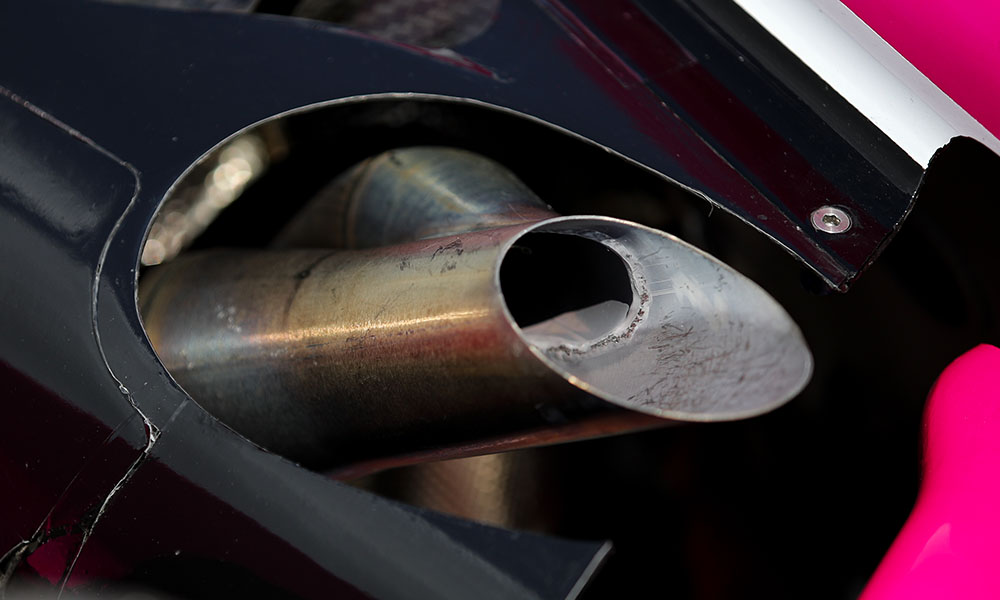
In the four races prior to the Indy 500, Honda used its 2020 exhaust which fed the wastegate into the main pipe to create a single outlet.
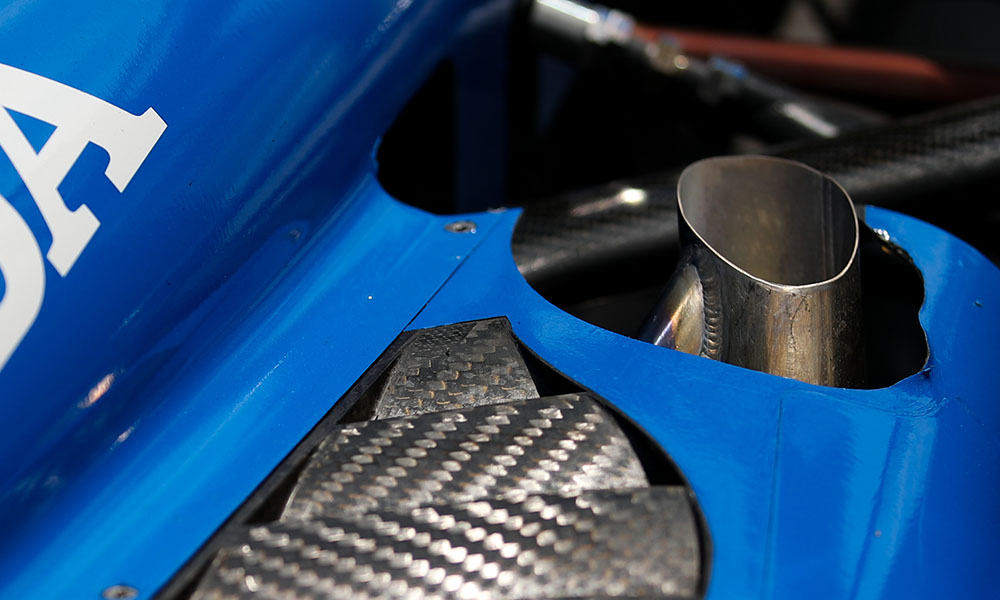
Here’s another look at the combined layout, with the wastegate pipe visible, along with the beaded welds attaching it to the main outlet.
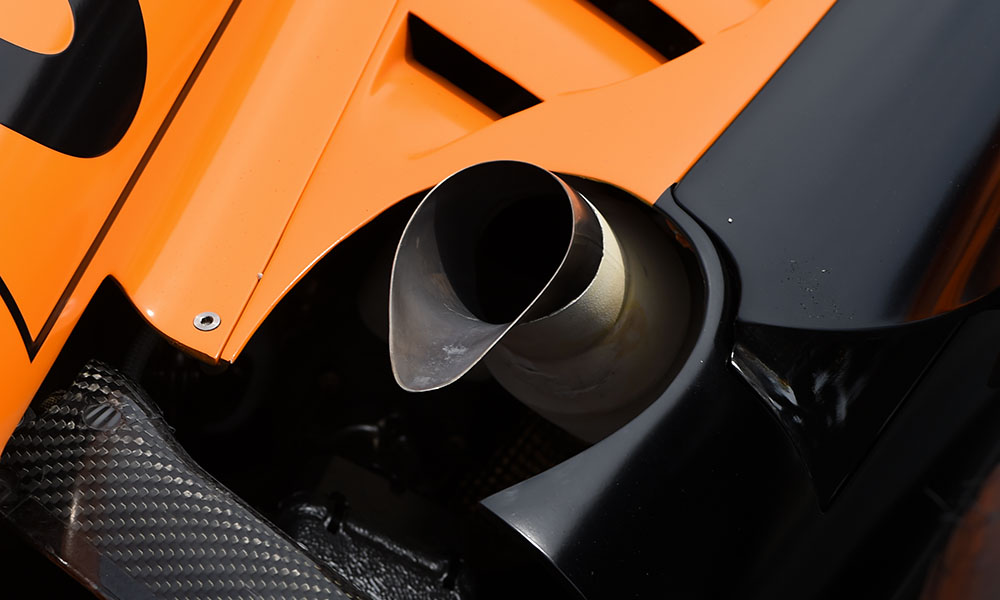
Chevy’s 2021 design goes for something found more often in drag racing circles with a tapered exhaust that looks to steer the fast and hot gases more rearward.
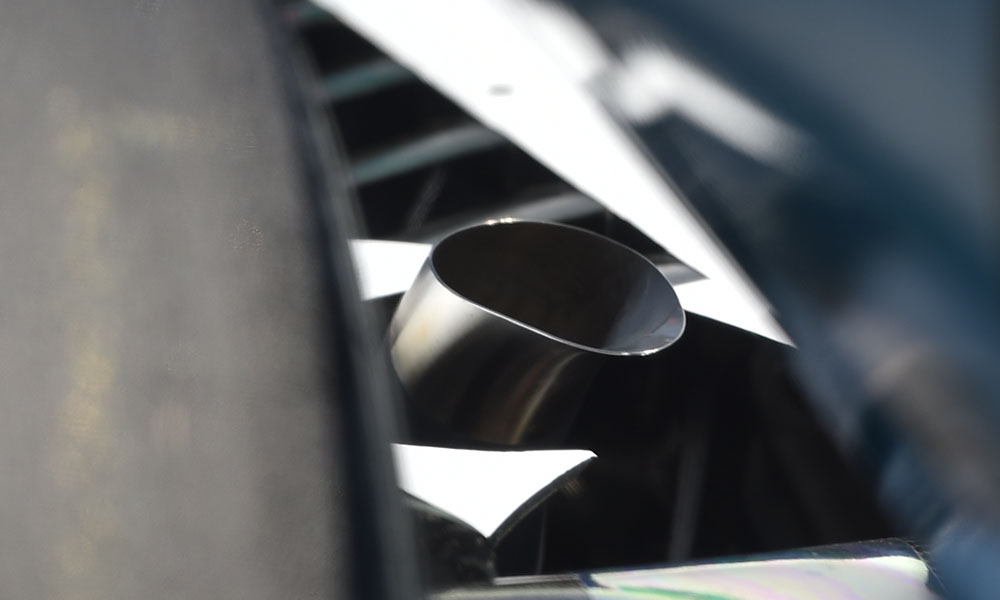
Another look at the gorgeous sculpting.
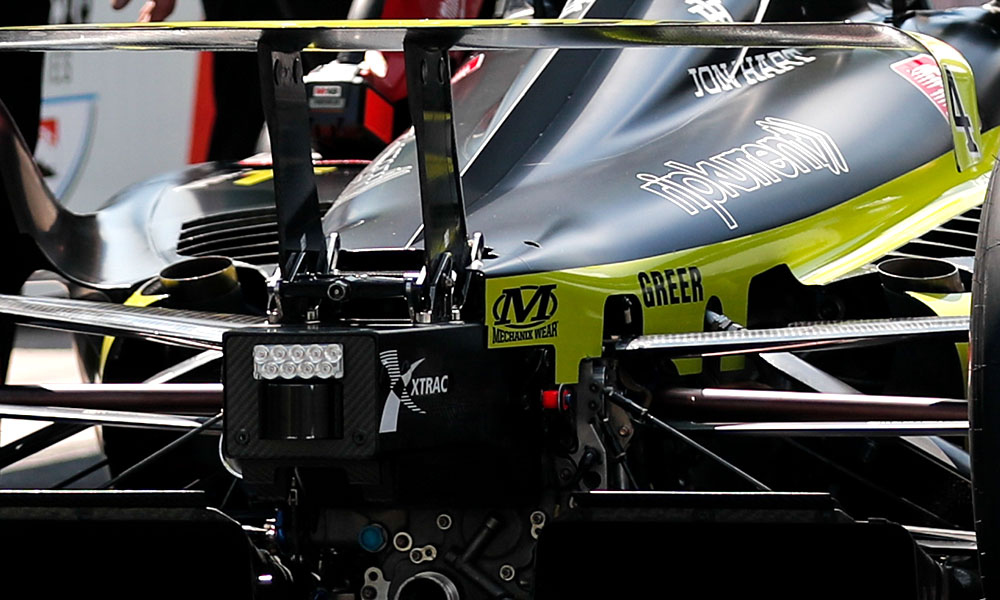
The difference between 2021 and Chevy’s more traditional round-and-skyward 2020 exhaust design is highlighted here.
Where the evolution of the Chevy and Honda exhausts for 2021 takes an interesting turn is found in 2019 and the preceding years.
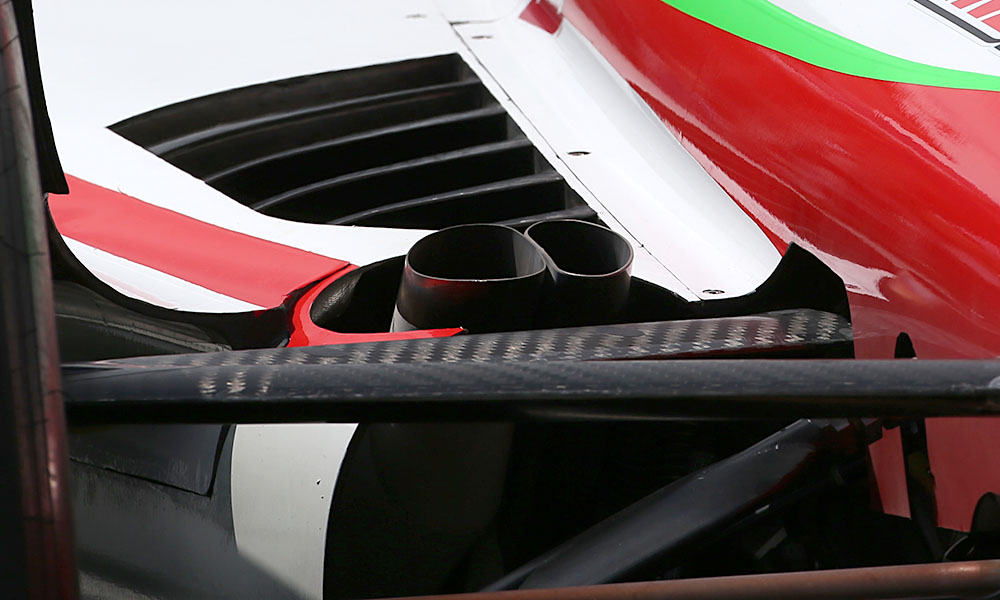
In 2019, Chevy, like Honda this year, opted to split its engine and wastegate exhausts.
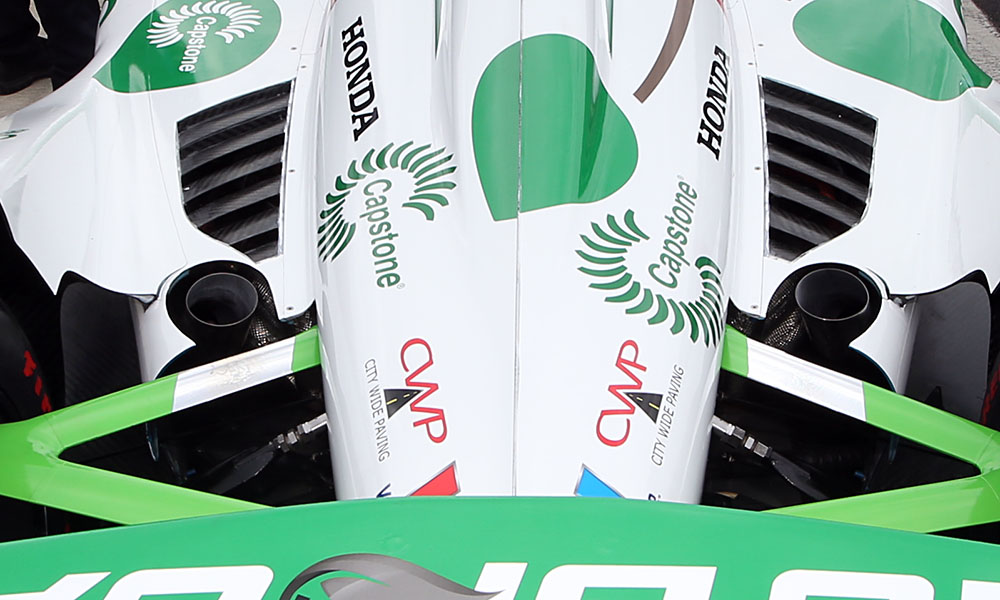
And in 2019, Honda, unlike Chevy, went for the single, integrated option.
To recap, Honda went single in 2019 while Chevy went double. In 2020, Chevy and Honda both went single. And in 2021, Chevy went single while Honda opened with a single and just went to a double.
If we close the story by moving back to the start of the turbo V6 era in 2012, we’ll find the hot ticket in exhaust layouts have been bouncing back and forth for quite some time.
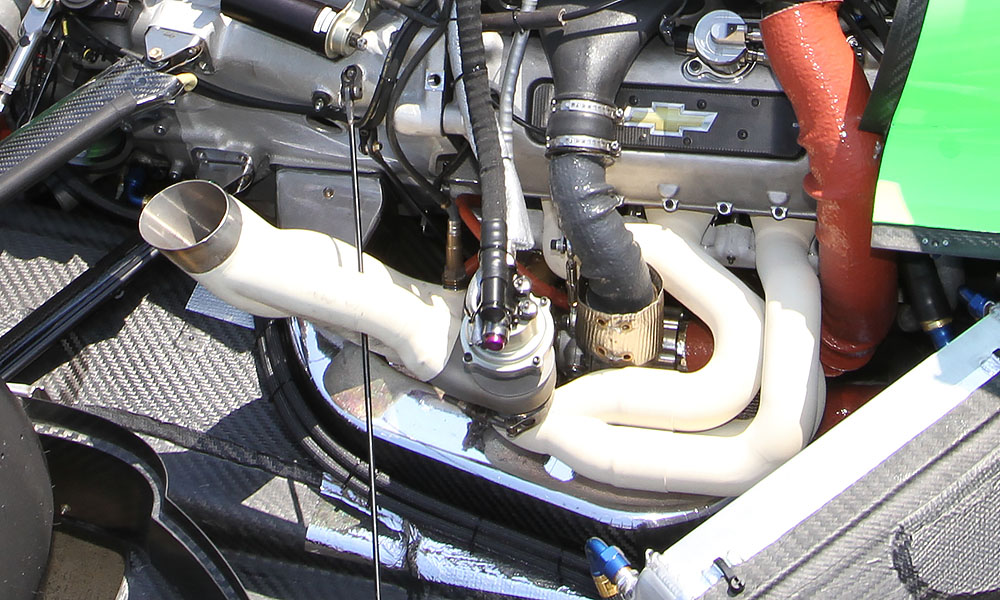
Chevy kicked off its first of many consecutive Manufacturers’ championships in 2012 with a single that fed the wastegate pipe into the main near the top like Honda would do in 2020 and early 2021.
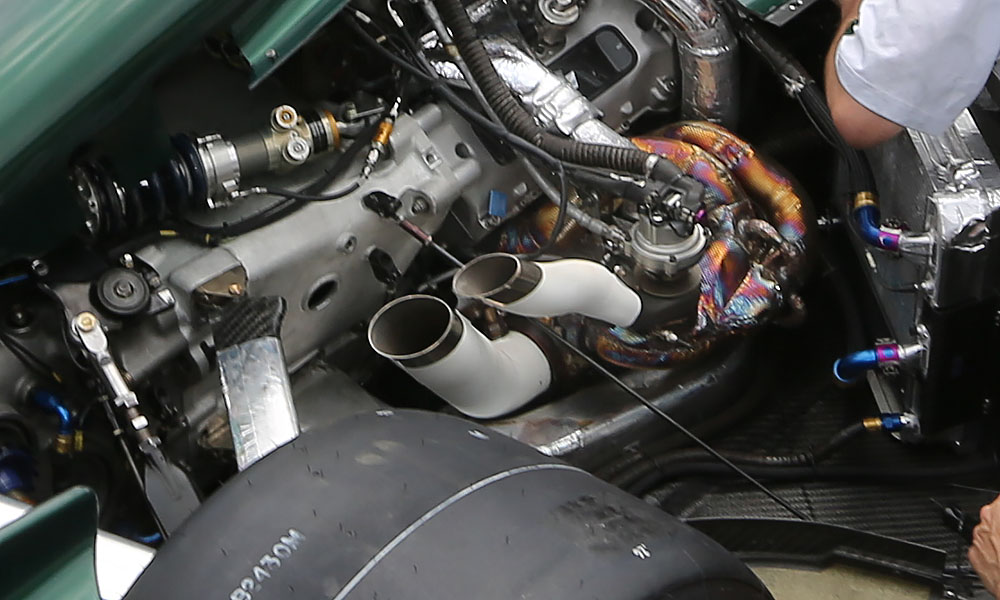
That changed in 2013 when the Bowtie separated the engine and wastegate exhaust outlets.
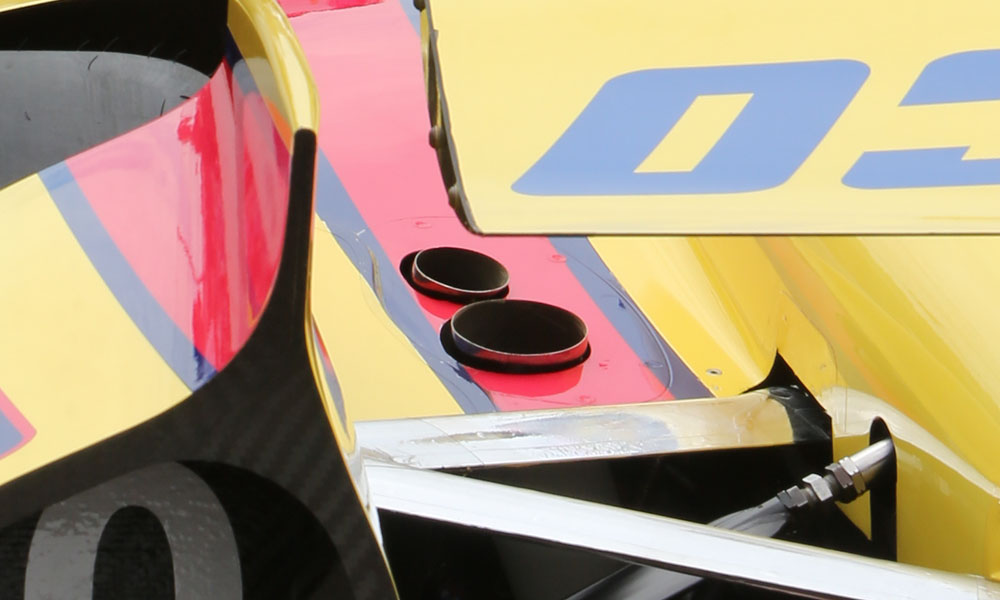
In another look at Chevy’s 2013 design, the wastegate outlet was placed in front of the main exhaust; as more recent versions showed, both brands pulled the wastegate outlet back to sit on the inside of the engine exhaust in double configurations.
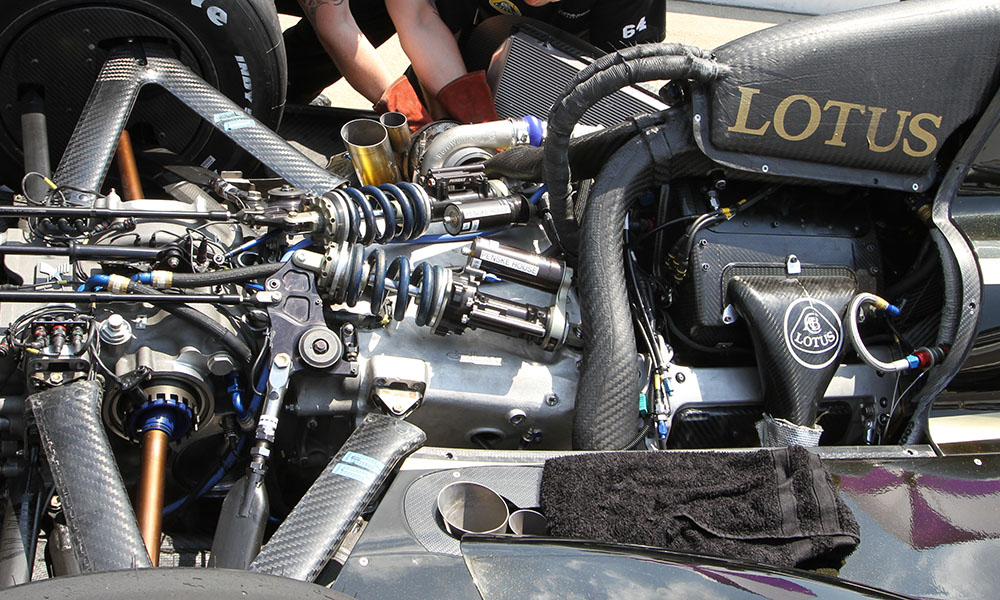
Even the ill-fated 2.2-liter twin-turbo V6 from Lotus in 2012 went the way of the double, matching Chevy’s approach with the wastegate outlet up front.
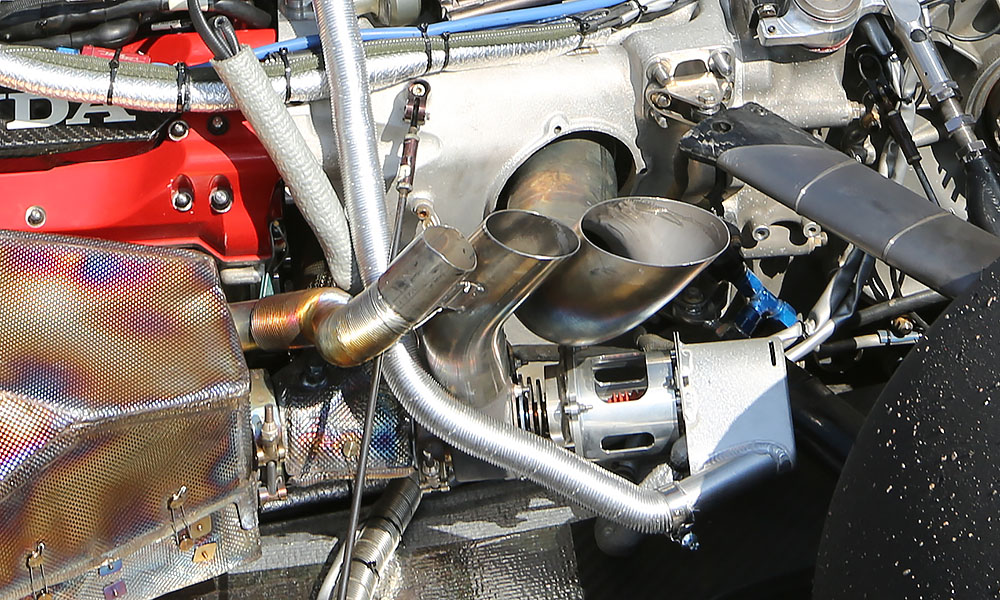
In descending order, in 2013, while still using a single turbocharge mounted in the bellhousing, Honda routed three pipes out of the left side, with the main exhaust outlet at the rear, the wastegate outlet in the middle, and a cooling duct -- meant to extract hot air from the header bag enclosure -- up front.
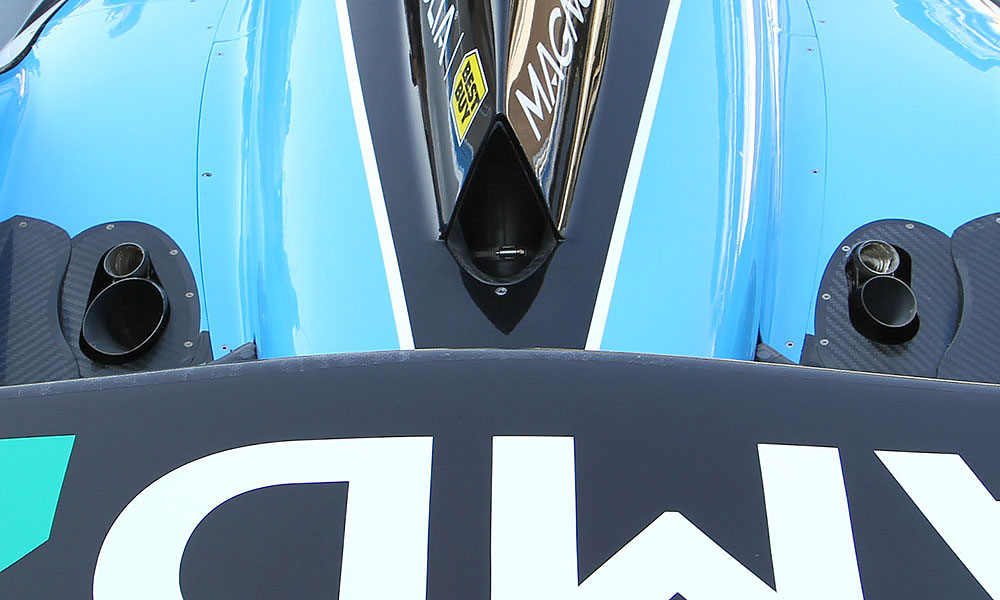
By now, you’ve probably come to expect change, and here we are with Honda’s original exhaust layout in 2012. The main engine outlet is on the left, the wastegate is on the right, and in front of both, the small header bag cooling ducts.
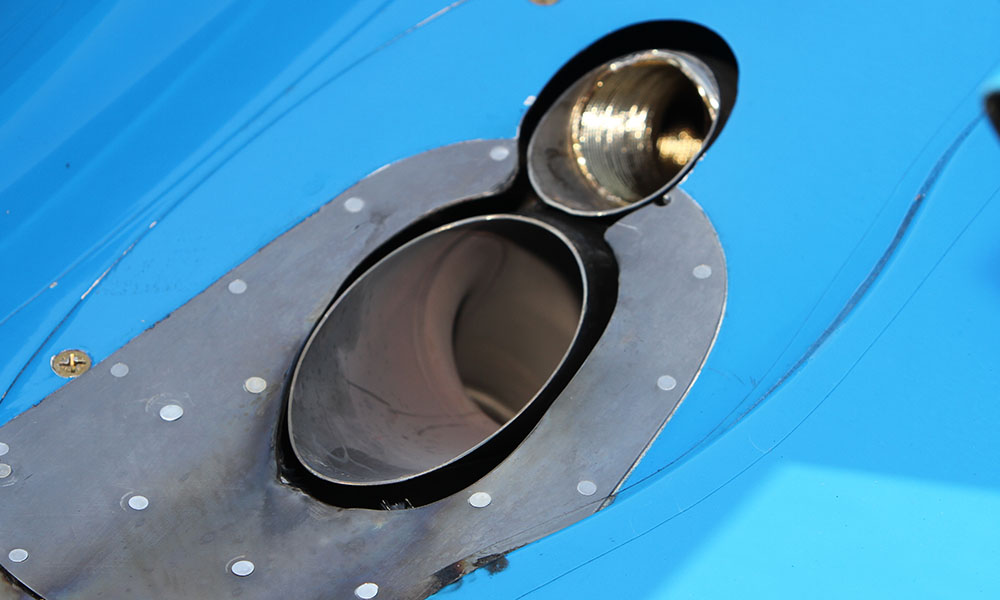
In a final nod to the ever-changing ideas on optimal exhaust arrangements, Chevy’s sculpted and rear-pointing 2021 exhausts that protrude above the sidepods have a distant cousin, as Honda’s right-side wastegate outlet from 2012 features a profile that’s almost the same, albeit tucked low, which required the use of heat shielding to be formed and riveted to the bodywork on Simon Pagenaud’s Schmidt Hamilton Motorsports entry.
What’s new is old; what’s old is new, and whether its singles or doubles, the constant changes and switching from one concept to another is always done after gains are found in power and heat management. And with the endless quest by Chevy and Honda to make improvements, a single might work best with a range of other engine changes one year, while a double might be the smart choice with next year’s developments.
Anyone care to predict who’ll be using singles or doubles 12 months from now at the Indy 500?

Marshall Pruett
The 2026 season marks Marshall Pruett's 40th year working in the sport. In his role today for RACER, Pruett covers open-wheel and sports car racing as a writer, reporter, photographer, and filmmaker. In his previous career, he served as a mechanic, engineer, and team manager in a variety of series, including IndyCar, IMSA, and World Challenge.
Read Marshall Pruett's articles
Latest News

Comments
Comments are disabled until you accept Social Networking Cookies. Update cookie preferences
If the dialog doesn't appear, ad-blockers are often the cause; try disabling yours or see our Social Features Support.