Robin Miller's Mailbag for March 17, presented by Honda Racing / HPD
hpd.honda.com
and on social media at@HondaRacing_HPD
and https://www.facebook.com/HondaRacingHPD.Questions for Robin can be sent to millersmailbag@racer.com. Due to the high volume of questions received, we can’t always guarantee that your letter will be printed, but Robin will get to as many as he can. Published questions have been edited for clarity. Views expressed do not necessarily reflect those of RACER or Honda/HPD.
Q: I am not sure why people are complaining about the IndyCar Series the way they do. It seems to have become a series that a lot of drivers want to be a part of. It has drivers from NASCAR, F1, WEC, IMSA and other series racing or wanting to race in it. That should say a lot about the competition and the other drivers. You don't see other racing series getting this attention. Do you think it has reached the premier level based on who wants to drive in IndyCar?
Eric R, London, OH
RM: I don’t hear too much complaining lately because the competition is second to none, and that’s what attracts drivers from various disciplines. Clark, Stewart, Hill, Brabham, Rindt and Hulme gave Indy massive credibility in the 1960s and Emmo and Mansell did the same for CART, so I think it’s always been highly regarded, even though F1 zealots still consider it inferior. Let’s put it this way, short of motorcycles, it’s the best way for a driver to prove his worth, since all the cars and engines are so similar.
Q: I haven’t heard much about lack of mechanical grip hindering passing for a few years. What’s your opinion of the current status? Any mutterings from any drivers? Is it even a relevant question now? With Dallara making the bodies, it ought to be a lot easier to change if warranted instead of trying to write a lot of construction rules for teams to innovate around, as in other racing series.
Steve De Cenzo, Vancouver, WA
RM: I haven’t been to a race and talked to a driver in over a year so I don’t hear anything, but the only area of concern seemed to be overtaking on superspeedways and that’s aero, not mechanical. Not sure you could ask for better racing than we’ve seen on road and street courses.
Q: Do you feel that IndyCar could benefit by allowing drivers to keep their number year to year? I believe that NASCAR drivers have a benefit by identifying with a number. It helps me to know who is running where, and I instantly identify with the person driving. Some numbers become iconic... the No. 43 and No. 3 cars come to mind. In today’s IndyCar it’s four races in, and I’m still trying to figure out who is who. The one exception is AJ. He is forever No. 14. With color schemes changing more often, some number consistency year-over-year would really help. Your thoughts?
Gerald Oliver, Midlothian, Texas
RM: It seems like Scott Dixon has been No. 9 forever but that hasn’t done much to raise his profile so I don’t think continuity matters, and many times maybe a sponsor requests a certain number. Only Herk (56), Parnelli (98) and A.J. (14) were popular enough to have that kind of identity -- and Petty and Earnhardt.
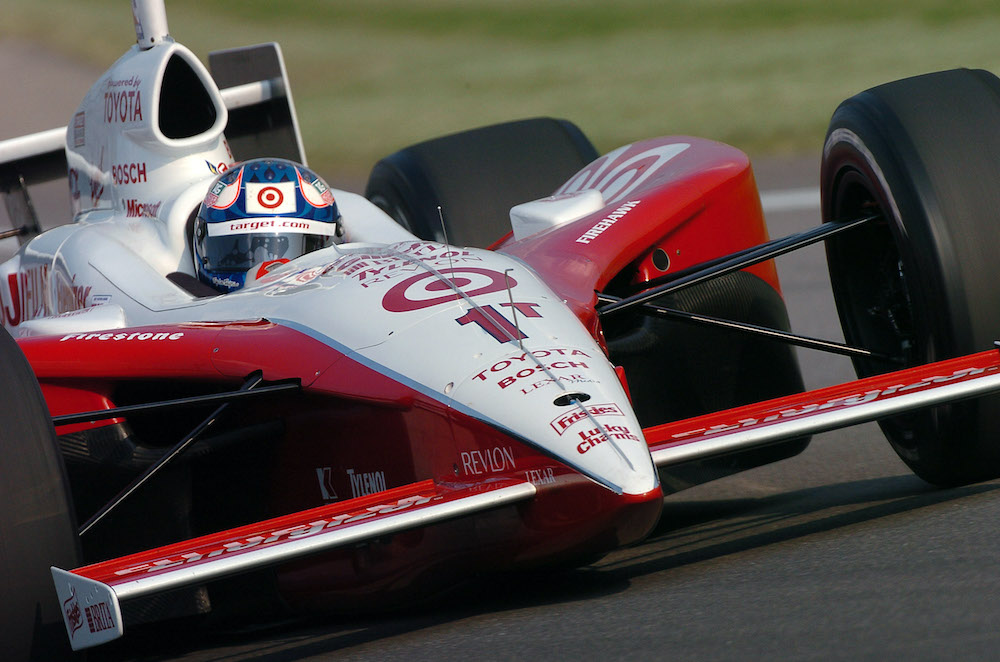
The last time Dixon ran without his trademark No. 9 was back in 2004. Walt Kuhn/Motorsport Images
Q: Ty Gibbs was ripping up ARCA last year and into this season, and is posting good results in the Xfinity Series. I can’t help but think back to what Tony Stewart said a while ago about Toyota and how it can pick up a young driver, have them race a year or two and release them, since there’s nowhere else for them to go. I look at IndyCar, and how even before the pandemic, other than Oliver Askew or Colton Herta, you didn’t really hear of teams like Penske, Ganassi or Andretti having someone waiting in the wings in Indy Lights or further on down. What are your thoughts on the state of young driver development in general, and where it can go from here once we get used to this new normal?
Brandon Karsten
RM: Well, Andretti is the only IndyCar owner with a stake in driver development, and he’s cranked out Pato O’Ward, Sage Karam, Zach Veach, Askew and Herta while Ricardo Juncos has helped pave the way for Rinus VeeKay, Spencer Pigot, Kyle Kaiser and is currently grooming Sting Ray Robb. Based on the last few years I’d say the system is working pretty good -- at least in terms of drivers getting a shot.
Q: At one time Tony George was on the CART board with a non-voting position. Do you think if he was given more input about some of his ideas the whole Split could have been avoided? Even Andrew Craig said Tony George was "very, very, sincere" with his vision.
Dan, Buffalo, NY
RM: All I know is that my old pal Tony Bettenhausen used to say that Tony would sit through a CART meeting and never speak, but then start voicing his concerns or ideas in the parking lot. Dale Coyne once said CART should have done a better job of keeping TG in the loop as far as future rules, tracks, etc. But his attempted buyout of CART in 1991 in Houston was a disaster and not many CART owners felt he was competent after that, so I don’t know if The Split could have been averted.
Q: Do you have any opinions or theories about Michael Andretti's disastrous 1993 Formula 1 season? Do you believe there was a conspiracy to keep him from succeeding?
Ron, Portland, OR
RM: Teammate Ayrton Senna said it wasn’t a very good car, it was a bad year for rookies because testing was limited, and Michael didn’t endear himself to the team by commuting from the States all the time. He was only a couple tenths behind Senna in one test and obviously had the chops to do well, but it was just a bad situation -- compounded by Ron Dennis, who couldn’t wait to get rid of Andretti.
Q: I remember how awesome it was when Nigel Mansell came over and the attention he brought. I might be in the minority, but it wasn't his driving that interested me, it was his complaining. The guy moaned and groaned better then anyone I have ever seen, and it was funny to listen to. Have you ever seen a better complainer than the moody mustache?
Ryan McKeever
RM: He was certainly a drama queen when it came to pain, yet he was a helluva warrior when the helmet went on and I think a lot of that was part of his makeup. But he was a trooper at Long Beach when he drove with his back injury, and he played with pain all season. I listened to him crying about his car’s handling after a pit stop and then he was reminded it was full of fuel and would feel great again in 10 laps. It worked, and he won the race. My best memory is when he won Michigan and collapsed after getting out of the car, only to look over and see his teammate (Mario) with a little bead of sweat and standing by the car. Nige immediately recovered. But he was a great part of IndyCar racing history, and the crowds have never been bigger.
Q: I don't think anyone can argue that the first Harvest GP was one of the best races we've seen in a long time, even if it got crap ratings due to a Friday afternoon time slot. My question is, have any of the high-IQ types sat down and tried to adjust the race lengths so that they have these big strategy windows at all of the events? I think it would really spice up the street courses where passing can be difficult.
Your humble servant, HB
RM: There are a lot of variables that go into a race distance (television first and foremost) but IndyCar has added or subtracted laps at certain tracks to try and make sure everyone has to make the same number of pit stops, and sometimes it works, and sometimes yellow dictate the show. I don’t recall if there was as much fuel strategy at that Harvest GP as it was just badass racing.
Q: Why did IndyCar drop the Iowa Speedway race? It was a great short track, the drivers loved it and the tickets were reasonable. Last year was not good because of the pandemic; that was no one’s fault.
Tom Gomes, Clutier, Iowa
RM: This will be the last Iowa Speedway question of the forseeable future (it will be retired like Cleveland, Milwaukee and MIS) but I’ll give you the benefit of the doubt, being a first-time contributor. IndyCar didn’t drop anything, Iowa Speedway and ISC opted to shut it down after Roger Penske decided not to buy the track. It is a shame because the racing was always good, but it’s just another oval track casualty.
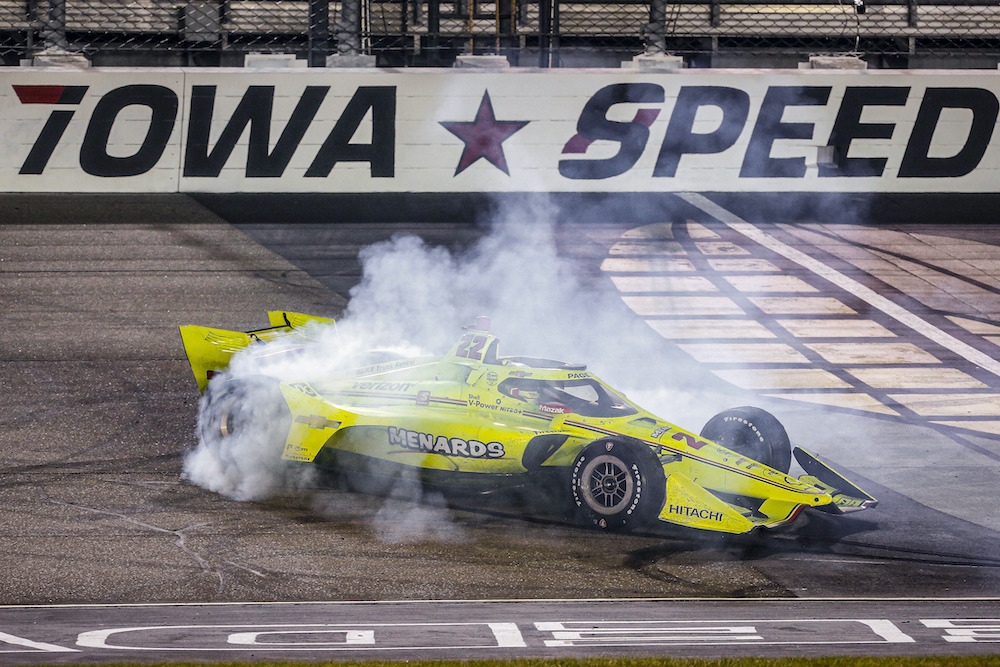
It's always a big week when Robin adds something new to the Mailbag blacklist. Welcome aboard, Iowa. Barry Cantrell/Motorsport Images
Q: As the pre-eminent motorsports scrivener of our time, you've had the opportunity to interview many hundreds of IndyCar drivers across the decades. Which drivers consistently gave you the best interviews, and which did you find to be at the other end of the spectrum?
Michael Smith, Cranston, RI
RM: Best: Uncle Bobby, A.J., Mario, J.R., Tom Sneva, Jim Crawford and Tony Kanaan. Toughest: Danny Ongais, Mike Mosley and A.J. if something broke.
Q: Michael McDowell and Christopher Bell won the first two NASCAR Cup races in 2021 and they had never won a Cup race before. Has anybody ever won the first two IndyCar Series races of the year that has never won an IndyCar race ever?
Chris Fiegler, Latham, NY
RM: Troy Ruttman and Mike Nazaruk in 1952, Kevin Cogan and Michael Andretti in 1986, Scott Sharp and Richie Hearn in 1996.
Q: I was glad to see that Paul Page was elected to the IMS Hall of Fame. In my opinion, his voice and the way he conducted a broadcast rivaled the great commentators of the past (i.e Sid Collins and Tom Carnegie). His commentary was always exciting, and he had a way of conveying information to the listeners in a dramatic fashion. His call of the finish of the 1982 Indy 500 was classic! (“You should see the celebration!”)
Joe Weiss, Spooner, WI
RM: Very much deserved, and Paul’s book will be out in May so I suggest picking it up because he’s got some cool stories.
Q: I don't like starting a Mailbag question with ‘years ago…’ but I miss Jon Beekhuis breaking down mechanical and engine insight, or Jack Arute hooking a bowling ball to his helmet to show G-force in the corner. I still have as much interest in the car as I do with who is driving it. Honestly, I don’t even know how a hybrid engine even performs, nor does there seem to be much information (other than obvious specs) about it.
Watching an old 500-mile race had such an anticipation because there was no telling if the car would complete the race. There was always a mystery behind a cloud of smoke and a tow strap. Why are these "ask the professor" segments gone? Is it because reliability is no longer an issue? I would still enjoy hearing how we have gotten to this point, and perhaps they could mix in a fluff piece about aerodynamics. At the very least they could blow some smoke and talk about titanium connecting rods and the weight of the heads.
Steve, Lorain, Ohio
RM: A lot of IndyCar fans miss Jon, and not only was his reporting technically savvy, he kept track of race strategy like nobody else. But NBC cut back pit reporters and went to full-timers, and unfortunately, Beekhuis wasn’t retained. Arute was tied to ABC for years, so when it lost IndyCar, he lost that job. But I understand he’s got a weekly podcast, so you can still hear him.
Q: I read Marshall Pruett’s piece on zero emission fuels, and this might be a game-changer for IndyCar. Obviously the development and production of such fuels are out of its hands. IndyCar’s move to hybrid would pale in comparison if it could become the first to adopt this in racing. It would put the ethanol transition years ago to shame, and maybe even invite new OEMs into the fray.
Greg in NJ
RM: Over to Marshall: "It certainly has the potential to be a huge development if it becomes a real thing. Most people understand the reasoning behind going semi- or full-electric with road cars -- all done to reduce harmful pollutants being pumped into the atmosphere. Pretty simple thing: If internal combustion engines make the bad pollution, go away from internal combustion engines. But for those who follow the electric vehicle world, there's some nasty environmental issues there as well, mostly with the battery material harvesting and disposal sides.
"Provided something close to a zero-pollutant synthetic fuel can be used in road and race cars, lots of problems get solved and the long-term need for EVs gets raised. Until we see the ‘e-fuel’ revolution happen, it will remain more of a mythical solution than a surefire thing."
Q: Do you have any old columns or stories that you have written about Gordon Smiley? Even 40 years on, the video and images of the crash at Indy in '82 are haunting. I have read several accounts about his history in Formula Ford and his endeavors in the UK, plus his ultimate "eye on the prize" of racing in Formula 1 -- that he openly treated the Indy 500 as a mere stepping-tone to get there. I'm trying to reconcile some differing stories about his experience (perhaps inexperience) at the Brickyard, and the seeming two sides to him. Some reports say he was gregarious and openly helpful to fellow competitors, and others have him being a real handful to work with, quite confident in his abilities and not afraid to tell anyone about it. Donald Davison kind of straddles the line in a couple of the interviews I've watched. You have been exposed to a lot of personalities over the years, and I was wondering your thoughts on him and his abilities/potential?
Brad in Seattle
RM: Gordon came up to the Indianapolis Star’s sports department on winter day in 1980 to introduce himself and lay out his plans to succeed in CART. He was very personable, and I reminded him we’d met once at Mid-Ohio when he lapped me in the national Formula Ford race. He tangled with the Bettenhausen family and wrote Rick Mears a long letter apologizing for causing an accident, and that was pretty unusual since most drivers would simply do it face-to-face back then. He was very brave, and that eventually cost him his life in 1982.
The morning he died I was with some guys from the Star in the first turn during practice, and Gordon was having a helluva time. A.J. rode his bike down to where we were standing and watched a couple laps and said, “that boy is gonna bust his ass. You should go tell his chief mechanic.” So I walked down to Derek Mower and explained what A.J. said and what I thought I saw as an ill-handling car, and he replied: “I’ve been trying to calm him down all week but he’s obsessed with the Whittington brothers because they’re faster. Before he went out to qualify I told him to just run four laps, and if it’s not good enough, we’ve got all week to get the backup in the show. But he slammed down his visor and said he was going to run 200 mph.” I wrote a column later that basically said Smiley committed suicide because he refused to listen to his car or crew chief and simply drove into oblivion. I got a nasty letter from a preacher for being too insensitive, but I was merely trying to re-emphasize that Indy will bite you if you don’t respect it. And, that day, he didn’t.
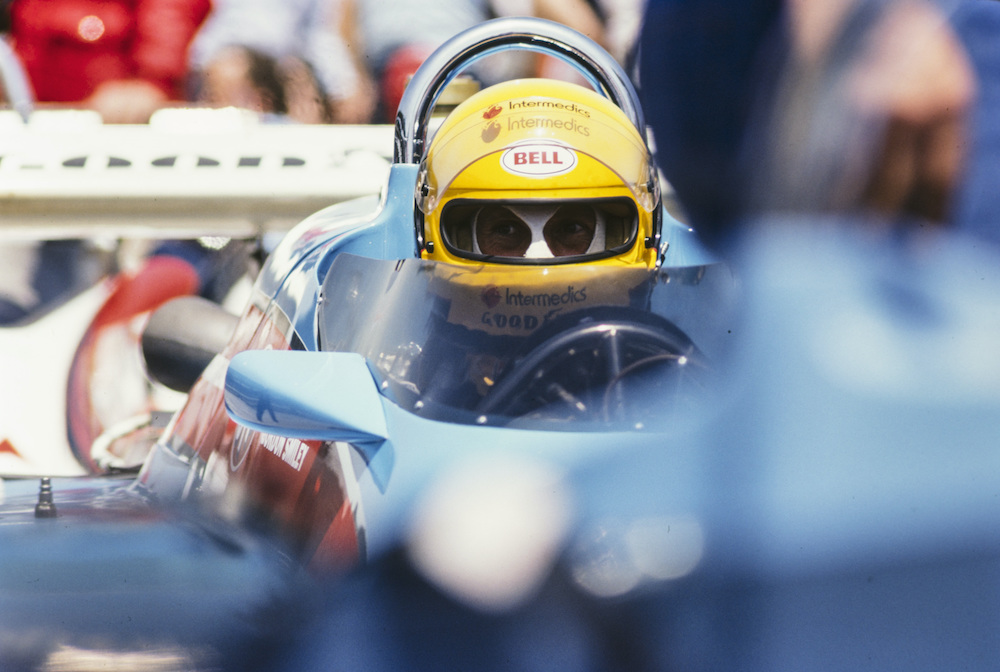
There were never any question marks over Smiley's bravery. Motorsport Images
Q: I have been an A.J. fan since I was eight years old, and listened to him win his fourth Indy 500 in 1977. I thought of a question to ask him, from a safe distance, a while ago. Watching some of the stupid or over-aggressive mistakes some drivers can make got me wondering when was the last time A.J. had an accident due to his own mistake, rather than someone else's oops or mechanical problems? I pose this question in a sincere way, betting that he has to go pretty far back into his career to remember such an error. He was such a smart driver who didn't overuse his equipment that I would think it would stand out to him that he had caused an accident by screwing up, and I wondered if you could pose this question to him, and see if he remembers such an incident? Thanks for your great work, and hopefully an answer to this question.
Glenn Kozora
RM: Do we count when he drove his bulldozer into the pond and flipped? Honestly, I can’t recall very many accidents that were his fault over five decades. Maybe his tip-over at DuQuoin in 1970, but he was so smooth and so smart he never seemed out of control.
Q: Hi Robin, love what you do; keep it up! I've read comments about drivers not being as brave as in the old days and tracks being boring cookie cutters (most are), so I wanted to make a suggestion. Check out the FIA World Rally Championship. The Arctic Rally was a few weeks ago, and it was incredible watching the cars go through the stages at breakneck speeds, especially the night stages. It was simply an amazing sight. The action was non-stop. Just wanted to know your thoughts on this series.
Bill, Richmond, VA
RM: Well, I watched about 15 minutes and those guys are as crazy as the Isle of Man riders, but it’s breathtaking and a special skill set, for sure. The navigators have to be as brave as the driver, because it’s all about trust.
Q: Who owns the IROC series' tapes? I mean, first with the 911s then with the IROC Camaros… what a fun series. I would imagine that if they were aired a lot of new fans would enjoy them!
Peter Carey, San Bruno, CA
RM: I imagine they’re property of whatever network aired them at the time.
Q: I could have sworn that I heard that Austin Cindric may or may not have been interested in open-wheelers, but Tim said emphatically that Austin wasn't going to go that route. If this is true, I find it interesting. His dad runs the best open-wheel team on the planet, and it's not like Austin was going to have to make a living in stockers or not make a living at all. It's almost as if Tim didn't want to see a kid of his in open-wheel. While I'm at it, I don't have any problem with any driver not wanting to run Indy/Texas/Pocono. People like A.J., Parnelli, Ward and Sachs had to do Indy, or else they didn't eat. That mindset stuck with Mario, the Unsers, J.R., etc., even though the money got better. I think it comes down to society placing more of a value on human life than it did in the 1920s-'70s. Driver X says "I don't want to do a Wickens" and the public says "I don't blame you!" I'd go into this further, but I'm saving it for my novels!
Damon Hynes
RM: Austin started out in smaller open-wheel cars before being moved into sports cars and then stock cars, and I think Tim understands it’s much safer, plus his son has some chops in Xfinity and a bright future ahead of him. BTW, the heroes you mentioned never thought about not racing anywhere because it was their job, and they had supreme confidence in their skills. Rodger Ward didn’t like the banks or Langhorne, so he could pick and choose because he was so good and so successful at Indianapolis.
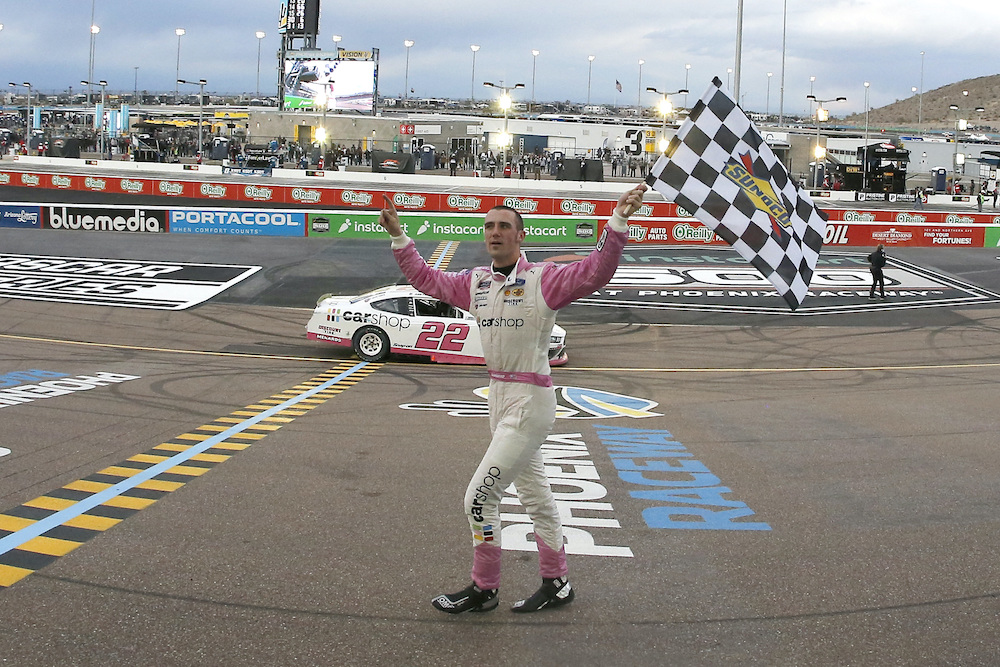
Choosing a roof over wings seems to be working our pretty well for Cindric so far. Russ LaBounty/Motorsport Images
Q: What drivers, after racing and wrecking at a close finish of the 500, were the best at sportsmanship?
Charles Patterson
RM: Al Unser Jr. applauding Emmo after the 1989 race when he got knocked into the wall going for the win. He was going to give him the finger, but changed his mind and got a lot of good publicity for his sportsmanship.
Q: Hello Robin. One of your questions last week about sponsorship mentioned the Boyles Special Maserati driven by Wilbur Shaw. While fans are waiting for the season to begin, they may be interested in two Dinner with Racers season two episodes on Prime Video. Episode 3, Speedway Empire, is an interesting story about Mike Boyles in the '30s, which resulted in Wilbur Shaw having back-to-back wins in the 500. For those who remember Dick Simon, Episode 2 has some really interesting stories, some related to racing and some... well... some so out there that it is amazing Dick is still with us. Ryan Eversley and Sean Heckman do a great job bringing unusual stories to the racing fans. Season 1 favorites are Episode 4 -- a history of Virginia International Raceway -- and Episode 3, The Animated Adventures of Uncle Bobby.
Finally, speaking about Uncle Bobby, last year I was camping Saturday evening at The Ridge Motorsports Park during two days of driving my track car. It was the night before the 2020 Indy 500, and I found The Roast of Bobby Unser... hosted by you! It was the perfect pre-500 activity, and it had me laughing so hard. Well done, and thanks!
Glenn Cirlincione, Renton, WA
RM: The Bobby Unser Roast is a classic just for all the star power, and Ryan and Sean do a great job. Very entertaining way to spend a cold winter.
Q: A year on, IndyCar is still doing sim racing. I don't get it; what does the series think they're gaining by doing it? I have respect for people who enjoy it, but it's not real racing. Why do they treat it so seriously? Last year they even had invocations for it and national anthems being sung. It just seems hokey to me, unless I'm missing something. I know of at least one publicist who hated the qualifying format and having to harvest then send thousands of virtual driver autographs. I may be wrong about it, but I heard a rumor that drivers didn't like participating or being forced to by IndyCar series brass and told to keep their mouths shut and stick to the party line.
Geoff Roberts, Unionville
RM: It beats me, but I refuse to acknowledge it exists and I’ve never heard one driver talk about how he loves doing it (but I’ve heard a few make fun of it). Obviously, judging by the TV ratings, it does nothing for IndyCar’s profile. And that’s why it’s the last item here.
Presented by:
Robin Miller
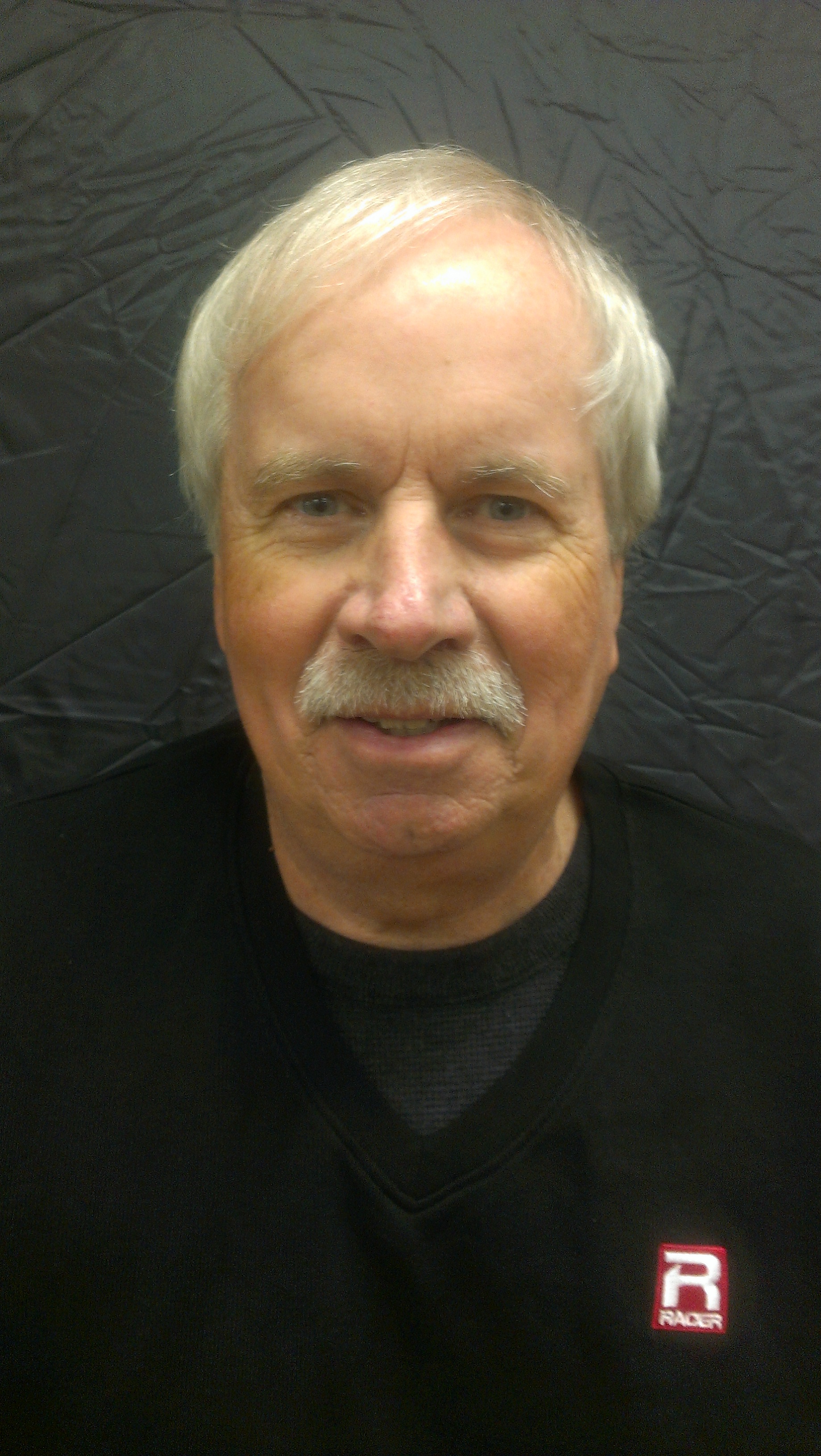
Robin Miller flunked out of Ball State after two quarters, but got a job stooging for Jim Hurtubise at the 1968 Indianapolis 500 when Herk's was the last roadster to ever make the race. He got hired at The Indianapolis Star a month later and talked his way into the sports department, where he began covering USAC and IndyCar racing. He got fired at The Star for being anti-Tony George, but ESPN hired him to write and do RPM2Nite. Then he went to SPEED and worked on WIND TUNNEL and SPEED REPORT. He started at RACER when SPEED folded, and went on to write for RACER.com and RACER magazine while also working for NBCSN on IndyCar telecasts.
Read Robin Miller's articles
Latest News
Comments
Comments are disabled until you accept Social Networking Cookies. Update cookie preferences
If the dialog doesn't appear, ad-blockers are often the cause; try disabling yours or see our Social Features Support.