Illustration by Paul Laguette
Robin Miller's Mailbag for September 2, presented by Honda Racing / HPD
hpd.honda.com
and on social media at@HondaRacing_HPD
and https://www.facebook.com/HondaRacingHPD.Questions for Robin can be sent to millersmailbag@racer.com. Due to the high volume of questions received, we can’t always guarantee that your letter will be printed, but Robin will get to as many as he can. Published questions have been edited for clarity. Views expressed do not necessarily reflect those of RACER or Honda/HPD.
Q: Gateway's Sunday crowd was pretty impressive, considering the circumstances. Bad weekend for some, good weekend for others. Dixie was brilliant on Saturday, Pato is impressive and Fast Willy seems jinxed. Despite all the guns Andretti has, they've been nothing but blanks. They seem totally out of sync. It's hard to beat the ovals. We need more. And, let's get back to racing. Stop with the pit-lane speed limit. Nobody over the wall until the car is stopped. Hell, it's already spec racing! Reward those with balls. Agree?
Ron Rush
RM: Chris Blair & company did a good job of drawing people in tough circumstances and I’m glad to hear next year goes back to a Saturday night, because it’s cooler and a better-looking show. But adding ovals isn’t likely because they’re a tough nut for the promoter, and I’m still thinking R.P. is going to have to buy Iowa to keep it on the schedule. I worked on Indy pit crews when their was no speed limit and the pits were always open and I’m all for it, but it’s never going to happen.
Q: Do you think there is anything that can be done at WWTR to make passing easier for the IndyCars? On Sunday with the hotter track temperatures, it was essentially impossible to pass. The pass for the win was made in the pits. I was happy to hear that next year’s race will be a night race.
Bill Oliver
RM: Here’s what IndyCar VP of competition and race engineering Bill Pappas had to say: “It a good thing will be racing at night in 2021 because that helps everything. We need more mechanical grip, and I think we could look at the tires. I think someone should talk to the track about increasing the banking in Turns 3-4 to ensure it is flat. That would allow you the get a run from the exit of Turn 2 all the way to entry of Turn 1.”
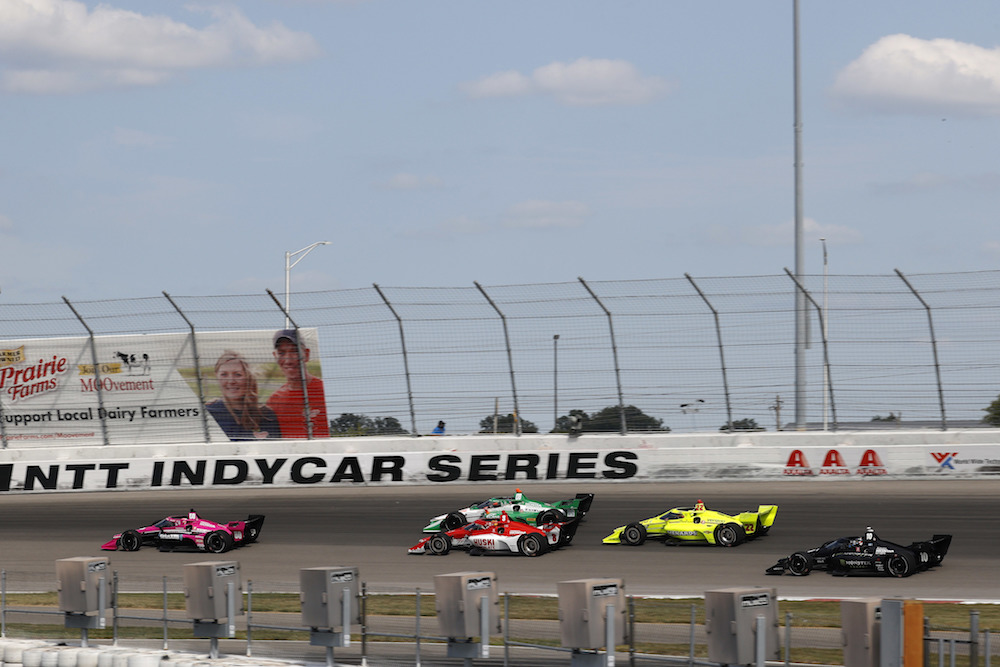
The move back to a night race should make for a racier visit to WWTR in 2021. Michael Levitt/Motorsport Images
Q: Wanted to share the boots-on-the-ground experience (and thankful to have gotten an in-person experience this year) from Sunday's IndyCar race at Gateway. After watching Saturday's race, I was able to convince two buddies to tag along and make the four-hour trek to Gateway. I would say one is an ‘average’ fan as he has been to multiple 500s, a few GPs and watches several races a year with knowledge of cars, teams, and drivers. The other is a novice that has been to quals with me, and catches the 500 or bits and pieces here and there. I have been to roughly 150 IndyCar (CART, IRL, Champ, Indy, etc.) subscribe to NBC Gold, RACER, etc.
We paid $87.50 after convenience fees per ticket to sit in the WWTR grandstands (I have always been on the front stretch at Gateway). The seats were great, properly socially-distanced, and we could see the whole track. The negative was that there were no video boards or scoring pylon on this side of the track, so we had to resort to the IndyCar app to show us the running order and lap counts, especially after pit cycles. We got there in time for the truck race, and I've watched a few, but although we really didn't know any drivers it was an enjoyable race that provided some added value. We were there for the open-wheel rocketships, and well, we were left quite disappointed. Both friends commented on the fact they spent $87.50 to watch a very fast and loud parade, while paying $8/beer, and $20 to park.
Overall we spent roughly $120 each, and I have a feeling I will be the only one coming back next year. I tried to send them a video of Josef stating that more horsepower and tire deg could certainly help next year and he's confident this will be addressed. One of them asked me why they didn't know this coming, since they had Iowa and other races this year. I don't know the answer. What I can say to convince them to come back with me next year? What is the answer? And what are the chances I get to attend the Harvest GP? Out of all the races I've witnessed, this one was pretty bad. Even in the past where you'd have the leader winning by a lap, at least he was able to lap cars and there was some mid-pack racing.
Brian Burrell
RM: Not sure what happened between Saturday (which was a pretty decent race) and Sunday (which was a parade) but IndyCar’s tech chief weighed in an answer above yours. WWTR doesn’t have the banking and spacing that Iowa does so it’s never going to be as exciting, but there were some pretty good passes in Saturday’s show. I guess you could tell your pals it’s going to be a night race again and that always makes it a little better because the track isn’t as hot. IMS is going to find out if the Harvest GP will have spectators in a couple weeks. Thanks for all your support and trying to make IndyCar some new fans.
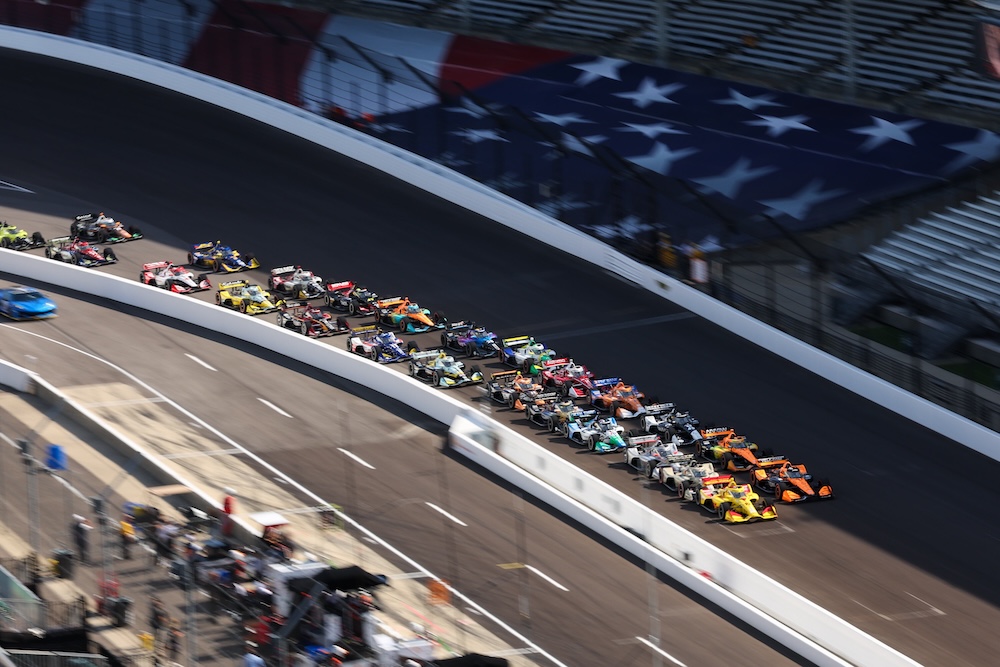
Q: What was race control’s rationale for penalizing the No. 55 and No. 7 cars at the start but not the No. 12 and No. 22? I don’t have all the data they have, but even without rewinding my DVR it looked pretty clear that Will Power, as the leader, not only brought the field around too slow, but critically, failed to maintain speed. Power’s lift just before accelerating is what checked up the inside lane and caused the melee that took out a fourth of the field. The 55 took evasive action to avoid a collision without overtaking anyone, but Pagenaud saw that pop and stood on the gas and popped out as well, then immediately slammed on the brakes. Askew simply followed him on the gas but really had no chance to stop in time.
If the 55 was punished for getting out of line and/or going early, didn’t the 22 do the same? If the 7 was guilty of avoidable contact following the 22’s mistake, isn’t everyone else behind him (except Rossi that got hammered from behind) also guilty? Karma took care of Power, but it should have been Race Control. That kind of hi-jinx is a regular cause of IndyCar’s “big ones” before even taking the green. That, and the mystery competition caution at halfway, robbed a lot of fans of seeing their drivers compete in an otherwise entertaining race.
Aron Meyer, Tucson, AZ
RM: IndyCar says Power maintained a constant and reasonable speed, and it’s the responsibility of the other drivers to adjust when he accelerates.
Q: So, the Indy 500 has to be run without fans. Yet, the Bommarito Automotive Group 500 can be run with fans in attendance. Can you explain the nonsense logic with that decision?
Jerry, TX
RM: Indy could have had fans but chose not to, while WWT Raceway was allowed a percentage of its capacity. I said all along I thought IMS could have successfully spaced 60,000 people with The Captain’s plan, but something changed his mind.
Q: In all of sports right now, what irks me especially is the Indy 500 with zero fans. Why couldn’t they let in, say, 10,000 lucky fans and have them sit 50 feet apart with masks? I was at the NASCAR race in Daytona two weeks ago for the road race and it went quite smoothly! They even sold concessions. Zero fans makes no sense to me. On another note, at Daytona I saw Alex Tagliani driving in the third-tier truck series! Wasn’t he a superstar at CART at one time? What happened?
Doug Ferguson, Debary, FL
RM: When you’ve got 200,000 seats it makes no difference if you let in 10,000 or 60,000, but the decision was made to allow no one and enough people were already mad or disappointed so why would you alienate even more of them? Tags was always quick but never a superstar in CART, but he won the pole at Indy and he’s had some good runs on road courses in the Xfinity series. He’s 46 years old brother, that’s what happened.
Q: Three extremely quick observations, and one request from the IndyCar weekend at Gateway. Kudos to Mr. Bommarito on Sunday’s command of “Gentlemen, start your engines!” Small known fact that Saturday was only Will Power’s fourth short oval pole. Will has also had yellow flags given on lap one of three of his four short ovals. Can Mr. Penske (in his IndyCar shirt) mandate Power be given a lesson on how to bring the field to the start of an event? Your comments, please.
Tom Kientz
RM: “As we have written in these pages many times, in IndyCar, the pole winner receives the reward of being able to dictate the start of the race within the prescribed Start Zone. On Sunday, the No. 12 maintained a constant speed when the field was under his control, was within a reasonable speed of the previous speed of the pace car, and accelerated within the start zone. This is all verified real time via live speed and throttle trace through onboard telemetry. It is the responsibility of all competitors to adjust accordingly.” Kyle Novak, IndyCar Race Director.
Q: I am a long-time follower of IndyCar since my first race at OMS September 1971. This is my first time writing you, but have read your articles faithfully. I know this is a contract year for Will Power at Penske, and that is adding to his pressure in a frustrated and strange 2020 season. I feel like Will has a lot of years left in his career, and I hope it turns around at Penske. But if The Captain does not extend is contract, what do you think are his best options team-wise?
Steve Karnes, Long Beach, CA
RM: I believe Roger was quoted in The Indianapolis Star saying that all three drivers were coming back in 2021, but I’m skeptical because that means they’d have to field a fourth car for Scott McLaughlin, and Tim Cindric is not a fan of four cars. But if Power did get cut loose I’m sure he’d find another ride, because he’s still plenty fast and capable of winning anywhere.
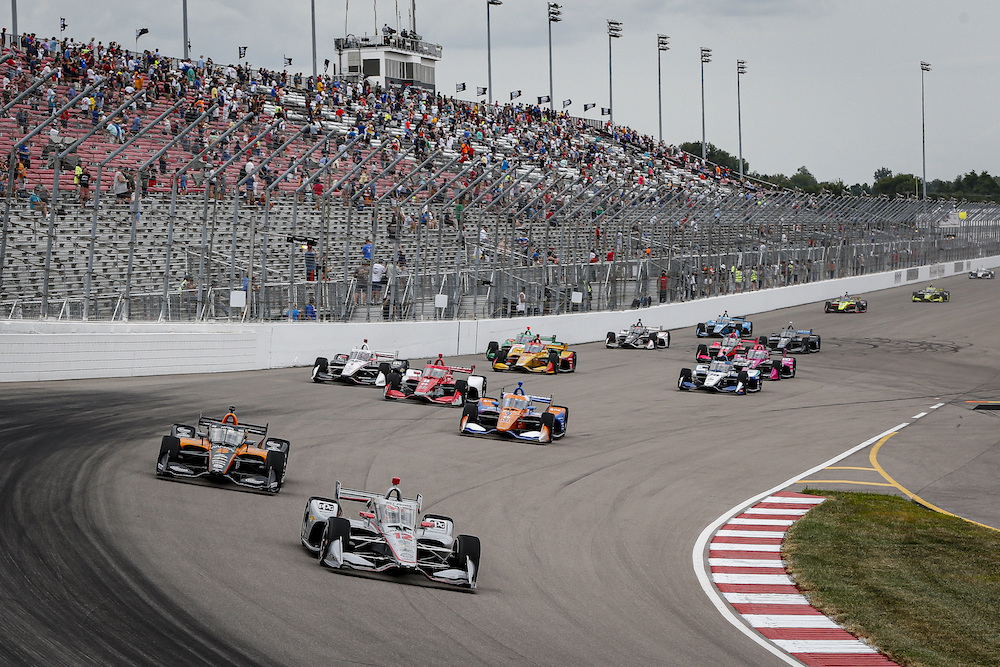
No complaints from race control about Power's start. Barry Cantrell/Motorsport Images
Q: After such a poor run of results for various reasons, do you think Alexander Rossi will bounce back?
Jordan, Warwickshire, UK
RM: I would think so, but obviously something isn’t clicking right now (other than Indy) with what had been the team to beat, and they’ve also had more than their share of bad luck.
Q: Please explain “undercut” and the strategy involved.
Dale Murray, Mount Joy, PA
RM: How about we let one of the masters of that strategy, Mike Hull of Ganassi Racing, explain it in detail:
“With cars more equally-matched (spec race cars) the under and over cut is more widely an option in today’s IndyCar racing. Before the present formula, the further in front that you could go, it wasn’t necessary. At Gateway with Dixon this weekend, we hit it three for three on Saturday and one for three on Sunday! The reason, probably, is that more tried it on Sunday, so there was never much open track.
“Compared notes with Brad Goldberg, Marcus Ericsson’s lead engineer. I consider him to be one of the best in the business at this process. Was paired with him four Ford GT years on the 67 car – amazing track position perspective, and had Briscoe and Westbrook as part of the process. Undercut is: stopping once in the window when counting backwards from the end of the race, earlier than the field if on your out-laps. It’s meant to put you into open track to run faster laps on fresh tires, while your competition stays nose-to-tail at a much slower speed on track, effectively being further ahead once they stop.
“Overcut: Being patient to save fuel and your tires. You then go to full rich and try to make it up. We saw both at work at Gateway. Stopping laps after your competition while they peel into the pit lane, then finding open track, to take full advantage of it. If it works, you would leapfrog them without impedance. Either can work, but you need at least 20 percent of your stint to give you that clean air. The driver needs to keep the tires underneath to take full advantage and understand how to be quick while using the least amount of fuel until it counts, and then drive flawlessly. It’s a fine line to get it right with a driver who really gets the process.”
Q: I was wondering what people are thinking about Oliver Askew's performance so far this year? I didn't really expect him to be ahead of Pato on a consistent basis given O'Ward's greater experience and proven speed, but figured he'd been be more or less in the same ballpark. He has such a strong U.S. open-wheel pedigree that his lack of competitiveness is really surprising. Curious to hear your perspective on how he can change his approach to get farther up the grid.
Ben B.
RM: I imagine they think he’s a rookie who has had some really good runs and also made some mistakes, but I'd expect that Arrow McLaren SP is happy with his performance. You can’t compare him to Pato, who’s got so much more experience in all kinds of cars, and isn’t really a rookie.
Q: After an endless summer of cancelled and postponed races, I finally got to see Saturday’s race in person at WWTR! And it wasn't until the race was over that I realized I watched the entire race and never thought once about the aeroscreen. Am I in the minority?
Terry Daley
RM: I think as long as the racing is compelling you never notice whether the car has three wings, six tires or an aeroscreen and I haven’t heard much moaning about the looks lately.
Q: A discussion about the aeroscreen. I am 100% in support of it, but by my count from official and social media, it has already saved four drivers’ lives and countless injuries to others. Can we all just dial down the hyperbole a bit? No doubt it will help save lives and drivers from injuries, but history tells us that it is very rare that a driver was harmed with the previous cockpit design. Stands to reason that the aeroscreen is just that much more protective and I'm glad it is in IndyCar, but let’s not blow this out of proportion NASCAR-style. And your interview with A.J. was exceptional. I wish you had gone on for another hour. I really do envy you, with the time you get to spend with these heroes of Indy.
Andrew R.
RM: Fair enough on the aeroscreen. I don’t know that it’s really saved anyone’s life, but it probably prevented Rinus Veekay from injury at Iowa, and I think the tires more than the aeroscreen really kept Spencer Pigot from being hurt after his sudden stop at Indy. P.T. gets a little ahead of himself sometimes and I think he’s pronounced that it’s saved lives when we’re not really sure.
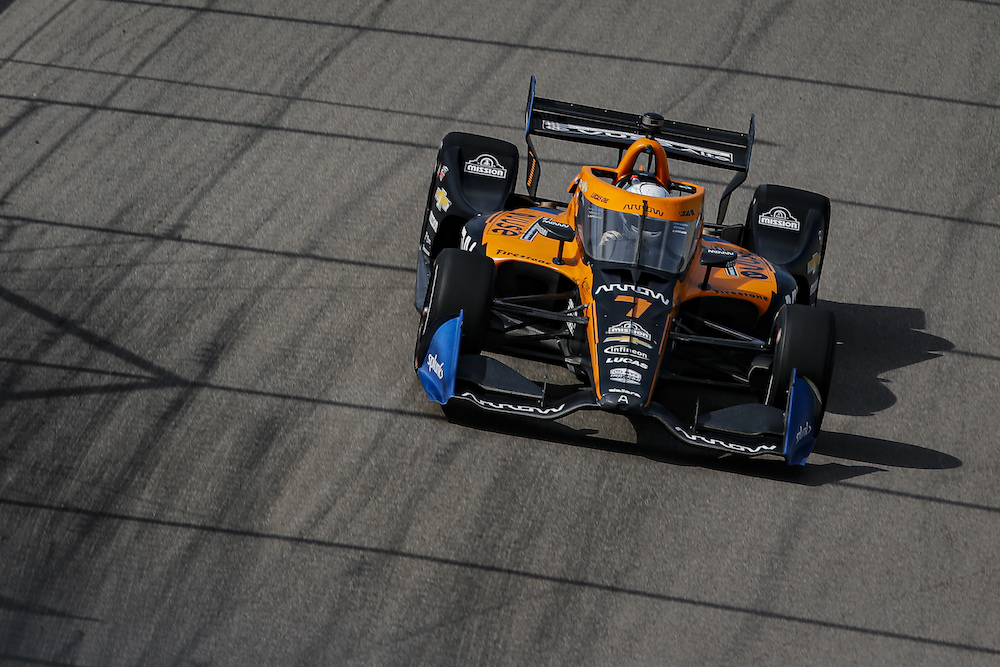
Askew's had a top-three finish, and sits ahead of three Andretti drivers in the points with three races to go. Barry Cantrell/Motorsport Images
Q: I’m just reading last week’s Mailbag and just read the letter about banning Sato. Holy crap, how do you put up with the ignorance that is shown in a letter like that without going off in your reply? I thought your rebuttal was great and more restrained than I would have been, while also highlighting the stupidity (especially the final IRL comment). I image you get a lot of emails like that, and if you lambasted everyone of them you’d get nothing else done. So kudos for putting up with such stupidity like that over the years, and I love that you actually included it in the Mailbag for us to make fun of. The public are dumb. I blame NASCAR.
Jeff Barker, Boise, ID
RM: The Mailbag is for you guys and there are a lot of intelligent questions or suggestions, but every now and then I get something like last week when there is no record or history of anything that reader said being true about Takuma. He and Bourdais got into a shoving match at Toronto last year, but that’s about the extent of his heinous history.
Q: Now that Takuma Sato has won the Indy 500 in 2017 and 2020, has Honda shown any interest in putting Motegi back on the IndyCar calendar? I would think with Sato's built-in popularity and being the winner of the Long Beach GP and two Indianapolis 500s, they would have no issues filling seats this time around. Hell, I'd be fine with a race around Suzuka. It's still a Honda-owned track.
Dan, KC, MO
RM: The oval at Twin Ring Motegi was damaged in the 2011 Fukushima earthquake and tsunami. It was repaired enough that Takuma could run his Indy-winning car at Honda “Thanks Day” at the end of 2017 (following his first 500 win). But not sure if the track was restored to race-ready condition, or if it was just enough for Takuma’s demonstration laps that weekend. The road course might be an option. The other issue would be sponsorship. Putting on an international event is much more expensive for promoter than a North American race, as international promoters are usually responsible for all shipping costs for the cars and equipment, and at least some of the airfares; in addition to the sanction fee to IndyCar, advertising, marketing, staffing, etc. Maybe if Honda of Japan got behind it there’s a possibility since Sato is the rock star of his country.
Q: I noticed at Gateway that Dixon still seemed in disbelief Sato beat him at Indy. He. Just. Got. Beat. Fair and square. Sato was going to make it on fuel despite Scott’s jabs to the contrary. It really wasn’t a huge upset – it doesn’t count to be the strongest between Lap 1-180 or even 199, but for sure Scott looked very, very strong. When was the last time a second-place 500 finisher was so dumbfounded at finishing there?
Eric Z, Lancaster, NY
RM: Probably Marco in 2006 when he appeared to have victory in hand taking the white flag, only to be overtaken by Sam Hornish. I think Dixie was in a little bit of shock since he’d dominated the race and Sato seemingly came out of nowhere, although he’d been a steady top five all day.
Q: I haven't heard anything about driver cooling issues during the 500. Was the weather a non-issue, or have the changes mostly fixed it? Also, I feel obligated to say I support ending the race under yellow.
Tobey Taylor, Houston, TX
RM: Well it was plenty hot at Indy and St. Louis and I never heard any complaints from the drivers, so maybe things are improving.
Q: I’ve started reading through the Mailbag and the myriad comments about green/white/checkered finishes. I feel that IndyCar got it right, not just for the obvious TV/damage/500 not 505 reasons, but purely as a matter of fairness to the leader. Whenever the yellow flag is flown the leaders’ hard work is eradicated immediately, and the second car is right on their gearbox.
Further, the current rules (unfairly) remove lapped traffic with 15 laps to go on a superspeedway, which means the work that Sato did to put the lapped car between him and Dixon would also be undone. That’s a double blow, and really unfitting for a major international sporting event. Surely purity of competition should take precedence over attempts at “spicing up the show”, and this rule that gets rid of the lapped traffic has no place in what is probably the most famous motor race in the world.
Thomas Warren, Sydney, Australia
RM: Totally agree Thomas, but I guess the important question is, would more people watch if they always knew the race would have one shot at finishing under green? I don’t think so, but it’s probably worth IndyCar discussing with its owners.
Q: As far as red flags go, I completely agree with running out Indy under yellow. It was obvious to me that NBC could not keep a broadcast window open for an indefinite amount of time to repair the pit wall end. Whether the current design of the attenuator strikes an optimal balance between safety and ease of repair will no doubt be analyzed by Admiral Penske and his staff in the days ahead.
My first 500 was in 1980. Back in the USAC days, I recall a sign reading “TEN” being manually displayed from the old sign board area at the start-finish line with ten laps to go. I mention this because it is my view that once Lap 190 is completed (and a modern version of the “TEN” sign is displayed to the field), the only reasons the red flag should be displayed would be: (1) an accident causing complete blockage of the track (debris or fire), (2) an accident throwing significant debris into the seating area, or (3) a pit-lane fire. I hate the fact that so many Indy “fans“ have apparently been lobotomized by the Green-White-Checker Disease cooked up in NASCAR’s laboratory.
Mike Matisko, Newburgh, IN
RM: Prior to 1964, the race had never been red-flagged and it happened again in 1966 – both for multi-car accidents. That was the original intent: only stop if the track was blocked, or drivers and fans needed medical assistance like in 1973. The three times races have been red-flagged in this decade were to try and ensure a green-flag finish, and I guess I have no problem with that if there are 15 laps to go. But with only four I totally get not stopping the race – especially with the TV and fence circumstances at Indy this year.
Q: In racing, the red flag is thrown for safety, not for spectator satisfaction. Some races are a certain length and yellow flag laps don’t count; most sprint car or midget races for example. Others are set to a length that is set by time, like some sports car races. It’s the 24 hours of Daytona regardless of a yellow, and then it’s not 24 hours and two more laps! And then there are races that are set by who can travel a certain distance in the least amount of time. That would be, oh I don’t, say a 500-mile race. As some folks mentioned, that’s not a 505- or 515-mile race.
Jim Patton, Lindale, TX
RM: Isn’t it amazing that Rick Mears won the 1984 Indy 500 by two laps and the race finished under caution and nobody bitched?
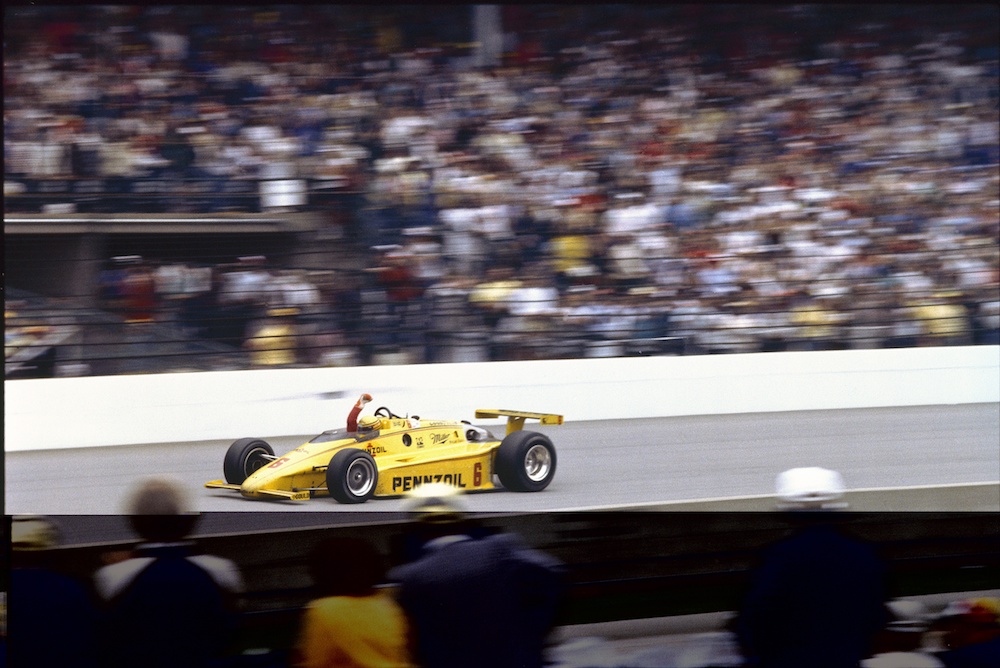
Now we're going to get a bunch of letters from people who have been stewing in their Mears '84–derived anger for 36 years but had nowhere to vent. Motorsport Images
Q: I will add my opinion to the red flag controversy. The right call was made. No one likes a race, especially the Indy 500, to end under caution. But a G-W-C is a fraud. About 30 years ago, I had the privilege to meet Rodger Ward, and asked him why, in his classic 1960 duel with Rathmann, with his tires worn, he didn’t just cruise behind Rathmann until the last two laps and then go for the lead?
He told me that he went for the lead with six laps to go because of the possibility of an accident causing the race to end under yellow. So, he took the lead and hoped he could hold off Rathmann for the win. His increased pace caused his tires to wear even faster and Rathmann regained the lead on Lap 197 and won. The point is, strategy has always played a big part in the 500. Whether Dixon was waiting a couple of laps to go for the lead, or was trying and just couldn’t just get there, is immaterial.
A 500-mile race is just that, 500 miles, and race strategies need to consider the possibility of a yellow-flag finish.
Peter, Gainesville, VA
RM: That’s a cool story from Ward, and some insight into a driver’s mentality for most of Indy’s history. Race and fuel strategy is based on 500 miles, so is it fair to the teams who got it right to be penalized with laps added and a free pit stop before resuming the race? A couple owners are convinced IndyCar has to adapt GWC in the interest of television, but I’m not sure that has any bearing on whether people tune in or not.
Q: Thank you for your work in fielding all the crap just so the fans can have some insight on the sport we love. My favorite letter last week was from Jim Mulcare. He said in part, “The Indy 500 is 500 miles. Not 505, or 510. To me that says it all, IndyCar doesn’t need any gimmicks to keep its fans. So my question is when is a red flag thrown? My experience through the years is, when the track or barriers are damaged and unsafe, or the track is blocked by debris.
Jack, Ft Myers, FL
RM: Up until 2012, it had only been used in the event of a blocked track from a big wreck, and that was its purpose. But Beaux Barfield wanted the championship to be decided under the green, so he stopped Fontana. He did it again in 2014 at Indy with seven laps remaining, and Kyle Novak followed suit last year with 18 laps left. There is no rule per se, but a red flag is up to the discretion of the Race Director and the situation.
Q: I thought it was a good, compelling Indy 500. Certainly not a top 10 all-timer, but it kept my interest and had a deserving winner. I’m far more disappointed in the fans calling for a red flag with five to go. Apparently, we as race fans are so starved for close finishes that if the race doesn’t end five-wide with one car airborne and another on fire, tumbling over the yard of bricks, these knuckle-dragging fans get butt-hurt. “Gotta finish under green,” the Homer fans say. No. The race finishes at 500 miles with integrity – even under yellow. Late red flags are like taking away a late score in the Super Bowl to make the game more close and compelling. Not every race is going to be a great finish. These fans want to NASCAR-circus the Indy 500 too. I hated it in 2014 and last year. Everyone really has gotten dumber in 2020. Thoughts?
Paul, Illinois
RM: You’re spot-on, because today it’s got to be some kind of video game finish when for years, nobody cared about how close it was at the checker or if one driver was on another planet. But I was encouraged by the number of people who felt like you and wanted to keep the Indy 500 accurate.
Q: Since 2002, my seats at Indy have been directly across from pit entrance. I have seen the attenuator destroyed and replaced more than once. In previous years it was made from styrofoam. When it was damaged, they would simply connect a cable to it lift it out of the ground with a machine, and drop an already-waiting spare in its place . Probably in less time than it takes to clear the track. This year’s attenuator appeared to be constructed from tires. Why the change? Is there still a spare ready to go, or does the existing attenuator have to be repaired?
Wayne, Stanhope, NJ
RM: We’ll let IMS president Doug Boles answer this one: “We are exploring what options we might have related to the attenuator. And, while Mark’s suggestion below is a possibility, it does also leave an end at the entry point no matter where the cars enter – it also puts the inside track wall (the wall between pit entry and the track) closer to the racing surface which presents its own set of unknown issues in the event of accidents on track. The good news, the attenuator did what I was supposed to do – especially given how hard the impact was, and the speed at which Spencer impacted the barrier.”
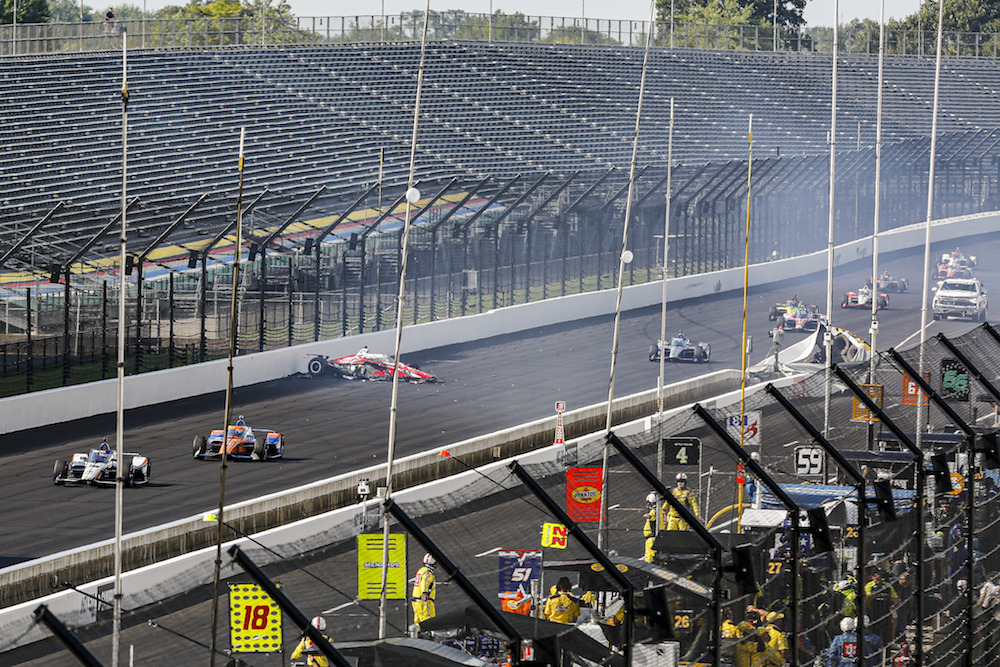
The Speedway is evaluating its attenuator options. Barry Cantrell/Motorsport Images
Q: Will you be at any of the upcoming races? Really missed you at the 500 because you know the history, the drivers, and the owners better than anyone. You should be a regular at every race – in the studio. I would like to compliment Paul Tracy. Love his commentary. Just the right amount of experience, opinion, and humor. Can you tell me what happened to Jon Beekhuis? Finally, given your history with Tony George, how do you feel about the Penske acquisition of IMS? Hoping to see more of you at the races!
Cheryl S.
RM: Well, thanks Cheryl, but other than going to the Speedway I’m grounded in 2020 while my bone marrow is on the Bear Rack (sorry, that’s an old Gasoline Alley line). Jon was always an asset in the pits and calling strategies but got bumped because NBC had full-timers that needed work. I wrote that T.G. selling IMS to R.P. was the smartest thing he’s ever done, and the best thing for IndyCar and IMS overall. It was Tony who made sure The Captain had first option, and I think we’re all very thankful.
Q: I don’t write very often, but after two years of NBC coverage of the 500, I’m dying to know why the network feels its necessary to bring in their people from NASCAR to co-host. I appreciate their all-in support of IndyCar, and Mike Tirico is fine as a host, but come on guys, give him a supporting cast
Last year, Dale Jr. prefaced every comment with “I don’t know much about IndyCar...” Then why is he there? Get him some background first. Danica doesn’t seem to have a clue. Even the few times they tried to toss her the ball it was met with dead silence. Rutledge doesn’t deserve comment except to say he was at his best outside the track. Tirico has proven his skills when he’s working with knowledgeable people and generally brings out their best, but he has to have something to work with. For two years, he has not. He should have someone with a thorough racing background who isn’t camera-shy. From your videos I think you and Marshall would be good, but you’re both tied up with bigger issues.
Rick Mears, Dario, maybe J.R. also come to mind, but they’re otherwise engaged. If NBC insists on using their NASCAR people, maybe Kyle Petty would be OK if he spent a couple of weeks before the race in Gasoline Alley, but they’d have to find him a sub. I’d be OK if they partnered T. Bell with Mike and just let P.T. and Diffey do commentary. That might link them together better if things were more interactive. In any case, it should be someone you’d like to spend a couple of hours with (ideally over a beverage) just talking about IndyCar racing. So far, we haven’t seen that. Which brings up my question: who would you most like to sit down with to talk about racing, who would also be good in front of a camera for five hours?
John from Madison
RM: I totally understood bringing in Earnhardt, because he’s one of the few people who can move the needle and he’s got a lot of “race fan” in him at Indy. Danica can only talk about her experiences so that limits her in terms of the new wave of drivers or what’s going on in the paddock, because she doesn’t spend much time around IndyCar. But, again, she’s a big name and NBC wanted to start out with a splash. Tirico is terrific and I wish I could sit with him for a couple segments, because I promise you I’d get him more engaged in the action. I love talking to A.J., Mario, Uncle Bobby, Rufus and J.R. about the good old days, but I think Hinch will be a great addition to the booth when he quits driving.
Q: What do you think of the blocking call on pit lane? Would you predict even lower ratings for next year’s 500?
Eric Morris, Home Place, IN
RM: I thought it was too harsh. No, I think being back in May will help restore the audience.
Q: Is there a law that says there cannot be any promotion of the IndyCar series during the telecast of the Indy 500? I ask with some sarcasm, but I am continually amazed (year-after-year) how IndyCar does not promote the series during its most-watched race of the year. I thought ABC was bad, but NBC was worse this year. (I understand the ratings are skewed this year because of the race being in August.)
Did they show the point standings going into the 500? Did they show the entire calendar with the race winners listed? Did they show the point standings after the race? Why wasn’t there a video montage showing highlights from the first six races of the season? That could have been shown during the pre-race and during a long yellow during the race (Rossi’s yellow comes to mind).
Finally, how do you not promote the next race (let alone the rest of the season) at all during the coverage until the last five seconds of the broadcast? Shouldn’t we have heard Leigh Diffey say, “If you are enjoying what you are seeing today, I have good news, the next IndyCar race is only six days away!” ABC would promote the Duel in Detroit doing in and out of commercial breaks during the race and before signoff – both verbally and with an on-screen graphic. NBC only had a graphic on screen, but didn’t talk about WWTR. I’m at a loss as to why IndyCar misses out on the biggest chance at self-promotion in order to grow the sport.
Bewildered in L.A.
RM: I can’t really tell you why, but it’s surprising because NBC does such a good job of promoting Indy all across its properties. But thanks for pointing out those other things, because they’re vital to the product and production.
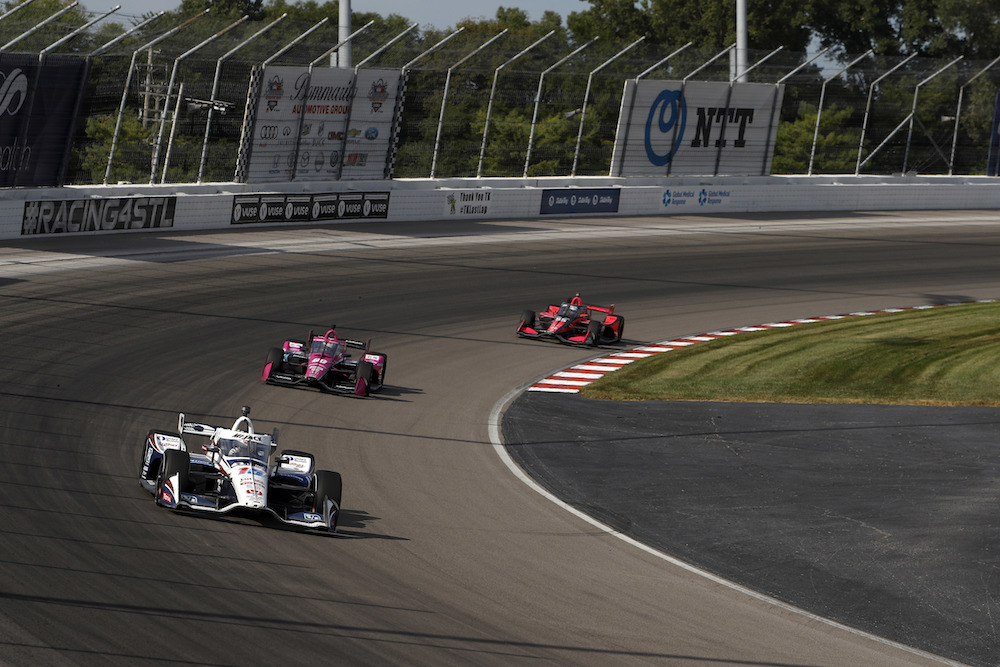
IndyCar definitely raced again on the weekend after the Indy 500, even if they forgot to mention it in the broadcast. We have photos to prove it. Abbott/Motorsport Images
Q: In the UK where I watch the IndyCar races, when there is a commercial stateside we see the continuing action but with no commentary. From a British viewer’s point of view, the American audience has one hell of a lot of commercials to contend with. Seems this is shooting themselves in the foot when you look at the viewing ratings. Too many commercials, I would suggest.
Oliver Wells
RM: That’s a major complaint about IndyCar and NASCAR, but somebody has to help pay for all the money NBC spends and we have the two box (commercial in one and racing with no commentary in the other), so fans don’t miss much.
Q: One thing I never thought about until listening to the Dale Jr. podcast was his observation on how different IndyCar drivers view the "code" on the racetrack. Dale Jr. stated how most of NASCAR's drivers are on the same page since most are from North America, but he noticed during iRacing that IndyCar is not like that since it's more international. Apparently what goes and doesn't go is very debatable. Hinch was on the show and confirmed that observation, even commenting about how entertaining drivers meetings can be because of this.
My question is, does IndyCar notice this and pick stewards based on this? I noticed in the Indy 500 there was a North American and a European steward (Luydendyk and Papis).
Andrew Bane, Odessa, TX
RM: No, I think IndyCar just tries to find a couple of ex-drivers that understand situations and are willing to take on this thankless job. Arie grew up racing in Europe and Max was in F1 before coming to CART, so they’ve got a good reference for what some of the foreign rookies might do or think they can go.
Q: Let me add thank-yous to Messers Penske, Miles, Boles and many others for doing as well as possible in this difficult time. I was surprised to see the drop-off in TV viewers for the 500.
That said, I also read that Mr. Sato’s family watched from the UK and Japan, which led me to wonder why worldwide viewing numbers are never shown? A review of the grid showed drivers from 12 different countries, led by the U.S. which had 15, or less than half the field. There were drivers from North America, South America, Asia, Europe and Australia/NZ. Combined with the fact that the series is sponsored by a Japanese corporation and ran on tires by an American brand of a Japanese company and the 500 won by a Japanese manufacturer, clearly the IndyCar series is much more international than most sports in the U.S. It would seem to me that viewer numbers on TV and/or streaming international are as important as those in Cincy and other domestic markets. Who would have these numbers, because I think the sport is followed more than is reported and larger than U.S.-only sports?
Jim Exline, Sullivan, IN
RM: I would like to know those numbers as well and I’ve asked IndyCar, but I don’t think they’re readily available or easy to find.
Q: Prior to this crazy year, the Indy 500 box score with payout was published on Indycar.com, and sometimes the Star, usually on Tuesday or Wednesday. Haven't seen that yet. I'm wondering if this is going to be the norm? Maybe IndyCar under Mr. Penske doesn't feel the need to publish the payout, especially considering that the purse had to be halved this year. Also, there were multiple session reports published by RACER.com sooner than available on Indycar.com. The IMS.com and IndyCar.com websites were never as good as they could be. Maybe this is something that IndyCar can work on this coming off-season.
Bill, Cincy
RM: The Star ran the payout on Aug. 24 and it was half of what had been promised prior to the pandemic. Sato made $1.3 million – half of what Pagenaud earned a year ago.
Q: What's with the outrage over Takuma Sato – who some ‘fans’ are ranting about on social media – drinking 2% milk in Victory Lane (and yes, I'm aware, though apparently some fans are not, that every driver is asked their preference on the milk should they win). Have they forgotten Emerson Fittipaldi drinking OJ (he owned the company, right?) and refusing the milk after his Indy win? So what's the big deal over Sato's milk choice? At least he didn't pick chocolate milk to drink.
Just Jake, LA refugee
RM: I had not heard anything about it until your letter, but that would confirm my theory that some race fans will bitch about anything.
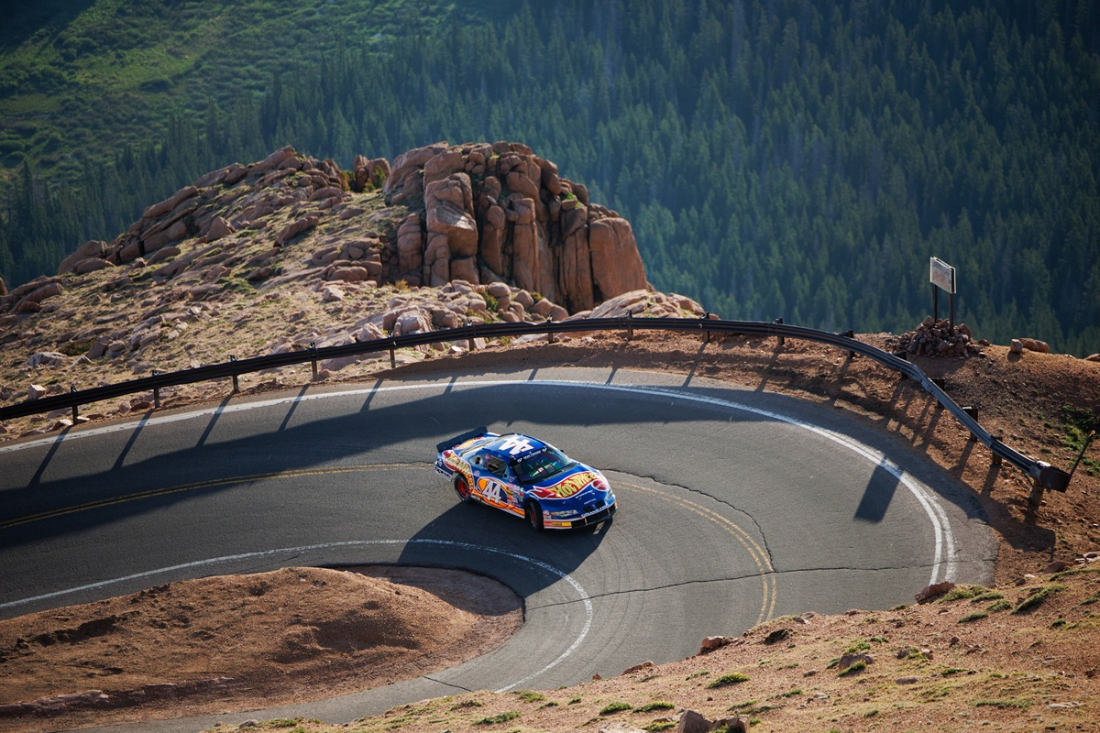
Q: Thanks to the links provided on RACER.com, I spent Sunday morning watching live coverage of the Pikes Peak hill climb while waiting for the IndyCar race to start. I know that the Unser family made their mark on the hill before carving their name into IndyCar history. What other IndyCar drivers came from Pikes Peak, or did any IndyCar legends go to Pikes Peak after making their name at Indy?
John in Arkansas
RM: Mario, Al Unser Jr. and Rick and Roger Mears all won the open-wheel class, and Parnelli captured the stock car division once.
Q: I was wondering if anyone has asked Roger about what the plans are for Mary George’s old house on the grounds? Any chance he turns it into an Airbnb?
Chad Bozell, Noblesville, IN
RM: Not sure what’s going to happen to the “Mouse House” but there are some stories inside those walls.
Q: Going back to the Indy 500, with Marco Andretti nailing the pole position. I knew Marco could not win that race from the start, and he didn’t prove me wrong. Marco went right into fade mode, and then he was hardly spoken of the rest of the race. He drives too timidly and without hunger, and has for many seasons. The Andretti name will usually keep him a sponsor every year, but not through his performance.
He seems to be distracted by his high society lifestyle, and it’s translating to me that he is no serious threat to anyone on the track on race day. He has a high drive for fame and wealth, but no drive for trophies. You know him better than I do. Is it Marco, the team assigned to him, or what is it that is making him start and finish in the back almost every race?
Chad, Bourbon, IN
RM: I don’t think he cares about fame, and I do think he’s got some mental demons that work against his talent. I wish they could have run the race the day after he won the pole, because his confidence was at an all-time high, but by race day, after the struggles on Carb Day, he just didn’t have it. If Mario and Michael can’t figure it out, nobody can.
Q: I have read that Jimmie Johnson doesn't have much interest in driving ovals for IndyCar (due to safety concerns, though the new aeroscreen may change his thinking). Ed Carpenter doesn't want to drive the road and street courses, so perhaps that's a match made in heaven? Your thoughts? I love reading your Mailbag!
Sandra Johnson
RM: Oh I think he’s got interest, but his wife is the one who said no ovals. And ECR could be a possibility with the Chevy connection, depending on how many cars Ed fields in 2021.
Q: The sale of Williams F1 and talk about F1 returning to the Brickyard has sparked some memories. What’s the story behind Longhorn Racing? If memory serves me correctly, the Longhorn Team purchased drawings for the Williams FW07 and built an Indy car from them. I’ve also heard that Patrick Head actually attended test sessions with the team. So what’s the story?
Jeff Hammond
RM: Bobby Hillin wanted his own chassis, so in 1980 he hired Patrick Head to design it but Al Unser struggled with it until the second year, when he finished second in Mexico City and third at Michigan and scored a second at Road America in 1982. Pretty sure that adventure is what broke Hillin and shut the doors.
Q: I was just contemplating all the IndyCar team owners – almost all of them used to be drivers. And if there was anyone who has seen them all drive and rank them, it would be you. You've been around the block a few times; how would you rank these guys in their prime?
Peter Malone
RM: Michael Andretti, Bobby Rahal, Jimmy Vasser, Bryan Herta, Chip Ganassi, Sam Schmidt, Mike Shank and Dale Coyne. Didn’t see R.P. race, but he was damn good and in line for the Indy ride that went to Mario when The Captain turned them down.
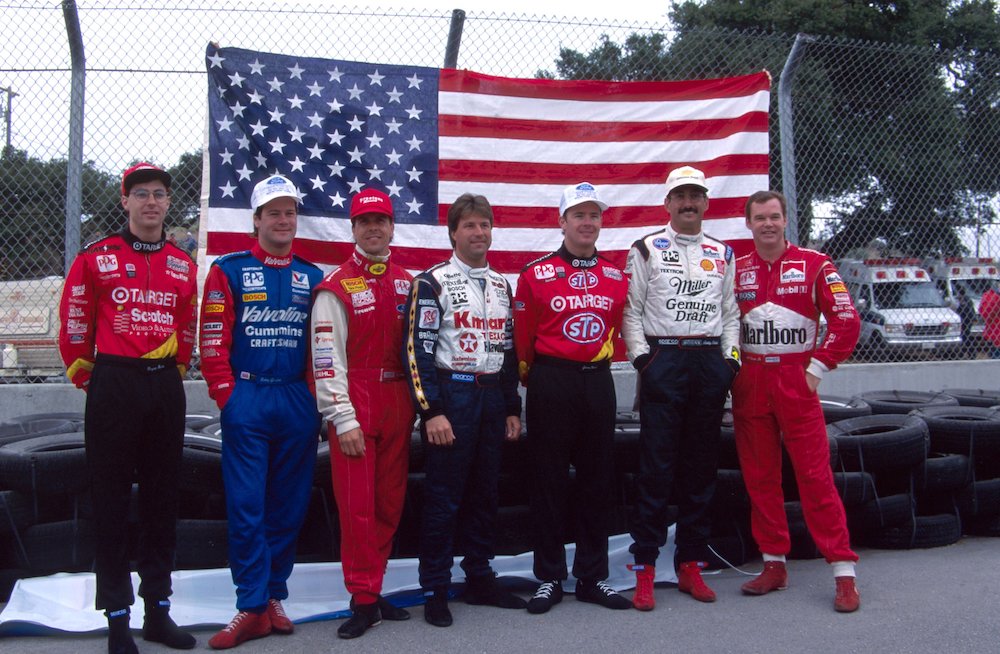
Just over half of the guys in this picture now own a stake in an IndyCar team. Motorsport Images
Q: A correction to your answer about the same car winning the 500. Definitely the George Salih laydown with Sam Hanks in '57 and Jimmy Bryan in '58, but how about Wilbur Shaw’s Maserati in '39 and '40 and Mauri Rose in the Blue Crown in '47 and '48?
Don Hopings, Cathedral City, CA
RM: Thanks to IndyCar historian and writer Rick Shaffer, here are the most successful cars in IMS history:
"Billy Arnold's car – a front-wheel-drive Summers-Miller – in 1930 and 1931 led more laps in two races than any car – 353 – but it only won one race. He won the 1930 race by more than seven minutes – the fourth-biggest victory margin in 500 history. Arnold won the 1930 pole in it and would have won the 1931 pole had he not flunked post-qualifying tech for unhooking his brakes! Then he qualified on the second day faster than he had the first day and needed only seven laps to go from18th to first. He led until a rear axle broke on Lap 162, resulting in an accident that ended with an errant wheel flying across Georgetown Road and striking and killing an 11-year-old boy.
“In 1932, apparently in the same car, he took the lead on Lap 2 and led 57 straight laps before a backmarker chopped him big time in Turn 3 and he crashed heavily for the second straight year while comfortably in the lead. From 1930 to 1932, he completed 419 laps (more than 1,000 miles) and led 410 laps. That's 97.9 percent of the time he was on the track in those races, he was leading!
Wilbur Shaw's Maserati came close to winning three in a row – that broken wheel with the chalk warning washed off was all that kept him from winning 1941. The Blue Crowns did win three in a row – same design but with two drivers and two cars. Bill Vukovich's Fuel Injection Special should have been 3-0 from 1952-54. The Belond Exhaust lay-down car won back to back in 1957 and 1958 with Hanks and Bryan. And Unser's Lola had some major tweaks from 1970 to 1971 but was the same design.”
Q: It isn't often when one of us in the unwashed masses of racefandom gets to correct the master, but your answer to the question about cars that won multiple 500s needs a slight tweak. Bill Vukovich ran the same car, a Kurtis KK500a I believe, in 1952-53-54 with wins in the last two attempts. In 1955, he drove for Lindsey Hopkins in a newer Kurtis KK500c methinks, (don't quote me on the models) in which he ultimately perished while leading. He certainly could have won four in a row, and for my money may have been the most dominant driver to ever turn a wheel there. Thanks for the top billing in the Mailbag last week. My existence is now validated.
Jim Mulcare, Westbury, NY
RM: Thanks for the correction, Jim. I cannot believe I put 1953-55 when I had just finished reading Bob Gates’s wonderful book on Vuky and knew he had a new car for 1955, owned by Lindsey Hopkins.
Q: I am an Indy 500 traditionalist and I had expected Roger Penske of all people to call "Gentlemen, start your engines" instead of the now-fashionable "Drivers start your engines," but he resorted to the latter. Why did he do it, even though there was no female driver participant in the race, and why is calling "gentlemen" forbidden any more at the races?
Adam, Toronto, Canada
RM: I asked him but haven’t yet received an answer.
Q: The main gate at Indy was awesome! The fans, the sounds, the T-bird flyover and Arie Luyendyk stopping by on the other side of the fence to say hi to fans! Pato And Oliver and Arrow Members stopping by to throw hats over fence and open of boxes of diecast and signing them and tossing them over the fence! The reverberation as the cars rolled into Turn 1! Penske members stopping by and giving a hat to an 8-year-old through the fence! Doug Boles stopped by on our side of the fence in suit and tie and mask to say thank you and had his photo taken with fans. Watching the race on the screen and actually hearing the cars was great! Eating at the Mug and Bun walking back to the airport was really good! Take things one day at a time Robin Miller, stay positive and one more thing – pork chops at Dawsons were great. See you in nine months.
Barney Colborn, Reno, NV
RM: Really cool to hear those stories of Arie, Pato, Oliver and the Penske boys dropping in on you fans outside the track, and combined with the drivers visiting people’s homes in Speedway, it was about as positive an experience as could be expected under the circumstances. Thanks for sharing, Barney.
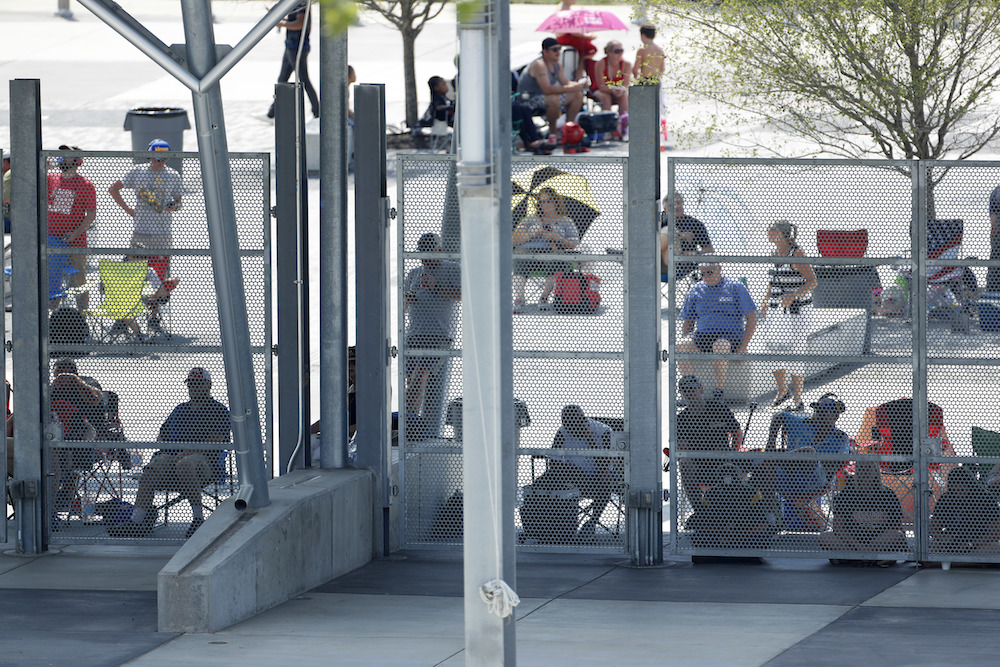
If you build it, they will come. Phillip Abbott/Motorsport Images
Q: Thanks to you and your RACER.com cohorts very much for all the super coverage up to and through the 500. It has made a tremendous difference for us as fans. Post-500, which teams and drivers do you feel are making the greatest gains through this difficult season?
Thank you especially for the A.J. interview. One of the highlights of a trip to Indy was almost meeting him in the Speedway Motel restaurant. Having eaten a couple tables away from his, and he sitting sideways at his table, I walked directly towards him as I was leaving: He made eye contact as I approached, with a Dirty Harry, “Make my day -- don’t even think you’re going to talk to me" look. It was so perfect, and very much what I had been warned to expect, I burst out laughing as I looked at him.
I swear his eyes squinted a little, and the right corner of his mouth twitched about an eighth of an inch up, but the eye contact continued through my passing by. He’s a great guy, with that incredible integrity, intensity and focus that too few men have for even a few years, let alone over eight decades.
Rick, California
RM: Tex doesn’t like to be bothered while dining but you made eye contact, so that’s a winner.
Q: Best compliments on your latest interview with A.J. Thoroughly enjoy both of you bantering back and forth. I appreciated his comments about how brave and great the before-Foyt old-timers were. Could not agree more, recalling the chats I had 40 years ago with Harlan Fengler about his making 123mph on the Beverly Hills board track in the 1920s. The board track guys were true gladiators in every sense. Take care of yourself, Robin. A. J. and the rest of us appreciate you!
Ron Carbaugh, Eaton, Ohio
RM: He said something about not being nearly as brave as those old guys and you just chuckle thinking about how dangerous open-wheel racing was in the 1950s, 1960s and 1970s. But he has a point, those riding mechanics were maniacs. And Fengler was a badass on the board tracks.
Q: Robin, I’ve been reading and listening to you since the early 1990s. Thanks for all the years of insight and entertainment. I stumbled on the recent The Athletic article about you. It was very well-done and I hope others can read and learn a bit more about your interesting career and life. Are you allowed to post a link in the Mailbag? If so, please do and don’t be too humble, as I believe all would really enjoy the content. No other comment or questions other than I hope for improved health for you, if for nothing else than to get you back running around on pit lane for the race broadcasts. All the best.
Dave Cubine
RM: Thanks Dave, Zak Keefer really flattered me but the worst thing about that article was that now I’ve got to be nice to A.J. forever because he was so complimentary. The link doesn’t work, you have to subscribe for seven days.
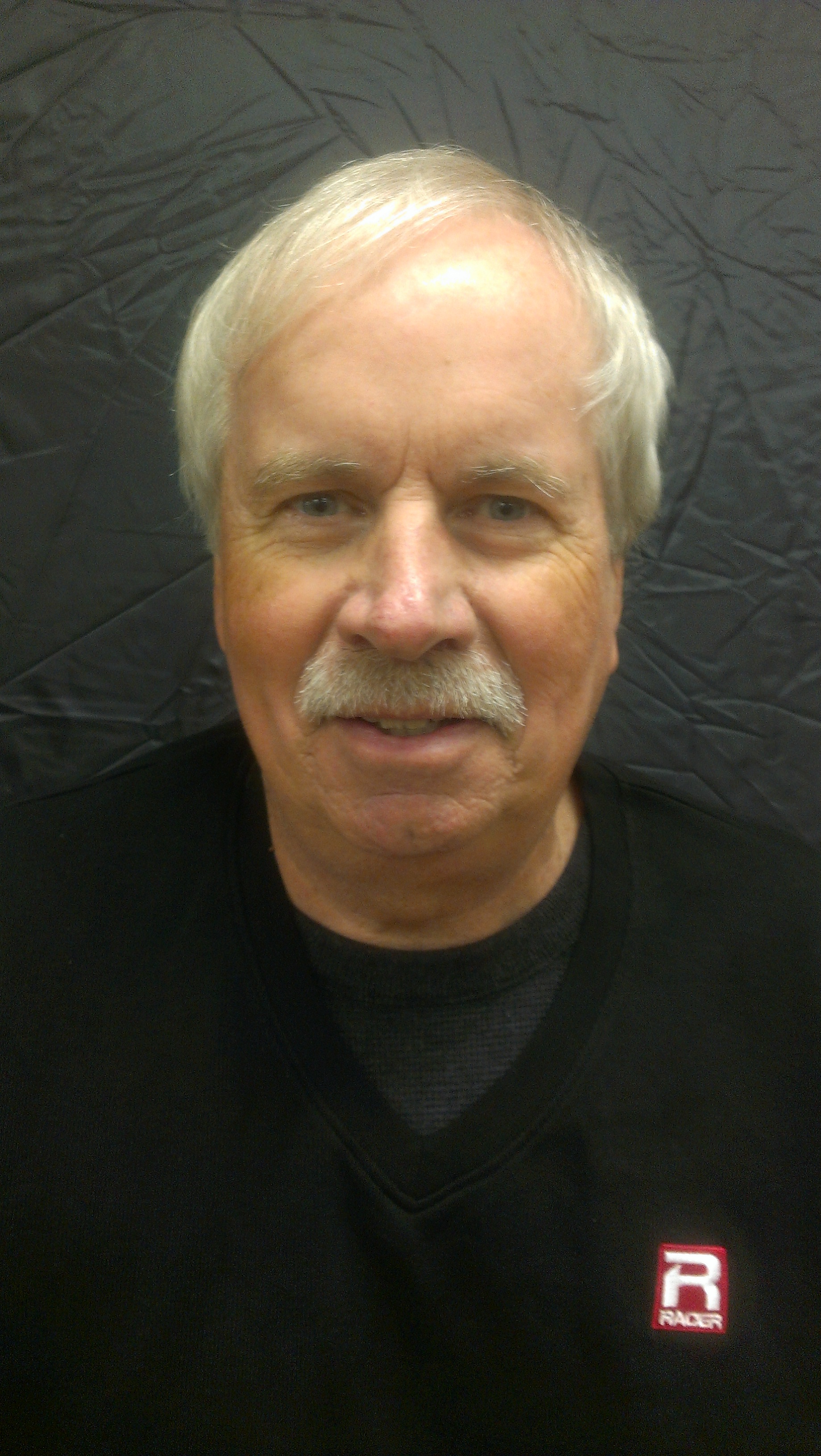
Robin Miller
Robin Miller flunked out of Ball State after two quarters, but got a job stooging for Jim Hurtubise at the 1968 Indianapolis 500 when Herk's was the last roadster to ever make the race. He got hired at The Indianapolis Star a month later and talked his way into the sports department, where he began covering USAC and IndyCar racing. He got fired at The Star for being anti-Tony George, but ESPN hired him to write and do RPM2Nite. Then he went to SPEED and worked on WIND TUNNEL and SPEED REPORT. He started at RACER when SPEED folded, and went on to write for RACER.com and RACER magazine while also working for NBCSN on IndyCar telecasts.
Read Robin Miller's articles
Latest News
Comments
Comments are disabled until you accept Social Networking Cookies. Update cookie preferences
If the dialog doesn't appear, ad-blockers are often the cause; try disabling yours or see our Social Features Support.