Images Dave Friedman Collection / Benson Ford Research
Trans Am: The more things change
Just six laps into the 79-lap 1970 Riverside Raceway SCCA Pro Racing Trans Am battle, Indianapolis 500 winner and many-time USAC champion Parnelli Jones’ bright orange Ford Mustang was caught up in someone else's accident, off the track in Turn 9, suffering bodywork and spoiler damage, clawing for traction.
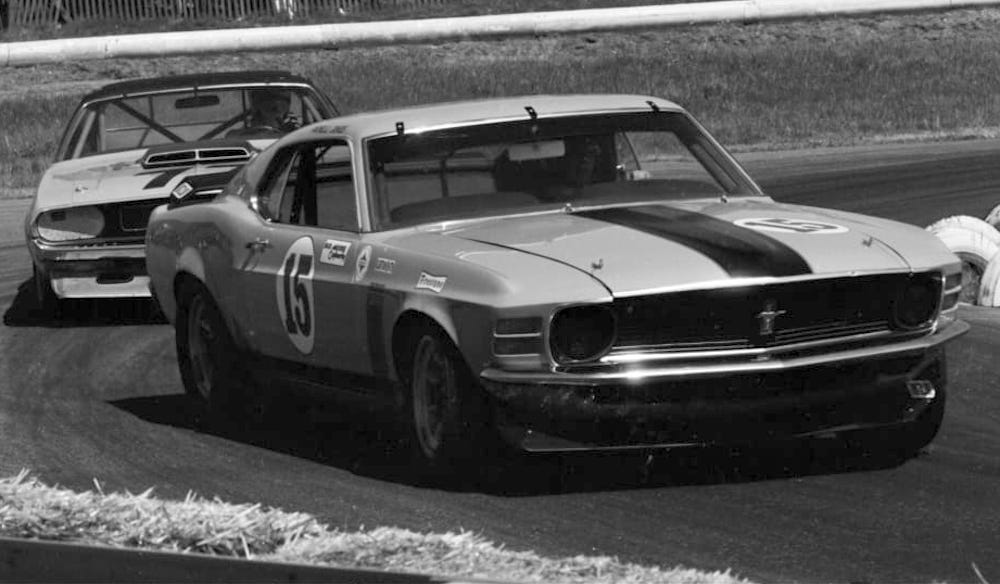
Jones skidded back on the racing surface and was quickly up to speed once more, by then well behind then-race-leading teammate George Follmer but beginning one of the most memorable come-back drives in the storied history of the SCCA Trans American Championship.
After the race, Jones would joke about the worsening vibration, about using the curbing to turn the car; but his rivals on the day – on the season – could only hang their heads. Jones’ Bud Moore-built No. 15 Mustang had caught and passed Follmer’s No. 16 with eight laps remaining in the Oct. 4, 1970, Riverside Trans Am, clattering on to claim its second consecutive victory, fifth on the season, further solidifying Ford’s lock on the manufacturer’s championship.
Nearly 50 years later, one established veteran and one young driver whose skill might someday carry him to Parnelli Jones heights – Ed Sevadjian and Tyler Kicera, respectively – split a pair of victories on the same Southern California circuit, triggering a flood of memories in those lucky enough to have witnessed both events.
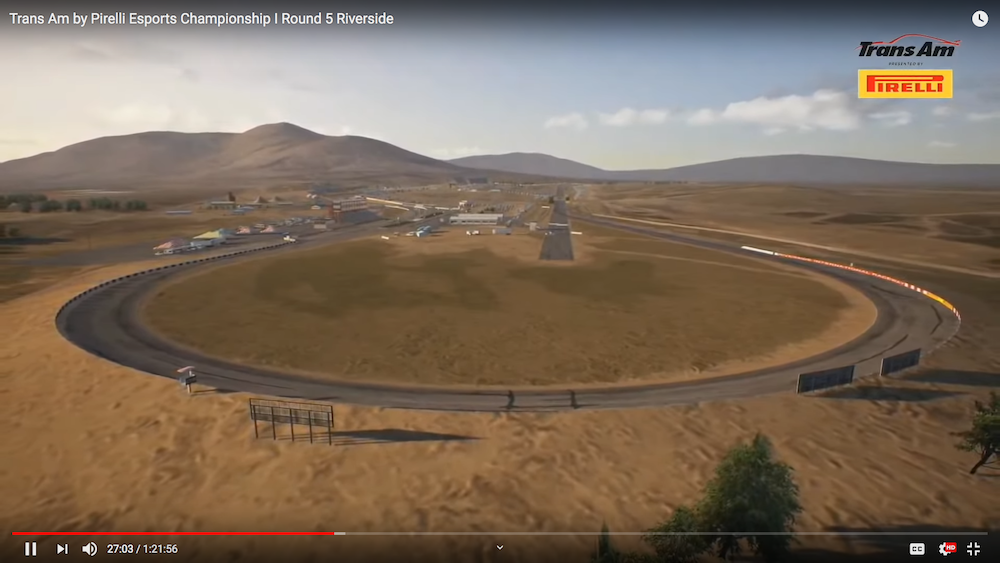
Much beloved Riverside Raceway, of course, gave its concrete and asphalt life for a shopping center back in 1989. But, almost magically, the fast nine-turn circuit has been resurrected in virtual form to, on May 30, 2020, once again host a pair of Trans Am races – Esports style, that is.
While Riverside is long gone and Jones long-retired, the now-named Trans Am Presented by Pirelli series is very much alive. The much-anticipated 2020 season had to be significantly reconfigured due to the COVID-19 pandemic, but today’s drivers are back on track, having already picked up the in-person action at Mid-Ohio Sports Car Course on June 26-28 and Brainerd International Raceway on July 10-12. The next stop is Road America on Aug. 6-8, all of this picking up where Trans Am left off at Sebring back in February, in those heady pre-pandemic times.
For many of the current drivers – and certainly for the fans – there was a seven-round Esports Trans Am series to keep the fires of enthusiasm well stoked. Much like the pivotal 1970 season, the Esports version was intense from start to finish, featuring most of the modern-day series stars and headlined by a fierce championship duel between Kicera and Josh Hurley that carried right to the finale.
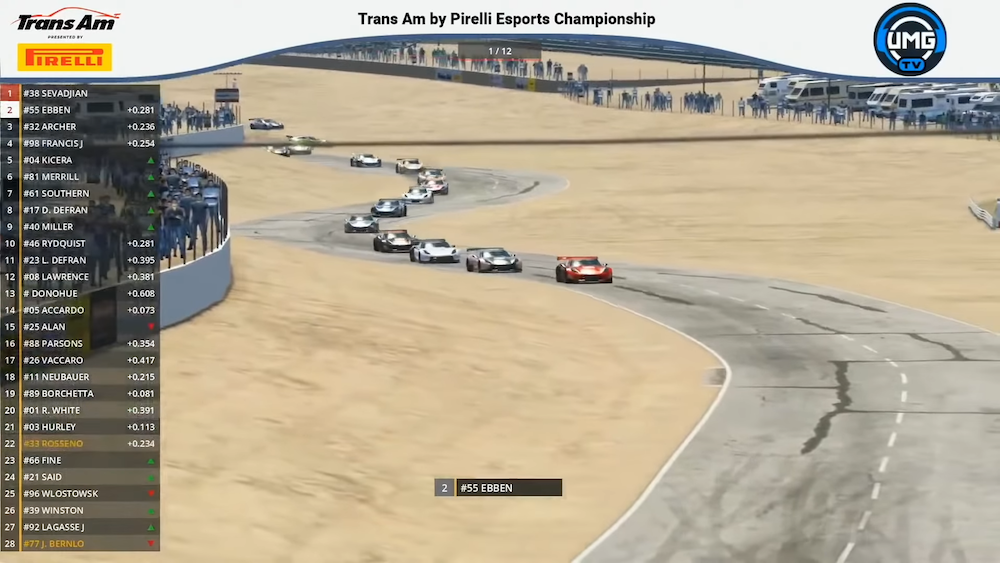
Ed Sevadjian led flag to flag in Race 1 on the virtual Riverside Raceway, resurrecting a now-defunct circuit for a most-popular stop in the 2020 Trans Am Esports series.
In the virtual Riverside race, Sevadjian’s Esports win from the pole (which he’d claimed by an astounding 0.001sec) was lights to flag. Kicera’s win in the 20-minute-long Race 2, though, brought with it memories of Jones in that infamous 1970 run: Starting fifth on the grid, Kicera picked off one driver after another in the short race, taking over the lead with just minutes remaining to close the points gap on season-long rival Josh Hurley.
The full replay can be found at Trans Am’s YouTube channel, and it’s genuinely worth your time.
Running to the history books
As important as the Esports series was, filling the three-month gap between real-world events, sim races at long-lost Riverside and Bridgehampton – two of the most challenging road courses in North America – sent many scrambling to YouTube and a variety of history books for fresh perspective on one of the most heralded racing seasons ever: 1970 Trans Am.
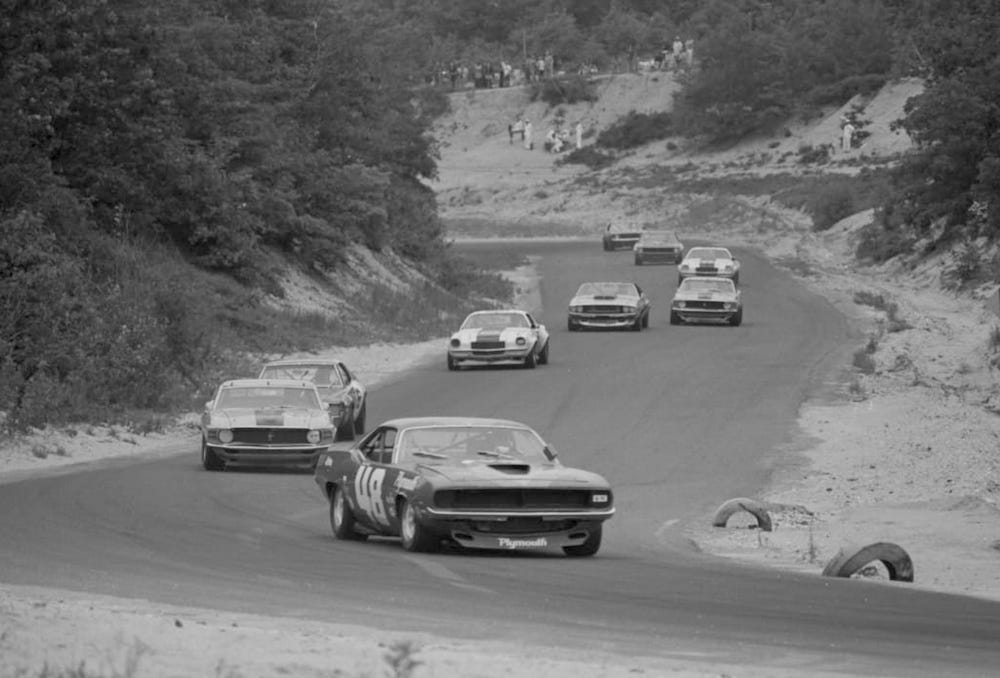
Sand-swept Bridgehampton Trans Am 1970: Barracuda (Swede Savage), Mustang, Javelin, Camaro, Challenger ...
The 1970 season is a cornerstone of Trans Am lore as the only one in racing history to feature all four (then) major U.S. automakers: Ford, General Motors, American Motors, and Chrysler. Fronting for those automakers were a half-dozen powerhouse teams and many of America’s most skilled drivers, among them Jones, Follmer, Mark Donohue, Peter Revson, Jim Hall, Dan Gurney, Swede Savage, and Sam Posey, plus lesser well-known but supremely talented Tony Adamowicz, Ed Leslie, Milt Minter, and others.
Sadly, one great driver left off that list at season end was 1967 Trans Am champion, ex-Shelby pilot and Titus/Godsall Racing principal Jerry Titus, tragically killed in July at Road America.
This was only the fifth season of SCCA’s sedan series which had been launched in 1966, perfectly timed to catch the ascendancy of the “pony car” – Ford’s Mustang and the herd that followed: Chevrolet Camaro, Pontiac Firebird, AMC Javelin, Dodge Challenger, and Plymouth Barracuda.
For the 1970 season, the factory efforts had all been parceled out to powerhouse teams, Ford continuing with South Carolina-based NASCAR team owner Walter “Bud” Moore; Chevrolet’s back-door factory effort with Texan Jim Hall; Pontiac through the Canadian-funded Titus/Godsall Racing; Plymouth jumping in with the great SoCal All American Racers; and Dodge via the Marblehead, Mass.-based constructor Autodynamics (with chassis' built by AAR).
The shocker over the winter was Team Penske parking its all-conquering ’69 Camaros in favor of a lucrative deal to run American Motors’ Javelin, introduced to the series the year before by Ron Kaplan.
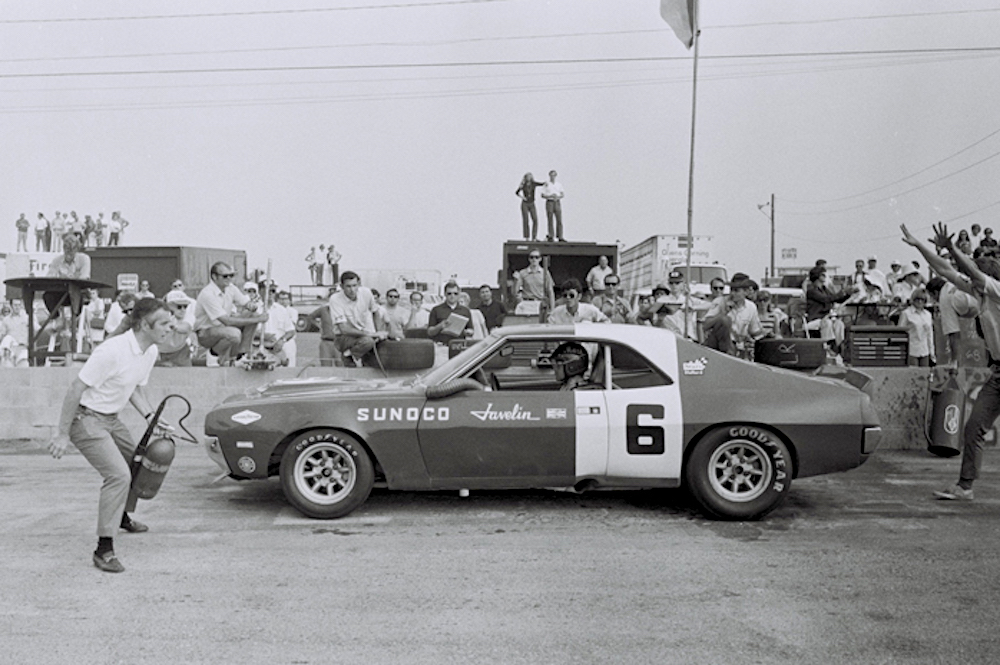
Team Penske scored the lucrative American Motors deal for 1970, but it was several races into the season before the Javelins could truly compete with the fleet Bud Moore Mustangs.
Not unexpectedly, Penske struggled at the start of the season with its new cars, the well-dialed-in Bud Moore Mustangs dominating the first four events at Laguna Seca, Lime Rock, Bryar, and Mid-Ohio.
At Bridgehampton in June, though, it all came right for Penske’s brilliant Mark Donohue who gave the Javelin its first win. The quiet New Jersey-born driver then won again at Road America and Mt. Tremblant, a three-win streak interrupted by Milt Minter’s surprise victory (in an ex-Penske Roy Woods Racing Camaro) in an incident-plagued, appropriately named, Donnybrooke (aka Brainerd).
Englishman Vic Elford notched a win at Watkins Glen, the Jim Hall Camaros well suited to the upstate New York GP circuit’s long straights. But the tide swung back to the Mustangs as the 11-race season wound down, Jones winning handily in Kent, Wash., and charging spectacularly back to front in the October Riverside finale.
Donohue’s red, white and blue Penske Javelin finished third at Riverside. It was both appropriate and touching that Mark’s son David was invited to participate in the 2020 Esports race. An accomplished GT racer himself, David Donohue never got to lap the real Riverside, and while the 3.3-mile virtual version was different from the 2.54-mile layout used in the 1960s and ’70s, his appearance was heartwarming – and somewhat successful. Handicapped by a cast on one wrist and despite no previous experience at the track or in the series, he finished just outside the top 10 in the Trans Am Esports Race 1 at the circuit.
Back to 1970, though, faced with a down economy and a looming energy crisis, the factories, one by one, withdrew from the Trans Am. In response, SCCA rules makers changed the look of the series through the decade with Porsche 934 turbos battling for top honors in the premier class and Group 44 Jaguars and Triumphs plus several independent Porsches and Corvettes starring in the supporting Category I.
On into the 1980s and ’90s as tubeframe racecars overtook the production-based machinery, the “pony cars” (Camaros and Mustangs) returned. Intensity remained, a hallmark as a host of new names emerged, young drivers with bright futures seizing the Trans Am limelight: Wally Dallenbach Jr., Scott Pruett, Tommy Kendall, Willy T. Ribbs, Scott Sharp, Paul Gentilozzi, Boris Said, and many others.
21st Century Renaissance
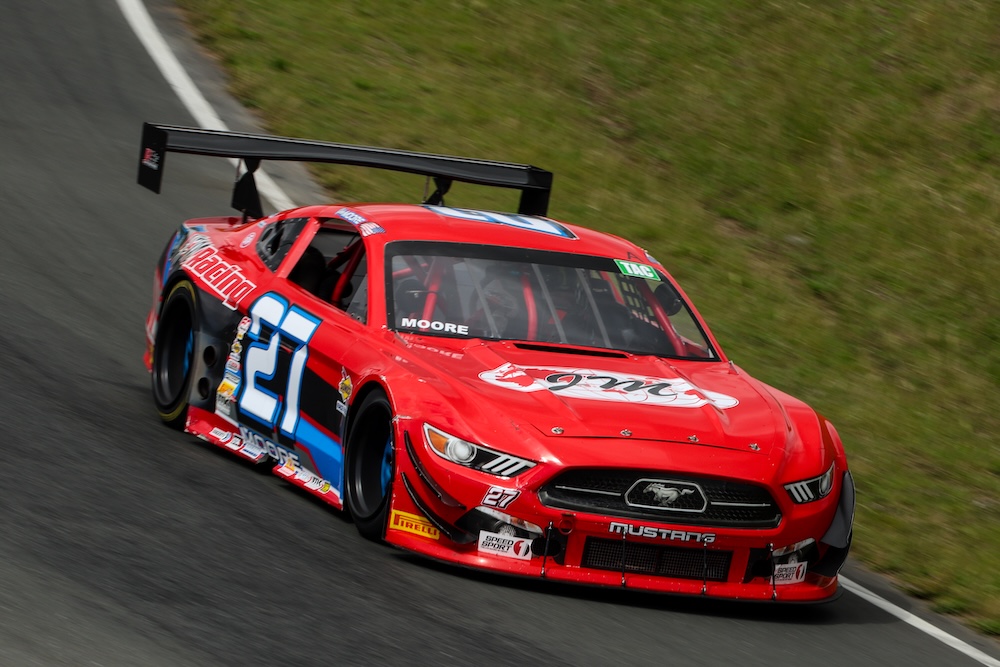
The early years of the 21st century were rebuilding years, as the Trans Am faced formidable GT-racing competition from all sides. Fresh enthusiasm from new owners The Trans Am Race Company (assuming management of the series from SCCA) and its principals Tony Parella and series veteran John Clagett turned the tide. With support plus sponsorship from tire maker Pirelli, which debuted in 2017, and several seasons of steady growth behind it, the Trans Am renaissance – along with the exciting and affordable muscle car laden TA2 class – was in full swing rolling into 2020. Another spectacular 12-race schedule on most of North America’s premier circuits had been announced, the combination of rules stability and newly added XGT class backstopping a record number of entries at the start of a new decade – and then COVID-19.
The first few weeks of March were fraught, indeed, with all the major sanctioning bodies forced to cancel spring races and Trans Am was no exception.
To the rescue? A virtual Trans Am series. After a preliminary event at Lime Rock set up in record time (read more about that in the June issue of SportsCar), a larger platform was found which had digital machinery most closely approaching Trans Am spec cars. A seven-weekend, 14-race April to June Esports series on the Assetto Corsa Ultimate Edition gaming platform was the result, launched to much acclaim at a virtual Laguna Seca on April 18.
Class of the field in the opening rounds were the two drivers who would take the points battle to the finale: Josh Hurley, who’s had an enduring career in a wide variety of machinery, from karts to Formula Atlantic as well as sports and GT cars; and Tyler Kicera, who rose up through the Spec Miata ranks. In the virtual series, Hurley ultimately got the better of Kicera to take the Trans Am Eports title by the narrowest of margins – and cling to the hope the real world would notice and put him into a real-world TA machine.
Through the spring, though, others impressed, including race winners Dylan Archer, Ed Sevadjian, and former “real world” Trans Am champions Cameron Lawrence and Ernie Francis Jr., while Thomas Merrill, J.P. Southern, Hunter Pickett (grandson of series great Greg) also earned podium spots. And the West Coast Trans Am series was well represented in the points courtesy Nick Rosseno, Cameron Parsons, and Carl Rydquist.
Sim racing filled the spring gap, but there was no hiding the fact the Trans Am world was anxious to get back on track. In late May, Trans Am released its extensively revised 10-race schedule, the action resuming during the June 26-28 weekend at Mid-Ohio, which it shared with the SCCA Pro Racing F4 U.S. Championship and FR Americas series.
Full Support
The entry list for the Mid-Ohio race showed that most of the expected regulars and all of the front runners made it through the lockdown, preparing to pick up where they left off at the beginning of the year. At the top of the order, defending and six-time champion Ernie Francis Jr., one of America’s brightest young stars, has returned with a new sponsor to resume his battle with accomplished former prototype racer Chris Dyson for TA-class top honors, both in Ford Mustangs.
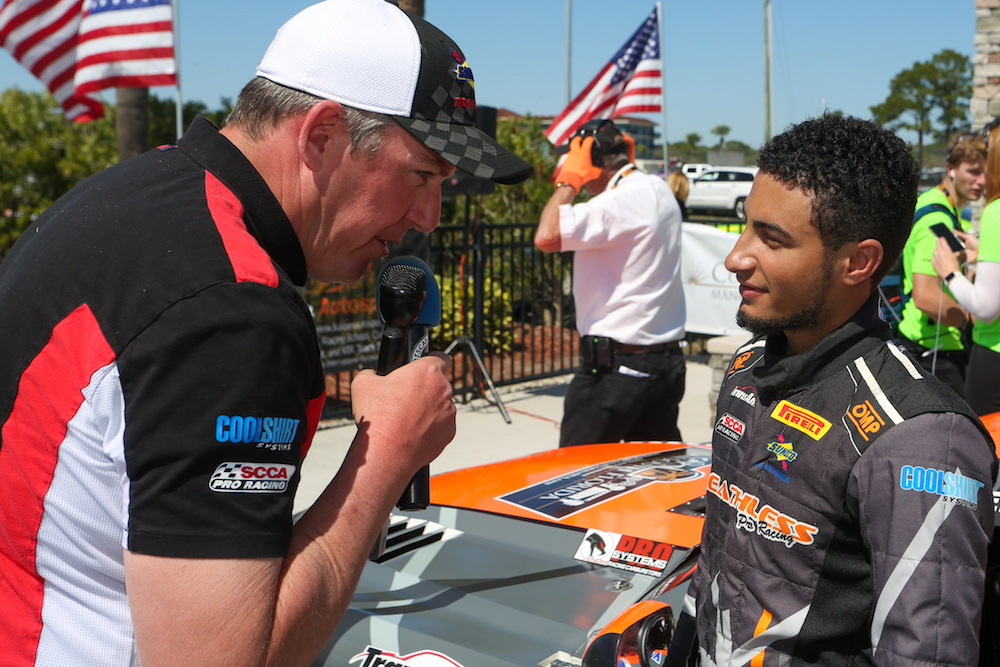
Francis Jr. (right) is one of the bright young starts of the 21st-century Trans Am. Image by Chris Clark.
Nipping at their heels in the Trans Am’s premier class was be a quintet of former champions, Tony Ave, Amy Ruman (in Corvettes), Tomy Drissi, Simon Gregg (son of perennial champion Peter Gregg), and Doug Peterson (in Chevrolet Camaros).
While the focus over the years, generally, has been on the premier class, the Trans Am has featured a multi-class format from the beginning. The original Over- and Under-2-Liter (the latter becoming the 2.5 Challenge in 1971) morphed steadily through to a streamlined 2020 featuring five classes: big-bore TA; populous and hard-fought TA2; and XGT, SGT, and GT for the huge variety of production-based GT3, GT4, and other exotica and select SCCA Club Racing muscle.
The GT classes, attracting entries from SCCA Club Racing and others whose FIA GT3 cars have lost their homologation, have enjoyed steady growth, largely at races in the Midwest. Then there is TA2: Introduced in 2011, the TA2 Powered by AEM Championship has all but taken over from the more exotic TA and GT machinery as a crowd favorite, with more than 20 and often 30-plus TA2 cars enjoying separate races on all Trans Am weekends. Being largely spec, many have likened this class to Spec Miata, but with crazy horsepower.
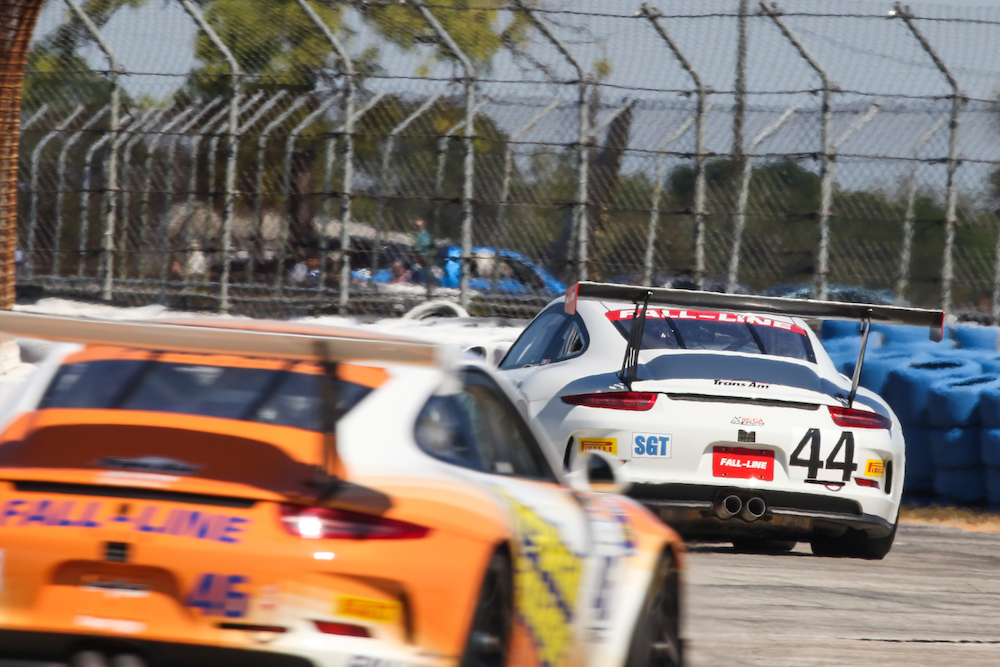
The crowd-pleasing Under 2-Liter (later Under 2.5-Liter) Trans Am class so popular in the 1970s and '80s is back via the current trio of GT classes. Image by Chris Clark.
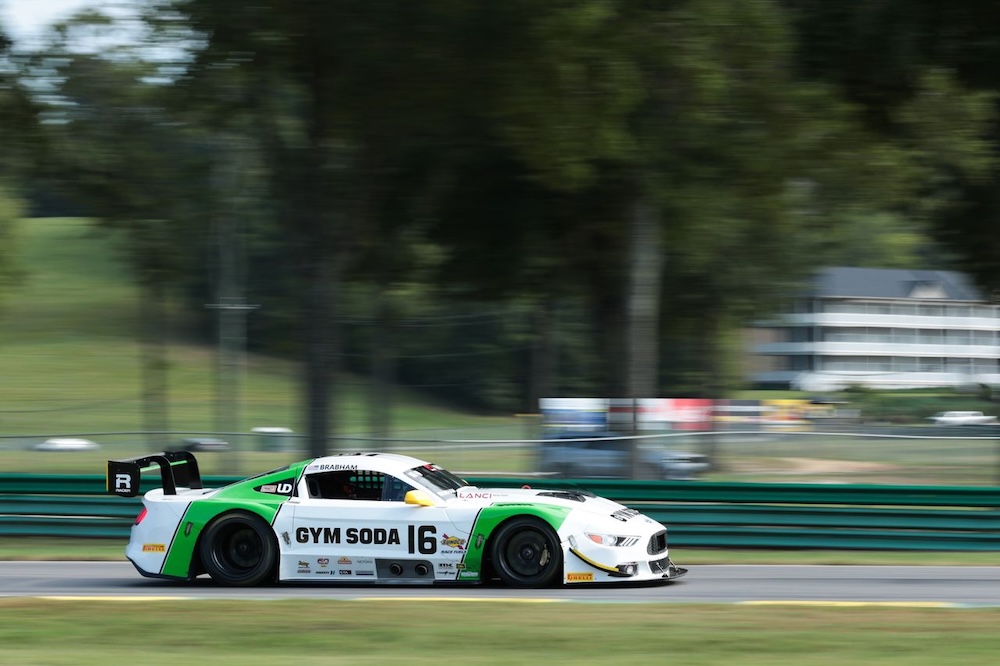
With tube-frame chassis from a quartet of American manufacturers; rigidly controlled shock absorber, brake, and other components, approved engines, and Camaro, Mustang, or Challenger bodywork that very much resembles the real thing, TA2 is fast becoming one of the most popular ways for its drivers to enjoy big horsepower on America’s best tracks.
The new young racing in the TA2 class has been spectacular – so good, in fact, that this year its rules were adopted by an Australian race organizer, with the Australian Trans Am series set for a summer debut.
As it was in the glorious 1970 season, it’s impossible to predict a 2020 TA2 champion: Defending champion Marc Miller is not returning to defend his title this summer, and Sebring race winner Mike Skeen was not on most pundits’ pre-season list of predicted winners (though with a strong Stevens/Miller Camaro and impressive race history, he should have been), leaving the door wide open for the likes of former champions Rafa Matos, Cameron Lawrence, Doug Peterson and (West Coast) Thomas Merrill; experienced Misha Goikhberg and Scott Lagasse; and young up-and-comers Lawless Alan, J.P. Southern Jr., and, frankly, many others.
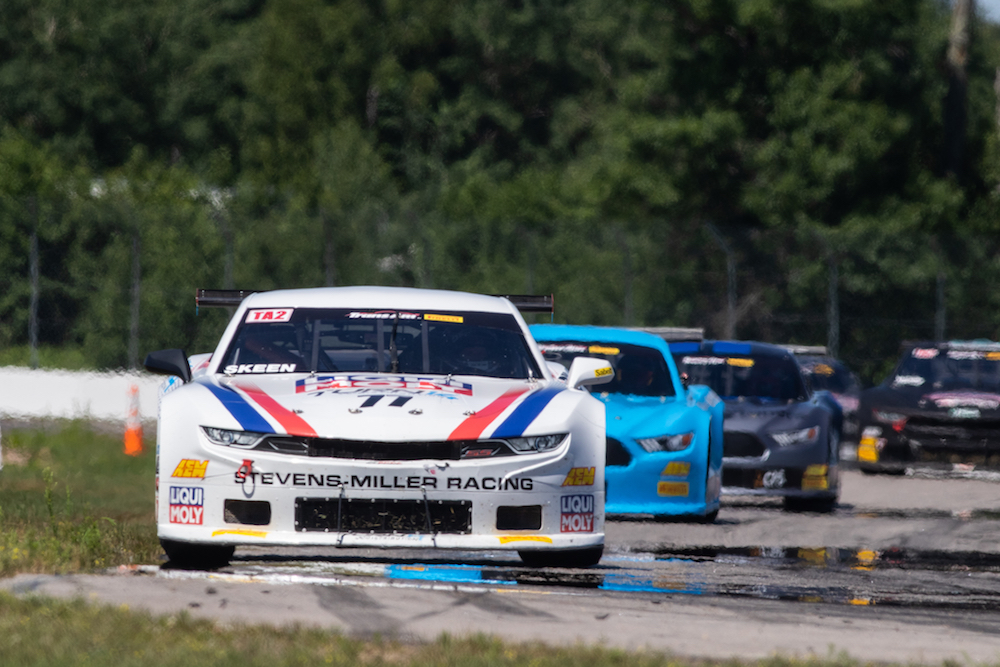
Mike Skeen has emerged the 2020 season TA2 frontrunner, but he's closely pursued in the points race by a horde of talented drivers in the series' most populous class. Image by Chris Clark.
In recent years, TA2 has become popular with the young stars of NASCAR looking to gain road-racing experience (although packed racing schedules in post-COVID summer and fall may preclude many free weekends this season).
The tone was clearly defined in the Trans Am’s early years – door-handle-to-door-handle racing start to finish in hour-long races on North America’s best racetracks featuring fan-recognizable machinery hustled along by supremely talented drivers – and it continues to this day. Across the decades, the influence of drivers like Parnelli and George and Mark and Dan is still felt, heard in the echoes of rumbling Trans Am V8s.
This story originally appeared in the August 2020 issue of SportsCar magazine, the official publication of the Sports Car Club of America. A print and digital subscription is just one of the many benefits of SCCA membership.
SIDEBAR Meet Tony Parella
Tony Parella’s motorsports journey began innocently enough as a 15-year old, wheeling dirt-track cars in Upstate New York. As time progressed, Parella’s involvement in the sport also changed, with him ultimately purchasing the Sportscar Vintage Racing Association (SVRA) in 2012. A quite unique professional racing opportunity arose soon thereafter, and now in 2020, Parella continues to expand his offering through SCCA Pro Racing’s duo of formula car series.
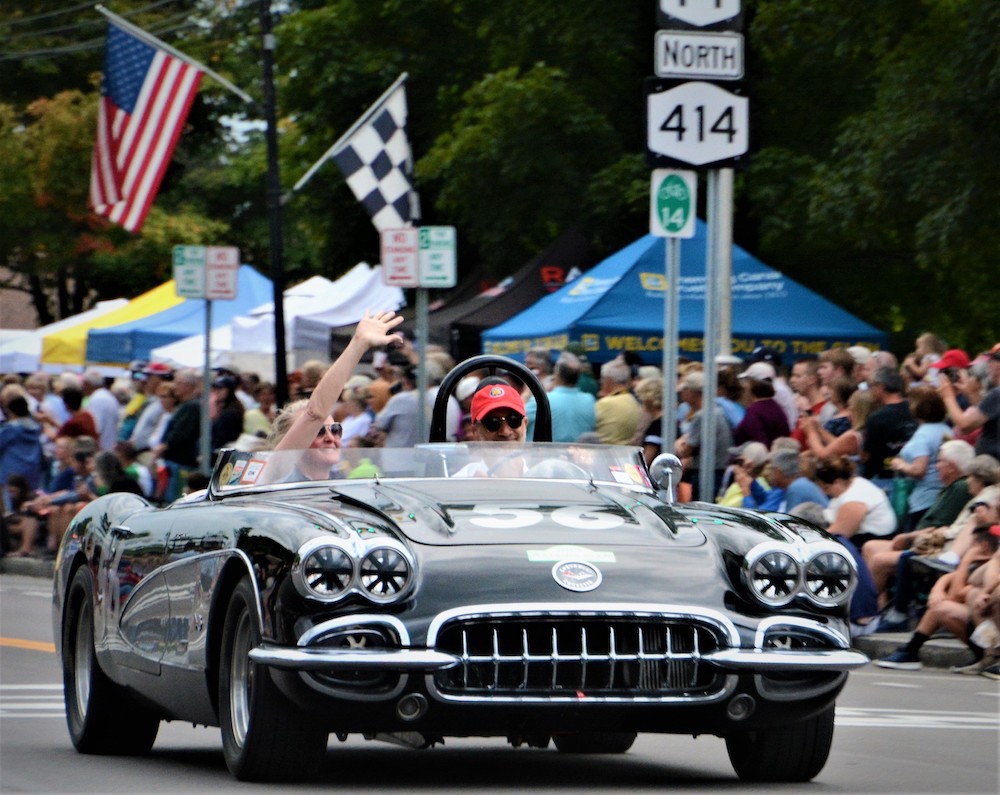
Tony Parella (behind the wheel) has blended vibrant SVRA vintage series, historic Trans Am and, most recently, FR Americas and F4 into a potent and entertaining weekend recipe. Image via SVRA.
“In 2013, I received a call from John Clagett, the president of the Trans Am Race Company [TARC, which operates the SCCA Pro Racing Trans Am Series], and he said Trans Am would like to race at SVRA’s Sebring weekend,” Parella explains of the conversation that eventually led to him becoming the majority owner of TARC.
That SVRA-Trans Am weekend showed tremendous promise, although Parella admits several SVRA members pushed back. “Some of the vintage racers asked how we could let professional racers into the weekend,” he says, “but now there have been an insane number of SVRA members who have crossed over to Trans Am’s TA2 because it’s very affordable professional racing. Children and grandchildren of some of the SVRA racers are now competing in TA2.”
The partnership between Parella, SVRA, SCCA Pro Racing, and TARC worked so well that when the opportunity arose for Parella to take control of the SCCA Pro Racing F4 U.S. Championship and FR Americas Championship series, both powered by Honda, the fit was natural.
“Adding F4 and FR Americas to the fold will enable us to take Trans Am, F4, and FR Americas, and not only run them with SVRA weekends, but also break off and do professional racing weekends on their own,” Parella explains of his plans to manage the two spec open-wheel series that SCCA Pro Racing has launched over the last four years, plus Trans Am, all with SCCA Pro Racing sanctioning.
It doesn’t stop there. Trans Am released a mobile app earlier this year that showcased the series and allowed fans to stream races, and Parella’s intent is to expand this into F4, FR Americas, and even SVRA races. “Having F4 and FR Americas under the umbrella allows me to leverage the apps that we developed and the streaming packages we built,” he says, adding that despite the Trans Am app being announced barely one day prior to Trans Am’s 2020 opening round at Sebring, it drew some 500,000 views spanning 41 countries.
“We’ve had such a successful partnership with Trans Am that it gave us a great template to work with for F4 and FR Americas,” Parella concludes. “Trans Am is doing tremendous, and I think SCCA Pro Racing is happy about that. This next chapter will also have a great outcome.” - Philip Royle

Steve Nickless
Read Steve Nickless's articles
Latest News
Comments
Comments are disabled until you accept Social Networking Cookies. Update cookie preferences
If the dialog doesn't appear, ad-blockers are often the cause; try disabling yours or see our Social Features Support.