Image by Coates/Motorsport Images
STRAW: Even among modern F1 champions, Kimi is an outlier
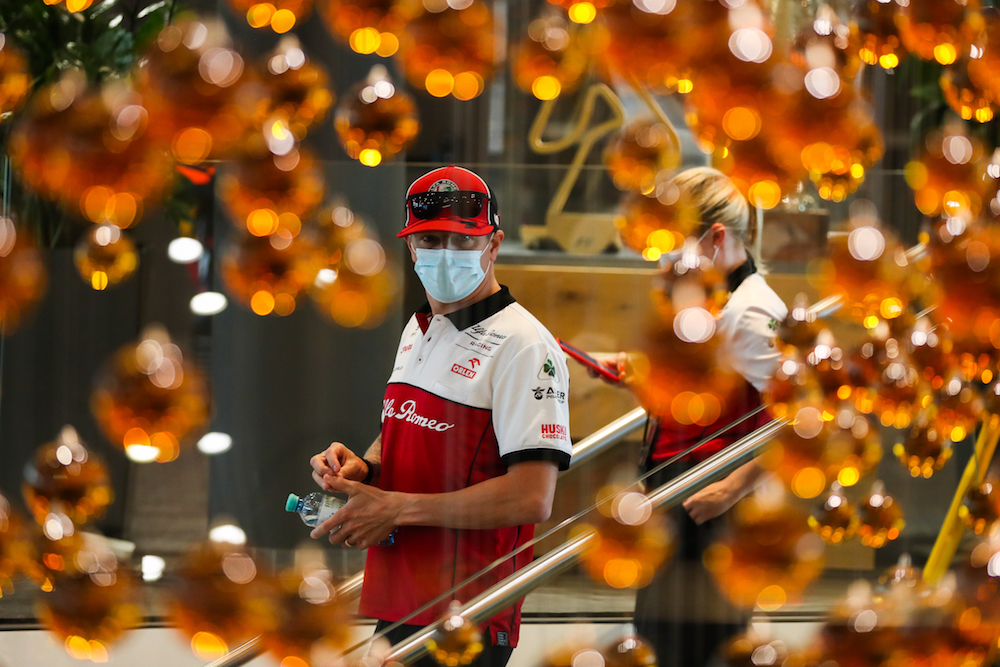
Something unique happened during the Hungarian Grand Prix weekend: for the first time 318 attempts, Kimi Raikkonen qualified last on merit for a Formula 1 race. He’d started at the back before, but always as a result of some kind of penalty or problem; never because he was at the bottom of the timesheets.
He finished 15th, one of only eight occasions he’s been classified so low in an F1 race. You might think this might be an ignominious weekend for the 2007 world champion, a man with 21 victories and who just two years ago was up the front and racing a Ferrari. But Kimi is a unique character and seems content with his lot, even when it doesn’t add up to points and Q3 appearances.
The combination of a former world champion and a back-of-the-grid struggler is bafflingly incongruous. How can someone so used to going wheel-to-wheel at the sharp end accept life in an uncompetitive Alfa Romeo team where he’s managed to score points just once in the last 12 races?
But Raikkonen is an unusual man, one of outrageous talent combined with sufficient drive to become one of just 33 people to secure the ultimate prize in grand prix racing. Yet he also has the temperament to drop deep into the midfield and get out of the car having finished nowhere without showing any signs of either frustration or, by his standards, boredom.
“For sure, we are not where we want to be, but also I don’t think we do favors for ourselves in certain things so we have to do things better and improve,” was his conclusion after the race, delivered in his trademark unemotional staccato. No ‘this is a waste of my time’, no ultimatum for better performance, no sign of anger.
Ever since he signed for Alfa Romeo, trading a frontrunning machine to one scraping to make the top 10, he has been refreshingly direct. Usually, Raikkonen simply explains he’s enjoying it and that this is good enough for him. Whether the desire to bank a still-lucrative paycheck – albeit one for a fraction of the remuneration he commanded in his pomp – is part of it, who knows. But he genuinely appears content to be a 40-year-old still reveling in the challenge of F1 at the back.
“I don’t think it’s any different,” says Raikkonen of the difference in racing in the pack as opposed to up front. “When you do enough years you will have some races that you have to come through the pack, or you end up passing for positions somewhere.
“I don't feel that the racing is any different, you might race against different teams or different cars but in general it's the same story wherever you race. It's the same sport and different team, and some races are a little bit better than others, but I don't see why you should change your mindset or anything else. You always try to do the best that you can, and be as high as you can, so it hasn't changed.”
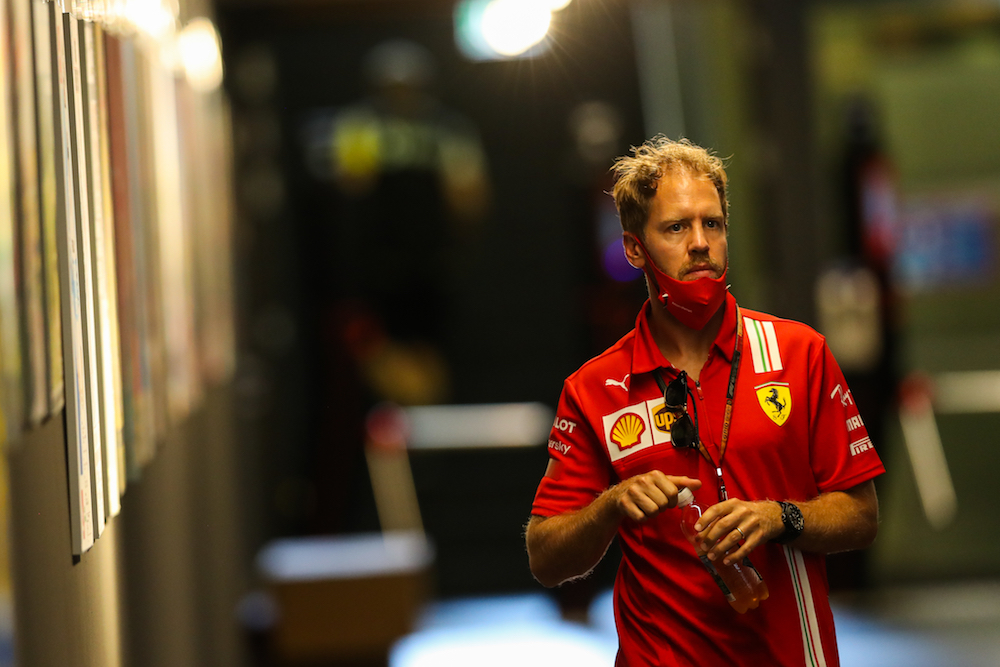
While Raikkonen appears to have found some level of satisfaction at Alfa Romeo, the likes of Sebastian Vettel and Fernando Alonso are pinning their F1 futures to the hope of another swing at a title. Image by Coates/Motorsport Images
Perhaps some of his fellow former world champions wish they could achieve such a zen-like state, whether that means settling for a lesser station in F1 or accepting that the glory days are gone and embracing retirement. Elite sportspeople are an intensely driven breed – they have to be to get to the top. But this can sometimes make knowing when to cash in your chips or having the ability to switch off that desperation to win – or as Lewis Hamilton puts it, not to lose – and simply enjoy yourself, impossible.
Take Sebastian Vettel. He’s contemplating moving to Racing Point for its transformation into the Aston Martin team next year. The Racing Point is a fast car and the team has grand ambitions, which ultimately is what he’s buying into. Vettel is asking himself if he has the motivation and the drive, at 33 and after four world titles, to invest at the very least two years of his life, probably more, into a project that could potentially allow him to win more races.
He wouldn’t give a second thought to taking a place at Alfa Romeo, a team that appears to have gentle aspirations to move forward but isn’t looking like emerging as a winning force on a timeline that would suit him.
Martin Brundle asked him this explicitly in an interview for British broadcaster Sky Sports F1. Would he consider taking the Raikkonen path? Vettel’s answer was clear, and aligned with his previous comments about having no interest in racing in F1 to make up the numbers.
“I want to win, so I know that, and I think we all know that, at the moment you need to be in a certain car to be able to win,” said Vettel. “That’s probably not on the cards, and then obviously, I have to evaluate whether there’s anything that comes close to that.”
Vettel has to have a realistic shot of winning, if not today then at worst tomorrow, for it to be worth his while. His drive and desire means that success is what matters above all, so even if Racing Point remains at its current level of being able to take top six finishes and the odd podium – perhaps even a victory, with a slice of luck on its side – that won’t be enough.
He might yet also decide to retire. But presumably that insatiable appetite for success makes taking that option profoundly difficult. While Vettel isn’t someone who craves the limelight, he will know you are a long time retired in sport and he wouldn’t be the first to have been unable to find something to fill the hole left by not competing. If he can’t find contentment there, he will have to risk unhappiness by rolling the dice on a Racing Point project that should succeed, but isn’t a sure thing.
The we have Fernando Alonso. He turned his back on Formula 1 at the end of 2018 and, while he criticized the style of F1 and, on signing to come back with Renault next year, talked up the changes drawing him back in, the real problem was lack of opportunity to win.
The day after the announcement he would sit out 2019 was made, I put it to him that he wouldn’t be doing this if he had a competitive car at his disposal. This elicited, briefly, agreement before he returned to his chosen messaging. Alonso perhaps could have accepted F1 was over once it became clear none of the proven top teams wanted him – but he’s gambled on Renault.
Yes, it’s a factory team and yes, the 2022 regulations reset offer an exciting opportunity. But there’s no cast-iron guarantee, and he’ll have to spend next season racing in the upper midfield at best as he waits for the key season to come round. He wants that third world championship and he had to take this drive to have any chance of that happening, but it’s another long shot.
Throughout history, the question of when to stop and when to carry on has always plagued top drivers. Vanishingly few go out on their own terms, as Nico Rosberg did in a shock retirement announcement just five days after winning the 2016 world championship.
At the time, he admitted that the challenge of beating Hamilton over a season had left him empty. His objective was to win the title, he scaled that mountain and had no desire to put himself through the cold, the physical discomfort and the altitude sickness again. He was either happy with what he achieved, or recognized he probably wouldn’t be able to win the title again and accepted it.
“This year was extremely tough because I put everything into it, I didn’t leave a stone unturned and pushed like crazy in all directions, along with everyone who was involved,” said Rosberg at the time. “This was also my family, [making] a lot of sacrifices. My wife, for example, every time I was home she understood that I needed to rest, so I never did any nights, I never took care of my little daughter, I never did any difficult things. She was always there to support and to make it as easy as possible, and that is just one example of the commitment we all put into it.
“That’s why I’m not willing to make that sort of commitment again for another year. And I’m not interested in coming fourth. I’m a fighter and I want to win. But I’m not interested to do that again. I don’t want to do it again. So I’ve decided to follow my heart, and my heart has told me to stop there, call it a day and go on to other things.”
But as Alonso and Vettel show, such an attitude is rare. Michael Schumacher couldn’t leave F1 alone and came back after three years out with Mercedes with a clear objective – to win the world championship. He retired a second time after three seasons that yielded a solitary podium and one qualifying-topping performance at Monaco in 2012 that was for nothing because he had a grid penalty for wiping out Bruno Senna’s Williams in the preceding Spanish Grand Prix.
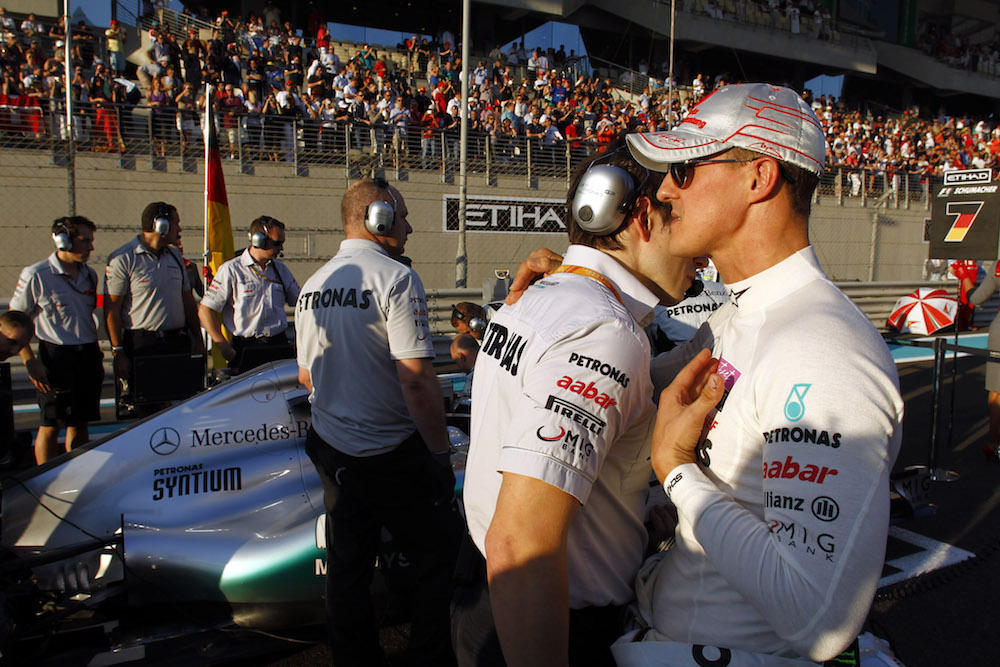
Schumacher came out of his first retirement with a more outwardly relaxed approach than during his prime, even though he was unable to recapture the Ferrari magic at Mercedes. Image by Motorsport Images
During his three years, Schumacher did appear to come to terms with his lot and accept that the title wouldn’t return and seemingly enjoyed himself. He was certainly a more relaxed figure, so perhaps he found a little of what Raikkonen has done. Certainly, when I asked him at Interlagos nine years ago about suggestions from some quarters that he returned because he couldn’t fill the hole left by quitting F1 at the end of 2006 left in his life, he railed against it.
“I had a great career and for three years I had lots of fun. The biggest thing was that I had the freedom to live the way I wanted to live, something that I missed out on in all the years before,” said Schumacher in 2011.
“So why did I come back again if I enjoyed it so much? The main part is that I was doing competition anyway, but after my motorcycle accident it sort of cleaned up my ambitions there! Secondly, I was doing go-karts and enjoying it.
“My intention was simply to come back and enjoy the sport – the challenge, the competition – due to the fact that there was this combination of Ross [Brawn] and Mercedes that I didn’t even dream about. It just came out and I took the decision of why not again? If you had asked this two years before, I certainly would have said no.
“I wouldn’t have the energy any more to do testing and racing as I used to do, but what we have now is very easy for me. The timescale works out.”
Even Jenson Button had something of the same problem, flirting with retirement before eventually dropping off the grid after 2016. While he was content to have won the title, what he was driven by was race wins, and the desire to add to his tally of 15 led to him hanging on in the hope the McLaren-Honda project would break through.
Others, like Mika Hakkinen, had no choice but to quit when it became clear they didn’t have much fuel left in the tank. The Finn won two world championships, lost out on a third to Michael Schumacher but firmly lost his mojo in 2001 – only occasionally delivering his best form and opting for a sabbatical that became retirement. Even Hakkinen briefly flirted with the idea of a comeback before being disabused of the notion by his struggles in a test for McLaren in November 2006, having run competitively in DTM.
The other leading drivers from that era – Damon Hill and Jacques Villeneuve – also both struggled. Villeneuve battled on in F1 until being dropped by BMW Sauber during 2006 and continued to seek ways back onto the grid, and is still active as a driver today. Hill realized in 1999 that he’d run out of steam, but was obliged to see out the season after having decided to stop in the middle of that year.
In fact, the number of world champions who have been able to stop on their own terms or accept a slide down the grid is vanishingly small. In the previous generation, Alain Prost toyed with continuing his career with McLaren in 1994 having retired as world champion, while Nigel Mansell’s determination led to his debacle with the same team the following year.
But what is rare is for any of them to be able to continue in their chosen sport for fun, Raikkonen-style. He can be frustrating because he is a prodigious talent who perhaps hasn’t had as much success as he might have done, so is perhaps a little too relaxed with life. But he’s probably a more content human being for that.
You could argue Alonso and Vettel should learn from that, but they are probably not wired that way. If they were, it’s hard to imagine them having achieved so much.
Presented by:

Edd Straw
Edd Straw is a Formula 1 journalist and broadcaster, and regular contributor to RACER magazine. He started his career in motorsport journalism at Autosport in 2002, reporting on a wide range of international motorsport before covering grand prix racing from 2008, as well as putting in stints as editor and editor-in-chief before moving on at the end of 2019. A familiar face both in the F1 paddock, and watching the cars trackside, his analytical approach has become his trademark, having had the privilege of watching all of the great grand prix drivers and teams of the 21st century in action - as well has having a keen interest in the history of motorsport. He was also once a keen amateur racing driver whose achievements are better measured in enjoyment than silverware.
Read Edd Straw's articles
Latest News
Comments
Comments are disabled until you accept Social Networking Cookies. Update cookie preferences
If the dialog doesn't appear, ad-blockers are often the cause; try disabling yours or see our Social Features Support.