Image by Paul Laguette
Robin Miller's Mailbag for June 24, presented by Honda Racing / HPD
hpd.honda.com
and on social media at@HondaRacing_HPD
and https://www.facebook.com/HondaRacingHPD.Questions for Robin can be sent to millersmailbag@racer.com. Due to the high volume of questions received, we can’t always guarantee that your letter will be printed, but Robin will get to as many as he can. Published questions have been edited for clarity. Views expressed do not necessarily reflect those of RACER or Honda/HPD.
Q: In your last Mailbag someone asked what lay ahead for Scott Dixon. Retire soon, sports cars, keep plugging away for a while longer? Why is it now that if a driver is about to turn 40, it's about time to hang up the driving shoes? A.J. was 42 when he won his fourth Indy 500, Gordy Johncock 45 when he scored his second win in 1982, Uncle Bobby was 47 in 1981 and Big Al 48 in 1987. One thing I always liked about racing is that unlike the stick and ball sports, if you turn 40 you still have a lot of racing left in you. It's sad that has seemed to have changed. Do you agree?
Rick Owens, Fort Wayne, IN
RM: We’ll likely never see the longevity we did back in the era you referenced with those legends (plus Mario and J.R.) because they were very special and today’s drivers start so much younger, so the good ones make enough money to either go to sports cars early or walk away. Helio, JPM and Hornish were all still plenty capable but got an offer from The Captain they couldn’t refuse, while Vasser, Brack and de Ferran cashed in when CART’s engine wars paid them handsomely. Dario also broke the bank before having to quit, and P.T. would be loaded if he hadn’t been married three times. T.K. has done very well and is the rare example today of 20-plus years along with Dixie, who shows no signs of slowing down. But Power, Pagenaud and Seabass are rapidly approaching the big 4-0 and will likely be competitive as long as they have good rides. Not sure we’ll ever see another 50-year-old like A.J. and Mario still running Indy, but 40 isn’t the end, either.
Q: In the wake of Alex Zanardi's recent accident, I wanted to ask a question that's always been on my mind. Assuming the 2001 Eurospeedway accident had not occured, do you have any idea as to what Alex's plans were for 2002? Did he have a multi-year deal with Morris Nunn? Were other teams calling in either CART or the IRL?
Victor from Toronto
RM: I believe it was for two years, but I never heard of interest from IRL teams and Alex had struggled in 2001, so it wasn’t like when he left after 1998.
Q: As an African American open-wheel fan for 50 years now, it was cool to see a couple of letters in last week’s mailbag from African American fans. I caught a fair amount of guff as a kid from my Black friends who questioned how I could be a fan of that “white sport.” As a kid who lived in Indianapolis for about five years, I was part of a group of guys, black and white, who were into racing, but since the family moved back to Texas years ago, it has often felt like I’m the only Black guy interested in IndyCar or racing in general. I’ve attended the Indy 500 six times, as well as several IndyCar and NHRA races and even an F1 race (well, it was the defunct Dallas GP in the early '80s), and have never had any uncomfortable moments at the racetrack. A cousin who lives in Indianapolis has gone with me to the 500 a couple of times and was pleasantly surprised by the fun, welcoming vibe he experienced.
But with the exception of the NHRA, which has the most diverse fan base among the major series, and Lewis Hamilton, there are no high-profile black/minority drivers out there. For many, this may give the impression that it is purely a “white sport.” Do you know if IndyCar is considering any kind of diversity initiative to try to attract minority drivers or crew members? This could, in time, help grow the fan base of the series.
Rod, Houston
RM: I’m glad to hear your Indy experiences have been good and that doesn’t really surprise me, but you hit upon the key to any sport. Black people have nobody to cheer for, and that’s why CART dropped the ball on Willy T. and Bill Cosby. That was a huge missed opportunity to create a new fan base and marketing platform – especially with Cosby’s participation. I haven’t asked Roger Penske about any kind of diversity initiative, but he doesn’t miss much and he sees what NASCAR has done, so I wouldn’t surprised if he gets something going.
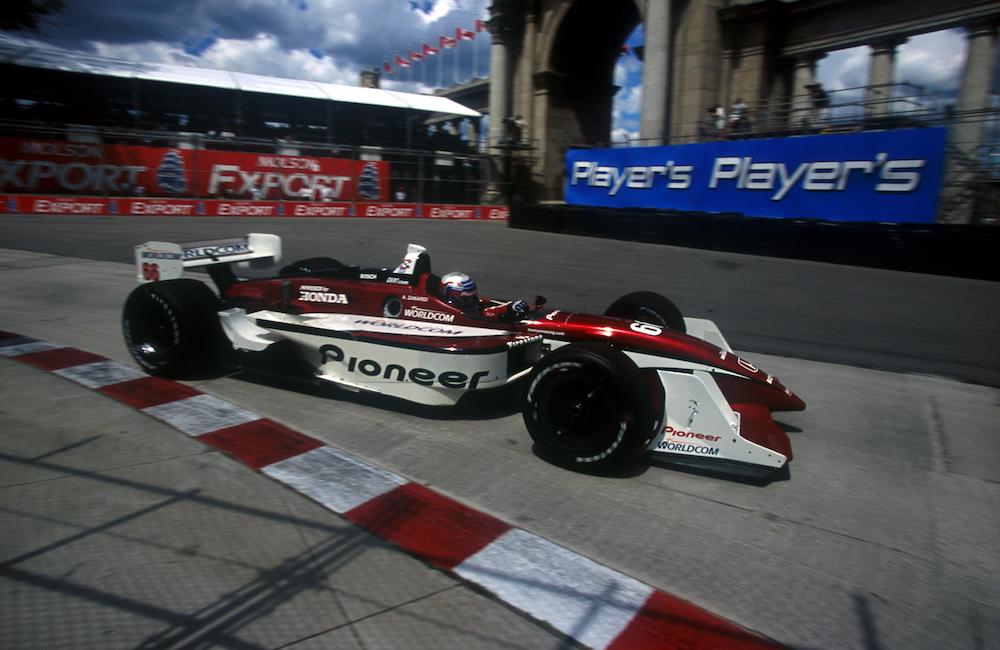
Zanardi spent much of 2001 trying to recapture the old magic. Image by Motorsport Images
Q: In your opinion, how would Tommy Thompson fit in? I don’t hear much on him, but he sure seemed to have a desire to get to the big level when he was tragically lost at Trenton.
John Guedel
RM: I was at Trenton that weekend and I interviewed Tommy the day before his accident, and his number one goal was the Indianapolis 500. A Vietnam vet, he started in Formula Fords, moved to Super Vees and was driving the Mini Indy series in 1978. He had the backing of Black American Racers, although Viceroy cigarettes had pulled out as the primary backer by then, and the team was looking for more sponsorship. He won Super Vee races and finished eighth in the Mini-Indy opener at Phoenix before crashing over the wall on the last lap at Trenton when another car broke right in front of him. He was 35 when he died, so time was not on his side in terms of making it to Indy cars, but he had the desire.
Q: It's time for Roger Penske to publish his autobiography. Beyond that, Robin Miller should be his co-author. When I was in my prime earning years, I searched for a book by Roger hoping I could learn some of the Penske ways to help myself succeed. I'm sure it will be fascinating.
Marcus Erickson, Snohomish, WA
RM: That would require The Captain to sit down for several hours for several days and go through his career, but that’s probably not going to happen – he cannot sit still and is always on the move. I think it would be an interesting read, regardless of who writes it, but thanks for the endorsement.
Q: Miller, what if we put a "rehabilitated" Kyle Larson in an IndyCar?
Phil M.
RM: I called A.J. several weeks ago and told him to hire Larson, but he seemed to think Tony Stewart was going to do it. I asked Stew a couple weeks ago and he said he’d like to, but nothing to report yet. Larson belongs in the Indy 500.
Q: Are there any concerns about the IndyCar race at Laguna Seca being hosted by a guy with no motorsports experience? I just read the article saying that new Laguna Seca Volunteer Association group has announced termination of contracts negotiations. It seems like Laguna Seca is now in the hands of a corrupt and inexperienced group that will ultimately fail. With all of the other challenges facing motorsports and IndyCar, we don’t need corrupt politics killing an IndyCar race.
Scott Thompson
RM: If Marshall is concerned, then we should all be concerned because he knows those people and that territory, and as we’ve all said, volunteers are the backbone of any race – they are a must.
Q: As August 23rd gets closer, I'm having increased doubts that Indy will happen. Good for RP in putting that October placeholder, because I think more and more that that's what's happening. So since my Indy May and Richmond June races didn't happen, I'm heading to Mid-Ohio in August, bringing the tent, paddock passes, and a weekend's worth of grill meat and beverages. I don't imagine social distancing will be an issue that weekend. I fully intend to spend two days wandering the track deciding on where I'll set up for the IndyCar race, but before I even do that, what do you recommend for a first-time visitor? Any can't-miss-this sights, sounds, smells, and/or tastes?
Henry, Richmond, VA
RM: Not sure what’s happened lately to give you that impression, but we’re still two months away and I don’t think anyone can say definitively what will be allowed in terms of public gatherings in Indiana. As for MO, Rocky’s has good steaks in downtown Mansfield and the little drive-in on the outskirts of town has great sloppy Joes (ask A.J.) so those are two places. Just roam and I imagine you’ll want to get on the hill just past Turn 4 to watch the start.
Q: Could I get a quick history lesson on why open-wheel stopped visiting Homestead-Miami after 2010? Would IndyCar ever consider returning? No NASCAR traction compound to avoid!
Scott, Milwaukee
RM: I think lack of interest would be my answer. After the first few CART races (well attended with Honda, Toyota and Marlboro tickets), it gradually became a non-event and was never promoted from what I saw. IndyCar talked about going back a couple years ago but thankfully came to its senses.
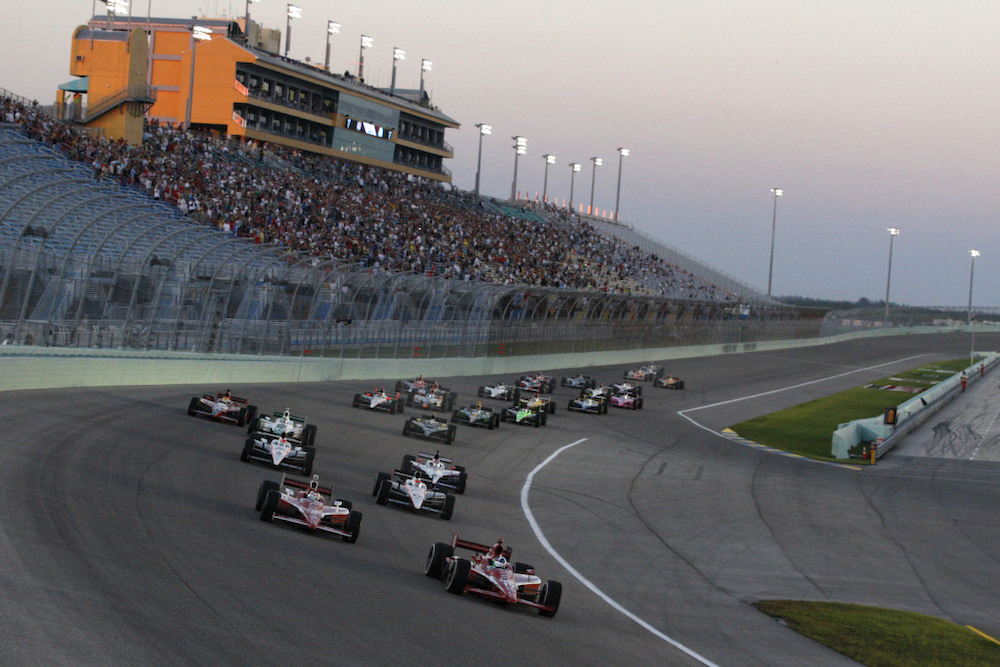
There were a lot of fans dressed as empty seats when IndyCar made its last visit to Homestead in 2010. Image by Motorsport Images
Q: Do you think that Kurt Busch could do the doubleheader at Indianapolis on July 4?
Bob Golden
RM: I imagine if he had good opportunities in both, but I think a return to the Indy 500 would be more appealing to him. Jimmie Johnson was thought to be in line for a car at the Indy GP but obviously that all fell apart.
Q: It does seem that the 500 is moving towards going green with fans. We received a call to relocate our seats (we were going to try pit out) but it seems they are removing them. Does this reflect only a smaller COVID crowd, or is the intent to bring back the apron?
Skip Ranfone, Summerfield, FL
RM: From IMS President Doug Boles: “We are not installing the southern third of the Pit Road Terrace seats this year. The Pit Road Terrace seats are the temporary bleachers that we install behind the pit road fence on the south side of the Pagoda. It would not impact a decision to bring back the apron or not. A couple of reasons for the change: (1) With IndyCar using the Gasoline Alley garages on July 4 weekend, it helps us with our install time by not putting up as many seats between the race and Aug 12, and (2) in a typical year, we only sell about 50% of these seats, so a third reduction in more appropriate related to demand. And, not the reason why, Skip is correct that it would be a benefit in a COVID year in the sense that it is less people in the area. Ticketing customers in the impacted seats are being relocated inside the remaining Pit Road Terrace seats or given an option for another seat without having to pay the seat price difference.”
Q: You have frequently mentioned the '70s and USAC’s role in IndyCar losing ground to NASCAR. Would you please write a longer piece on the subject, which I agree was a pivotal period for IndyCar, but is not as well-remembered as the CART breakaway and The Split? To me, the '70s were about an influx of top-rank new teams into Indy racing, many of them migrating from the defunct Can-Am and (original) Trans-Am series. Among them, McLaren, Jim Hall, and, of course, Penske. These teams had bigger aspirations than the parochial USAC leadership, which makes the CART breakaway inevitable in retrospect. In the meantime, perhaps in response to this message, you could please give more details about the Marlboro fiasco? I confess that I have no memory whatsoever of that debacle. Curiously, I do remember the VPJ team with Viceroy sponsorship, which maybe says something about the failures involved.
Al Gordon, Watertown, MA
RM: IndyCar didn’t really lose ground to NASCAR until ESPN came along in the early '80s and then The Split in 1996. USAC’s wounds were self-inflicted – taking the dirt cars out of the national championship, losing Marlboro as the title sponsor, banning rear-engine sprinters and refusing to listen to the pleas of the car owners. Marlboro simply wanted exclusivity and when Viceroy came in a year later, that was it and they were gone. And it was a year before R.J. Reynolds began backing NASCAR. USAC billed itself as the “sport of the '70s” and it should have been, but too many shallow thinkers and clueless leaders.
Q: I know you have mentioned a few times about how back in the day nobody worried about races where a driver would run away with it. Today it’s all about how close the competition is, because that’s all we have today! Back in the day it was about, “What are they going to bring this year?” Front engine to rear engine, turbine, turbo charge? Then they started to add wings, then you had the aerodynamic greatness of downforce, always something new and innovative every year. Everybody was so interested in the technology, if one of them turned out to be vastly superior, we were just like, “Wow they kicked ass!” and we didn’t care if they won by two laps.
To me, that is the difference. We have cookie-cutter cars, three major teams that make up most of the field and wins, so all we have is competition and upsets. To me they would be better off putting a cap on the budget and let everyone come with whatever they want. If I can bring in a modified Dodge 440 engine and compete with these guys, let it happen. Open the field to anyone who can compete within a certain budget. I guess it will never happen, but I think it would be pretty freaking wonderful.
Tim Berryman
RM: There is no doubt the lack of innovation and surprises greatly diminished the interest in Indy 500 practice and qualifying, as well as the race itself, and the overall interest of national mainstream magazines. But throwing away today’s template and starting from scratch with “run whatcha brung” wouldn’t seem to guarantee participation from teams or manufacturers. Spec racing should be tight and IndyCar’s best selling card is the competition, but I just don’t see a return to the old days.
Q: Why did Mario Andretti never drive for Penske? What was the history and relationship between the two? I think had Mario had a ride with Roger, his Indianapolis 500 resume would have been a whole lot more impressive.
Chas O., Oak Park, IL
RM: Mario did run Indy for The Captain at Indianapolis in 1976-77-78-80, with a best result of eighth in the rain-shortened ’76 race. He also ran selected races – winning Trenton in 1978 and finishing second at Pocono in 1977 behind teammate Tom Sneva to give R.P. his first-ever 1-2.
Q: Foyt, Jones, McClusky, Nelson, Al Unser, White, Hartman, Herk, et al... Fords, Dodges, Plymouths, and a Chevy or two...paved, dirt, and road… that USAC stock car division was awesome! What really happened, and why did it go away? Those were the days.
Speaking of IRP, I enjoyed the Champ Cars out there, too. Given that IndyCar has a strong fan base here, does anyone ever throw that out there? I even wondered how'd they do on IRP’s fifth-eighths oval. After all, Iowa is only 7/8. I know what you're thinking – another old guy stuck in the past. And you're right, can't go home again, but I'm glad I got to see it. I enjoy your work.
Joel Sasse
RM: Not sure there is one particular reason that USAC stocks declined and finally died, but when you lost Rufus, A.J., Herk, McCluskey and the Unsers, that really hurt the box office. I’ve never understood why the Hoosier Grand Prix at IRP drew so poorly, because the access was great and it was all the stars of Indy, but I don’t think they ever had more than 10,000 people. IRP is a great midget, sprint and Silver Crown track, but I’d shudder to think of the crash damage for Indy cars. And it’s OK to be stuck in the past – it’s where I reside.
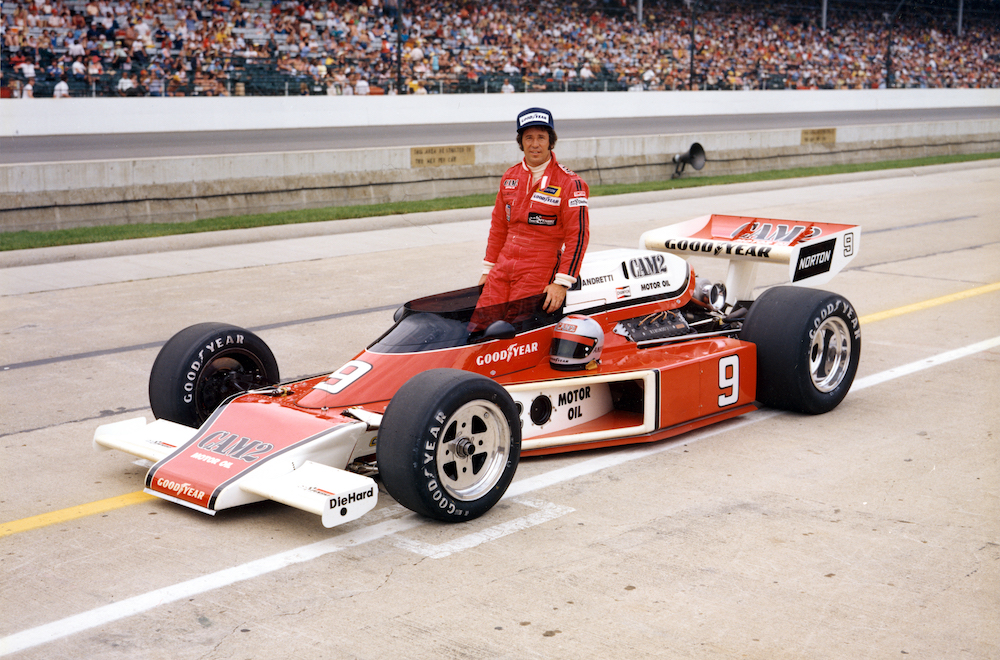
Mario suiting up for Penske in '77. He'll look even less excited when his header breaks during the race. Image by IMS
Q: With NASCAR already having a non-point event that pays a million dollars to win in the form of the All Star Race, would a concept similar in nature work in IndyCar? No points and a suitcase of dead presidents would make normal professional racers take a few crazy risks, plus it could be ratings gold for NBC if it encourages fans to tune in.
Matthew Marks
RM: The key word to your question is “pays,” because the only reason to have an all-star race is for good money and IndyCar’s regular purses suck, so I can’t imagine finding dead presidents for a non-points race. I think R.P. is going to work on getting the Indy 500 purse where it belongs (he’s already added $2 million) and hopefully boosting the other race purses. CART had the Marlboro Challenge and it was well-funded, obviously, but not sure that kind of money still exists for motorsports.
Q: I haven’t been an Indy fan for the longest time, so I don’t know the whole history. Has there ever been/why isn’t there a NASCAR style overtime/green-white-checker finish to the races just to ensure a green flag finish?
Shawn Lee, Maryland
RM: I think IndyCar looks at it as too much of a gimmick (although double points for the season finale is a joke), but there have been a couple instances in the past few years where a race was red-flagged to ensure a chance at a green-flag finish.
Q: Leading up to Vegas 2011, when IndyCar tried to up the excitement level by offering a $2.5 million bonus to a non-regular driver who started at the back and went on to win, I heard numerous rumors of drivers that may have been trying to pull something together. One of those drivers was Alex Zanardi. Any idea how close he was to being a part of that race in Vegas? And what other drivers were potentially in the mix?
Rich Whitaker, Marblehead, MA
RM: Never heard Alex mentioned, but I know Randy Bernard extended an invitation to Jimmie Johnson, Kasey Kahne, Jeff Gordon and the Busch brothers when he was at Tony Stewart’s all-star dirt race at Eldora that summer.
Q: Your answer to Breen's June 17 letter was insightful. But your last (*asterisk*) sentence was BS. It showed a lack of understanding of the importance of the Indy 500. You flunked out on that one. Indy is not about who isn't there, it’s about who is there on that particular day. It’s a race full of ifs, ands, and buts every year. In 1996 CART should have taken those eight remaining spots on the grid. One of their teams probably could have won. But CART was too arrogant. CART had all the drivers, teams, sponsors… but they didn't have Indy. Their arrogance blinded them to the importance of the Indy 500. CART was dead after they didn't show up for the 1996 500. It just took 11 more years for that dead man walking to fall over!
Many drivers have had great careers without winning the Indy 500. But all drivers who have won the 500 have had great careers! Little Al in 1992, with the wreath around his neck, wet eyes looking skyward, saying, "You just don't know what it means to win Indy!" Or Bobby Rahal saying, "When I go out on the chicken dinner circuit in the winter, they don't introduce me as the three-time CART National Champion, they introduce me as the 1986 Indy 500 Champion." And so it is with any Indy 500 winner. There are no asterisks needed for an Indy 500 champion.
The saddest case is Michael Andretti. He missed five prime years of his Indy career. I wonder if he ever lies in his bed at night, stares at the dark ceiling, and thinks, "Eddie Cheever won the Indy 500 and I didn't."
Bill B.
RM: That’s why The Mailbag exists, Bill, we can agree to disagree. I covered those Indy 500s just like any other, and Buddy Lazier fighting through his injuries or Cheever winning with his own little team were both good stories, and that’s how I wrote it. Arie and Brack did what they had to do – beat who was at IMS – and Luyendyk’s consolation is that he did beat everyone in 1990. By the time all the CART guys had defected you only had a couple ‘names’ missing at Indy, and none of those guys on the Borg-Warner Trophy have anything to regret because they drank the milk and went in the history books. But would they have won against Michael, Emmo, Unser, Rahal, Tracy, Moore, Zanardi and Vasser? I think not. The late, great Jim Murray said coming to Indy in 1996 was like going to the World Series and finding out it was the Toledo Mud Hens instead of the Yankees. Cruel? Maybe, but certainly honest. And it’s not a knock on the drivers and teams that took advantage of the situation, but it allowed NASCAR to take over IMS for a decade.
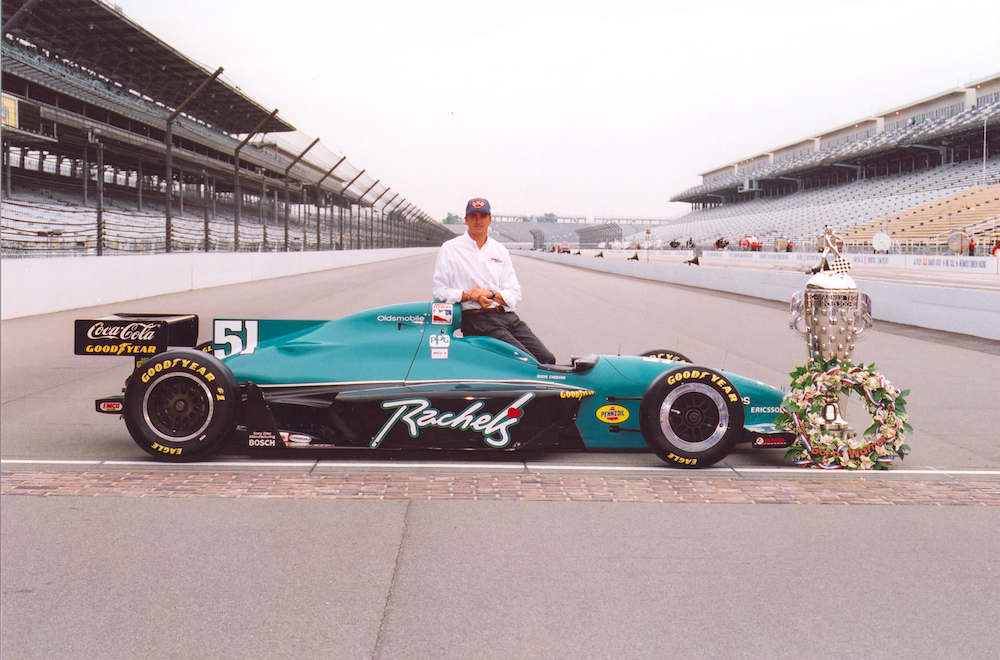
I guess you could just Photoshop Michael Andretti's head onto Eddie's body if you really wanted to. Image by IMS
Q: There will never be agreement or consensus on The Split, and not interested in another debate here. I have tons of respect for you Robin, but your answer to Brian Breen last week was not fair and it was biased, specifically the last line about the Indy 500 in the years 1996-99 should have an asterisk because CART drivers weren't participating. Were they not allowed to enter or did they choose not to? Should last year’s winner have an asterisk because Lewis Hamilton or Kyle Busch wasn't entered? CART and the IRL were separate series, the same as NASCAR and F1 are separate series. Those IRL years produced winners just the same as any other year, and every year will always have the best drivers who choose to enter and qualify for the race. That is fact, not opinion.
Mike Bray, Flower Mound, TX
RM: The Split was never about the drivers, they merely went where they had opportunities or contracts. And Kyle Busch is a helluva talent but not one of the best open-wheel drivers, while it would be great to see Hamilton follow Fernando’s footsteps some day. But many of the best open-wheel drivers of the '90s didn’t compete at Indy for many years and that’s not an opinion – it’s a fact.
Q: I attended my first IndyCar race at the old Langhorne Speedway way back in 1967, so as one of our older IndyCar fans, I have experienced a lot of changes over the years and seen a lot of cars, some beautiful and some ugly. And while I was apprehensive about the new look of the aeroscreen, I must say the cars looked much better than I anticipated.
On another note, I read recently where Ferrari was giving consideration to entering IndyCar and had spoken directly with RP about the possibilities. I know there are millions of Ferrari fans around the world who might love the idea, but I’m concerned about the financial impact they might have on the other teams. There are no cost caps in IndyCar (not that we ever needed them) and Ferrari could spend multiple times that of even our best-funded teams. This isn’t the first time Ferrari has discussed entering IndyCar and they never pulled the trigger, so maybe I’m worried about nothing. Thoughts?
Jerry Hair
RM: I said I couldn’t imagine Ferrari coming when that story first surfaced, but Roger Penske evidently has made contact so maybe there’s a chance. Would they be allowed to build their own car and engine? I would think that might be their only interest, but can’t imagine The Captain letting the balance of competition get steamrolled by a Prancing Horse.
Q: Going a little stir crazy with the lack of social interaction. Was wondering if you had a book(s) you could recommend on the Indy 500 and/or Speedway. Hope you're well. Love your work!
CART fan Brian
RM: Black Noon, Vukovich, Second to One, Beast, Hard Luck Lloyd, Tony Bettenhausen & Sons and The Official History of the Indianapolis 500. Coast181.com should have all of these except the history book, and that should be at IMS gift stores.
Q: Will IndyCar ever recover from the IRL/CART split? After 16 years and the prime time major network ratings are still meager. It’s good racing. I don’t get it. Big egos can destroy anything.
E.J. Rossi
RM: I doubt if we ever see the CART crowds of the '90s, and we’ll never see the Indy 500 ratings of the 1960s-'70s-'80s, but IndyCar has become a niche sport. The road race and street race crowds are good, but ovals remain a tough sell and there seems to be about one million people that watch NBC races and about 400-600,000 that watch NBCSN on a regular basis. The racing is real good, but sadly, that’s not enough at the moment. If R.P. was 63 instead of 83 I’d say there was a chance to recapture a lot of that old pizazz, but give him a chance to make a difference because he will.
Q: Trying to catch up on a bit of history. Johnnie Parsons got second and a win in a Kurtis Offy. The following year, Mike Nazaruk took second in the same car. Any idea how long that particular car ran at Indy? Have any other individual cars, (other than the Blue Crown Specials or Maseratis), done as well?
Frank Buczolich
RM: Some local knowledge from author/historian Rick Shaffer: “The car was actually the first one Frank Kurtis built for Indy for himself. He had built the front-drive Novis for Lew Welch. Kurtis ran the car in 1948 for the first time and Tommy Hinnershitz got ninth after starting 23rd. Then Parsons got second as a rookie and then won the rain-shortened 1950 race. Immediately after the race, Kurtis sold it to Jim Robbins, who did not run the car until 1951 with Nazaruk, who got second. Then in 1952, Parsons started 31st in it and finished 10th. People got to where they got new cars just about every year so it's hard to top the Parsons Kurtis, the Blue Crowns or the Maserati.”
Q: I was thinking about the virtual racing IndyCar had before the real racing got started, and I think we missed an opportunity to answer the age-old question of how good would today's IndyCar drivers have been at Indy in the cars of the past. With all of the vintage computer programs it should be easy. The format could be pick a year or two from each decade, cars from the 1940s, cars from the '50s, cars from the '60s including the turbines, cars from the '70s…
The drivers and their engineer pick the car they want to run each race. The only setup changes that could be made would have to be what was available during that particular era. Maybe you could suggest to NBC that they could run it after the season ends this year. Since the season will be shorter, IndyCar could get four more weeks of good publicly. And we would get an entire winter's worth of bench racing. What real IndyCar fan wouldn't want to see T.K. in a Watson roadster or Dixie driving the Lotus Turbine, or how would Marco do in his grandfather's winning 1969 car? Let's make this happen.
Dave Lake, Ft. Wayne, IN
RM: You truly think someone steering a wheel on a computer can be compared to someone trying to hustle a roadster through Turn 1 on eight-inch tires? Dario got to drive Jim Clark’s Lotus at IMS and afterwards said he couldn’t believe anyone could run 150 mph in that car. Sorry, I get that some people are in love with virtual racing, but I’m not one of them, and certainly not the one to carry this banner to NBC.
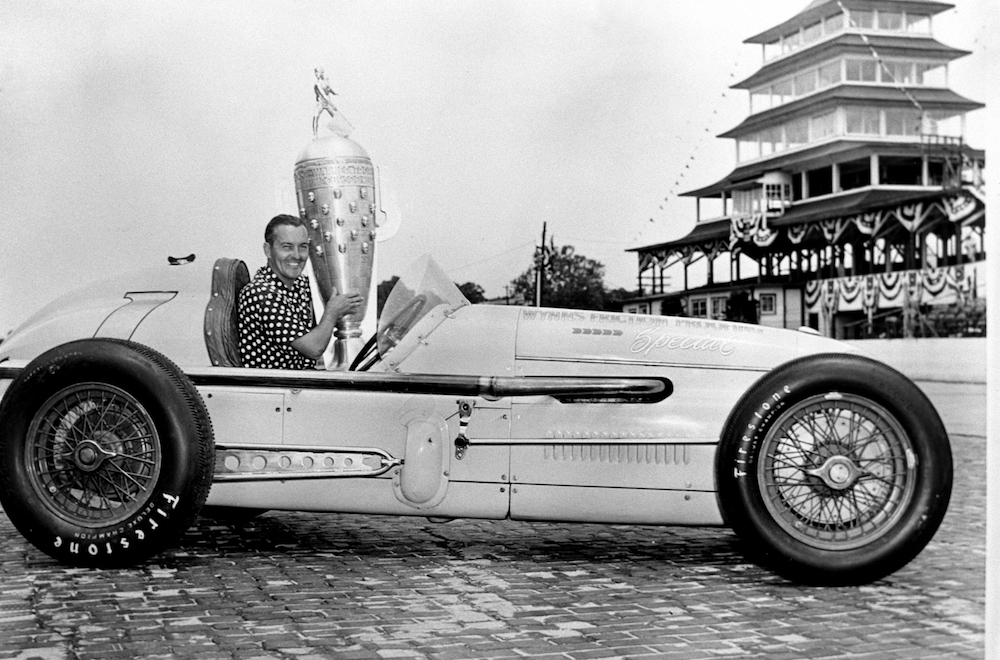
Parsons' Kurtis saw plenty of action. Just don't ask Robin to pitch NBC on having current drivers iRace a virtual version of it during the off-season. Image by IMS
Q: Robin, loyal reader here. Just want to raise a point about the “I should be able to do what I want and take my own risks” idea. That’s fine, except one of the things about this nasty bug is you can carry it and transmit it and not know it. That’s why it has been spread by some group events. Nobody likes the restrictions, but you don’t have the right to infect others, knowingly or unknowingly. Thanks for listening.
Jeff B, Bernardsville, NJ
RM: It’s a slippery slope, and there’s hardly a consensus on how to try and go back to normal living. I still see a lot of masks in grocery stores in Indy, but not many in restaurants, while the grandstands were packed at USAC midget week and I didn’t see many. The experts say you are protecting others by wearing a mask, so from that perspective it’s more about respecting other people, and the daily totals don’t give you a lot of confidence that this pandemic is close to being over. Like I said last week, if I’m 20-30-40, I’m a lot more secure than someone my age (70) but I also get that you can’t sit indoors the rest of your life. When Pancho, Kunzman and Merle are having lunch at Jim Bob’s in folding chairs they’re not wearing masks, but when you think about the injuries they survived and the fact we’re sitting outside, it doesn’t seem as risky as running the cushion at Eldora or Manzanita.
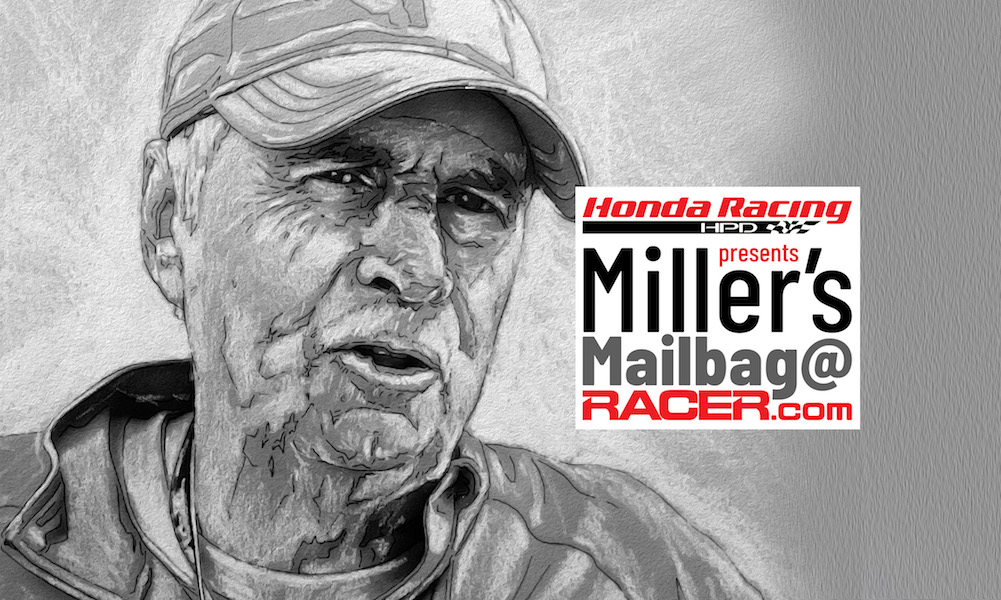
Q: About damn time you got a new picture for the Mailbag. You are like me, it is much better to have a rendering of my face than an actual photograph, but you don't look much like the old picture. I think that was the one you used in the old Speed Channel site, and that was a long time ago. Keep up the good work and thanks for letting us keep bitching, because we don't have many more things to spend time on.
Tom in Waco
RM: We can thank RACER editor Mark Glendenning [MG: along with artist Paul Laguette and editor-in-chief Laurence Foster – it takes an army] for putting that ugly, snaggle-toothed old man to rest and replacing it with something much less offensive to the eyes. Thanks for noticing, and I had 10 letters all agreeing with you.
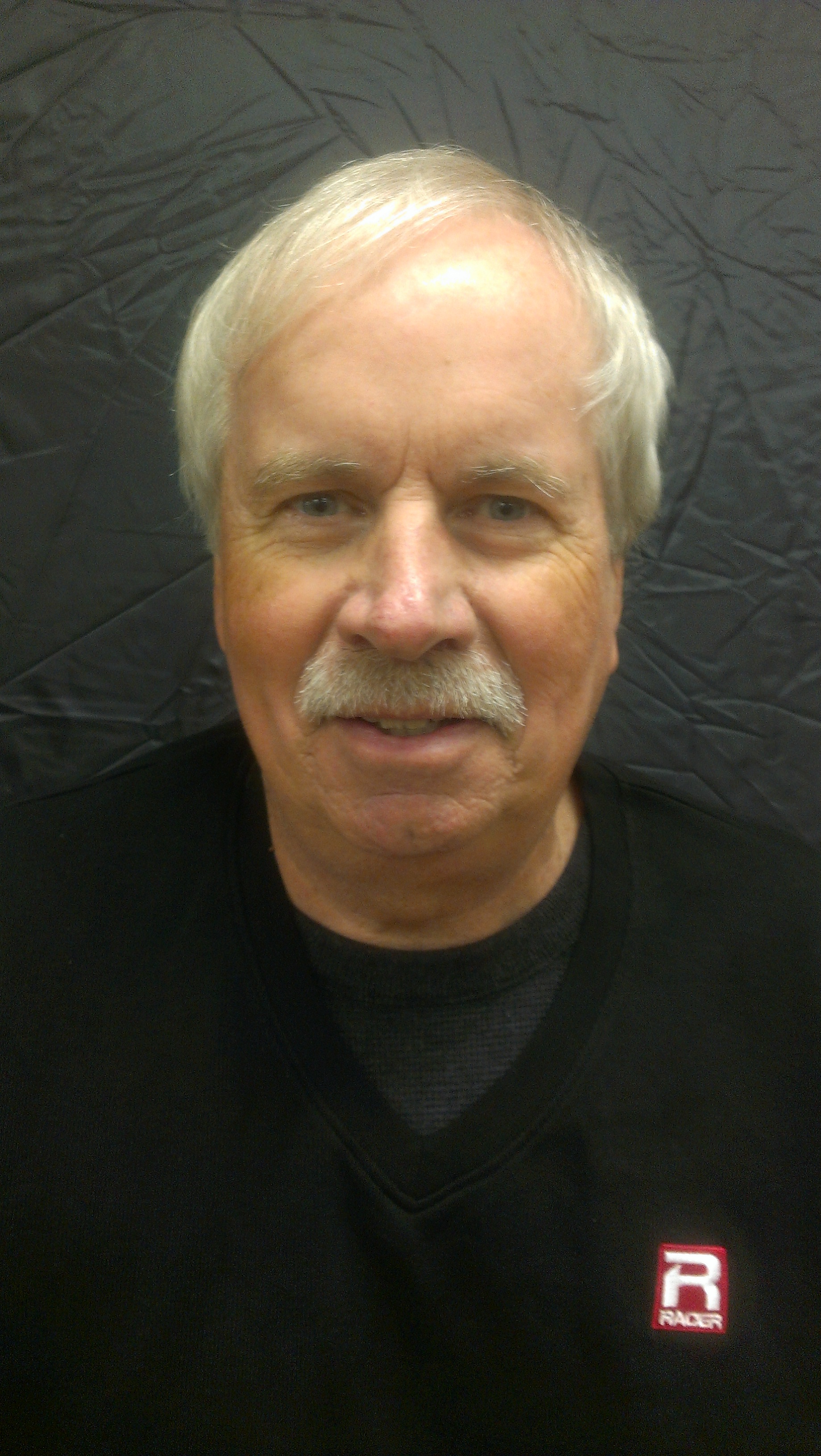
Robin Miller
Robin Miller flunked out of Ball State after two quarters, but got a job stooging for Jim Hurtubise at the 1968 Indianapolis 500 when Herk's was the last roadster to ever make the race. He got hired at The Indianapolis Star a month later and talked his way into the sports department, where he began covering USAC and IndyCar racing. He got fired at The Star for being anti-Tony George, but ESPN hired him to write and do RPM2Nite. Then he went to SPEED and worked on WIND TUNNEL and SPEED REPORT. He started at RACER when SPEED folded, and went on to write for RACER.com and RACER magazine while also working for NBCSN on IndyCar telecasts.
Read Robin Miller's articles
Latest News
Comments
Comments are disabled until you accept Social Networking Cookies. Update cookie preferences
If the dialog doesn't appear, ad-blockers are often the cause; try disabling yours or see our Social Features Support.