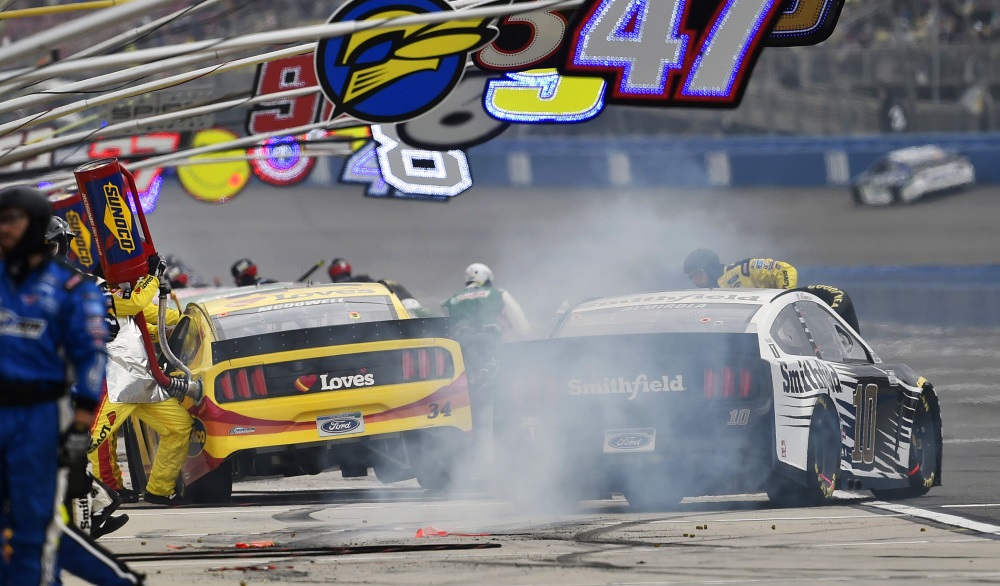
Nigel Kinrade/Motorsport Images
INSIGHT: NASCAR teams ready for the post-shutdown grind
NASCAR Cup Series teams will run four races in 11 days beginning at Darlington, but the logistics aren't as daunting as one might expect.
One of the variables helping the cause is the races are close to home. Most NASCAR teams are based in the Charlotte, North Carolina, area, and Darlington Raceway is just over two hours away in South Carolina. Charlotte Motor Speedway is all but in every team’s backyard.
Secondly, both Darlington and Charlotte are intermediate tracks. That means teams can work with the cars they had been preparing for Atlanta and Homestead-Miami before the coronavirus pandemic forced the sport into hiatus.
However, there are still plenty of variables teams are going to be working through over the next two weeks. Those 11 days are broken down into two Cup Series races in four days at both Darlington and Charlotte.
“Fortunately for us, we had Atlanta and Homestead cars ready to go, so those were pretty easy to throw into the mix,” Greg Ives, crew chief for Alex Bowman, tells RACER. “But that’s only two cars, and you need four races, and just trying to figure all that out is difficult.
“Personnel-wise, I think we’re in a good spot not having to fly anybody or travel anywhere. That’s good. The size of the company we have, we maybe have a little bit of an advantage over some of the smaller teams that turn their cars around week to week or only have a couple cars. We’re fortunate to be in a situation through all this to have cars ready to go.”
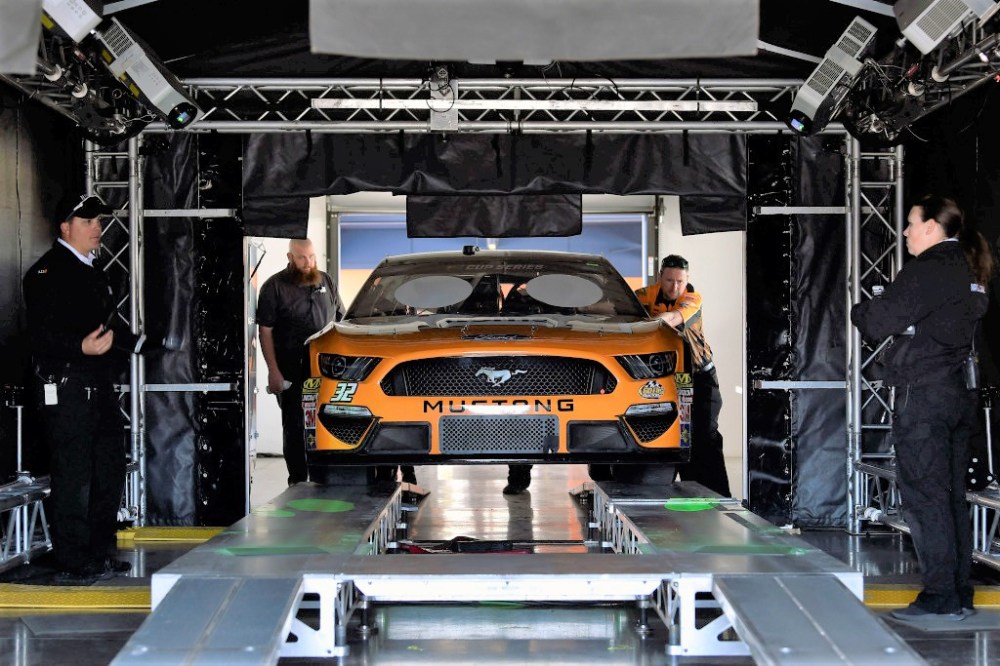
Smaller teams like Corey LaJoie's Go Fas are stretched more by the compressed schedule. Image by Nigel Kinrade/Motorsport Images
Go Fas Racing general manager Mason St. Hilaire tells RACER the No. 32 team is also utilizing its Atlanta car for the first Darlington race. The second Darlington race could be where they use the Homestead car. For Charlotte, St. Hilaire’s group is putting another car together for the Coca-Cola 600 on May 24.
“Then we’ll follow up with the next Charlotte (race) and if that Darlington car that we went there the first time with just had a little damage on the right side, we put a right side on it, get it ready for the second Charlotte,” says St. Hilaire. “But if not, we have another car ready to go. We’ve planned four intermediate cars for four races.
“I’m always a 'what’s the worst-case scenario that could happen?' guy. What happens if we kill the car every race? Best-case scenario we come out of Darlington with a whole car and nothing wrong on it, we come back on Monday, service it, and put it back in rotation following Darlington. That’s an ideal situation to give us more breathing room. But if we were to kill a car every race, what would we do? So, we have a car for each one. Logistically it’s not that tough; it’s just fluid, like NASCAR says. Things change; you never know what might happen at any moment in time.”
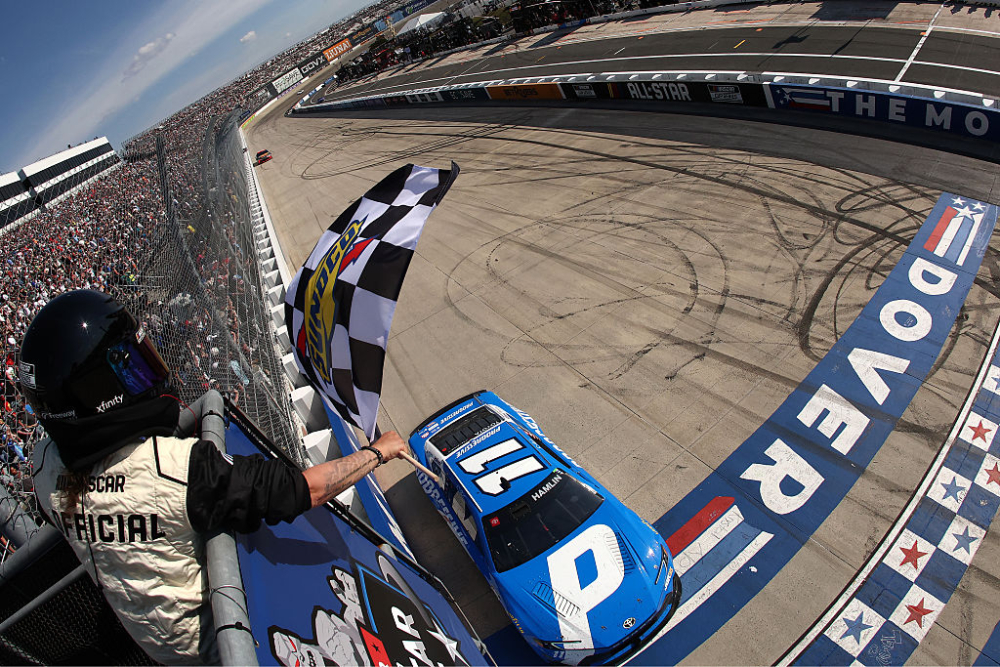
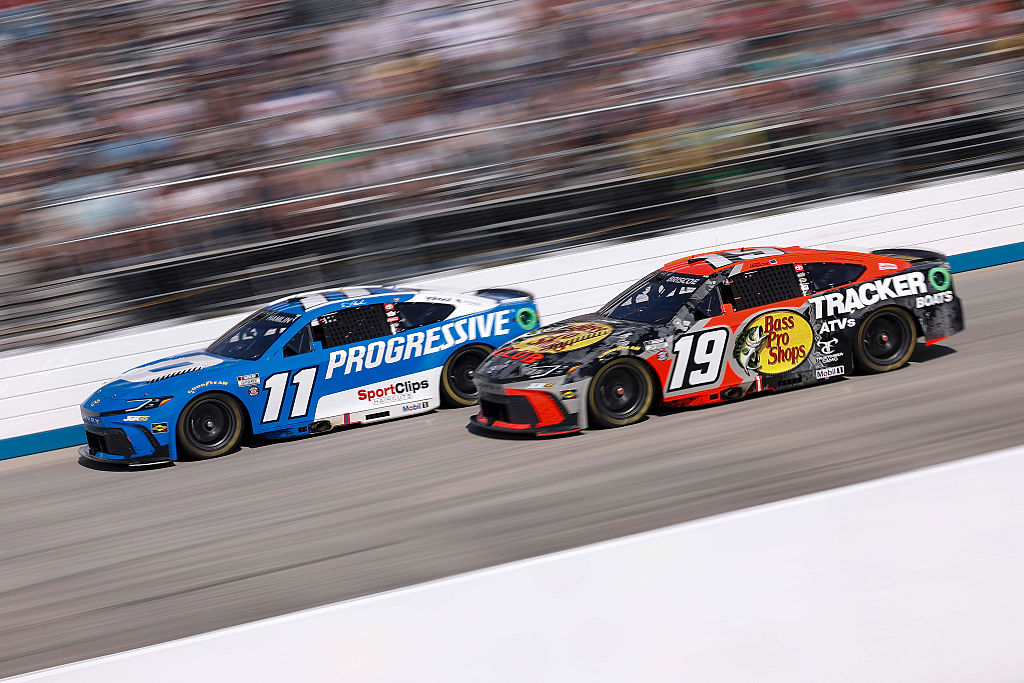
Darlington isn’t the kindest track, with the preferred groove being up against the wall, leaving drivers on-edge lap after lap. There is a reason one of the most used terms when discussing the track is “Darlington Stripe.”
Even so, Clint Bowyer’s crew chief Johnny Klausmeier is planning on running the same car in both races. Should things go as planned in the Sunday race, Klausmeier sees an advantage in having everything already set with the car.
Part of the challenge at Wood Brothers Racing is that the No. 21 car is effectively a customer car of Team Penske. As such, crew chief Greg Erwin explained how the car turnaround cycle for Penske is not set up to handle having to prepare the number of cars four teams need for four races in 11 days.
“The first thing is, all the department managers at Penske have done a terrific job of realizing what the needs needed to be and re-allocating some people and resources to be able to crank those cars out of the system,” Erwin tells RACER. “We’re typically on a fairly long turnaround routine just because we’re so thorough with the car prep and whatnot. The good part of this is we had cars in the truck down in Atlanta that were done and ready to go, and it turns out to be a very similar spec of car that we’re going to take to Darlington. The Homestead car wasn’t too far behind it.
“We basically had two downforce cars ready to go. It’s not like we’re starting off with a short track and a road course or a speedway and a road course. The scheduling side of that, NASCAR being able to go to Darlington, really helped.”
Erwin’s approach is that the team is preparing for two races instead of four. Once they run one race at Darlington, they will be able to adjust for the second by what did and didn’t work. The same will apply to Charlotte.
Once the cars unload at Darlington and Charlotte, there won’t be much teams can do. Drivers will not get to shake down their machines because there is no practice and qualifying. Someone like Ives is not too stressed about it as he’s confident in the foundation his team has with their setup, given what they’ve accomplished with the 550 horsepower cars, which includes a win at Fontana in early March.
Ives also praises his driver, Bowman, for his feel for both Darlington and Charlotte. Granted, Ives still thinks about the opposite side of the spectrum of what he’ll need to do should they miss it at Darlington, but his outlook is mainly positive.
“Travels and that type of thing kind of come into play when you don’t have time on the racetrack,” says Ives. “If we’re going to a Bristol or Martinsville or Phoenix or Richmond, I’d have a little more anxiety just because we haven’t had that great setup there like we had maybe two years ago.”
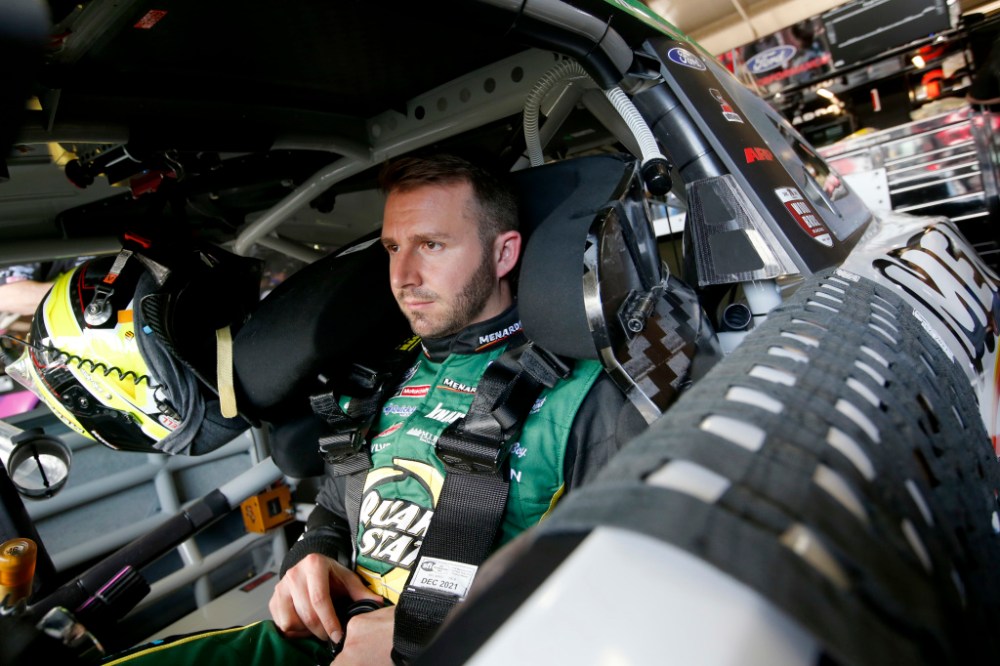
Missing out on practice and qualifying will require a change of approach for Matt DiBenedetto and his Wood Brothers team. Image by Matthew Thacker/Motorsport Images
Erwin says that having to go without practice or qualifying will change the first part of the race for his team. Erwin and Matt DiBenedetto started the season solidly with three top-13 finishes and sit ninth in the point standings, and like Ives, feel good about the intermediate tracks.
However, the No. 21 team usually shows up to the track with a car they feel comfortable starting the race with. As the weekend rolls on, they get more aggressive with changes like letting the car down lower, air pressure, and even camber. There is also what they see from tire wear.
“This situation here where we’re going to roll through tech and put them on the line, I think that probably handcuffs you a little bit in terms of how aggressive you might feel comfortable starting off,” says Erwin. “Not to say we wouldn’t make those changes after the first race at Darlington, but going to the first Darlington, we need to concentrate on having a good, solid return. I don’t want to be fighting tire problems or big fender rubs, anything like that, right off the truck.”
Engineers and simulation tools will be heavily relied upon before arriving at the track. Sunday’s temperature is expected to hit around 90 degrees, making the track hot and slick. However, it will be a green track without any rubber having been laid down from multiple on-track activities that would have taken place leading into a Cup race.
“It’s going to show what you’re like off the liftgate,” says St. Hilaire. “We’re going to find out who was dialed in and who wasn’t to start off the race. Hopefully, we’re in the dialed-in category. We’re going to heavily rely on sim. I wouldn’t be surprised to see a lot of guys with a lot of spring rubbers and a softer spring to make adjustments. You’re going to build adjustability into your race car for these races.”
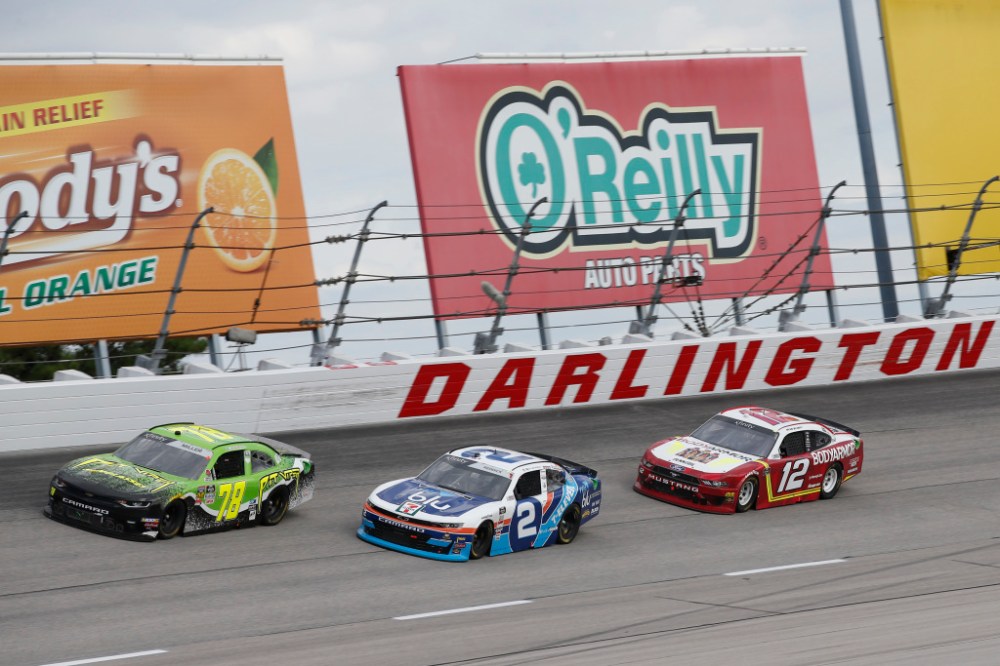
Grueling Darlington figures to provide a tough engineering challenge to start off. Image by Matthew Thacker/Motorsport Images
The most important message from St. Hilaire to his team has been to make sure everything is tight. With no practice to check things over, there is no room for any nut or bolt to be loose.
“Make sure you check your list twice, a third time, and then one more time before going to bed,” St. Hilaire says. “We need to make sure that we don’t have things falling apart because with this many races and where we are – everyone is points racing, but it means a lot where we’re at right now. If we can get out there and not having anything falling off these cars and get everything right, we can have really good points days and run competitively.”
Erwin believes teams having to run what they show up with could be an opportunity for some over others.
“We’ve thought about that; we’ve talked about it quite a bit, actually,” he says. “It seems like really no matter what the rule packages have been over the years or what the tire has been or how much PJ1 they did or didn’t put down, no matter what opportunities get thrown at the race teams, generally the better teams and the better drivers continue to come to the top. I don’t feel as though if we did this every week, it would be a true equalizer, but I do think through the course of certainly the first half of the race at Darlington, you could see some guys that you typically would expect upfront.
“You could see some guys fade, and you might see some guys that really hit it well come forward early, but remember a lot of that is the rubber that the track is going to take over the first half of the race or even the first green flag run.”
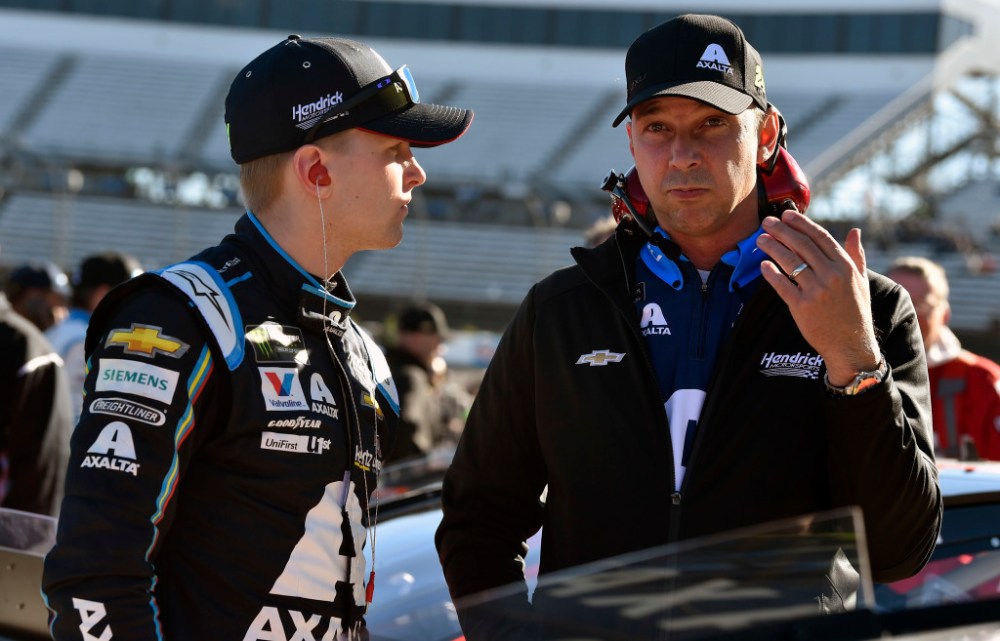
Short lead times will put a premium on the communication between driver and crew chief, like William Byron and Chad Knaus. Image by Nigel Kinrade/Motorsport Images
Chad Knaus admitted on Thursday he has not yet seen or laid hands on the No. 24 Chevrolet for driver William Byron. The first time Knaus saw his pit crew was Thursday, as Knaus was in his car while they did pit practice.
Another crew chief ready to deal with the logistics and unknown variables, Knaus also expects a little bit of the same to happen as these next few races play out.
“I think the potential for somebody to really hit on it and have an advantage is definitely there. Absolutely,” says Knaus of running without practice and qualifying. “Although, I think the best teams will still manage to work their way toward the front, either by the end of the race or by the end of this little jaunt that we’ve got going on. The best teams out there are going to learn from their experiences in the first couple of races and be able to build upon that, and the best teams have a very good and deep notebook.
“If you go to any venue, and you don’t think that a Kyle Busch or a Chase Elliott or some of these guys are not going to rumble, I think you’re just kind of fooling yourself. They’ve got depth. They’ve got time and tenure with their crew chief. So, they’ve got a lot to fall back on. So, I think the best teams will still be the best teams when it’s all said and done.”
Kelly Crandall
Kelly has been on the NASCAR beat full-time since 2013, and joined RACER as chief NASCAR writer in 2017. Her work has also appeared in NASCAR.com, the NASCAR Illustrated magazine, and NBC Sports. A corporate communications graduate from Central Penn College, Crandall is a two-time George Cunningham Writer of the Year recipient from the National Motorsports Press Association.
Read Kelly Crandall's articles
Latest News
Comments
Comments are disabled until you accept Social Networking Cookies. Update cookie preferences
If the dialog doesn't appear, ad-blockers are often the cause; try disabling yours or see our Social Features Support.